
News
NCSP DG Salutes China on Spring Festival, Unveils Push for Export-Driven Economic Reset


NCSP DG Salutes China on Spring Festival, Unveils Push for Export-Driven Economic Reset
By: Michael Mike
The Director-General of the Nigeria–China Strategic Partnership (NCSP), Joseph Tegbe, has congratulated the government and people of China on the Spring Festival, describing the celebration as symbolic of a renewed and more ambitious phase in Nigeria–China economic relations.
In a statement marking the Lunar New Year, Tegbe noted that this year’s festivities coincide with the 55th anniversary of diplomatic ties between Nigeria and China, established in 1971. He said the milestone reflects a resilient partnership that has grown from formal diplomatic engagement into one of Africa’s most consequential economic relationships.
According to him, the relationship—now elevated to a Comprehensive Strategic Partnership—has expanded beyond trade to encompass infrastructure financing, industrial investment, technology cooperation and people-to-people exchanges.
He said China remains Nigeria’s largest trading partner and a major contributor to strategic infrastructure projects spanning rail, ports, power and industrial parks.
Tegbe, however, stressed that the next chapter of engagement must go beyond infrastructure development to focus on value addition, manufacturing and export competitiveness.
He described the Zero-Tariff initiative introduced by the Chinese government for qualifying African exports as a potential game-changer for Nigeria’s non-oil sector. The policy, he said, opens a pathway for Nigerian producers to access one of the world’s largest consumer markets under preferential trade terms.
“The Zero-Tariff arrangement provides Nigerian businesses with an unprecedented opportunity to scale exports, deepen industrial processing and create jobs at home,” Tegbe stated. “But access alone is not enough—success will depend on quality standards, efficient logistics and strong collaboration between government and the private sector.”
He disclosed that the NCSP is engaging stakeholders across manufacturing, agriculture and export promotion agencies to ensure Nigeria maximises the preferential trade window and translates diplomatic goodwill into measurable economic gains.
Tegbe added that as both countries commemorate 55 years of diplomatic engagement, the symbolism of the Spring Festival—renewal, growth and prosperity—mirrors what he described as a strategic recalibration of bilateral ties toward sustainable development and shared prosperity.
“With deliberate execution and policy discipline, this next phase of Nigeria–China relations can redefine our export landscape and strengthen industrial capacity,” he said.
Observers say the renewed emphasis on export diversification signals a broader shift in Nigeria’s foreign economic strategy, positioning China not just as an infrastructure partner but as a gateway for industrial expansion and global market access.
NCSP DG Salutes China on Spring Festival, Unveils Push for Export-Driven Economic Reset


Foreign Aid Regulation Bill: Safeguard or Shackles for Civil Society?
Nigeria’s 10th National Assembly is considering the Foreign Aid (Regulation, Transparency and Disclosure) Bill, 2026 (SB. 1034). On the outlook, the Bill promises accountability, transparency, and alignment of foreign aid with national priorities. In an era of heightened concern about terrorism financing, such regulation may appear necessary. However, beneath its good intentions lies a framework that could strangle civil society and weaken the very communities aid is meant to serve.
Moreover, the simple question: Is the proposed law truly about accountability, or is it about control?
What the Bill Seeks: The Bill plans to establish a Foreign Aid Regulatory Commission (FARC) to register, monitor, and audit all foreign aid inflows. The big question is: why another agency in a country already borrowing heavily to fund development interventions?
With this Bill, NGOs would be required to: register within 30 days of receiving aid; disclose donor details, amounts, conditions, partners, and utilisation reports — all made publicly accessible; submit to annual independent audits and align projects strictly with national development plans; face punitive penalties: ₦5,000,000 fines or imprisonment for individuals, and ₦20,000,000 fines plus license revocation for organisations.
So, individuals are not left out. Small NGOs, already stretched thin, will be burdened by excessive bureaucracy occasioned by compliance paperwork, risking their vital role in fostering trust within communities. The Bill’s requirements, like mandatory registration and disclosure, could limit NGO independence, posing potential threats to civil society’s autonomy and effectiveness. This Bill can be largely classified as Government Overreach. The mandatory alignment with government priorities weakens NGOs’ liberty to identify local priorities and restricts community-driven initiatives.
In addition, public disclosure of donor and project details could expose NGOs to harassment, politicisation, or security threats, especially in sensitive environments. Imagining such risks emphasises the need for safeguards to protect civil society actors.
The punitive penalties are excessive; administrative lapses, not deliberate misuse, could land NGO leaders in jail or bankrupt organisations. Just imagine when the law is used to target NGOs and their leaders. Donor confidence is crucial; if Nigeria is perceived as hostile to civil society, international partners may redirect funds elsewhere, risking Nigeria’s development progress and global standing.
The real implications, therefore, if passed in its current form, are that the Bill will shrink civic space, reduce aid flows, and force smaller NGOs to shut down. Grassroots communities, the most vulnerable, will be left without support. What is framed as a tool against terrorism financing risks becoming a weapon of state control.
Acknowledging that civil society is not rejecting accountability, NGOs are already subjected to several regulatory agencies, for instance:
Agency
Role for NGOs
Key Requirements
Corporate Affairs Commission (CAC)
Oversees registration of NGOs as Incorporated Trustees under CAMA 2020.
- Name reservation and incorporation – Annual returns filing – Governance compliance (trustees, constitution)
National Revenue Service (NRS)
Tax authority ensuring NGOs comply with tax laws.
- Obtain Tax Identification Number (TIN) – File tax returns (even if exempt) – Withholding tax compliance
Special Control Unit Against Money Laundering (SCUML)
Supervises NGOs and DNFBPs to prevent money laundering and terrorism financing.
- Mandatory SCUML registration – Suspicious transaction reporting – Compliance audits
Financial Reporting Council of Nigeria (FRCN)
Ensures financial transparency and accountability.
- Compliance with financial reporting standards – Submission of audited accounts
National Planning Commission (NPC)
Regulates NGOs involved in international development.
- Registration for foreign-funded projects – Alignment with national development priorities
Labour & Employment Agencies
Oversees employment practices.
- Compliance with labour laws – Pension and social insurance contributions
Data Protection Commission (NDPA)
Regulates data privacy and protection.
- Compliance with the Nigeria Data Protection Act – Safeguarding donor and beneficiary data
For instance, SCUML is Nigeria’s regulatory body responsible for monitoring and supervising designated Non-Financial Businesses and Professions (DNFBPs) to ensure compliance with Anti-Money Laundering (AML) and Combating the Financing of Terrorism (CFT) laws.
These agencies have not outlived their responsibilities; they can be empowered to ensure transparency without duplicating mandates or creating another costly bureaucracy. This approach fosters a sense of partnership and shared responsibility, rather than conflict or suspicion. Nigeria must combat terrorism financing, but not at the expense of civil society.
This Bill, as drafted, risks silencing NGOs and weakening democracy. Lawmakers should embrace a balanced regulatory framework that ensures accountability while preserving the independence and vitality of NGOs. Civil society is ready to partner with government in safeguarding aid. What it cannot accept is being shackled by laws that treat NGOs as suspects rather than allies.
Austin Aigbe FSM, wrote from Abuja; he can be reached by email: aigbeomoruyi@gmail.com
Foreign Aid Regulation Bill: Safeguard or Shackles for Civil Society?
Yobe approves the construction of four new modern markets in four local government areas
By: Yahaya Wakili
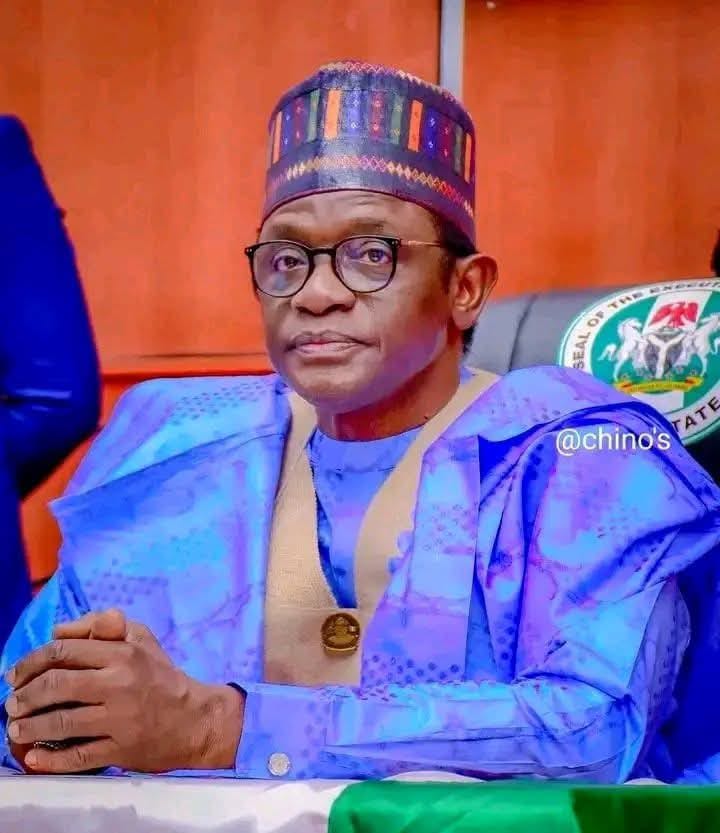
As part of his initiatives to boost commerce in the state, Governor Mai Mala Buni has committed to improving revenue generation and creating jobs for the teeming population. The Yobe State government has approved the construction of four modern markets in four local government areas of the state.
This is part of Governor Mai Mala Buni’s commitment to boosting commerce, generating revenue, and creating jobs for the teeming people of the state.
The construction of projects will also strengthen the local economy, as well as improve the livelihoods of the people of Yobe.
In addition, the construction of these four additional modern markets will provide significant benefits. The administration of Governor Mai Mala Buni, CON, COMN, has constructed 14 ultra-modern and modern markets across the state since he assumed office in 2019.
The four towns that were going to benefit from the new modern markets are Sabon Garin Nangere, the headquarters of Nangere Local Government; Bumsa in the Gulani Local Government Area.
Other towns include GirGir in the Jakusko local government area and Ngelzarma in the Fune local government area.
Yobe approves the construction of four new modern markets in four local government areas
Unijos alumni condenms killing of student
By : Our Reporter
The University of Jos Alumni Association has condemned the killing of a student allegedly by fellow students, describing the act as “senseless and reprehensible.”
In an official statement signed by its Global President, Gad Peter, and released on Monday, the association said it received the news “with profound shock and deep sadness.”
“We condemn this senseless and reprehensible act in the strongest possible terms,” the statement read. “Violence has no place within our University community and stands in direct contradiction to the values of excellence, character, mutual respect, and humanity upon which the University of Jos was founded.
The Alumni body stated unequivocally that it does not condone violence in any form. “No grievance, disagreement, or circumstance can ever justify the taking of a human life,” it said.
The association called on relevant authorities to carry out a “thorough, transparent, and impartial investigation” into the incident and to ensure that anyone found culpable is prosecuted according to the law.
“Accountability is essential not only to honour the memory of the deceased but also to preserve the safety and integrity of our university community,” the statement added.
Addressing members as “Great Josites,” the Alumni President said the association stands united in rejecting violence and in promoting “a culture of peace, responsibility, and respect for the sanctity of human life.”
“Our thoughts and heartfelt condolences are with the family, friends, colleagues, and the entire University community,” Peter said.
“May the soul of the deceased rest in peace, and may justice prevail.”
Security agencies on the Plateau had confirmed the arrest of three suspects in connection with the incident as at the time of writing this report.
Unijos alumni condenms killing of student

Foreign Aid Regulation Bill: Safeguard or Shackles for Civil Society?

Yobe approves the construction of four new modern markets in four local government areas

Unijos alumni condenms killing of student

Roger Federer’s Shock as DNA Results Reveal Myla and Charlene Are Not His Biological Children

THE PLIGHT OF FARIDA

FAILED COUP IN BURKINA FASO: HOW TRAORÉ NARROWLY ESCAPED ASSASSINATION PLOT AMID FOREIGN INTERFERENCE CLAIMS
-
 News2 years ago
Roger Federer’s Shock as DNA Results Reveal Myla and Charlene Are Not His Biological Children
-
Opinions4 years ago
THE PLIGHT OF FARIDA
-
 News1 year ago
FAILED COUP IN BURKINA FASO: HOW TRAORÉ NARROWLY ESCAPED ASSASSINATION PLOT AMID FOREIGN INTERFERENCE CLAIMS
-

 News2 years ago
EYN: Rev. Billi, Distortion of History, and The Living Tamarind Tree
-
 Opinions5 years ago
POLICE CHARGE ROOMS, A MINTING PRESS
-

 ACADEMICS2 years ago
A History of Biu” (2015) and The Lingering Bura-Pabir Question (1)
-

 Columns2 years ago
Army University Biu: There is certain interest, but certainly not from Borno.
-

 Politics1 year ago
2027: Why Hon. Midala Balami Must Go, as Youths in Hawul and Asikira/Uba Federal Constituency Reject ₦500,000 as Sallah Gift
