
News
Ramadan: Borno Distributes Palliatives to 300,000 Households

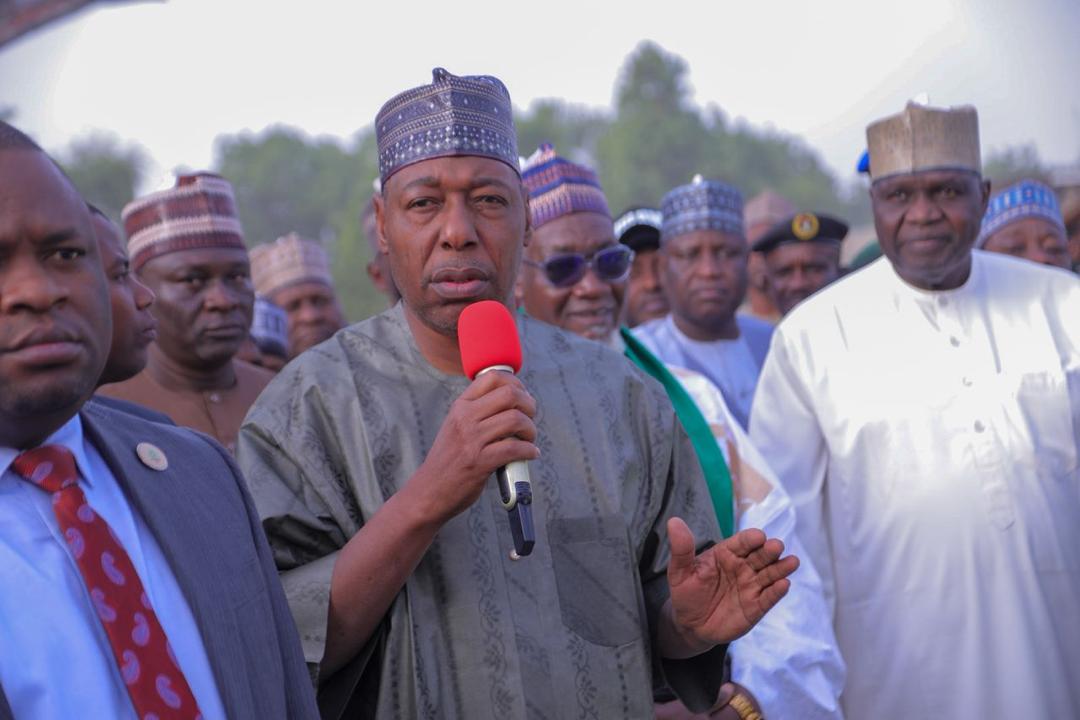
Ramadan: Borno Distributes Palliatives to 300,000 Households
By: Michael Mike
Borno State Governor, Prof. Babagana Zulum has launched the distribution of Ramadan relief materials to 300,000 vulnerable households across the state’s 27 local government areas, in one of the largest social support interventions this year.
The flag-off ceremony, held at Ramat Square in Maiduguri on Tuesday, marks the beginning of a statewide exercise aimed at easing the economic hardship faced by residents during the holy month of Ramadan.
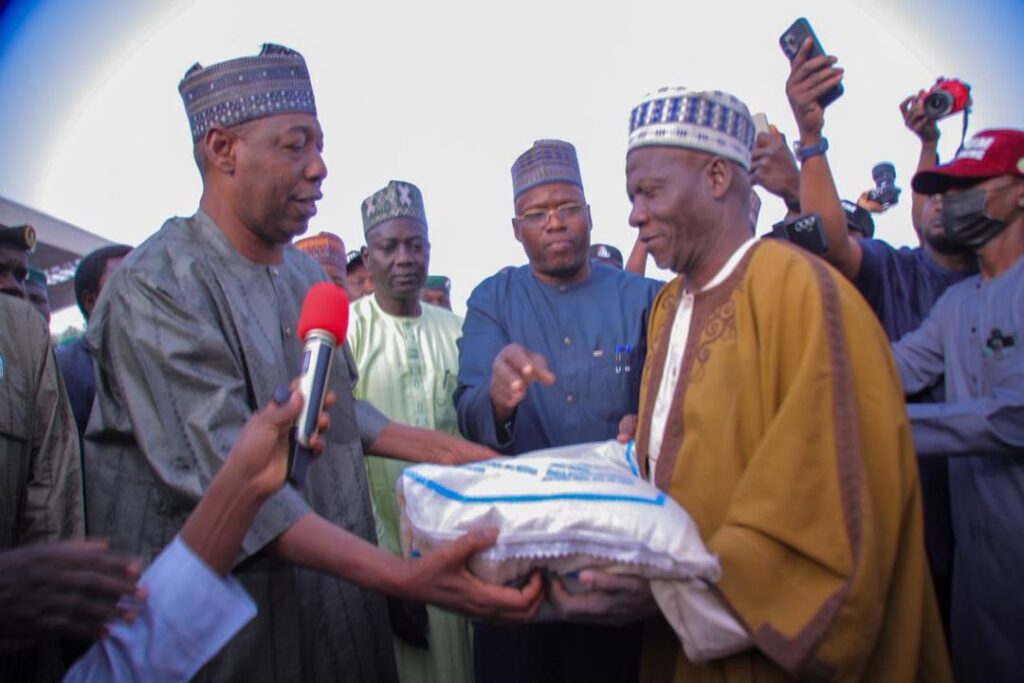
Under the scheme, each beneficiary household will receive a bag of rice, a bag of millet and 10 kilogrammes of sugar.
Addressing members of the distribution committee and government officials at the event, Zulum issued a stern warning against diversion of the relief materials, insisting that the exercise must be conducted with strict accountability.
He said: “These items are not for sale. They are not meant for your friends or family members who do not need them.”
He stressed that the palliatives are intended for widows, orphans, internally displaced persons, struggling farmers and low-income earners grappling with rising living costs. Any official found compromising the process, he warned, would face legal consequences.
Zulum emphasised that fairness and transparency must guide the operation to ensure that the most vulnerable residents benefit from the intervention.
In a move reflecting religious inclusivity, the governor directed that Christian residents observing Lent — which coincides with Ramadan this year — should also benefit from the distribution.
He noted that his administration has consistently supported Christian communities, particularly during major religious celebrations. Beyond annual Christmas food distributions, the state government also provides free transportation for non-indigenous Christians travelling to celebrate the festive season with their families outside Borno.
Meanwhile, the senator representing Borno Central, Kaka Shehu Lawan, and the Secretary to the State Government, Bukar Tijani, praised the governor’s intervention, describing it as timely and critical in light of ongoing economic pressures.
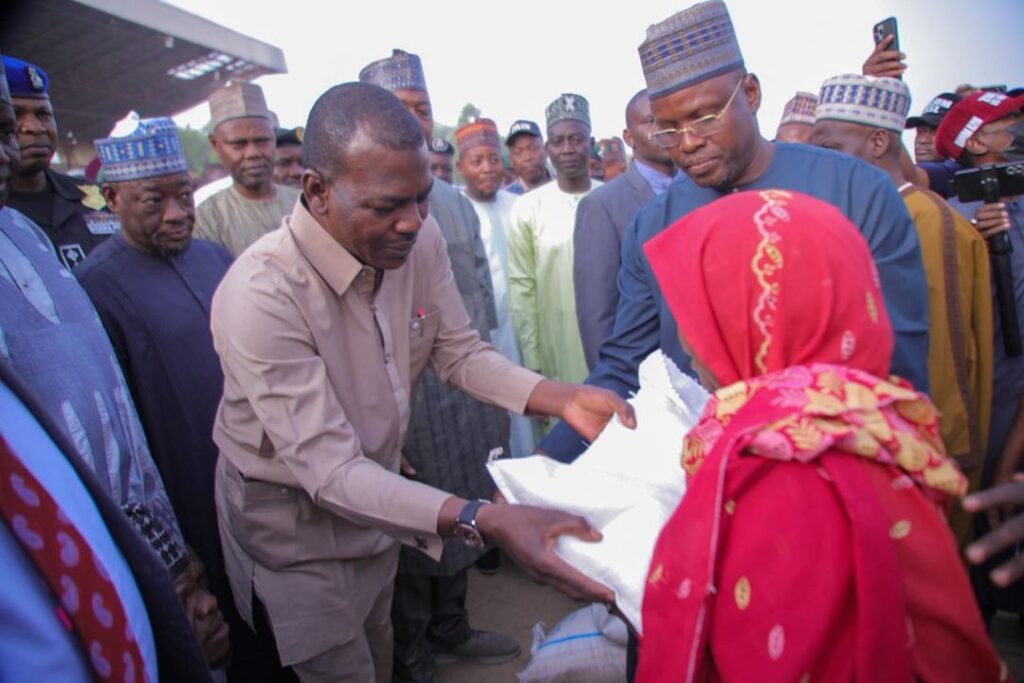
Director-General of the State Emergency Management Agency (SEMA), Ali Abdullahi Isa, assured residents that the agency has put mechanisms in place to ensure a smooth and orderly distribution process across all local government areas.
The event drew a large turnout of senior government officials, including members of the House of Representatives, the Speaker and principal officers of the Borno State House of Assembly, and other key stakeholders.
With the rollout now underway, the Borno State Government says the exercise is part of broader efforts to strengthen social safety nets and support communities still recovering from years of insurgency and economic disruption.
Ramadan: Borno Distributes Palliatives to 300,000 Households



Troops Rescue Kidnap Victim Abandoned by Fleeing Abductors in Plateau
By Zagazola Makama
Troops of Sector 3, Operation Enduring Peace (OPEP), have rescued a 47-year-old woman, Mrs Pollina Alfred, who was kidnapped from her residence in Dong Village, Jos North Local Government Area of Plateau State.
The rescue operation was conducted on August 11, 2026, following the abduction of the victim from her residence in the community.
A military source told Zagazola Makama that troops launched a search operation at about 7:00 a.m. and tracked the kidnappers to the Rafin Bauna general area in Bassa Local Government Area of the state.
The troops subsequently came under pressure as they intensified their search, forcing the kidnappers to abandon the victim and flee into the surrounding area.
Mrs Alfred was found and rescued by the troops without further harm.
Following the rescue, the victim was debriefed by the security personnel before being reunited with her family.
Troops Rescue Kidnap Victim Abandoned by Fleeing Abductors in Plateau
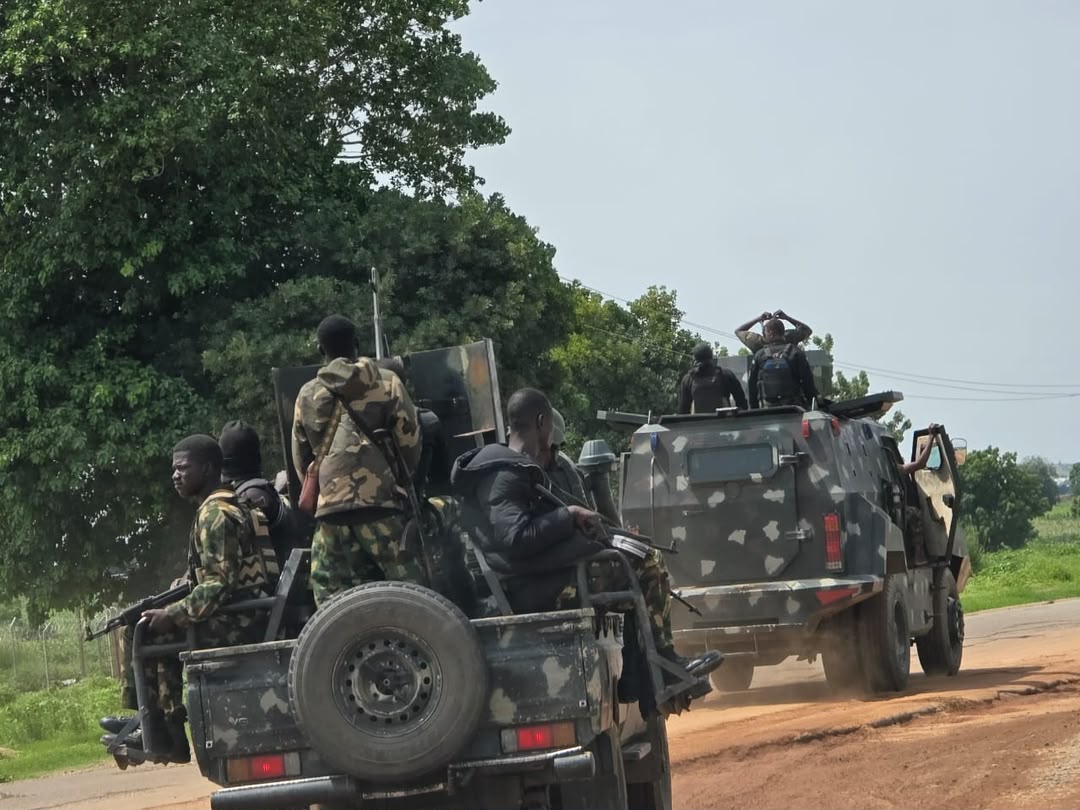
Troops Foil Armed Berom Militias Moving To Attack Fulani Communities in Mangu, Plateau
By Zagazola Makama
Troops of Operation Enduring Peace (OPEP) have engaged armed Berom militias following reports of their movement from Barkin Ladi Local Government Area to carry out attacks in some fulani communities in Mangu Local Government Area of Plateau State.
A military source told Zagazola Makama that troops of Sub-Sector 81, reinforced by additional personnel from Headquarters Sector 8, mobilised to the general area at about 7:00 a.m. on August 11, 2026, following an advance report on the movement of the armed group.
The militias were reportedly moving towards Gwomgada, Dorong and Kaduno communities in Langai District of Mangu LGA.
The troops subsequently made contact with the armed group at Makera and Kaduno communities, leading to a firefight.
The engagement forced the militias to withdraw towards the general area of Jos East Local Government Area.
The troops are currently pursuing the fleeing group to deny them freedom of action and prevent further attacks on communities.
In a reinforcement effort, a detachment of the Special Forces has also been dispatched from Headquarters, Operation Enduring Peace, to support the troops operating in the area.
Further details on the operation are expected as the military continues its efforts to contain the threat and secure affected communities.
Troops Foil Armed Berom Militias Moving To Attack Fulani Communities in Mangu, Plateau
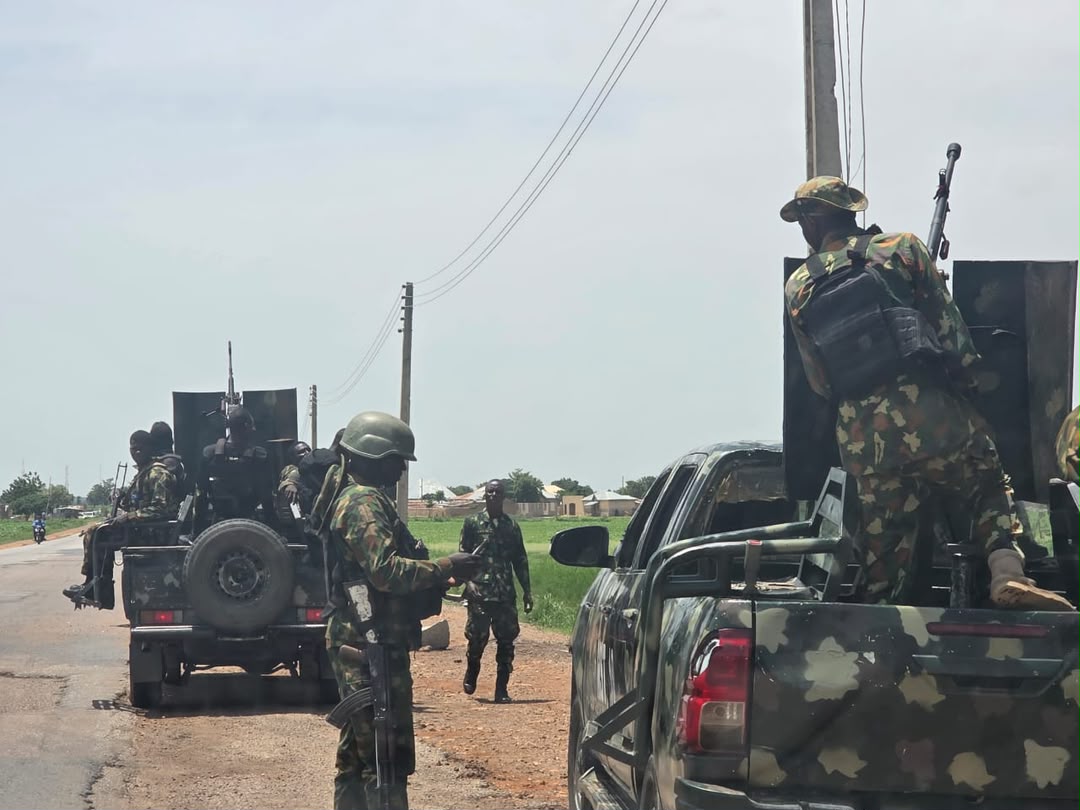
Troops Repel Fulani Bandits Attack, Secure Farmlands in Mangu, Plateau
By Zagazola Makama
Troops of Sector 8, Operation Enduring Peace (OPEP), have repelled an attack by suspected armed Fulani bandits during a response to reports of farmland destruction at Manja Forest in Mangu Local Government Area of Plateau State.
A military source told Zagazola Makama that the incident occurred at about 12:45 p.m. on August 11, 2026, following reports that armed herders suspected to be Fulani militias were destroying farmlands in the area.
The troops swiftly mobilised to the location and made contact with the armed group.
A firefight ensued, during which the troops employed superior firepower and forced the militias to withdraw in disarray.
The source said the troops expended 10 rounds of 7.62mm x 54mm ammunition and 19 rounds of 12.7mm x 108mm ammunition during the engagement.
Following the encounter, the troops maintained dominance of the area to prevent the attackers from regrouping or launching further attacks against farmers and other residents.
The troops also engaged community leaders and members of the Vigilante Group of Nigeria (VGN), urging them to sustain neighbourhood watch activities and promptly report suspicious movements to security agencies.
The operation is part of ongoing efforts by Operation Enduring Peace to protect farming communities, prevent attacks and maintain security across vulnerable areas of Plateau State.
Troops Repel Fulani Bandits Attack, Secure Farmlands in Mangu, Plateau

Troops Rescue Kidnap Victim Abandoned by Fleeing Abductors in Plateau

Troops Restore Normalcy After Drivers Block Highway, Vandalise Government Property in Plateau

Farmer arrested after killing Fulani Harder during altercation in Kaduna

Roger Federer’s Shock as DNA Results Reveal Myla and Charlene Are Not His Biological Children

THE PLIGHT OF FARIDA

FAILED COUP IN BURKINA FASO: HOW TRAORÉ NARROWLY ESCAPED ASSASSINATION PLOT AMID FOREIGN INTERFERENCE CLAIMS
-
 News2 years ago
Roger Federer’s Shock as DNA Results Reveal Myla and Charlene Are Not His Biological Children
-
Opinions4 years ago
THE PLIGHT OF FARIDA
-
 News1 year ago
FAILED COUP IN BURKINA FASO: HOW TRAORÉ NARROWLY ESCAPED ASSASSINATION PLOT AMID FOREIGN INTERFERENCE CLAIMS
-

 News2 years ago
EYN: Rev. Billi, Distortion of History, and The Living Tamarind Tree
-
 Opinions5 years ago
POLICE CHARGE ROOMS, A MINTING PRESS
-

 ACADEMICS2 years ago
A History of Biu” (2015) and The Lingering Bura-Pabir Question (1)
-

 Columns2 years ago
Army University Biu: There is certain interest, but certainly not from Borno.
-

 Politics1 year ago
2027: Why Hon. Midala Balami Must Go, as Youths in Hawul and Asikira/Uba Federal Constituency Reject ₦500,000 as Sallah Gift
