
News
Nigeria Poises for AI Leadership as Education Stakeholders Push Data-Driven Reform

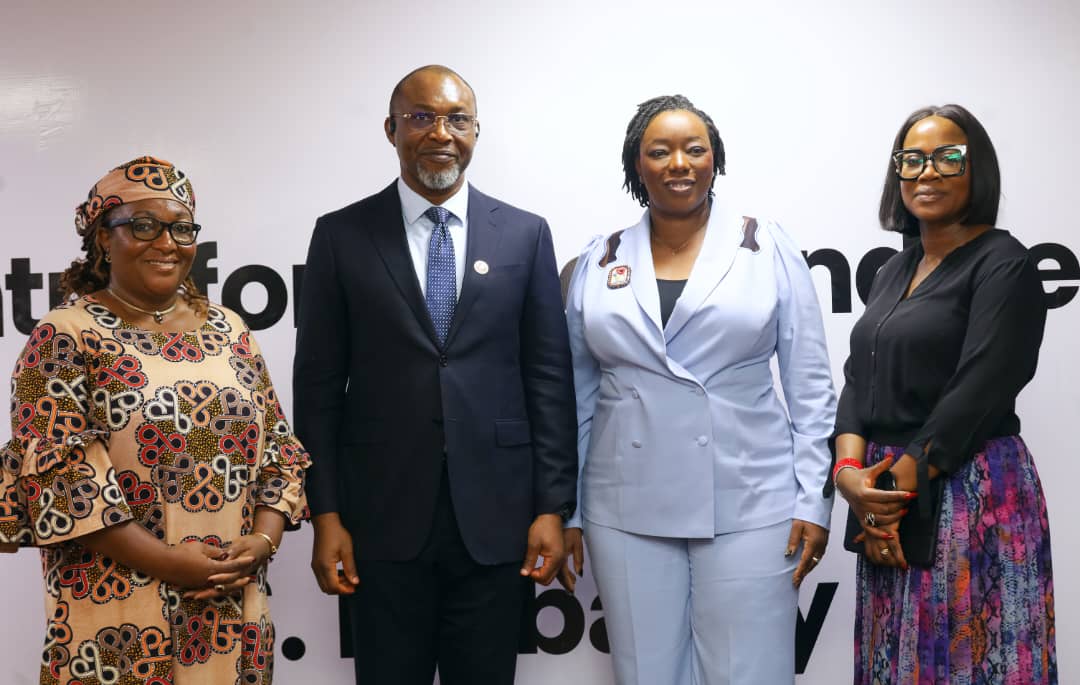
Nigeria Poises for AI Leadership as Education Stakeholders Push Data-Driven Reform
By: Michael Mike
Nigeria can emerge as a continental leader in artificial intelligence if it fixes the fundamentals of data governance and institutional readiness, experts declared at a major policy workshop in Abuja focused on transforming school administration through technology.
The high-level session, themed “Data and AI for School Administration: From Records to Results in Nigeria’s Education System,” was convened by the Athena Centre for Policy and Leadership in collaboration with the U.S. Embassy in Nigeria. Hosted at the NOI Polls Building, the event drew more than 200 participants physically and virtually, including policymakers, school leaders, examination officials and education administrators from across the country.
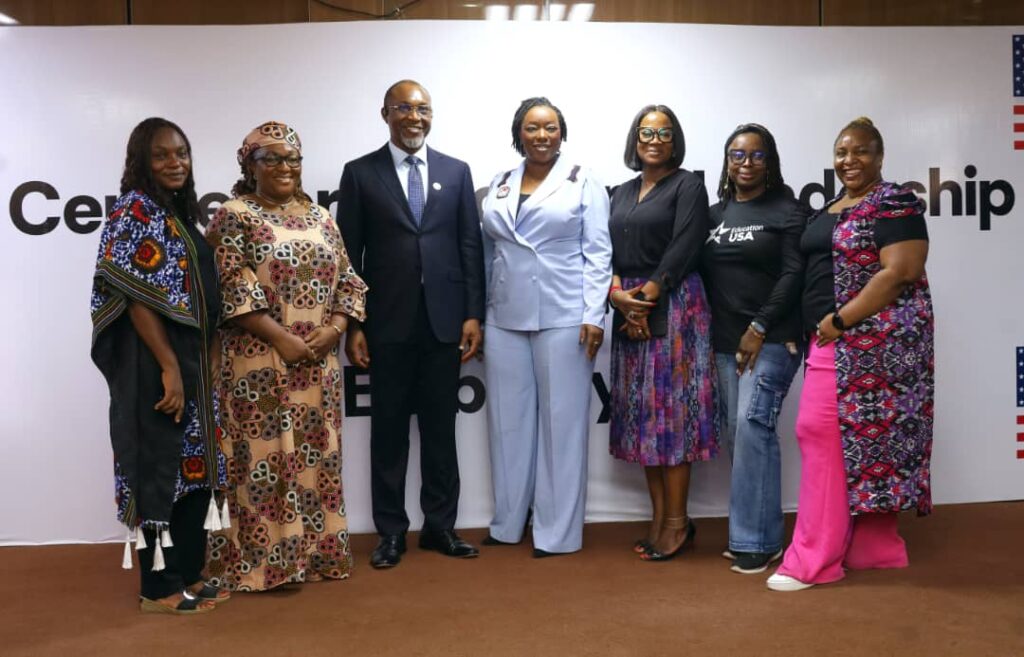
Discussions centred on how structured data systems and emerging artificial intelligence tools can improve transparency, strengthen school governance and deliver measurable learning outcomes.
Delivering the keynote address, AI strategist and Founder of Fimio, Dr. Omoju Miller, said Nigeria’s demographic advantage and global diaspora network position it uniquely in the global AI economy. However, she cautioned that adoption without domestic capacity-building would leave the country dependent rather than competitive.
“AI is inevitable,” she said, noting that the real strategic decision for Nigeria lies in whether it will simply use AI tools developed elsewhere or cultivate the expertise to design and govern its own systems responsibly.
Participants agreed that while enthusiasm for AI is growing, the deeper challenge lies in fixing persistent weaknesses in data management. Dr. Agodi Alagbe, Founder of the Centre for Teaching and Learning Academy, argued that Nigeria’s education system suffers more from fragmented and unreliable datasets than from technological deficits.
“Nigeria’s education challenge is not AI; it is data,” she said. “Reform must begin with accurate, validated and structured data that can inform policy decisions.”
She pointed to inconsistencies in enrolment records, teacher deployment statistics, infrastructure audits and learning performance metrics as obstacles that undermine effective planning and accountability.
Offering a state-level reform example, Ogun State Commissioner for Education, Science and Technology, Professor Abayomi Arigbabu, joined virtually to present his state’s transition from paper-based administration to integrated digital platforms. He outlined the deployment of Education Management Information Systems (EMIS), Student Management Systems (SMS) and Learning Management Systems (LMS) as part of broader institutional reforms.
According to him, digital transformation is achievable even in resource-constrained environments when guided by clear policy direction and disciplined implementation.
Moderating the session, Chidima Chidoka, Director of the Athena Centre, stressed that artificial intelligence amplifies existing systems — whether strong or weak. She noted that without credible data architecture and institutional safeguards, AI adoption could compound inefficiencies rather than solve them.
At the conclusion of the workshop, participants who completed assessment modules were awarded certificates, while participating institutions are expected to receive customised AI Preparedness and Data Governance Assessment Reports. The reports will identify operational gaps and recommend structured pathways for responsible AI integration.
Organisers described the workshop as part of a broader push to embed evidence-based governance in Nigeria’s education sector. Participants unanimously agreed that strengthening the country’s education data infrastructure is the indispensable first step toward building a modern, accountable and AI-ready school system.
As conversations around artificial intelligence accelerate globally, stakeholders at the Abuja gathering made one point clear: Nigeria’s opportunity will depend not on how quickly it adopts AI, but on how effectively it builds the systems to sustain it.
Nigeria Poises for AI Leadership as Education Stakeholders Push Data-Driven Reform


Military
COAS commissions 6 Division RSM House, reaffirms frontline leadership role of regimental sergeant majors
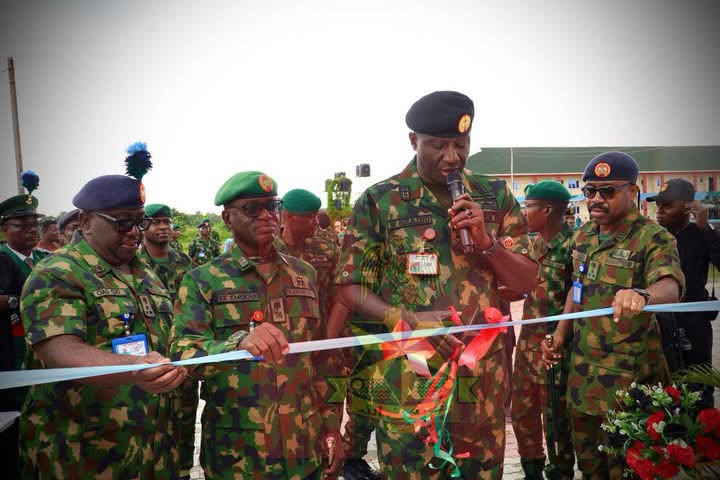
COAS commissions 6 Division RSM House, reaffirms frontline leadership role of regimental sergeant majors
By Zagazola Makama
The Chief of Army Staff (COAS), Lieutenant General Waidi Shaibu, has reaffirmed the critical role of Regimental Sergeant Majors (RSMs) in strengthening discipline, leadership and operational effectiveness across the Nigerian Army.
The COAS made the remarks on Friday during the commissioning of the newly constructed 6 Division Regimental Sergeant Major’s House in Port Harcourt as part of activities marking the 163rd Nigerian Army Day Celebration (NADCEL 2026).
Speaking at the event, Lt.-Gen. Shaibu described RSMs as the backbone of regimental administration and custodians of discipline, standards and morale within the Army.

He said the provision of dedicated accommodation for RSMs was not merely a welfare initiative but a strategic investment aimed at enhancing leadership at the unit level and improving operational efficiency.
According to the Army Chief, RSMs play a vital role in translating command directives into action, maintaining troop cohesion and ensuring effective implementation of operational orders across various theatres of operation.
He added that the senior non-commissioned officers also serve as the crucial link between officers and soldiers, fostering professionalism, mutual trust and esprit de corps within formations and units.

Shaibu noted that the influence of RSMs in mentoring soldiers, enforcing discipline and sustaining troop morale remains indispensable to the success of military operations.
He stressed that providing conducive accommodation for key regimental leaders would enhance their ability to discharge their responsibilities effectively and contribute to improved operational readiness.
The COAS reiterated that under his “Soldier First” philosophy, the welfare of personnel, particularly those occupying critical leadership positions, remains a top priority.
He maintained that sustained investment in welfare infrastructure and leadership development would continue to strengthen the Nigerian Army’s capacity to remain a resilient, professional and combat-ready force capable of addressing the country’s evolving security challenges.
COAS commissions 6 Division RSM House, reaffirms frontline leadership role of regimental sergeant majors
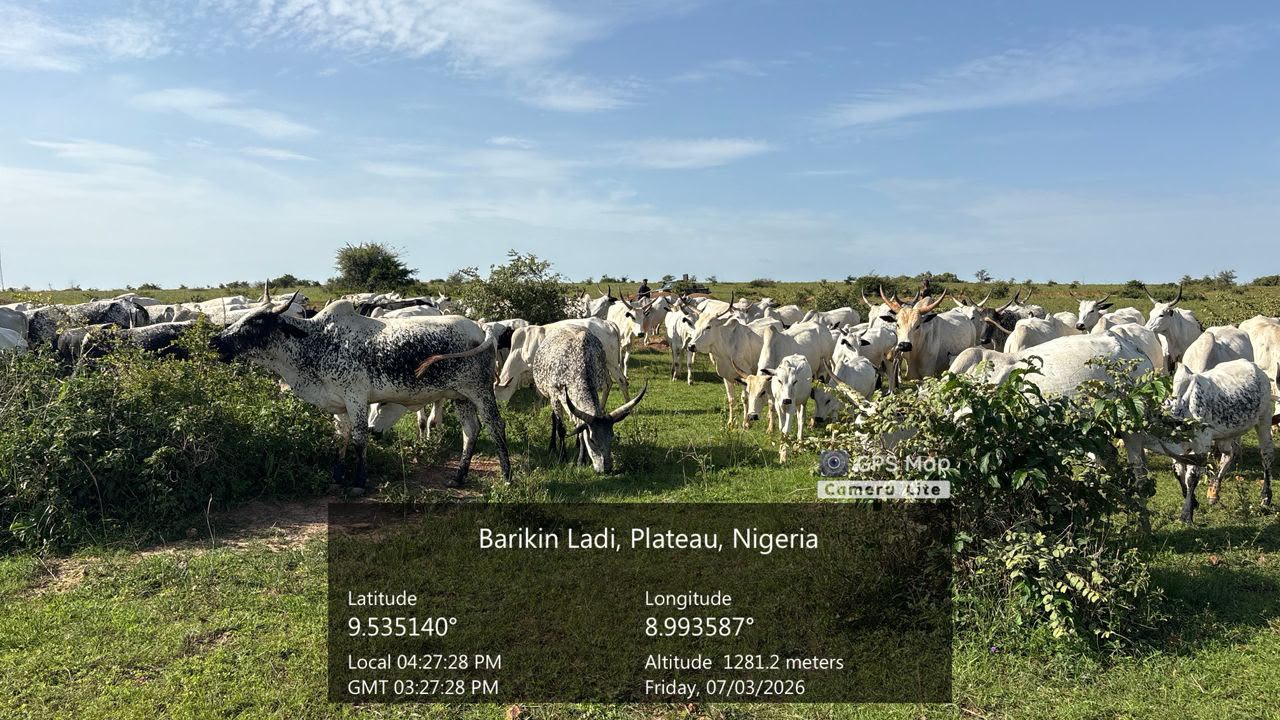
Troops intercept cattle grazing in restricted area in Plateau, herders flee
By: Zagazola Makama
Troops of Operation Enduring Peace (OPEP) have intercepted a herd of cattle found grazing in a restricted area in Barkin Ladi Local Government Area of Plateau State.
Intelligence sources told Zagazola Makama that the troops of Sector 4 OPEP responded to a report of illegal grazing at about 3:30 p.m. on Friday in Nyerwie village.
The sources said that upon arrival at the location, the troops found a herd of cattle grazing in the restricted area.
The herders reportedly fled into nearby bushes on sighting the troops, abandoning the livestock.
The intercepted cattle were subsequently moved to a secure location for necessary administrative action, while efforts are ongoing to identify and apprehend the fleeing herders, the sources said.
Troops intercept cattle grazing in restricted area in Plateau, herders flee
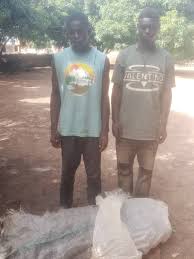
Troops Arrest Two Suspected Vandals, Recover Stolen Construction Materials in Jos
By: Zagazola Makama
Troops of Operation Enduring Peace (OPEP) have arrested two suspected vandals in Jos North Local Government Area of Plateau State for allegedly stealing construction materials from an ongoing road construction site.
Security sources said the suspects, identified as Arin Itse, 21, and Agwom Christopher, 19, were arrested at about 9:30 a.m. on Friday during a routine patrol by troops of Sector 1, Sub-Sector 12, along the Kwanga road in Jos North.
The sources said the suspects were intercepted while in possession of iron rods suspected to have been stolen from a road construction company handling an ongoing project in the area.
According to the sources, the suspects were taken into custody for further investigation, while the recovered iron rods were handed over to the construction company.
The sources added that investigations were ongoing to determine the circumstances surrounding the alleged theft and whether other persons were involved.
Troops Arrest Two Suspected Vandals, Recover Stolen Construction Materials in Jos

COAS commissions 6 Division RSM House, reaffirms frontline leadership role of regimental sergeant majors

Troops intercept cattle grazing in restricted area in Plateau, herders flee

Troops Arrest Two Suspected Vandals, Recover Stolen Construction Materials in Jos

Roger Federer’s Shock as DNA Results Reveal Myla and Charlene Are Not His Biological Children

THE PLIGHT OF FARIDA

FAILED COUP IN BURKINA FASO: HOW TRAORÉ NARROWLY ESCAPED ASSASSINATION PLOT AMID FOREIGN INTERFERENCE CLAIMS
-
 News2 years ago
Roger Federer’s Shock as DNA Results Reveal Myla and Charlene Are Not His Biological Children
-
Opinions4 years ago
THE PLIGHT OF FARIDA
-
 News1 year ago
FAILED COUP IN BURKINA FASO: HOW TRAORÉ NARROWLY ESCAPED ASSASSINATION PLOT AMID FOREIGN INTERFERENCE CLAIMS
-

 News2 years ago
EYN: Rev. Billi, Distortion of History, and The Living Tamarind Tree
-
 Opinions5 years ago
POLICE CHARGE ROOMS, A MINTING PRESS
-

 ACADEMICS2 years ago
A History of Biu” (2015) and The Lingering Bura-Pabir Question (1)
-

 Columns2 years ago
Army University Biu: There is certain interest, but certainly not from Borno.
-

 Politics1 year ago
2027: Why Hon. Midala Balami Must Go, as Youths in Hawul and Asikira/Uba Federal Constituency Reject ₦500,000 as Sallah Gift
