
News
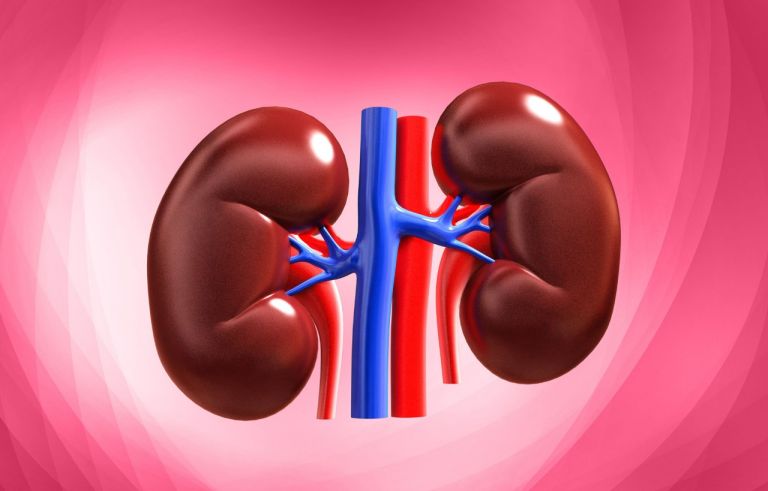
Kidney health: Avoid excessive use of painkillers, expert urges Nigerians

Kidney health: Avoid excessive use of painkillers, expert urges Nigerians
By Hajara Usman
Mr Inuwa Mshelia, Chairman, National Association of Nephrology Nurses, Federal Teaching Hospital (FTH) Gombe Chapter, has urged Nigerians to avoid excessive consumption or use of painkillers as a way of improving their kidney health.
Mshelia who made the call during the commemoration of World Kidney Day on Thursday in Gombe said it was important for Nigerians to adopt preventive measures against kidney diseases.
He said that the World Kidney Day is observed every second Thursday of March to raise awareness about kidney health and the prevention of kidney-related diseases.
The expert said the sensitisation campaign was aimed to educate communities on the importance of early detection and proper management of kidney disease.
Mshelia said treatment for advanced kidney disease was capital-intensive, and many patients only seek medical help when the condition has already progressed to a severe stage.
“I urged members of the public to avoid excessive use of painkillers and to remain well hydrated by drinking adequate water; such lifestyle habits can help protect the kidneys.”
He added that individuals living with hypertension and diabetes are at higher risk and should regularly monitor their health.
Mshelia explained that kidney dialysis is very expensive, especially for patients who reached stage five of kidney failure, and many cannot afford the recommended dialysis sessions, which may be required up to three times a week.
He encouraged people to embrace preventive healthcare rather than waiting until the disease becomes severe.
The Nephrologist commended Usman Bello, the member representing Akko Federal Constituency, for sponsoring dialysis treatment for all patients throughout 2025.
He, however, appealed to wealthy individuals and philanthropists to support kidney patients who struggle to afford the cost of treatment.
Also speaking, Dr Alaya Rasheed, Senior Registrar in the Nephrology Department at FTH, said that over the past five years in Gombe, that kidney disease awareness campaigns are beginning to have a positive impact.
According to him, more patients are now seeking medical help earlier than before, which has improved their chances of managing the condition effectively.
Rasheed said that with proper treatment, health education and lifestyle changes, about 60 to 70 per cent of patients could slow the progression of kidney disease and may not quickly reach the stage where dialysis would be required.
“Many patients diagnosed early can remain stable for several years with proper medical care.
“However, kidney disease remains a growing concern in Nigeria.
“Current estimates indicate that between 10 and 19 per cent of Nigerians may have some form of kidney disease, meaning millions of people could be affected across the country,” Rasheed explained.
He stressed that kidney disease occurs in different stages and not all patients require dialysis or a kidney transplant, as many cases could be managed medically.
Rasheed highlighted the importance of early detection, prevention and improved access to healthcare services.
Some patients who spoke to our Correspondent in separate interviews said that paying about N75,000 for first session and subsequently N50,000 for dialysis has not been easy, more so when they required at least two to three sessions per week.
They called on well-meaning individuals to emulate Alhaji Usman Bello, who sponsored dialysis sessions throughout 2025.
Kidney health: Avoid excessive use of painkillers, expert urges Nigerians


U.S., Nigerian Forces Eliminate ISIS Second-in-Command in Joint Operation
By: Zagazola Makama
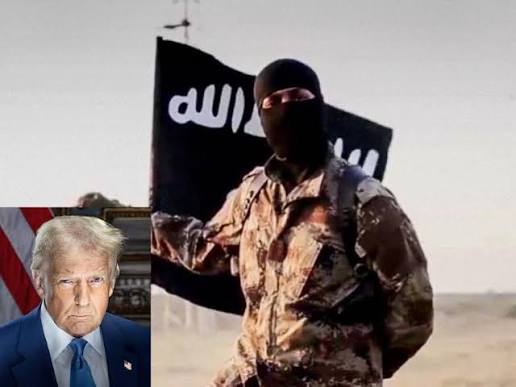
The United States has announced the elimination of Abu-Bilal al-Minuki, described as the second-in-command of the global Islamic State terrorist network, during a joint counterterrorism operation conducted with Nigerian security forces.
In a statement issued on Friday, Donald Trump said American forces, working alongside the Nigerian Armed Forces, carried out what he described as a “meticulously planned and very complex mission” targeting the terrorist leader.
According to Trump, Abu-Bilal al-Minuki had been operating from Africa and was considered one of the most active terrorist figures globally.
“Tonight, at my direction, brave American forces and the Armed Forces of Nigeria flawlessly executed a meticulously planned and very complex mission to eliminate the most active terrorist in the world from the battlefield,” Trump said.
He stated that the operation was enabled through intelligence sources that tracked the activities and movements of the ISIS commander.
Trump added that the removal of al-Minuki would significantly weaken the global operations of the terrorist group and reduce its capability to coordinate attacks, including plots targeting American interests.
He also thanked the Nigerian government for its cooperation and partnership in the operation.
“With his removal, ISIS’s global operation is greatly diminished. Thank you to the Government of Nigeria for your partnership on this operation,” he said.
Neither the U.S. nor Nigerian authorities immediately disclosed the exact location or operational details surrounding the mission.
The development marks one of the most significant counterterrorism operations involving U.S. and Nigerian forces in recent years against transnational terrorist elements linked to the Islamic State network.
U.S., Nigerian Forces Eliminate ISIS Second-in-Command in Joint Operation
News
Cuba Blames U.S. Sanctions for Deepening Energy Crisis, Responds Cautiously to Reported $100m Aid Offer
Cuba Blames U.S. Sanctions for Deepening Energy Crisis, Responds Cautiously to Reported $100m Aid Offer
By: Michael Mike
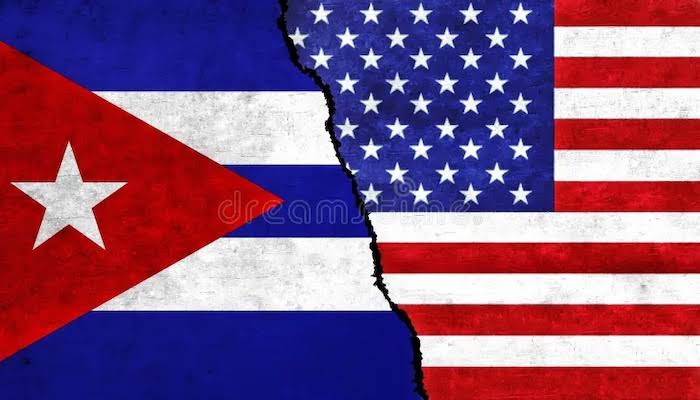
The government of Cuba has intensified accusations against the United States over the island’s worsening electricity and economic crisis, while cautiously welcoming reports of a proposed $100 million American aid package amid growing humanitarian concerns.
In separate statements issued this week, Cuban President Miguel Díaz-Canel and government officials argued that the country’s severe power shortages, fuel scarcity, and economic hardship are direct consequences of decades-long U.S. sanctions and what Havana described as an increasingly aggressive “energy blockade.”
The latest developments come as Cuba experiences one of its most difficult periods in recent years, marked by prolonged blackouts, shortages of food and medicine, rising inflation, and mounting public frustration.
Díaz-Canel said the situation affecting Cuba’s National Power System had become “especially tense,” with authorities forecasting a deficit of more than 2,000 megawatts during peak evening demand.
According to the Cuban leader, fuel shortages alone were responsible for preventing the generation of at least 1,100 megawatts of electricity, significantly worsening blackouts across the country.
He accused Washington of deliberately obstructing fuel supplies to Cuba by threatening sanctions and punitive measures against countries and companies willing to trade with Havana.
“This dramatic worsening has a single cause: the genocidal energy blockade that the U.S. has imposed on our country,” Díaz-Canel declared.
The Cuban president argued that recent improvements in electricity supply during April demonstrated the direct relationship between fuel imports and power generation capacity.
He noted that the arrival of a single fuel tanker — out of the eight Cuba reportedly requires monthly — temporarily reduced electricity deficits and mitigated blackouts, though outages did not disappear entirely.
Díaz-Canel further accused sections of the U.S. media and political establishment of attempting to portray Cuba’s economic crisis as solely the result of government mismanagement while ignoring the impact of sanctions and economic restrictions.
According to him, neither the decades-old U.S. embargo nor the additional sanctions imposed during the administration of former President Donald Trump had succeeded in overthrowing the Cuban Revolution.
He alleged that more recent executive measures targeting fuel supplies, foreign trade, and investment in Cuba were specifically designed to increase suffering among ordinary citizens and provoke unrest against the government.
Despite the criticism, Havana has also reacted cautiously to reports that the United States Department of State had formally proposed an aid package valued at $100 million for Cuba.
In a separate government statement, Cuban authorities said it remained unclear whether the proposed assistance would come in the form of direct financial support or material aid such as fuel, food, or medicine.
The Cuban government said it was prepared to consider foreign aid offered in good faith and expressed openness to working with the Catholic Church in implementing humanitarian support efforts.
“We are willing to hear the details of the offer and how it would be implemented,” the statement said, while warning against any attempt to use humanitarian assistance for political leverage.
Havana maintained that the most meaningful support Washington could provide would be the easing of economic, commercial, financial, and energy restrictions imposed on the island.
Cuban officials argued that sanctions had intensified “as never before” in recent months, severely affecting nearly every sector of the economy and worsening living conditions for millions of citizens.
The latest exchange reflects the complicated and often confrontational relationship between Havana and Washington, which has remained strained for more than six decades despite intermittent attempts at diplomatic rapprochement.
While Cuba insists that U.S. sanctions are the central driver of its current crisis, critics of the Cuban government continue to point to structural inefficiencies, state control of the economy, and policy failures as major contributors to the country’s prolonged economic difficulties.
Nevertheless, the apparent willingness of both sides to discuss humanitarian assistance suggests a potentially significant, though cautious, opening for limited engagement amid escalating hardship on the island.
Cuba Blames U.S. Sanctions for Deepening Energy Crisis, Responds Cautiously to Reported $100m Aid Offer
Troops Arrest Suspected Gunrunner in Taraba State
By: Zagazola Makama
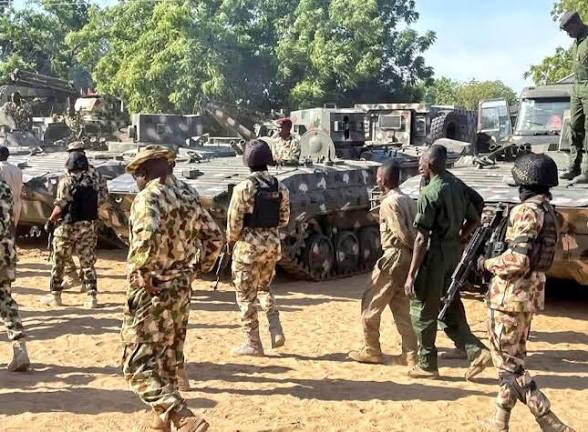
Troops of Operation Whirl Stroke (OPWS), in collaboration with Defence Intelligence Agency operatives and local vigilantes, have arrested a suspected gunrunner in Ardo-Kola Local Government Area of Taraba State.
Security sources said the arrest was made at about 7:45 a.m. on May 13 during an intelligence-led operation at Iware community in the area.
The suspect was reportedly apprehended following credible intelligence linking him to arms trafficking activities within the Amaseyo general area.
Preliminary interrogation revealed that the suspect was allegedly involved in illegal arms dealing, prompting his immediate arrest by the joint security team.
The suspect is currently in custody and undergoing further investigation, while security agencies say efforts are ongoing to dismantle arms trafficking networks operating within the state and surrounding areas.
Troops Arrest Suspected Gunrunner in Taraba State

APC 2027: Will consensus enforce anti-party as a result of collapses in internal democracy?

U.S., Nigerian Forces Eliminate ISIS Second-in-Command in Joint Operation

Political Party System: Why Are We Members; If Few Will Decide Our Fate Through Consensus?

Roger Federer’s Shock as DNA Results Reveal Myla and Charlene Are Not His Biological Children

THE PLIGHT OF FARIDA

FAILED COUP IN BURKINA FASO: HOW TRAORÉ NARROWLY ESCAPED ASSASSINATION PLOT AMID FOREIGN INTERFERENCE CLAIMS
-
 News2 years ago
Roger Federer’s Shock as DNA Results Reveal Myla and Charlene Are Not His Biological Children
-
Opinions4 years ago
THE PLIGHT OF FARIDA
-
 News1 year ago
FAILED COUP IN BURKINA FASO: HOW TRAORÉ NARROWLY ESCAPED ASSASSINATION PLOT AMID FOREIGN INTERFERENCE CLAIMS
-

 News2 years ago
EYN: Rev. Billi, Distortion of History, and The Living Tamarind Tree
-
 Opinions4 years ago
POLICE CHARGE ROOMS, A MINTING PRESS
-

 ACADEMICS2 years ago
A History of Biu” (2015) and The Lingering Bura-Pabir Question (1)
-

 Columns2 years ago
Army University Biu: There is certain interest, but certainly not from Borno.
-

 Opinions2 years ago
Tinubu,Shettima: The epidemic of economic, insecurity in Nigeria
