
Northeast
Maiduguri Bomb Blast: Senator Kyari acknowledges Tinubu, Shettima, and Zulum for support to victims.

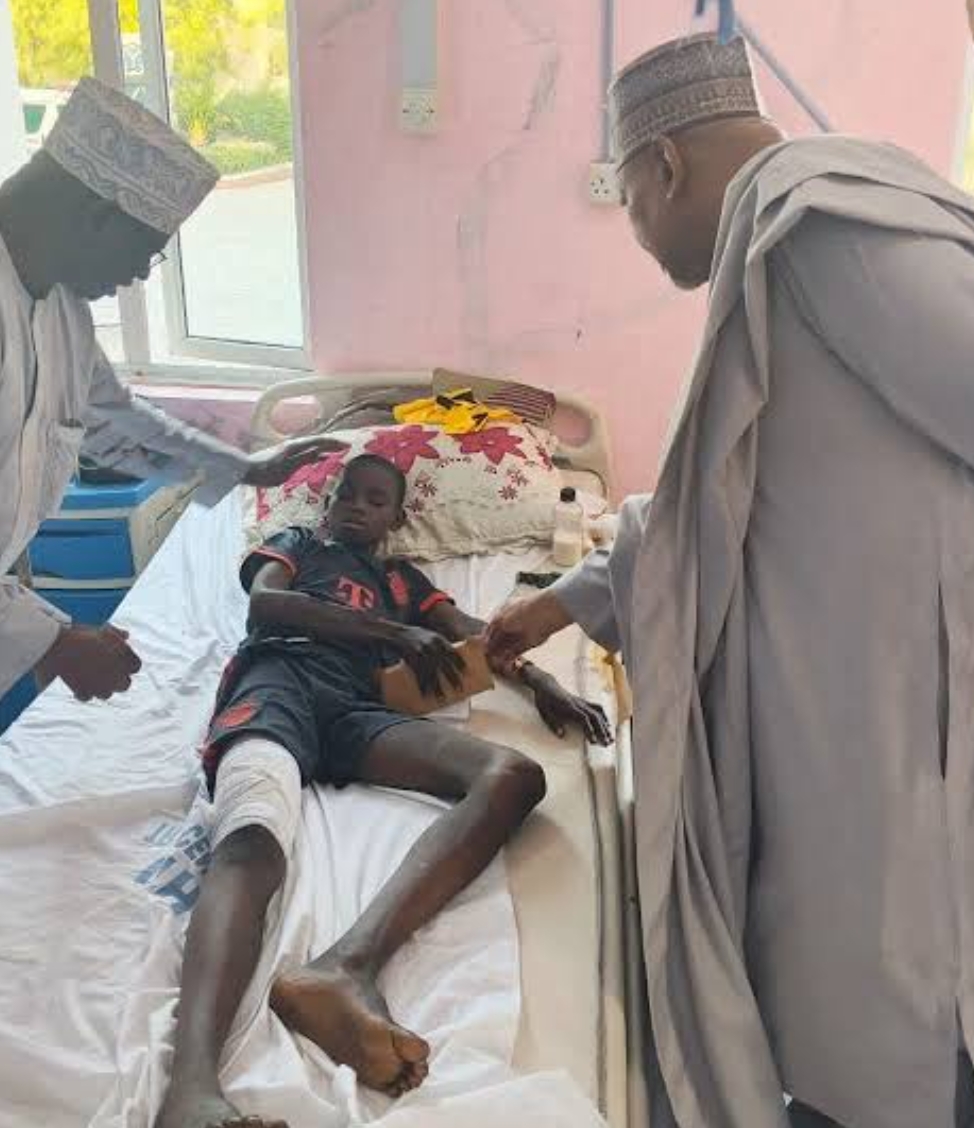
Maiduguri Bomb Blast: Senator Kyari acknowledges Tinubu, Shettima, and Zulum for support to victims.
By: Dr. James Bwala
The recent visit of the minister of agriculture and food security to the victims of the Maiduguri bomb blast stands as a compelling testament to the federal government’s commitment to alleviating human suffering and advancing security in Nigeria’s northeast region. This high-profile gesture not only extends vital financial support to those affected but also underscores the government’s dedication to restoring peace and stability amid persistent insecurity challenges.
The Minister’s visit, coupled with the laudable efforts of President Bola Tinubu, Vice President Kashim Shettima, and Borno State Governor Babagana Umara Zulum, exemplifies a comprehensive approach to addressing both humanitarian needs and security threats. Their unified dedication must be recognized as a critical driver in Nigeria’s ongoing struggle against insurgency and for sustainable development.
Kyari’s decision to personally visit victims of the Maiduguri bomb blast transcends mere symbolic action. It reveals an empathetic government response that goes beyond abstract policy formulations into tangible support for affected communities. The bomb blast, perpetrated in one of the nation’s most conflict-ridden areas, resulted in devastating human losses and severe economic disruptions to livelihoods. By visiting the victims, the minister acknowledges their plight first-hand, fostering a crucial connection between government officials and grassroots realities. This face-to-face engagement is indispensable for crafting policies that are responsive and tailored to the unique challenges faced by people living under the shadow of terrorism.
READ ALSO: https://newsng.ng/umth-when-vp-kashim-shettima-acknowledges-ahidjo-and-hospital-staff-for-their-services-to-victims-of-maiduguri-bomb-blasts/
The financial support extended by the minister forms a critical lifeline for victims struggling to rebuild their lives. The immediate aftermath of attacks like the Maiduguri bomb blast often witnesses heightened vulnerabilities—loss of homes, disruption of agricultural activities, and compromised food security. Since agriculture is the backbone of the local economy and a primary source of sustenance, the role of the Ministry of Agriculture and Food Security in intervening cannot be overstated. Providing financial aid ensures that survivors can access essential resources, resume farming activities, and thereby restore their food production capacity. Ultimately, this assistance contributes directly to regional food security and economic recovery, fostering resilience against the destabilizing effects of insurgency.
Equally significant is the minister’s public appreciation of the federal government’s broader efforts to tackle insecurity, highlighting the indispensable leadership of President Tinubu, Vice President Shettima, and Governor Zulum. This triad of leadership embodies a strategic synergy between federal and state authorities that is vital for counter-insurgency efforts. President Tinubu’s administration has placed national security at the forefront of its agenda, instituting reforms aimed at enhancing military responsiveness and intelligence coordination. Vice President Shettima, hailing from the northeast region himself, represents a critical bridge between local interests and federal actions, emphasizing inclusive governance and sensitivity to regional dynamics.
READ ALSO: https://newsng.ng/umth-when-vp-kashim-shettima-acknowledges-ahidjo-and-hospital-staff-for-their-services-to-victims-of-maiduguri-bomb-blasts/
Governor Babagana Umara Zulum’s role is especially noteworthy, as his ground-level leadership offers a direct interface with the people most affected by insecurity in Borno State. His tenure has been marked by proactive reconstruction projects, rehabilitation of internally displaced persons (IDPs), and sustained advocacy for increased federal support. Together, these leaders manifest a comprehensive approach that blends military, political, and humanitarian interventions—a necessity in a conflict environment as complex as northeastern Nigeria.
Critics may argue that such visits and financial donations are insufficient to stem the tide of violence and that more aggressive military action or systemic political reforms are necessary. While these critiques hold some merit, it is important to acknowledge that the multifaceted nature of insecurity demands equally multifaceted responses. Military efforts alone cannot rebuild bombed communities or address underlying socio-economic grievances. Conversely, humanitarian support without adequate security frameworks leaves vulnerable populations exposed to repeated attacks. The minister’s visit, therefore, symbolizes the critical balancing act between compassion and security strategy, demonstrating that effective government intervention must integrate both.
READ ALSO: https://newsng.ng/umth-when-vp-kashim-shettima-acknowledges-ahidjo-and-hospital-staff-for-their-services-to-victims-of-maiduguri-bomb-blasts/
Recognizing the contributions of President Tinubu, Vice President Shettima, and Governor Zulum signals an important narrative of hope and accountability. In regions beleaguered by decades of insurgency, governance is often viewed through the prism of neglect and failure. Highlighting these leaders’ commitments counters such pessimism and encourages civic trust. It also places public officials under deserved scrutiny and motivates continuous improvement in policy implementation. By publicly appreciating their efforts, the minister reinforces a culture of recognition and responsibility that can galvanize further progress toward peace.
It is also crucial to situate this visit within the context of broader strategies aimed at achieving sustainable food security in Nigeria’s northeast. Insurgent activities have severely disrupted agricultural production cycles, escalated food scarcity, and exacerbated poverty. The Ministry of Agriculture and Food Security’s involvement in providing direct support to victims aligns with the government’s long-term vision of restoring agricultural productivity as a cornerstone of regional stability. By supporting farmers and displaced persons, the government aids in reestablishing livelihoods and curtails the socioeconomic factors that often fuel insurgency recruitment.
READ ALSO: https://newsng.ng/umth-when-vp-kashim-shettima-acknowledges-ahidjo-and-hospital-staff-for-their-services-to-victims-of-maiduguri-bomb-blasts/
The Minister of Agriculture and Food Security’s visit to the Maiduguri bomb blast victims represents more than a compassionate outreach; it epitomizes an integrated government response that marries humanitarian relief with strategic security objectives. The financial assistance extended offers critical immediate support, while the appreciation of President Tinubu, Vice President Shettima, and Governor Zulum highlights the indispensable leadership guiding Nigeria’s fight against insecurity. Their collective efforts create a powerful narrative of resilience, responsibility, and hope that must continue to shape policies moving forward. To effectively combat insurgency and foster lasting peace, Nigeria requires this sustained commitment from all levels of government, robust institutional collaboration, and unwavering support for the victims who bear the brunt of conflict. Abubakar Kyari’s visit is thus a pivotal moment and a call to action for continued dedication to securing Nigeria’s northeast and uplifting its people.
* James Bwala, PhD, writes from Abuja.
Maiduguri Bomb Blast: Senator Kyari acknowledges Tinubu, Shettima, and Zulum for support to victims.


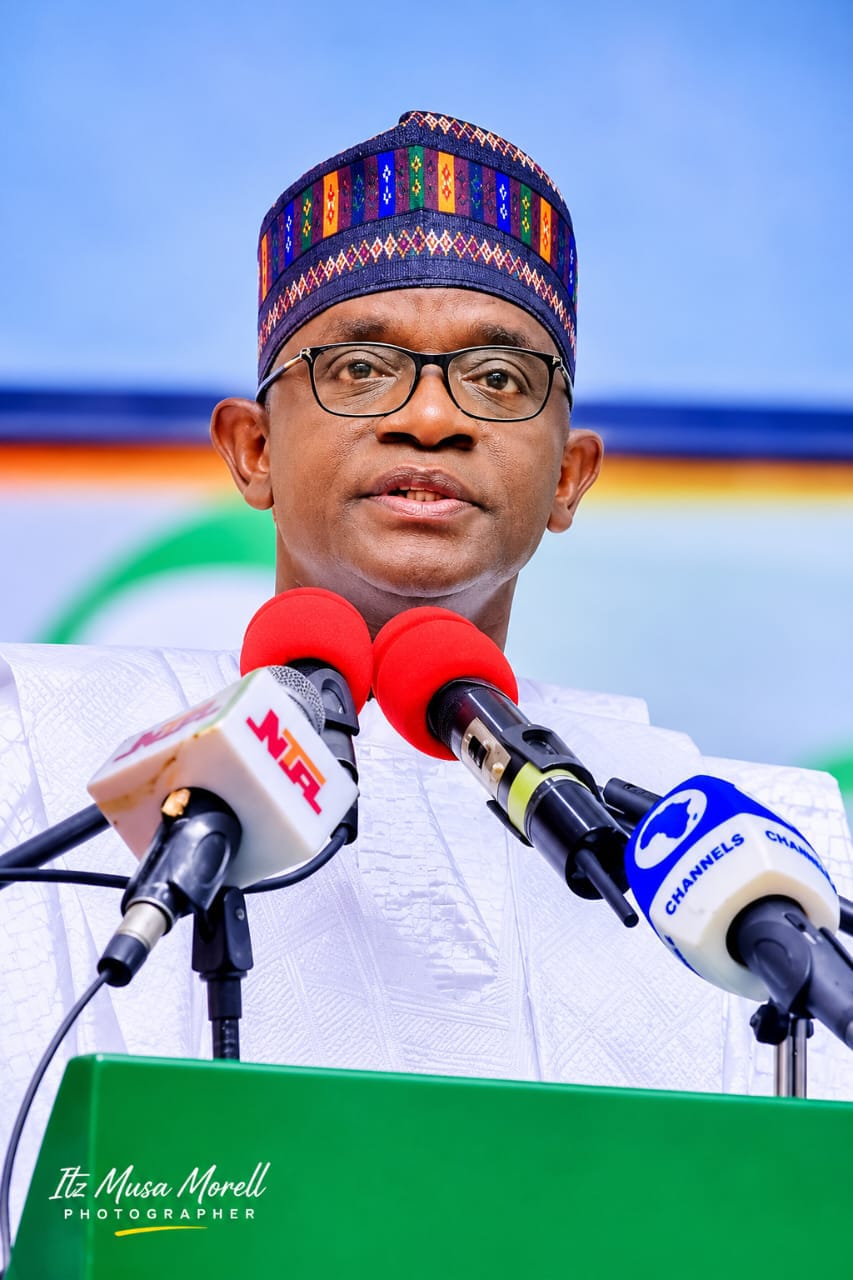
Budget: Yobe presents ₦532 billion for 2027
By: Yahaya Wakili
Yobe State Governor, Hon. Mai Mala Buni CON, COMN, has presented his last budget of #532,271,000,000 for the 2027 fiscal year to the Yobe State House of Assembly.
Out of the total #288,426,340,000, 54.2% is earmarked for current expenditure, while the sum of #243,844,660,000, representing 45.8%, is proposed for capital expenditure, respectively.
The 2027 budget is tagged “Budget of Consolidation Sustainability and Inclusive Growth.” He further said the theme was deliberate because it reflected the realities of the state’s present development journey, the responsibilities of the concluding present of the administration, and its commitment to the future prosperity of Yobe State.
“The budget is anchored on three fundamental policy principles: consolidation to strengthen progress already achieved, complete ongoing projects and ensure that investment produces intended benefits, and sustainability to ensure that progress does not end with the tenure,” Governor Buni added.
He said the 2027 budget was designed to balance immediate service delivery with the long-term development interest of the state while strengthening expenditure control and promoting transparency.
Governor Buni further said this budget also reflects our administration’s continued commitment to sustainable development, economic growth, human capital development, infrastructural transformation, and improved service delivery across Yobe State.
The sectoral allocation shows that the governance sector took the highest share with #175.74bn, represented 33%, while the ministry of education received the second largest allocation of #99.79bn, represented 18.8%.
Budget: Yobe presents ₦532 billion for 2027

Borno 2027: The General’s Charge and How Zulum Unleashes Borno’s Heavyweight Political Squad
By Abubakar M. Kareto
In Nigerian politics, elections are rarely won on auditorium stages; they are decided in the quiet corridors of rural wards and the long queues of remote polling units.
The formal inauguration of the Borno State All Progressives Congress (APC) Campaign Council at the Government House followed by a massive, open-air campaign flag-off at the Sports Centre in Maiduguri represents a calculated departure from routine rally-making toward micro-targeted grassroots mobilization.
By commanding party stalwarts to abandon executive comfort and embed themselves directly within their local communities, Governor Babagana Umara Zulum is deploying a bottom-up doctrine aimed at locking down political legitimacy where it matters most.
At the heart of this strategy is the critical task of maintaining party cohesion after intense internal primaries. Zulum’s explicit instruction for victorious candidates to reach out and heal rifts with aggrieved aspirants reflects a realistic understanding of political arithmetic: internal resentment erodes turnout faster than any opposition campaign. By coupling reconciliation with firm warnings against subversion, the leadership is attempting to forge an unbreakable front out of potentially volatile factions.
The sheer scale of political unity displayed in Maiduguri underscores the formidable nature of this campaign structure. Bringing together political titans including former Governors Senator Maina Ma’aji Lawan and Senator Ali Modu Sheriff, alongside APC Deputy National Chairman Ali Bukar Dalori and the state’s complete senatorial delegation demonstrates an unprecedented level of internal alignment.
This public display of solidarity among historical heavyweights signals organizational stability, minimizing space for opposition inroads while keeping rank-and-file members firmly aligned.
Beyond local dynamics, Borno State occupies a unique position on the national political chessboard as the home state of Vice President Senator Kashim Shettima. In this high-stakes arena, sheer victory is insufficient; the turnout margin itself serves as a barometer of political influence.
Delivering a massive vote tally is therefore both a local objective and a strategic demonstration of national strength, cementing the state’s leverage within the governing alliance.
To turn political influence into actual votes, the campaign relies heavily on record-based persuasion and visible governance dividends. By grounding the campaign pitch in key developmental gains achieved despite severe security challenges and highlighting major federal institutions acquired in Gwoza, Bama, and Azare canvassers are equipped with a tangible policy narrative. Framing voter turnout for President Bola Ahmed Tinubu, gubernatorial candidate Engr. Mustapha Gubio, and all legislative candidates as a direct return on investment gives party workers a clear, evidence-backed story for every doorstep across the state’s 27 local government areas.
A vital strength of this expanded outreach is the deliberate inclusion of women and youth as core engines of voter mobilization. The strong presence of the women’s delegation led by Borno First Lady Dr. Falmata Babagana Umara Zulum alongside the wife of the Deputy Governor and the wives of party candidates highlights an organized effort to engage families and community networks directly. Demanding structured participation across all demographics ensures that campaign directives actively translate into voter registration and turnout.
Deputy Governor Umar Usman Kadafur’s commitment to an issue-based, unit-by-unit campaign outlines the operational mechanics needed to execute this vision. Requiring regular field reports creates a system of measurable accountability across every precinct. In a vast state with complex logistics, such systematic tracking ensures that high-level strategy is actively carried out at every single polling station.
Lastly, the Maiduguri launch demonstrates how strategic discipline, elite reconciliation, and precinct-level focus converge to shape electoral outcomes. In an increasingly competitive political landscape, the Borno APC has laid out a clear blueprint: harness the full weight of a unified leadership squad, but win the election one polling unit at a time.
About the Author
Abubakar M. Kareto is a Public Affairs Analyst and Communications Strategist focusing on governance, policies, economy, and institutional reforms across Nigeria and Africa. He can be reached on X @amkareto and via email at amkareto@gmail.com.
Borno 2027: The General’s Charge and How Zulum Unleashes Borno’s Heavyweight Political Squad
Northeast
Diaspora Investment: NiDCOM, NDSI Move to Bridge Trust Deficit, Unlock Billions in Nigerian Capital


Diaspora Investment: NiDCOM, NDSI Move to Bridge Trust Deficit, Unlock Billions in Nigerian Capital
…Investors demand credible projects, transparency, stronger safeguards as regulators open direct engagement with Nigerians abroad
By: Michael Mike
Nigeria is seeking to unlock billions of dollars in potential diaspora investments by confronting the trust deficit, weak investment transparency and inadequate investor protection mechanisms that have discouraged many Nigerians abroad from committing capital to projects at home.
The Nigerians in Diaspora Commission (NiDCOM) and the Nigeria Diaspora Summit Initiative (NDSI) have identified the credibility of investment opportunities, regulatory transparency and accountability in project execution as critical to converting diaspora financial resources into productive investments capable of driving economic growth.
Chairman/Chief Executive Officer of NiDCOM, Hon. Abike Dabiri-Erewa, said Nigeria’s diaspora community possessed enormous financial, professional, entrepreneurial and intellectual resources that could support the country’s ambition to build a $1 trillion economy if credible investment channels and adequate institutional safeguards were put in place.
Dabiri-Erewa spoke on Tuesday at the opening of the ninth Nigeria Diaspora Investment Summit (NDIS) 2026, organised around the theme, “Bridging the Trust Gap: Connecting Diaspora Capital with Credible Home-Based Opportunities.”
She said the time had come to move diaspora engagement beyond remittances and informal investment arrangements to structured, transparent and commercially viable opportunities capable of generating sustainable economic returns.
According to her, although Nigerians in the diaspora contribute billions of dollars annually through remittances, their wider investment potential remains largely untapped because of concerns over transparency, unreliable project information, opaque transactions and fraudulent investment schemes.
She identified the knowledge gap and trust deficit as two major barriers that have continued to constrain the flow of diaspora capital into productive sectors of the Nigerian economy.
“Unlocking diaspora capital requires more than passion or patriotism; it demands institutional transparency, robust regulatory safeguards, verified service providers, and clear investor protection frameworks,” she said.
The NiDCOM chief executive said the Commission was committed to transforming diaspora engagement from general advocacy into structured, secure and profitable investment pathways.
She explained that the summit had been designed to give prospective investors direct access to institutions responsible for regulating Nigeria’s financial markets, facilitating infrastructure investments and improving the business environment.
The first day’s deliberations focus on capital market opportunities, with the Securities and Exchange Commission (SEC), Nigerian Exchange Group (NGX), Central Bank of Nigeria (CBN) and Ministry of Finance Incorporated (MOFI) expected to guide participants on regulated financial instruments, investment risks, entry requirements and dispute resolution mechanisms.
The second day is dedicated to infrastructure and regulatory frameworks, with the Infrastructure Concession Regulatory Commission (ICRC), Nigerian Sovereign Investment Authority (NSIA), MOFI and Corporate Affairs Commission (CAC) expected to provide information on infrastructure projects and investment opportunities under Public-Private Partnerships.
Other participating institutions, including the Presidential Enabling Business Environment Council (PEBEC) and Nigerian Export Promotion Council (NEPC), are expected to address business registration, regulatory compliance, anti-fraud safeguards, property documentation and reforms aimed at improving the business environment.
Dabiri-Erewa said the interactive sessions would enable diaspora investors to engage directly with regulators, scrutinise investment opportunities and obtain answers to questions relating to due diligence and the protection of their funds.
She urged Nigerians abroad to move away from informal and unverified investment channels and take advantage of the institutional mechanisms being presented at the summit.
“Under the Renewed Hope Agenda of President Bola Ahmed Tinubu, Nigeria is open, improving, and ready for your structured engagement,” she said.
She also challenged regulatory agencies, financial institutions and service providers participating in the summit to demonstrate transparency and strengthen the confidence of Nigerians abroad in the country’s investment environment.
In his welcome address, Chairman of the Summit Organising Committee and NDIS Coordinator, Mobolaji Lewis, said the central challenge confronting diaspora investment was not necessarily a lack of interest or financial capacity among Nigerians abroad, but persistent concerns about the credibility of investment opportunities and the protection of their funds.
He identified transparency, regulatory procedures, project execution, financial accountability and investor protection as critical factors influencing the willingness of Nigerians abroad to commit capital to the domestic economy.
Lewis said the summit had evolved into an important platform for connecting Nigerians in the diaspora with investment opportunities, institutions and stakeholders in Nigeria, while providing an avenue to convert their financial resources, professional expertise, entrepreneurial capabilities and global networks into productive investments.
He explained that the decision to scale down the physical summit in 2026, against the backdrop of the national election campaign season, informed the adoption of a two-day virtual engagement to sustain investment promotion and institutional collaboration.
According to him, the organisers deliberately moved beyond merely showcasing investment opportunities to helping prospective investors understand how to identify, verify, access and participate in credible projects in Nigeria.
“Building investor confidence requires a coordinated institutional response. No single organisation can independently address all the concerns of prospective investors,” Lewis said.
He urged participating regulators, financial institutions and government agencies to make their presentations practical, transparent and investor-focused, while encouraging Nigerians abroad to ask questions, seek clarification and engage directly with institutions responsible for facilitating and regulating investments.
Lewis said the success of the programme should not be measured merely by the number of participants or presentations, but by the quality of engagements established, the confidence generated and the investment partnerships that emerge.
He added that the 2026 engagement would lay the groundwork for the full Nigeria Diaspora Investment Summit in 2027, which would mark the 10th anniversary of the initiative.
The summit is being organised by NDSI in collaboration with NiDCOM, with support from corporate partners, including First Bank of Nigeria Plc, O3 Capital and AG Mortgage.
Nigeria’s renewed effort to attract diaspora investment comes against the backdrop of its longstanding dependence on remittances from citizens abroad as an important source of foreign exchange and household support.
However, converting a greater proportion of these financial flows into long-term productive investments remains a major policy challenge, particularly in an environment where prospective investors demand verifiable projects, transparent transactions, effective oversight and credible mechanisms for resolving disputes.
For the organisers, the challenge therefore goes beyond persuading Nigerians abroad to bring their money home. It is about rebuilding confidence in the country’s investment environment and ensuring that diaspora resources translate into viable businesses, infrastructure and sustainable economic opportunities.
Ultimately, the success of the initiative will depend not on how strongly Nigeria appeals to the patriotism of its citizens abroad, but on how convincingly it demonstrates that their investments are safe, their interests protected and the opportunities presented are capable of delivering sustainable returns.
That is the trust gap the ninth Nigeria Diaspora Investment Summit seeks to bridge, making confidence, rather than patriotism alone, the foundation for bringing diaspora capital into Nigeria’s economy.
Diaspora Investment: NiDCOM, NDSI Move to Bridge Trust Deficit, Unlock Billions in Nigerian Capital

2027 Elections: NHRC, KAS Unveil Safety Handbook for Journalists

ISLAMIC STATE MILITANTS KILL 32 NIGER GUARDSMEN IN SANAM CAMP ATTACK, 22 OTHERS CRITICALLY INJURED

PLATEAU’S BLOODSHED AND THE HYPOCRISY OF SELECTIVE OUTRAGE – NO COMMUNITY IS ABOVE THE LAW

Roger Federer’s Shock as DNA Results Reveal Myla and Charlene Are Not His Biological Children

THE PLIGHT OF FARIDA

FAILED COUP IN BURKINA FASO: HOW TRAORÉ NARROWLY ESCAPED ASSASSINATION PLOT AMID FOREIGN INTERFERENCE CLAIMS
-
 News3 years ago
Roger Federer’s Shock as DNA Results Reveal Myla and Charlene Are Not His Biological Children
-
Opinions5 years ago
THE PLIGHT OF FARIDA
-
 News2 years ago
FAILED COUP IN BURKINA FASO: HOW TRAORÉ NARROWLY ESCAPED ASSASSINATION PLOT AMID FOREIGN INTERFERENCE CLAIMS
-
 Opinions5 years ago
POLICE CHARGE ROOMS, A MINTING PRESS
-

 News3 years ago
EYN: Rev. Billi, Distortion of History, and The Living Tamarind Tree
-

 ACADEMICS3 years ago
A History of Biu” (2015) and The Lingering Bura-Pabir Question (1)
-

 Columns3 years ago
Army University Biu: There is certain interest, but certainly not from Borno.
-

 Politics1 year ago
2027: Why Hon. Midala Balami Must Go, as Youths in Hawul and Asikira/Uba Federal Constituency Reject ₦500,000 as Sallah Gift
