
News
UK–Nigeria Trade Mission Deepens Education, Skills Partnership


UK–Nigeria Trade Mission Deepens Education, Skills Partnership
By: Michael Mike
A high-level United Kingdom trade mission on education and skills has concluded a week-long skills and schools trade mission to Nigeria, laying a solid foundation for expanded collaboration in education and workforce development between both countries.
The mission, which ran from April 19 to 23 in Abuja and Lagos, brought together leading UK private schools, skills providers and education institutions with Nigerian stakeholders, including policymakers, investors and school operators.
Organised by the UK Department for Business and Trade, the engagement is part of the UK’s broader International Education Strategy, which identifies Nigeria as one of five priority markets for global education partnerships. The initiative is being championed by Steve Smith, who is expected to return to Nigeria later this year to sustain momentum.
The mission builds on diplomatic and educational engagements during a recent state visit to the United Kingdom in March, further reinforcing the growing importance of education within UK–Nigeria bilateral relations.

At the heart of discussions was the expansion of in-country delivery of British education, including the establishment of internationally recognised UK schools in Nigeria, as well as the development of industry-aligned skills programmes, particularly in Technical and Vocational Education and Training (TVET).
In Abuja, the delegation held high-level talks with Nigeria’s Minister of Education, Tunji Alausa, securing strong political backing for deeper institutional cooperation. Both sides explored pathways for partnerships that would strengthen Nigeria’s education system while equipping young people with skills tailored to labour market demands.
The delegation also visited several British curriculum schools and colleges in Abuja and Lagos, gaining first-hand insight into teaching standards and operational models already in place within Nigeria.
Speaking at the conclusion of the mission, British Deputy High Commissioner, Jonny Baxter, highlighted education as a key pillar of bilateral engagement.
“The UK and Nigeria share a deep and longstanding relationship, and opportunities in education are one of its most exciting frontiers,” he said, noting that the mission demonstrated “strong appetite on both sides to deepen collaboration.”
He added that connecting UK institutions with Nigerian partners would help build sustainable, in-country education systems, while positioning Nigeria as a regional hub for high-quality learning.
Also reflecting on the mission, Sarah Chidgey described the initiative as a practical demonstration of the UK’s education strategy in action.
According to her, progress in UK–Nigeria education collaboration has grown steadily since her first visit in 2022, with the current mission reinforcing mutual commitment to expanding access, quality, and innovation in the sector.
The delegation included representatives from prominent UK institutions such as Harrow International School, The King’s School Canterbury, Whitgift School, Bedford School, and Pearson, among others.
The mission concluded with a robust pipeline of follow-up activities, including one-on-one engagements, memorandum of understanding (MoU) discussions, and agreed next steps aimed at translating dialogue into tangible partnerships.
Analysts say the initiative signals a shift toward more structured and commercially viable education cooperation between both countries, with potential benefits spanning student mobility, local capacity building, and skills development aligned to Nigeria’s economic priorities.
With sustained engagement expected in the months ahead, stakeholders believe the mission could mark a turning point in positioning Nigeria as a major destination for international education investment in Africa.
UK–Nigeria Trade Mission Deepens Education, Skills Partnership


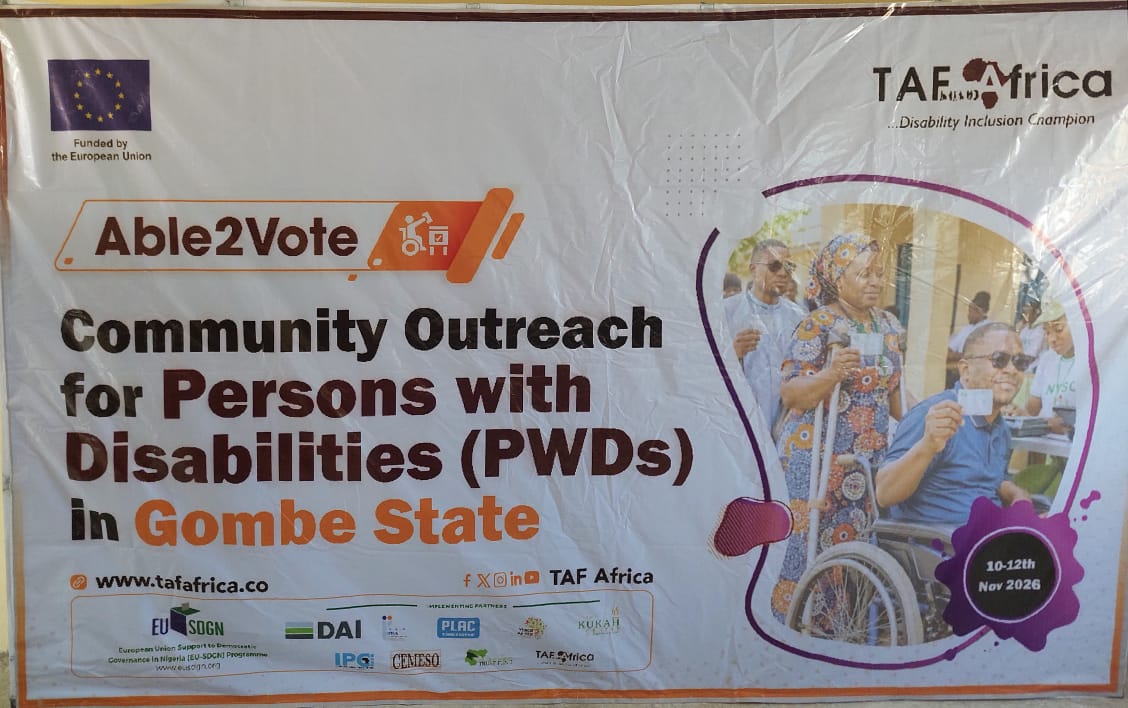
2027: TAF-Africa urges INEC, security agencies to ensure inclusive voting
By Elizabeth Ogunjobi
TAF-Africa has urged the Independent National Electoral Commission (INEC) and security agencies to ensure accessible and safe voting for Persons with Disabilities (PwDs) in 2027.
Dr Andrew Adaji, Programme Manager of The All-Rights Foundation, made the call in Gombe on Wednesday during a community outreach for PwDs.
Adaji said the agencies must ensure that all eligible voters exercised their constitutional rights without discrimination or unnecessary difficulties.
He said PwDs deserved adequate support to participate in electoral processes, given their population and potential contributions to national development.
He estimated that PwDs constituted about 35 million Nigerians, representing 18 per cent of the country’s population.
Adaji urged INEC to promote priority voting and ensure its officials understood provisions designed to facilitate voting for PwDs.
He also criticised the commission’s alleged neglect of Form EC40H, which documents the participation of voters with disabilities.
“Based on our experience during the off-cycle governorship elections in Ekiti, Anambra and Osun states, most ad-hoc staff were not even aware that the form existed,” he said.
He said observers had to draw polling officials’ attention to the form during the elections.
Adaji urged INEC to incorporate training on Form EC40H into its preparation of ad-hoc staff.
He said this would enable officials to understand its purpose and properly document PwDs participating in elections.
He also called for assistive devices, including magnifying glasses and Braille ballot guides, for voters with visual impairments.
Adaji urged INEC to make polling units physically accessible, stressing that PwDs should exercise their rights independently and with dignity.
“We should not have to carry them into polling units. Instead, the facilities should be designed to accommodate them,” he said.
He expressed optimism that improved accessibility would encourage more PwDs to participate in elections.
Adaji also urged security agencies to prioritise the protection of PwDs during security threats and emergencies.
He encouraged PwDs in Gombe to exercise their voting rights under the priority voting provisions of the law.
He said the provisions included special queues for PwDs, pregnant women and older persons.
Adaji urged Nigerians to support the participation of PwDs in the electoral process.
Alheri Nuhu, Women Leader of the Deaf Association in Gombe State, commended The All-Rights Foundation for organising the outreach.
Nuhu said PwDs had been denied adequate attention during previous elections, despite their constitutional rights.
She lamented discrimination by INEC officials and other voters, saying communication barriers often left deaf voters disenfranchised.
She urged INEC to engage sign language interpreters among its ad-hoc staff to facilitate communication during elections.
Similarly, Malam Sani Abubakar, Chairman of the Lepers Association in Gombe State, called for inclusive voting arrangements.
He said leprosy had affected some members’ thumbs, making thumbprinting difficult despite their faces being captured during previous elections.
Abubakar urged INEC to introduce alternative voting arrangements for affected voters to prevent their disenfranchisement.
NAN reports that The All-Rights Foundation is conducting the outreach in six Gombe communities, targeting 305 PwDs.
2027: TAF-Africa urges INEC, security agencies to ensure inclusive voting
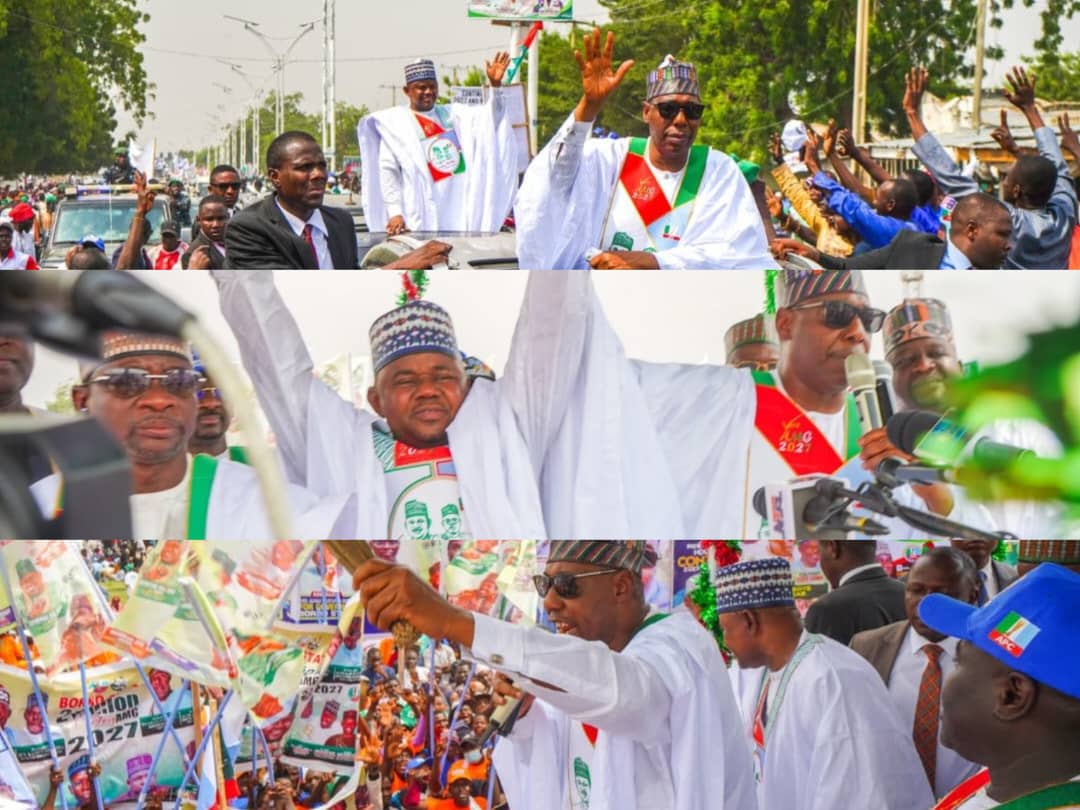
Borno 2027: The General’s Charge and How Zulum Unleashes Borno’s Heavyweight Political Squad
By Abubakar M. Kareto
In Nigerian politics, elections are rarely won on auditorium stages; they are decided in the quiet corridors of rural wards and the long queues of remote polling units.
The formal inauguration of the Borno State All Progressives Congress (APC) Campaign Council at the Government House followed by a massive, open-air campaign flag-off at the Sports Centre in Maiduguri represents a calculated departure from routine rally-making toward micro-targeted grassroots mobilization.
By commanding party stalwarts to abandon executive comfort and embed themselves directly within their local communities, Governor Babagana Umara Zulum is deploying a bottom-up doctrine aimed at locking down political legitimacy where it matters most.
At the heart of this strategy is the critical task of maintaining party cohesion after intense internal primaries. Zulum’s explicit instruction for victorious candidates to reach out and heal rifts with aggrieved aspirants reflects a realistic understanding of political arithmetic: internal resentment erodes turnout faster than any opposition campaign. By coupling reconciliation with firm warnings against subversion, the leadership is attempting to forge an unbreakable front out of potentially volatile factions.
The sheer scale of political unity displayed in Maiduguri underscores the formidable nature of this campaign structure. Bringing together political titans including former Governors Senator Maina Ma’aji Lawan and Senator Ali Modu Sheriff, alongside APC Deputy National Chairman Ali Bukar Dalori and the state’s complete senatorial delegation demonstrates an unprecedented level of internal alignment.
This public display of solidarity among historical heavyweights signals organizational stability, minimizing space for opposition inroads while keeping rank-and-file members firmly aligned.
Beyond local dynamics, Borno State occupies a unique position on the national political chessboard as the home state of Vice President Senator Kashim Shettima. In this high-stakes arena, sheer victory is insufficient; the turnout margin itself serves as a barometer of political influence.
Delivering a massive vote tally is therefore both a local objective and a strategic demonstration of national strength, cementing the state’s leverage within the governing alliance.
To turn political influence into actual votes, the campaign relies heavily on record-based persuasion and visible governance dividends. By grounding the campaign pitch in key developmental gains achieved despite severe security challenges and highlighting major federal institutions acquired in Gwoza, Bama, and Azare canvassers are equipped with a tangible policy narrative. Framing voter turnout for President Bola Ahmed Tinubu, gubernatorial candidate Engr. Mustapha Gubio, and all legislative candidates as a direct return on investment gives party workers a clear, evidence-backed story for every doorstep across the state’s 27 local government areas.
A vital strength of this expanded outreach is the deliberate inclusion of women and youth as core engines of voter mobilization. The strong presence of the women’s delegation led by Borno First Lady Dr. Falmata Babagana Umara Zulum alongside the wife of the Deputy Governor and the wives of party candidates highlights an organized effort to engage families and community networks directly. Demanding structured participation across all demographics ensures that campaign directives actively translate into voter registration and turnout.
Deputy Governor Umar Usman Kadafur’s commitment to an issue-based, unit-by-unit campaign outlines the operational mechanics needed to execute this vision. Requiring regular field reports creates a system of measurable accountability across every precinct. In a vast state with complex logistics, such systematic tracking ensures that high-level strategy is actively carried out at every single polling station.
Lastly, the Maiduguri launch demonstrates how strategic discipline, elite reconciliation, and precinct-level focus converge to shape electoral outcomes. In an increasingly competitive political landscape, the Borno APC has laid out a clear blueprint: harness the full weight of a unified leadership squad, but win the election one polling unit at a time.
About the Author
Abubakar M. Kareto is a Public Affairs Analyst and Communications Strategist focusing on governance, policies, economy, and institutional reforms across Nigeria and Africa. He can be reached on X @amkareto and via email at amkareto@gmail.com.
Borno 2027: The General’s Charge and How Zulum Unleashes Borno’s Heavyweight Political Squad
News
Two Notorious Terrorist Leaders Haruna Balatoni and Black Neutralised in Plateau Military Offensive Another Fatally Wounded as Six AK-47 Rifles Returned
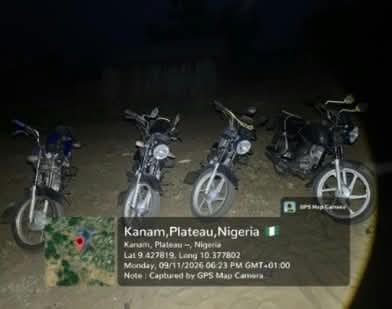
Two Notorious Terrorist Leaders Haruna Balatoni and Black Neutralised in Plateau Military Offensive Another Fatally Wounded as Six AK-47 Rifles Returned
By: Zagazola Makama
Troops of the Nigerian Army have recorded major breakthroughs in ongoing offensive operations against armed criminal networks in Plateau State, neutralising two notorious terrorist leaders, critically wounding another and recovering six AK-47 rifles previously seized from security forces.
The latest developments followed sustained military offensives at Dajin Madam in Wase Local Government Area of Plateau State on November 8, 2026.
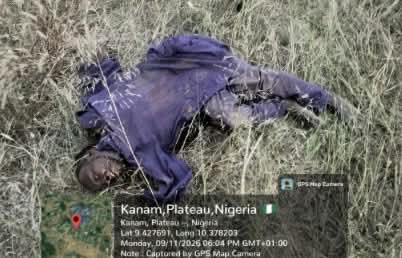
Security sources disclosed that HUMINT reports received at about 8:53 a.m. on November 9 indicated that the intensity of the military operation had resulted in the neutralisation of two suspected terrorist leaders identified as Haruna Balatoni and Black.
Another notorious figure, identified as Dogo Mai Kunkuru, was reportedly shot in the chest and left in a critical condition, with sources indicating that his chances of survival were slim.
In a significant development on November 10, the sustained military pressure reportedly compelled the terrorist network, through an intermediary identified as Ali-Kwara, to return six AK-47 rifles previously seized from security forces.
The recovered weapons are currently in military custody.
In a related operation, troops of 173 Battalion deployed at Mansur rescued a kidnapped mother and her daughter and recovered 39 cattle.
The developments represent a significant disruption of the criminal network’s leadership, weapons stockpile and capacity to sustain operations in the Wase axis.
The recovery of the six rifles is particularly important as it restores weapons previously lost to the criminal network and provides an opportunity for further intelligence exploitation.
The latest successes underscore the impact of sustained offensive pressure, intelligence-driven operations and military presence in dismantling armed groups operating across Plateau State.
The reported deaths of the terrorist leaders and the condition of Dogo Mai Kunkuru are based on preliminary HUMINT assessments and remain subject to independent military confirmation
Two Notorious Terrorist Leaders Haruna Balatoni and Black Neutralised in Plateau Military Offensive Another Fatally Wounded as Six AK-47 Rifles Returned

2027: TAF-Africa urges INEC, security agencies to ensure inclusive voting

Borno 2027: The General’s Charge and How Zulum Unleashes Borno’s Heavyweight Political Squad

Troops Intercept Abandoned Toyota Camry Loaded with 315 Sachets of Suspected Indian Hemp in Kaduna

Roger Federer’s Shock as DNA Results Reveal Myla and Charlene Are Not His Biological Children

THE PLIGHT OF FARIDA

FAILED COUP IN BURKINA FASO: HOW TRAORÉ NARROWLY ESCAPED ASSASSINATION PLOT AMID FOREIGN INTERFERENCE CLAIMS
-
 News3 years ago
Roger Federer’s Shock as DNA Results Reveal Myla and Charlene Are Not His Biological Children
-
Opinions5 years ago
THE PLIGHT OF FARIDA
-
 News2 years ago
FAILED COUP IN BURKINA FASO: HOW TRAORÉ NARROWLY ESCAPED ASSASSINATION PLOT AMID FOREIGN INTERFERENCE CLAIMS
-
 Opinions5 years ago
POLICE CHARGE ROOMS, A MINTING PRESS
-

 News3 years ago
EYN: Rev. Billi, Distortion of History, and The Living Tamarind Tree
-

 ACADEMICS3 years ago
A History of Biu” (2015) and The Lingering Bura-Pabir Question (1)
-

 Columns3 years ago
Army University Biu: There is certain interest, but certainly not from Borno.
-

 Politics1 year ago
2027: Why Hon. Midala Balami Must Go, as Youths in Hawul and Asikira/Uba Federal Constituency Reject ₦500,000 as Sallah Gift
