
News
Nigeria, Ghana Close Ranks Against Drug Cartels, Sign Landmark Anti-Trafficking Pact

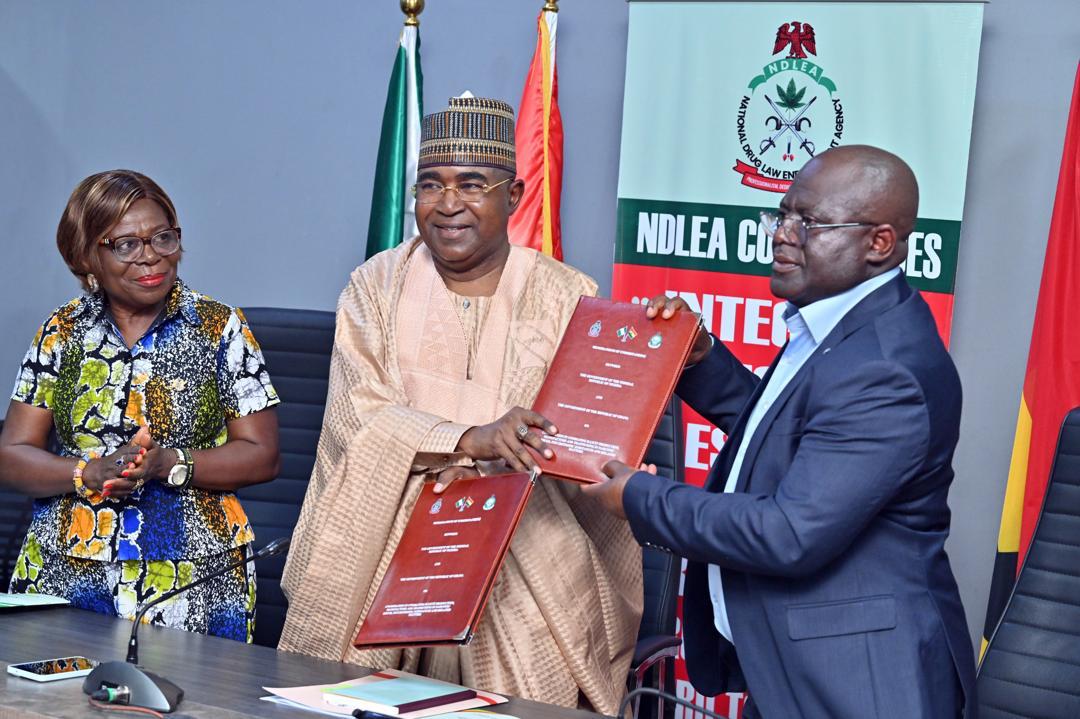
Nigeria, Ghana Close Ranks Against Drug Cartels, Sign Landmark Anti-Trafficking Pact
By: Michael Mike
Nigeria and Ghana have reinforced their joint fight against drug trafficking networks in West Africa, sending a strong warning to criminal cartels with a new wave of coordinated enforcement and intelligence-sharing efforts.
Chairman of the National Drug Law Enforcement Agency, Brig. Gen. Buba Marwa (Rtd) declared that both countries are now more aligned than ever in tackling transnational drug crimes. He spoke on Tuesday in Abuja while hosting a delegation from Ghana’s Narcotics Control Commission led by its Director-General, Brig. Gen. Maxwell Obuba Mantey.
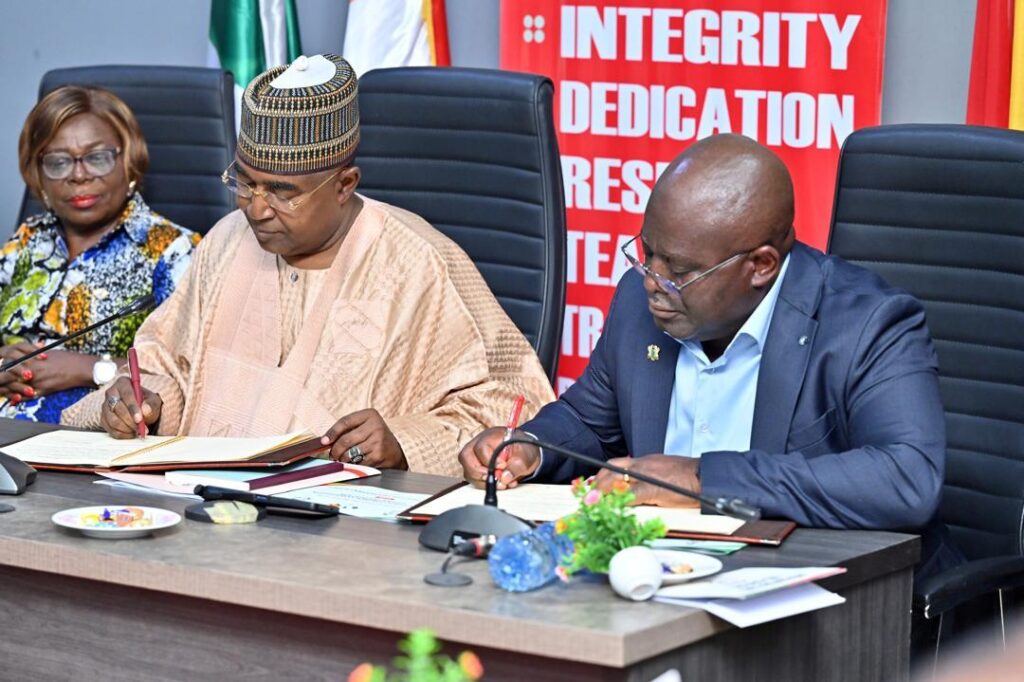
Marwa described the visit as a strategic step beyond diplomacy, emphasizing that the growing sophistication of drug trafficking and its links to money laundering demand deeper regional collaboration.
“Let this serve as a warning to those who seek to destabilize our societies with illicit drugs: Nigeria and Ghana stand united,” he said, noting that joint efforts in intelligence-led operations and interdiction strategies would significantly shrink the operational space for criminal networks.
A major highlight of the engagement was the signing of a Memorandum of Understanding (MoU) between the two agencies. The agreement establishes a formal framework for cooperation in combating the production and trafficking of psychotropic substances, precursor chemicals, and associated financial crimes.
Marwa said the MoU transforms an already strong relationship into a “structured, aggressive, and unified front” against drug barons, adding that both countries would intensify joint training, digital forensics collaboration, and coordinated operations across the West African corridor.
On his part, Mantey acknowledged Nigeria’s leadership role in regional security, describing the relationship between both countries as one rooted in shared history and mutual respect. He stressed that the visit was aimed at strengthening existing ties rather than starting new ones.
He warned that drug trafficking across West Africa is becoming more complex, with traffickers adopting advanced methods, expanding maritime routes, and increasing the production and distribution of synthetic drugs. He also noted a shift in Ghana’s role from primarily a transit hub to a country facing rising domestic drug use and distribution challenges.
“No single country can effectively address this threat in isolation,” Mantey said, underscoring the need for practical cooperation in operations, intelligence sharing, and institutional capacity building.
He added that the success of the new partnership would depend on concrete implementation, including coordinated enforcement actions and sustained collaboration between both agencies.
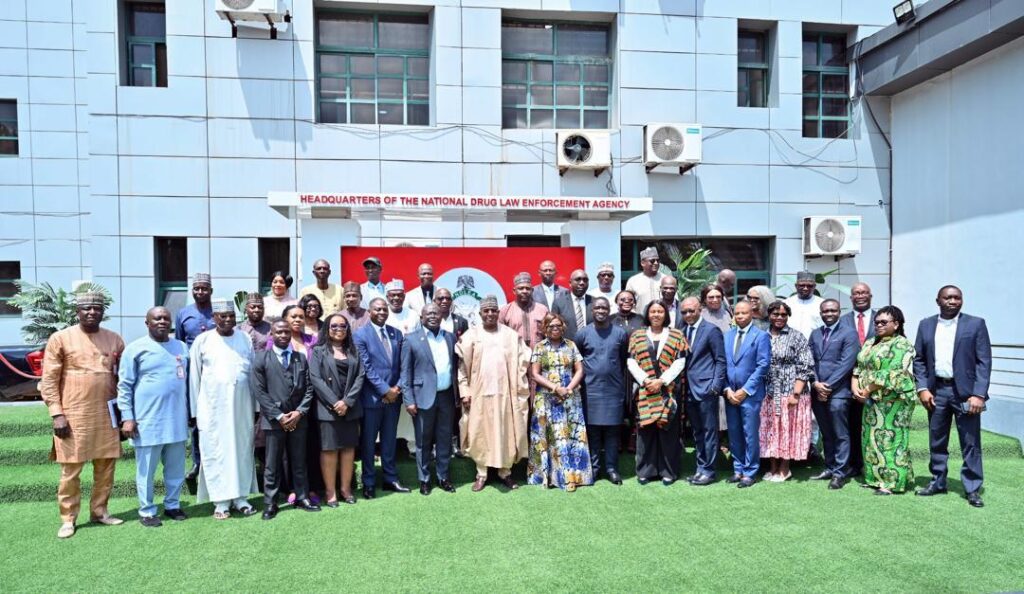
The meeting, held at the NDLEA headquarters in Abuja, was attended by senior officials from both countries, including representatives of the Ghanaian High Commission.
The renewed alliance signals a broader regional push to confront organized drug networks, amid growing concerns over their impact on security, governance, and public health across West Africa.
Nigeria, Ghana Close Ranks Against Drug Cartels, Sign Landmark Anti-Trafficking Pact


News
Femi Pedro Assumes Office as Nigeria’s High Commissioner to Australia, Pledges Stronger Trade, Diaspora Ties
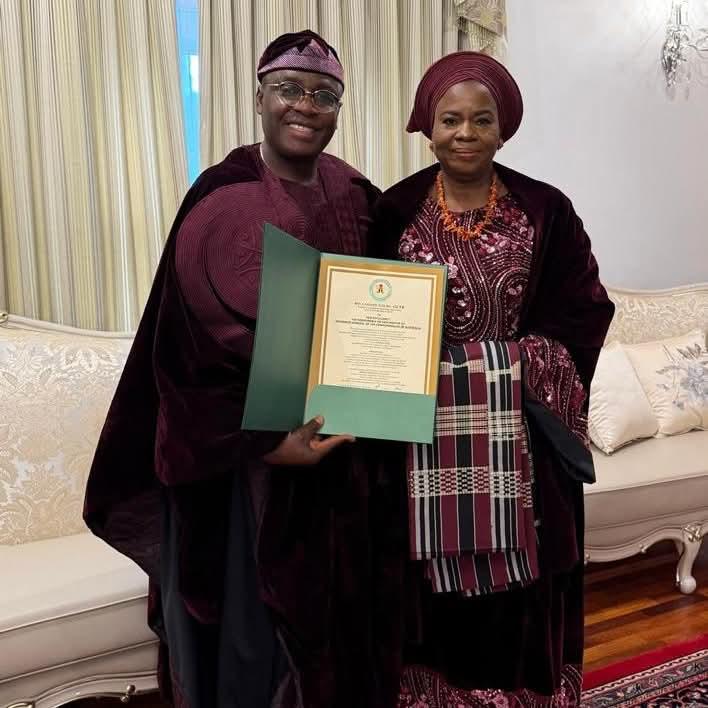
Femi Pedro Assumes Office as Nigeria’s High Commissioner to Australia, Pledges Stronger Trade, Diaspora Ties
By: Michael Mike
Former Deputy Governor of Lagos State, Femi Pedro, has formally assumed office as Nigeria’s High Commissioner to Australia, pledging to deepen economic cooperation, boost trade and investment, and strengthen engagement with Nigerians living across Australia and the Pacific region.
Pedro officially commenced his diplomatic duties after presenting his Letters of Credence to the Governor-General of Australia, Her Excellency the Honourable Ms. Sam Mostyn AC, in a ceremony that marks the beginning of his tenure as Nigeria’s envoy to Australia, with concurrent accreditation to New Zealand, Fiji, Solomon Islands and other Oceanic states.
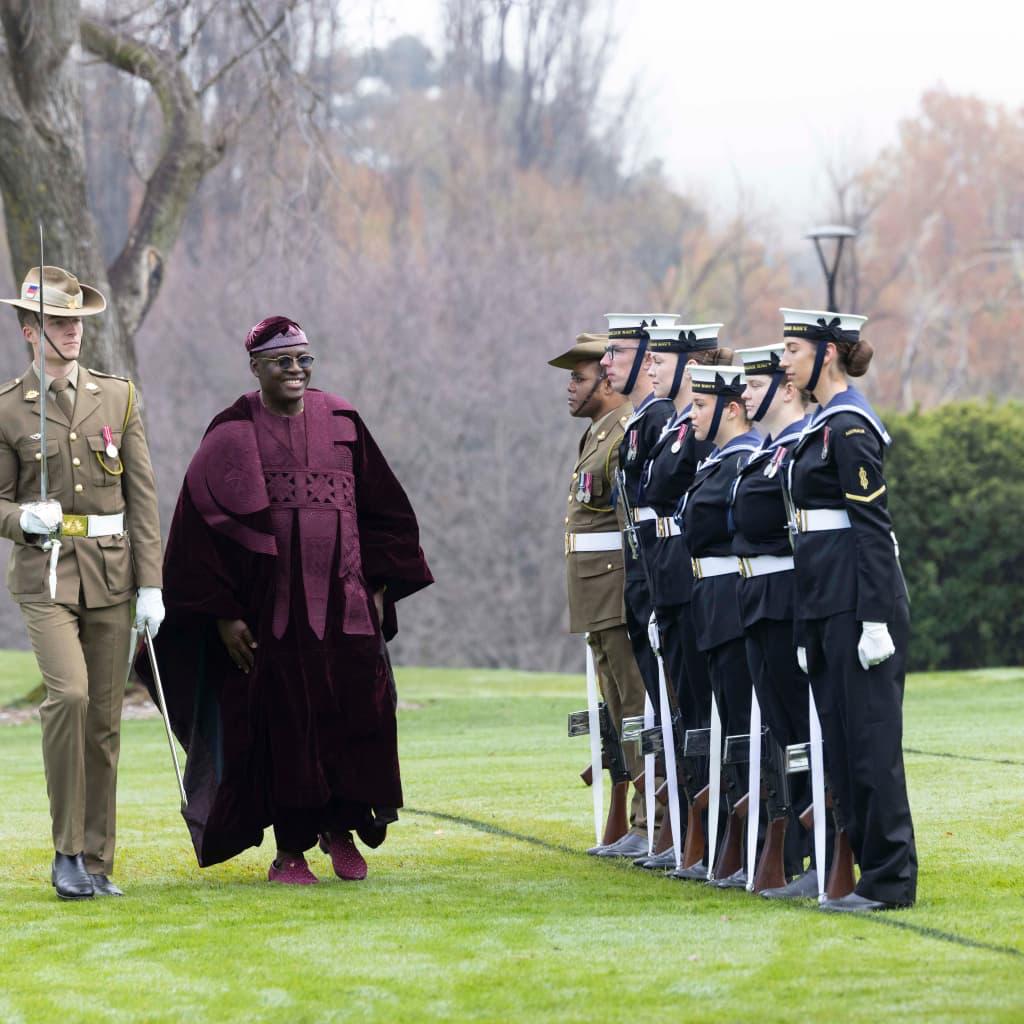
Describing the occasion as more than a ceremonial event, the envoy said his appointment represented a call to action aimed at expanding Nigeria’s footprint in one of the world’s most dynamic regions.
He noted that Nigeria and Australia enjoy a growing relationship anchored on shared Commonwealth values and mutual respect, stressing that both countries possess enormous opportunities for collaboration in strategic sectors, including critical minerals, agricultural innovation, education, technology and financial services.
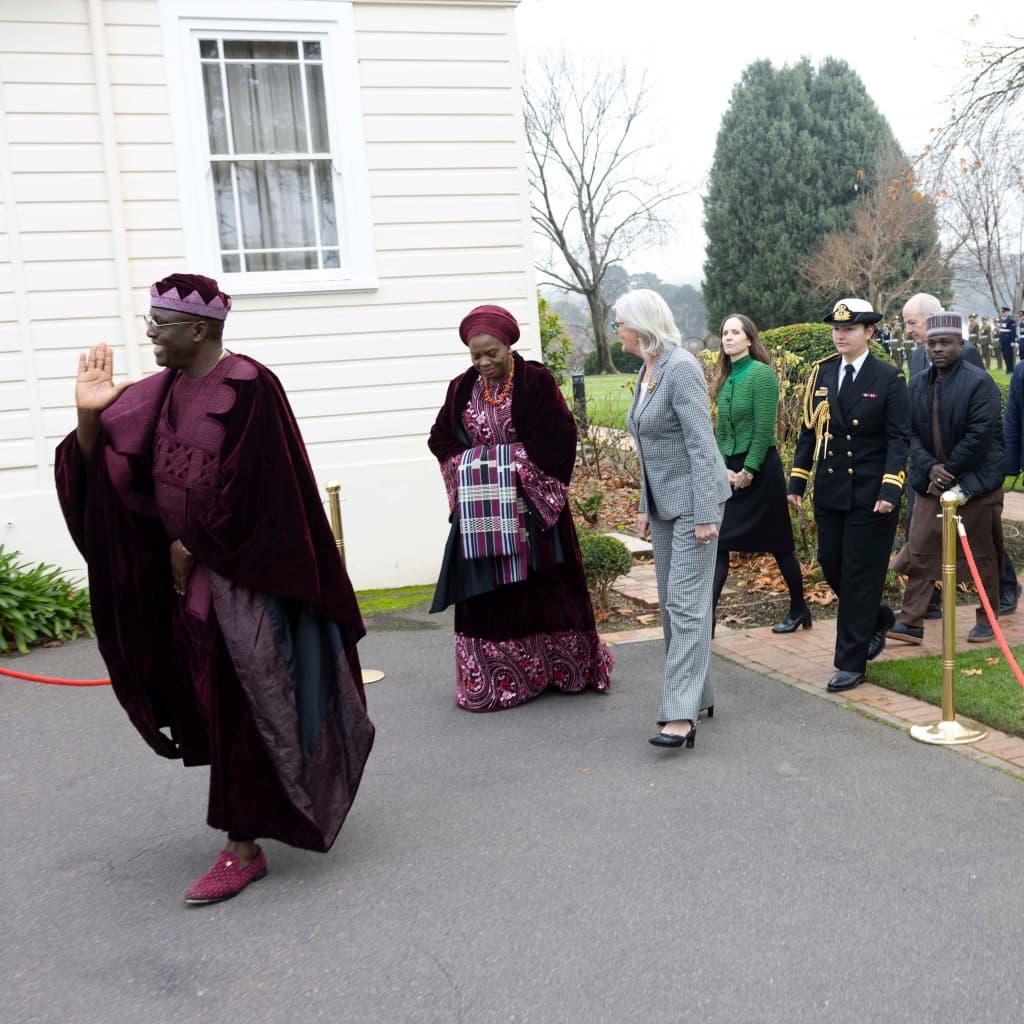
According to him, Nigeria is open for business and ready to forge stronger partnerships capable of delivering economic growth and mutual prosperity.
Pedro pledged to work closely with the Australian government and stakeholders across the Pacific to attract investments, promote educational cooperation and encourage cultural exchanges that would benefit both nations.
The envoy also assured Nigerians residing in Australia and across the Oceanic states that the Nigerian mission under his leadership would remain accessible and responsive to their needs.
He said he was assuming office carrying not only the mandate of President Bola Ahmed Tinubu but also the hopes and aspirations of Nigerians at home and in the diaspora.
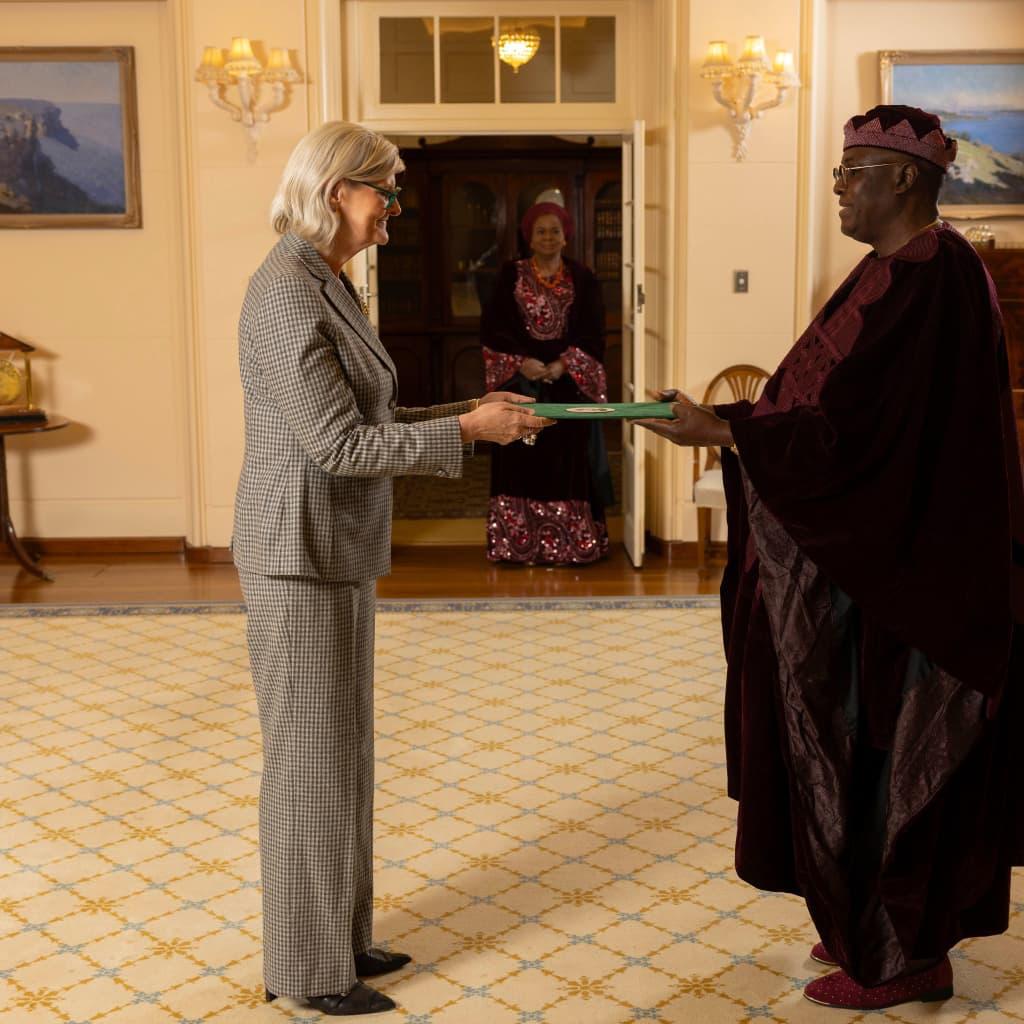
The High Commissioner disclosed that his diplomatic engagements would be guided by the Tinubu administration’s foreign policy doctrine anchored on the four pillars of Demography, Development, Diaspora and Democracy, while also promoting the National Values Charter as part of efforts to project a positive image of Nigeria globally.
He urged Nigerians in the region to see themselves as ambassadors of the country and partners in nation-building, noting that the diaspora community remains a critical asset in advancing Nigeria’s interests abroad.
Nigeria and Australia have in recent years expanded cooperation in trade, mining, education and security, with both countries increasingly exploring opportunities in the critical minerals sector amid the global transition to clean energy. Australia is also home to a growing Nigerian community, many of whom are contributing significantly to academia, healthcare, business and technology.
Pedro’s assumption of office comes at a time when the Federal Government is intensifying economic diplomacy and seeking to leverage its diaspora communities to attract investments, promote exports and strengthen bilateral relations with key partners across the world.
Femi Pedro Assumes Office as Nigeria’s High Commissioner to Australia, Pledges Stronger Trade, Diaspora Ties
News
ActionAid Faults Onanuga’s Remarks, Says Hunger and Hardship Have Become Nigeria’s Daily Reality
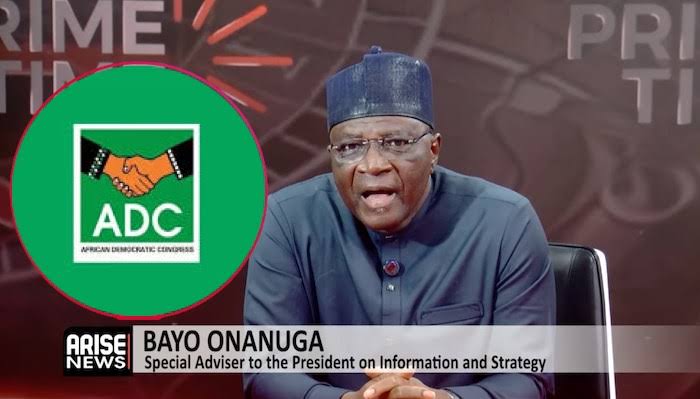
ActionAid Faults Onanuga’s Remarks, Says Hunger and Hardship Have Become Nigeria’s Daily Reality
By: Michael Mike
ActionAid Nigeria (AAN) has sharply criticised recent remarks by the Special Adviser to the President on Information and Strategy, Bayo Onanuga, accusing the presidency of normalising hunger and economic hardship and dismissing the daily struggles of millions of Nigerians.
The organisation said the presidential spokesman’s claim that he could not see the level of hunger Nigerians complain about, based on his personal observations and interactions with people around him, reflected a dangerous disconnect from realities across the country.
In a statement issued in Abuja on Wednesday, ActionAid Nigeria described such remarks as careless and unsupported by evidence, insisting that the hardship confronting Nigerians was documented in official statistics and reflected in the experiences of communities across the country.
The organisation noted that although Onanuga questioned the extent of hunger in Nigeria, he acknowledged during the same interview that the prices of food items had risen significantly. According to ActionAid, a crate of eggs that sold for about N600 a few years ago now costs between N6,000 and N8,500, underscoring the severity of the cost-of-living crisis.
It said official figures from the National Bureau of Statistics showed that food inflation rose to 16.96 per cent year-on-year in May 2026, from 16.68 per cent in April, driven by increasing prices of staples such as onions, maize, yam, cassava, tomatoes, pepper, wheat and plantain.
ActionAid further noted that the naira’s devaluation had eroded the purchasing power of workers and households, while labour groups had repeatedly argued that incomes would need to rise substantially to restore the living standards Nigerians enjoyed about a decade ago.
The organisation maintained that communities it works with across Nigeria, including women smallholder farmers, informal traders and residents of conflict-affected and displaced communities, continue to report worsening conditions, with food, transportation, healthcare and other basic necessities increasingly becoming unaffordable.
It stressed that the realities of hunger and hardship were not products of political propaganda or social media exaggeration but were evident in market prices, government inflation data, school enrolment figures and the difficult choices families now make to survive.
ActionAid also challenged the presidency’s claims on improving security conditions, citing independent reports that indicated otherwise.
According to the organisation, the Nigeria Watch violence-monitoring project documented 12,954 violent deaths across the country in 2025, while fatalities linked to kidnappings rose from 425 in 2024 to 747 in 2025. It added that incidents of rural banditry spread from nine states to sixteen states during the same period.
The organisation also cited data from the Armed Conflict Location and Event Data Project, which ranked Nigeria as the deadliest country in West Africa during the first half of 2025, accounting for 5,768 conflict-related deaths, representing 44.5 per cent of all fatalities recorded in the region.
Country Director of ActionAid Nigeria, Andrew Mamedu, said public officials who have the privilege of working closely with the presidency have a responsibility to understand and communicate the realities confronting citizens.
He lamented that millions of Nigerians were no longer making choices aimed at improving their lives but were instead deciding which basic necessities they could afford to forgo.
According to him, families are increasingly skipping meals to pay transport fares, avoiding hospitals because they cannot afford treatment and compromising their children’s education because survival has become their overriding concern.
Mamedu recounted the experience of a family in the Lekki area whose son often trekked long distances to school because there was no junior secondary school in their community and his parents could not consistently afford transportation costs.
He said the boy, shortly after recovering from an illness, embarked on the long trek to school, collapsed and died.
“This was not a medical mystery. It was Nigeria failing a child in every way that mattered until it cost him his life,” he said.
ActionAid consequently demanded that government officials stop downplaying the cost-of-living crisis and begin addressing it as an urgent national emergency affecting millions of citizens.
The organisation urged governments at all levels to tackle the root causes of rising living costs through investments in local food production, improved transport and logistics infrastructure and stronger social protection and social security programmes tailored to the realities of low-income households.
It also called for economic relief measures to be designed and regularly reviewed in consultation with communities most affected by inflation, currency devaluation and rising costs of transportation, healthcare and education.
ActionAid reaffirmed its commitment to working with government, communities and other stakeholders to identify solutions that improve citizens’ welfare, while continuing to document and amplify the experiences of vulnerable populations and hold public officials accountable to standards of honesty, empathy and evidence-based governance.
ActionAid Faults Onanuga’s Remarks, Says Hunger and Hardship Have Become Nigeria’s Daily Reality
Troops Intercept Arms Courier, Recover Weapons and Ammunition
By: Zagazola Makama
Troops of 12 Brigade, in collaboration with operatives of the Office of the National Security Adviser (ONSA) and Hybrid Forces, have intercepted a suspected arms courier vehicle and recovered weapons, ammunition and communication equipment along the Sokoto-Zaria-Kaduna highway.
Security sources disclosed that the operation, conducted on June 21 based on credible intelligence, targeted a vehicle suspected to be conveying arms to Kogi State.
The sources said the suspect abandoned the vehicle and fled upon sighting the security operatives.
A search of the vehicle led to the recovery of two AK-47 rifles, nine magazines, 67 rounds of 7.62mm special ammunition, two Beretta pistols with 9mm ammunition, two Baofeng handheld radios and three camouflage jackets.
According to the sources, the recovered items are currently in the custody of the troops for further investigation and exploitation.
The sources added that efforts were ongoing to identify and apprehend the fleeing suspect as well as uncover the network behind the arms movement.
They noted that the operation underscored the effectiveness of intelligence-led security efforts aimed at disrupting the movement of illegal arms and ammunition across the country.
Troops Intercept Arms Courier, Recover Weapons and Ammunition

MSF Launches Local Nutrition Initiative as Child Malnutrition Crisis Deepens in Kebbi

Femi Pedro Assumes Office as Nigeria’s High Commissioner to Australia, Pledges Stronger Trade, Diaspora Ties

ActionAid Faults Onanuga’s Remarks, Says Hunger and Hardship Have Become Nigeria’s Daily Reality

Roger Federer’s Shock as DNA Results Reveal Myla and Charlene Are Not His Biological Children

THE PLIGHT OF FARIDA

FAILED COUP IN BURKINA FASO: HOW TRAORÉ NARROWLY ESCAPED ASSASSINATION PLOT AMID FOREIGN INTERFERENCE CLAIMS
-
 News2 years ago
Roger Federer’s Shock as DNA Results Reveal Myla and Charlene Are Not His Biological Children
-
Opinions4 years ago
THE PLIGHT OF FARIDA
-
 News1 year ago
FAILED COUP IN BURKINA FASO: HOW TRAORÉ NARROWLY ESCAPED ASSASSINATION PLOT AMID FOREIGN INTERFERENCE CLAIMS
-

 News2 years ago
EYN: Rev. Billi, Distortion of History, and The Living Tamarind Tree
-
 Opinions5 years ago
POLICE CHARGE ROOMS, A MINTING PRESS
-

 ACADEMICS2 years ago
A History of Biu” (2015) and The Lingering Bura-Pabir Question (1)
-

 Columns2 years ago
Army University Biu: There is certain interest, but certainly not from Borno.
-

 Politics1 year ago
2027: Why Hon. Midala Balami Must Go, as Youths in Hawul and Asikira/Uba Federal Constituency Reject ₦500,000 as Sallah Gift
