
News
China Reaffirms One-China Principle, Criticizes Taiwan’s Foreign Engagements and Calls for Media Caution in Nigeria

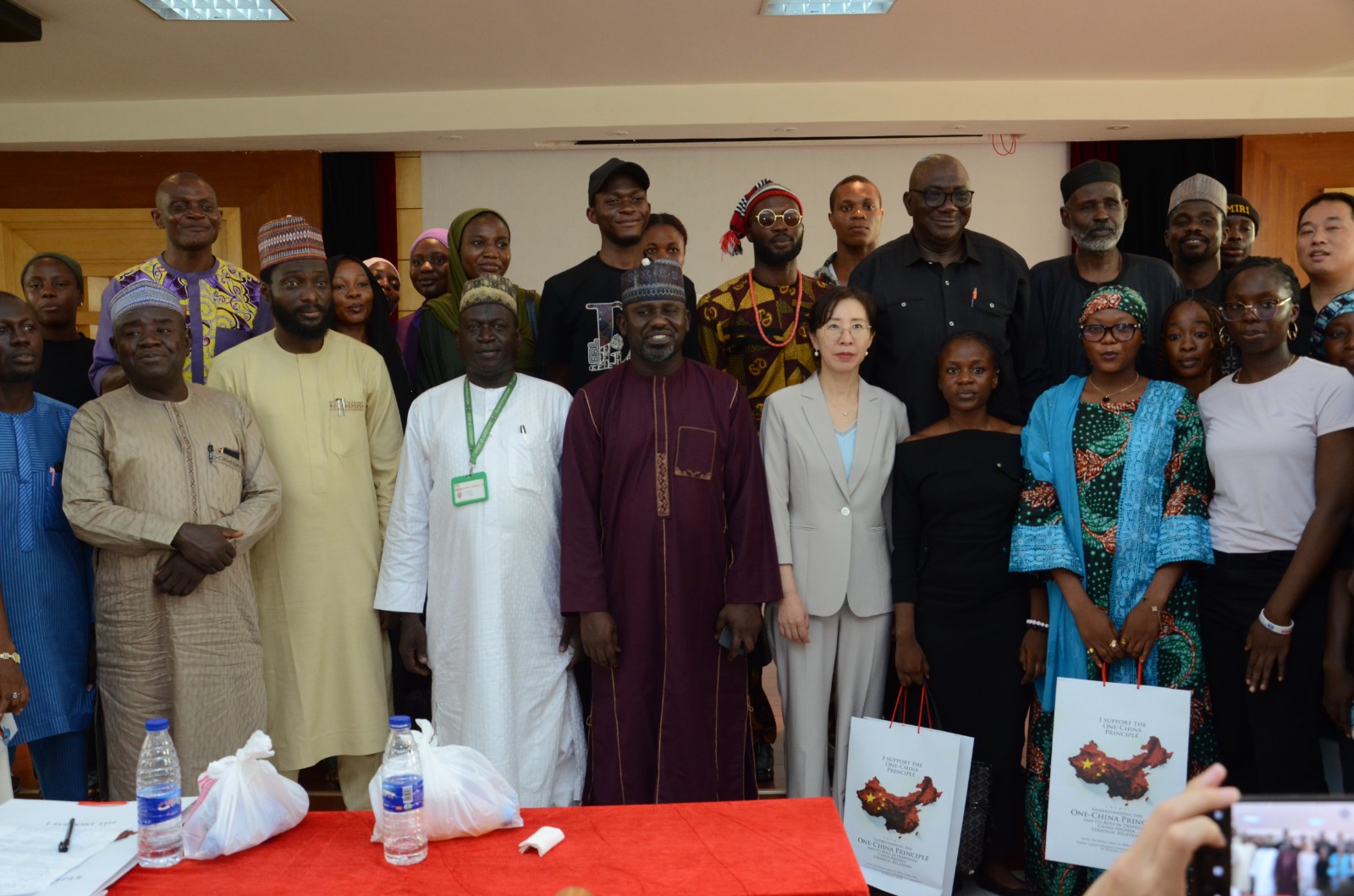
China Reaffirms One-China Principle, Criticizes Taiwan’s Foreign Engagements and Calls for Media Caution in Nigeria
By: Michael Mike
China has strongly reiterated its One China principle, insisting that Taiwan is an inseparable part of its territory, while criticizing recent international engagements involving Taiwan’s leadership and foreign media interactions, including visits by Nigerian journalists to Taipei-linked institutions.
The remarks were made during a policy briefing that combined historical arguments, diplomatic assertions, and warnings directed at international media over Taiwan-related reporting.
At the centre of the statement was the recent overseas diplomatic activity of Taiwan’s President Lai Ching-te, including a visit to Eswatini where he met members of the royal household. Beijing described the visit as part of efforts to expand Taiwan’s international presence and advance separatist objectives. Taiwan, however, continues to operate its foreign engagements as part of its self-governing system, maintaining unofficial relations with a limited number of countries.
Chinese officials also raised concerns over recent interactions between a small group of Nigerian journalists and Taiwan’s external affairs representatives, as well as discussions around strengthening Taiwan’s trade presence in Nigeria. Beijing argued that such engagements challenge established diplomatic arrangements between China and countries that recognize the One China principle.
China’s position is rooted in what it describes as centuries of historical governance over Taiwan. Officials cited early administrative links dating back to imperial China, arguing that the island has long been under Chinese jurisdiction in historical records.
Speaking at an occasion in Abuja, the Counselor, Embassy of the People’s Republic of China in Nigeria Ms.Dong Hairong’s speech. referenced key Second World War-era agreements, including the Cairo Declaration (1943) and the Potsdam Proclamation (1945), which stated that territories taken by Japan, including Taiwan, should be returned to China following Japan’s defeat. Beijing maintains that Japan’s surrender and subsequent acceptance of these terms legally confirmed Taiwan’s restoration to Chinese sovereignty.
She said following the Chinese civil war and the establishment of two rival administrations in 1949, the government of the People’s Republic of China (PRC) asserted itself as the sole legal authority representing China. The opposing government retreated to Taiwan, leading to the long-standing political separation across the Taiwan Strait.
She also cited United Nations General Assembly Resolution 2758 (1971) as a decisive legal foundation for its position. The resolution recognized the People’s Republic of China as “the only legitimate representative of China to the United Nations” and expelled representatives of Chiang Kai-shek’s administration.
She argued that this resolution establishes the One China principle in international law and leaves no room for “two Chinas” or “one China, one Taiwan.” According to Beijing, more than 180 countries—including Nigeria—maintain diplomatic relations with China based on this framework.
She reaffirmed that national reunification remains a central long-term objective, describing it as part of the broader “national rejuvenation” strategy.
She accused Taiwan’s ruling Democratic Progressive Party (DPP) of promoting “de-Sinicization” and separatist policies, while Taiwan continues to insist on its democratic governance and separate political system.
She noted that despite political tensions, policies encouraging cross-strait exchanges in trade, culture, education, and youth engagement are in place. She also referenced past evacuations of Taiwan residents from crisis zones with Chinese diplomatic assistance as evidence of practical cooperation between both sides.
The briefing placed strong emphasis on Nigeria’s relationship with China, noting that diplomatic ties established in 1971 were built on Nigeria’s recognition of the One China principle.
She stated that Nigeria has consistently affirmed that it recognizes the People’s Republic of China as the sole legitimate government of China and considers Taiwan part of Chinese territory. This position, it said, forms the foundation of bilateral relations.
While also highlighting expanding economic cooperation with Nigeria and Africa, including infrastructure projects and trade initiatives aimed at strengthening South–South relations. Recent developments include Chinese-supported regional institutions in Abuja and tariff reductions for African exports entering the Chinese market.
The Chinese official urged Nigerian journalists and international media organisations to adhere strictly to the One China framework in their reporting.
She cautioned against describing Taiwan in terms that imply statehood or recognizing official diplomatic titles inconsistent with Beijing’s position, warning that such portrayals could undermine diplomatic relations.
She said Beijing stance is based on historical records, international agreements, and United Nations resolutions, while Taiwan continues to operate as a self-governing entity with its own political system and foreign relations network.
A public affairs analyst and political strategist, Segun Showunmi, said Nigeria’s continued support for the One-China Principle remains central to the growth of diplomatic, economic and strategic relations between Nigeria and China in an increasingly multipolar world.
In a paper titled “The One-China Principle and the Next Phase of China–Nigeria Relations in an Emerging Multipolar World,” Showunmi argued that the relationship between both countries was built on mutual trust, sovereign respect and non-interference, principles he said have strengthened cooperation over the decades.
According to him, Nigeria formally embraced the One-China Principle in 1971 when diplomatic relations were established with Beijing, recognizing the government of the People’s Republic of China as the sole legitimate representative of China.
He traced the roots of the policy to the 1949 Chinese revolution led by Mao Zedong, noting that successive Chinese leaders transformed the doctrine into a central pillar of China’s foreign policy and international engagement.
Showunmi stated that Nigeria’s consistency on the issue created confidence between both nations, resulting in significant Chinese investments in infrastructure and strategic sectors across the country.
He highlighted projects such as the Abuja–Kaduna Railway, Lagos–Ibadan Railway, airport terminal expansions, road construction, telecommunications development, power projects and the Lekki Deep Sea Port as examples of Chinese-backed interventions that have contributed to Nigeria’s infrastructure modernization.
According to him, China has emerged as a major economic alternative for African countries seeking development partnerships without stringent political conditions, adding that Nigeria has also benefited from expanded trade opportunities, technology transfer, educational cooperation and diplomatic coordination in multilateral institutions.
The analyst, however, argued that the next phase of China–Nigeria relations must move beyond symbolic diplomatic solidarity to a more structured and strategic partnership capable of supporting industrialization and long-term development.
He called for the establishment of a China–Nigeria Strategic Economic Council to coordinate industrial policy, energy transition planning, artificial intelligence, critical minerals and advanced manufacturing.
Showunmi also urged the Nigerian government to negotiate stronger local content provisions in Chinese-funded projects to ensure the development of indigenous engineering expertise and domestic supply chains.
On his part, the Director of the Abuja School of Social and Political Thoughts and Dean of the Faculty of Law at Ave Maria University, Prof. Sam Amadi, urged African states to carefully calibrate their foreign policy on the One-China question, warning against formal diplomatic engagement with Taiwan while advocating continued trade within defined limits.
Speaking at a media salon on the One-China Principle held at the China General Chamber of Commerce in Nigeria, Amadi said the distinction between the One-China principle and One-China policy is often misunderstood in international diplomacy.
“The One-China principle and One-China policy are clear, but difficult to operationalise,” he said, adding that while the terms appear similar, “from a diplomatic perspective, they look the same, but they’re not exactly the same.”
The former foreign affairs adviser under President Umaru Musa Yar’Adua explained that the One-China principle, as advanced by Beijing, asserts that there is only one China, governed by the Communist Party of China, and that Taiwan is part of China under eventual reunification.
He noted that many countries adopt what he described as “strategic ambiguity,” allowing them to recognize Beijing officially while still maintaining informal economic and trade relations with Taiwan.
“The problem has always been: how do you acknowledge Beijing’s claim and deal with the real-world situation of engaging with Taiwan?” he said.
Amadi argued that Africa’s traditional emphasis on territorial integrity aligns broadly with China’s position, but acknowledged that modern diplomatic and economic realities complicate strict interpretations.
“Africa has a history with keeping territories intact… internal disagreement should not be taken to represent separate statehood,” he said.
However, he warned against what he termed “sovereignty for rent,” describing situations where diplomatic recognition is exchanged for economic or political incentives.
“One of the things Taiwan is doing is what we call sovereignty for rent—you pay, you acknowledge our sovereignty,” he said.
Outlining policy options, Amadi said African states currently fall into different camps ranging from full alignment with Beijing to mixed and ambiguous engagement strategies.
“My position is that African countries should never have diplomatic engagement with Taiwan, but should calibrate trade agreements carefully,” he stated, emphasizing the need for consistency with the One-China framework while acknowledging global economic realities.
China Reaffirms One-China Principle, Criticizes Taiwan’s Foreign Engagements and Calls for Media Caution in Nigeria


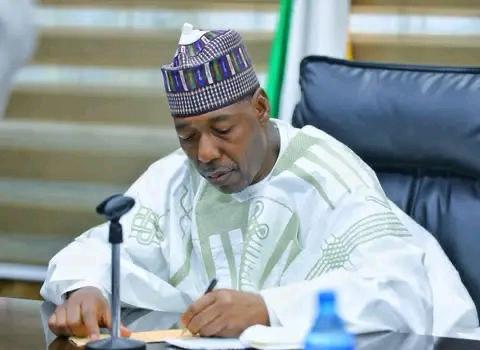
Zulum Appoints Engr Peter Samuel as General Manager BOSAMA
By: Our Reporter
Borno State Governor, Professor Babagana Umara Zulum, has approved the appointment of Engr Peter Samuel, MNSE, MNIAE, as the General Manager of Borno State Agricultural Mechanization Authority (BOSAMA).
In a statement by the Special Adviser to the Governor on Media, Dauda Iliya, the appointment was based on Engr Samuel’s outstanding professional competence, proven track record, and experience in agricultural engineering and mechanization.
The statement noted that Engr Samuel possesses the requisite qualifications, technical expertise and leadership capacity required to reposition BOSAMA in line with Governor Zulum’s agricultural transformation agenda.
The newly appointed General Manager is an Agricultural Engineer with academic, professional, administrative, and practical experience in agricultural mechanization, farm power and machinery, irrigation engineering, and agricultural infrastructure development.
He holds a Master of Engineering (M.Eng.) in Farm Power and Machinery from Joseph Sarwuan Tarka University, Makurdi (formerly the Federal University of Agriculture, Makurdi), a Postgraduate Diploma in Farm Management and Production Economics from Nasarawa State University, and a Bachelor of Engineering (B.Eng.) in Agricultural and Environmental Resources Engineering from the University of Maiduguri.
Engr Samuel has distinguished himself through years of meritorious service in teaching, research, agricultural engineering practice, and project implementation. He currently serves as a Lecturer in Farm Power and Machinery at Ramat Polytechnic, Maiduguri.
Over the years, he has held several strategic leadership positions, including General Manager of a commercial agricultural enterprise, Project Coordinator, Programme Coordinator, and Consultant on numerous agricultural development interventions implemented by reputable national and international organisations.
He is a member of the Nigerian Society of Engineers (NSE) and the Nigerian Institution of Agricultural Engineers (NIAE).
Governor Babagana Zulum congratulated the new General Manager on his appointment and urged him to deploy his wealth of knowledge, technical expertise, and experience in agricultural mechanization to strengthen the operations of BOSAMA
Zulum Appoints Engr Peter Samuel as General Manager BOSAMA
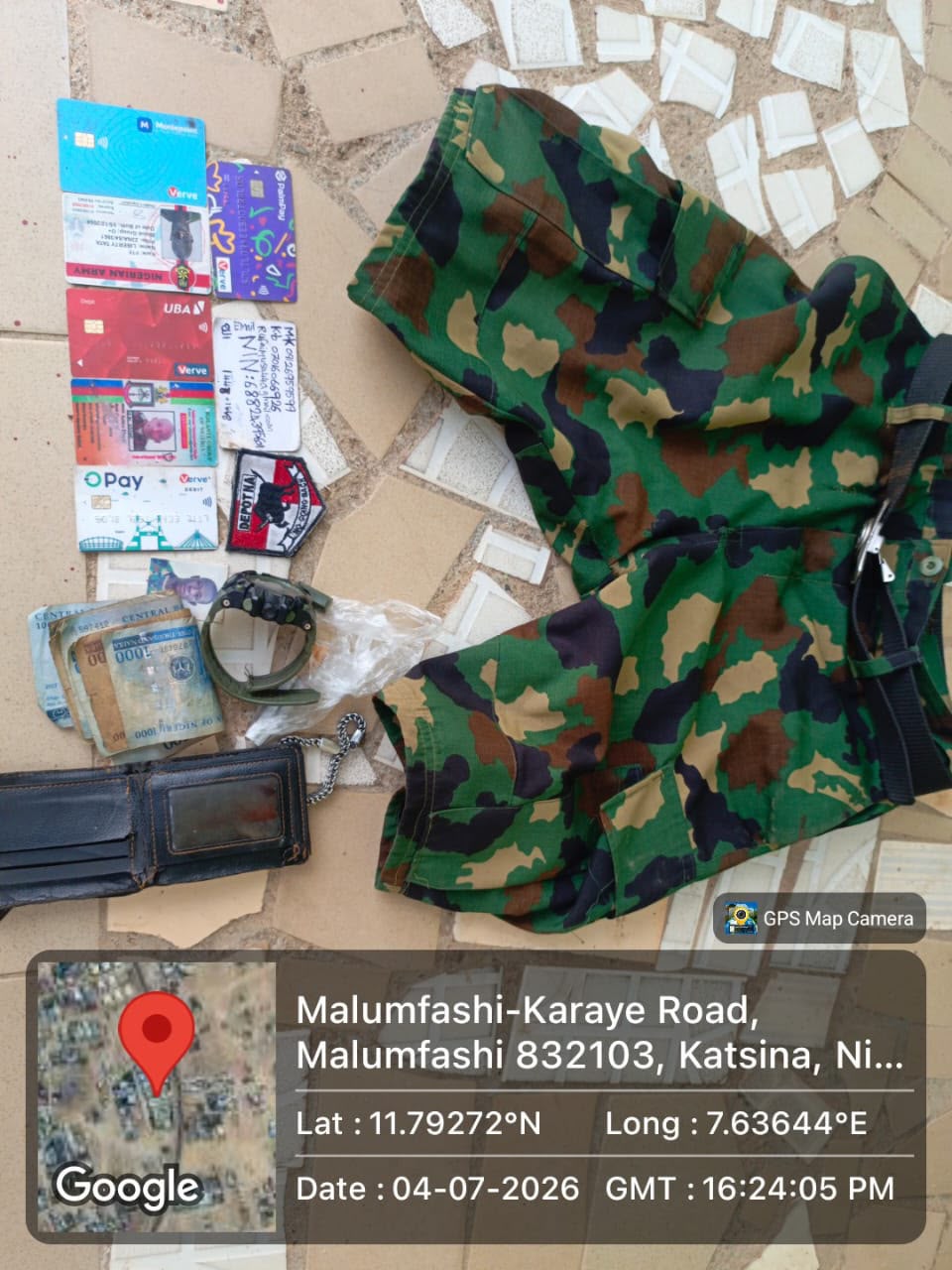
Troops Arrest Suspected Military Impostor in Katsina
By Zagazola Makama
Troops of 17 Brigade have arrested a suspected military impostor during a fighting patrol in Malumfashi Local Government Area.
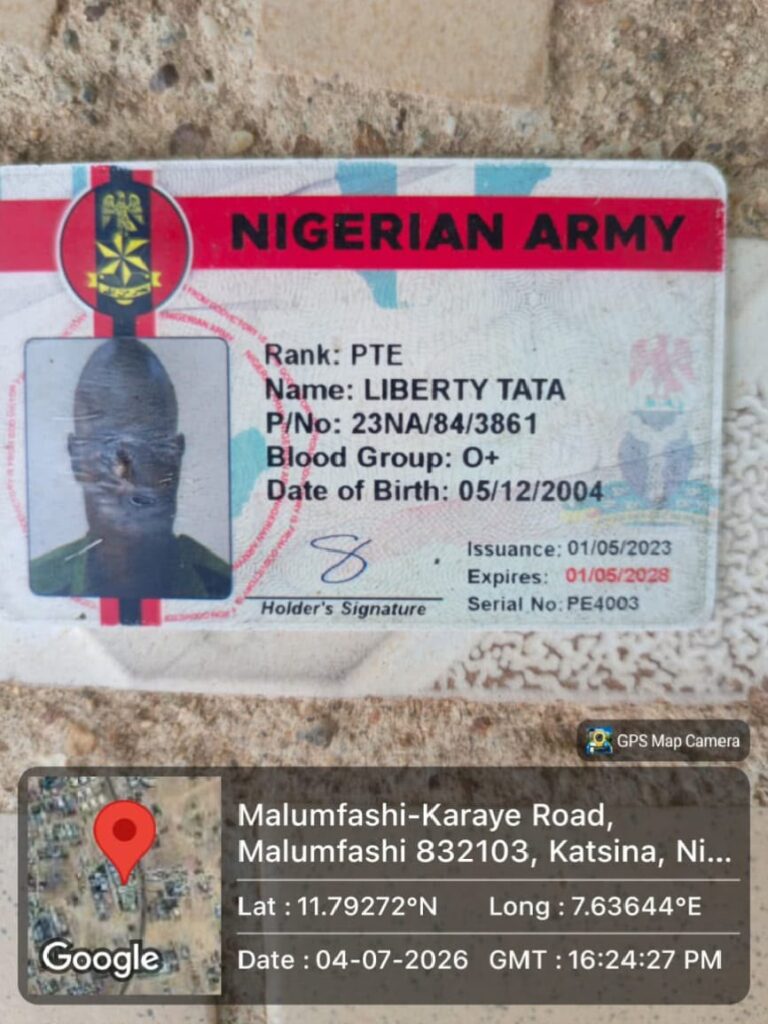
Security sources told Zagazola Makama that the suspect was apprehended at about 1:30 p.m. on July 4 by troops deployed at the Forward Operating Base (FOB) Malumfashi while conducting routine patrols within Malumfashi town.

According to the sources, the suspect was intercepted while wearing a woodland camouflage three-quarter short, raising suspicion among the troops.
A search conducted on the suspect led to the recovery of a fake Nigerian Army identity card, four Automated Teller Machine (ATM) cards, one woodland camouflage three-quarter short, a wristwatch and the sum of ₦17,000.
The suspect and the recovered exhibits are currently in military custody pending further investigation.
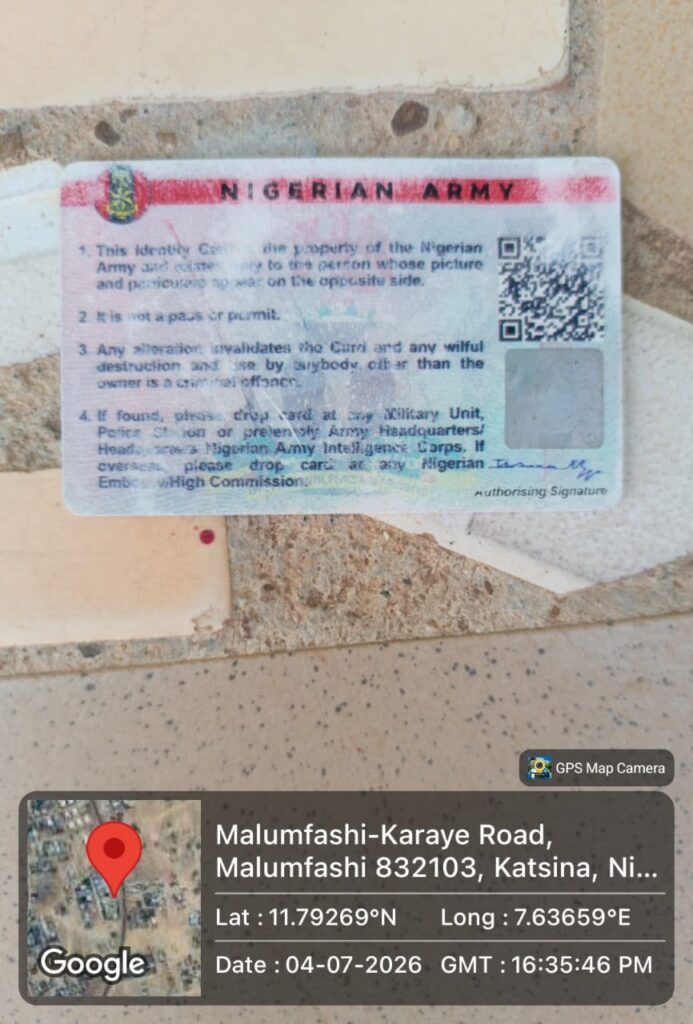
Military sources said the arrest forms part of ongoing efforts to curb impersonation of security personnel and other criminal activities within the area.
Troops Arrest Suspected Military Impostor in Katsina

Troops Recover 50 Rustled Cattle, Repel Suspected Rustlers in Kaduna
By Zagazola Makama
Troops deployed at the Forward Operating Base (FOB) Kankomi have recovered 50 rustled cattle after repelling suspected cattle rustlers during an ambush operation in Chikun Local Government Area.
Security sources told Zagazola Makama that the troops responded to a distress call at about 9:55 a.m. on July 4 over the activities of suspected rustlers at Ungwan Gontu community.
According to the sources, the troops swiftly laid an ambush and made contact with the fleeing suspects, forcing them to abandon the stolen livestock and escape into the surrounding area.
During the operation, the troops recovered 50 rustled cattle, which were subsequently identified and handed over to their rightful owner.
Military sources said efforts are ongoing to track down the fleeing suspects as security operations continue to combat cattle rustling and other criminal activities across Kaduna State.
Troops Recover 50 Rustled Cattle, Repel Suspected Rustlers in Kaduna

Zulum Appoints Engr Peter Samuel as General Manager BOSAMA

DSS Frees Cardiac Surgeon Martin Aghaji on Bail Over Alleged Economic Crime

Troops Arrest Suspected Military Impostor in Katsina

Roger Federer’s Shock as DNA Results Reveal Myla and Charlene Are Not His Biological Children

THE PLIGHT OF FARIDA

FAILED COUP IN BURKINA FASO: HOW TRAORÉ NARROWLY ESCAPED ASSASSINATION PLOT AMID FOREIGN INTERFERENCE CLAIMS
-
 News2 years ago
Roger Federer’s Shock as DNA Results Reveal Myla and Charlene Are Not His Biological Children
-
Opinions4 years ago
THE PLIGHT OF FARIDA
-
 News1 year ago
FAILED COUP IN BURKINA FASO: HOW TRAORÉ NARROWLY ESCAPED ASSASSINATION PLOT AMID FOREIGN INTERFERENCE CLAIMS
-

 News2 years ago
EYN: Rev. Billi, Distortion of History, and The Living Tamarind Tree
-
 Opinions5 years ago
POLICE CHARGE ROOMS, A MINTING PRESS
-

 ACADEMICS2 years ago
A History of Biu” (2015) and The Lingering Bura-Pabir Question (1)
-

 Columns2 years ago
Army University Biu: There is certain interest, but certainly not from Borno.
-

 Politics1 year ago
2027: Why Hon. Midala Balami Must Go, as Youths in Hawul and Asikira/Uba Federal Constituency Reject ₦500,000 as Sallah Gift
