
News
Allegations Over Kidal Mosque Strike Point to Deepening Polarisation in Mali Conflict

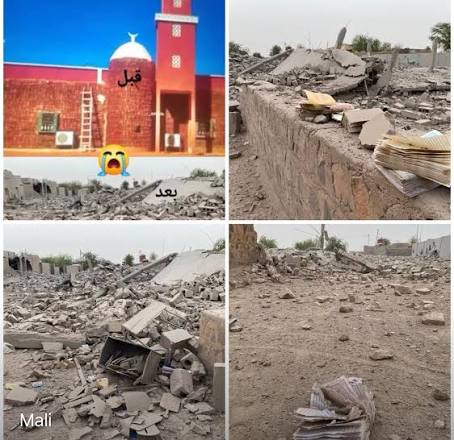
Allegations Over Kidal Mosque Strike Point to Deepening Polarisation in Mali Conflict
By: Zagazola Makama
Fresh allegations surrounding an airstrike in the northern Malian city of Kidal have intensified tensions and sharpened accusations against the military government of Colonel Assimi Goïta and its Russian security partners, amid an increasingly brutal and polarised conflict in northern Mali.
The claims, widely circulated, accuse Malian forces and Russian Wagner-linked operatives of targeting a mosque in Kidal during Eid al-Adha celebrations, an allegation that, if independently verified, could further inflame already fragile relations between Bamako and communities in the Azawad region.
At the middle of the controversy is the reported destruction of the Aliou Mosque in Kidal, a city that has long served as a symbolic stronghold of Tuareg separatist movements and anti-government resistance.
It was gathered that the mosque was allegedly struck during a sacred Islamic holiday period, amplifying public outrage among sections of the population. The mosque not only served as a place of worship, but also as an important social and communal centre within a conflict-ravaged city.
Particularly emotional reactions have focused on reports that copies of the Qur’an were found damaged beneath the rubble following the strike, images and narratives that have circulated widely online and contributed to growing anger among some citizens.
It was argued that the attacks affecting religious sites carry consequences extending beyond military calculations because they touch deeply held spiritual and cultural sensitivities.
However, independent verification of the exact circumstances surrounding the incident remains difficult due to restricted access to northern Mali and the highly contested information environment surrounding the conflict.
The allegations emerge amid intensified fighting between Malian armed forces and armed groups operating in northern Mali following the collapse of previous peace arrangements.
Since the withdrawal of international forces and the expansion of Russian military cooperation with Bamako, clashes have increased across several northern regions, including Kidal, Gao, and Timbuktu.
Critics of the military government accuse authorities of increasingly relying on heavy aerial bombardments and aggressive military tactics in efforts to regain territorial control.
Supporters of the junta, however, maintain that the government is confronting heavily armed insurgent and separatist networks that threaten national sovereignty and territorial integrity.
The conflict has evolved into both a military struggle and an information war, with competing narratives shaping domestic and international perceptions of events on the ground.
There was also renewed accusations against Russian Wagner-linked operatives operating alongside Malian forces.
Human rights organisations have repeatedly raised concerns in recent years over allegations of abuses involving both Malian security forces and Russian paramilitary personnel during counterinsurgency operations.
The Malian authorities have consistently defended their security partnerships as necessary components of the country’s fight against terrorism and foreign interference.
Wagner operatives have become deeply embedded in sensitive military operations, particularly in northern regions where government authority remains contested.
The growing visibility of Russian involvement has become one of the defining geopolitical features of Mali’s post-2021 security strategy.
However, it was warn that incidents involving religious sites could deepen mistrust between the central government and communities in northern Mali, particularly among populations already alienated by years of conflict, displacement, and political marginalisation. The symbolic impact of any perceived attack on a mosque during Eid could have long-term psychological and political consequences.
Wars involving identity, religion, and historical grievances often become more difficult to resolve when sacred spaces are drawn into the conflict. The continued militarisation of the crisis risks fuelling resentment and widening the divide between Bamako and northern populations.
On Political commentator criticises what it describes as limited international reaction to the latest allegations, arguing that global attention toward Mali has diminished despite worsening humanitarian and security conditions.
He noted that instability in Mali continues to affect the broader Sahel, where jihadist violence, military rule, displacement crises, and weakened state institutions remain interconnected challenges.
He concludes with a warning that prolonged conflict, heavy-handed military responses, and deepening social fractures could leave lasting scars on Mali’s national cohesion for generations.
He said independent investigations, transparency, and credible humanitarian access will remain critical in determining the facts surrounding incidents such as the reported strike in Kidal and in preventing further escalation of tensions across the region.
Allegations Over Kidal Mosque Strike Point to Deepening Polarisation in Mali Conflict


News
Nigeria: European Union (EU) Heads of Mission conclude strategic visibility and public diplomacy mission to Kano
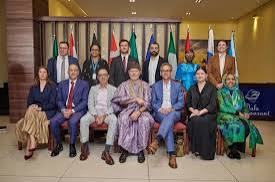
Nigeria: European Union (EU) Heads of Mission conclude strategic visibility and public diplomacy mission to Kano
- reinforcing engagement with youth, communities, and regional partners.
By: Our Reporter
A high-level delegation of EU Member States Heads of Missions and their Deputies, led by EU Ambassador to Nigeria and ECOWAS, Gautier Mignot, together with UNICEF, the Deutsche Gesellschaft für Internationale Zusammenarbeit (GIZ) on behalf of the German Government, Plan International Nigeria, UN Habitat, and other development partners, has concluded a multi-day engagement in Kano State aimed at strengthening strategic visibility, public diplomacy, and partnerships across Northern Nigeria.
During the visit, the delegation met with the Deputy Governor of Kano State, Murtala Sule Garo, who represented His Excellency Abba Kabir Yusuf, Governor of Kano State, and exchanged ideas on urban development, opportunities for youth, and social inclusion. The Governor emphasized the importance of strong partnerships in advancing development across the state, noting that, “under the leadership of Governor Abba Kabir Yusuf, Kano State remains committed to creating an enabling environment that encourages responsible investment, promotes transparency and accountability and fosters collaboration with international partners to achieve shared development goals.”
The Government of Kano State presented its Urban Development Strategy, aimed at guiding sustainable urban growth, improving resilience, strengthening infrastructure planning, fostering social cohesion, promoting peace and regional integration, and unlocking economic opportunities across the metropolitan region, with technical support from UN-Habitat.
Reflecting on the mission, Gautier Mignot, EU Ambassador to Nigeria and ECOWAS, said, “This visit underlines the European Union’s commitment to being visibly present and engaged in Northern Nigeria. By connecting directly with communities, young people, and local institutions, we are strengthening partnerships that support inclusive growth, stability, and opportunity for all.”
Dr. Markus Wagner, Country Director, GIZ Nigeria and ECOWAS, said, “Investing in women and young entrepreneurs is key to building resilient communities. Through skills development and support to local enterprise, we are creating opportunities that strengthen local economies across Northern Nigeria.”
At Bayero University Kano, the EU Heads of Mission engaged directly with students in an interactive exchange focused on youth participation and locally driven solutions, underscoring the importance of listening to young voices and supporting their contribution to society.
On education, Dr Charles Usie, Country Director, Plan International Nigeria said, “Quality education is more than access to a classroom; it is about creating opportunities for children to learn, thrive, and shape their own futures. Achieving this requires strong partnerships and sustained investment, particularly for girls and children who continue to face barriers to education and opportunity. Together, we can build a future where no child is left behind.”
Across programme visits, the delegation observed EU-supported and partner-led initiatives, including an accelerated education programme supported by Plan International and a Qur’anic education centre supported by UNICEF, promoting inclusive learning and strengthening child protection. Wafaa Saeed, UNICEF Representative in Nigeria, said, “Children and young people are at the centre of this engagement. By investing in their education, health, and protection, we are helping ensure that every child, especially the most vulnerable, can survive, learn, and build a better future.”
The delegation also visited a facility producing ready-to-use therapeutic food for children affected by malnutrition, and media platforms such as Kannywood, highlighting the role of local storytelling in shaping public dialogue and social change.
Participating at the Northwest Governors’ Forum Policy Dialogue on Reducing Multidimensional Poverty, the EU Heads of Mission engagement concluded with renewed commitment from the European Union and partners to deepen collaboration across Northern Nigeria, expand opportunities for young people and women, and support inclusive, resilient systems that respond to local needs and aspirations.
Nigeria: European Union (EU) Heads of Mission conclude strategic visibility and public diplomacy mission to Kano

Gombe gets smart police divisional headquarters to strengthen internal security
Gov. Inuwa Yahaya of Gombe State, on Wednesday, inaugurated a smart Divisional Police Headquarters in Gombe to enhance crime fighting and strengthen internal security.
Also inaugurated were housing units for rank-and-file constructed by the Nigeria Police Trust Fund (NPTF) with digital infrastructure support from Galaxy Backbone Ltd.
Speaking during the inauguration in Gombe, Yahaya described the infrastructure as critical in modern crime fighting.
Represented by his deputy, Mr Mannasah Jatau, the governor said the police need the right tools and regular training of its personnel to effectively tackle crime.
He commended President Bola Tinubu, Minister of Police Affairs, Ibrahim Gaidam and the NPTF leadership for the gesture.
The Inspector General of Police (IGP), Olatunji Disu, who was represented by Mohammed Mustapha, DCP Administration, Gombe State Police Command, said the facility would boost officers’ morale.
Disu described the facilities as investments in the welfare, dignity and operational readiness of personnel.
According to Disu, decent accommodation and modern workspace will enhance response time and help officers serve the public with greater efficiency and humanity.
Also, Mohammed Sheidu, Executive Secretary, NPTF, said the divisional headquarters equipped with modern technologies was part of its special intervention project to boost personnel morale.
Sheidu described the projects as strategic investment in modern, responsive and people-centred policing.
“What we inaugurated today is not just a physical structure but a direct investment in the men and women who dedicate their lives to protecting our communities and safeguarding the nation,” he said.
Prof. Ibrahim Adeyanju, Chief Executive Officer, Galaxy Backbone, said the facility was a commitment to harnessing the power of technology in transforming policing in Nigeria.
Adeyanju said that his company in partnership with NPTF was laying the foundation for a smart digital police force, “one that is proactive, data-driven and responsive to the needs of our citizens.
“This facility will enhance intelligence gathering and crime prevention integrated with NIN, facials, fingerprints and other biometrics.
“We are looking at cloud-based solutions that ensure secure storage and real time access to critical and confidential information.
“This initiative will help strengthen police force, improve response time and ensure accountability and transparency.
“By embracing digital tools, the Nigerian Police Force will be better positioned to combat crimes, protect communities and uphold justice in a rapidly evolving world,” he said.
Adeyanju said Galaxy backbone and the NPTF were building a future where Nigerian police would stand as a model of smart digital security in Africa.
Gombe gets smart police divisional headquarters to strengthen internal security
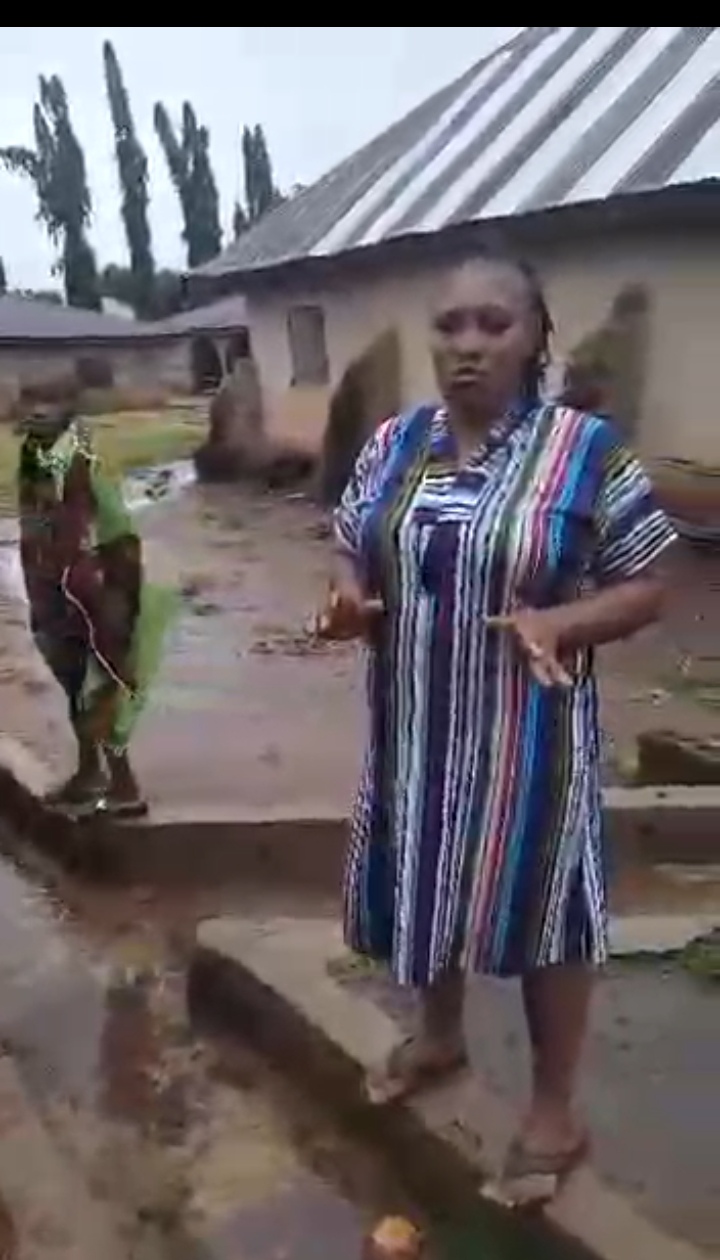
Swift Troops’ Intervention Foils Attack on School, Saves Students in Kogi
By: Zagazola Makama
The timely intervention of security troops has prevented what could have been a major attack on students writing the ongoing West African Senior School Certificate Examination (WASSCE) in Iluke Community, Kabba-Bunu Local Government Area of Kogi State.
Eyewitnesses who spoke after the incident commended the swift response of the troops, saying their prompt arrival at the scene prevented the attackers from carrying out a mass abduction of students.
The attack occurred when armed men stormed the community and started shooting where students were writing their examinations.
According to eyewitness accounts, the assailants attempted to seize the students and move them into a nearby bush before security personnel responded to distress calls from residents.
“The situation would have been much worse if the soldiers had not arrived when they did. Their intervention saved the students and prevented what could have been a major tragedy,” one resident said.
Another eyewitness described the response of the troops as timely and professional, noting that the security operatives engaged the attackers and forced them to abandon their mission.
The residents said the arrival of the troops compelled the attackers to retreat from the area.
All the students were reportedly safe and unharmed and safely reunited with their families following the operation.
Community members also praised local security volunteers and other security agencies that supported the operation.
The incident, however, left the community in mourning following the death of three residents during the attack.
Security sources said one of the attackers was neutralised during the exchange of fire, while several others escaped with gunshot wounds.
A security operation is ongoing to track down the fleeing suspects and prevent further attacks in the area.
Residents of Iluke Community expressed gratitude to the troops for their courage and sacrifice, describing the intervention as a decisive action that prevented a larger humanitarian crisis.
They urged security agencies to sustain the ongoing operations and strengthen security presence in vulnerable communities across the area.
The Kogi State Government has also commended the troops and other security personnel involved in the operation, assuring residents of its commitment to safeguarding lives and property.
Swift Troops’ Intervention Foils Attack on School, Saves Students in Kogi

Nigeria: European Union (EU) Heads of Mission conclude strategic visibility and public diplomacy mission to Kano

Gombe gets smart police divisional headquarters to strengthen internal security

Troops Foil Terrorists’ Advance, Recover Motorcycle in Yobe

Roger Federer’s Shock as DNA Results Reveal Myla and Charlene Are Not His Biological Children

THE PLIGHT OF FARIDA

FAILED COUP IN BURKINA FASO: HOW TRAORÉ NARROWLY ESCAPED ASSASSINATION PLOT AMID FOREIGN INTERFERENCE CLAIMS
-
 News2 years ago
Roger Federer’s Shock as DNA Results Reveal Myla and Charlene Are Not His Biological Children
-
Opinions4 years ago
THE PLIGHT OF FARIDA
-
 News1 year ago
FAILED COUP IN BURKINA FASO: HOW TRAORÉ NARROWLY ESCAPED ASSASSINATION PLOT AMID FOREIGN INTERFERENCE CLAIMS
-

 News2 years ago
EYN: Rev. Billi, Distortion of History, and The Living Tamarind Tree
-
 Opinions4 years ago
POLICE CHARGE ROOMS, A MINTING PRESS
-

 ACADEMICS2 years ago
A History of Biu” (2015) and The Lingering Bura-Pabir Question (1)
-

 Columns2 years ago
Army University Biu: There is certain interest, but certainly not from Borno.
-

 Politics1 year ago
2027: Why Hon. Midala Balami Must Go, as Youths in Hawul and Asikira/Uba Federal Constituency Reject ₦500,000 as Sallah Gift
