
News
Inside the Intelligence Web That Tracked Down ISWAP Commander Abu-Bilal al-Minuki

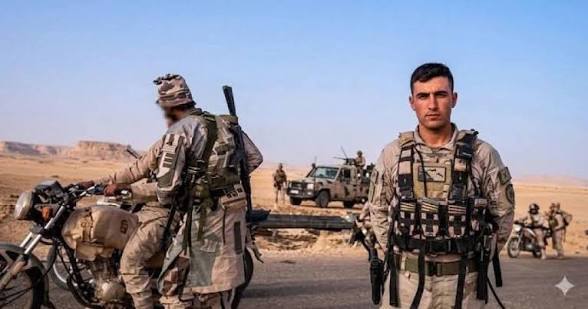
Inside the Intelligence Web That Tracked Down ISWAP Commander Abu-Bilal al-Minuki
By: Zagazola Makama
For years, Abu-Bilal al-Minuki, a.k.a Abbor Mainok, moved like a shadow across West Africa’s insurgency landscape — an elusive, high-value commander whose name surfaced in fragmented intelligence reports, intercepted communications, and battlefield whispers across the Lake Chad Basin.
But what ultimately brought him into the crosshairs of a joint Nigeria–United States counterterrorism operation was not chance, nor a sudden intelligence windfall. It was the slow, patient tightening of an intelligence net, woven thread by thread by Nigerian security agencies and their international partners until escape became statistically impossible.
Security sources familiar with the operation describe the mission not as a single breakthrough, but as the end product of “months of layered intelligence convergence” involving the Department of State Services (DSS), the Nigerian Intelligence Agency (NIA), the Defence Intelligence Agency (DIA), and the United States Africa Command (AFRICOM).
At the centre of this architecture was a quiet but persistent pursuit: mapping the movement, contacts, and behavioural patterns of a man described as “a mobile command node” within the Islamic State West Africa Province (ISWAP).
The intelligence trail reportedly began with intermittent sightings in Nigeria’s capital, Abuja an unusual pattern for a commander of his stature. Sources say al-Minuki was first flagged in Abuja during what appeared to be a low-profile civilian movement. He was later traced to Kano, where intelligence indicated he made contact with an ISWAP-linked facilitator from Yobe State.
From that point, the picture began to sharpen.
Each movement, once isolated, started forming a pattern: Kano to Yobe, Yobe to Maiduguri in March. The security intelligence agencies did not want to take him out prematurely. Later, from Maiduguri, he found his way deeper into the Lake Chad operational corridor.
It was here that Nigeria’s intelligence ecosystem began to operate less like separate agencies and more like a fused operational organism.
Human intelligence from local networks, surveillance inputs from theatre commands, and technical intercepts were no longer treated as independent streams. Instead, they were merged into a single analytical framework capable of tracking not just where al-Minuki was, but where he was likely to go next.
At a critical stage in March 2026, al-Minuki reportedly went off the radar. Rather than losing him, the system recalibrated.
Patterns of his known associates were re-examined. Communication networks were mapped with greater precision. Analysts built what one source described as a “predictive movement profile” a behavioural model that estimated not just his location, but his operational intent.Ten days before his elimination, it was gathered that he travelled to Iraq for an international engagement with the ISIS network. When he re-emerged, intelligence coverage resumed seamlessly.
A major turning point, according to intelligence sources, came with the arrest of a suspected ISWAP operational figure identified as Abdulrahman Ozovieh Muhammad, also known as Abu Ghozi. His detention, though initially treated as a separate internal security success, reportedly yielded a cascade of exploitable intelligence: contact lists, communication patterns, logistical arrangements, and possible operational linkages extending into the Lake Chad axis.
In intelligence terms, such captures often function as “access nodes” points through which larger networks become visible. It was through this expanding web that analysts believe critical confirmation of al-Minuki’s movements was achieved in the days leading up to the final operation.
By mid-May 2026, the intelligence picture had matured into a “validated target cycle.”
At this stage, Nigerian intelligence agencies were no longer merely supporting an operation they were co-owning it. AFRICOM’s surveillance and strike capabilities were integrated into a joint framework in which target confirmation, timing, and execution planning became shared responsibilities.
According to defence sources, this fusion was critical. Nigerian agencies provided the granular human intelligence and contextual mapping, while U.S. assets contributed advanced surveillance and precision strike capabilities. The result was a synchronized operational chain that left minimal room for error or escape.
When the strike eventually occurred in Metele, Borno State, it was described by officials as “precise, deliberate, and intelligence-validated.”
But before the strike, the joint team was determined to capture him alive. Troops were air-dropped at Ali Jamlari, very close to Metele.
The troops moved immediately and engaged the terrorists in heavy gunfire that lasted several hours. It was while al-Minuki was trying to escape that he was neutralized, while a few of his men escaped through Dogon Chukwu.
Early assessments indicated the elimination of al-Minuki alongside senior fighters, marking one of the most significant degradations of ISWAP’s command structure in recent years.
But beyond the immediate battlefield impact, the operation represented the maturity of Nigeria’s intelligence-led warfare doctrine. The success against al-Minuki illustrates a broader transformation in Nigeria’s counterterrorism strategy from reactive engagement to predictive disruption.
Rather than waiting for attacks or battlefield encounters, intelligence agencies are increasingly shaping the operational environment itself tracking leadership movements, pre-empting coordination, and dismantling networks before they fully activate.
Last year, two most-wanted terrorist kingpins, Abu Baraa and Mahmuda, were captured through the diligent and coordinated work of Nigeria’s Department of State Services (DSS).
The psychological impact, too, is becoming visible.
This year alone, the Nigerian Army under Operation HADIN KAI has eliminated more than 57 ISWAP commanders in major leadership decapitation operations. Reports from the theatre already suggest growing anxiety among insurgent fighters, increased fragmentation of units, and a decline in operational cohesion signs that sustained intelligence pressure, combined with ground and air offensives, is achieving effects beyond physical attrition.
While the strike itself will dominate headlines, security insiders insist the real story lies in what cannot be seen: the coordination rooms, the analytical boards, the intercepted signals, the human sources operating in silence, and the inter-agency trust that allowed intelligence to flow without friction.
In that hidden architecture, they say, lies the true victory. In that sense, the true achievement lies not only in the elimination of a high-value target, but in the demonstration that coordinated intelligence when sustained, disciplined, and shared across institutions and borders can reshape the trajectory of asymmetric conflict.
Zagazola Makama is a Counter-Insurgency Expert and Security Analyst in the Lake Chad Region.
Inside the Intelligence Web That Tracked Down ISWAP Commander Abu-Bilal al-Minuki



Centre lauds Kaduna Govt over life skills, gender education policies approval
By Aisha Gambo
The Centre for Girls’ Education (CGE) has commended the Kaduna State Executive Council for approving the Kaduna State Life Skills Policy and the State Policy on Gender in Education (SPGE 2026–2030).
The Executive Director of the organisation, Habiba Mohammed, made this known in a statement issued on Wednesday in Kaduna.
She said the approval marked a transition from donor-supported, time-bound interventions to a sustainable, government-led framework for delivering life skills education and promoting gender equity in schools.
According to her, the Life Skills Policy will equip young people with the knowledge, skills, attitudes and values required to succeed in education, employment and life, while the Gender in Education Policy providzbves a framework to promote equity, inclusion, participation, retention, completion and improved learning outcomes.
“The approval moves life skills and gender equity from the margins of the classroom into the core of Kaduna State’s education system,” she said.
Mohammed said CGE contributed to the development and validation of the policies through its system-strengthening project supported by Co-Impact, OASIS Initiative and the Malala Fund, in collaboration with the Adolescent Girls Initiative for Learning and Empowerment (AGILE) and the Kaduna State Ministry of Education.
She said the policies built on more than 18 years of the organisation’s Safe Space model, which independent evaluations showed had helped reduce child marriage, increase school enrolment and delay early marriage.
According to her, the AGILE programme in Kaduna has reached more than 127,319 girls and 6,250 boys between the ages of 14 and 18, while over 1,400 female and male teachers have been trained as mentors.
She added that institutionalising the model through public policy would ensure that life skills education became a permanent component of the state’s education system.
Mohammed said the policies would address barriers to school access, retention and completion, particularly for girls and other vulnerable learners.
She added that they would also institutionalise life skills as a co-curricular programme, strengthen evidence-based decision-making across the state’s 23 local government areas and guarantee continuity beyond donor-funded programmes.
The executive director commended Gov. Uba Sani for providing the leadership that made the policy approval possible.
She also appreciated the Commissioner for Education, Prof. Abubakar Sani Sambo, the Kaduna State Ministry of Education, the AGILE State Project Implementation Unit, the World Bank and other stakeholders for their contributions to the process.
Mohammed reaffirmed CGE’s commitment to supporting the Kaduna State Government with technical assistance during the implementation phase, including teacher training, gender-responsive education sector budgeting and monitoring.
She said the ultimate goal was to ensure that every girl and boy in Kaduna State had the opportunity to learn, develop and thrive.
Centre lauds Kaduna Govt over life skills, gender education policies approval
Troops Kill Six ISWAP Fighters, Wound Seven in Failed Attack on Borno Military Base
By: Zagazola Makama
Six fighters of the Islamic State West Africa Province (ISWAP) were reportedly killed and seven others seriously wounded during a failed attack on a Forward Operating Base (FOB) at Logomani in Borno State, credible intelligence sources have disclosed.
The sources told Zagazola Makama that the terrorists launched the attack on the military position in the early hours of July 7 but suffered significant casualties after troops mounted a fierce resistance.
According to the intelligence assessment, the attackers had assembled at Garal before advancing on the military base.
Following the failed assault, surviving insurgents were reportedly seen regrouping at Chukun Gudu, where they buried six of their fighters killed during the encounter.
Among those reportedly buried was a senior fighter identified as Munzir, also known as Ba Alayi, who was said to be an indigene of Wulgo.
The development comes as troops of Operation HADIN KAI continue sustained clearance operations aimed at dismantling terrorist enclaves and disrupting insurgents’ logistics and mobility across the Lake Chad region.
Troops Kill Six ISWAP Fighters, Wound Seven in Failed Attack on Borno Military Base
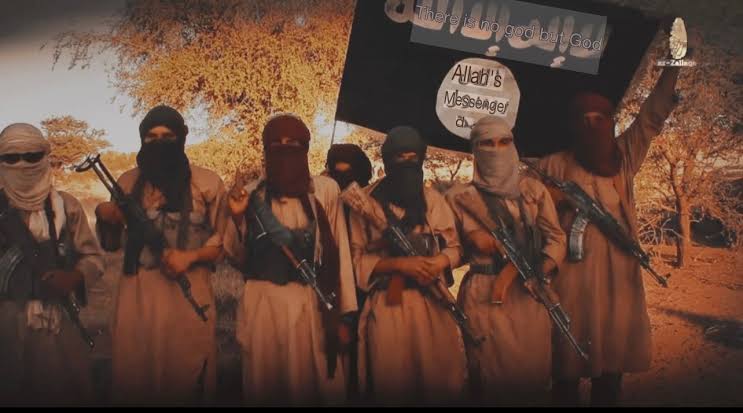
Cholera Outbreak Kills Nine ISWAP Terrorists in Timbuktu Triangle
By: Zagazola Makama
A cholera outbreak has reportedly claimed the lives of nine fighters of the Islamic State West Africa Province (ISWAP) in the Timbuktu Triangle, a known terrorist stronghold in Borno State, intelligence sources have disclosed.
The sources told the News Agency of Nigeria (NAN) that the outbreak had spread through the group’s enclaves, highlighting deteriorating sanitary conditions and limited access to medical care within the insurgents’ camps.
According to the intelligence, two additional ISWAP fighters infected with the disease were allegedly executed by fellow terrorists after attempts to manage their condition at Kimba village proved unsuccessful.
The sources said the development pointed to the worsening health conditions within the terrorist hideouts, where sustained military pressure has disrupted logistics, including access to medicines and treatment facilities.
The sources added that commanders had also been urged to intensify efforts to intercept medical supplies and pharmaceuticals intended for terrorist camps in order to further degrade ISWAP’s treatment capability and operational resilience.
The reported outbreak comes amid sustained offensives by troops of Operation HADIN KAI, who continue to target terrorist enclaves and logistics networks across the Lake Chad region in a bid to degrade the insurgents’ fighting capacity.
Cholera Outbreak Kills Nine ISWAP Terrorists in Timbuktu Triangle

Centre lauds Kaduna Govt over life skills, gender education policies approval

Troops Kill Six ISWAP Fighters, Wound Seven in Failed Attack on Borno Military Base

Cholera Outbreak Kills Nine ISWAP Terrorists in Timbuktu Triangle

Roger Federer’s Shock as DNA Results Reveal Myla and Charlene Are Not His Biological Children

THE PLIGHT OF FARIDA

FAILED COUP IN BURKINA FASO: HOW TRAORÉ NARROWLY ESCAPED ASSASSINATION PLOT AMID FOREIGN INTERFERENCE CLAIMS
-
 News2 years ago
Roger Federer’s Shock as DNA Results Reveal Myla and Charlene Are Not His Biological Children
-
Opinions4 years ago
THE PLIGHT OF FARIDA
-
 News1 year ago
FAILED COUP IN BURKINA FASO: HOW TRAORÉ NARROWLY ESCAPED ASSASSINATION PLOT AMID FOREIGN INTERFERENCE CLAIMS
-

 News2 years ago
EYN: Rev. Billi, Distortion of History, and The Living Tamarind Tree
-
 Opinions5 years ago
POLICE CHARGE ROOMS, A MINTING PRESS
-

 ACADEMICS2 years ago
A History of Biu” (2015) and The Lingering Bura-Pabir Question (1)
-

 Columns2 years ago
Army University Biu: There is certain interest, but certainly not from Borno.
-

 Politics1 year ago
2027: Why Hon. Midala Balami Must Go, as Youths in Hawul and Asikira/Uba Federal Constituency Reject ₦500,000 as Sallah Gift
