
News
Zulum – I Will Hand Over a More Secure and Prosperous Borno to Gubio

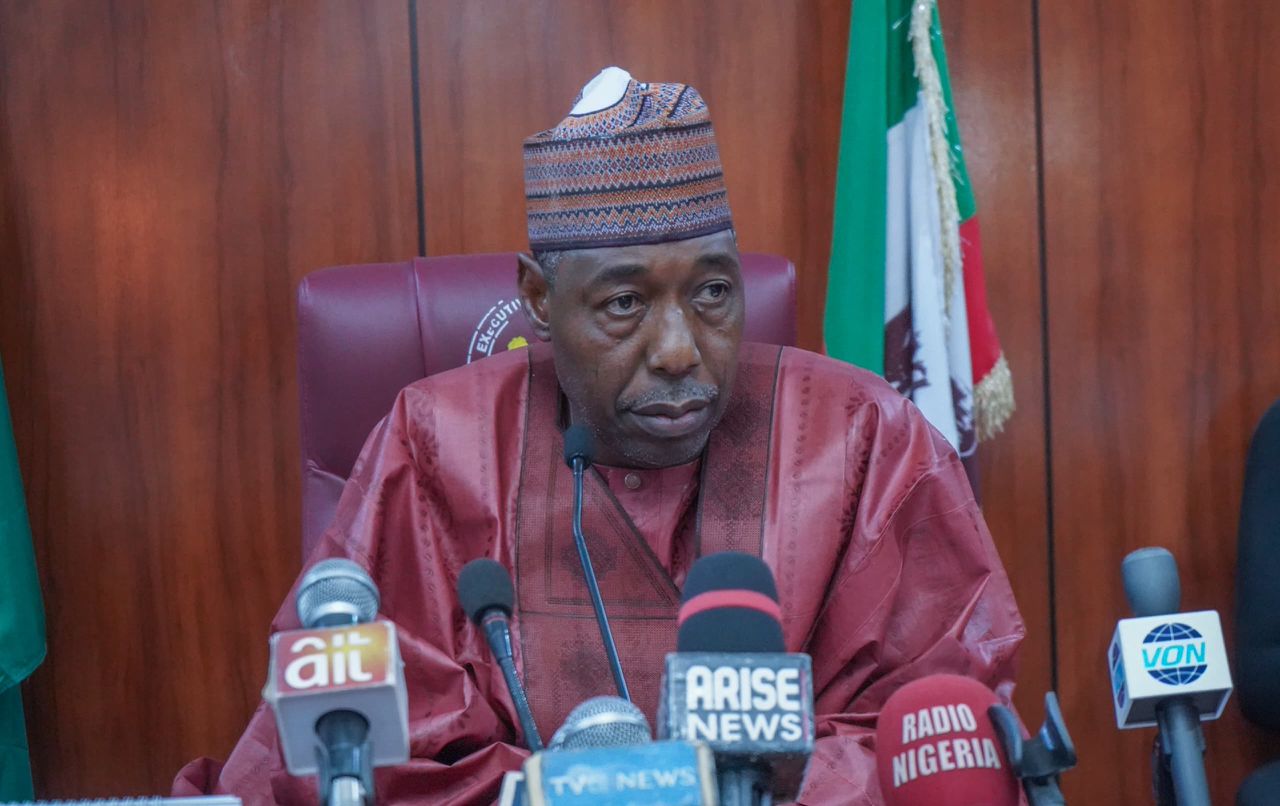
Zulum – I Will Hand Over a More Secure and Prosperous Borno to Gubio
By: Our Reporter
Borno State Governor, Professor Babagana Umara Zulum, has assured that he will hand over a more stable, secure, and economically prosperous Borno to the next administration.
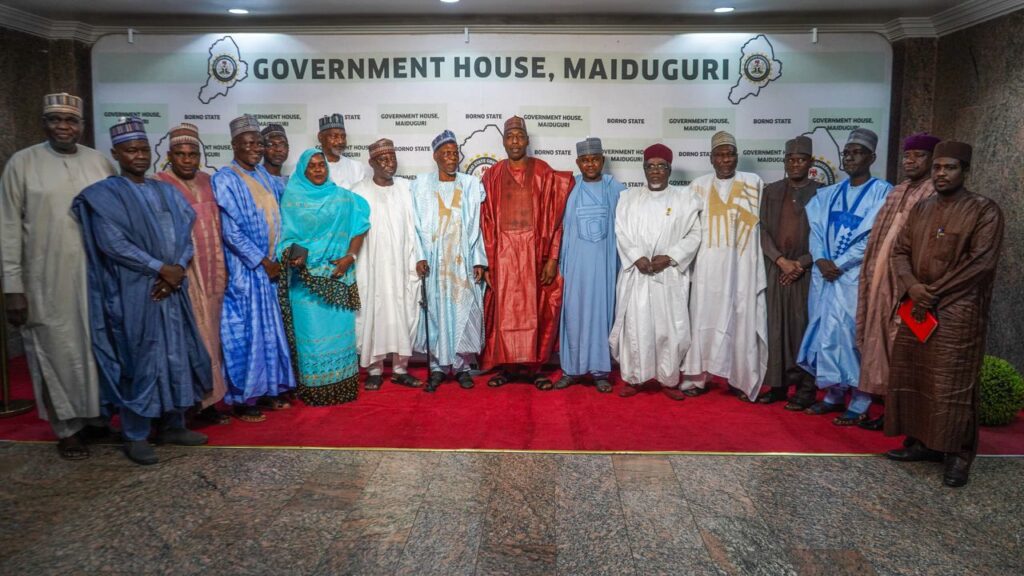
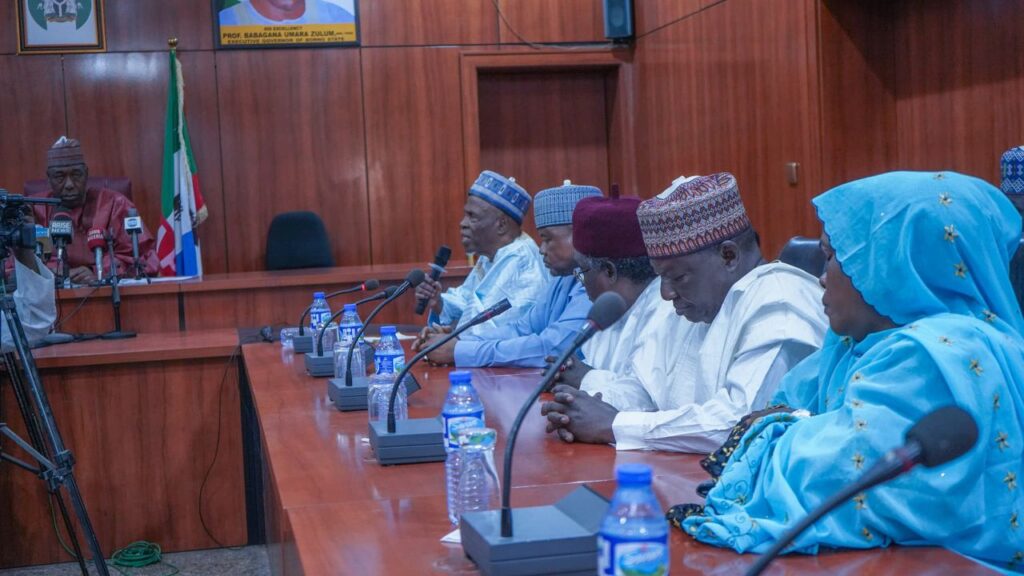
Governor Zulum gave the assurance on Monday when he received prominent sons and daughters of Gubio Local Government Area, led by elder statesman Alhaji Gambo Gubio, who paid him a courtesy visit at the Government House, Maiduguri, alongside the APC gubernatorial candidate, Engr. Mustapha Gubio.
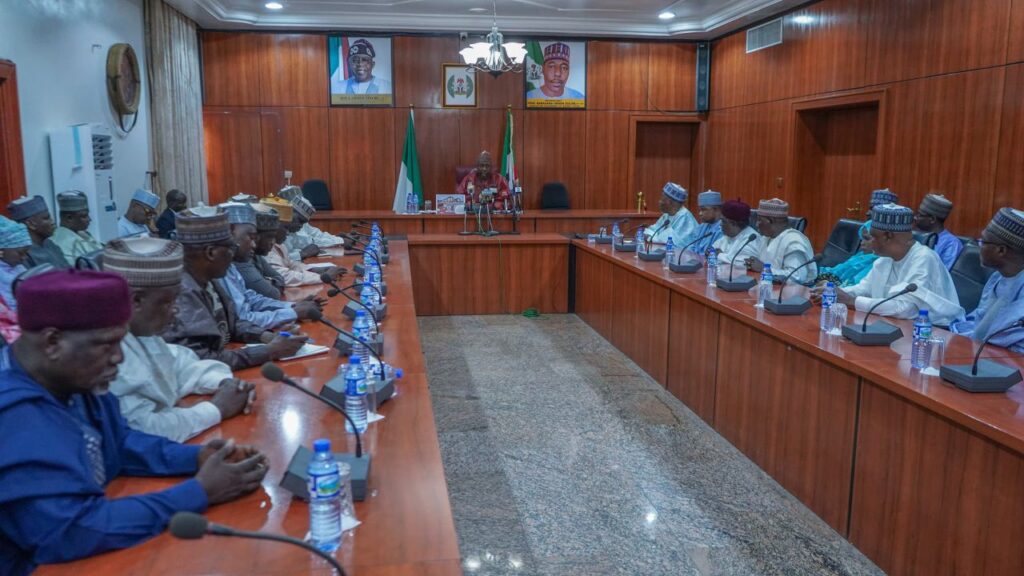
The delegation also included the Chairman of the Borno State Civil Service Commission, Dr. Bulama Mali Gubio; a former member of the House of Representatives, Hon. Fanta Baba Shehu; the Executive Chairman of Gubio, Hon. Mali Bulama Mali; a retired Commissioner of Police; and former Council chairmen.
The Governor noted that despite the challenges confronting the state, particularly insecurity, his administration remains committed to consolidating on the gains achieved over the years and laying a stronger foundation for sustainable development.
“Security is the most difficult issue. Insha Allah, before I leave, the situation will be better than now. I will hand over a more stable, more prosperous, and more secure government to Engr. Mustapha Gubio, Insha Allah,” Zulum declared.
He emphasised that sustaining achievements is often more difficult than attaining them, urging continued support and prayers for the APC governorship candidate.
“What matters is not just success; managing success is more difficult than achieving success itself. Managing success and managing the affairs of Borno State is not easy, but with collective support, prayers, and guidance, God will give him the wisdom and energy to succeed as a candidate and, Insha Allah, as Governor,” he said.
Extolling the leadership qualities of Engr. Mustapha Gubio, Governor Zulum described him as a man of integrity, humility, and composure whom he has known for more than two decades.
“Alhaji Mustapha Gubio, I have known him for the past 26 years, since he was a student at the University of Maiduguri. His integrity is evident; he is humane, very gentle, and composed. Insha Allah, God will help him to steer the mantle of leadership of Borno State,” Zulum stated.
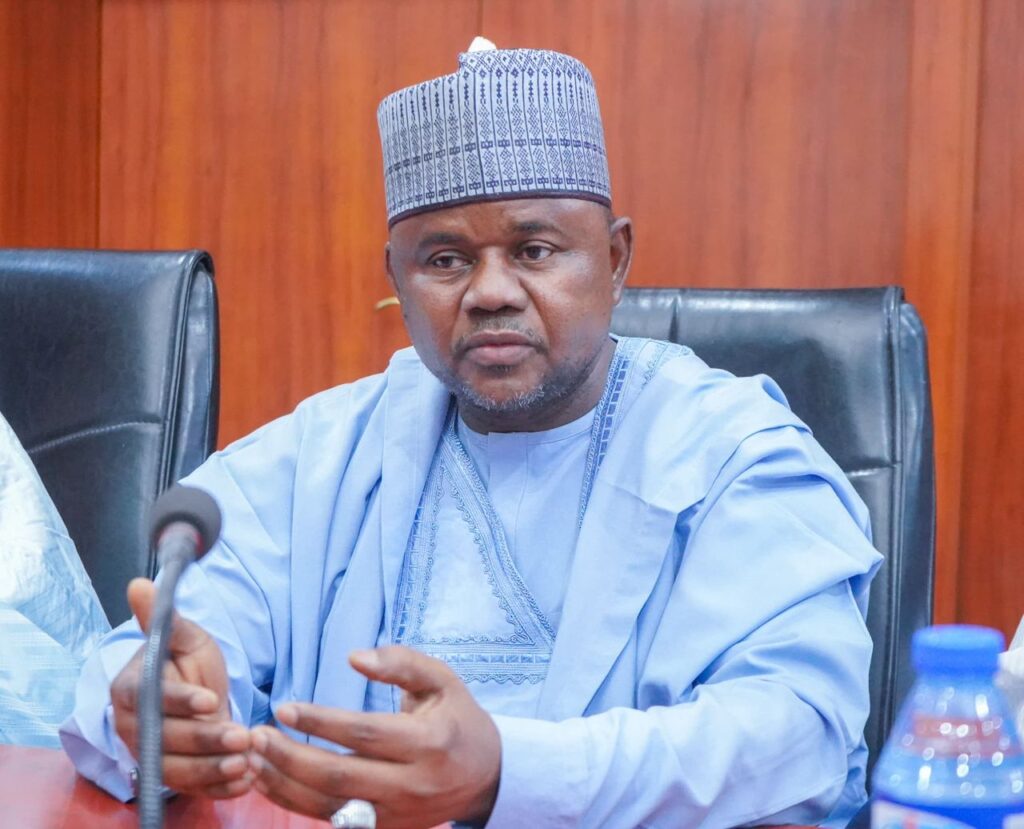
The Governor added, “We will continue to pray for our gubernatorial candidate so that the Almighty will give him the wisdom and the wherewithal to steer the leadership of the state.”
Reflecting on the challenges he encountered at the beginning of his administration in 2019, Zulum recalled the sacrifices required to confront the state’s security and humanitarian crises.
“When I took over the leadership of the state, in the first 55 days of my administration, I saw my children only three times. The first four years were really challenging, but Almighty Allah has helped us to see light at the end of the tunnel,” he said.
The Governor expressed appreciation to the delegation for the visit. “As Muslims, when we seek Allah’s guidance and pray for the best outcome, we must accept His decision with complete faith and conviction, knowing that whatever He chooses is ultimately the best for us,” Zulum remarked.
Leader of the delegation, Alhaji Gambo Gubio, commended Governor Zulum for his pivotal role in the emergence of Engr. Mustapha Gubio as the APC governorship candidate for the 2027 election.
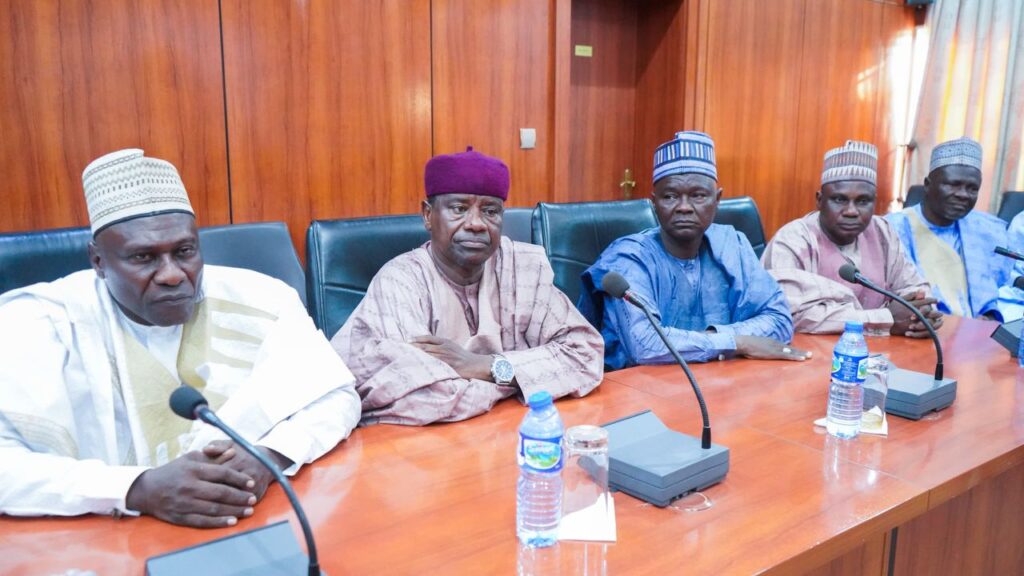
“We are here today to express our profound gratitude and thanks for this remarkable occasion. Words alone cannot adequately convey the depth of our feelings or fully capture all that we wish to say. However, we remain sincerely grateful and deeply appreciative,” Alhaji Gambo said.
He described the APC candidate as a worthy son of Gubio and expressed confidence in his future leadership.
Alhaji Gambo also acknowledged Governor Zulum’s achievements in security, infrastructure development, and governance, noting that “Zulum is succeeding,”.
The courtesy visit was attended by the APC State Chairman, Hon. Bello Ayuba; the Secretary to the State Government, Hon. Bukar Tijani; the Acting Chief of Staff, Dr. Babagana Mustapha Malumbe; commissioners, special advisers, and other government officials.
Zulum – I Will Hand Over a More Secure and Prosperous Borno to Gubio



Governor Buni reflects on the passing away of the Emir of Ngazargamu and others in Yobe
By: Yahaya Wakili
Governor Mai Mala Buni, CON, of Yobe State, has mourned the passage of sons and daughters of the state, describing the deaths as a giant loss to their families, communities, and, indeed, the state in general.
The governor disclosed the information in response to the sad deaths recorded across the state within short periods in recent times.
Governor Mai Mala Buni called for prayers for the repose of their souls and support to their families, adding that “it is indeed a trying moment for us, but we firmly believe that it is the will of Almighty Allah.”
He consoled the families of the deceased and the people of the state, noting that, “As faithful, we all know death is a necessary end; it will always come at the prescribed time as ordained by Allah (SWT).”
According to Governor Buni, we have lost one too many in recent times, from the late Emir of Ngazargamu to the Permanent Secretary, Dr. Bukar Aji; former Permanent Secretary Alhaji Ligali Ma’aji; Alhaji Yakubu Dokshe; Hajiya Mairiga Umar; Alhaji Kafchi Shettima; and some others.
“The deceased persons have, in their individual capacities, contributed greatly to the people and the state at large,” Gov. Buni added.
“As Muslims, we accept the will of God and pray for the repose of their souls. May Almighty Allah grant them Aljannah Firdausi and their families the fortitude to bear the irreparable loss.”
Governor Buni prayed, May Almighty Allah forgive their shortcomings and bless their souls with Aljannah Fiddausi. Ameen.
Governor Buni reflects on the passing away of the Emir of Ngazargamu and others in Yobe
News
Nigeria Launches Ambitious 10-Year Agrifood Plan to Transform Agriculture and Boost Food Security
Nigeria Launches Ambitious 10-Year Agrifood Plan to Transform Agriculture and Boost Food Security
By: Michael Olukayode
Nigeria’s agricultural sector is entering what policymakers describe as a defining decade, with the Federal Government unveiling a 10-year Agrifood System Strategy and Action Plan designed to reposition agriculture from a largely production-focused activity into a complete economic ecosystem built around food security, value creation, resilience and inclusive growth.
The strategy, launched in Abuja on July 23, 2026, is Nigeria’s framework for domesticating the African Union’s Comprehensive Africa Agriculture Development Programme (CAADP) Kampala Declaration (2026–2035), and is being positioned as a major attempt to address longstanding challenges that have limited the country’s agricultural potential.
At the centre of the new agenda is a recognition that Nigeria’s food challenge is not simply about producing more crops, but about building a system capable of supporting farmers, reducing losses, expanding processing, attracting investment and ensuring that agriculture contributes more significantly to national development.
Speaking at the Agrifood System Working Group Meeting, the Minister of Agriculture and Food Security, Senator Abubakar Kyari, described Nigeria’s agrifood system as a critical pillar of the economy, noting that it supports the livelihoods of more than 70 per cent of the population, drives rural economies, contributes significantly to GDP and holds enormous potential for job creation, foreign exchange earnings and inclusive growth.
“When our agrifood system thrives, Nigeria thrives,” the minister said, stressing the need for a transformation that goes beyond traditional agricultural interventions.
Moving Beyond Fragmented Agricultural Policies
For decades, Nigeria has introduced several agricultural programmes aimed at improving food production and supporting farmers. However, many have struggled to deliver lasting transformation due to challenges including inconsistent implementation, weak coordination, limited financing and inadequate infrastructure.
The new strategy attempts to take a different approach by adopting an integrated agrifood systems model.
Kyari explained that the plan was developed in alignment with the CAADP Kampala Declaration, which builds on previous continental commitments under the Maputo and Malabo Declarations but goes further by focusing on value chain development, resilience, inclusivity and good governance rather than production alone.
The minister said President Bola Ahmed Tinubu directed the development of the 10-year strategy because food security must be treated as a national security priority. He noted that the government’s objective is to move beyond isolated projects and create a coherent, bankable and implementable roadmap for long-term agricultural transformation.
Governance at the Heart of Transformation
A major theme running through the new strategy is governance.
Kyari argued that governance is the foundation upon which sustainable production, investment, food security, inclusivity and resilience must be built. He maintained that without strong governance structures, the ambitious objectives of the Kampala Declaration cannot be achieved.
This emphasis reflects a major lesson from Nigeria’s agricultural history: increasing production requires more than inputs. It requires reliable institutions, effective coordination between federal and state governments, accurate data, accountability and policies that remain consistent beyond political cycles.
Nigeria’s Continental Leadership Role
The International Fund for Agricultural Development (IFAD) described Nigeria’s new strategy as a landmark achievement, noting that the country has become the first nation to develop a national strategy and action plan for domestication of the CAADP Kampala Declaration.
According to IFAD, the achievement demonstrates Nigeria’s commitment to translating continental agricultural ambitions into concrete national actions and provides a model that other African countries can follow in implementing the Kampala Declaration through nationally owned frameworks.
The development agency commended the Federal Ministry of Agriculture and Food Security, government institutions, development partners, private sector actors, research organisations, farmer groups, women and youth organisations whose contributions shaped the strategy.
Putting Farmers, Women and Youth at the Centre
A major feature of the new framework is its focus on inclusion.
IFAD noted that the strategy recognises that sustainable agrifood transformation can only happen when smallholder farmers, women, young people, rural communities and vulnerable populations are placed at the centre of policy and investment decisions.
The strategy also incorporates cross-cutting issues such as climate resilience, nutrition, gender equality, youth empowerment, disability inclusion and support for internally displaced persons.
This approach reflects a growing understanding that agricultural development is not only about increasing output, but also about improving livelihoods and expanding opportunities for millions of Nigerians who depend on farming and related activities.
Digital Agriculture and Modern Farming
Another important element highlighted by IFAD is the emphasis on digital transformation.
The development agency noted that digital tools could become a major driver of efficiency in Nigeria’s agricultural sector through farmer registries, climate advisory services, electronic extension services, digital financial platforms, market information systems and data-based decision-making.
If successfully implemented, digital agriculture could improve transparency, expand access to services and help millions of farmers adopt modern production techniques.
Investment, Processing and Value Addition
The Federal Government has also highlighted ongoing interventions aimed at strengthening the agricultural value chain.
Kyari said government programmes have financed hundreds of thousands of farmers through the Bank of Agriculture’s Smallholder Financing and Value Chain Fund, distributed fertilisers and improved seeds, introduced a Guaranteed Minimum Price mechanism and expanded support for farmers across production cycles.
Other initiatives include Special Agro-Industrial Processing Zones designed to bring processing infrastructure closer to farming communities, agricultural mechanisation programmes involving the deployment of tractors and equipment, and efforts to reposition Nigeria’s cocoa industry through improved seedlings.
The focus on processing is particularly significant because Nigeria has historically exported many agricultural commodities in raw form, limiting income opportunities for farmers and reducing the country’s ability to capture greater value from its agricultural resources.
The Challenge Ahead: Turning Strategy Into Results
Despite the optimism surrounding the new framework, implementation remains the biggest test.
Nigeria’s agricultural transformation will depend on sustained financing, effective coordination, infrastructure development, climate adaptation measures and the ability to ensure that policies reach smallholder farmers across the country.
Kyari acknowledged the importance of collaboration, stating that the Agrifood System Working Group would provide oversight, review progress, identify gaps and support solutions through cooperation among government institutions, development partners, academia, farmers’ associations and civil society organisations.
IFAD similarly stressed that successful implementation would require continued political commitment, coordinated action, adequate financing, strong accountability mechanisms and sustained collaboration among stakeholders.
Nigeria’s new agrifood strategy therefore represents both an opportunity and a test. The opportunity lies in transforming agriculture into a major engine of economic growth, employment and food security. The test lies in whether the country can overcome the implementation challenges that have affected previous reforms.
As Kyari concluded, transforming Nigeria’s agrifood system will require political will, governance capacity and collective resolve. The next decade will determine whether this latest agricultural roadmap becomes a turning point or another ambitious plan waiting for full implementation.
Nigeria Launches Ambitious 10-Year Agrifood Plan to Transform Agriculture and Boost Food Security
Nigeria Calls for Calm as Houthi-Saudi Arabia Tensions Raise Fresh Regional Security Concerns
By: Michael Mike
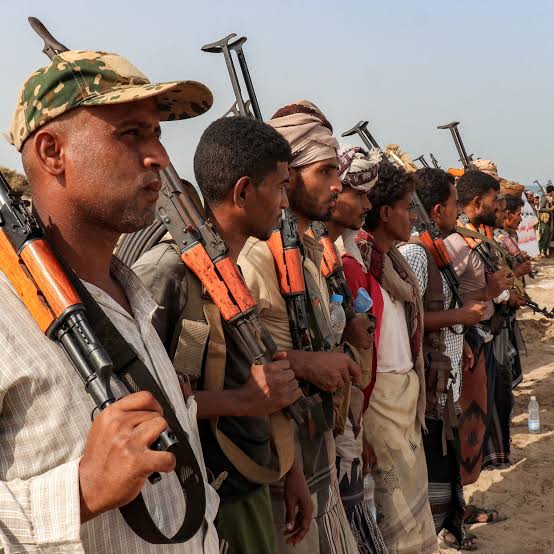
The Federal Government of Nigeria has appealed for urgent de-escalation between Yemen’s Houthi movement and the Kingdom of Saudi Arabia following renewed tensions and reported attacks, warning that further hostilities could worsen insecurity in the Middle East and threaten civilian lives.
Nigeria, through the Ministry of Foreign Affairs, expressed deep concern over the unfolding situation and urged all parties to exercise maximum restraint, avoid retaliatory actions and embrace dialogue as the pathway towards resolving their differences.
In a statement issued on Sunday, the ministry said Nigeria remained committed to the principles of peaceful dispute resolution, international law and the objectives of the United Nations Charter.
“The Federal Government of Nigeria notes with deep concern the ongoing tensions and reported attacks involving the Houthi militia in Yemen and the Kingdom of Saudi Arabia,” the statement said.
“Nigeria strongly calls on all parties to exercise maximum restraint, immediately de-escalate the situation, and refrain from any further actions that could inflame hostilities or endanger civilian lives and regional peace and stability.”
The government stressed that any escalation of the conflict could have wider implications for regional security, adding that diplomacy and peaceful engagement remained the most effective means of preventing further deterioration.
The tensions between the Houthis and Saudi Arabia are rooted in Yemen’s prolonged conflict, which has become one of the world’s most complex humanitarian and geopolitical crises.
The Houthi movement, also known as Ansar Allah, emerged in northern Yemen and gained significant influence after taking control of Yemen’s capital, Sana’a, in 2014. The development triggered a military intervention by a Saudi-led coalition in 2015, which backed Yemen’s internationally recognised government against the group.
The conflict has since resulted in widespread destruction, displacement and a severe humanitarian crisis, with millions of Yemenis affected by food insecurity, limited access to healthcare and damaged infrastructure.
Although periods of relative calm and diplomatic efforts have reduced the intensity of fighting in recent years, tensions between the Houthis and Saudi Arabia have continued to pose a major security challenge. The Houthis have previously carried out missile and drone attacks targeting Saudi territory, while Riyadh has responded with military operations.
The conflict has also drawn wider regional attention due to its links with broader rivalries in the Middle East and concerns over the security of key trade routes, particularly around the Red Sea.
Nigeria has consistently advocated peaceful resolution of international disputes and has called for dialogue in conflicts affecting global stability.
The Federal Government reaffirmed its readiness to support genuine initiatives aimed at reducing tensions, restoring calm and promoting lasting peace in the region.
The statement, signed by Kimiebi Imomotimi Ebienfa, spokesperson for the Ministry of Foreign Affairs, emphasised Nigeria’s continued support for diplomatic solutions and the protection of civilian populations affected by conflicts worldwide.
As regional and international actors monitor developments, Nigeria urged all stakeholders to prioritise peace and stability over further confrontation.
Nigeria Calls for Calm as Houthi-Saudi Arabia Tensions Raise Fresh Regional Security Concerns

Governor Buni reflects on the passing away of the Emir of Ngazargamu and others in Yobe

Nigeria Launches Ambitious 10-Year Agrifood Plan to Transform Agriculture and Boost Food Security

Nigeria Calls for Calm as Houthi-Saudi Arabia Tensions Raise Fresh Regional Security Concerns

Roger Federer’s Shock as DNA Results Reveal Myla and Charlene Are Not His Biological Children

THE PLIGHT OF FARIDA

FAILED COUP IN BURKINA FASO: HOW TRAORÉ NARROWLY ESCAPED ASSASSINATION PLOT AMID FOREIGN INTERFERENCE CLAIMS
-
 News2 years ago
Roger Federer’s Shock as DNA Results Reveal Myla and Charlene Are Not His Biological Children
-
Opinions4 years ago
THE PLIGHT OF FARIDA
-
 News1 year ago
FAILED COUP IN BURKINA FASO: HOW TRAORÉ NARROWLY ESCAPED ASSASSINATION PLOT AMID FOREIGN INTERFERENCE CLAIMS
-

 News2 years ago
EYN: Rev. Billi, Distortion of History, and The Living Tamarind Tree
-
 Opinions5 years ago
POLICE CHARGE ROOMS, A MINTING PRESS
-

 ACADEMICS2 years ago
A History of Biu” (2015) and The Lingering Bura-Pabir Question (1)
-

 Columns2 years ago
Army University Biu: There is certain interest, but certainly not from Borno.
-

 Politics1 year ago
2027: Why Hon. Midala Balami Must Go, as Youths in Hawul and Asikira/Uba Federal Constituency Reject ₦500,000 as Sallah Gift
