
News
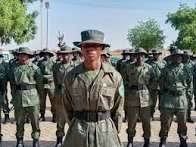
FG deploys 1000 forest guards to strengthen counter terrorism operations in Sokoto

FG deploys 1000 forest guards to strengthen counter terrorism operations in Sokoto
By: Zagazola Makama
No fewer than 50 Forest Guards have been deployed to the Forward Operating Base (FOB) in Gatawa, Sabon Birni Local Government Area of Sokoto State, as part of ongoing efforts to enhance security operations in the area.
Military sources disclosed that the personnel reported to the FOB on June 17 and were formally documented before being integrated into ongoing security activities within the area of responsibility.
The Forest Guards arrived with 25 AK-56 rifles, 50 magazines, 4,500 rounds of 7.62 x 35mm special ammunition, 25 face masks, 10 whistles, one Global Positioning System (GPS) device and a first-aid kit.
According to the sources, the newly deployed personnel were subsequently taken through orientation, familiarisation and cadre activities designed to acquaint them with the operational environment and security procedures in the area.
The deployment is expected to bolster ongoing efforts by security agencies to enhance surveillance, intelligence gathering and response capabilities in communities affected by security challenges within the Sabon Birni axis.
Security authorities expressed optimism that the integration of the Forest Guards would further strengthen collaboration among security stakeholders and contribute to sustaining peace and stability in the area.
FG deploys 1000 forest guards to strengthen counter terrorism operations in Sokoto


Troops Recover 318 Rustled Livestock During Offensive Against Bandits in Katsina
By: Zagazola Makama
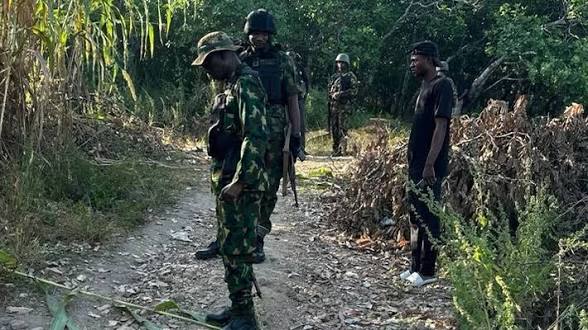
Troops of the 17 Brigade have recovered 318 rustled livestock during a major offensive operation targeting suspected bandit enclaves in Matazu Local Government Area of Katsina State.
Military sources said the operation, conducted on June 17, was launched on two fronts to clear criminal elements operating around Tuga and adjoining communities.
The sources disclosed that Intelligence, Surveillance and Reconnaissance (ISR) missions were carried out ahead of the ground assault, while air assets conducted precision strikes on three suspected terrorist locations to degrade the criminals’ capabilities before the advance of ground troops.
According to the sources, one column of troops advanced through Karaduwa, Farin Tafki, Saura and Radawa towards Tuga, while a second column moved through Sayaya, Gangule and Radawa to the objective area.
During the operation, troops successfully cleared several communities, including Karaduwa, Farin Tafki, Saura and Radawa, and intercepted 318 rustled livestock believed to have been stolen by bandits.
The recovered animals were subsequently moved to a military base for documentation and further action.
The troops also responded to attacks launched by suspected bandits on Tuga and Kuka Maidamisa villages. The attacks were reportedly carried out in retaliation against residents accused by the criminals of providing information that led to the rescue of kidnapped victims, including one Mrs Amina Abubakar.
Military sources said troops conducted further exploitation of the surrounding areas after securing the affected communities but did not encounter any additional significant threats.
The operation is expected to continue as security forces sustain pressure on criminal elements operating within the area.
Troops Recover 318 Rustled Livestock During Offensive Against Bandits in Katsina

Nigeria Explains Ethiopia Prisoner Transfer Deal, Denies Viral Inmate List
By: Michael Mike
The Federal Government has defended its recent agreement with Ethiopia on the transfer of sentenced persons, saying the deal is aimed at allowing Nigerian inmates serving jail terms in the East African country to complete their sentences at home under more humane conditions.
Minister of Foreign Affairs, Bianca Odumegwu-Ojukwu, said the agreement aligns with President Bola Tinubu’s citizen diplomacy policy, which places the welfare of Nigerians abroad at the centre of the administration’s foreign policy.
The minister also dismissed as false a list circulating on social media claiming that 136 Nigerians were imprisoned in Ethiopia, describing both the figures and the crimes attributed to the inmates as fabricated.
According to her, only 98 Nigerian prisoners in Ethiopia’s maximum-security prisons are covered by the transfer arrangement.
Odumegwu-Ojukwu explained that negotiations for the agreement had spanned several years due to difficulties in establishing the actual number of Nigerian inmates held in Ethiopia’s prison facilities, particularly the maximum-security prisons at Kaliti and Aba Samuel.
She said many of the prisoners had repeatedly appealed to the Nigerian government to facilitate their return home because of harsh living conditions, inadequate healthcare, poor feeding, limited access to legal services, language barriers and the absence of family visitation rights.
The minister disclosed that four Nigerian inmates died while the two countries were finalising the agreement, underscoring the urgency of the intervention.
She described many of the prisoners as young and vulnerable Nigerians who had fallen victim to criminal syndicates and made regrettable choices, insisting that they still deserved humane treatment despite their offences.
Addressing concerns that the transferred inmates could be released upon their return to Nigeria, the minister clarified that the memorandum of understanding expressly prohibits the granting of pardon or amnesty without the consent of Ethiopia, the sentencing state.
She also rejected attempts to portray the inmates as belonging predominantly to one ethnic group, stressing that criminality should not be ethnicised.
“A lot of them are from the South-East. There are also those from the South-West and South-South. At the end of the day, crime has no ethnicity. All these people are Nigerian citizens in a foreign jail,” she said.
The minister added that the government remains committed to pursuing similar interventions for Nigerians facing legal and humanitarian challenges in other parts of the world, reaffirming that the protection of citizens abroad remains a major pillar of Nigeria’s foreign policy under the Renewed Hope administration.
Nigeria Explains Ethiopia Prisoner Transfer Deal, Denies Viral Inmate List

Hate Speech Threatens Democracy, Development Ahead of 2027 Polls, NHRC Warns
By: Michael Mike
The National Human Rights Commission (NHRC) has raised concerns over the growing menace of hate speech in Nigeria, warning that inflammatory rhetoric could undermine democracy, trigger violence, and reverse the country’s developmental gains ahead of the 2027 general elections.
The Executive Secretary of the Commission, Tony Ojukwu, said hate speech constitutes a direct violation of human rights and poses a grave threat to national peace, unity, and sustainable development.
In a statement issued on the occasion of the International Day for Countering Hate Speech, Ojukwu stressed that hate speech strips individuals of their dignity and violates the principles of equality and non-discrimination enshrined in Article 7 of the Universal Declaration of Human Rights.
He noted that although freedom of expression is a fundamental right, it does not extend to speech that incites hatred, hostility, discrimination, or violence against others.
According to him, Nigeria’s legal framework already criminalises such conduct, citing Sections 24 and 26 of the Cybercrimes (Prohibition, Prevention, etc.) Act, 2015, which prohibit the deliberate dissemination of offensive and inflammatory messages through digital platforms.
The human rights advocate, however, maintained that legislation alone cannot curb the menace, insisting that political leaders, traditional rulers, religious figures, media organisations, and citizens all have a responsibility to exercise restraint and promote responsible communication.
He warned that unchecked hate speech has the capacity to fuel divisions and sow the seeds of conflict.
“When communities are pitched against one another, public trust collapses, businesses shut down, schools close, and investments disappear. Conflict destroys infrastructure, displaces families, and reverses years of developmental gains. No nation can build on the ruins of hatred,” he said.
Looking ahead to the 2027 general elections, Ojukwu cautioned that hate speech could compromise the credibility of the electoral process and infringe on citizens’ rights to participate freely in democratic governance.
He warned that incendiary rhetoric could intimidate voters, suppress participation, and deepen Nigeria’s ethnic and religious fault lines.
“Hate speech is not harmless talk. It is a trigger for conflict, a brake on national development, and a betrayal of our shared humanity. Let us not allow this monster to spread ahead of the 2027 general elections. If we do, we will pay for it with lives, livelihoods, and the future of our democracy,” he said.
The Chief Human Rights Officer of Nigeria called on Nigerians to reject divisive narratives, verify information before sharing it, and promptly report incitement to violence and discriminatory conduct to relevant authorities.
He also pledged that the Commission would continue to monitor, document, and respond to incidents of hate speech across the country as part of its mandate to protect human rights and promote social cohesion.
Hate Speech Threatens Democracy, Development Ahead of 2027 Polls, NHRC Warns

Troops Recover 318 Rustled Livestock During Offensive Against Bandits in Katsina

Joint Security Forces Arrests 10 Suspects in Anambra Raid

Troops Engage Suspected Pipeline Vandals in Rivers, Launch Manhunt

Roger Federer’s Shock as DNA Results Reveal Myla and Charlene Are Not His Biological Children

THE PLIGHT OF FARIDA

FAILED COUP IN BURKINA FASO: HOW TRAORÉ NARROWLY ESCAPED ASSASSINATION PLOT AMID FOREIGN INTERFERENCE CLAIMS
-
 News2 years ago
Roger Federer’s Shock as DNA Results Reveal Myla and Charlene Are Not His Biological Children
-
Opinions4 years ago
THE PLIGHT OF FARIDA
-
 News1 year ago
FAILED COUP IN BURKINA FASO: HOW TRAORÉ NARROWLY ESCAPED ASSASSINATION PLOT AMID FOREIGN INTERFERENCE CLAIMS
-

 News2 years ago
EYN: Rev. Billi, Distortion of History, and The Living Tamarind Tree
-
 Opinions5 years ago
POLICE CHARGE ROOMS, A MINTING PRESS
-

 ACADEMICS2 years ago
A History of Biu” (2015) and The Lingering Bura-Pabir Question (1)
-

 Columns2 years ago
Army University Biu: There is certain interest, but certainly not from Borno.
-

 Politics1 year ago
2027: Why Hon. Midala Balami Must Go, as Youths in Hawul and Asikira/Uba Federal Constituency Reject ₦500,000 as Sallah Gift
