
News
President Tinubu Orders Security Reinforcement At NIPSS, Kuru


President Tinubu Orders Security Reinforcement At NIPSS, Kuru
Pledges to support families of fallen soldiers, policeman
By: Our Reporter
President Asiwaju Bola Ahmed Tinubu has ordered the immediate and permanent reinforcement of security at the National Institute for Policy and Strategic Studies (NIPSS), Kuru, Plateau State, following a recent attack on the perimeter of the institute by bandits.
He said the incident has strengthened the resolve of the Federal Government to protect national institutions, support security personnel, and ensure that future attacks do not find the country unprepared.
Speaking on Friday while addressing participants of Senior Executive Course 48, 2026, at NIPSS, President Tinubu who was represented by Vice President Kashim Shettima conveyed the condolences of the Federal Government to families of two soldiers and one policeman who lost their lives during the attack.
VP Shettima said the President has directed that emergency security measures be activated without delay, with the Director General of NIPSS required to work with the Armed Forces, the Nigeria Police Force and the Department of State Services to fortify the institute’s perimeter.
The Vice President noted that a comprehensive action plan and timeline for permanent security reinforcement, covering surveillance, personnel, access control and emergency systems, must be submitted to the Office of the Vice President within 72 hours.
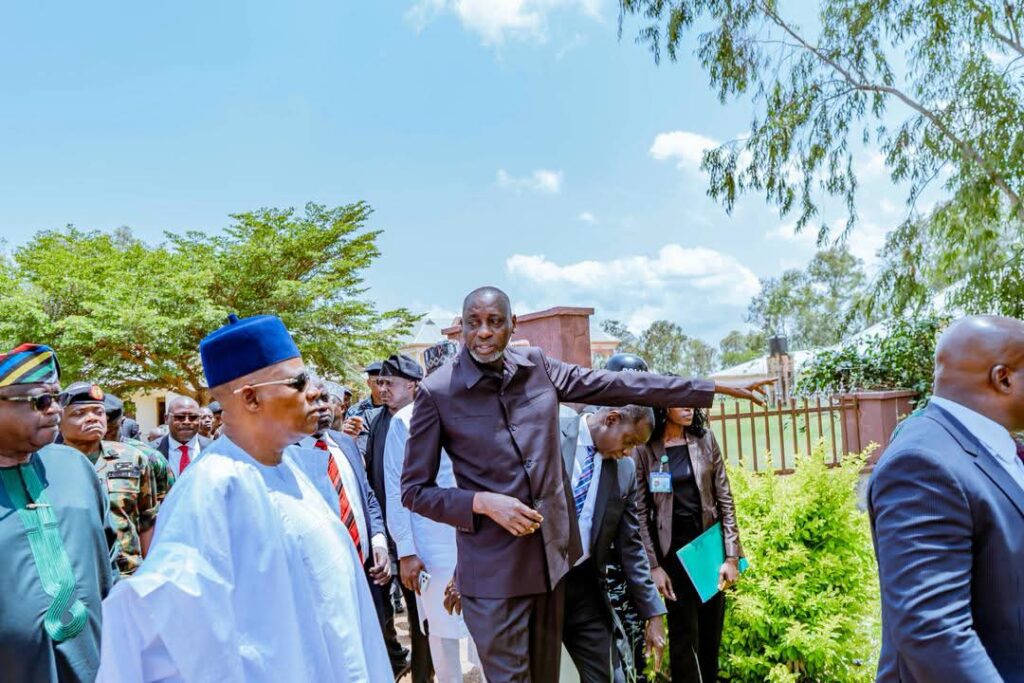
He stated: “His Excellency, President Bola Ahmed Tinubu, GCFR has directed that emergency security measures be activated at once, with the DG to coordinate with the Armed Forces, the Police, and the DSS to fortify the perimeter without delay.
“On the President’s order, a comprehensive action plan and timeline for permanent reinforcement, covering surveillance, personnel, access control, and emergency systems, must be submitted to the Office of the Vice President within seventy-two hours. Weekly progress reports will follow until full completion. No future attack must find us unprepared.”
The Vice President described NIPSS as a key national asset and Nigeria’s strategic intellectual nerve centre, saying its protection must be treated as a national security priority.

According to him, the attack was intended to spread fear and disrupt the training of future national leaders, but it instead revealed the courage, discipline and resilience of the participants, management and security personnel at the institute.
“I come to you with a heavy heart and a firm spirit. A banditry attack on the perimeter of NIPSS claimed the lives of two gallant soldiers and one courageous policeman. To their families, to the Nigerian Armed Forces, and to the Nigeria Police Force, I extend, on behalf of His Excellency, President Bola Ahmed Tinubu, GCFR, and the entire Federal Government, our deepest condolences,” VP Shettima said.
“We mourn with you. We share your pain. And we honour their sacrifice,” he added.
Senator Shettima assured participants and staff of the institute that their safety remained non-negotiable, adding that the Federal Government would give full support to the families of the fallen security personnel.
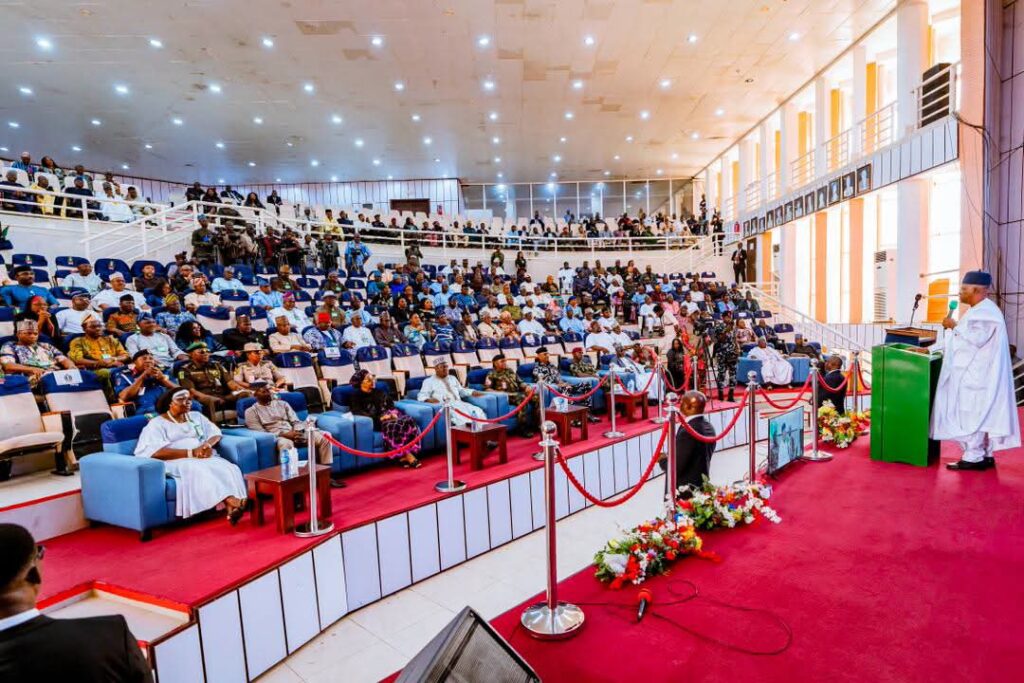
“Your safety is non-negotiable. The President has directed the immediate reinforcement of security around NIPSS and all strategic institutions. The sacrifice of those three brave men will not be in vain. Their children will be our children. Their welfare will be our responsibility,” he assured.
He said those behind the attack would not break the spirit of the country or the purpose for which NIPSS was established.
The Vice President commended participants of SEC 48 for remaining calm and disciplined during the attack, saying their conduct under pressure had proved their fitness for the serious responsibilities for which they were being trained.
His words: “When darkness came to the gates of this Institute, it expected to find people who would scatter into the night. It found instead men and women who stood their ground.
“You did not flee. You did not abandon your colleagues. You faced the worst that cruelty could send, and you answered it with composure, with courage, and with the steady discipline of people who understand exactly why they were summoned to this place.”
VP Shettima praised the Director General of NIPSS, Professor Ayo Omotayo, for his leadership and swift coordination with the Armed Forces and the Nigeria Police Force, which he said brought reinforcements without delay, secured the perimeter and accounted for every participant and staff member.
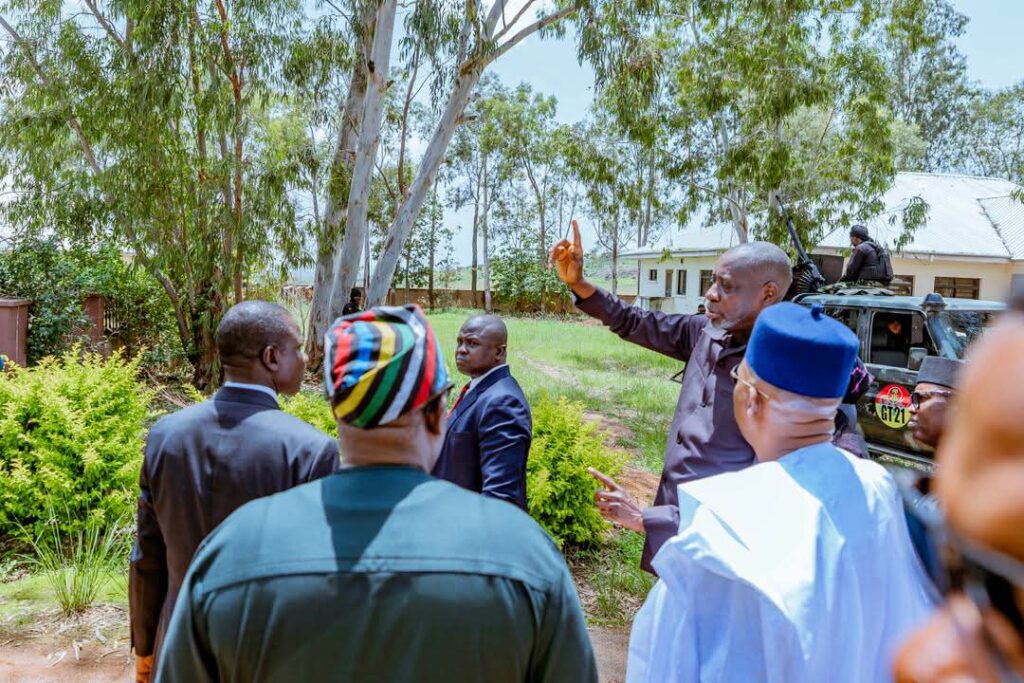
“In a moment that tested this Institute to its core, your calm command turned crisis into control. On behalf of the President and the nation, I thank you,” the Vice President said.
He also commended the Director of Studies, Barrister Nima Salman Mann, for coordinating the safety of staff and participants and ensuring that order was maintained when fear could have taken over.
Addressing SEC 48 participants, VP Shettima urged them not to allow the incident to define them negatively, but to draw strength from it as part of their preparation for national leadership.
Earlier in his remarks, Governor Caleb Mutfwang of Plateau State said the NIPSS community, the people and government of Plateau were appreciative of the Vice President’s visit and the empathy shown by the Federal Government since the incident occurred.
The Governor also approved the request by the management of NIPSS for the provision of a buffer zone around the institution as well as the installation of security lights around the area, amongst other measures to be undertaken by the Plateau State Government.
He prayed for the repose of the souls of the fallen heroes in the attack and praised the gallantry of staff and participants who fought bravely to repel amd prevent the incursion on the institute, assuring that the importance of NIPSS was further enhanced by the actions of the officers and the commitment of the participants during the incident.
For his part, the Director General of NIPSS, Prof Ayo Omotayo, presented an incident report to the Vice President, noting that the institute is deeply honoured by the visit which demonstrates the commitment of President Tinubu towards academic excellence.
While noting that the incident highlights the vulnerability of critical government institutions across the country, he appealed to the Vice President to facilitate the provision of surveillance infrastructure, including CCTV cameras around the institute as well as additional deployment of security personnel to the institution.
During the interactive session, representatives of the Senior Executive Course (SEC) 48 participants, Dr Toyin Sanni and Dr Kabiru Abba, said the NIPSS Course participants are encouraged by and assured of government’s commitment to their safety and remain focused on completing the assignment at the institute.
President Tinubu Orders Security Reinforcement At NIPSS, Kuru


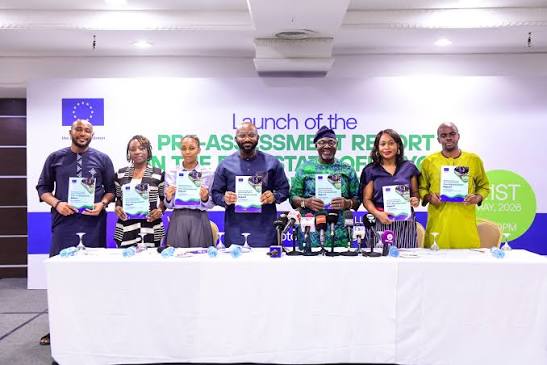
Anthena Observatory Deploys Real-time Electoral Data System for Ekiti Poll, Signals Poll
By: Michael Mike
The Athena Election Observatory (AEO) has unveiled a strengthened post-election audit system featuring near real-time result capture for the Ekiti State governorship election scheduled for Saturday, in what analysts describe as one of the most significant upgrades yet in independent electoral monitoring in Nigeria.
The initiative, driven by the Athena Centre for Policy and Leadership, comes alongside preparations to release long-awaited audit reports on the 2026 governorship elections in Ondo and Anambra States under a newly enhanced analytical framework designed to improve accuracy, speed, and evidentiary depth.
At the core of the upgrade is a redesigned data architecture that introduces stricter verification protocols, enhanced data-quality controls, and expanded analytical capacity. The system is expected to reshape how election data is captured, validated, and interpreted in the immediate aftermath of polls.
For the Ekiti election, the Observatory will deploy more than 200 trained data-entry and quality assurance personnel in a coordinated operation aimed at capturing polling unit results in near real time as they are uploaded to the Independent National Electoral Commission (Independent National Electoral Commission) Result Viewing Portal (IReV).
Unlike previous audits where data capture commenced after the completion of elections, the new model allows structured real-time aggregation of results as they become publicly available—marking a shift from retrospective analysis to near-immediate electoral data tracking.
The Chancellor of the Athena Centre for Policy and Leadership, Osita Chidoka, described the development as a major step in strengthening evidence-based electoral assessment in Nigeria.
He said the credibility of elections is not determined solely by the voting process but also by the transparency and quality of post-election evidence available for scrutiny.
“The Ekiti exercise strengthens our ability to build a comprehensive evidentiary record from the earliest stages of result publication,” Chidoka said. “It lays the foundation for more timely, rigorous and structured post-election analysis.”
The Observatory stressed that the real-time capture exercise is not itself the audit, but an early-stage data aggregation process designed to support deeper forensic review after elections. Full audits will still depend on verification, reconciliation, and cross-referencing of official electoral documents.
These include BVAS accreditation data and statutory result sheets such as Forms EC8A, EC8B, EC8C, EC8D, EC8E, and EC40G. The organisation said it will also rely on additional records obtained through formal requests to electoral authorities.
All data will be processed through the Observatory’s upgraded analytical platform to assess voter accreditation trends, collation integrity, compliance with electoral guidelines, and other indicators of electoral credibility.
The AEO also confirmed that the release of its Ondo and Anambra governorship election audit reports was deliberately delayed to allow integration into the new system, ensuring consistency across all three election assessments.
According to the Observatory, the decision reflects a shift toward a unified analytical framework capable of producing comparable, data-driven insights across multiple electoral cycles.
It added that the forthcoming reports on Ondo, Anambra, and Ekiti elections will provide one of the most comprehensive comparative datasets yet produced by a non-state electoral monitoring body in Nigeria, with implications for ongoing debates on electoral reform and transparency.
Political observers say the development underscores growing reliance on technology-driven oversight mechanisms in Nigeria’s electoral process, even as questions persist over logistics, data integrity, and institutional trust in election administration.
The Independent National Electoral Commission (Independent National Electoral Commission) has not issued a formal response to the Observatory’s expanded monitoring initiative.
The Ekiti governorship election is expected to serve as a critical test case for both electoral administration and the effectiveness of emerging independent audit technologies in strengthening public confidence in results management.
Anthena Observatory Deploys Real-time Electoral Data System for Ekiti Poll, Signals Poll
News
NSCDC Reaffirms Zero Tolerance for Conflict-Related Sexual Violence, Expands qSurvivor Protection Framework
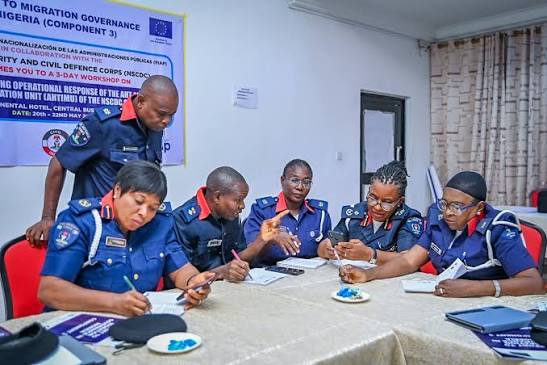
NSCDC Reaffirms Zero Tolerance for Conflict-Related Sexual Violence, Expands qSurvivor Protection Framework
By: Michael Mike
The Nigeria Security and Civil Defence Corps (NSCDC) has restated its commitment to the global fight against conflict-related sexual violence, pledging stronger institutional response mechanisms to protect women, girls, and other vulnerable groups in crisis situations across the country.
In a statement marking the International Day for the Elimination of Sexual Violence in Conflict, the Commandant General of the NSCDC, Nigeria Security and Civil Defence Corps, Prof. Ahmed Audi, said the Corps remains firmly aligned with international standards on prevention, accountability, and survivor-centred response to sexual violence in conflict settings.
He stressed that the NSCDC continues to strengthen its operational capacity to prevent abuse, support victims, and ensure perpetrators are brought to justice, noting that conflict-related sexual violence remains a serious threat to peace and human security.
“Preventing sexual violence in conflict and protecting women, girls, and children is a shared security responsibility. It demands early intervention, strict accountability for offenders, and the absolute protection of the dignity of survivors,” Audi said.
The Corps highlighted that its revised Gender Policy, launched on February 3, 2026, is already reshaping operational conduct across commands nationwide. According to the NSCDC, the policy is reinforcing gender-responsive security operations, improving early warning systems, and strengthening trauma-informed care for survivors of violence.
At the National Headquarters, the Head of the Gender Unit, Deputy Commandant of Corps (DCC) Kemi Ajet, said the framework is designed to ensure that gender considerations are fully integrated into security planning and field operations, particularly in vulnerable and conflict-prone communities.
She warned that emerging conflict indicators—including rising community tensions, harassment and intimidation patterns, forced displacement, trafficking risks, and heightened vulnerability among internally displaced persons and persons with disabilities—must be urgently monitored and reported.
DCC Ajet also called for stronger collaboration among security agencies, traditional institutions, civil society organisations, and the media to improve reporting networks, eliminate stigma, and end victim-blaming in cases of sexual violence.
The NSCDC urged members of the public to promptly report suspicious activities through its official communication channels, stressing that timely intelligence remains critical to preventing abuse and saving lives.
NSCDC Reaffirms Zero Tolerance for Conflict-Related Sexual Violence, Expands qSurvivor Protection Framework

Interagency Rivalry Fuelling Nigeria’s Insecurity, NSCDC Commandant Warns
By: Michael Mike
Interagency rivalry and the inability of security institutions to work seamlessly together are undermining Nigeria’s response to insecurity, the Federal Capital Territory (FCT) Commandant of the Nigeria Security and Civil Defence Corps (NSCDC), Dr. Olusola Odumosu, has warned.
Odumosu raised the alarm on Friday in Abuja at the launch of his book, Nigeria’s Security Dilemma: Rivalries and Implications, Vol. 1, where security experts and government officials unanimously called for greater synergy among security agencies to tackle the country’s mounting security challenges.
The NSCDC commandant argued that no single security organisation possesses the capacity or expertise to effectively address the multifaceted threats confronting Nigeria, insisting that a fragmented approach to national security has only emboldened criminal elements.

“No one agency has it all. There is a need for a united front because security is not what one agency can do. No one has a monopoly of wisdom,” he said.
Odumosu identified institutional rivalries, competition for relevance and lack of coordinated action as major impediments to a robust national security architecture.
Echoing similar concerns, Chairman of the Senate Committee on Interior, Senator Adams Oshiomhole, said national security must rise above institutional ego and political affiliations.
“When it comes to security, there is no PDP, no APC. We need to understand that,” he said.
The former Edo State governor advocated mandatory intelligence sharing among security agencies, stressing that intelligence gathering is ineffective unless it is promptly acted upon through coordinated operations.
He recommended closer collaboration between the Department of State Services (DSS), the Police and the military, arguing that integrated intelligence and operational support are critical to dismantling criminal networks.
Drawing from his experience as governor, Oshiomhole recalled how intelligence-led operations backed by military firepower had led to the arrest of numerous kidnappers and criminal suspects.
The senator, however, expressed concern that some successful operations ended in frustration when suspects were discharged or granted bail despite the efforts invested in apprehending them.
Also speaking at the event, the Minister of Defence, represented by Rear Admiral Olusanya Bankole (retd), acknowledged the challenges posed by interagency competition and disclosed that efforts were already underway to improve collaboration across the nation’s security institutions.
“The stability of Nigeria is more important than the ego of any agency,” he said.
In his remarks, Deputy Commandant General of NSCDC in charge of Technical Services, Zakari Ibrahim Ningi, who represented the Commandant General of the Corps, Prof. Ahmed Audi, described insecurity as a global phenomenon that has impacted every sphere of human endeavour and said the book’s focus on security cooperation could not have come at a more appropriate time.
The event was attended by senior security officials and policymakers, including the Inspector-General of Police, Mr. Olatunji Disu, represented by the FCT Commissioner of Police.
The book was formally launched by Hon. Tayo Odumuyiwa, who supported the publication with a donation of N20 million, underscoring growing recognition of the need for fresh thinking and stronger cooperation in addressing Nigeria’s security crisis.
Interagency Rivalry Fuelling Nigeria’s Insecurity, NSCDC Commandant Warns

Anthena Observatory Deploys Real-time Electoral Data System for Ekiti Poll, Signals Poll

President Tinubu Orders Security Reinforcement At NIPSS, Kuru

NSCDC Reaffirms Zero Tolerance for Conflict-Related Sexual Violence, Expands qSurvivor Protection Framework

Roger Federer’s Shock as DNA Results Reveal Myla and Charlene Are Not His Biological Children

THE PLIGHT OF FARIDA

FAILED COUP IN BURKINA FASO: HOW TRAORÉ NARROWLY ESCAPED ASSASSINATION PLOT AMID FOREIGN INTERFERENCE CLAIMS
-
 News2 years ago
Roger Federer’s Shock as DNA Results Reveal Myla and Charlene Are Not His Biological Children
-
Opinions4 years ago
THE PLIGHT OF FARIDA
-
 News1 year ago
FAILED COUP IN BURKINA FASO: HOW TRAORÉ NARROWLY ESCAPED ASSASSINATION PLOT AMID FOREIGN INTERFERENCE CLAIMS
-

 News2 years ago
EYN: Rev. Billi, Distortion of History, and The Living Tamarind Tree
-
 Opinions5 years ago
POLICE CHARGE ROOMS, A MINTING PRESS
-

 ACADEMICS2 years ago
A History of Biu” (2015) and The Lingering Bura-Pabir Question (1)
-

 Columns2 years ago
Army University Biu: There is certain interest, but certainly not from Borno.
-

 Politics1 year ago
2027: Why Hon. Midala Balami Must Go, as Youths in Hawul and Asikira/Uba Federal Constituency Reject ₦500,000 as Sallah Gift
