
News
NAPTIP Raises Alarm Over Rise of ‘Fraud Factories’, Says Over 300,000 Victims Trapped in Global Scam Networks

NAPTIP Raises Alarm Over Rise of ‘Fraud Factories’, Says Over 300,000 Victims Trapped in Global Scam Networks
By: Michael Mike
The National Agency for the Prohibition of Trafficking in Persons (NAPTIP) has raised the alarm over the growing sophistication of human trafficking networks, warning that thousands of young people are being deceived, trafficked and forced into cybercrime operations disguised as employment opportunities.
The agency said the emerging trend, driven by technology and online recruitment platforms, has transformed human trafficking from its traditional forms of sexual exploitation, forced labour and domestic servitude into a digital-age crime where victims are held captive in illegal “fraud factories” across the world.
The Director-General of NAPTIP, Binta Adamu Bello, issued the warning on Wednesday during a press conference ahead of the 2026 World Day Against Trafficking in Persons commemoration in Nigeria.
She said this year’s global theme, “Trapped Behind the Scam,” captures the dangerous reality of victims forced into online fraud schemes after being lured with fake promises of lucrative jobs abroad.
According to her, many young Nigerians, particularly educated youths with digital skills, are targeted by criminal syndicates offering opportunities in information technology, digital marketing, customer service, cryptocurrency trading and other online professions.
“Upon arrival in foreign countries, especially parts of Asia, they discover that the promised jobs do not exist. Their passports are confiscated, their freedom restricted, and they are forced through threats, violence, intimidation or psychological coercion to carry out sophisticated online scams,” Bello said.
She explained that victims become prisoners behind computer screens, compelled to commit crimes against unsuspecting individuals worldwide while their traffickers profit from the proceeds.
The NAPTIP boss disclosed that more than 300,000 people are trafficked annually into scam operations across Southeast Asia, generating an estimated $64 billion in criminal revenue.
She identified countries such as Myanmar, Cambodia, Thailand and Laos as major locations where large-scale scam compounds operate, adding that similar criminal structures are beginning to emerge in Nigeria and other parts of Africa.
Bello said traffickers now exploit social media platforms, encrypted messaging applications, online recruitment portals, cryptocurrency systems and artificial intelligence tools to identify, recruit and control victims.
She described the recruitment process as a carefully organised criminal operation involving fake online job advertisements, digital grooming, fraudulent travel arrangements and eventual exploitation at scam centres.
“Recruiters create fake identities on social platforms, build trust with victims, arrange travel and upon arrival at the destination, passports are seized. Victims are then forced to engage in romance scams, investment fraud and cryptocurrency-related crimes,” she said.
She revealed that some victims who fail to meet criminal targets are subjected to torture, sexual violence, solitary confinement and other forms of brutal punishment.
NAPTIP Rescues Hundreds, Disrupts Scam Centres
The Director-General disclosed that NAPTIP rescued and repatriated more than 300 victims of cyber-enabled human trafficking from neighbouring countries, including Ghana and Côte d’Ivoire, in 2025.
She added that 156 victims have already been rescued since January 2026, with support from international partners, including organisations assisting victims trapped in Myanmar.
Bello further disclosed that the agency’s Cyber Response Team has disrupted several emerging scam training centres in Nigeria linked to activities popularly known as “Yahoo Plus,” “Yahoo Extra” and “Hustle Kingdom.”
According to her, some suspects involved in financially motivated extortion, sexual extortion and revenge pornography have been arrested and are currently facing prosecution.
She warned that the consequences of cyber-enabled trafficking extend beyond individual victims, affecting families, communities and Nigeria’s international reputation.
“Families lose contact with their loved ones. Parents spend their savings pursuing fake employment opportunities, while communities suffer the social and economic consequences of irregular migration,” she said.
839 Traffickers Convicted Since Agency’s Creation
Bello reaffirmed NAPTIP’s commitment to dismantling trafficking networks through intelligence-led investigations, prosecution and international cooperation.
She disclosed that the agency has secured the conviction of 839 traffickers since its establishment, including 47 convictions recorded from January 2026 to date.
She said the agency recently secured the conviction of a high-profile trafficker and his wife in Ondo State, with properties worth millions of naira forfeited to the government.
The NAPTIP chief said the agency would continue to strengthen cyber intelligence, expand international partnerships and deploy technology-driven strategies to identify criminal networks and rescue victims.
Warning to Traffickers
Issuing a stern warning to human traffickers, Bello said the era of operating without consequences was coming to an end.
“The days when traffickers operated with impunity are rapidly coming to an end. NAPTIP will continue to turn up the heat on traffickers until Nigeria becomes an increasingly hostile environment for every trafficking syndicate,” she said.
She urged young Nigerians to verify overseas job opportunities, avoid unofficial recruitment channels and report suspicious offers to relevant authorities.
As part of activities marking the 2026 World Day Against Trafficking in Persons, NAPTIP announced a series of programmes including public sensitisation campaigns, awareness walks, survivor support activities and community engagements across Nigeria.
Bello called on Nigerians, government institutions, civil society organisations and international partners to strengthen collaboration in preventing trafficking, protecting survivors and ensuring that criminal networks profiting from human exploitation are brought to justice.
“Together, through vigilance, partnership, compassion and innovation, we can ensure that no one remains trapped behind the scam,” she said.
NAPTIP Raises Alarm Over Rise of ‘Fraud Factories’, Says Over 300,000 Victims Trapped in Global Scam Networks


News
Nigeria, Germany Forge New Strategic Pact as Abuja Woos Investors, Berlin Pledges Stronger Economic, Security Ties
Nigeria, Germany Forge New Strategic Pact as Abuja Woos Investors, Berlin Pledges Stronger Economic, Security Ties
By: Michael Mike
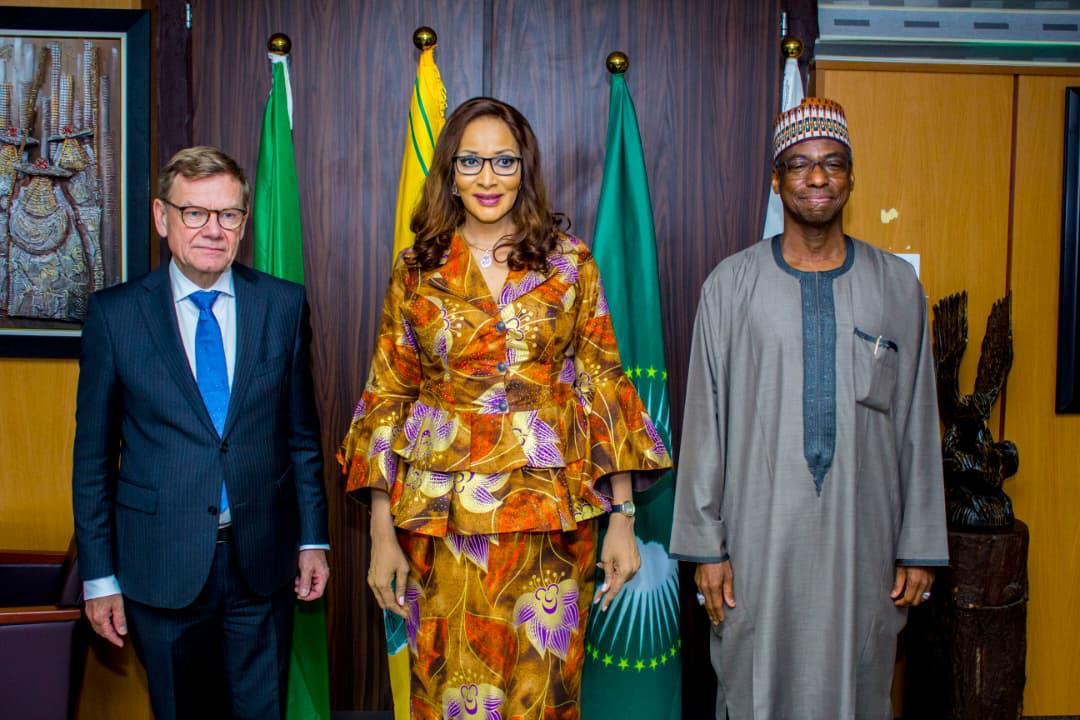
Nigeria and Germany on Wednesday moved to deepen their longstanding strategic partnership, with both countries committing to expanded cooperation in trade, energy, technology, security and human capital development as Berlin pledged increased investment in Africa’s largest economy.
The renewed commitment was made in Abuja during a high-level bilateral meeting between Nigeria’s Minister of Foreign Affairs, Ambassador Bianca Odumegwu-Ojukwu, and her German counterpart, Federal Minister for Foreign Affairs, Johann Wadephul.
The meeting came as both countries seek to build on more than 65 years of diplomatic relations, with Nigeria positioning itself as a major destination for German investment while Germany reaffirmed its role as a key economic and development partner.
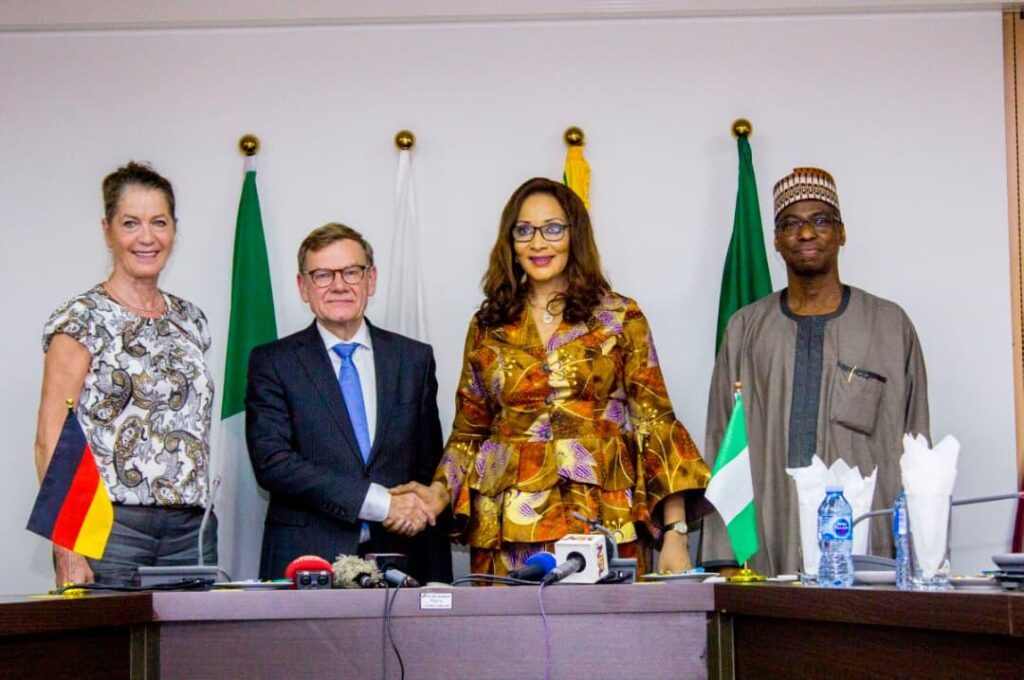
Welcoming the German delegation, Odumegwu-Ojukwu described Germany as one of Nigeria’s most important strategic partners in Europe, noting that bilateral relations had expanded beyond diplomacy to encompass trade, investment, renewable energy, education, science and technology, migration, culture and security cooperation.
She said the evolving global environment, marked by geopolitical tensions, terrorism, climate change, food insecurity and economic uncertainty, had made stronger international partnerships more important than ever.
According to her, Nigeria remained committed to strengthening ties with Germany in ways that would deliver measurable benefits to both countries and contribute to regional and global stability.
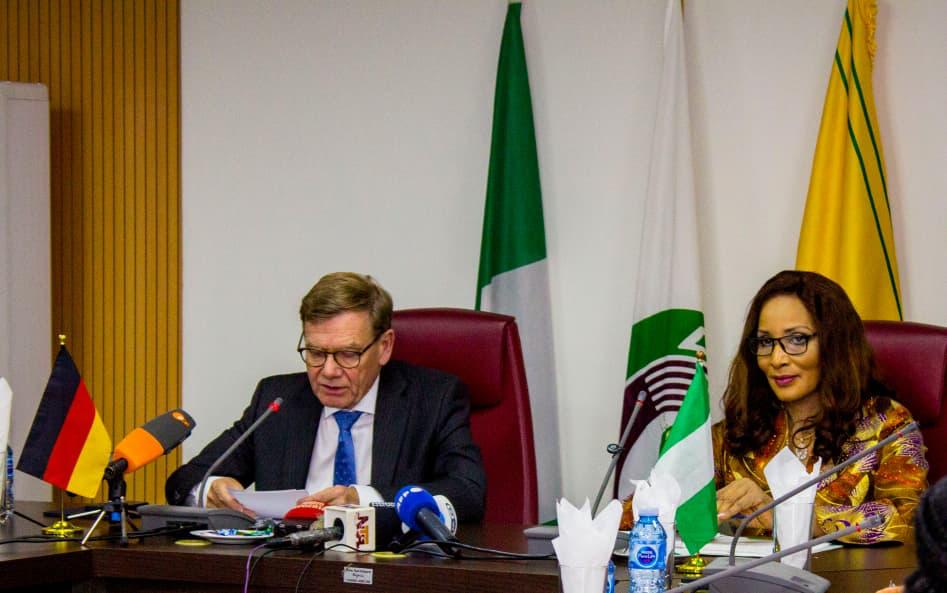
The minister identified renewable energy, digital innovation, artificial intelligence, critical minerals, manufacturing, agriculture, healthcare, infrastructure and the green economy as areas with significant potential for deeper collaboration.
She highlighted the Nigeria-Germany Bi-National Commission as a major pillar of bilateral engagement, saying the platform had continued to provide a roadmap for expanding cooperation across key sectors.
Odumegwu-Ojukwu noted that Nigeria had continued implementing economic reforms aimed at improving the investment environment, strengthening governance and creating opportunities for private sector participation.
She called for increased German investment in Nigeria’s priority sectors, particularly renewable energy, industrial development, transport infrastructure, agriculture and digital technology.
Responding, Wadephul described Nigeria-Germany relations as a strategic partnership built over decades, recalling that Germany established its embassy in Lagos just three days after Nigeria gained independence in 1960.
He said the relationship had continued to grow, with Germany now standing as Nigeria’s largest European trading partner on a bilateral basis.
The German foreign minister disclosed that trade between both countries increased by 10 per cent in the previous year, signalling growing economic cooperation.
He said the Nigeria-Germany Business Forum would continue to serve as a vehicle for expanding commercial ties and attracting more German companies into Nigeria.
“With my visit, many more German investors will be investing in Nigeria,” Wadephul assured, while expressing Germany’s interest in Nigeria’s energy sector and other areas capable of driving economic transformation.
He also commended the effectiveness of the Nigeria-Germany Bi-National Commission, describing it as a valuable mechanism for sustaining cooperation and delivering practical outcomes.
Beyond economic issues, both ministers stressed the importance of closer collaboration on regional security, particularly amid rising threats from terrorism, violent extremism and organised crime in parts of West Africa.
Odumegwu-Ojukwu praised Germany’s continued support for the Economic Community of West African States (ECOWAS), especially in promoting peace-building, democratic governance, conflict prevention and institutional strengthening.
Wadephul reiterated Germany’s commitment to supporting ECOWAS efforts to address insecurity in the region, particularly challenges linked to terrorism and instability in the Sahel.
He expressed readiness to work closely with his Nigerian counterpart to further strengthen the strategic partnership between both nations.
The renewed engagement signals a push by Abuja and Berlin to transform decades of diplomatic friendship into broader economic opportunities, increased investment flows and stronger cooperation on regional and global challenges.
Nigeria, Germany Forge New Strategic Pact as Abuja Woos Investors, Berlin Pledges Stronger Economic, Security Ties
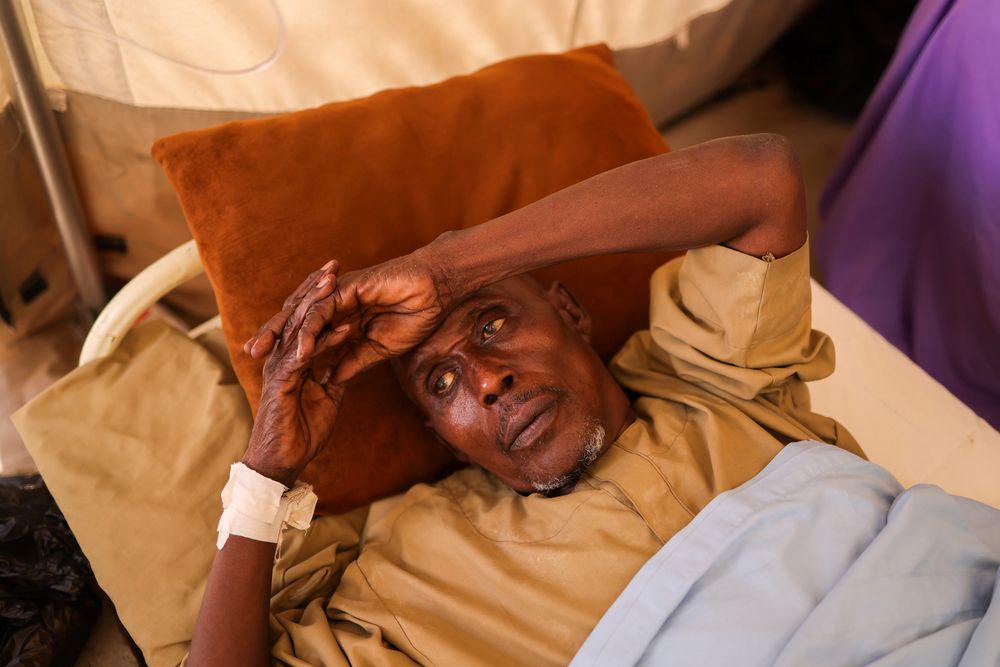
MSF: Cholera Outbreak Overwhelms Borno Health Facilities as Suspected Cases Cross 35,000
By: Michael Mike
Healthcare facilities in Borno State, northeast Nigeria, are struggling to cope with a rapidly escalating cholera outbreak that has affected thousands of people, with humanitarian organisation Médecins Sans Frontières (MSF) warning that transmission is spreading faster than containment efforts.
MSF, in a statement on Wednesday, said the outbreak, which began with the first suspected cases reported on May 1, 2026, has placed enormous pressure on medical centres across the state, as health workers battle to treat rising numbers of patients suffering from severe dehydration and other complications.
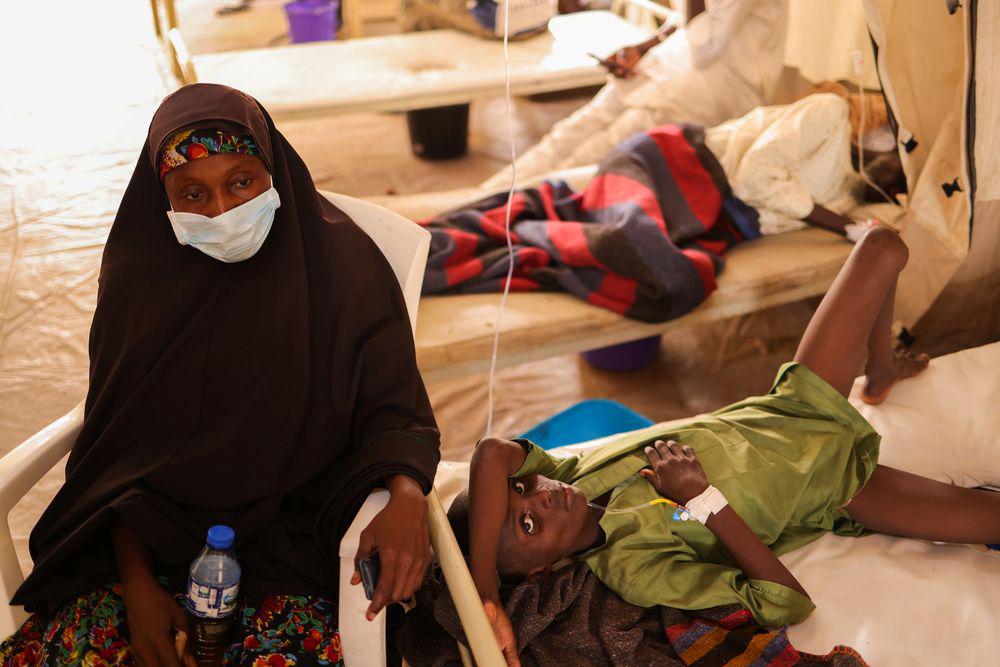
According to the Borno State Ministry of Health, more than 35,500 suspected cholera cases and 198 deaths had been recorded as of July 12, 2026.
Among those affected is 13-year-old Muhammad Usman, who was rushed by ambulance to the MSF-supported Cholera Treatment Centre (CTC) in Maiduguri after developing severe symptoms.
“ He started vomiting, had diarrhoea and complained of stomach pain. Later, he lost consciousness. We realised it could be cholera,” his mother, Hadiza Ali, said.
Cholera, a bacterial infection transmitted through contaminated food and water, causes severe watery diarrhoea and rapid dehydration. Without immediate medical attention, the disease can become fatal within hours.
MSF said the surge has been fuelled by overcrowded informal settlements, inadequate access to clean drinking water, poor sanitation systems and weak waste management practices.
To support the government-led response, MSF has expanded its operations across Borno State, supporting two Cholera Treatment Centres, five Cholera Treatment Units and 17 oral rehydration points designed to bring care closer to affected communities.
The organisation said it had treated more than 24,000 patients with suspected cholera since the beginning of its response, with over 25 per cent presenting with severe symptoms.
“We have significantly expanded our response over the past two months, but the transmission is still spreading faster than efforts to contain it, mainly due to a lack of access to clean water, sanitation and healthcare,” said Bienfait Tombola, MSF Project Medical Coordinator in Maiduguri.
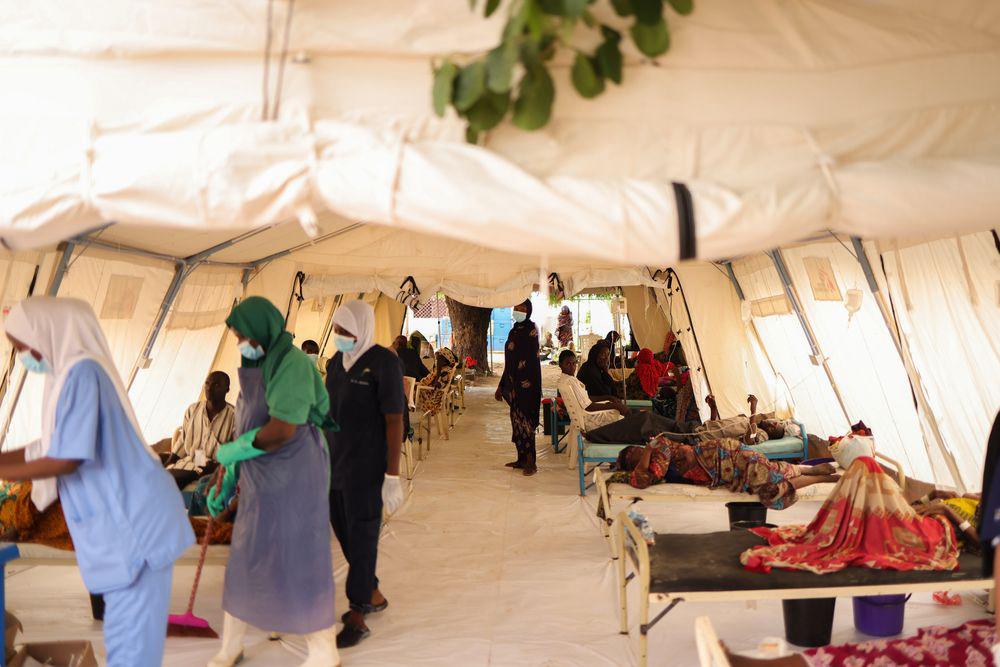
Beyond medical treatment, health authorities and humanitarian partners are also confronting challenges around public awareness, with many residents unaware of how cholera spreads and how to prevent infection.
Kyari Ali, a 65-year-old patient receiving treatment at the Maiduguri CTC, said several members of his family and community had contracted the disease.
“Many people in my family and community have suspected cholera. I even have relatives who are also here in the treatment centre. I don’t know how I got the disease, I don’t know how cholera spreads,” he said.
In response, MSF and health authorities have intensified community sensitisation campaigns, trained healthcare workers, strengthened infection prevention measures and improved water safety through chlorination at key collection points.
A major oral cholera vaccination campaign conducted in early July with support from MSF reached more than 2.6 million people in affected areas.
However, health experts warn that long-term control of the outbreak will require urgent investment in clean water supply, sanitation infrastructure, disease surveillance and expanded access to healthcare services.
The outbreak has also spread beyond Borno State, with neighbouring Plateau State reporting 102 suspected cholera cases as of July 12, according to health authorities.
With health facilities under sustained pressure and new infections continuing to emerge, MSF stressed that expanding vaccination campaigns and improving access to safe water and sanitation remain critical to slowing transmission and preventing further deaths.
MSF: Cholera Outbreak Overwhelms Borno Health Facilities as Suspected Cases Cross 35,000

Fubara Declares Support for Tinubu, Chinda, Says Rivers Political War Is Over
By: Michael Mike
Rivers State Governor, Sir Siminalayi Fubara, has announced his support for President Bola Ahmed Tinubu’s second-term ambition and the governorship aspiration of Hon. Kingsley Ogundu Chinda, saying political differences in the state have been resolved and that the time for confrontation is over.
Fubara made the declaration on Wednesday during the groundbreaking ceremony of the Riven Medical Industries Project in Port Harcourt, where he said previously opposing political camps in Rivers had reached an understanding to work together for peace and development.
The governor said he had aligned with the “Rainbow Coalition,” a political movement associated with former Rivers State Governor and Minister of the Federal Capital Territory, Nyesom Wike, and urged his supporters across the state to support candidates under the platform ahead of the 2027 general elections.
“We have made peace in the state and I am supporting our Rainbow Coalition. President Bola Ahmed Tinubu is our president, and is the one we are supporting. OK Chinda is the governorship candidate that I am supporting and anybody who believes in me will support him and every other candidate that is under the Rainbow Coalition,” Fubara said.
He added that he had returned to the political family, insisting that Rivers State must move beyond past disagreements.
“I’ve gone back to our family. So, please, whoever you are, give your total support to the Rainbow Coalition. We need to move forward. The time of war is over. It is time for peace and this peace is taking us to another level,” he said.
Fubara urged his supporters not to claim allegiance to him alone but to support the broader political arrangement, stressing that he was committed to unity and stability in the state.
“I’m not party to anything that will bring any form of disunity in this state. I’ve done what I need to do and we are moving forward,” he stated.
The governor also used the occasion to highlight the significance of the Riven Medical Industries Project, describing it as a major step towards industrialisation, healthcare development, and economic expansion in Rivers State.
However, he warned investors against abandoning commitments after receiving government support, recalling past experiences where agreements with investors resulted in disputes and legal battles.
According to him, the state government approved the project because of confidence in the investors’ ability to revive the facility, create employment opportunities, and contribute to economic growth.
He tasked the investors to adhere strictly to project timelines, particularly ensuring the completion of the first phase within three months, while appealing to host communities and the Obio/Akpor Local Government Area leadership to provide an enabling environment for the project.
The Riven Medical Industries Project is a Public-Private Partnership between the Rivers State Government and Enbay Pharmaceutical Industries Limited, aimed at transforming the former Integrated Medical Industries (IMI) into a pharmaceutical manufacturing hub.
When completed, the facility is expected to produce pharmaceutical formulations, gelatine capsules, intravenous infusions, and Active Pharmaceutical Ingredients (API), boosting local drug production capacity and reducing Nigeria’s reliance on imported medicines.
The project is also projected to create thousands of direct and indirect jobs, promote technology transfer, attract investment, and strengthen Nigeria’s healthcare supply chain.
The development comes as political activities intensify ahead of the 2027 general elections, with alliances and realignments expected to shape contests across states.
Fubara Declares Support for Tinubu, Chinda, Says Rivers Political War Is Over

Nigeria, Germany Forge New Strategic Pact as Abuja Woos Investors, Berlin Pledges Stronger Economic, Security Ties

MSF: Cholera Outbreak Overwhelms Borno Health Facilities as Suspected Cases Cross 35,000

Fubara Declares Support for Tinubu, Chinda, Says Rivers Political War Is Over

Roger Federer’s Shock as DNA Results Reveal Myla and Charlene Are Not His Biological Children

THE PLIGHT OF FARIDA

FAILED COUP IN BURKINA FASO: HOW TRAORÉ NARROWLY ESCAPED ASSASSINATION PLOT AMID FOREIGN INTERFERENCE CLAIMS
-
 News2 years ago
Roger Federer’s Shock as DNA Results Reveal Myla and Charlene Are Not His Biological Children
-
Opinions4 years ago
THE PLIGHT OF FARIDA
-
 News1 year ago
FAILED COUP IN BURKINA FASO: HOW TRAORÉ NARROWLY ESCAPED ASSASSINATION PLOT AMID FOREIGN INTERFERENCE CLAIMS
-

 News2 years ago
EYN: Rev. Billi, Distortion of History, and The Living Tamarind Tree
-
 Opinions5 years ago
POLICE CHARGE ROOMS, A MINTING PRESS
-

 ACADEMICS2 years ago
A History of Biu” (2015) and The Lingering Bura-Pabir Question (1)
-

 Columns2 years ago
Army University Biu: There is certain interest, but certainly not from Borno.
-

 Politics1 year ago
2027: Why Hon. Midala Balami Must Go, as Youths in Hawul and Asikira/Uba Federal Constituency Reject ₦500,000 as Sallah Gift
