
News
A year of military reform, operational expansion and democratic professionalism under President Tinubu

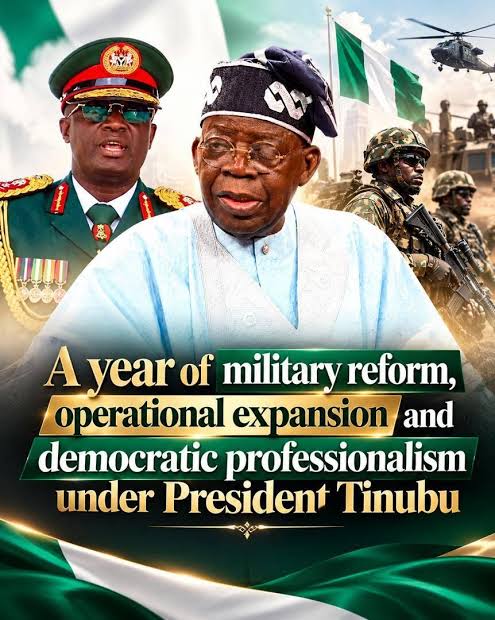
A year of military reform, operational expansion and democratic professionalism under President Tinubu
By: Zagazola Makama
The effectiveness of the Nigerian Army is inseparable from the country’s ability to confront terrorism, banditry, kidnapping, communal violence and other threats to national security. Since Lieutenant General Waidi Shaibu assumed office as the 25th Chief of Army Staff in October 2025, his tenure has been marked by an emphasis on institutional reform, operational readiness, technology, troop welfare, force expansion and the constitutional relationship between the military and democratic authority.
Almost one year into his tenure, the emerging record presents a military leadership attempting to combine battlefield pressure with institutional rebuilding. It is a record that also reflects a broader reality of President Bola Ahmed Tinubu’s administration: the government has increasingly placed national security, military modernisation and the welfare of personnel at the centre of its response to Nigeria’s complex security environment.
Rather than measuring Shaibu’s tenure solely by the number of terrorists neutralised or criminals arrested, its significance can also be assessed through the less visible changes taking place inside the Army how soldiers are trained, how formations are positioned, how technology is integrated, how personnel and their families are treated, and how the Army understands its place within a constitutional democracy.
Lieutenant General Waidi Shaibu was appointed Chief of Army Staff by President Tinubu on Oct. 24, 2025, succeeding Lt. Gen. Olufemi Oluyede, who moved on to become Chief of Defence Staff. Shaibu brought to Army Headquarters considerable operational experience, having previously commanded major formations and served in counter-insurgency operations in the North-East. His professional background includes service with Operation Lafiya Dole and Operation Hadin Kai, as well as senior command and staff appointments.
That background has shaped the character of his command. Rather than presenting the Army merely as a force that reacts to attacks, Shaibu has consistently spoken about building a force capable of anticipating threats, integrating intelligence, exploiting technology and operating jointly with other security agencies.
His early visits to operational theatres reinforced that approach. In November 2025, during his maiden tour of Operation Hadin Kai in Maiduguri, he directed troops to sustain offensive operations against insurgents and deny terrorist groups the support and sanctuary required to regenerate their capabilities. The message was clear: the Army under his leadership would seek to maintain pressure on armed groups while simultaneously strengthening the institution behind the frontline.
Perhaps the clearest expression of Shaibu’s institutional thinking came in February 2026 with the introduction of the PROSE Command Philosophy. PROSE represents Professional Excellence, Robust Administration, Operational Readiness, Strategic Cooperation and Exemplary Leadership. Shaibu unveiled the philosophy while addressing participants of Senior Course 48 at the Armed Forces Command and Staff College, Jaji.
He argued that leadership in Nigeria’s contemporary security environment must be anchored in character, courage and genuine concern for personnel. The significance of PROSE goes beyond an acronym. It attempts to connect five areas that are sometimes treated separately in military administration: professionalism, administration, combat preparedness, cooperation and leadership.
For an Army operating simultaneously in counter-insurgency, counter-terrorism, banditry, kidnapping and internal-security deployments across several regions, the approach recognises that battlefield success cannot be sustained without institutional discipline. In March 2026, Shaibu further linked the philosophy to respect for human rights, international humanitarian law and the Rules of Engagement. He directed commanders to protect civilians and stressed that adherence to those standards was not simply a legal obligation but also a practical requirement for building public confidence and improving intelligence-led operations.
This aspect of the command philosophy is particularly important in counter-insurgency warfare, where the population is not merely a community to be protected but a crucial source of information. One of the strongest features of Shaibu’s tenure has been the emphasis on technology. The Army Chief has repeatedly argued that the nature of warfare is changing and that Nigeria cannot confront modern armed groups exclusively through conventional ground operations.
In May 2026, the Army disclosed the acquisition of additional TP-2 tactical drones and the reconfiguration of Army aviation assets for combat operations. Shaibu said the investments were intended to strengthen surveillance, target acquisition, precision operations and casualty evacuation. He has also advocated deeper integration of unmanned aerial systems and combat aviation into Army training and operations. At the Combat Arms Training Week in Jaji, he described drone warfare and combat aviation as increasingly indispensable components of modern military operations.
This represents an important shift in the Army’s operational philosophy. The traditional model of troops moving into difficult terrain to locate hostile forces is gradually being complemented by persistent surveillance, aerial reconnaissance, improved intelligence fusion and precision-enabled operations. The objective is not technology for its own sake. The strategic purpose is to give commanders better information, shorten reaction time and reduce the exposure of soldiers to unnecessary risk.
Since his assumption of office, the Army has combined offensive operations with expanded formations, improved intelligence fusion, new equipment, specialised training, troop welfare programmes and a reorganisation of the force structure. Perhaps the most consequential development of the year has occurred above the level of individual battlefield engagements. On July 23, 2026, President Bola Ahmed Tinubu approved the expansion of the Nigerian Army from eight divisions to 12 divisions.
The four additional divisions are: 5 Division Makurdi, Responsible for Benue, Nasarawa and Kogi States., 9 Division — Ilorin, Responsible for Kwara and Niger States. 10 Division — Jalingo, Responsible for border areas of Taraba and Adamawa States and 83 Division — Benin City, designed to cover Edo, Delta and Bayelsa States.
The reorganisation also redistributed the responsibilities of existing divisions to create a more rational operational footprint. This represents one of the most substantial structural changes to the Nigerian Army in recent years. Another development that provides the clearest example of Shaibu’s approach to force structure. On Sept. 28, 2026, the Nigerian Army operationalised the 28 Armoured Brigade and Garrison in Birnin Kebbi, alongside the 281 Tank Battalion in Yauri and 381 Artillery Regiment in Kaoje, all in Kebbi State.
The Army said the new formations are intended to expand its operational footprint, strengthen command and control and reduce response times to security threats in the North-West.
This is significant because the North-West’s security challenge is geographically extensive.
Large distances, difficult terrain and dispersed rural communities can give armed groups an operational advantage when security forces must respond from distant bases.
A more distributed force structure is therefore designed to bring troops, armour and fire-support capabilities closer to vulnerable areas.
The development is consistent with a broader restructuring of the Army’s force posture, creating new opportunities but also additional responsibilities for commanders. The philosophy is straightforward: an Army cannot effectively secure territory if its command structures and operational assets are too distant from the communities requiring protection.
Shaibu has also placed emphasis on expanding the Army’s manpower pipeline. From manpower shortages to a larger training architecture.
According to the COAS, two additional training depots have been established in Osogbo, Osun State, and Amasiri-Idda, Ebonyi State, alongside the existing Depot Nigerian Army in Zaria. The objective is to increase the capacity to produce disciplined and combat-ready personnel capable of meeting the country’s expanding security requirements.
This is an important institutional investment.
Recruitment alone does not create combat power. Personnel must be trained, equipped, professionally socialised and deployed within effective command structures. The graduation of 1,182 Special Forces personnel from the Advanced Infantry Training Programme in August 2026 further demonstrated the emphasis on specialised capabilities. At the ceremony, Shaibu again linked combat effectiveness with discipline, human rights and adherence to the Rules of Engagement.
The message coming from Army Headquarters is therefore increasingly consistent, Nigerian soldiers must be capable of confronting armed groups while remaining accountable to the Constitution and the law.
Perhaps another most consequential aspect of Shaibu’s leadership is one that cannot be measured in battlefield statistics: the treatment of the soldier. The Army’s operational effectiveness ultimately depends on the morale, confidence and welfare of the men and women sent into dangerous environments. Under the welfare programme, the Army has reported extensive construction, renovation and infrastructure projects across the six geopolitical zones. The Affordable Home Ownership Option for All Soldiers, or AHOOAS, has also expanded.
The pilot project at Idu, Abuja, delivered more than 400 housing units, which the Army said were occupied by personnel and their families. The scheme has subsequently expanded to locations including Ibadan, Benin, Jos, Gombe and Akwa Ibom. In December 2025, Shaibu commissioned a 60-unit AHOOAS estate in Ibadan, reinforcing the connection between housing, morale and post-service stability.
In June 2026, he commissioned another 80 housing units in Jos.
The Army described the project as part of its broader effort to provide serving and retired personnel with decent and affordable accommodation. At Maxwell Khobe Cantonment in Plateau State, renovated accommodation blocks were also commissioned as part of the welfare drive. These initiatives address an issue that military historians and commanders have long understood: a soldier who knows that his family is secure is better positioned to concentrate on the mission.
The welfare agenda extends beyond serving personnel but also caring for the families of fallen soldiers. The Army has reported improvements in its Group Life Assurance arrangements, including efforts to clear outstanding claims to families of fallen personnel.
Its Education Sponsorship Scheme had supported more than 15,000 children of deceased personnel across different levels of education as of May 2026, according to figures cited by Shaibu. This is more than an administrative intervention. For a military institution that asks its personnel to accept the possibility of death in service, the knowledge that families will not be abandoned after a soldier’s death is an important component of institutional trust. It also reinforces the message behind the Soldier First approach: military professionalism is not only about demanding sacrifice; it is also about creating a system that recognises and supports that sacrifice.
Another emerging feature of Shaibu’s approach is the emphasis on indigenous defence capacity.
The Army Chief has pointed to greater patronage of Nigerian defence institutions and industrial facilities, including the Defence Industries Corporation of Nigeria, the Command Engineering Depot in Kaduna and the Special Vehicle Plant in Bauchi. The objective is to improve logistics, strengthen self-reliance and reduce institutional dependence on external sources for selected capabilities. For a country facing persistent security challenges, local defence production has strategic implications.
Equipment that cannot be maintained, repaired or replaced quickly can become a liability.
The development of local technical capabilities can therefore contribute to sustainability, especially when operations continue for prolonged periods.
Another defining feature of Shaibu’s public messaging has been the recognition that military effectiveness depends partly on the confidence of the civilian population. The Army has increasingly framed human rights, civilian protection and humanitarian cooperation as operational requirements rather than peripheral public-relations issues. In July 2026, during a meeting with the International Committee of the Red Cross, Shaibu reaffirmed the Army’s commitment to international humanitarian law, human rights and established Rules of Engagement. He also highlighted the Civilian Harm Mitigation and Response Plan, detention-management reforms and efforts to facilitate humanitarian access.
That approach matters in Nigeria’s conflict zones. When communities trust security forces, they are more likely to report suspicious activity, provide early warning and cooperate with investigations. When that confidence collapses, intelligence becomes harder to obtain and criminal and terrorist groups can exploit the resulting information vacuum. For this reason, civil-military relations should be understood as part of the operational architecture.
Perhaps the most politically sensitive dimension of the Army Chief’s tenure is his position on the military’s relationship with democracy.
Shaibu has repeatedly stated that the Nigerian Army must remain apolitical and subordinate to constituted civil authority.
In December 2025, he told newly commissioned officers that the Army must protect democratic governance and remain apolitical in the discharge of its constitutional responsibilities.
That position assumes particular importance as Nigeria approaches the 2027 general elections.
The role of the military in elections is constitutionally defined and normally exists in support of civil authorities and the lead security agency, principally the police, rather than as a partisan political actor. Recent military sensitisation activities have reiterated the requirement for neutrality, professionalism and adherence to constitutional responsibilities during electoral duties. This is one of the areas where military professionalism and democratic consolidation directly intersect. A strong military in a democracy is not one that determines political outcomes. It is one that protects the constitutional order while remaining under civilian authority.
Recognition of the Nigerian Army’s counter-terrorism effort
The Army’s reported progress has also attracted external recognition. In July 2026, the Nigerian Army received the Africa’s Best National Army in Counter-Terrorism Operations for 2025 award from African Security Watch. The award was formally presented to Lt. Gen. Waidi Shaibu at Army Headquarters in Abuja. Such recognition should not be treated as proof that Nigeria’s security problems have been solved. Terrorism, banditry, kidnapping and communal violence remain serious challenges.
But it is evidence that the Army’s counter-terrorism performance has received recognition beyond Nigeria.
Operational gains—and the unfinished task
More than 1,106 Boko Haram and ISWAP terrorists during his tenure, including several high-profile commanders operating across the North-East.
Among the notable terrorist leaders neutralised by troops were Abu Bilal Al-Muniki, also known as Abu Mainok; Malam Jidda, Amir of Ngorgore and Malumti villages; Abu Modu; Modu Dogo; Munzir of Dogon Chukun; Abu Aisha, Qaid of Tumbun Mota; and Abul Kaka, among others.
In May 2026, Defence Headquarters announced that coordinated operations involving Nigerian forces and U.S. Africa Command had produced additional strikes against ISIS/ISWAP elements around Metele in the North-East.
The operation demonstrated another important development of the military under President Bola Ahmed Tinubu’s leadership, the growing importance of intelligence sharing and international cooperation in targeting senior terrorist commanders and concentrations of fighters.
The Army leadership has reported notable operational gains across several theatres, including the use of joint operations, intelligence fusion, modern combat platforms and stronger cooperation with other security agencies. Shaibu has attributed recent successes to investments in MRAP vehicles, armoured personnel carriers, surveillance drones, armed drones and expanded Army Aviation. The broader security environment, however, remains difficult.
Under Operation FANSAN YAMMA, the Army reported that troops neutralised 1,717 bandits, arrested 2,660 suspects and rescued 4,052 civilians during the period covered by the COAS’s operational assessment. The operation also recovered more than 527 AK-47 rifles and over 156,000 rounds of ammunition.
In the North-Central zone, where Nigeria faces a complicated mixture of terrorism, banditry, kidnapping, communal violence and other criminal activities, Army formations operating under Operation Enduring Peace, Operation Whirl Stroke and Operation Sahel Sanity recorded another set of gains. The Army reported: 576 criminals neutralized, 8,837 suspects arrested and 2,225 civilians rescued.
In the South-East, troops operating under Operation UDO KA reported the neutralisation of 219 criminals, the arrest of 1,494 suspects and the recovery of weapons and improvised explosive devices. The Army said operations had targeted criminal enclaves, including areas around Orsu Forest and the Okigwe axis, while efforts continued to restore normal socio-economic activity. In the South-South, the Army reported that troops neutralised 134 criminals, arrested 3,896 suspects and rescued 341 civilians. In the South-West, the Army reported 13 criminals neutralised, 1,720 suspects arrested and 131 civilians rescued.
The Army itself has not claimed that these problems have disappeared. Indeed, Shaibu’s repeated emphasis on modernisation, training, intelligence and force expansion reflects an acknowledgement that the security environment is changing faster than conventional military structures can comfortably accommodate.
That may ultimately be the most important test of his tenure: whether the institutional reforms now being implemented can outlast individual operations and survive changes in the security environment.
Why Shaibu’s tenure matters to democratic stability
The connection between military professionalism and democracy is sometimes misunderstood. Democracy does not require a weak military. It requires a professional
military that is strong enough to defend the country but disciplined enough to remain within constitutional boundaries. Nigeria’s experience makes that distinction particularly important.
The Army’s responsibilities extend from counter-terrorism to internal security support, border protection, critical infrastructure security and election-related assistance.
At each level, the constitutional position remains the same: the military serves the Nigerian state and its constitution, not a political party. Shaibu’s repeated emphasis on neutrality, civilian protection and subordination to constituted authority therefore provides an institutional framework for the Army’s democratic role.
The bigger picture was building an Army for the next decade. The significance of Shaibu’s first year is therefore not contained in one operation, one weapon system or one military formation. It lies in the attempt to connect several reforms into one institutional direction. President Tinubu’s role in the transformation is particularly important.
President Tinubu’s role in military modernisation
Shaibu has publicly acknowledged this relationship. In his assessment of Army performance, he attributed recent gains partly to the strategic direction and sustained support of the Commander-in-Chief, saying that the President’s leadership had provided political will, resources and policy guidance for operational success. The relationship between the President and the military is constitutionally defined.
The President, as Commander-in-Chief, establishes the strategic direction and provides the political authority and resources within which the Armed Forces operate. The service chiefs are then responsible for translating that direction into military policy, command and operations. Under Tinubu, the expansion from eight to 12 Army divisions provides one of the clearest institutional examples of this strategic relationship. Shaibu’s tenure has also demonstrated that Nigeria’s security challenge is no longer confined to the conventional battlefield. The expansion of the Army, approval for additional personnel, procurement of critical platforms and investment in troop welfare all require decisions at the highest political level.
The military increasingly operates in an environment where propaganda, social media manipulation, misinformation and psychological operations can influence public confidence almost as significantly as a physical attack.
The Army’s growing emphasis on intelligence fusion, drones, surveillance and information management reflects this changing environment. The battle is simultaneously being fought in forests, villages, highways, borders, cyberspace and the information space.
The first year of Lieutenant General Waidi Shaibu’s tenure is best understood as a period of institutional consolidation and operational expansion.
There are also substantial challenges that remain unresolved. Nigeria’s security crisis is too complex to be attributed to one service chief or solved within on year. The Army operates alongside the Navy, Air Force, Police, intelligence agencies, state institutions and local communities. Its performance is therefore one component of a much larger national-security system. But the direction of travel under Shaibu is clear.
It is toward an Army that seeks to be more technologically enabled, more geographically responsive, more attentive to the welfare of its personnel, more integrated with other security institutions and more conscious of its constitutional obligations.
For President Tinubu’s administration, that institutional development has an important national consequence: the government requires a professional military capable of defending the territorial integrity of Nigeria while remaining firmly within democratic civilian control.
That is the constitutional space in which Lieutenant General Waidi Shaibu’s tenure should ultimately be assessed not by partisan expectations, but by whether the Nigerian Army becomes more capable, more professional, more accountable and better prepared to protect Nigerians.
And as Nigeria moves toward another electoral cycle, that distinction will matter. The Army’s most important contribution to democracy will not be choosing political outcomes. It will be ensuring that Nigerians are able to live, work, travel, vote and participate in civic life under a constitutional order protected by a professional military that knows precisely where its mandate begins and where it ends.
Zagazola Makama is a Counter Insurgency Expert and Security Analyst in the Lake Chad Region
A year of military reform, operational expansion and democratic professionalism under President Tinubu


News
How Military Pressure Leads to Release of 10 Captives, Surrender of Terrorists and 12 Rifles in Kwara as Video of Surrendering of bandits sparks Controversy
How Military Pressure Leads to Release of 10 Captives, Surrender of Terrorists and 12 Rifles in Kwara as Video of Surrendering of bandits sparks Controversy
By: Zagazola Makama
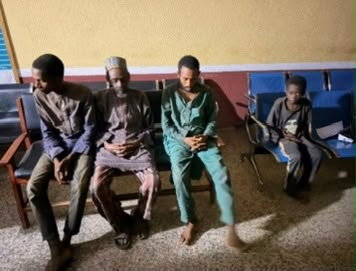
The release of 10 kidnapped victims and the recovery of 12 rifles from surrendered terrorists following sustained military pressure on armed groups around Gbugbu Forest in Edu Local Government Area of Kwara State have been overshadowed by controversy surrounding a video showing troops receiving surrendered bandits, which was subsequently misinterpreted on social media.
The video, circulated by a social media commentator known as The Moon, prompted questions about the activities of the Nigerian Army and the Department of State Services (DSS), with the commentator urging Nigerians to demand explanations from the security agencies over what he portrayed as an engagement with bandits.
The premature exposure of a sensitive surrender operation by a social media commentator draws attention to the consequences of sensationalism, operational security and the growing tendency to misrepresent painstaking security operations.
There is a dangerous difference between demanding accountability from security institutions and recklessly discrediting their operations without understanding what is happening behind the scenes. Unfortunately, a recent social media commentary on the ongoing security operations in Kwara State appears to have crossed that line.
A video showing troops of the Nigerian Army receiving surrendered terrorists around Gbugbu Forest in Edu Local Government Area of Kwara State has generated controversy after it was circulated online by a social media commentator known as The Moon, who questioned what the military and the Department of State Services (DSS) were doing with bandits.
His commentary, urging Nigerians to demand answers from the Army and DSS, presented an incomplete picture of what was, in fact, a sensitive and classified security operations involving efforts to secure the release of kidnapped victims, recover weapons and receive top bandits armed bandits elements who were willing to abandon violence to surrender.
What the video did not explain was that the military and intelligence operatives were not necessarily conducting a conventional assault operation at that particular moment. They were engaged in a non-kinetic process designed to achieve objectives that could have been considerably more difficult, costly and dangerous through direct confrontation. And this is where the misinterpretation becomes particularly troubling.
Zagazola understands that the video was recorded at about 2:00 p.m. on November 13, when three prominent terrorist figures operating around Gbugbu Forest Auta Ilori, Dan Karemi and Ori Gambali indicated their willingness to surrender to security forces, submit their weapons and release captives held in their custody.
The development followed sustained military pressure on the armed group through ongoing operations under Operation SAVANNAH SHIELD.
Troops had maintained pressure around Gbugbu Forest and adjoining areas, restricting the operational freedom of the criminal elements and creating conditions for engagement through non-kinetic channels.
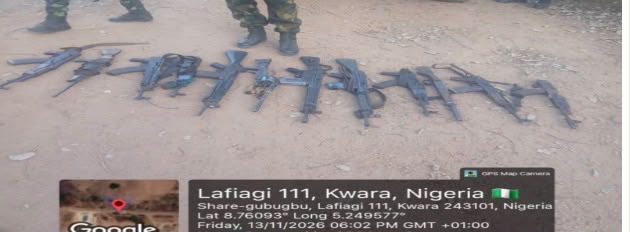
The first phase of the process produced tangible results. Twelve rifles of different types were recovered, while 10 kidnapped victims were successfully released from captivity.
Zagazola has also obtained photographs and video footage of some of the rescued victims, providing further evidence that the engagement had produced concrete results.
The rescued victims and recovered weapons were subsequently taken into military custody, while many of the armed fighters agreed to surrender by submitting their weapons through
the surrender process.

In other words, while some commentators were busy interpreting the footage through the lens of suspicion, the security agencies were pursuing an ongoing process that had already resulted in the recovery of weapons and the freedom of 10 people.
One of the most persistent misconceptions about counterterrorism and counterinsurgency operations is the assumption that military effectiveness must always be measured by the number of terrorists killed or the volume of gunfire exchanged. That is a dangerously simplistic understanding of modern security operations.

Military operations involve both kinetic and non-kinetic approaches. Kinetic operations involve the use of force, including raids, air interdictions, ambushes and direct engagements. Non-kinetic operations, on the other hand, employ intelligence, psychological pressure, community engagement and other measures to weaken armed groups and achieve security objectives without necessarily resorting to immediate violence. And when terrorists indicated their willingness to surrender, military will have no choice but to accept. This was enshrined in accordance with the laws of armed conflict and the rule of engagement.
Both approaches are legitimate instruments of national security when conducted within the law and under appropriate command and control.
In situations where kidnappers or armed criminal groups express willingness to release captives and surrender weapons, refusing to explore such an opportunity simply because it does not produce battlefield footage would be an irresponsible approach.

Consider the 10 kidnapped victims recovered in the first phase of the Kwara engagement.
These are 10 human beings who have been given an opportunity to return to their families without the additional risks that could accompany a military assault on their captors. A direct assault on a forest hideout where kidnapped persons are being held could expose them to crossfire, reprisals or execution by their captors.
That does not mean military force should never be used. It means commanders must assess the circumstances, weigh the risks and choose the approach most likely to protect innocent lives while achieving the mission.The recovery of 12 rifles is equally significant. Every weapon removed from the possession of armed criminal networks represents a reduction in their capacity to inflict violence on communities and security personnel.
The objective is not to give criminals a platform or reward their crimes. It is to dismantle their operational capacity, secure the freedom of victims and bring those responsible within the reach of the law.
The danger of exposing a sensitive security operation

Perhaps the most disturbing aspect of this controversy is not merely the commentary itself but the apparent exposure of footage from an operation that was still ongoing. The video was reportedly recorded by personnel involved in the engagement and subsequently found its way into public circulation. This highlights troubling issues surrounding operational security and discipline within the ranks.
Not every military operations is intended for public consumption. Some operations require confidentiality, particularly where intermediaries are involved, captives remain in danger and negotiations have yet to reach their conclusion.
The premature publication of such footage can undermine trust, expose intermediaries, compromise intelligence sources and potentially provide armed groups with information about the security agencies’ approach.
More importantly, it can put the lives of the very people the military is trying to rescue at risk.
Imagine a situation where captors who have agreed to release some victims suddenly discover that their engagement with security forces has become a subject of public ridicule, speculation and political pressure. Such exposure could harden their position, trigger distrust and jeopardise the release of additional captives.
It could also expose troops and intelligence personnel involved in the process to threats and retaliation. This is why operational security is not a public relations inconvenience. It is a critical component of mission success. There is a reason military authorities do not disclose every intelligence lead, every contact with armed groups or every tactical decision while an operation is underway.
It is therefore fundamentally unfair to take a few minutes of footage from a complex security engagement, strip it of its operational context and present it as evidence that the Army and DSS are fraternising with bandits or failing to perform their responsibilities.
The remaining process, according to security sources, was still ongoing at the time of filing this report and at the time the video was still circulating. It is therefore particularly irresponsible to pronounce judgment on an operation before its conclusion, especially when the people whose lives depend on its success may still be in danger.
Nigeria’s security forces operate under enormous pressure, often in difficult terrain, with threats that are not always visible to the public.
Behind every successful operation are intelligence assessments, surveillance, operational planning, coordination, risks to personnel and decisions that may determine whether hostages return home alive.
The public rarely sees these complexities.
What many people see are short videos, dramatic photographs and social media commentaries that reduce complicated security operations to a few seconds of footage. This culture of instant judgment is becoming a serious problem.
There is nothing wrong with demanding transparency from the military. Indeed, the armed forces must communicate their achievements, explain their actions and remain accountable to Nigerians. But transparency should not be confused with the reckless disclosure of sensitive operational details. Neither should public criticism be based on deliberately or inadvertently misleading interpretations of events.
A kidnapped person rescued without a bullet being fired is just as valuable as a terrorist neutralised in a military assault. Twelve rifles recovered through intelligence-led engagement are no less significant than weapons seized during a battlefield raid.
The families of the 10 rescued victims will probably not be concerned about whether their loved ones were released through a gun battle or negotiations. What matters to them is that their relatives are alive and coming home.
That should be the priority.
The man who circulated the video and questioned the Army and DSS may have intended to demand accountability, but accountability without context can easily become misinformation, while reckless exposure of an ongoing operation can have consequences far beyond social media arguments.
It is important to understand that the military is not conducting operations to entertain social media audiences. Its primary responsibility is to protect lives, defend the country and neutralise threats to national security. Sometimes, the most consequential victories in counterterrorism are achieved not by pulling the trigger, but by creating the conditions that make the gun unnecessary.
Zagazola Makama is a counter-insurgency and security analyst.
How Military Pressure Leads to Release of 10 Captives, Surrender of Terrorists and 12 Rifles in Kwara as Video of Surrendering of bandits sparks Controversy
News
Fiscal Responsibility Commission Seeks Stronger Enforcement Powers, More Funding, Act Amendment

Fiscal Responsibility Commission Seeks Stronger Enforcement Powers, More Funding, Act Amendment
By: Michael Mike
The Fiscal Responsibility Commission (FRC) has called on the Federal Government to strengthen its enforcement powers, increase its funding and amend the Fiscal Responsibility Act (FRA), 2007, to enhance accountability and transparency in the management of public resources.
The Acting Chairman of the Commission, Charles Abana, made the appeal in Abuja on Monday at the public presentation of the 2026 Fiscal Responsibility Index (FRI) Report, covering the 2023–2025 financial years.
Abana said the Commission had continued to discharge its statutory responsibilities despite challenges, including limited enforcement powers, inadequate funding, staff shortages and insufficient office accommodation, more than 16 years after its establishment.
He stressed that strengthening the Commission was necessary to improve fiscal discipline, ensure accountability in government institutions and promote the prudent management of public funds.
According to him, the Commission’s internally generated revenue has grown significantly through the monitoring and payment of operating surpluses and other independent revenue sources, rising from about N300 million in 2010 to more than N2 trillion annually.
He urged the government to deliberately address the institutional challenges confronting the Commission, particularly by strengthening its enforcement capacity and providing adequate financial and operational support.
The Acting Chairman described the Fiscal Responsibility Index as an evidence-based instrument for measuring and ranking the compliance of Federal Ministries, Departments and Agencies (MDAs) with statutory public financial management obligations.
He said the Index goes beyond administrative assessments and rankings, providing a mechanism for identifying compliance gaps, encouraging institutional competition and promoting transparency and accountability in the utilisation of public resources.
Specifically, the assessment examines MDAs’ compliance with requirements relating to public financial management practices, budgeting thresholds, procurement transparency and revenue remittance under the Fiscal Responsibility Act and other applicable public financial management frameworks.
Abana said the fundamental objective was to establish a credible basis for measuring institutional performance, identifying areas requiring improvement and strengthening accountability across the Federal Government.
He noted that the 2026 edition, the second of its kind, assessed the performance of Federal MDAs over three consecutive financial years — 2023, 2024 and 2025 — offering a broader picture of their compliance and institutional performance.
He explained that the assessment was conducted through a rigorous and participatory process designed to ensure transparency, fairness and the credibility of the final findings.
According to him, the Commission organised technical peer-review and methodology validation sessions on June 2 and 11, 2026, involving more than 80 representatives of Federal MDAs.
The sessions provided stakeholders with opportunities to examine the assessment methodology, review questionnaires and make technical contributions to ensure that the indicators were clear, measurable and consistent with the statutory responsibilities of the institutions.
He further disclosed that the Commission held two-day score reconciliation and evidence review meetings at its headquarters in Abuja on September 1 and 2, 2026.
During the meetings, participating MDAs were engaged in two batches and given opportunities to review their preliminary scores, clarify issues and reconcile discrepancies between submitted information and available documentary evidence.
Abana said the process was important in ensuring that the final assessment was based on verifiable evidence rather than assumptions or subjective judgments.
He added that the Commission subsequently received and verified outstanding physical and electronic documents submitted by participating MDAs up to the September 4, 2026 deadline.
The Acting Chairman commended the participating institutions, the Commission’s technical team and development partners for their contributions to the successful completion of the exercise.
He particularly acknowledged the support of International IDEA, the European Union and the Centre for Social Justice, describing their contributions as instrumental to the development of the initiative.
Also speaking at the event, the Executive Director of the Centre for Social Justice (CSJ), Eze Onyekpere, said the organisation collaborated with the Fiscal Responsibility Commission in the design, research, preparation and validation of the 2023–2025 Fiscal Responsibility Index.
Onyekpere explained that the project was implemented under CSJ’s programme, Improving the Effectiveness of Anti-Corruption Processes and Reforms in Nigeria, with support from the European Union, International IDEA and the Rule of Law and Anti-Corruption Project (RoLAC 2).
He said the broader programme was designed to improve the effectiveness of anti-corruption laws, policies, interventions and strategies at national and subnational levels, ultimately strengthening compliance with existing anti-corruption frameworks.
According to him, anti-corruption laws and policies should go beyond their mere existence to produce systemic changes, institutional compliance and behavioural transformation in society.
He noted that effective implementation of such frameworks should promote corruption prevention, facilitate corrective action, improve the detection and prosecution of offenders and discourage future violations.
Onyekpere emphasised that fiscal policies, particularly government budgets, played a central role in the security and welfare of citizens, as well as the consolidation of democracy.
He argued that democracy and development were closely connected, noting that the collection, management, expenditure, reporting, monitoring and evaluation of public resources remained among the principal ways governments affected citizens’ lives.
He said the implementation of the Fiscal Responsibility Act, 2007, was therefore central to Nigeria’s development aspirations and required continuous monitoring, reporting and evaluation to identify shortcomings and facilitate necessary reforms.
The CSJ Executive Director recalled that the first Fiscal Responsibility Index was developed through a collaboration between the Centre for Social Justice and the Fiscal Responsibility Commission in 2015 and used to benchmark 16 Federal MDAs.
He said the revised Index was designed to advance fiscal responsibility by promoting prudent public financial management practices among government institutions.
Onyekpere explained that the findings were expected to encourage MDAs to abandon practices capable of undermining their institutional integrity and performance.
He added that the report would also provide civil society organisations, the media, the private sector and other stakeholders with evidence-based tools to advocate reforms and demand greater accountability in public financial management.
Of particular significance, he disclosed that evidence emerging from the Index was being deployed in the preparation of the Fiscal Responsibility Rules, a proposed binding subsidiary legislation intended to strengthen the implementation and enforcement of the Fiscal Responsibility Act.
According to him, the proposed rules are expected to establish timelines, enforcement procedures, a code of conduct, offences and penalties for violations of the Act.
He said the Index was also designed to establish a context-specific framework of indicators for monitoring and assessing the fiscal prudence of Federal MDAs, collect relevant data, benchmark institutional performance and establish baseline information for measuring future progress or setbacks.
Other objectives include preparing comprehensive fiscal responsibility reports, facilitating their use for advocacy and stakeholder engagement, and encouraging the Federal Government to adopt appropriate reforms based on the findings.
Meanwhile, Abana said the Index had become particularly important given Nigeria’s growing development needs and the increasing demand for infrastructure, social services, economic opportunities and improved citizens’ welfare.
He maintained that the country’s ability to meet its development obligations depended not only on revenue generation but also on the quality of expenditure management, transparency in procurement, discipline in budget implementation and effective institutional accountability.
He therefore urged MDAs to see the findings of the Index as an opportunity for institutional learning and improvement rather than merely a competition for positions on the ranking table.
“Institutions that have demonstrated strong compliance should sustain and deepen their performance, while those with identified gaps should develop clear and measurable action plans to address them,” he said.
He assured that the Commission would continue to engage relevant institutions, provide guidance within its mandate and strengthen its monitoring and enforcement mechanisms to promote compliance with the Fiscal Responsibility Act.
The Acting Chairman also called for a shift from the practice of merely preparing reports and submitting returns to a system in which fiscal compliance is reflected in actual institutional practices and measurable public value.
He urged the media and civil society organisations to support the dissemination of the Index’s findings and sustain public engagement on fiscal transparency and accountability.
According to him, public awareness and constructive scrutiny remain essential components of an effective accountability framework.
Abana said the Commission remained committed to building a public financial management system in which government budgets are credible, procurement processes transparent, revenues properly accounted for and expenditures disciplined.
He added that the ultimate objective of fiscal responsibility should be to ensure that public resources translate into tangible improvements in the lives of Nigerians.
He called on government institutions, oversight agencies and citizens to collectively support the institutionalisation of fiscal responsibility principles across the public service.
The Fiscal Responsibility Commission is responsible for monitoring and enforcing compliance with the provisions of the Fiscal Responsibility Act, 2007, which establishes a framework for promoting fiscal discipline, transparency and accountability in the management of public finances.
Fiscal Responsibility Commission Seeks Stronger Enforcement Powers, More Funding, Act Amendment
News
NHRC Seeks Stronger Dutch Partnership to Protect Civic, Political Spaces Ahead of 2027 Elections
NHRC Seeks Stronger Dutch Partnership to Protect Civic, Political Spaces Ahead of 2027 Elections
By: Michael Mike
The Executive Secretary of the National Human Rights Commission (NHRC), Dr Tony Ojukwu, has called for renewed and stronger cooperation between Nigeria and the Kingdom of the Netherlands to strengthen human rights protection, safeguard democratic institutions and protect civic and political spaces ahead of the 2027 general elections.
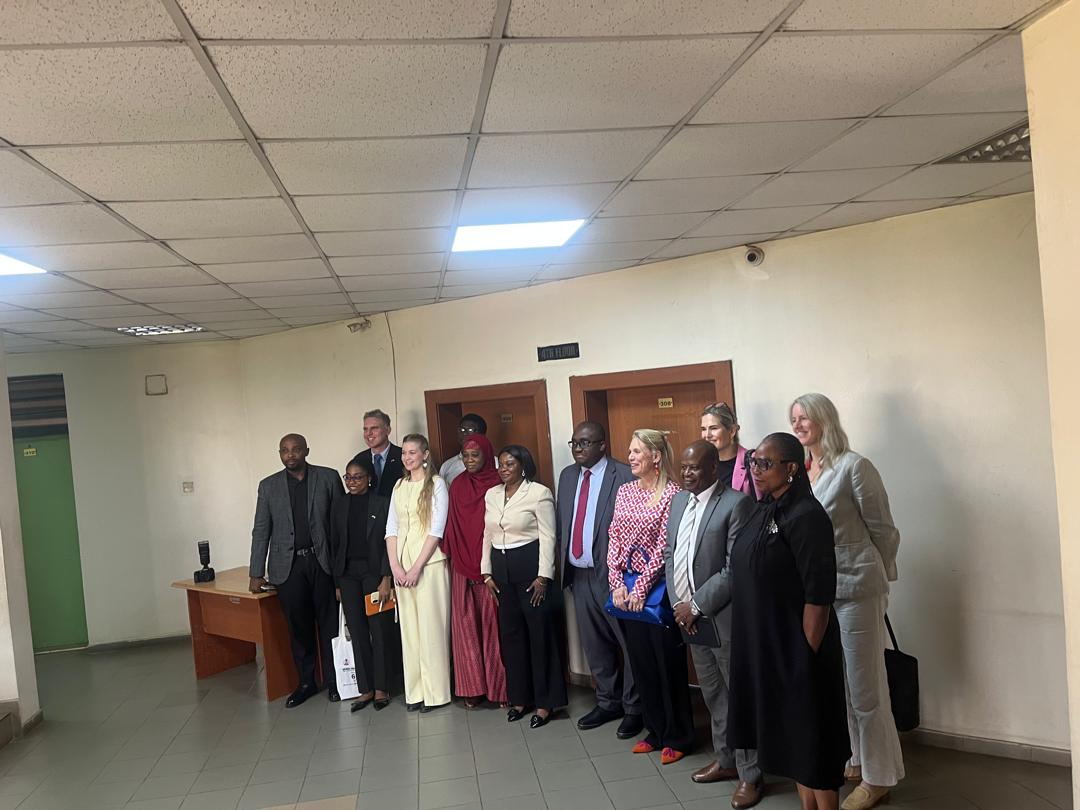
Ojukwu made the call during a high-level engagement between the commission and a visiting delegation from the Dutch Ministry of Foreign Affairs, led by Ms Guusje Korthals, Deputy Director-General for Political Affairs.
The meeting, which focused on understanding the mandate of the commission and assessing the human rights situation in Nigeria, also provided an opportunity for the NHRC to seek stronger institutional collaboration with the Netherlands in addressing emerging human rights challenges.
Ojukwu was represented at the meeting by the Senior Human Rights Adviser to the commission, Dr. Hillary Ogbonna, who said the engagement was particularly significant as Nigeria prepares to commence its membership of the United Nations Human Rights Council in January 2027.
He described the development as an important opportunity for Nigeria to strengthen its human rights commitments, deepen international relations and consolidate its position in global human rights advocacy.
According to him, the commission deliberately used the engagement to present areas requiring international cooperation and support, stressing that the partnership between the NHRC and the Netherlands had become long overdue.
The meeting was attended by heads of departments and directors of the commission, who provided the visiting delegation with an overview of the NHRC’s mandate, institutional capacity and ongoing interventions across various human rights sectors.
Ogbonna expressed optimism that the discussions would translate into concrete programmes and sustained collaboration, disclosing that a return visit by the Dutch Ambassador to Nigeria was expected to further consolidate the proposed partnership.
He described the anticipated visit as an opportunity to revive and strengthen bilateral cooperation, expressing hope that the latest engagement would provide a fresh beginning for relations between the commission and the Netherlands.
A major issue discussed was the protection of the right to freedom of religion, which Ogbonna acknowledged had become an issue of considerable concern to Nigeria’s international partners.
He, however, emphasised the need to approach religious freedom from a comprehensive human rights perspective, noting that the commission had continued to document developments and violations relating to the exercise of this fundamental right.
He disclosed that the NHRC would launch a capacity-building programme on the right to freedom of religion in 2027, expressing the hope that the Netherlands would support the initiative through technical assistance and institutional cooperation.
The commission also sought Dutch support for strengthening human rights monitoring, documentation and reporting, particularly through its monthly human rights dashboard, which has attracted commendation for providing regular updates on the human rights situation in Nigeria.
Another critical area identified for collaboration was the protection of vulnerable populations, particularly women and children, whose rights require sustained institutional attention and effective protection mechanisms.
Beyond these areas, the commission placed particular emphasis on the need to protect and expand Nigeria’s civic and political spaces as the country approaches the 2027 general elections.
Ogbonna stressed that the commission was not waiting for international partners to identify the challenges, explaining that it had deliberately brought the issues to the attention of the Dutch delegation as part of its current priorities and ongoing interventions.
He said the protection of civic space must guarantee an enabling environment for civil society organisations, media practitioners and human rights defenders to operate without intimidation, harassment or undue restrictions.
He also expressed concern over the disruption of political campaigns and activities, noting that such incidents raised questions about the protection of constitutionally guaranteed freedoms, particularly freedom of peaceful assembly and freedom of association.
On political space, he emphasised the need to guarantee candidates the freedom to campaign and participate in the electoral process without political, security or judicial interference.
He further stressed that citizens must be allowed to exercise their voting rights freely and have the opportunity to defend their votes without intimidation or obstruction.
According to him, the commission considers the protection of these rights fundamental to ensuring credible elections and strengthening democratic accountability.
Ogbonna disclosed that the NHRC would launch an advisory on political space in the coming weeks ahead of the elections, following a recent stakeholder engagement supported by the European Union.
He said the initiative would form part of the commission’s broader efforts to identify threats to democratic participation, promote respect for fundamental freedoms and ensure that political activities are conducted within the framework of human rights and the Constitution.
The commission also called for sustained protection of the media and civil society beyond election periods, emphasising that their roles in promoting accountability, transparency and democratic governance must not be undermined.
“The media and civil society are at the heart of every democracy, and it is the job of the commission to continue to protect them,” he said.
The Dutch delegation’s visit was led by Korthals, Deputy Director-General for Political Affairs at the Ministry of Foreign Affairs of the Netherlands.
Other members included Ms Frederieke Quispel, Director of the Sub-Saharan Africa Department; Ms Nienke Raap, Senior Policy Officer for Nigeria; Mr Ronald Sonnemans, Deputy Ambassador of the Netherlands to Nigeria; Ms Belle de Yaama Jonge, Second Secretary for Political Affairs and Human Rights; and Ms Jessica Odudu, Senior Policy Adviser on Human Rights and Public Diplomacy.
During the engagement, Korthals acknowledged the longstanding relationship between Nigeria and the Netherlands, noting the importance of human rights to national development, democracy and the rule of law.
She also highlighted existing cooperation between both countries on multilateral platforms, including the United Nations and the European Union.
The NHRC described the visit as part of broader diplomatic engagements through which international partners seek to strengthen relations with Nigeria and demonstrate support for its democratic and human rights development.
With Nigeria preparing to assume membership of the UN Human Rights Council in January 2027, the commission expressed hope that the renewed engagement with the Netherlands would move beyond diplomatic discussions to practical cooperation in strengthening human rights institutions, protecting vulnerable populations and safeguarding democratic freedoms.
The anticipated return visit by the Dutch Ambassador is expected to provide another opportunity to advance discussions and translate the proposed areas of cooperation into concrete institutional partnerships.
NHRC Seeks Stronger Dutch Partnership to Protect Civic, Political Spaces Ahead of 2027 Elections

How Military Pressure Leads to Release of 10 Captives, Surrender of Terrorists and 12 Rifles in Kwara as Video of Surrendering of bandits sparks Controversy

Fiscal Responsibility Commission Seeks Stronger Enforcement Powers, More Funding, Act Amendment

NHRC Seeks Stronger Dutch Partnership to Protect Civic, Political Spaces Ahead of 2027 Elections

Roger Federer’s Shock as DNA Results Reveal Myla and Charlene Are Not His Biological Children

THE PLIGHT OF FARIDA

FAILED COUP IN BURKINA FASO: HOW TRAORÉ NARROWLY ESCAPED ASSASSINATION PLOT AMID FOREIGN INTERFERENCE CLAIMS
-
 News3 years ago
Roger Federer’s Shock as DNA Results Reveal Myla and Charlene Are Not His Biological Children
-
Opinions5 years ago
THE PLIGHT OF FARIDA
-
 News2 years ago
FAILED COUP IN BURKINA FASO: HOW TRAORÉ NARROWLY ESCAPED ASSASSINATION PLOT AMID FOREIGN INTERFERENCE CLAIMS
-
 Opinions5 years ago
POLICE CHARGE ROOMS, A MINTING PRESS
-

 News3 years ago
EYN: Rev. Billi, Distortion of History, and The Living Tamarind Tree
-

 ACADEMICS3 years ago
A History of Biu” (2015) and The Lingering Bura-Pabir Question (1)
-

 Columns3 years ago
Army University Biu: There is certain interest, but certainly not from Borno.
-

 Politics1 year ago
2027: Why Hon. Midala Balami Must Go, as Youths in Hawul and Asikira/Uba Federal Constituency Reject ₦500,000 as Sallah Gift
