
News
Africa’s Climate Promises Face Funding Test as Nigeria Defends Sustainable Oil, Gas Development


Africa’s Climate Promises Face Funding Test as Nigeria Defends Sustainable Oil, Gas Development
…Experts seek private capital, affordable climate finance as FG targets lower emissions, domestic refining
By: Michael Mike
Africa’s climate commitments risk remaining unfulfilled without increased private-sector investment, affordable financing and stronger government accountability, stakeholders warned on Tuesday as the Africa Climate Forum 2026 opened in Abuja, with the Federal Government insisting that sustainable petroleum development must remain part of Nigeria’s energy transition.
The government said Nigeria was pursuing a pragmatic pathway that would allow it to harness its vast oil and gas resources for economic development while reducing emissions, curbing gas flaring and progressively diversifying towards cleaner energy sources.
The position, presented by the Permanent Secretary, Federal Ministry of Petroleum Resources, through the Deputy Director, Midstream and Downstream Department, Emmanuel Okon, highlighted the challenge facing African countries seeking to reconcile climate commitments with energy security, industrialisation, poverty reduction and the need to expand access to affordable energy.
The development comes as stakeholders at the fourth edition of the Africa Climate Forum called for stronger public-private partnerships to translate climate pledges into projects capable of protecting livelihoods, improving energy access and strengthening the continent’s resilience to climate change.
The two-day forum, organised by the Global Centre for Law, Business and Economy at the Shehu Musa Yar’Adua Centre, Abuja, has as its theme, “Implementing in Lockstep: Public-Private Action for Green Outcomes.”
In his remarks on Nigeria’s approach to sustainable petroleum development, Okon said the country was not seeking to abandon its petroleum resources but to develop them responsibly while progressively reducing their environmental impact.
“Nigeria is not approaching the energy transition by abandoning its petroleum resources. Rather, we are pursuing a responsible and pragmatic pathway in which our natural resources are developed sustainably while we progressively reduce their environmental footprint and use their revenues and capabilities to accelerate the transition to a cleaner and more diversified energy system,” he said.
He said Nigeria’s petroleum resources remained critical to national development but insisted that their value should increasingly be assessed by the environmental responsibility of their production and the economic benefits generated for Nigerians.
According to him, Nigeria had approximately 37.01 billion barrels of proven and probable crude oil and condensate reserves and 215.19 trillion cubic feet of proven and probable natural gas reserves as of January 1, 2026.
He said the Federal Government was strengthening the regulatory and investment environment under the Petroleum Industry Act while pursuing higher production, improved asset integrity, transparency and more sustainable operations.
Nigeria’s crude oil and condensate production reached approximately 1.68 million barrels per day in August 2026, he added, describing the figure as evidence of improving operational performance.
However, Okon said sustainable petroleum development must go beyond increasing production to include emissions reduction, improved gas utilisation, technological innovation and greater domestic value addition.
He said the government was strengthening efforts to address methane emissions and greenhouse gases, with the upstream petroleum regulator directing operators towards measurement-based emissions reporting and credible measurement, reporting and verification systems.
He also identified gas development as a major component of Nigeria’s energy strategy, noting that the resource could support electricity generation, industrial production, liquefied petroleum gas, compressed natural gas, liquefied natural gas and petrochemicals.
According to him, better utilisation of natural gas could help Nigeria reduce waste, support industrialisation and progressively move towards a lower-carbon energy system.
On gas flaring, Okon said the Nigerian Gas Flare Commercialisation Programme was designed to attract technically and commercially viable projects that would convert gas otherwise wasted through flaring into productive economic assets.
He said the approach would generate economic value while improving environmental outcomes in oil-producing communities.
The government also highlighted domestic refining as part of its strategy to retain more value from petroleum resources within Nigeria.
Okon disclosed that approximately 53.7 million barrels of crude oil were supplied to local refiners in the second quarter of 2026, representing 97.4 per cent performance against the applicable supply framework.
He said strengthening domestic crude supply would support the transition from an economy that exports crude oil and imports refined products to one that increasingly refines, manufactures and adds value locally.
The government, he added, was also pursuing investment and regulatory reforms to unlock additional production and attract capital into the sector.
Nigeria recently launched its 2026 oil and gas licensing round, offering 40 blocks, according to Okon, who said new investments must increasingly be accompanied by environmental responsibility, technological innovation, efficiency and measurable benefits for the population.
He stressed that the government could not achieve sustainable petroleum development without collaboration among businesses, investors, financial institutions, research institutions, host communities and development partners.
“Government must provide clear policy, predictable regulation and appropriate incentives. Industry must deploy capital, technology and best practices. Financial institutions must develop instruments capable of financing transition,” he said.
He also called for a just and orderly energy transition that reflected Africa’s development circumstances, arguing that the continent should have sufficient room to use its natural resources responsibly while expanding access to reliable and affordable energy.
“Africa must also be allowed the development space to utilise its resources responsibly. Our transition must be just, orderly and fit for our circumstances. A sustainable energy future for Africa cannot be one in which millions of people remain without reliable and affordable energy,” he said.
Okon maintained that the petroleum industry could contribute to climate solutions through methane reduction, reduced gas flaring, carbon management, improved efficiency and gradual diversification, even as the environmental consequences of hydrocarbons remained a concern.
“Our destination is a more prosperous, secure and lower-carbon Nigeria,” he said, urging government, industry, finance, technology and development partners to translate the ambition into investment and measurable results.
In a goodwill message, the Founder and Executive Chair of Avocado Holdings, Dr Oge Funlola Modie, urged African governments, businesses and development partners to move beyond climate declarations and establish clear responsibilities and accountability mechanisms to ensure that commitments translate into tangible benefits.
Modie, who was represented by Mrs Chioma Ikenna-Ibeh, Head of Business, Radah Media Company, commended the Director of the Global Centre for Law, Business and Economy, Prof. George Nwangwu, and his team for sustaining the forum over the past four years, said Africa’s challenge was no longer simply to formulate climate policies but to implement them in ways that improved people’s lives.
She described climate action as fundamentally a development issue, with implications for reliable energy, food security, resilient infrastructure, economic opportunities and the well-being of communities.
“While these efforts have been important, the true measure of progress lies in our ability to translate them into tangible outcomes,” she said.
According to her, effective climate action requires governments to provide clear policy direction and an enabling environment, the private sector to bring investment and innovation, development partners to facilitate access to finance and expertise, and communities to participate meaningfully in decisions affecting their lives.
She cautioned, however, that collaboration must go beyond bringing stakeholders together, insisting that shared priorities, clearly defined responsibilities and accountability for results were essential to effective implementation.
Modie also highlighted strategic communication as a frequently overlooked component of climate action, saying policies and interventions could fail without public understanding, institutional trust and community participation.
Speaking through the goodwill message, she said the experience of The Radah Media Company, a media partner of the forum, reinforced the importance of integrating communication and stakeholder engagement into implementation from the outset.
“Communication is not merely how we report progress. It is one of the ways we make progress possible,” she said.
She argued that communication connects policies with the people they are intended to serve, builds confidence in institutions and enables communities to contribute to developing practical solutions.
Modie urged participants to focus on how proposed interventions would be delivered, who would be responsible for them and how their success would be measured.
“Africa does not lack ambition, ideas or capable people. What we must strengthen is our ability to align our efforts, sustain partnerships and deliver results,” she said.
She expressed hope that the forum would be remembered not only for the quality of its discussions but also for the partnerships strengthened and the actions that followed.
“Ultimately, the credibility of our climate commitments will not be determined by what we promise together, but by what we deliver together,” she said.
The petroleum ministry’s position came against the backdrop of wider calls at the forum for increased private-sector investment to close Africa’s climate financing gap.
The Convener, George Nwangwu said the continent’s participation in international climate negotiations and the development of national climate commitments had yet to translate sufficiently into tangible improvements for vulnerable communities.
He identified inadequate financing, high borrowing costs, currency risks, regulatory uncertainty, poor project preparation and limited access to long-term capital as major obstacles preventing viable climate projects from attracting investment.
Public expenditure and development assistance alone, he said, could not provide the resources required to address the continent’s climate challenges.
He therefore called for a coordinated approach in which governments establish credible policies and effective institutions, businesses provide capital and innovation, and development finance institutions help reduce investment risks.
Investments, he said, should target resilient infrastructure, affordable and reliable electricity, clean cooking, climate-smart agriculture, sustainable cities and green industries capable of creating opportunities for African enterprises.
“To implement is to move from aspiration to execution, from promises to projects, and from declarations to delivery,” the Convener said.
He added that the true measure of climate ambition was not the number of commitments made but the outcomes delivered.
To advance implementation, the organisers have structured the forum around four platforms: policy dialogue, inve
Africa’s Climate Promises Face Funding Test as Nigeria Defends Sustainable Oil, Gas Development


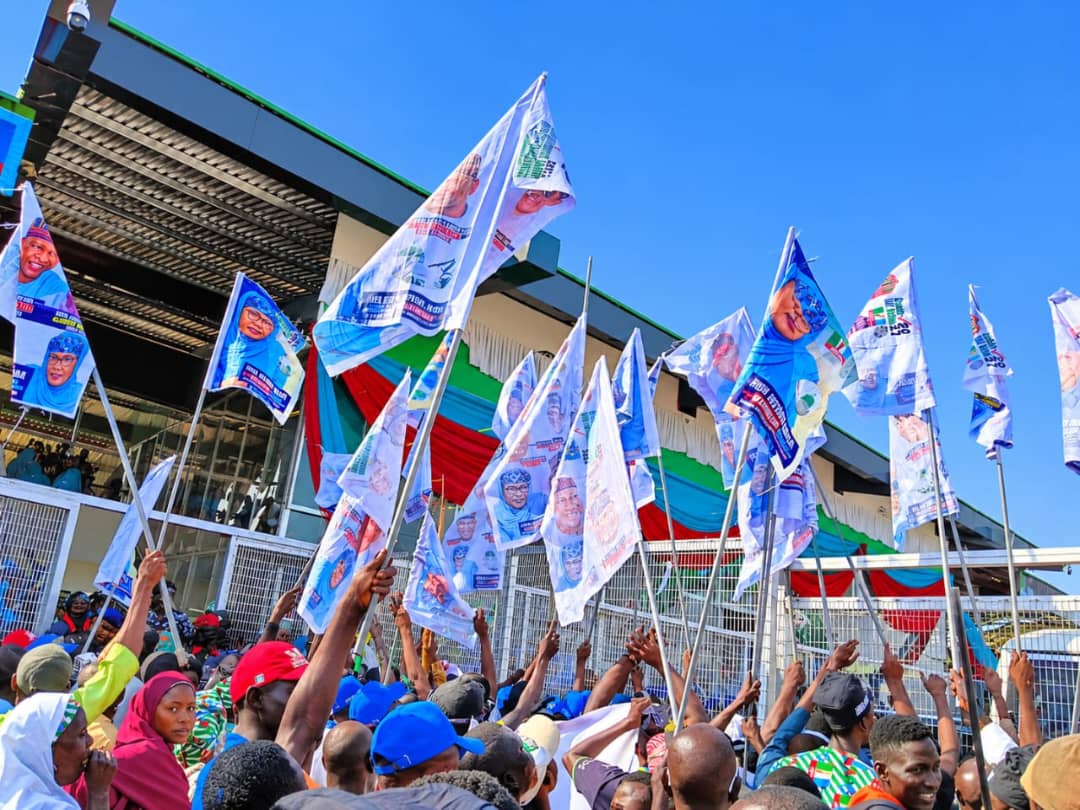
Yobe APC flag-off 2027 campaign in Damaturu
By: Yahaya Wakili
The All Progressives Congress (APC) Yobe state chapter has today officially flagged off its statewide campaign ahead of the 2027 general elections at the August 27 stadium in Damaturu, the state capital.
Addressing a massive crowd of APC supporters, the Minister of Police Affairs and Chairman of critical stakeholders in Yobe state, Senator Ibrahim Geidam, has cautioned members of the party against anti-party activities in the forthcoming general elections in the state and the country as a whole.
According to Senator Geidam, the party leadership has concrete evidence regarding those who worked tirelessly against the interest of the APC during the previous general elections in the state.
‘I have the record at my hand of those who participated in the non-success of the party in the past general elections, and I will disclose them now if possible,’ the Minister of Police Affairs added.
The highlight of the ceremony was the receiving of the large number of decampees from the PDP to APC. The defectors led by the former minister of science and technology, Dr. Abdu Bulama, and the former national chairman of the People’s Democratic Party (PDP), Ambassador Umaru Iliya Damagum.
In his remarks, Governor Mai Mala Buni CON, COMN of Yobe State, welcomed the defectors and presented them the party flags and commended them for what he described as a welcome development and solidarity to the party.
Governor Buni assured the defectors that the leadership of the All Progressives Congress (APC) in the state promised equal opportunities for the new members and called on all party supporters in the state to come out and en masse to vote for President Bola Ahmed Tinubu GCFR and all APC candidates from top to bottom.
Also speaking of the detector-general of the campaign council, Hon. Kaigama Umar Yunusari said the 2027 election is a competition between zone C and two other zones because this time around the governorship candidate is from zone C; the zone has never produced the governor or the deputy since the restoration of democracy in 1999.
Yobe APC flag-off 2027 campaign in Damaturu
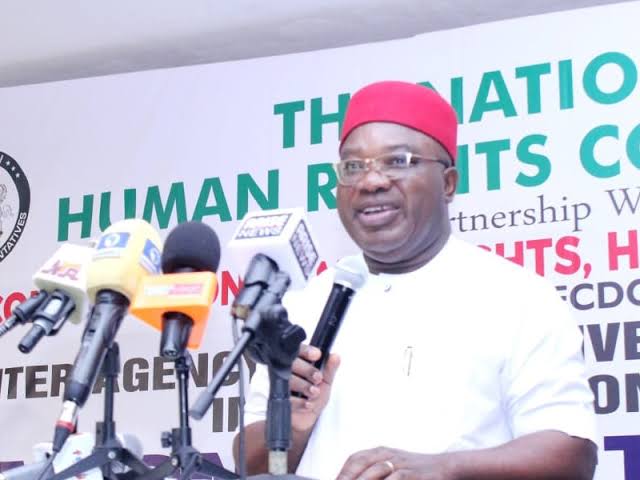
NHRC Wqrns Media Against Electoral Misinformation, Hate Speech Ahead of 2027 Polls
…Ojukwu urges ethical reporting, protection of journalists, accountability
By: Michael Mike
The National Human Rights Commission (NHRC) has warned against the spread of misinformation, disinformation, hate speech and politically manipulated narratives ahead of the 2027 general elections, saying irresponsible media reporting could threaten national peace, public safety and democratic stability.
The Executive Secretary of the Commission, Chief Tony Ojukwu, said the media must uphold accuracy, fairness, verification, balance and respect for human dignity in its coverage of the electoral process.
Ojukwu, who spoke at the 2026 NHRC Annual Media Parley, said the media’s strategic role in informing voters, scrutinising political actors, shaping public opinion and facilitating democratic engagement placed enormous responsibility on journalists, particularly as the country approaches another electoral cycle.
The parley was themed, “Ethical Journalism and the 2027 General Elections: Promoting Professionalism, Peace and Accountability.”
According to him, elections transcend political contests and the transfer of power, as they involve fundamental human rights, including freedom of expression, access to information, peaceful assembly, political participation and the right of citizens to freely determine their leaders.
He warned that the distinction between responsible and irresponsible journalism could have far-reaching consequences for national cohesion and the enjoyment of human rights.
“Our message is simple: the media must not become a vehicle for electoral division; it must remain an instrument for democratic accountability, peaceful participation and national cohesion,” he said.
The NHRC boss stressed that while freedom of expression remained fundamental to democracy, journalists must exercise the right with professional responsibility, especially in an increasingly volatile information environment where digital manipulation and politically motivated narratives could undermine public confidence in democratic institutions.
He, however, said the responsibility for a healthy media environment did not rest on journalists alone, insisting that media practitioners must also be protected from intimidation, harassment and unlawful interference in the discharge of their duties.
Ojukwu said the Commission remained committed to protecting journalists’ rights and promoting an environment that supports independent, free and responsible media practice, noting that safeguarding journalists also protects citizens’ right to information and preserves the democratic space.
He urged journalists to intensify human rights-focused reporting in the run-up to the 2027 elections, particularly on voter intimidation, political violence, discrimination, attacks on journalists, restrictions on civic participation and violations of the rights of women, children, persons with disabilities and other vulnerable groups.
The Executive Secretary also drew attention to the risks confronting journalists during election coverage, especially in volatile environments, saying their safety and security must remain a priority.
He disclosed that the NHRC, in collaboration with Konrad Adenauer Stiftung, would launch a Safety Handbook for Journalists and Media Practitioners on November 26, to provide practical guidance on navigating the risks associated with field reporting, particularly during elections.
He said the initiative was designed to equip journalists with the knowledge and guidance needed to protect themselves while carrying out their professional responsibilities.
Ojukwu expressed appreciation to journalists and media organisations for their sustained coverage of the Commission’s activities, their efforts in amplifying the voices of victims of human rights violations and their role in bringing critical human rights issues to national attention.
He described the annual parley as more than an engagement between the Commission and the media, saying it offered an opportunity to strengthen their partnership, reflect on their shared responsibilities and advance a society anchored on human rights, justice, accountability and democratic values.
The Executive Secretary expressed optimism that the deliberations would deepen collaboration between the NHRC and media practitioners and strengthen collective efforts towards peaceful, credible and accountable elections in 2027.
He welcomed the Director of the United Nations Information Centre (UNIC), Nigeria, Ronald Kayanja, who was invited as keynote speaker, alongside journalists, civil society representatives and officials of the Commission.
NHRC Wqrns Media Against Electoral Misinformation, Hate Speech Ahead of 2027 Polls
EU Releases €10m Additional Humanitarian Aid for Nigeria
By: Michael Mike
The European Union has released an additional €10 million in humanitarian assistance for Nigeria as part of a €39.5 million funding package to address urgent humanitarian needs across the Sahel and Lake Chad regions, amid persistent conflict, displacement, food insecurity and climate-related shocks.
The additional funding for Nigeria, announced by the EU Commissioner for Equality, Preparedness and Crisis Management, Hadja Lahbib, during a Senior Officials Meeting on the humanitarian situation in the Sahel and Lake Chad on November 12, is expected to strengthen emergency interventions in communities facing severe humanitarian challenges.
The EU said the funding was part of a humanitarian package announced at the latest United Nations General Assembly, bringing its total humanitarian assistance to the Sahel and Lake Chad regions to €263.5 million for 2026.

The additional €10 million allocated to Nigeria will support the scaling up of food security interventions, multi-purpose cash assistance, nutrition and healthcare services in areas with high levels of displacement.
The funding will also be deployed to improve shelter conditions, access to clean water, sanitation and hygiene services, while support for logistics and telecommunications in humanitarian hubs will be reinforced to facilitate the delivery of emergency assistance.
Nigeria continues to grapple with humanitarian challenges arising from prolonged insecurity, displacement, food shortages and environmental pressures, particularly in conflict-affected communities where access to basic services remains limited.
Across the wider Sahel and Lake Chad regions, the EU said its humanitarian funding supports frontline humanitarian partners in delivering emergency food, nutrition, healthcare, protection, water and sanitation services, as well as education in emergencies, according to the most pressing needs in individual countries.
The bloc reiterated that its humanitarian assistance is guided by humanitarian principles and allocated strictly on the basis of needs, irrespective of political, religious or other considerations.
It also renewed its call for respect for international humanitarian law and the protection of civilians and humanitarian workers operating in crisis-affected areas.
EU Releases €10m Additional Humanitarian Aid for Nigeria

Yobe APC flag-off 2027 campaign in Damaturu

EU Launches ₦152.9m Fund to Protect Women from Electoral Violence Ahead of 2027 Polls

NHRC Wqrns Media Against Electoral Misinformation, Hate Speech Ahead of 2027 Polls

Roger Federer’s Shock as DNA Results Reveal Myla and Charlene Are Not His Biological Children

THE PLIGHT OF FARIDA

FAILED COUP IN BURKINA FASO: HOW TRAORÉ NARROWLY ESCAPED ASSASSINATION PLOT AMID FOREIGN INTERFERENCE CLAIMS
-
 News3 years ago
Roger Federer’s Shock as DNA Results Reveal Myla and Charlene Are Not His Biological Children
-
Opinions5 years ago
THE PLIGHT OF FARIDA
-
 News2 years ago
FAILED COUP IN BURKINA FASO: HOW TRAORÉ NARROWLY ESCAPED ASSASSINATION PLOT AMID FOREIGN INTERFERENCE CLAIMS
-
 Opinions5 years ago
POLICE CHARGE ROOMS, A MINTING PRESS
-

 News3 years ago
EYN: Rev. Billi, Distortion of History, and The Living Tamarind Tree
-

 ACADEMICS3 years ago
A History of Biu” (2015) and The Lingering Bura-Pabir Question (1)
-

 Columns3 years ago
Army University Biu: There is certain interest, but certainly not from Borno.
-

 Politics1 year ago
2027: Why Hon. Midala Balami Must Go, as Youths in Hawul and Asikira/Uba Federal Constituency Reject ₦500,000 as Sallah Gift
