
News
Wisdom Kwati Group Targets $100bn Revenue by 2036, Eyes NGX, London Listings

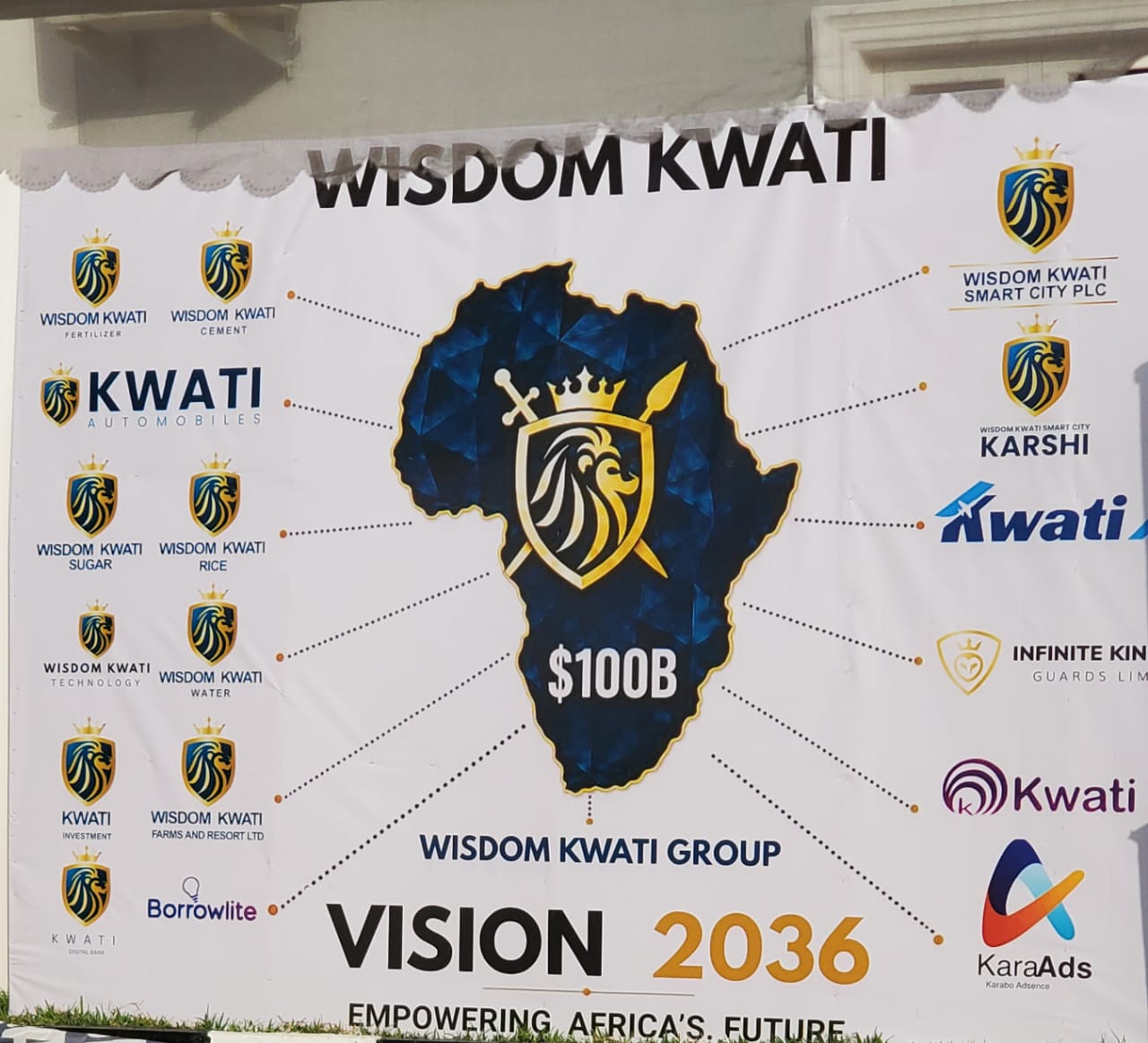
Wisdom Kwati Group Targets $100bn Revenue by 2036, Eyes NGX, London Listings
By: Michael Mike
Wisdom Kwati Group, a Nigerian conglomerate, has unveiled plans to grow its consolidated revenue to $100 billion by 2036 and pursue listings on the Nigerian Exchange (NGX) and London Stock Exchange in 2027, setting out an ambitious expansion programme spanning real estate, agriculture, financial technology, aviation and manufacturing.
The group announced the 10-year growth blueprint, tagged Vision 2036, during the inauguration of its corporate headquarters in Abuja and the presentation of Wisdom Kwati Smart City Plc as a public limited company.
Its chairman, Wisdom Kwati, said the $100 billion revenue target represented a long-term ambition rather than the group’s current financial position, pledging to strengthen corporate governance, introduce independent oversight and adopt international auditing standards as the business expands.
“It is not a claim that we are already a $100 billion enterprise. We are not. We will report under IFRS, audited internationally. Related-party transactions will go to independent directors. If we cannot defend that figure, we will not claim it,” Kwati said.
He said the group’s immediate priorities included compliance, documentation and measurable delivery, adding that the success of Vision 2036 would depend on building businesses whose performance could be independently verified.
As part of its capital-raising strategy, management said Wisdom Kwati Smart City Plc had received clearance to begin its listing process, with private placements expected to precede a proposed initial public offering and dual listing on the NGX and London Stock Exchange in 2027.
The proposed listings would mark a significant step in the group’s efforts to access capital markets, although the timeline remains subject to applicable regulatory requirements and the completion of the necessary processes.
Management said the smart city subsidiary operated across seven locations in Adamawa, Rivers, Abuja, Lagos, Kaduna, Nasarawa and Oyo states. It put the subsidiary’s asset valuation at about N74 billion, against reported turnover of N10 million at an earlier stage of its operations. The figures were not independently verified at the event.
Under Vision 2036, the group projects that its smart city business will contribute $50 billion in revenue through the development of five million homes across Africa, Asia, Europe and North America.
Its financial technology platform, which management said currently has more than 7,000 users, is expected to grow to two million users within 24 months and 50 million by 2036, contributing a projected $20 billion in revenue.
The group also plans to expand its agricultural operations following the acquisition of 1,000 hectares in Keffi, Nasarawa State, for farming. It intends to increase the area under cultivation to 10,000 hectares by 2030, with a longer-term target of securing up to 500,000 hectares across West Africa.
In Sierra Leone, management said it had secured 11,500 hectares in Nuni, near an airport, in partnership with the country’s government. Discussions were also said to be ongoing on proposed smart city projects in the United Arab Emirates, Ghana and Houston, Texas, by 2030.
Beyond real estate and agriculture, the group outlined plans to introduce bottled water and rice products by January 2027, followed by sugar in the second quarter, cement in the third quarter and fertiliser towards the end of the year.
Its artificial intelligence platform, Karrot, which management said had generated more than N100 million, is projected to achieve $1 billion in revenue by 2030.
The Group Chief Operating Officer, Pastor Baba Yerima Ballah, traced the organisation’s development from its beginnings as Tarabost about a decade ago to what he described as a 500-person organisation.
Ballah said the company had initially explored foreign financing for its smart city concept through a proposal submitted to the German government. However, he said regulatory bottlenecks frustrated efforts to secure the funding, prompting the group to reconsider its strategy and pursue local development.
He said the group’s interests now span construction, security, financial technology, agriculture, aviation, technology and real estate, including Karabo Construction, Infinity Kingdom Guards, Kwati Fintech Bank, Kwati Rice and Sugar, Kwati AI and Kwati Air.
Kwati said the group’s objective was to build businesses capable of delivering tangible infrastructure and services rather than relying on ambitious projections.
“Africa does not lack visions. What it lacks is the operating machine that will turn visions into houses with bedrooms, flights that land on time, and cities that will have water and title, not only renders,” he said.
He added that the group intended to develop an interconnected business model in which its subsidiaries patronised one another, creating demand and supporting growth across its various operations.
Management also pledged to protect investors’ funds and meet agreed returns, saying the credibility of Vision 2036 would ultimately be determined by execution.
The scale of the programme, however, presents significant financing, regulatory and operational demands. Delivering the proposed housing developments, expanding agricultural holdings across several countries and growing the fintech platform to millions of users would require substantial capital, effective management and sustained commercial performance.
The group’s revenue projections, asset valuation, proposed stock market listings and international expansion plans were not independently verified at the event. Their eventual realisation will depend on the availability of funding, compliance with regulatory requirements and the ability to translate the announced targets into demonstrable business results.
Wisdom Kwati Group Targets $100bn Revenue by 2036, Eyes NGX, London Listings



NUJ FCT Congratulates Lanre-Oke, Jesus Praise Ministry on 10th Anniversary
By: Michael Mike
The Correspondents’ Chapel of the Nigeria Union of Journalists (NUJ), FCT Council, has congratulated the founder and Senior Presiding Pastor of Jesus Praise Evangelical Ministry International, Abuja, Dr Femi Lanre-Oke, on the church’s 10th anniversary and eighth convention, HEBRON 2026.
The Chapel commended the ministry for its contributions to leadership development, education, social empowerment and community service over the past decade, saying its various initiatives had touched lives and helped nurture a new generation of Nigerian leaders.
In a congratulatory statement signed by its Chairman, Felix Ojo, the Chapel described the double celebration as a milestone marking 10 years of service to God and humanity, sustained commitment and teamwork.
It highlighted the ministry’s interventions through its mission centres, His Praise Publishing and Bookshop, scholarship programmes, FLO Leadership Academy, FLO Marriage Seminar, FLO Mentorship Programme, Davidstone School of Ministry and Still Waters Foundation.
Other initiatives cited included social empowerment outreaches, business grants, Staystrong conferences, the TED Women Initiative, conventions, and counselling and mentorship programmes.
The Chapel said the programmes reflected the ministry’s commitment to developing people, strengthening families, promoting leadership and equipping young Nigerians to assume greater responsibilities in society.
It also praised the resilience and dedication behind the growth of the ministry, which it said had evolved from a simple family gathering into an outreach with a wider reach.
According to the statement, the ministry has contributed to building moral values, shaping character and preparing young leaders to influence families, religious institutions, workplaces and society.
The Chapel said it shared the ministry’s vision of a church that exists to serve the people, particularly the oppressed, discouraged, neglected, rejected and disadvantaged, by offering relief, support and comfort.
It further expressed appreciation to Lanre-Oke and the ministry for their cooperation with journalists over the years and their commitment to the welfare of members of the profession.
The Chapel expressed optimism about strengthening the relationship through deeper partnership and collaboration in advancing their shared commitment to public service and community development.
It wished the ministry continued growth and greater commitment to its mission, while congratulating Lanre-Oke, the church leadership and members on the anniversary and HEBRON 2026 convention.
NUJ FCT Congratulates Lanre-Oke, Jesus Praise Ministry on 10th Anniversary
News
Ikpeazu at 62: Ambassador Unveils First-Class Scholarship, Says Empowerment Must Go Beyond Handouts
Ikpeazu at 62: Ambassador Unveils First-Class Scholarship, Says Empowerment Must Go Beyond Handouts
By: Michael Mike
Nigeria’s Ambassador to the Kingdom of Spain and former Governor of Abia State, Dr Okezie Victor Ikpeazu, has announced plans to establish the DOVIS Scholarship Scheme for exceptional first-class students, declaring that sustainable empowerment requires investment in education, skills acquisition and human capacity development rather than the distribution of handouts.
Ikpeazu made the disclosure at the celebration of his 62nd birthday and the Fifth Okezie Victor Ikpeazu Colloquium, organised by the Pa Ismael Ikpeazu Library and DOVI Scientific Leadership Centre, where speakers called for a shift towards empowerment programmes that equip young people with the knowledge, practical experience and resources needed to achieve lasting economic independence.
The colloquium, themed “Empowerment Beyond Handouts: Building Responsible, Skilled and Self-Reliant Young People for Sustainable Development,” examined how education, mentorship, enterprise development and practical training could help Nigeria harness the potential of its youthful population.
Under the proposed scholarship scheme, Ikpeazu said beneficiaries would be expected to maintain high academic standards, warning that the award would be suspended if a student’s academic performance declined.
The initiative reflects the central argument of the gathering: that empowerment should be measured not by the immediate value of assistance distributed but by the capacity beneficiaries develop to sustain themselves and contribute to society.
Reflecting on his years in public service, the former governor said effective empowerment must combine training, mentorship, practical experience and access to resources, citing agricultural initiatives undertaken during his administration in Abia State as an example of the approach.
He recalled the establishment of poultry clusters designed to prepare young people for independent enterprise through structured training and practical exposure.
The programme provided facilities including poultry pens, feed stores and veterinary clinics, while expert instructors guided participants through classroom instruction and practical farm management before their transition into independent poultry businesses.
According to Ikpeazu, the model helped reduce the risk of business failure by ensuring that participants acquired the necessary knowledge and experience before setting up their own enterprises.
The approach, he suggested, demonstrated the limitations of distributing funds or equipment without providing beneficiaries with the technical competence and managerial skills required to make productive use of them.
Ikpeazu also expressed gratitude to President Bola Ahmed Tinubu for appointing him Nigeria’s ambassador to Spain and commended the President’s economic reforms, which he said had placed the country on a positive economic trajectory.
He thanked members of his family, friends and political associates for their support throughout his academic, professional and political journey.
The keynote lecture, delivered virtually by Professor John Uzoma Ihendinihu, Professor of Accounting and Taxation at Michael Okpara University of Agriculture, Umudike, reinforced the argument that genuine empowerment must focus on building capacity rather than creating dependence on periodic assistance.
Ihendinihu said sustainable youth development required an integrated approach that developed character, knowledge, competence and self-reliance.
He argued that empowerment programmes should extend beyond cash transfers and material gifts to incorporate formal education, vocational training, mentorship, entrepreneurship support and access to markets.
The professor also presented Ikpeazu’s career and administration as an illustration of the relationship between education, discipline, enterprise development and public service, citing several initiatives introduced during his eight years as governor of Abia State.
Among the programmes he highlighted were the promotion of the Made-in-Aba campaign, the sponsorship of local artisans for international training, the establishment of the Enyimba Automated Shoe Company and the Enyimba Automated Garment Factory, as well as efforts to secure institutional markets for products manufactured by Aba-based entrepreneurs.
The Made-in-Aba initiative sought to strengthen local manufacturing, promote indigenous craftsmanship and expand opportunities for businesses operating in Aba, a major commercial and manufacturing centre in southeastern Nigeria.
By supporting artisans with training and promoting locally manufactured products, the initiatives were intended to improve productivity, create employment opportunities and help local enterprises compete in wider markets.
Ihendinihu argued that such interventions represented a shift from consumption-based assistance towards capacity building, in which beneficiaries were equipped to produce goods, develop businesses and generate sustainable incomes.
He urged governments, educational institutions, businesses and community leaders to prioritise the development of responsible, skilled and productive young people capable of driving long-term economic growth and national development.
The argument also raised a broader policy question about the effectiveness of empowerment programmes in Nigeria: whether interventions should be judged by the number of beneficiaries reached or by the jobs, enterprises and sustainable livelihoods they create.
The birthday colloquium’s emphasis on practical training and entrepreneurship built on four previous editions that examined the socioeconomic future of the Igbo people, entrepreneurship as a driver of economic development, business survival in an inflationary economy and the shortcomings of conventional empowerment programmes.
The first edition, themed “Socio-Economic Future of Ndigbo: Setting the Agenda,” considered pathways towards a more prosperous and inclusive future for the Igbo people. The second focused on “Entrepreneurship as a Pathway to Economic Growth and Development,” while the third examined “Maintaining Business Growth in an Inflationary Economy.”
The fourth edition, titled “The Paradox of Empowerment: Why Empowerment Programs Rarely Empower,” questioned why the distribution of resources often failed to translate into lasting economic independence.
This year’s theme sought to advance that discussion by focusing on how young people could be equipped with the skills, values and experience necessary to create value, sustain livelihoods and adapt to changing economic conditions.
Earlier, in his opening remarks, the event’s moderator and former spokesman of the Ministry of Foreign Affairs, Kimiebi Ebienfa, described Ikpeazu as a scholar, statesman, diplomat and public servant whose career had been shaped by scholarship, humility and service.
Ebienfa said the annual colloquium had consistently provided a platform for discussing economic development, entrepreneurship and sustainable empowerment.
He noted that the conversation had progressed from examining entrepreneurship and economic growth to questioning the limitations of conventional empowerment programmes and exploring how human capital development could deliver more enduring results.
The event also featured tributes and goodwill messages from friends, family members, associates and guests who participated physically and virtually from different parts of the world. They commended Ikpeazu’s contributions to public service, youth development, education and community advancement.
Born on 18 October 1964 in Umuebere, Umuobiakwa, Obingwa Local Government Area of Abia State, Ikpeazu earned a bachelor’s degree in Clinical Biochemistry from the University of Maiduguri, a master’s degree in Biochemical Toxicology and a PhD in Biochemical Pharmacology from the University of Calabar.
He worked as a university lecturer and researcher before entering mainstream politics, subsequently serving in various public offices before becoming governor of Abia State in 2015. He served two terms, ending in 2023, before taking up his diplomatic appointment in Spain.
The celebration concluded with goodwill messages, birthday tributes and a birthday song in honour of the ambassador, as family members, friends, associates and well-wishers marked his 62nd birthday.
Beyond the celebrations, the proposed scholarship scheme and the discussions at the colloquium placed education, practical skills and sustained enterprise development at the centre of the debate on how Nigeria can turn its youthful population into a driver of economic growth.
The underlying message was that lasting empowerment requires more than providing people with immediate assistance: it demands the knowledge, discipline, opportunities and institutional support that enable them to build independent and productive lives.
Ikpeazu at 62: Ambassador Unveils First-Class Scholarship, Says Empowerment Must Go Beyond Handouts

Man, Son Burnt Beyond Recognition, Three Injured in Jos South Crash
By: Zagazola Makama
A man and his son have been burnt beyond recognition, while three other persons sustained varying degrees of injuries in a fatal road crash involving a commercial tricycle at Sabon Barki area of Jos South Local Government Area of Plateau State.
The incident occurred at about 4:20 p.m. on Sunday, when the family was reportedly returning from church.
Sources said the tricycle, popularly known as Keke NAPEP, was allegedly hit by a commercial bus, causing it to burst into flames.

The man and his son were trapped in the burning tricycle and died before they could be rescued, while three other occupants sustained injuries.
Among the injured was the man’s wife, who reportedly suffered a broken leg. Two other children of the family and the tricycle rider were also injured and rushed to a hospital for treatment.
A witness, identified as Gyang, said he arrived at the scene shortly after the incident while returning from work.
“I was passing by on my way from work when I saw people crying. I went closer to find out what had happened and saw people trying to rescue the victims.
“But the fire was too much for us to handle. It was beyond our strength, and we could not do much to rescue them from the burning tricycle,” he said.
Gyang, however, clarified that he did not witness the actual collision but arrived after the crash had occurred.
He added that the driver of the other vehicle allegedly fled the scene after the incident.
Efforts to reach the Federal Road Safety Corps (FRSC) for comments were unsuccessful as of the time of filing this report.
The cause of the crash and the circumstances surrounding the alleged flight of the commercial bus driver remain unclear.
Man, Son Burnt Beyond Recognition, Three Injured in Jos South Crash

NUJ FCT Congratulates Lanre-Oke, Jesus Praise Ministry on 10th Anniversary

Ikpeazu at 62: Ambassador Unveils First-Class Scholarship, Says Empowerment Must Go Beyond Handouts

Man, Son Burnt Beyond Recognition, Three Injured in Jos South Crash

Roger Federer’s Shock as DNA Results Reveal Myla and Charlene Are Not His Biological Children

THE PLIGHT OF FARIDA

FAILED COUP IN BURKINA FASO: HOW TRAORÉ NARROWLY ESCAPED ASSASSINATION PLOT AMID FOREIGN INTERFERENCE CLAIMS
-
 News3 years ago
Roger Federer’s Shock as DNA Results Reveal Myla and Charlene Are Not His Biological Children
-
Opinions5 years ago
THE PLIGHT OF FARIDA
-
 News2 years ago
FAILED COUP IN BURKINA FASO: HOW TRAORÉ NARROWLY ESCAPED ASSASSINATION PLOT AMID FOREIGN INTERFERENCE CLAIMS
-
 Opinions5 years ago
POLICE CHARGE ROOMS, A MINTING PRESS
-

 News3 years ago
EYN: Rev. Billi, Distortion of History, and The Living Tamarind Tree
-

 ACADEMICS3 years ago
A History of Biu” (2015) and The Lingering Bura-Pabir Question (1)
-

 Columns3 years ago
Army University Biu: There is certain interest, but certainly not from Borno.
-

 Politics1 year ago
2027: Why Hon. Midala Balami Must Go, as Youths in Hawul and Asikira/Uba Federal Constituency Reject ₦500,000 as Sallah Gift
