
News
ActionAid Secretary-General Praises Nigerians’ Warmth, Urges Government to Scale Up Community-Based Solutions


ActionAid Secretary-General Praises Nigerians’ Warmth, Urges Government to Scale Up Community-Based Solutions
By: Michael Mike
The Secretary-General of ActionAid International has applauded Nigerians for their hospitality and resilience during his maiden visit to the country, describing Nigeria as “an impressive nation whose people embody warmth, courage, and a strong sense of community.”
Speaking during a field visit to a women-led community empowerment programme in Abuja as part of activities marking ActionAid Nigeria’s 25th anniversary, the global head of the development organisation said he arrived with mixed expectations but was quickly won over by the sincerity and openness of ordinary Nigerians.
“I had heard many things about Nigeria before coming, some of them told in jest, like the idea that you haven’t truly visited Africa until you’ve visited Nigeria,” he said. “But over the past three days, I’ve been moved by the kindness of the people and the genuine willingness to help. It has left me with a very strong, positive impression.”
Reflecting on the organization’s two-and-a-half decades in the country, the Secretary-General said the true measure of impact lies not in written reports but in the lived experiences of people who have benefited from the programs.
“Listening to women and young people speak confidently about how trainings and community support have transformed their lives is the clearest sign of impact,” he noted. “When people speak from a position of power and agency, you know development work is reaching the right places.”
He added that ActionAid will deepen its investments over the coming years—especially in women and young people—because these groups play a pivotal role in driving sustainable change at both community and national levels.
The Secretary-General urged the Nigerian government to recognize the vital role civil society organizations play in development and to ensure a supportive environment for their operations.
“When organizations like ActionAid thrive, entire communities thrive with them,” he said. “The government must acknowledge this and create conditions that allow civil society to operate effectively.”
However, he stressed that NGOs alone cannot achieve nationwide transformation.
“Non-governmental organizations can only reach a limited number of communities. Government has the mandate, the resources, and the long-term responsibility to deliver services at scale,” he explained. “Our job is to demonstrate what works. Government’s job is to expand it.”
He also highlighted education as a non-negotiable priority for Nigeria’s development.
“No country can achieve meaningful transformation without investing in education,” he said. “Budget decisions must reflect this reality, and every expenditure should have a direct impact on communities.”
His visit concluded with renewed commitments from ActionAid International to strengthen partnerships, expand grassroots initiatives, and support Nigerian communities in achieving long-term, people-driven development.
On his part, the Country Director of ActionAid Nigeria, Dr. Ahmed Mamedu reiterated the need for urgent government investment in underserved communities across the Federal Capital Territory (FCT) as well as other parts of the country, particularly those facing severe infrastructural and social service gaps.
He made the appeal during a field visit to Pasepa community, one of several hard-to-reach areas where ActionAid has worked for more than a decade.
Mamedu explained that the visit formed part of the anniversary celebrations, which include showcasing communities where ActionAid has driven long-term development initiatives. He noted that Pasepa, like many others in the FCT, reflects the reality of deep rural poverty often overlooked in discussions about Abuja.
He noted that: “Many people assume Abuja is all about the city’s glamour, but Pasepa is also part of the FCT,” adding that: “Coming here reveals what daily life looks like for people living in real poverty — difficult terrain, limited infrastructure, and minimal access to essential services.”
He said ActionAid has worked in Pasepa for over 12 years, partnering with local stakeholders to build community structures, strengthen accountability, and push for government responsiveness. Despite notable progress, but lamented that the reality on ground remains far from satisfactory.
“Are we impressed with what we are seeing here? The answer is no,” he stated. “We can definitely do better. We want to see more impact, more livelihood opportunities, and improved access to social services.”
He said one of the most striking observations during the visit was the steady stream of political actors entering the community, insisting that this is evidence that leaders are aware of the community’s challenges — and capable of reaching it when seeking support.
“If politicians can find their way here during the political season, then they can also bring infrastructure and amenities,” he said. “We expect that in the next few months and years, returning to this community will reveal concrete improvements.”
He stressed that such development is not only overdue but essential for improving the lives of thousands of residents.
He said the visit was also an opportunity for the Secretary-General of ActionAid International to directly experience the conditions in Nigeria’s marginalized communities.
“This visit allows him to hear the voices of the people firsthand and understand the depth of the work we do,” he added.
ActionAid Nigeria says it will continue supporting rural communities while advocating stronger government accountability and sustained investment in critical social infrastructure.
ActionAid Secretary-General Praises Nigerians’ Warmth, Urges Government to Scale Up Community-Based Solutions


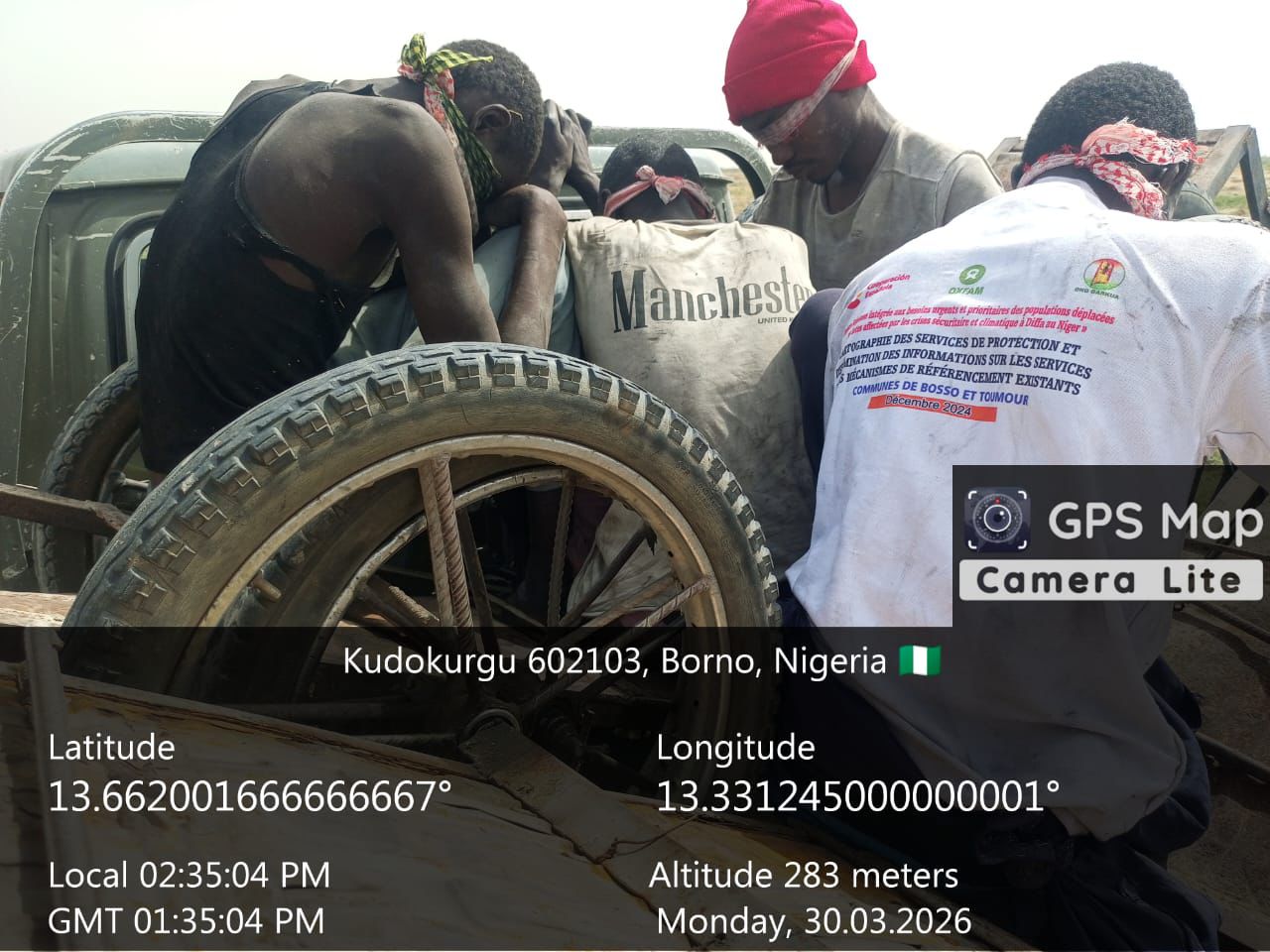
Troops intercept 11 youths with donkeys during patrol in Borno
By: Zagazola Makama
Troops of 68 Battalion have intercepted 11 youths during a routine patrol in Mallam Fatori area of Abadam Local Government Area of Borno State.
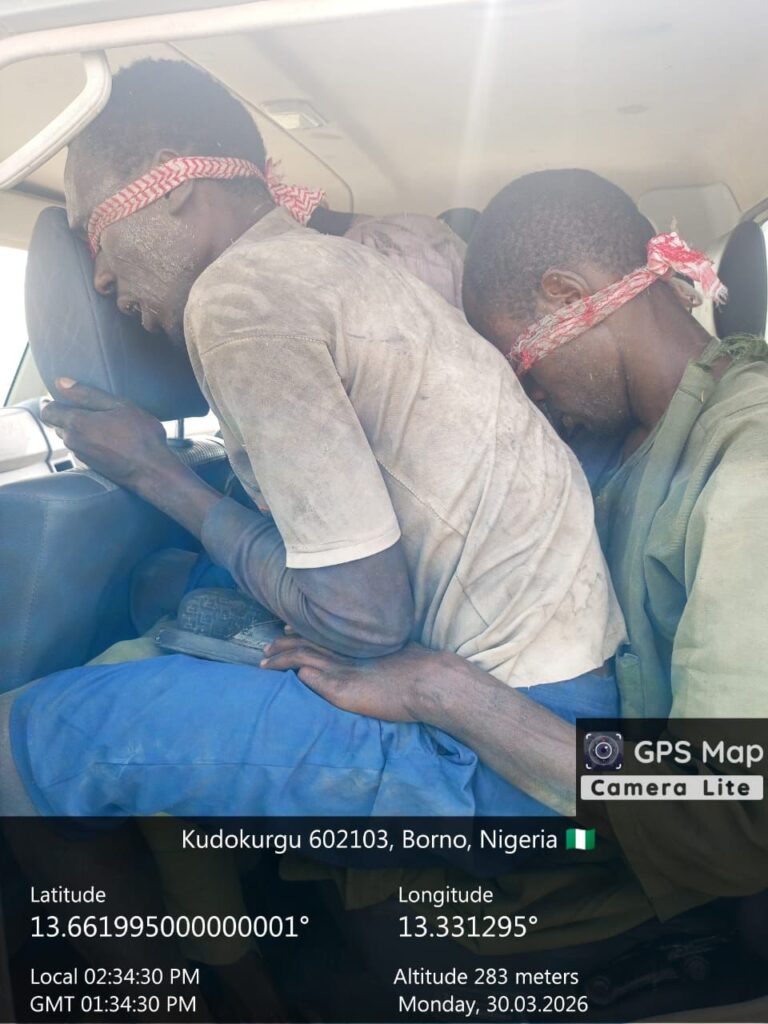
Security sources said the interception occurred along the Bulagana–Cheisa axis on April 2 during ongoing clearance operations in the area.
According to the sources, the individuals were found moving in the area with 12 donkeys when they were stopped and briefly interrogated by troops.
The sources added that the youths were later handed over, alongside the animals, to relevant authorities in a neighbouring country for further necessary action.
The military said the patrol was part of sustained efforts to maintain security dominance and prevent exploitation of border communities by criminal elements.
Troops intercept 11 youths with donkeys during patrol in Borno
Troops recover ammunition, logistics items in Kwara patrol operation
By: Zagazola Makama
Troops of the Nigerian Army under the 22 Brigade have recovered ammunition and other logistics items during a fighting patrol in Ifelodun Local Government Area of Kwara State.
A security source disclosed that the operation was conducted at about 4:00 p.m. on April 2 at Daban Lema, where troops of the brigade, operating from the Patrol Base, encountered signs of suspected terrorist activities in a deserted location.
According to the source, the troops immediately carried out exploitation of the area, leading to the recovery of four rounds of 7.62mm special ammunition and one empty PKT ammunition belt link.
Other items recovered include four mobile phones, two head warmers, two small solar panels, and assorted repair tools believed to have been used by the suspected terrorists.
The source added that the recovery indicates the presence and movement of suspected criminal elements within the area, noting that troops have intensified surveillance and patrols to deny them freedom of action.
Troops recover ammunition, logistics items in Kwara patrol operation
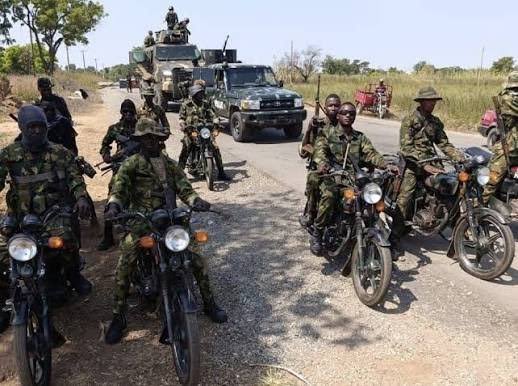
Troops foil attack by Criminal Youths, rescue victims, arrest suspects in plateau
By: Zagazola Makama
Troops of Sector 1, Operation Enduring Peace (OPEP), have foiled an attack on residents at Dutse Uku in Jos North Local Government Area of Plateau State.
A security source said the troops responded swiftly to a report of sporadic gunshots in the area at about 11:50 p.m. on April 2.
According to the source, upon arrival at the scene, the suspected criminals fled, abandoning their operation due to the prompt intervention of the troops.
He said the troops rescued two victims who sustained gunshot wounds during the incident and immediately evacuated them to a hospital for medical attention.
The source further disclosed that two suspects, dressed in black attire, were arrested at the scene.
Items recovered from the suspects include a cutlass and a knife.
He added that the suspects are currently in military custody and undergoing preliminary investigation, while efforts are ongoing to track down other fleeing members of the group.
Zagazola report that despite heightened security, there has been report of pocket of attacks in some communities.
The source reassured residents of the military’s commitment to protecting lives and property and urged the public to continue providing timely information to security agencies.
Troops foil attack by Criminal Youths, rescue victims, arrest suspects in plateau

Troops intercept suspected Boko Haram logistics convoy conveying 13 persons in Borno

Troops intercept 11 youths with donkeys during patrol in Borno

Troops, CJTF arrest three suspected Boko Haram logistics suppliers in Borno

Roger Federer’s Shock as DNA Results Reveal Myla and Charlene Are Not His Biological Children

THE PLIGHT OF FARIDA

FAILED COUP IN BURKINA FASO: HOW TRAORÉ NARROWLY ESCAPED ASSASSINATION PLOT AMID FOREIGN INTERFERENCE CLAIMS
-
 News2 years ago
Roger Federer’s Shock as DNA Results Reveal Myla and Charlene Are Not His Biological Children
-
Opinions4 years ago
THE PLIGHT OF FARIDA
-
 News12 months ago
FAILED COUP IN BURKINA FASO: HOW TRAORÉ NARROWLY ESCAPED ASSASSINATION PLOT AMID FOREIGN INTERFERENCE CLAIMS
-

 News2 years ago
EYN: Rev. Billi, Distortion of History, and The Living Tamarind Tree
-
 Opinions4 years ago
POLICE CHARGE ROOMS, A MINTING PRESS
-

 ACADEMICS2 years ago
A History of Biu” (2015) and The Lingering Bura-Pabir Question (1)
-

 Columns2 years ago
Army University Biu: There is certain interest, but certainly not from Borno.
-

 Opinions2 years ago
Tinubu,Shettima: The epidemic of economic, insecurity in Nigeria
