
News
AT UNGA 80: President Tinubu: Africa Must Begin To Finance Its Mineral Assets, Wield Power In Global Supply

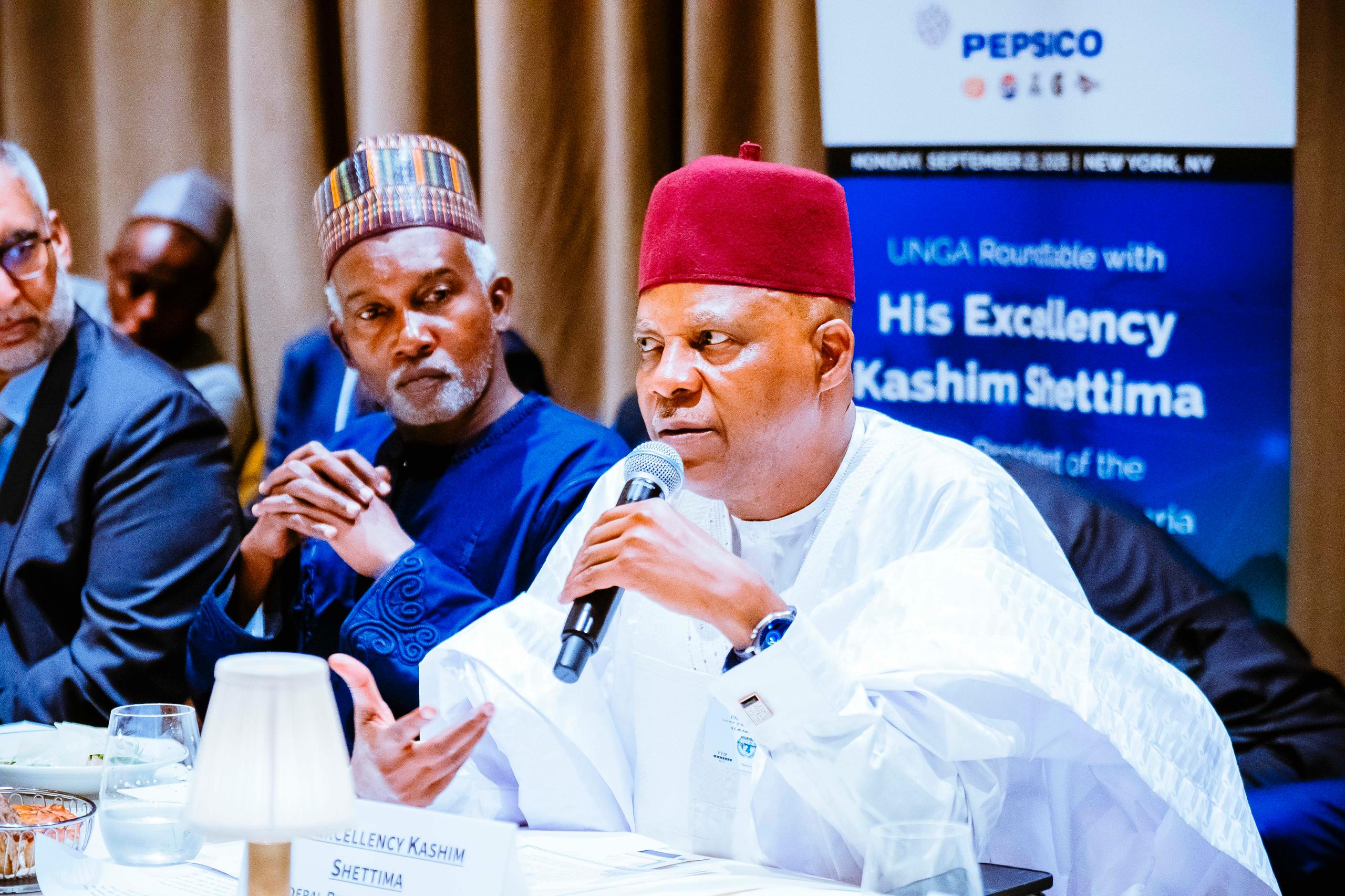
AT UNGA 80: President Tinubu: Africa Must Begin To Finance Its Mineral Assets, Wield Power In Global Supply
** Pledges Nigeria’s commitment towards catalysing mineral-led renaissance under Renewed Hope Agenda
By: Our Reporter
President Bola Ahmed Tinubu, GCFR, has called for a complete overhaul of the global financial architecture governing Africa’s mineral resources, saying it was time for African nations to not only finance their own mineral sectors but also assert their influence and control over African products’ global supply chains.
This, the President stated, had become necessary if African nations’ sovereignty is to be protected, just as he recommended collective action by development allies and partners, to bring Africa’s mineral economy to reality for the benefit of the continent.
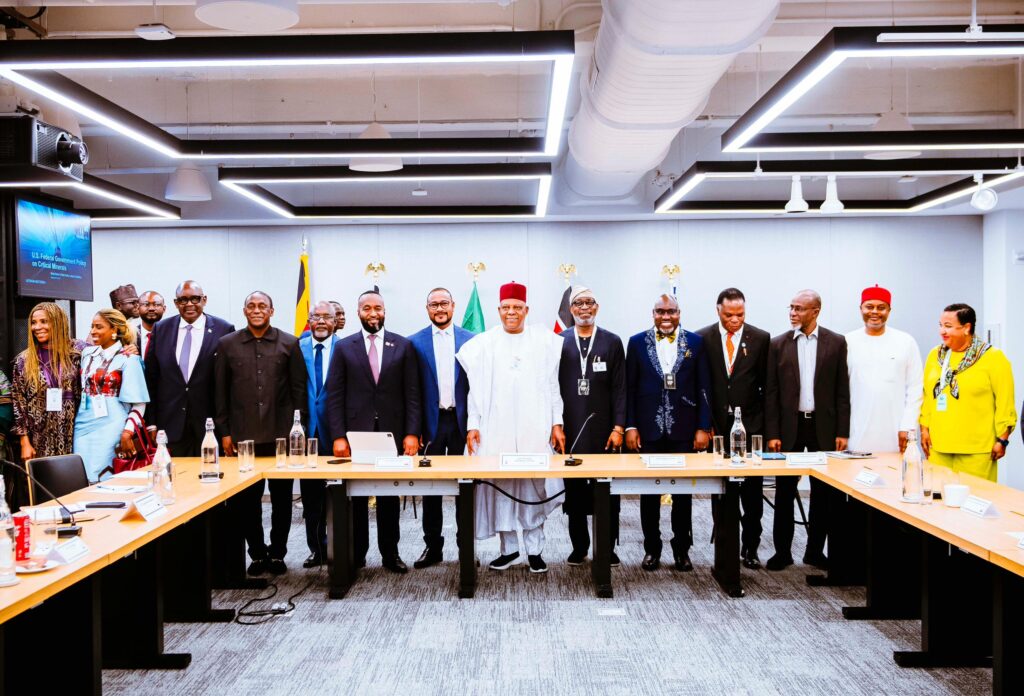
President Tinubu, represented by Vice President Kashim Shettima, called for these decisive actions at the Second Africa Minerals Strategy Group (AMSG) High-Level Roundtable on Critical Minerals Development in Africa, held on the margins of the 80th Session of the United Nations General Assembly, New York City.
“We must take the bull by the horns in financing our future. Never again shall we wait for capital to trickle in. With sovereign funds, blended vehicles, and innovation tools like the Africa Mineral Token, Africa shall finance Africa. To safeguard this sovereignty, we must guard our cobalt, lithium, graphite, gold, and rare earths not as fragmented states but as one continental bloc, wielding collective power in global supply chains,” the President submitted.
Pledging Nigeria’s commitment towards catalysing a mineral-led renaissance under the Renewed Hope Agenda, as exemplified back home, President Tinubu urged African leaders to end the “ignoble cycle” of importing finished goods through accelerated government-led mineral exploration.
To unlock Africa’s mineral economic future, the President said the objective will materialise based on four imperatives.
First, Tinubu urged African nations to climb the value chain, adding, “We must end the ignoble cycle of exporting rocks and importing finished goods. From beneficiation to green manufacturing, Africa must build industries on African soil.”
The President continued, “Second, I am proud to announce that with the African Minerals and Energy Resource Classification (AMREC) and the Pan-African Resource Reporting Code (PARC), we will no longer beg for geological knowledge of our own land. Africa’s data will be mapped, standardised, and owned by Africans.
“Third, data alone is not enough. We must accelerate government-led mineral exploration and national geological mapping.
“Without exploration, there is no sovereignty. Without mapping, there is no value. Every member state must prioritise country-wide surveys, strengthen geological agencies, and pool expertise through AMSG. For when Africa owns the map, Africa owns the future.”
Fourthly, President Tinubu urged African leaders to take the bull by the horns in financing Africa’s future. “With sovereign funds, blended vehicles, and innovative tools like the Africa Mineral Token, Africa shall finance Africa,” the President maintained.
The President demanded a collective demonstration of leadership while calling upon sovereign wealth funds, private partners, and development allies to join Africa in rewriting the story of Africa’s mineral economy.
“Nigeria, Uganda, Zimbabwe, Burkina Faso, Mali, Botswana, Gabon, and Ghana are already leading this new age of equal exchange, enforcing bans on the export of raw minerals to promote domestic beneficiation. Zimbabwe’s ban on raw lithium in 2022, Gabon’s decision to end manganese exports by 2029, and Kenya’s plan to restrict raw gold exports are historic acts of courage. Nigeria is accelerating similar reforms, for we know this is the road to jobs, to industries, and to prosperity,” the President said.
The President commended Nigeria’s Minister of Solid Minerals Development, Dr Dele Alake, who chairs the event, and the Secretary-General, H.E. Moses Michael Engadu of Uganda, for guiding Africa towards a path of productivity and pride.
The President concluded, “As Chair of this Roundtable, I pledge Nigeria’s unflinching commitment to ensuring that AMSG fulfils its promise of catalysing a mineral-led renaissance. Let us rise from this dialogue with a communiqué of clarity, a framework for action, and a spirit of unity.”
Earlier, Dr. Dele Alake while welcoming stakeholders and partners to the event called for cohesion amongst African nations saying with determined focus and a reinvigorated sense of partnership and transparency in the minerals sector, Africa will harness in all ramifications the total benefits of a sustained, deepened and well harmonised mineral sector, adding that, “these resources are indispensable for global sustainable development and remain catalyst for Africa’s rapid industrialisation”.
Speaking at the event, UN Assistant Secretary General and Regional Director, Africa UNDP, Ahunna Eziakonwa, urged African leaders to be cautious in terms of how they position themselves to make the most of the African resources for the people, rather than to be subjected to extreme exploitation, which is already happening, and being extracted without appropriate value.
She also emphasised the need for leaders in the continent to ensure partnership that delivers technology transfer, beneficiation, and creates jobs, saying ” there is a scramble and a lot of interest in Africa’s minerals, people are coming to partner, Africa can shape the quantum of that partnership and determine what works from the partnership.
Also, Mr Jozef Stkela, European Union Commissioner for International Partnership, said in the last few years, the European Union structured its approach, boosted, and secured its supply of critical raw materials.
He said that the EU adopted the Critical Raw Materials Act in 2024, to increase domestic production and diversify supply outside the European Union, saying “under this Act and our global gateways strategy, we have signed 14 strategic partnerships with the raw materials value chain of which four are in Africa.”
IN RELATED DEVELOPMENT
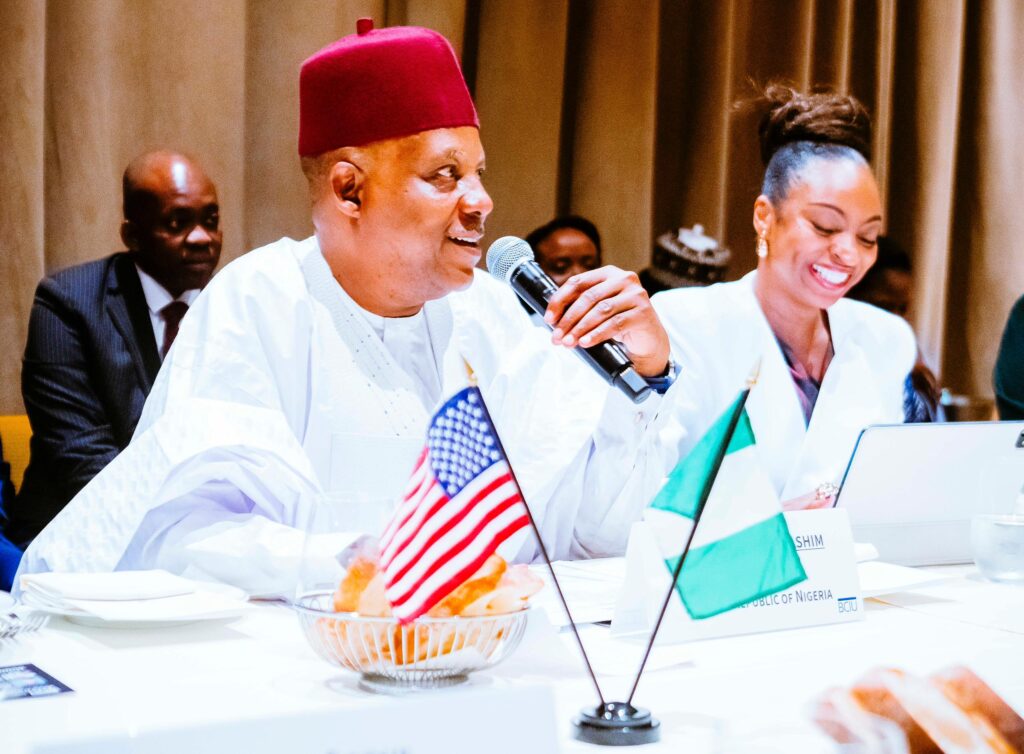
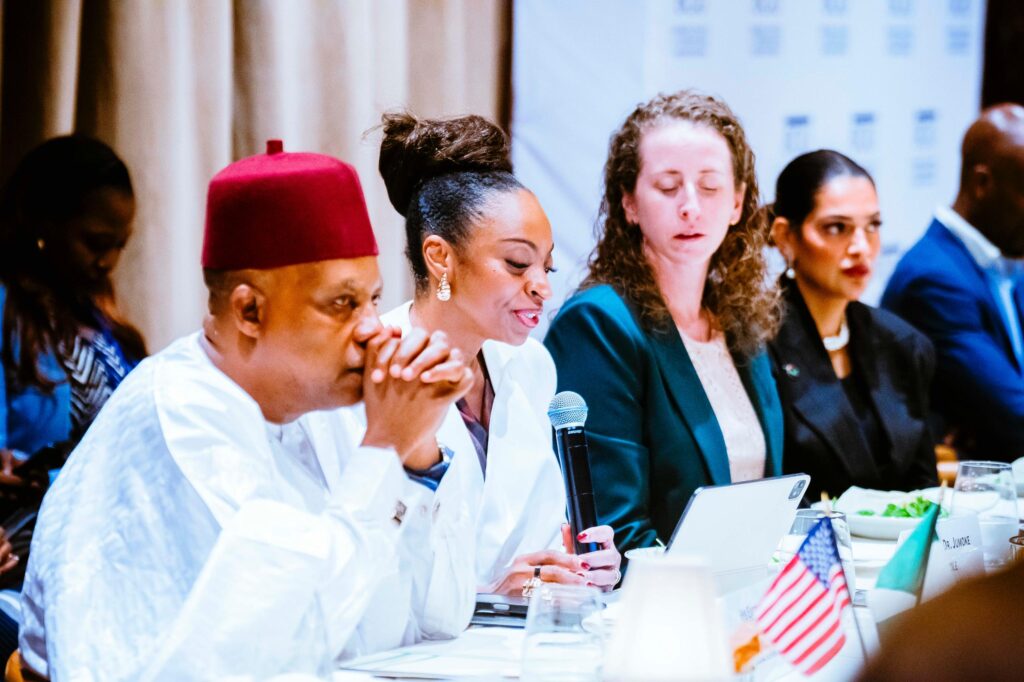
Meanwhile, Vice President Shettima has also held a roundtable hosted by the Business Council for International Understanding (BCIU) in partnership with the Flour Mills of Nigeria and other conglomerates, where he spoke about the investment opportunities in Nigeria and the ongoing economic reforms of President Tinubu’s administration.
The Vice President told investors that in President Tinubu, they have an ally, a friend, a colleague who grew up in the American ecosystem, who speaks their language and the language of business.
He said the Nigerian economy, given the super reforms of the President, had turned the corner and hence the mirific turnaround and positive figures cum stability, the Nigerian economy is experiencing. He charged investors to invest in the country as there had never been a time like now to invest in Nigeria, given the enabling environment and the ease of doing business now in Nigeria.
Similarly, VP Shettima held a bilateral meeting with the Chancellor of the Republic of Austria, Christian Stocker, at the UN Headquarters in New York, where both countries agreed to forge new ties and explore new ways of deepening their relationships.
AT UNGA 80: President Tinubu: Africa Must Begin To Finance Its Mineral Assets, Wield Power In Global Supply


Troops intercept 11 youths with donkeys during patrol in Borno
By: Zagazola Makama
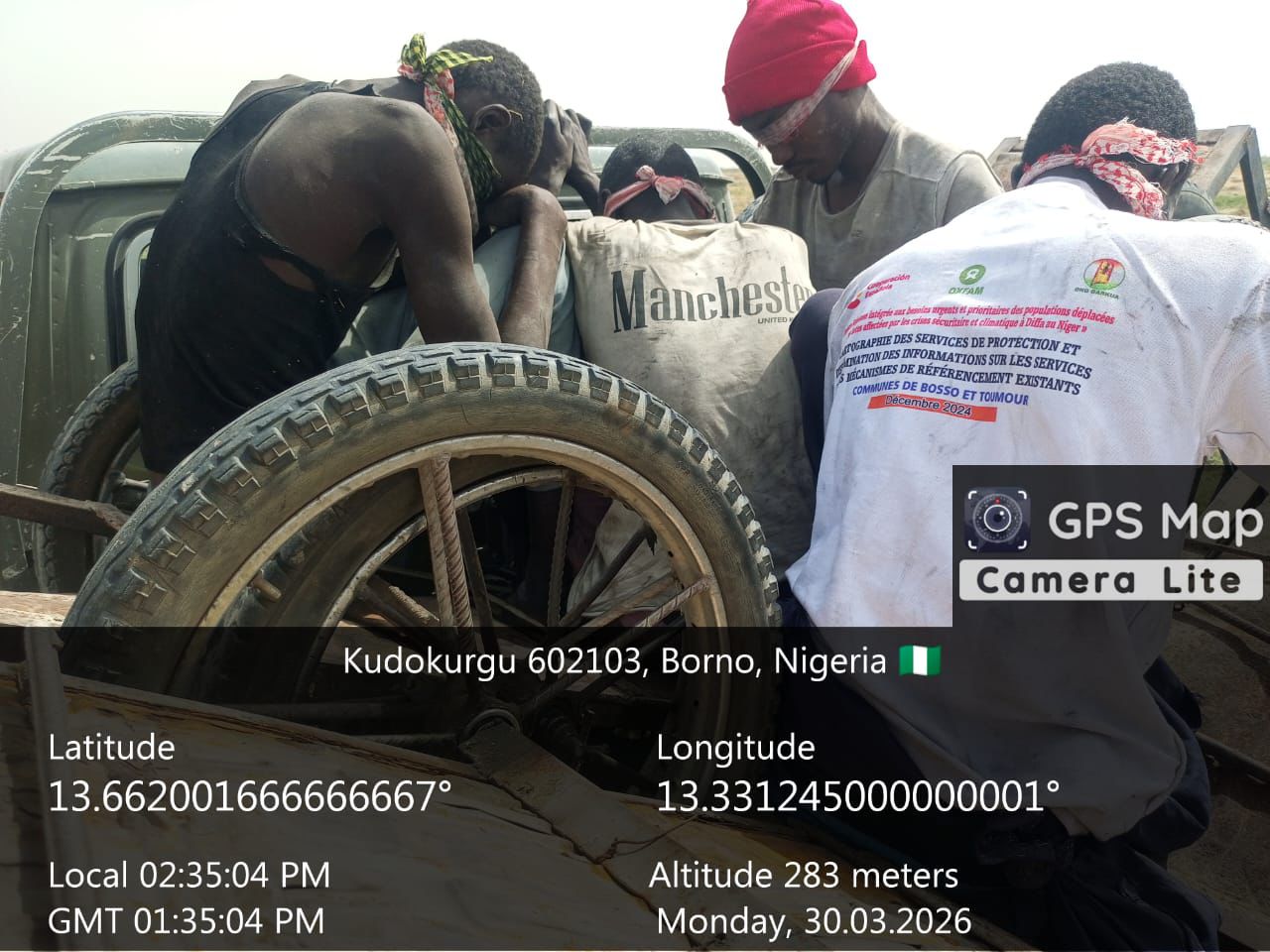
Troops of 68 Battalion have intercepted 11 youths during a routine patrol in Mallam Fatori area of Abadam Local Government Area of Borno State.
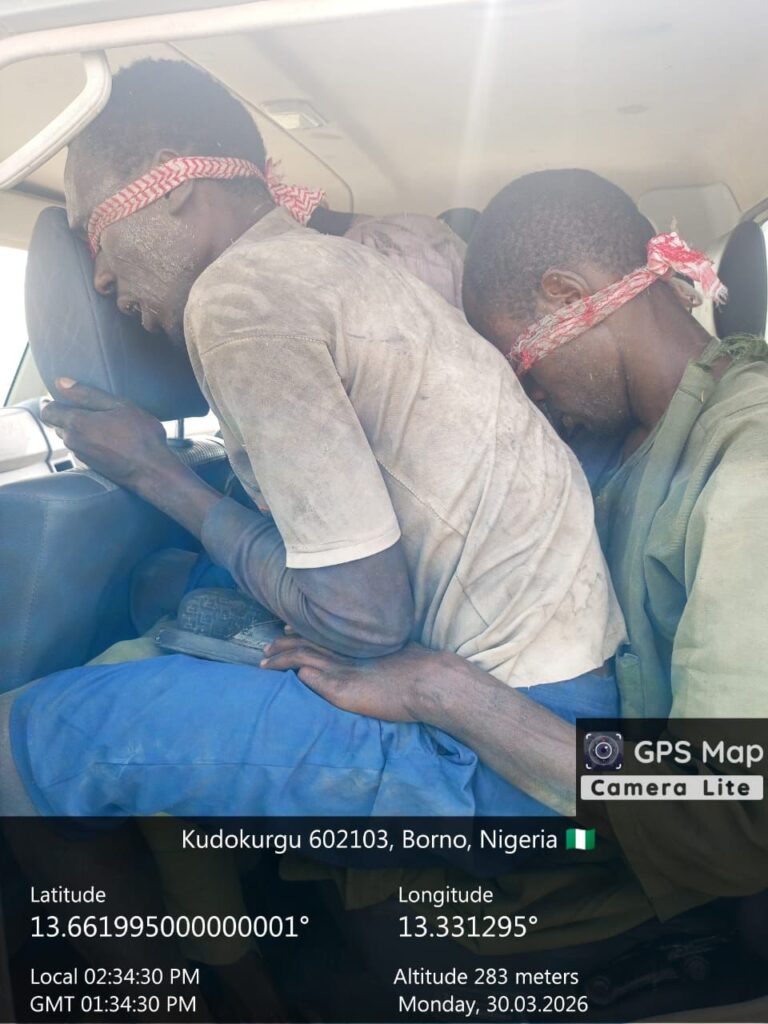
Security sources said the interception occurred along the Bulagana–Cheisa axis on April 2 during ongoing clearance operations in the area.
According to the sources, the individuals were found moving in the area with 12 donkeys when they were stopped and briefly interrogated by troops.
The sources added that the youths were later handed over, alongside the animals, to relevant authorities in a neighbouring country for further necessary action.
The military said the patrol was part of sustained efforts to maintain security dominance and prevent exploitation of border communities by criminal elements.
Troops intercept 11 youths with donkeys during patrol in Borno
Troops recover ammunition, logistics items in Kwara patrol operation
By: Zagazola Makama
Troops of the Nigerian Army under the 22 Brigade have recovered ammunition and other logistics items during a fighting patrol in Ifelodun Local Government Area of Kwara State.
A security source disclosed that the operation was conducted at about 4:00 p.m. on April 2 at Daban Lema, where troops of the brigade, operating from the Patrol Base, encountered signs of suspected terrorist activities in a deserted location.
According to the source, the troops immediately carried out exploitation of the area, leading to the recovery of four rounds of 7.62mm special ammunition and one empty PKT ammunition belt link.
Other items recovered include four mobile phones, two head warmers, two small solar panels, and assorted repair tools believed to have been used by the suspected terrorists.
The source added that the recovery indicates the presence and movement of suspected criminal elements within the area, noting that troops have intensified surveillance and patrols to deny them freedom of action.
Troops recover ammunition, logistics items in Kwara patrol operation
Troops foil attack by Criminal Youths, rescue victims, arrest suspects in plateau
By: Zagazola Makama
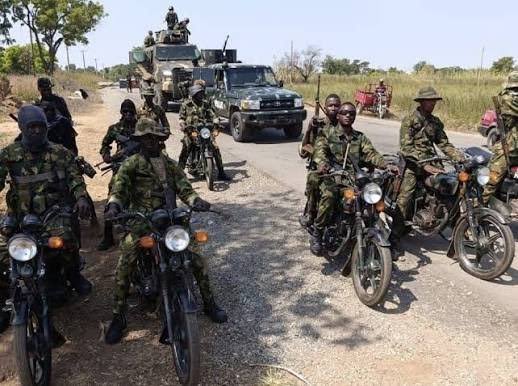
Troops of Sector 1, Operation Enduring Peace (OPEP), have foiled an attack on residents at Dutse Uku in Jos North Local Government Area of Plateau State.
A security source said the troops responded swiftly to a report of sporadic gunshots in the area at about 11:50 p.m. on April 2.
According to the source, upon arrival at the scene, the suspected criminals fled, abandoning their operation due to the prompt intervention of the troops.
He said the troops rescued two victims who sustained gunshot wounds during the incident and immediately evacuated them to a hospital for medical attention.
The source further disclosed that two suspects, dressed in black attire, were arrested at the scene.
Items recovered from the suspects include a cutlass and a knife.
He added that the suspects are currently in military custody and undergoing preliminary investigation, while efforts are ongoing to track down other fleeing members of the group.
Zagazola report that despite heightened security, there has been report of pocket of attacks in some communities.
The source reassured residents of the military’s commitment to protecting lives and property and urged the public to continue providing timely information to security agencies.
Troops foil attack by Criminal Youths, rescue victims, arrest suspects in plateau

Troops intercept suspected Boko Haram logistics convoy conveying 13 persons in Borno

Troops intercept 11 youths with donkeys during patrol in Borno

Troops, CJTF arrest three suspected Boko Haram logistics suppliers in Borno

Roger Federer’s Shock as DNA Results Reveal Myla and Charlene Are Not His Biological Children

THE PLIGHT OF FARIDA

FAILED COUP IN BURKINA FASO: HOW TRAORÉ NARROWLY ESCAPED ASSASSINATION PLOT AMID FOREIGN INTERFERENCE CLAIMS
-
 News2 years ago
Roger Federer’s Shock as DNA Results Reveal Myla and Charlene Are Not His Biological Children
-
Opinions4 years ago
THE PLIGHT OF FARIDA
-
 News12 months ago
FAILED COUP IN BURKINA FASO: HOW TRAORÉ NARROWLY ESCAPED ASSASSINATION PLOT AMID FOREIGN INTERFERENCE CLAIMS
-

 News2 years ago
EYN: Rev. Billi, Distortion of History, and The Living Tamarind Tree
-
 Opinions4 years ago
POLICE CHARGE ROOMS, A MINTING PRESS
-

 ACADEMICS2 years ago
A History of Biu” (2015) and The Lingering Bura-Pabir Question (1)
-

 Columns2 years ago
Army University Biu: There is certain interest, but certainly not from Borno.
-

 Opinions2 years ago
Tinubu,Shettima: The epidemic of economic, insecurity in Nigeria
