
News
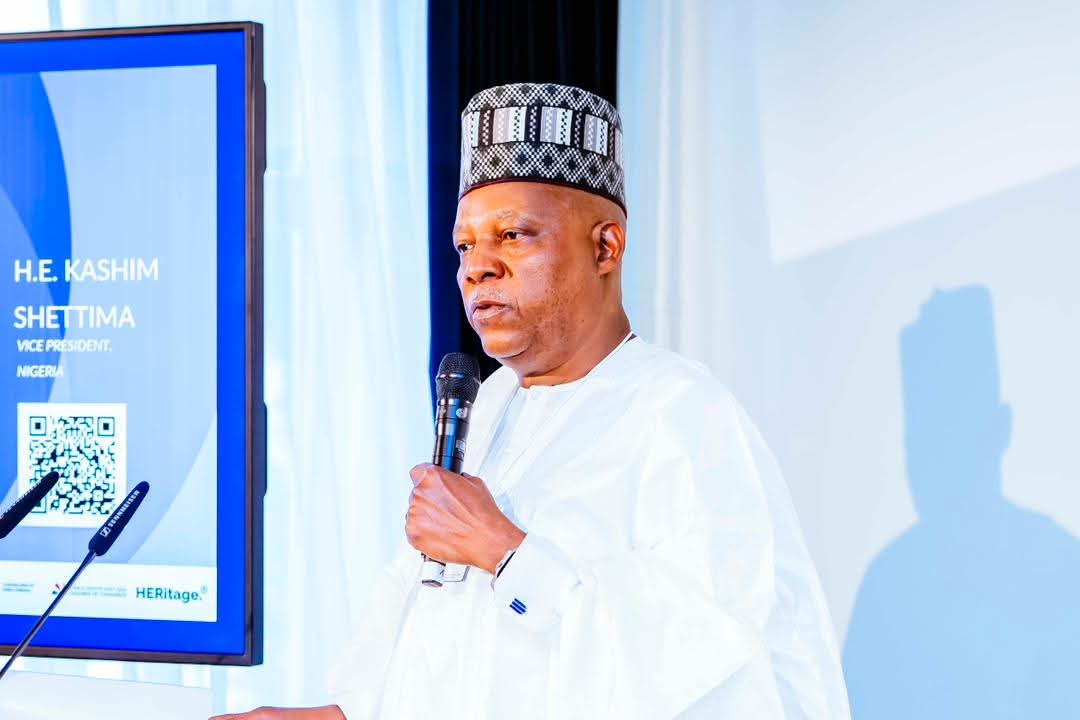
At WEF 2026: VP Shettima Pushes For Homegrown Solutions To Africa’s Economic Challenges

At WEF 2026: VP Shettima Pushes For Homegrown Solutions To Africa’s Economic Challenges
Urges continent to shift from import dependency to local production, from aid to investment
Says with Dangote Refinery, Nigeria is on the verge of becoming net exporter of fuel
By: Our Reporter
The Vice President, Senator Kashim Shettima, has advocated for homegrown solutions to Africa’s economic problems, emphasizing innovative approaches for growth, development and prosperity on the continent.
He noted that it is only by building domestic productive capacity that African nations can convert their population and natural talents into real, resilient wealth, just as he said instead of expecting prosperity to be parachuted in, “it must be homegrown and earned.”
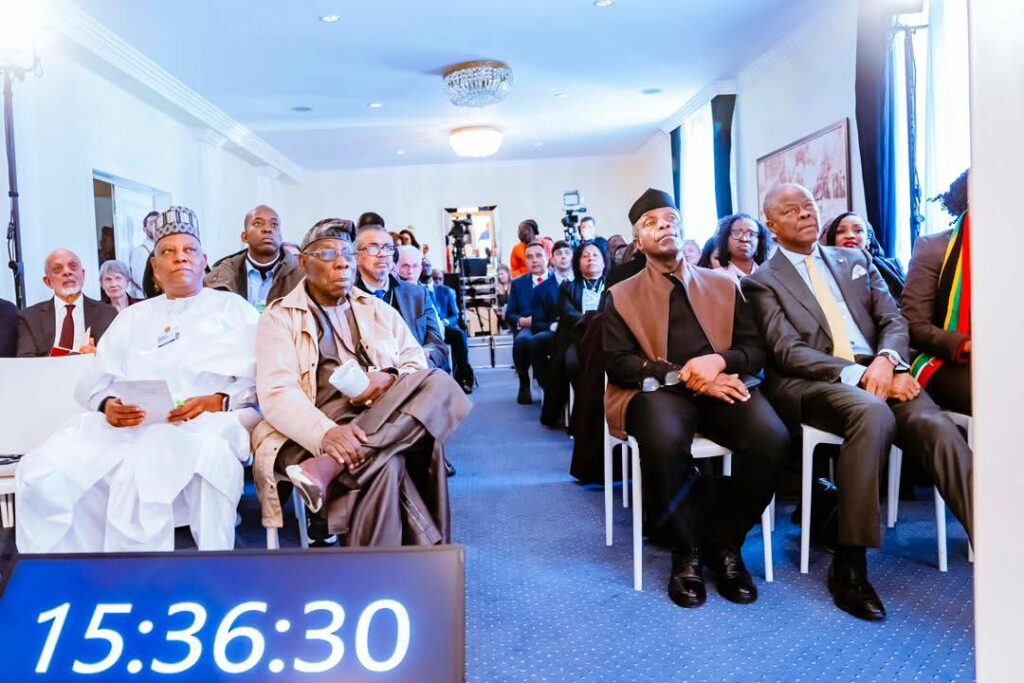
The Nigerian Vice President, who stated this on Thursday during the High-level Accra Reset Initiative meeting held on the margins of the ongoing 2026 World Economic Forum (WEF) Annual Meeting in Davos, Switzerland, observed that Africa was no longer the periphery but the pulse of the world’s demographic and economic future.
Citing Nigeria where the Dangote Refinery is gradually turning the nation into a major exporter of fuel as an instance, Senator Shettima pointed out that Africa can only rise when countries on the continent build.
He said, “Africa cannot rise on applause alone. We rise when we build. After decades as a net importer of value, Nigeria is on the verge of becoming a net exporter of refined fuel, powered by Africa’s largest refinery in Lagos, Nigeria: the Dangote Refinery.
“This is what happens when African capital meets industrial ambition. This implies that Nations move from price takers to value makers when production is matched with infrastructure and policy clarity. Even as manufacturing’s share of Africa’s GDP fell from 16 percent in 1980 to under 10 percent by 2016, we chose not to retreat but to leapfrog.”
Underscoring the benefits of modular factories, artificial intelligence, and robotics, the Vice President noted that “Africa can industrialize faster in the twenty first century than ever before,” just as he said the era when the continent is “known only for what it digs or grows” is now giving way for the era when Africa is known for what it builds.
The VP stated that while Africa’s future “depends on letting skills travel, return, and multiply,” prosperity will move at the speed of people.
He recalled that “in 2024 alone, Africans abroad sent home about 95 billion dollars, more than 5 percent of our GDP and roughly equal to total foreign direct investment.
“That is not charity. This is why we are also championing free movement across Africa because mobility is a competitive advantage in a world where human capital is the most precious resource. Let skills and ideas flow as freely as goods and capital, and prosperity will follow,” he added.
Relying further on the Nigerian situation, VP Shettima maintained that the experience had been shaped by a simple lesson, that “prosperity is not imported; it is built,” adding that the nation has “seen the prosperity paradox up close.”
He continued: “Markets and talent exist, yet resilience remains thin until demand is translated into domestic capability. This means firms that produce, meet standards, and compete globally. Wealth given from outside is fragile. Wealth created from within is enduring.
“Nigeria’s own market of over 200 million people has taught us that latent demand means little unless we cultivate local supply. Only by building domestic productive capacity can we convert our population and natural endowments into real, resilient wealth. Prosperity cannot be parachuted in – it must be homegrown and earned”.
The Nigerian Vice President welcomed the vision of the Accra Reset, describing the initiative as a bold reimagining of Africa’s shared future built through African-led cooperation, and rooted in sovereignty and self-definition.
On what Nigeria is bringing to the discussion at the Accra Reset, Senator Shettima said, “In the realm of health-industrial capability, we have begun treating health security not only as a social obligation but as an industrial value chain. This spans manufacturing, diagnostics, logistics, standards, and procurement.
.
“Through the Presidential Initiative for Unlocking the Healthcare Value Chain (PUHVAC), inaugurated in October 2023, we are coordinating reforms and investment to expand local production and strengthen quality systems. This approach resonates with a broader African aspiration: building our own vaccine and medicine capacity to secure what I call health sovereignty.”
The VP further described the Accra Reset Initiative as a call to action as well as a call to reset the mindset of African nation “from dependency to dignity, from aid to investment, from rhetoric to results.
“It is a call to prosper together. And I am confident that if we answer this call, the world will witness an African boom built not on the sands of commodity cycles, but on the bedrock of innovation, industry, and interdependence,” he concluded.
Earlier, President John Mahama of Ghana, who applauded the commitment and presence of Vice President Shettima and other leaders at the forum, decried the existing relationship between African countries and the global north, noting that bilateral relations among nations have become transactional at the detriment of Africa’s genuine transformation.
According to him, many states and non-state actors are acting unilaterally in pursuing their own national agenda and parochial interests, hence Africa remains trapped in cycles of conflict and multidimensional poverty, striving on handouts and humanitarian assistance from the developed world.
He said the introduction of the Accra Reset Initiative at the last United Nations General Assembly in New York was not another declaration or a wish list, but a practical answer to a question millions of young Africans are asking about the continent’s future and response in changing global order.
Urging synergy and cooperation among African leaders, President Mahama said, “though no specific name has been coined for the new global system that will emerge, Africa intends to be at the table in determining what that new global order will look like.”
For his part, former President of Nigeria, Chief Olusegun Obasanjo, dwelled on what Africa requires to take its rightful place in the comity of nations given the “new age of disruption, uncertainty and unpredictability.”
He warned that “as the world is reorganising, with supply chains withdrawn, security and economics fused, and the old development architecture struggling, countries that are not organised for negotiation and execution do not merely fall behind; they become bargaining chips.
“The Accra Reset Initiative has come to inspire leaders to stop complaining about the system that has changed or is changing, and to build a way through it,” the former President added.
On the marginalisation of Africa in value addition and technology, President Obasanjo said, “Let us be clear: sovereignty is not a flag to be waved about at international forums. It is discipline and the ability to make choices and carry them through.
“Sovereignty is also the ability to negotiate firmly, coordinate regionally, mobilise capital, incentivises, resources, and implement at a scale that will lead to sustainable development. If you cannot coordinate, you will be divided.”
In the same vein, former Vice President of Nigeria, Prof. Yemi Osinbajo, noted that the essence of the forum is to galvanise support for governments in Africa to rethink their strategies for transforming economies and address the numerous challenges confronting the people.
At WEF 2026: VP Shettima Pushes For Homegrown Solutions To Africa’s Economic Challenges


Burundi Presses Nigeria to Resume Crude Oil Supply, Seeks Deeper Economic Partnership
By: Michael Mike
The Ambassador of Burundi to Nigeria, Edward Nduwimana, has urged Nigeria to urgently resume the supply of crude oil to his country, warning that the suspension of the long-standing energy arrangement has continued to impact Burundi’s ability to address its energy deficit.
Nduwimana made the appeal during an interaction with journalists in Abuja, where he also called for the immediate convening of the Permanent Mixed Commission for Cooperation between both countries to revive stalled agreements and unlock new economic partnerships.
Nigeria had supplied Burundi with about 45,000 barrels of crude oil per day under a bilateral arrangement that ran between 2008 and 2014 before the agreement was halted amid reforms in Nigeria’s petroleum sector.
The envoy said the arrangement had played a crucial role in stabilising Burundi’s energy supply and supporting economic activities, stressing that its suspension created a significant gap in the country’s energy needs.
“Burundi wishes to express its gratitude to the Nigerian people, through their institutions, for the support provided since 2008 through the supply of crude oil,” he said.
“This support helped mitigate the effects of the energy deficit in my country. We understand that the suspension that occurred in 2014 took place in a particular context, driven by the government’s desire to restructure the sector.”
Despite the interruption, the ambassador expressed confidence that Nigeria would consider restoring the cooperation in the spirit of African solidarity and mutually beneficial partnership.
According to him, discussions are already underway to revive the arrangement as part of broader efforts to deepen bilateral relations between the two countries.
Nduwimana stressed that reconvening the Permanent Mixed Commission for Cooperation in 2026 has become urgent, noting that the last session of the commission was held in Bujumbura in 2021.
He explained that the proposed meeting would provide a platform for both governments to review previous commitments, resolve outstanding issues and chart a new roadmap for cooperation.
“The second session will represent an important step in strengthening bilateral cooperation between Burundi and Nigeria,” he said.
The envoy added that the meeting is expected to drive concrete progress in key sectors including trade, education, tourism, mining and agro-industry.
He said the discussions would also focus on strengthening legal frameworks and sector-specific agreements needed to accelerate joint projects and investment flows.
“Our ambition is to achieve concrete commitments that deliver tangible results for our two countries and their populations,” Nduwimana added.
Beyond diplomatic engagement, the ambassador extended an open invitation to Nigerian businesses and investors to explore opportunities in Burundi, which he described as an emerging investment destination in East Africa.
According to him, Burundi serves as a strategic gateway to the regional market of the East African Community and offers promising prospects in sectors such as agriculture, mining, energy, infrastructure and tourism.
“Burundi is a stable country, open for business, and committed to improving its investment climate,” he said.
“We invite economic operators from the West African region in general, and Nigeria in particular, to explore these opportunities and establish lasting and mutually beneficial partnerships.”
The renewed push for cooperation signals Burundi’s determination to revive its energy partnership with Nigeria while expanding economic ties beyond oil into trade, investment and regional market access.
Burundi Presses Nigeria to Resume Crude Oil Supply, Seeks Deeper Economic Partnership
Former Kaduna governor El-Rufai loses mother
By: Zagazola Makama
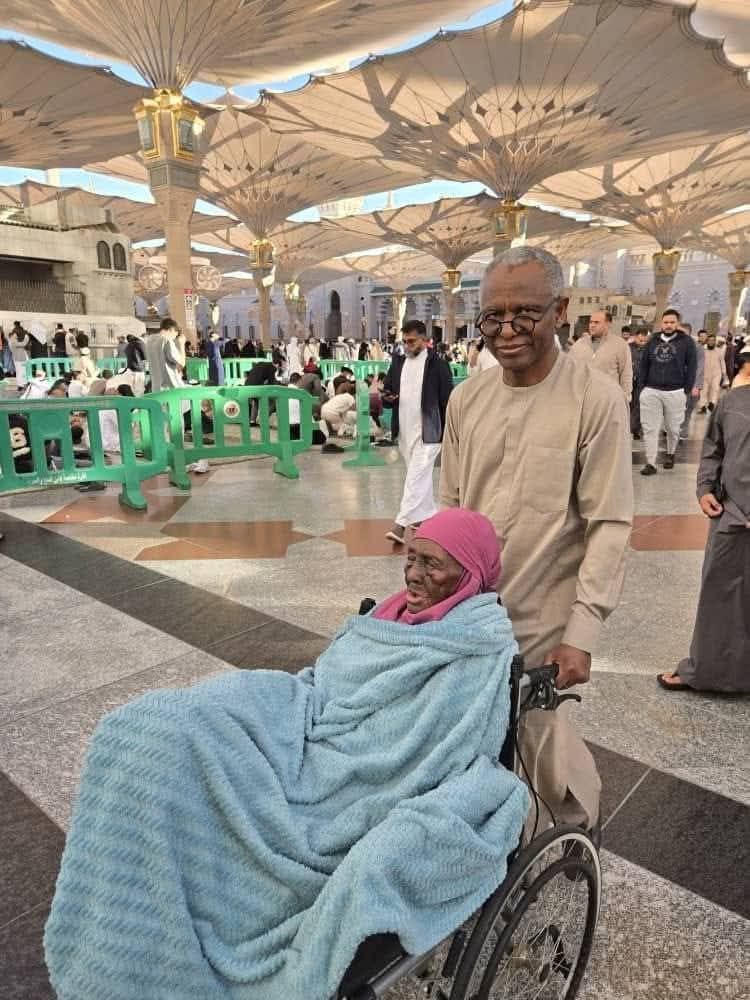
The former Governor of Kaduna State, Nasir Ahmad El-Rufai, has lost his mother, Hajiya Umma, who passed away on Friday.
The announcement of her death was announced by the Elrufai Family on Friday.
Family sources said the deceased had been battling age-related health challenges, which worsened in recent times.
According to the sources, her condition reportedly deteriorated further after she learned of the detention of her son by the Independent Corrupt Practices Commission (ICPC).
They noted that El-Rufai had been closely managing his mother’s health prior to her demise.
The family prayed for Almighty Allah to forgive her shortcomings and grant her Aljannatul Firdaus.
Former Kaduna governor El-Rufai loses mother
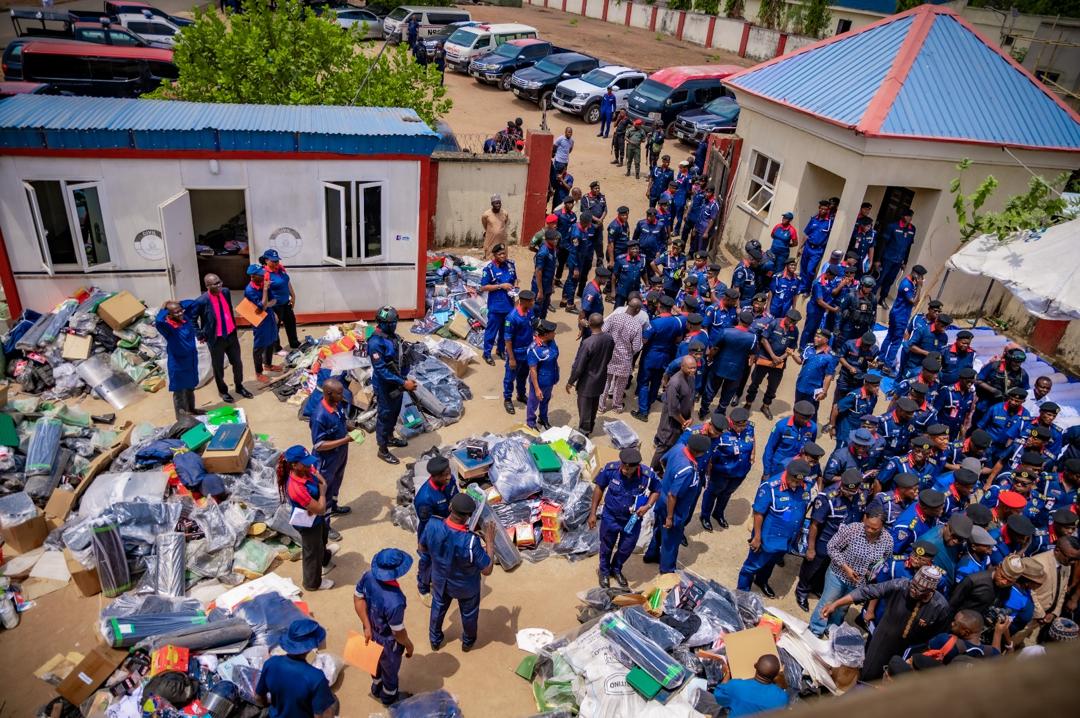
NSCDC Unveils Five-Year Strategy to Strengthen National Security
By: Michael Mike
The Commandant-General of the Nigeria Security and Civil Defence Corps (NSCDC), Abubakar Audi has unveiled a comprehensive five-year strategic roadmap aimed at strengthening national security, boosting operational efficiency and enhancing professionalism within the Corps.
Speaking at a high-level meeting with commanding officers from state formations across the country, Audi described the gathering as both “historic and strategic,” noting that it signaled the beginning of the second phase of his leadership following his reappointment.
The NSCDC boss expressed gratitude to President Bola Ahmed Tinubu for approving his reappointment and to the Minister of Interior, Olubunmi Tunji-Ojo, for recommending him for the position.
According to him, the renewed mandate provides the opportunity to deepen reforms and reposition the Corps for greater efficiency and national relevance.
Reflecting on his previous tenure, Houdi highlighted reforms introduced to tackle internal challenges within the organisation, particularly the issue of staff stagnation that had affected morale among personnel.
He noted that his administration addressed long-standing promotion delays and salary arrears, adding that efforts were ongoing through a presidential committee responsible for settling outstanding payments across Ministries, Departments and Agencies.
The Commandant-General also underscored the importance of capacity building, revealing that the Corps had developed a standardised curriculum for its training institutions. He described the initiative as a major step toward strengthening professionalism and operational discipline within the agency.
He said more senior officers have also been sponsored to attend strategic leadership programmes, including courses at the National Institute for Policy and Strategic Studies (NIPSS), aimed at improving institutional leadership and policy competence.
“Training remains central to discipline, professionalism and productivity,” Houdi said, adding that the next phase of his leadership would prioritise retraining and ethical reorientation of personnel.
He also highlighted operational achievements recorded by the Corps, particularly in the fight against oil theft and illegal mining across the country.
According to him, the Corps’ Special Intelligence Squad has dismantled more than 400 illegal refineries, arrested and prosecuted over 1,000 suspects, and secured between 400 and 500 convictions.
Similarly, the Mining Marshals initiative has shut down more than 1,000 illegal mining sites nationwide and facilitated the arrest and prosecution of numerous offenders, including foreign nationals.
Audi said these achievements were made possible through collaboration with other security agencies, particularly the Nigerian Army, as well as partnerships with private sector actors.
The Corps has also expanded its operational infrastructure, with new command facilities constructed in several locations and modern surveillance and communication equipment deployed to formations across the country.
He further disclosed that the agency is establishing a hydrocarbon and maritime surveillance centre in partnership with Tantita Security Services Nigeria Limited, alongside an ICT centre project expected to be completed within the next few months.
As part of the new strategy, the NSCDC will increasingly deploy advanced technologies, including artificial intelligence and drone surveillance, to enhance monitoring and protection of critical national assets.
Aidi outlined key priorities for the next five years, including strengthening discipline within the Corps, expanding training and retraining programmes, deploying modern surveillance technologies and enhancing protection of critical infrastructure.
He also announced plans to establish specialised units dedicated to safeguarding power infrastructure and tackling vandalism in the electricity sector.
The Commandant-General warned that the Corps would maintain zero tolerance for indiscipline and misconduct among personnel.
“We must restore professionalism and discipline. Any conduct outside our code will not be tolerated,” he said.
He urged officers to remain committed to protecting critical national infrastructure and to deepen intelligence sharing and collaboration with other security agencies in strengthening the country’s security architecture.
Audi challenged personnel to demonstrate the Corps’ relevance through tangible results.
“We must prove that we are ready to serve the nation with loyalty, commitment and professionalism,” he added.
NSCDC Unveils Five-Year Strategy to Strengthen National Security

Easter: Church Targets Spiritual Renewal, Community Impact with Power-Packed Programme

NIGCOMSAT to Host Nigerian Satellite Week 2026 as Nigeria Marks 20 Years in Space Economy

Burundi Presses Nigeria to Resume Crude Oil Supply, Seeks Deeper Economic Partnership

Roger Federer’s Shock as DNA Results Reveal Myla and Charlene Are Not His Biological Children

THE PLIGHT OF FARIDA

FAILED COUP IN BURKINA FASO: HOW TRAORÉ NARROWLY ESCAPED ASSASSINATION PLOT AMID FOREIGN INTERFERENCE CLAIMS
-
 News2 years ago
Roger Federer’s Shock as DNA Results Reveal Myla and Charlene Are Not His Biological Children
-
Opinions4 years ago
THE PLIGHT OF FARIDA
-
 News11 months ago
FAILED COUP IN BURKINA FASO: HOW TRAORÉ NARROWLY ESCAPED ASSASSINATION PLOT AMID FOREIGN INTERFERENCE CLAIMS
-

 News2 years ago
EYN: Rev. Billi, Distortion of History, and The Living Tamarind Tree
-
 Opinions4 years ago
POLICE CHARGE ROOMS, A MINTING PRESS
-

 ACADEMICS2 years ago
A History of Biu” (2015) and The Lingering Bura-Pabir Question (1)
-

 Columns2 years ago
Army University Biu: There is certain interest, but certainly not from Borno.
-

 Opinions2 years ago
Tinubu,Shettima: The epidemic of economic, insecurity in Nigeria
