
News
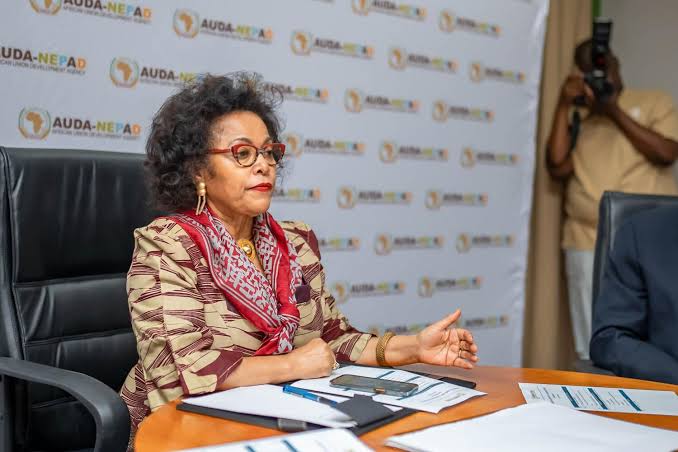
AUDA-NEPAD staff calls for probe of CEO over financial mismanagement, maladministration

AUDA-NEPAD staff calls for probe of CEO over financial mismanagement, maladministration
By: Our Reporter
The staff of African Union Development Agency, AUDA -New Partnership for Africa’s Development , NEPAD has called for probe of the organization’s Chief Executive Officer, CEO , Princess Princess Gloria Akobundu, over alleged corruption, financial mismanagement and maladministration.
This accusation was made in an interview with newsmen in a 2 days protest by the staff at the organization’s headquarters in Abuja.
The protester displayed placard bearing various inscriptions such as : “Princess Gloria Akobundu must go, enough is enough, “NEPAD is not a private sector “ She sold all utility Vechicles without replacement “ No working materials and the working environment is not conducive, among many others .
The convener of the protest Aliyu Abubakar explained that protest is against Mal administration, financial mismanagement and not allowing staff to carry out their official duties and functions.
He explained that this alleged corruption has been happening for the past 8 years since the assumption of office by the CEO.
He alleged that consultants are employed to carry out duties meant for the staff, adding that there are no working material or a conducive working environment for staffs.
He said,” Well, the motive behind this protest is simple. It’s about lack of Mal administration, financial mismanagement and not allowing staff to carry out their official duties and functions, so that is why we are here.
“Let me start by explaining about not allowing staff to carry out their official duties, like I said earlier, where all staff, as you can see, this is NEPAD Nigeria. That is new partnership for African development, and we know it is a federal government establishment. It’s not a private organization, and in a situation whereby a staff of this establishment will not be allowed to carry out his official duty. I think it’s wrong, because we are being employed and we are being paid salary to come and carry out our official duties
“ But instead of that, it is outsiders and sometimes consultants that will be doing the job. That is why we’re here to tell the whole world, because for the past eight years, under the leadership of Princess Gloria Akobundu, this has been happening, and it’s not as if we are not been drawing her attention.
“We have been drawing her attention. We have been written to her. We have been advising but all in vain. That is why we decided to take the bull by the horn, to come together, so that at least if maybe she think we are not the people that appoint her, but she has the principal, she was appointed by a president, and we are using this opportunity to send this message to His Excellency, President, Bola Ahmed Tinubu to come to our aid, so that he can know what is going on in this organization for the past eight years.
“No, this protest is two days for now, today and tomorrow is just for two days. But if after these two days, we didn’t get any positive result, then we are going to proceed with the next line of action, which is we are going to the National Assembly and we are going to the office of the secretary to the government of the Federation, because this office is under SGF, because the SGF is the national focal point of NEPAD Nigeria, then we are going to head of Service, National Assembly and the Office of the Secretary to the government of the Federation, so that they will hear what are going through.
“We want the federal government to draw to call her to order that she should allow NEPAD staff to function. They understand. Let us do what we are employed to do.
“All the programs and all the money that the federal government is bringing to this organization, for us to carry programs and project, let them carry out those programs and project, there is international donation that always come from NEPAD Continental. For the past eight years, nobody know what they have been doing with that, because, from our findings, it has been going to a private account.
“So we want the federal government to use this we are using this opportunity. We are calling on, Mr. President, irrelevant authorities to please come to our aid.
AUDA-NEPAD staff calls for probe of CEO over financial mismanagement, maladministration



Troops arrest suspected terrorist, recover rifle in Zamfara
By: Zagazola Makama
Troops of Operation FANSAN YAMMA have arrested a suspected terrorist and recovered an AK-47 rifle during a routine patrol in Gusau Local Government Area of Zamfara State.
Security sources said the arrest was made on April 3 at about 11:30 a.m. by troops of 1 Brigade Combat Team deployed at Forward Operating Base (FOB) Kurya.
The suspect was apprehended at Tungan Haki village and found in possession of one AK-47 rifle mounted with a magazine containing 13 rounds of 7.62mm special ammunition.
The sources disclosed that the suspect and the recovered weapon are currently in custody for further investigation and necessary action.
They added that troops have continued to intensify patrols and surveillance operations across the area to curb criminal activities.
Troops arrest suspected terrorist, recover rifle in Zamfara

IED explosion injures two security personnel during patrol in Anambra
By: Zagazola Makama
Two security personnel have been injured following the detonation of an improvised explosive device (IED) during a fighting patrol in Ihiala Local Government Area of Anambra State.
Security sources said the incident occurred on April 3 at about 12:30 p.m. when troops of Sector 5, Operation UDO KA, deployed at Forward Operating Base (FOB) Lilu, conducted a patrol alongside Nigeria Police personnel.
It was gathered that the team sighted the IED within the Lilu general area and attempted to destroy it.
However, the explosive device detonated during the process, injuring an Explosive Ordnance Disposal (EOD) personnel and a police officer.
The injured personnel were immediately administered first aid at the scene before being referred to a medical facility for further treatment.
Authorities said the situation has been brought under control, while operations continue in the area to ensure safety and prevent further incidents.
IED explosion injures two security personnel during patrol in Anambra
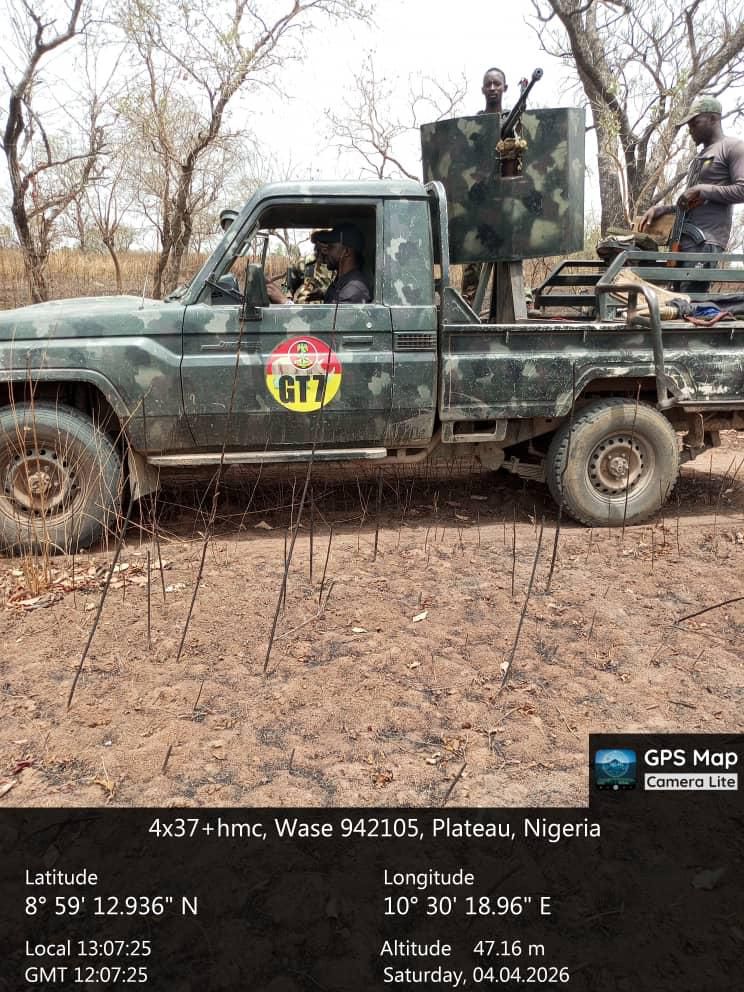
Troops neutralise two terrorists, destroy hideouts in Plateau clearance operations
By: Zagazola Makama
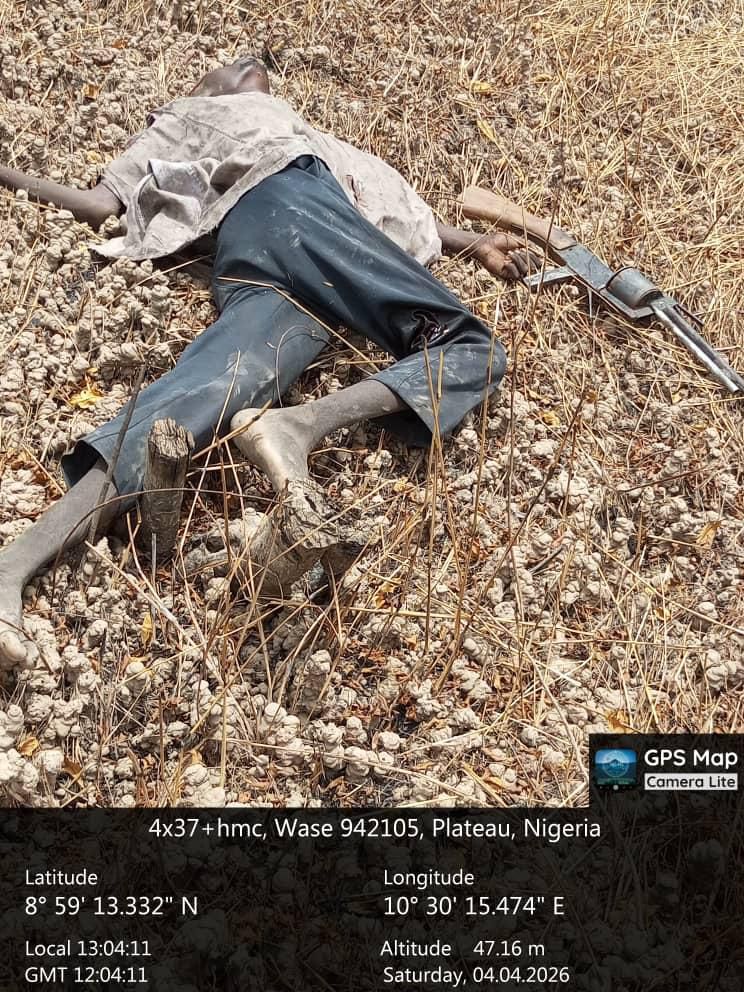
Troops of Operation Enduring Peace (OPEP), under Operation Wutan Daji, have neutralised two suspected terrorists and destroyed several hideouts during clearance operations in Wase Local Government Area of Plateau.
Security sources said the operations were carried out in conjunction with local vigilantes across Babangida, Adua and Bokayi villages within the Dutsen Zaki forest.
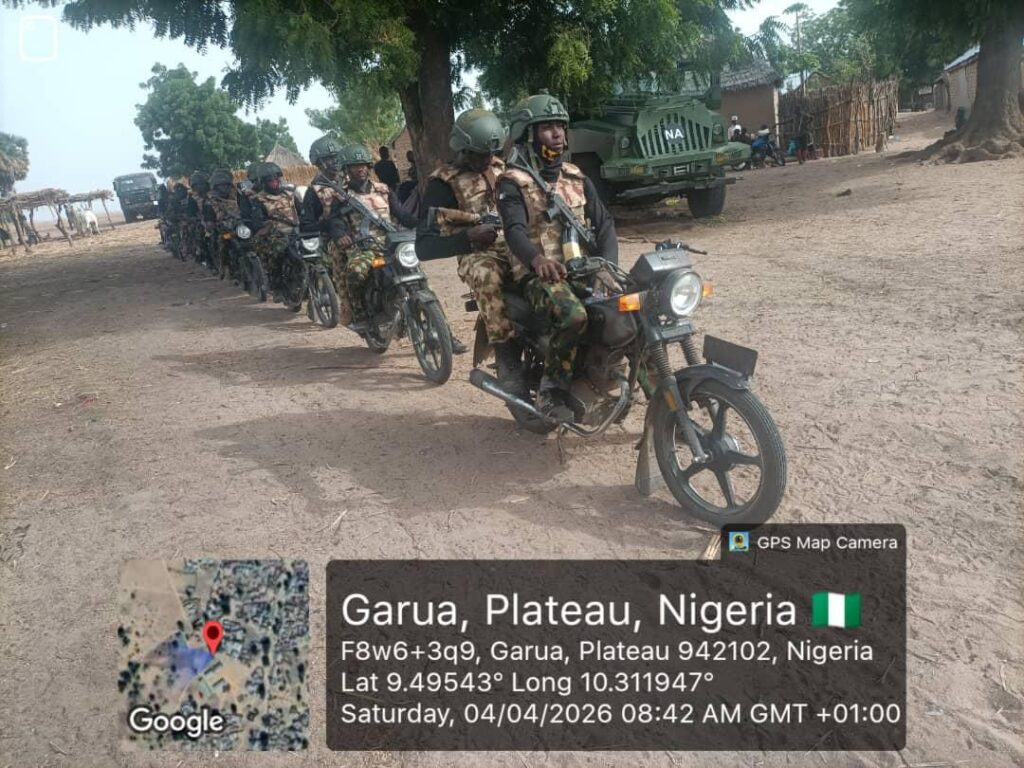
It was gathered that troops made contact with the terrorists along the Babangida–Adua road, leading to a gun battle in which two of the suspects were neutralised, while others fled with possible gunshot wounds.
No casualties were recorded among the troops, and all equipment was accounted for.
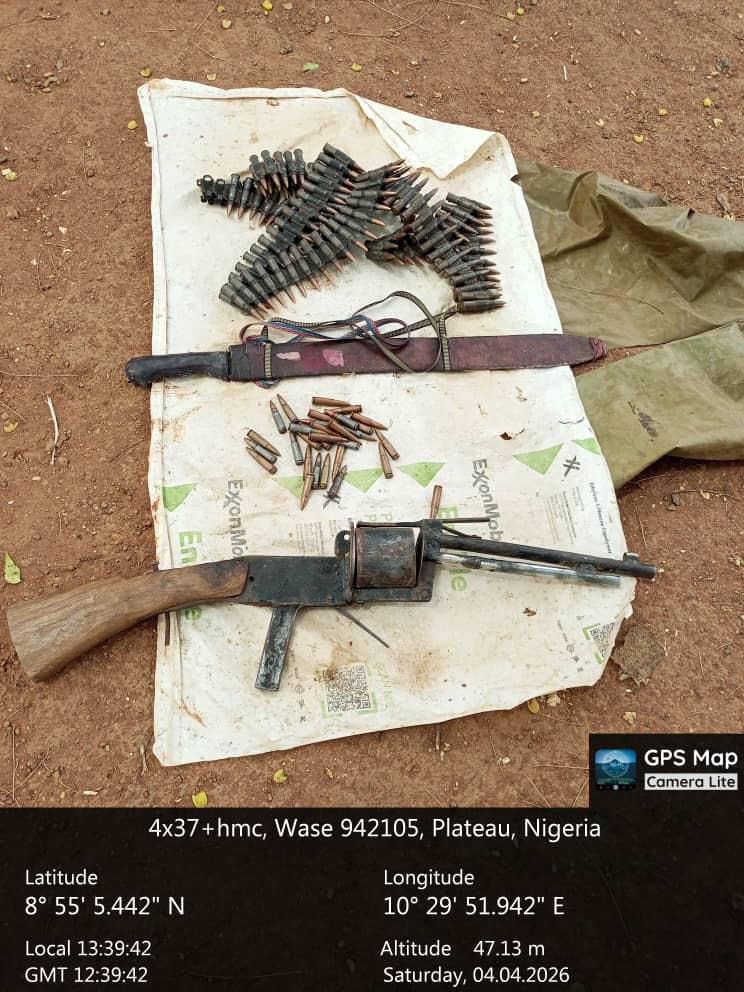
During the operation, troops recovered one locally fabricated gun, a belt containing 105 rounds of 7.62mm PKT ammunition, 30 rounds of 7.62mm special ammunition and a cutlass.
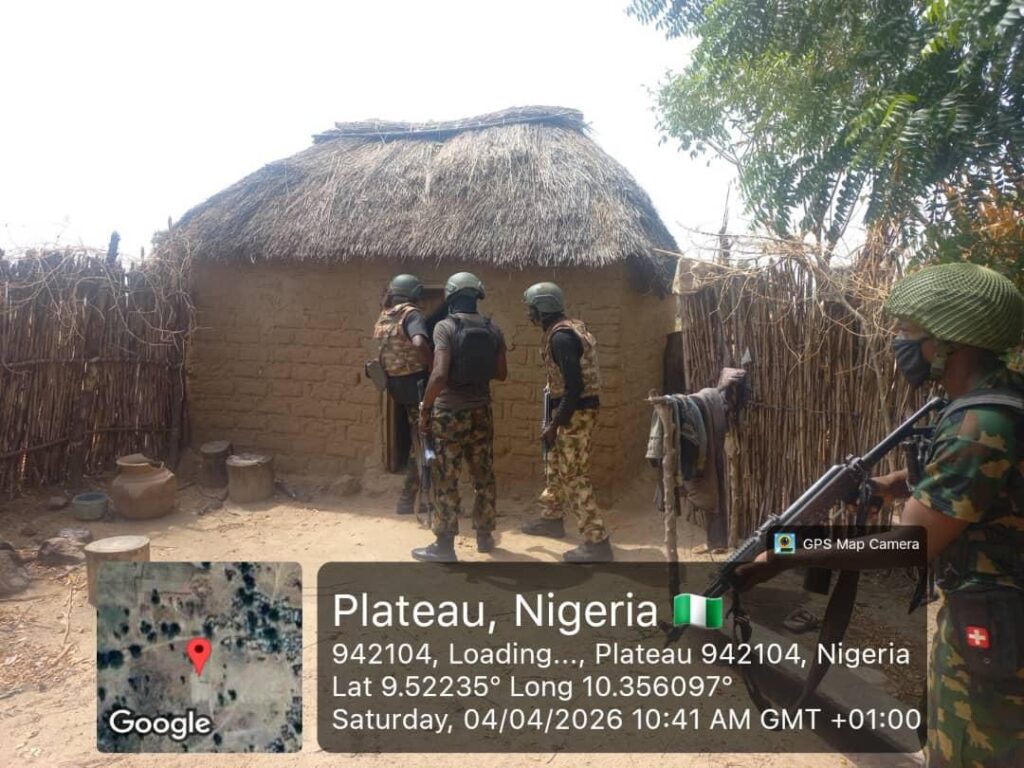
In a related development, troops of CSI Battalion XIV, in collaboration with 332 Artillery Regiment and vigilantes, conducted further clearance and raid operations in Dadin-Kowa and Dada villages.
The operation involved 47 soldiers and four vigilantes, supported with motorcycles, gun trucks, a Mine-Resistant Ambush Protected (MRAP) vehicle and an artillery gun.
The troops established a gun position and carried out fire missions on suspected terrorist locations in Madam Forest to deny them freedom of action.
Subsequent raid operations in Dadin-Kowa village led to the destruction of suspected terrorist hideouts, although no contact was made with the fleeing elements.
Troops neutralise two terrorists, destroy hideouts in Plateau clearance operations

Troops arrest suspected terrorist, recover rifle in Zamfara

Troops recover suspected rustled cattle in Plateau

Troops neutralise kidnapper, rescue victim in Enugu

Roger Federer’s Shock as DNA Results Reveal Myla and Charlene Are Not His Biological Children

THE PLIGHT OF FARIDA

FAILED COUP IN BURKINA FASO: HOW TRAORÉ NARROWLY ESCAPED ASSASSINATION PLOT AMID FOREIGN INTERFERENCE CLAIMS
-
 News2 years ago
Roger Federer’s Shock as DNA Results Reveal Myla and Charlene Are Not His Biological Children
-
Opinions4 years ago
THE PLIGHT OF FARIDA
-
 News12 months ago
FAILED COUP IN BURKINA FASO: HOW TRAORÉ NARROWLY ESCAPED ASSASSINATION PLOT AMID FOREIGN INTERFERENCE CLAIMS
-

 News2 years ago
EYN: Rev. Billi, Distortion of History, and The Living Tamarind Tree
-
 Opinions4 years ago
POLICE CHARGE ROOMS, A MINTING PRESS
-

 ACADEMICS2 years ago
A History of Biu” (2015) and The Lingering Bura-Pabir Question (1)
-

 Columns2 years ago
Army University Biu: There is certain interest, but certainly not from Borno.
-

 Opinions2 years ago
Tinubu,Shettima: The epidemic of economic, insecurity in Nigeria
