
Crime
Auto Parts Dealer, Businesswoman Arrested Over UK-bound Opioids, Cocaine

Auto Parts Dealer, Businesswoman Arrested Over UK-bound Opioids, Cocaine
By: Michael Mike
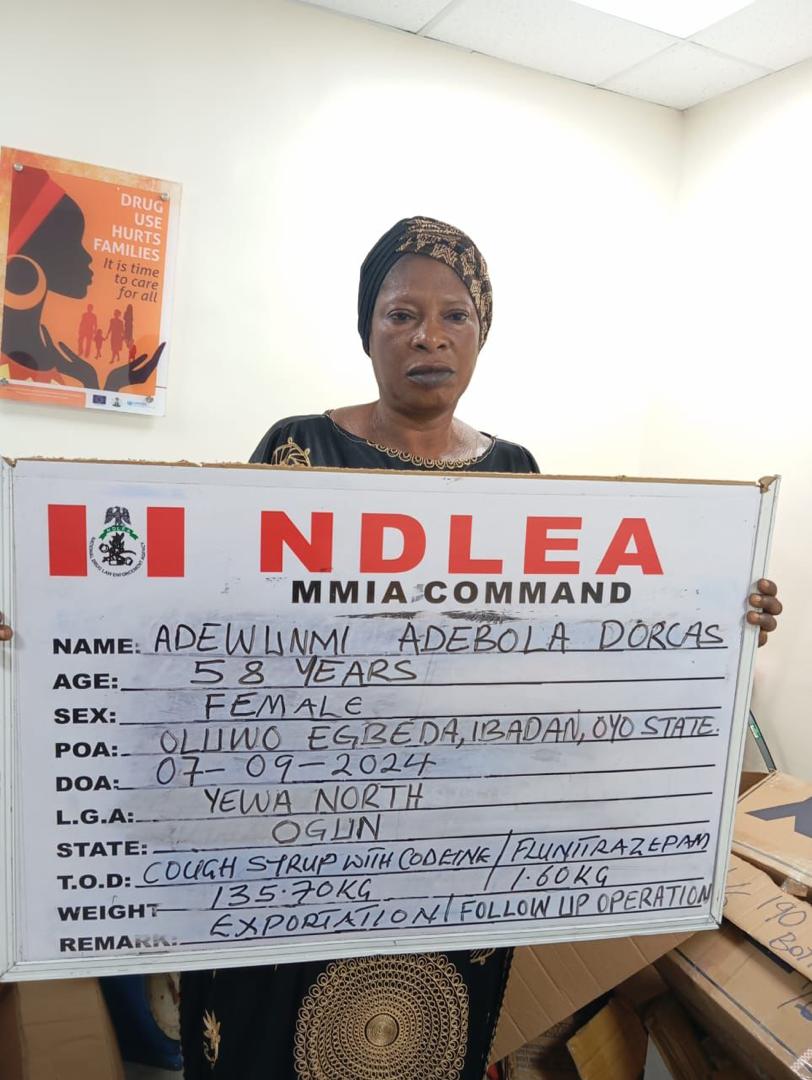
Operatives of the National Drug Law Enforcement Agency (NDLEA) have arrested an Ibadan-based businesswoman, Mrs. Adewunmi Adebola and an auto parts dealer, Arinze Ora over attempts to export consignments of opioids and cocaine to London, United Kingdom and Congo Brazzaville respectively.
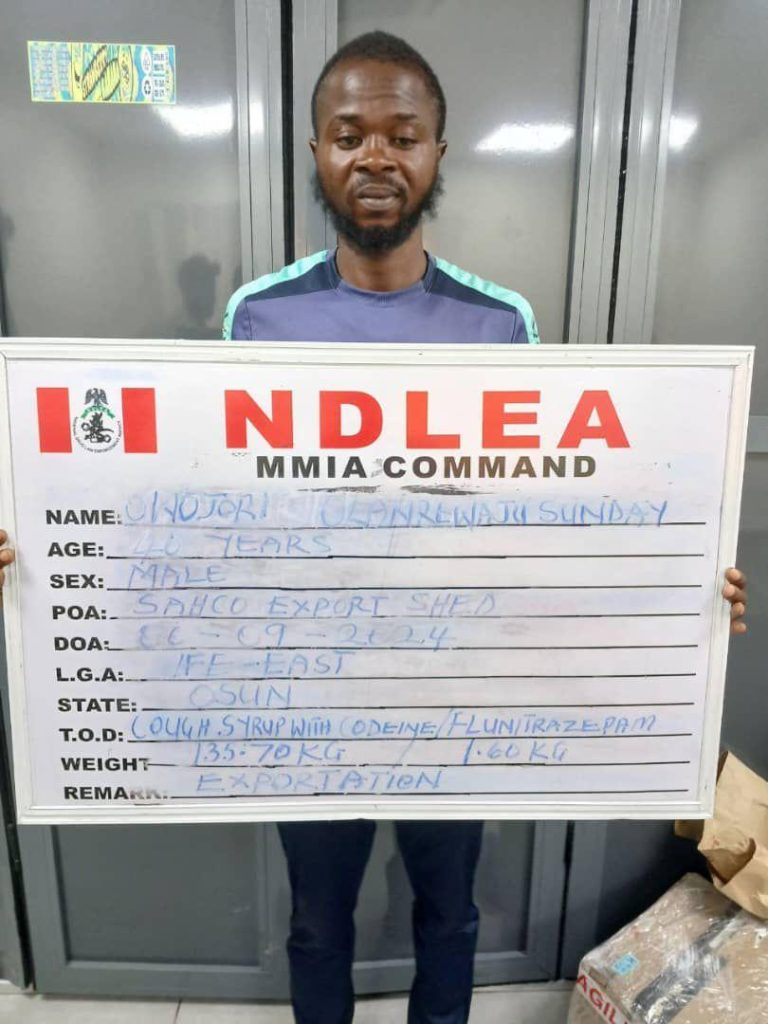
A statement on Sunday by the spokesman of the NDLEA, Femi Babafemi said officers of the anti-narcotics agency at the export shed of the Murtala Muhammed International Airport, Lagos had on Friday 6th September 2024 intercepted a cargo going to the United Kingdom, adding that a thorough search of the consignment revealed 924 bottles of codeine-based syrup weighing 135.7 kilogrammes and 5,250 tablets of rohypnol were hidden in cartons of foodstuffs.
Babafemi said the freight agent, Owojori Olanrewaju who presented the cargo for export was promptly arrested, with further investigation leading to the arrest of another suspect, Adewunmi Akeem , who claimed that his mother, 58-year-old Mrs. Adewunmi Adebola sent the consignment to him from Ibadan to deliver to the agent.
The spokesman said a follow up operation on Saturday 7th September led to the arrest of Mrs. Adewunmi in Ibadan where she deals in foodstuffs and cargo export.
In his statement, Owojori confessed that he has been working for Mrs. Adewunmi to export cargoes to the UK, adding that he was paid N2,411,000.00 for the job, while he was paid N2.1 million for a similar consignment handled for the businesswoman earlier.
In the same vein, NDLEA operatives at the same export shed of the Lagos airport last Wednesday intercepted some cartons of auto spare parts and powder custard going to Congo Brazzaville on Ethiopian Airlines. A diligent search of the cargo led to the discovery of 300 grammes of cocaine concealed in the containers of checkers powder custard packed together with some auto parts.
Babafemi said a follow up operation led to the arrest of the sender of the consignment, Arinze Ora, who deals in auto parts at the Trade Fair Auto Parts Wing, Amuwo Odofin area of Lagos.
Operatives of a Special Operations Unit of NDLEA last Tuesday arrested two brothers: Ikechukwu Ikeabba and Ugochukwu Ikeabba who are alleged sponsors of drug traffickers who specialise in exporting drugs by ingestion to Vietnam.
The NDLEA spokesman said their arrest followed diligent investigation of an earlier arrest of an Onitsha-based businessman, Ibeanusi Nosike, who excreted 68 wraps of cocaine weighing 1.282 kilogrammes after 12 days of excretion observation after he was arrested at the local wing of the Lagos airport by NDLEA operatives.
Babafemi said the 36-year-old Ibeanusi was arrested in the early hours of Thursday, 8th August 2024 at the old domestic terminal of the Lagos airport while attempting to board the first flight out of Lagos to Abuja where he was scheduled to join a Qatar Airways flight to Vietnam at the Nnamdi Azikiwe International Airport, Abuja at about 10am same day.
He said another Vietnam-bound businessman, 54-year-old Paul Mbadugha had been arrested by NDLEA operatives at the Abuja airport on Monday 12th August 2024 during the outward clearance of Qatar Airways flight QR 1432 to Hanoi, Vietnam via Doha after he tested positive to ingestion of cocaine. He noted that after four days under observation, Mbadugha egested a total of 88 wraps of the illicit drug with a gross weight of 1.71 kilogrammes.
He said at the time of the arrest of the two kingpins, the Ikeabba brothers, they were caught with 87 wraps of cocaine dummies used in training intending mules.
Babafemi said in Gombe state, NDLEA operatives acting on credible intelligence last Saturday arrested three suspects: Auwal Abdullahi, Isah Rabiu and Abubakar Da’u along Bauchi-Gombe road while travelling in a DAF truck marked GME 552 ZU. A search of the vehicle led to the seizure 2,490,000 pills of tramadol concealed with bags of salt.
He said a suspect, Idris Adamu, 23, was arrested with 41.5 kilogrammes of cannabis sativa at Kachia town, Kaduna state last Tuesday while two suspects: Godiya Jikuk, 36, and Yusuf Umaru, 65, were nabbed at Isinbode -Ekiti, Ekiti state with a total of 73.6 kilogrammes cannabis last Wednesday.
In Bauchi state, no fewer than 208,920 pills of tramadol and diazepam were seized from a suspect, Chinedu Asadu, 35, last Thursday while 104 kilogrammes of cannabis was recovered from two suspects: Abba Abdullahi and Mustapha Yahaya along the Lagos-Ibadan expressway last Tuesday by operatives in Lagos state.
He added that not less than 350,000 bottles of codeine-based syrup were discovered by NDLEA operatives in two containers shipped from India during a joint examination of the containers with men of Customs Service and other security agencies at the Tincan port in Lagos last Tuesday, starting that the containers were part of those targeted by NDLEA for 100 percent examination.
Babafemi said with the same vigour, commands and formations of the agency across the country continued their War Against Drug Abuse (WADA) sensitization activities to schools, worship centres, work places and communities among others in the past week.
While commending the officers and men of the Special Operations Unit, MMIA, Tincan, Lagos, Gombe, Kaduna, Bauchi, and Ekiti commands of the agency for the arrests and seizures, Chairman/Chief Executive Officer of NDLEA, Brig. Gen. Buba Marwa (Rtd) stated that their operational successes and those of their compatriots across the country are well appreciated.
He however urged them to continue to intensify ongoing drug supply reduction and drug demand reduction efforts.
Auto Parts Dealer, Businesswoman Arrested Over UK-bound Opioids, Cocaine


Crime
Terrorism: DSS Secures Another Death Sentence, As Katsina Court Convicts Female Courier Arrested With Large Arms Cache
Breaking…..
Terrorism: DSS Secures Another Death Sentence, As Katsina Court Convicts Female Courier Arrested With Large Arms Cache
By: Michael Mike
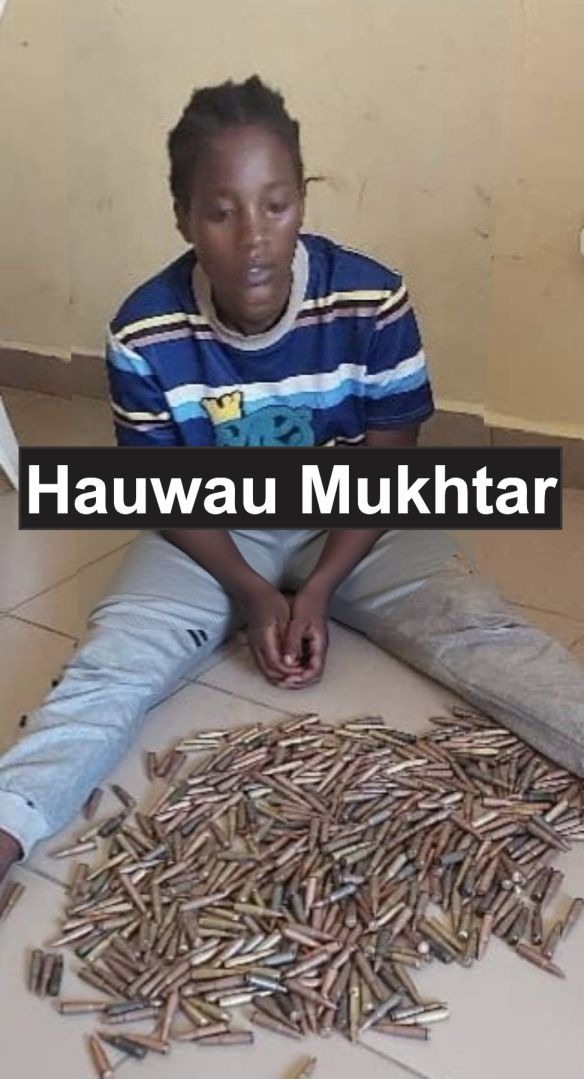
A Federal High Court in Katsina State has sentenced a female arms courier to death by hanging after the Department of State Services (DSS) successfully prosecuted her for conspiracy to commit, aid and abet terrorism. This is the second death sentence secured by the DSS in the month of June.
The convict, Hauwa’u Mukhtar, was arrested by the DSS on September 16, 2023, at Jibia Motor Park, Katsina State, while attempting to transport 438 rounds of 7.62mm ammunition to one Ado, a notorious bandit kingpin operating in Dunburum Forest, Zamfara State.
On 3rd June, a Federal High Court in Abuja sentenced four men arrested by the DSS to death by hanging for their roles in the June 5, 2022, terror attack on St. Francis Catholic Church in Owo, Ondo State, which claimed over 40 lives.
Security sources revealed that, in Katsina, the DSS filed a two-count charge against Hauwa’u Mukhtar
before High Court No. 3, Katsina, presided over by Justice A. B. Bawale.
After evaluating the totality of evidence, witness testimonies, tendered exhibits, and final addresses of both prosecution and defence counsel, the court held that the prosecution proved its case beyond reasonable doubt, finding Mukhtar guilty on both counts.
The judge subsequently sentenced the convict to death by hanging in accordance with the provisions of the Penal Code Law of Katsina State, 2021.
“The successful prosecution is a significant milestone for the DSS, demonstrating its capacity to not only intercept criminal actors but to follow through with decisive legal action that results in landmark convictions.’, stated the source.
It could be recalled that, about a month ago, a Federal High Court in Abuja convicted and sentenced one Halima Haliru Umar to 20 years imprisonment for unlawful possession of 302 rounds of AK-47 live ammunition and attempting to provide support for acts of terrorism marking the second conviction of a female arms courier secured by the DSS this year.
Terrorism: DSS Secures Another Death Sentence, As Katsina Court Convicts Female Courier Arrested With Large Arms Cache
Troops Repel Terrorists in Yobe, Recover Communication Equipment and Bicycles
By: Zagazola Makama
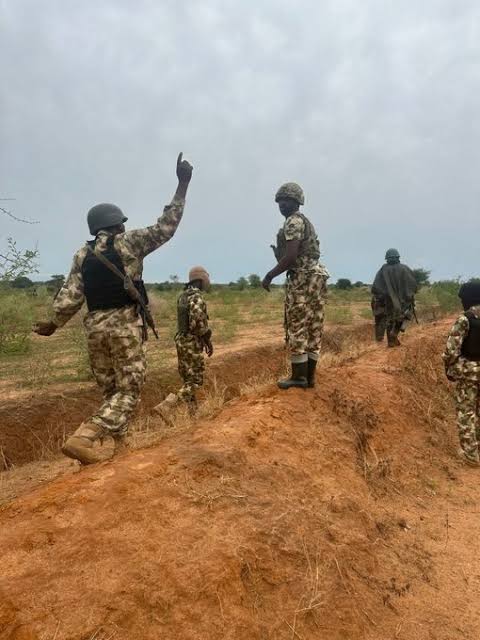
Troops and local vigilante members have repelled an attack by suspected terrorists in Kanama, Geidam Local Government Area of Yobe State, following intelligence reports on insurgent movements in the area.
Security sources said the operation was conducted in the early hours of June 15 after troops of the Forward Operating Base (FOB) Kanama, supported by vigilante personnel, acted on credible intelligence indicating the presence of suspected ISWAP/JAS terrorists within the community.
The joint patrol team reportedly made contact with the insurgents at about 3:15 a.m., leading to an exchange of gunfire.
According to the sources, the terrorists were forced to retreat towards the Sambisa axis after coming under pressure from the security forces.
Items recovered from the scene included nine bicycles, one Baofeng radio set, a mobile phone, three pairs of slippers and three locally made water bottles believed to have been abandoned by the fleeing insurgents.
One member of the vigilante group sustained a gunshot wound during the encounter and was evacuated to a medical facility for treatment.
The recovered items have been taken into custody for further exploitation and investigation.
Military authorities said troops remain on heightened alert and are continuing operations aimed at denying terrorist groups freedom of movement across the North-East region.
Troops Repel Terrorists in Yobe, Recover Communication Equipment and Bicycles
Troops of Operation Enduring Peace Arrest Two Suspected Drug Peddlers in Plateau
By: Zagazola Makama
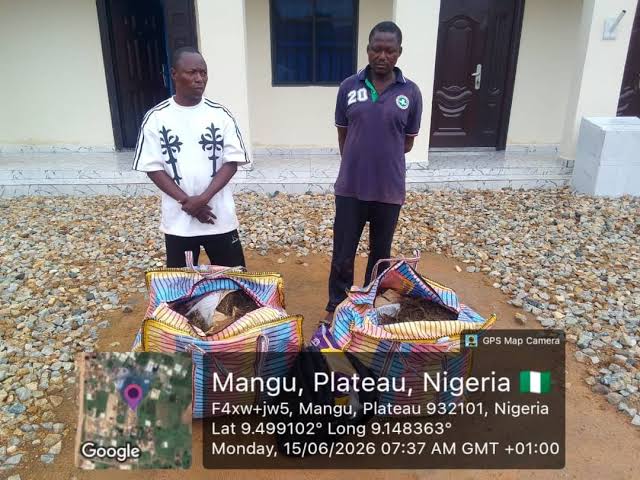
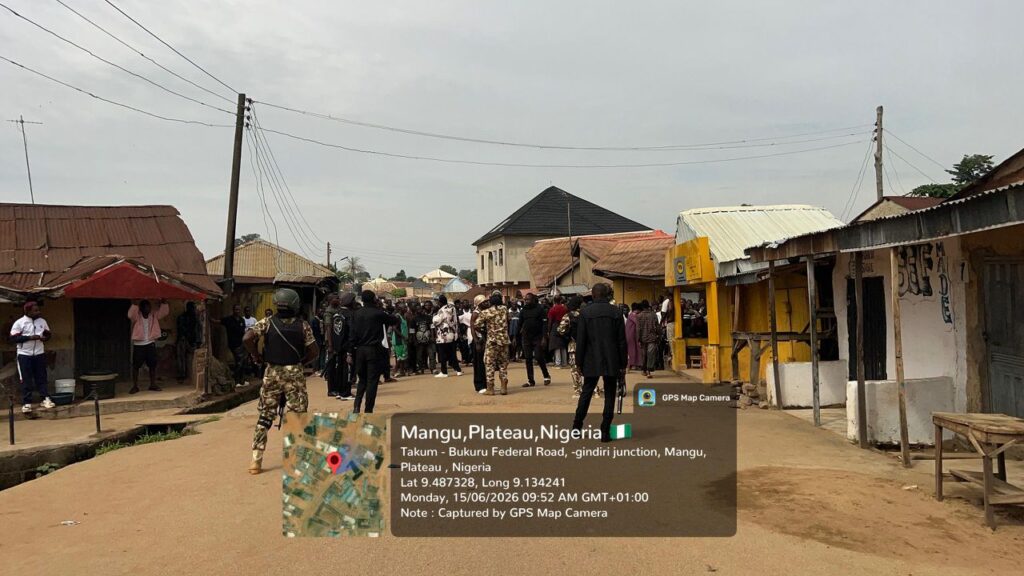
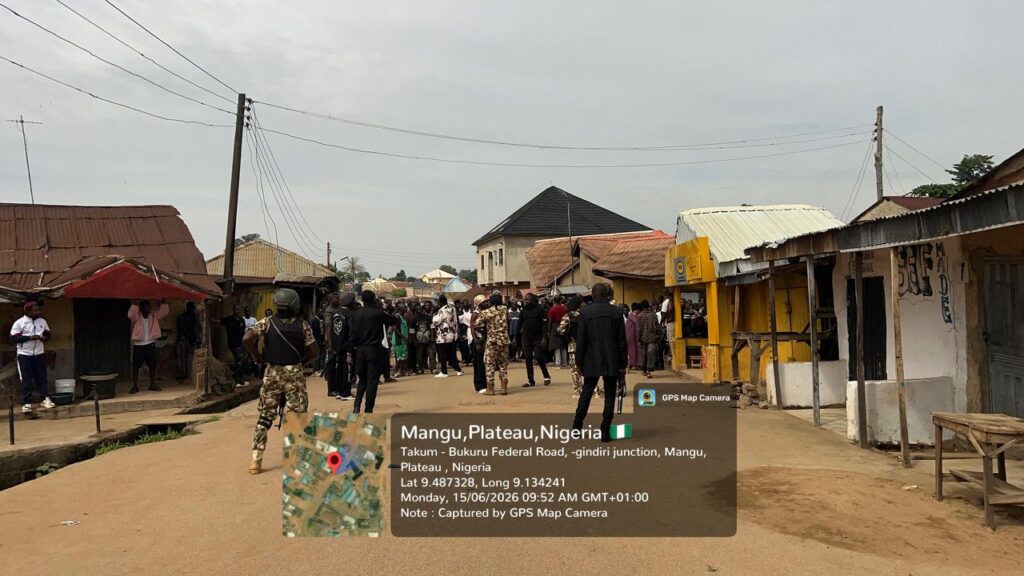
Troops of Operation Enduring Peace (OPEP) have arrested two suspected drug peddlers during a stop-and-search operation at Sabon Gari checkpoint in Mangu Local Government Area of Plateau State.
Security sources said the suspects, identified as Mr. Jerry Joshua, 45, and Mr. Williams Nwaso, 54, were intercepted at about 6:00 a.m. on June 15 at the checkpoint.
The troops, who were conducting routine security checks, reportedly discovered a large quantity of substances suspected to be cannabis sativa in their possession.
The suspects and the recovered exhibits have been taken into custody for further investigation and possible prosecution.
Security authorities said the arrest is part of ongoing efforts by Operation Enduring Peace to curb drug trafficking and other criminal activities within Plateau State.
Investigations are ongoing.
Troops of Operation Enduring Peace Arrest Two Suspected Drug Peddlers in Plateau

Terrorism: DSS Secures Another Death Sentence, As Katsina Court Convicts Female Courier Arrested With Large Arms Cache

Senate to Enact Stronger Laws to Tackle Rising Drug Abuse

How dialogue, military intervention prevented fresh bloodshed in Benue communities

Roger Federer’s Shock as DNA Results Reveal Myla and Charlene Are Not His Biological Children

THE PLIGHT OF FARIDA

FAILED COUP IN BURKINA FASO: HOW TRAORÉ NARROWLY ESCAPED ASSASSINATION PLOT AMID FOREIGN INTERFERENCE CLAIMS
-
 News2 years ago
Roger Federer’s Shock as DNA Results Reveal Myla and Charlene Are Not His Biological Children
-
Opinions4 years ago
THE PLIGHT OF FARIDA
-
 News1 year ago
FAILED COUP IN BURKINA FASO: HOW TRAORÉ NARROWLY ESCAPED ASSASSINATION PLOT AMID FOREIGN INTERFERENCE CLAIMS
-

 News2 years ago
EYN: Rev. Billi, Distortion of History, and The Living Tamarind Tree
-
 Opinions5 years ago
POLICE CHARGE ROOMS, A MINTING PRESS
-

 ACADEMICS2 years ago
A History of Biu” (2015) and The Lingering Bura-Pabir Question (1)
-

 Columns2 years ago
Army University Biu: There is certain interest, but certainly not from Borno.
-

 Politics1 year ago
2027: Why Hon. Midala Balami Must Go, as Youths in Hawul and Asikira/Uba Federal Constituency Reject ₦500,000 as Sallah Gift
