
News
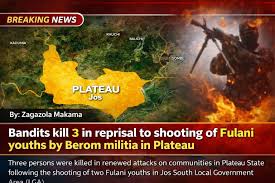
Bandits kill 3 in reprisal to shooting of fulani youths by Berom militia in Plateau

Bandits kill 3 in reprisal to shooting of fulani youths by Berom militia in Plateau
By: Zagazola Makama
Three persons were killed in renewed attacks on communities in Plateau State following the shooting of two Fulani youths in Jos South Local Government Area (LGA), as tensions continue to escalate in a cycle of reprisal violence between pastoral and farming communities.
The latest killings occurred on Tuesday, Jan. 6, 2026, during coordinated attacks on Jol community in Riyom LGA and Gero in Gyel District of Jos South LGA, where several residents, including Pius Luka Dida, Markus Danladi, Peter and Acham Ayuba, lost their lives.
The Berom Youths Moulder-Association (BYM) condemned the attacks, describing them as acts of sustained terror against indigenous communities, and demanded the proscription of the Miyetti Allah Cattle Breeders Association of Nigeria (MACBAN) and the prosecution of its leaders.
In a statement signed by its National Publicity Secretary, Rwang Tengwong, the group accused MACBAN of complicity in the violence and faulted its leadership over claims that Berom persons attacked Fulani communities.
The BYM leader, Mr. Dalyop Solomon Mwantiri, described the killings as “a grim reminder of the sustained and systematic terror being unleashed on indigenous communities of Plateau State.”
The group also alleged that armed herders destroyed dry-season farmlands in Kwi community, resulting in economic losses estimated at over ₦14 million, and called for compensation to victims’ families and the deployment of additional security personnel.
However, a check by Zagazola Makama indicated that the Jan. 6 attacks followed the killing of a Fulani youth and the shooting of another in Jos South earlier the same day.
The latest demand by Berom youths for the arrest of Fulani leaders emerged but did not reference the near-simultaneous shooting of Fulani youths in Jos South, an omission that reflects the deeply polarized narratives driving the conflict.
According to security sources, two Fulani youths Zakariya Abdullahi and Jibrin Musa, were ambushed around 8:00 p.m. while returning from Gero village in Jos South LGA. Abdullahi was killed on the spot, while Musa sustained gunshot injuries and was rushed to a hospital for treatment.
The attack was attributed to an ambush carried out by suspected Berom militia, which the victim described as unprovoked. The attack occurred within the same axis where later retaliatory violence was reported.
Again, the incident fits an established pattern in Plateau State, where attacks on one group are quickly followed by reprisals against another, deepening communal mistrust.
The latest violence followed the Dec. 31, 2025, attack on Bum community in Chugwi area of Vwang District, Jos South LGA, where at least seven farmers were killed in their homes and farmlands, despite earlier security alerts warning of possible attacks.
That incident was linked to earlier shootings on Dec. 27, 2025, when five Fulani youths were attacked near Con Filling Station along Bukuru Express Road while returning from Bukuru Cattle Market. The victims sustained critical injuries, with the attackers suspected to be members of a Berom militia.
The cycle of violence further intensified after a Dec. 16, 2025, attack on an illegal mining site at Tosho community in Barkin Ladi LGA, where 12 miners were killed and three others abducted by armed Fulani bandits. The attack reportedly followed incidents of cattle rustling, including the theft of 137 cattle in Nding community on Dec. 12, and livestock poisoning across Jos East and Riyom LGAs.
Subsequent reprisals included the killing of four children in Dorong village, Foron District, Barkin Ladi LGA, which residents described as a Fulani reprisal attack, as well as assaults on Gero village that resulted in deaths, injuries and loss of livestock.
Zagazola note that unresolved issues such as cattle rustling, farmland destruction, livestock poisoning and targeted killings on both sides remains key triggers for retaliatory attacks, leaving rural communities increasingly vulnerable across Plateau State.
Without a comprehensive, even-handed security response that addresses armed militias, criminal networks, and underlying economic disputes across Plateau State, Zagazola warn that retaliatory attacks will likely continue. Only decisive action that combines impartial law enforcement, accountability, conflict-sensitive governance and protection of vulnerable communities is likely to break the pattern now gripping Plateau State.
Bandits kill 3 in reprisal to shooting of fulani youths by Berom militia in Plateau



VP Shettima, Zulum, Others Grace Babajide Otitoju’s Book Launch
By: Our Reporter
Vice President, Senator Kashim Shettima, Borno State Governor, Professor Babagana Umara Zulum, and governors of Kwara, Lagos, Taraba, Kogi, and Akwa Ibom States attended the book launch and 60th birthday celebration of veteran journalist and Director of News at TVC, Babajide Otitoju.
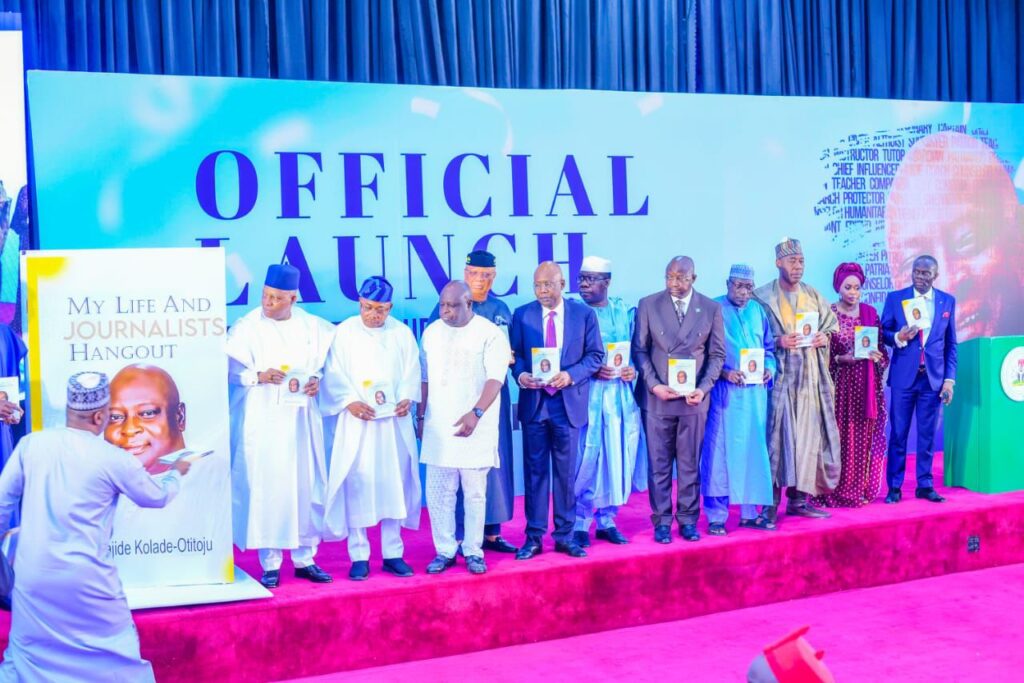
The event, held on Monday at the NAF Conference Centre, brought together prominent figures from Nigeria’s political and media spheres in honour of Otitoju’s enduring contributions to journalism.
The highlight of the occasion was the unveiling of Otitoju’s book titled “My Life and Journalist Hangout.”
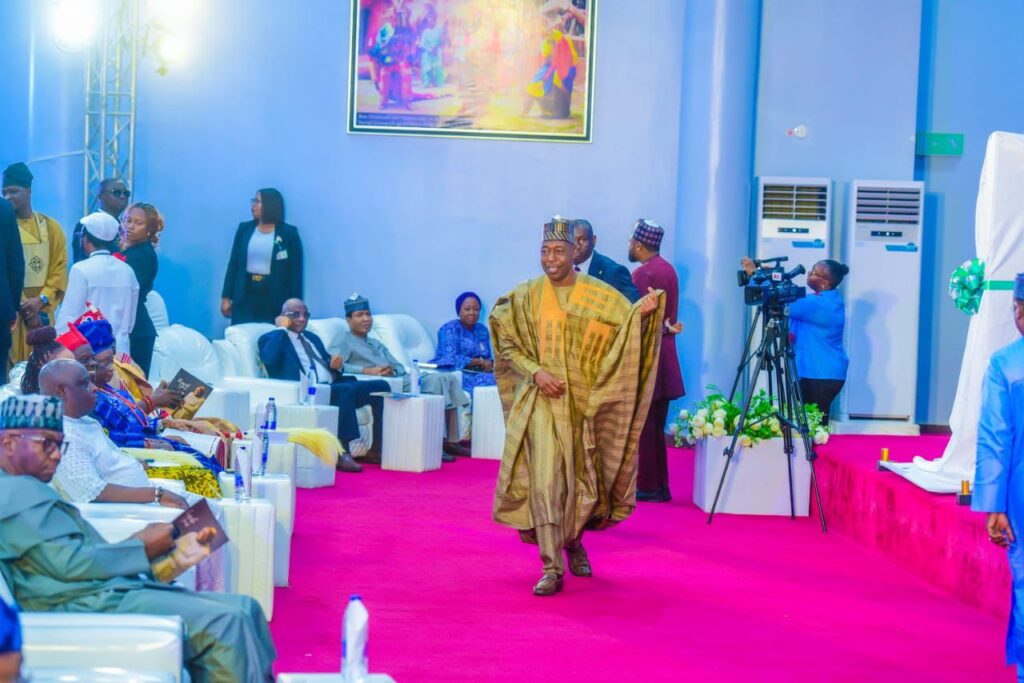
Chairman of the event and Governor of Kwara State, Abdulrahman Abdulrazak, delivered remarks on behalf of the 36 state governors.
He described Otitoju as a seasoned journalist whose work has significantly influenced the growth and development of journalism in Nigeria, adding that his legacy will stand as one of excellence and professionalism in the media industry.
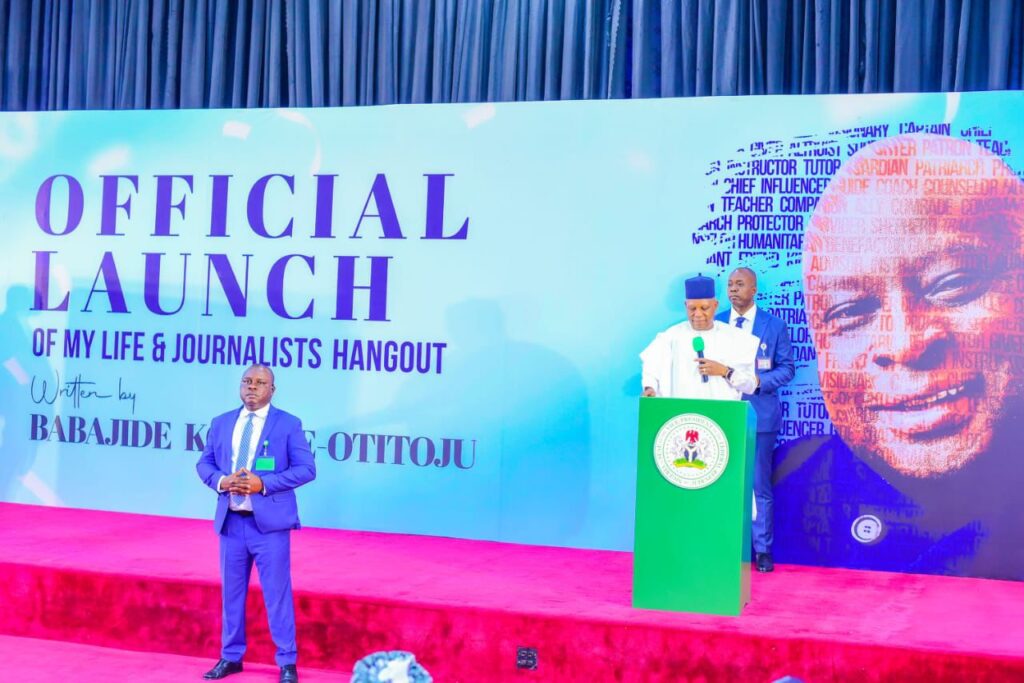
In a demonstration of collective support, the Kwara State Governor announced the purchase of 36 copies of the book on behalf of the Nigeria Governors’ Forum for a total sum of ₦200 million.
VP Shettima, Zulum, Others Grace Babajide Otitoju’s Book Launch
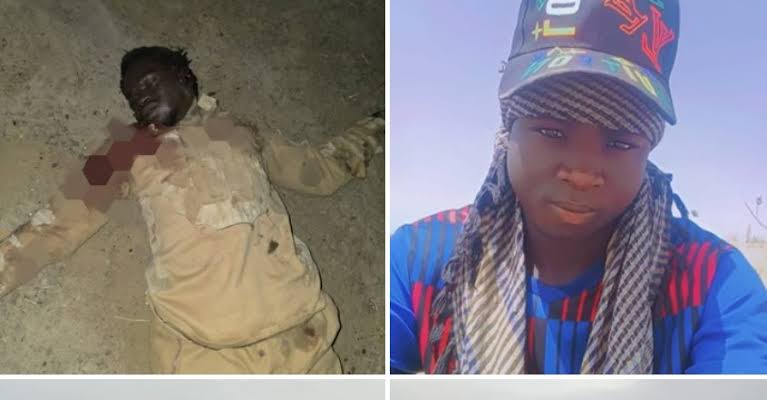
Troops uncover identity of neutralised Boko Haram fighter as top bomb maker
By: Zagazola Makama
Troops of Operation Hadin Kai have uncovered the identity of a neutralised Boko Haram fighter identified as a key improvised explosive device (IED) expert and trainer in the North-East theatre of operations.
Zagazola Makama that the fighter, earlier neutralised during an ambush operation along a border axis, was later identified as Habba Umar, also known by the alias “Bomma”.
He was reportedly discovered to be a specialist in IED and vehicle-borne improvised explosive device (VBIED) fabrication, with links to terrorist elements of Boko Haram and the Islamic State West Africa Province (ISWAP).
According to the sources, the suspect was believed to have operated within an enclave around Arena Wuje and allegedly played a key role in training and coordinating explosive device activities for the group.
Intelligence further indicated that he had suspected links to previous IED incidents along the Marte–Dikwa axis and parts of the Lake Chad basin corridor, although investigations are ongoing to fully establish the extent of his involvement.
The sources added that troops recovered items and electronic devices from the scene of the ambush, which are currently undergoing intelligence exploitation to support ongoing counter-terrorism operations.
Military authorities said operations in the general area remain ongoing, with troops sustaining pressure on terrorist elements and their support networks across the theatre.
Troops uncover identity of neutralised Boko Haram fighter as top bomb maker
Group demands zoning of Gombe Central Senatorial seat to Yamaltu/Deba
A sociocultural group under the auspices of Nyimatli Development Association (NDA) has demanded that the 2027 senatorial seat of Gombe Central be zoned to Yamaltu Deba Local Government Area of the State.
Speaking at a news conference on Monday in Gombe, Mr Emmanuel Usman, the secretary of the group in the company of other executive members said the demand was from the entire people of Yamaltu Deba LGA.
Usman said the demand was a necessary step for equity, unity, justice and inclusiveness.
He stated that since Gombe Central has two Local Government Areas of Akko and Yamaltu Deba and Akko has held the seat for 16 years, zoning it to Yamaltu Deba would ensure parity and correct the zoning imbalance.
“Akko has held the seat for too long and it is our turn to ensure equitable representation; this is the message from the Tera people and the people of Yamaltu Deba.
“The people of Yamaltu Deba LGA are concerned about the issue of representation at the National Assembly particularly at the Senate.
“Yamaltu Deba is in Gombe Central Senatorial District and the district is owned by Akko and Yamaltu Deba and by extension this seat should go round between the two LGAs in the zone.
“When we returned into the present democratic era, the first senator was from Akko who served for four years and then it returned to Yamaltu Deba, for another four years.
“Until it came to the time when Senator Danjuma Goje, from Akko became senator and he has served four consecutive terms that is for 16 years, without it being returned to Yamaltu Deba.
“We feel as a people if we own this seat collectively, equity and justice should have been the right thing and if Akko has enjoyed 16 years, it should now be returned to Yamaltu Deba,” he said.
Usman said that the people of Yamaltu Deba were already feeling maginalised not because the current senator Goje lacked competence or representation, but because they have been denied the right to represent the district.
He said the LGA has a lot of competent politicians and technocrats who could effectively represent the Senatorial District and fast track development.
Usman pleaded with Goje not to contest the 2027 senatorial seat but allow Yamaltu Deba in the spirit of “our unwritten consensus” for turn taking in representation.
“We have supported Goje, voted for him and given him the platform to lead, it is now time for him to return the favour and step aside for others from Yamaltu Deba to occupy the senate seat.”
He also appealed to Gov Inuwa Yahaya of Gombe State as the party leader of the All Progressives Congress (APC) in the state to listen to their plea towards ensuring fairness, inclusion and justice.
Group demands zoning of Gombe Central Senatorial seat to Yamaltu/Deba

VP Shettima, Zulum, Others Grace Babajide Otitoju’s Book Launch

Troops uncover identity of neutralised Boko Haram fighter as top bomb maker

Group demands zoning of Gombe Central Senatorial seat to Yamaltu/Deba

Roger Federer’s Shock as DNA Results Reveal Myla and Charlene Are Not His Biological Children

THE PLIGHT OF FARIDA

FAILED COUP IN BURKINA FASO: HOW TRAORÉ NARROWLY ESCAPED ASSASSINATION PLOT AMID FOREIGN INTERFERENCE CLAIMS
-
 News2 years ago
Roger Federer’s Shock as DNA Results Reveal Myla and Charlene Are Not His Biological Children
-
Opinions4 years ago
THE PLIGHT OF FARIDA
-
 News11 months ago
FAILED COUP IN BURKINA FASO: HOW TRAORÉ NARROWLY ESCAPED ASSASSINATION PLOT AMID FOREIGN INTERFERENCE CLAIMS
-

 News2 years ago
EYN: Rev. Billi, Distortion of History, and The Living Tamarind Tree
-
 Opinions4 years ago
POLICE CHARGE ROOMS, A MINTING PRESS
-

 ACADEMICS2 years ago
A History of Biu” (2015) and The Lingering Bura-Pabir Question (1)
-

 Columns2 years ago
Army University Biu: There is certain interest, but certainly not from Borno.
-

 Opinions2 years ago
Tinubu,Shettima: The epidemic of economic, insecurity in Nigeria
