
News
Benin coup plotter Pascal Tigri traced to Niger, as accusing fingers pointed at President Tchiani

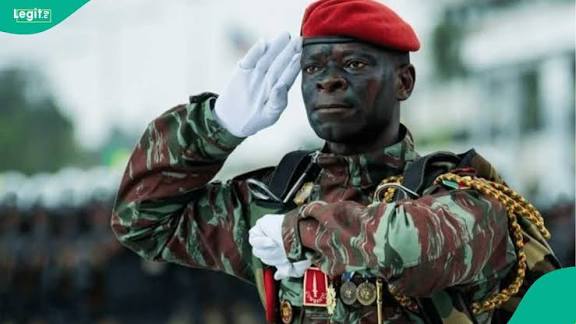
Benin coup plotter Pascal Tigri traced to Niger, as accusing fingers pointed at President Tchiani
By Hamza Suleiman
Pascal Tigri, the lieutenant-colonel at the center of the recent foiled coup in Benin, has reportedly been located in a ministerial residence in Niamey, Niger, in close proximity to the presidential palace and the Directorate-General of Documentation and External Security (DGDSE), multiple regional sources have confirmed.
Tigri is believed to have been in the villa since December 12, following a carefully orchestrated escape route that spanned several West African capitals.
Sources indicate that after the failed coup attempt in Cotonou on December 7, Tigri fled to Lomé, Togo, before boarding a private Beechcraft 100 D aircraft to Ouagadougou, Burkina Faso, on December 12. The aircraft, operated by Liza Transport International (LTI) Aviation, a subsidiary of the Burkinabè company Ebomaf owned by businessman Mahamadou Boukoungou, subsequently transferred Tigri to Niamey the same evening.
Regional intelligence suggests that Ouagadougou may have functioned as a “command and control hub” for the attempted coup, in alleged coordination with elements in Niger. Investigators in Benin have also raised concerns about the movements of other mutinous soldiers who reportedly fled Lomé on December 16 aboard the same LTI aircraft.
According to sources, the flight transponder was deactivated while crossing Bénin airspace, and verification with the National Civil Aviation Agency indicated the flight may have been cleared with a falsified authorization. These developments have intensified suspicion of external interference and potential complicity by regional actors.
Tensions between Bénin and Niger have escalated in recent weeks. President Abdourahamane Tiani of Niger has previously accused Bénin of harbouring groups engaged in terrorism, allegedly with external support. The failed coup, alongside unusual troop movements observed near the Bénin-Niger border on December 6, has further strained relations.
Notably, intelligence indicates that two units of the Nigerien Armed Forces were deployed to Gaya, Niger, two days before the coup, under orders from the Chief of Army Staff, General Mamane Sani Kiao. The units, dispatched from Maradi, were positioned near the Niger-Benin border, prompting questions about their intended mission, whether to escort sensitive convoys or monitor the activities of Tigri and his collaborators. After the coup’s failure, the Nigerien troops withdrew.
Sources close to the investigation reveal a pattern of discreet meetings, financial support, and communications linking Tigri and his affiliates with Nigerien intermediaries believed to be aligned with Nigerien authorities loyal to the transition government of General Abdourahamane Tiani. These contacts reportedly extended to operational planning and intelligence sharing, further complicating the regional security environment.
The presence of Tigri in Niamey, reportedly in a villa housing senior government officials including the Prime Minister and foreign advisors, mirrors the high-risk nature of his concealment. Reports indicate that Bala Arabé, head of Niger’s DGDSE, recently moved into a nearby city villa, further reinforcing suspicions of possible protection or surveillance by state actors.
In Bénin, authorities continue to pursue multiple leads, including tracing financial flows, and other classified intelligence. Video messages circulated by activist Kemi Seba in the immediate aftermath of the attempted coup suggest that some actors were forewarned, leading to an international warrant for Tigri and other suspected collaborators.
Nigeria, through intelligence sharing and diplomatic engagement, has played a stabilising role, working closely with Bénin authorities to monitor the crisis and prevent escalation. The swift and strategic deployment of Air and ground troops along the border played a pivotal role in limiting the potential fallout of the coup. Again, the deployment and surveillance along Gaya further prevented an escalation into a broader regional crisis. Nigeria’s proactive involvement exemplifies its commitment to safeguarding democratic governance and regional stability in West Africa.
The episode has drawn attention to vulnerabilities in border security, aviation oversight, and intelligence coordination in the sub-region. The intricate escape route, alleged cross-border support networks, and the covert operations surrounding Tigri signals the continuing challenges in preventing the spread of political instability as well as insecurity.
The presence of Tigri in Niamey, coupled with previous intelligence intercepts, continues to fuel speculation regarding Niger’s role, direct or indirect. The incident also exposed vulnerabilities in private aviation oversight and cross-border security, which called for the need for tighter controls to prevent the movement of rogue actors.
Meanwhile, sources confirmed that Bénin continues to pursue investigations into the escape of Tigri and other mutineers, with international warrants reportedly issued against key figures implicated in the attempted coup. For now, Tigri’s presence in Niamey continues to be a focal point of diplomatic and intelligence scrutiny in West Africa.
Nigerien authorities have not issued official statements regarding the presence of Tigri on their territory.
Benin coup plotter Pascal Tigri traced to Niger, as accusing fingers pointed at President Tchiani


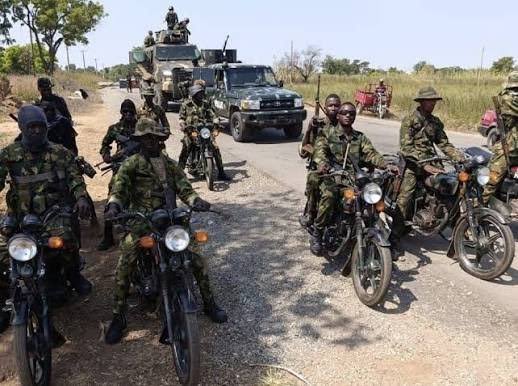
Troops foil attack by Criminal Youths, rescue victims, arrest suspects in plateau
By: Zagazola Makama
Troops of Sector 1, Operation Enduring Peace (OPEP), have foiled an attack on residents at Dutse Uku in Jos North Local Government Area of Plateau State.
A security source said the troops responded swiftly to a report of sporadic gunshots in the area at about 11:50 p.m. on April 2.
According to the source, upon arrival at the scene, the suspected criminals fled, abandoning their operation due to the prompt intervention of the troops.
He said the troops rescued two victims who sustained gunshot wounds during the incident and immediately evacuated them to a hospital for medical attention.
The source further disclosed that two suspects, dressed in black attire, were arrested at the scene.
Items recovered from the suspects include a cutlass and a knife.
He added that the suspects are currently in military custody and undergoing preliminary investigation, while efforts are ongoing to track down other fleeing members of the group.
Zagazola report that despite heightened security, there has been report of pocket of attacks in some communities.
The source reassured residents of the military’s commitment to protecting lives and property and urged the public to continue providing timely information to security agencies.
Troops foil attack by Criminal Youths, rescue victims, arrest suspects in plateau
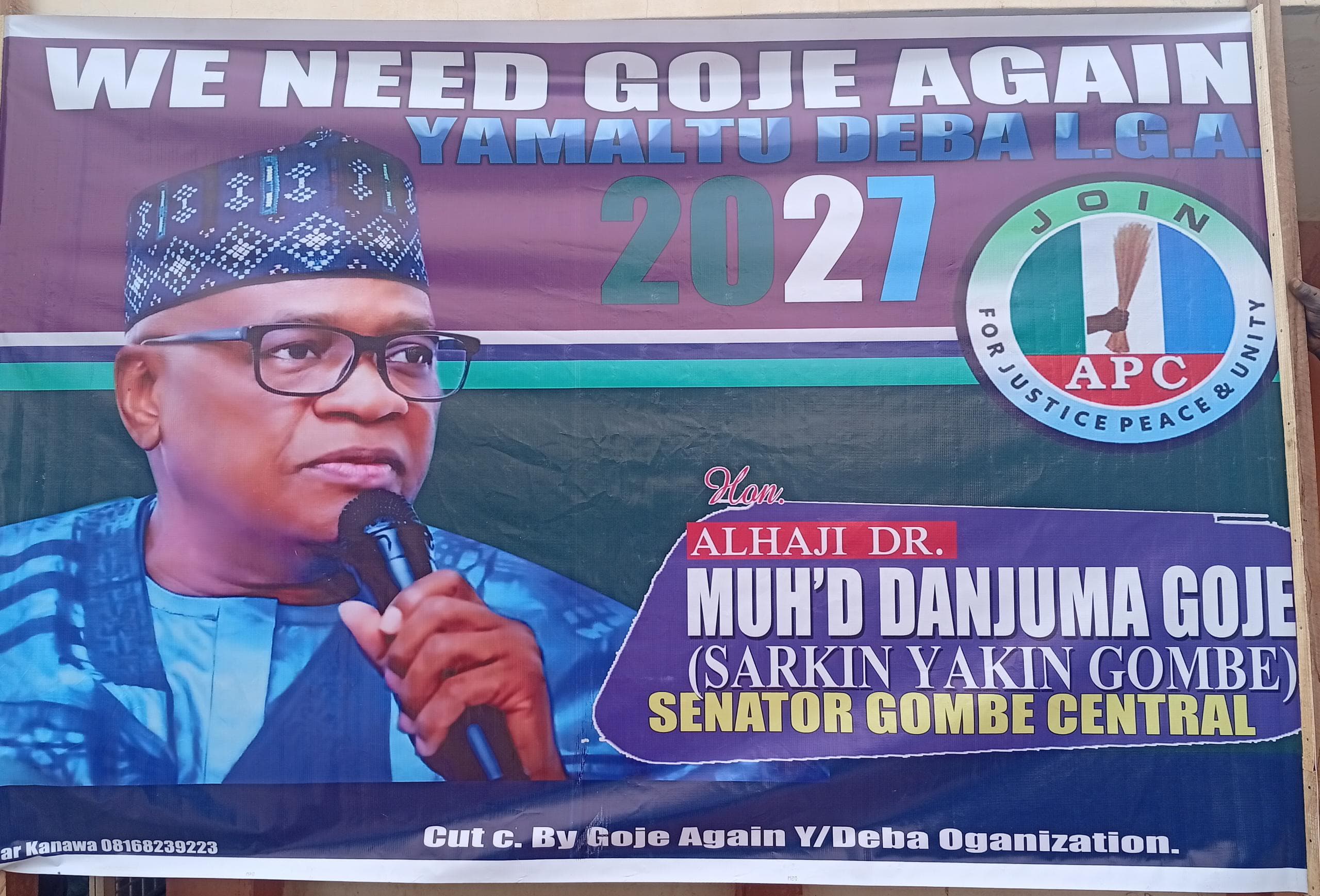
2027: Constituents declare support for Tinubu, Goje’s re-election
Yamaltu/Deba constituents have declared support for President Bola Tinubu and Senator Danjuma Goje’s re-election ahead of the 2027 General Elections.
Dr Newton Moses, declared the support in a statement read on behalf of the people of Yamaltu/Deba Local Government Area of Gombe State on Friday in Gombe.
Moses said voting for experienced leaders in 2027 remained key to addressing Nigeria’s challenges and delivering dividends of democracy to Nigerians.
He said the group’s decision to support Tinubu and Goje was guided by patriotism, and a sincere desire to see competent, and result-driven leadership that would benefit their constituents and the country.
He said that Goje’s leadership in the past 16 years at the Senate has benefitted the constituents and given effective representation to the people of Akko and Yamaltu/Deba LGAs that make up the district.
He dismissed allegations that the people of Yamaltu/Deba have been marginalised and were demanding the seat to be zoned to Yamaltu/Deba and not Akko where Goje is from.
He said that the constitution did not impose any zoning limitation or tenure restriction on membership in the National Assembly, hence urged those seeking the seat to test their popularity through election.
“We are not part of that group saying Goje should not return to the senate in 2027; that is not the voice of the grassroots from Yamaltu Deba.
“ Goje has, over the years, built invaluable networks and acquired the experience necessary to effectively advocate for the interests of his constituency and contribute meaningfully to national development.
“ By returning Goje to the Senate, Gombe Central stands to gain even more.
“ His established influence will ensure greater access to federal opportunities, increased developmental projects, and stronger representation in critical national decisions,” he said.
The group further advised President Tinubu to stay away from those working to tarnish the good name of Goje, stating that Goje’s influence in Gombe was important for the success of the All Progressives Congress in 2027.
Moses said at a time when Nigeria is focused on economic recovery, institutional strengthening, and inclusive growth under Tinubu, it was imperative that proven leaders like Goje to continue contributing his expertise toward national progress.
2027: Constituents declare support for Tinubu, Goje’s re-election

Hope in the Hard Times: Ashlee Momoh Foundation Spreads Easter Joy to Military Widows
By Comrade Philip O. Ikodor
The Ashlee Momoh Foundation (AMF), a non-profit organization dedicated to supporting the families of fallen officers, marked the Easter season with a heartwarming outreach to military widows at different locations in Abuja and Nasarawa state, respectively on April 2nd, 2026. This thoughtful initiative was designed to bring joy, hope, and support to the widows of our fallen Military Officers, who have made immense sacrifices for their country.

“Easter is the season of renewal, hope, and the triumph of light over darkness,” Princess Ashlee said. “It reminds us that even after the longest winter, spring arrives and even after the deepest sorrow, there is the possibility of a new dawn.” The outreach was designed to show support and encouragement to the military widows, and to felicitate with them on the occasion of Easter.

Princess Ashlee Momoh reassured the widows that while their loved ones are no longer physically present, their legacy lives on, and AMF is committed to standing with them, supporting them, and celebrating their strength. “Today, we celebrate you, our heroes’ widows, and the sacrifices you’ve made,” she said.
The event was filled with moments of joy and fulfilment, as beneficiaries received gift items, cash gifts, and scholarship opportunities. The Foundation also announced enlistment for skill acquisition and empowerment programs, aimed at equipping the widows with the tools they need to rebuild their lives.

The outreach was a testament to AMF’s unwavering commitment to supporting the families of fallen officers, and its dedication to making a positive impact in the lives of those who have made immense sacrifices for their country. As one beneficiary put it, “This Easter, we’ve received more than just gifts – we’ve received hope, love, and a sense of belonging.”

The Ashlee Momoh Foundation’s Easter outreach was a powerful reminder that even in the darkest moments, there is always hope, and that together, we can overcome any challenge.
Hope in the Hard Times: Ashlee Momoh Foundation Spreads Easter Joy to Military Widows

Troops foil attack by Criminal Youths, rescue victims, arrest suspects in plateau

2027: Constituents declare support for Tinubu, Goje’s re-election

Hope in the Hard Times: Ashlee Momoh Foundation Spreads Easter Joy to Military Widows

Roger Federer’s Shock as DNA Results Reveal Myla and Charlene Are Not His Biological Children

THE PLIGHT OF FARIDA

FAILED COUP IN BURKINA FASO: HOW TRAORÉ NARROWLY ESCAPED ASSASSINATION PLOT AMID FOREIGN INTERFERENCE CLAIMS
-
 News2 years ago
Roger Federer’s Shock as DNA Results Reveal Myla and Charlene Are Not His Biological Children
-
Opinions4 years ago
THE PLIGHT OF FARIDA
-
 News12 months ago
FAILED COUP IN BURKINA FASO: HOW TRAORÉ NARROWLY ESCAPED ASSASSINATION PLOT AMID FOREIGN INTERFERENCE CLAIMS
-

 News2 years ago
EYN: Rev. Billi, Distortion of History, and The Living Tamarind Tree
-
 Opinions4 years ago
POLICE CHARGE ROOMS, A MINTING PRESS
-

 ACADEMICS2 years ago
A History of Biu” (2015) and The Lingering Bura-Pabir Question (1)
-

 Columns2 years ago
Army University Biu: There is certain interest, but certainly not from Borno.
-

 Opinions2 years ago
Tinubu,Shettima: The epidemic of economic, insecurity in Nigeria
