
National News
BORNO emirate concerned citizens condemn recent political violence between the APC and PDP

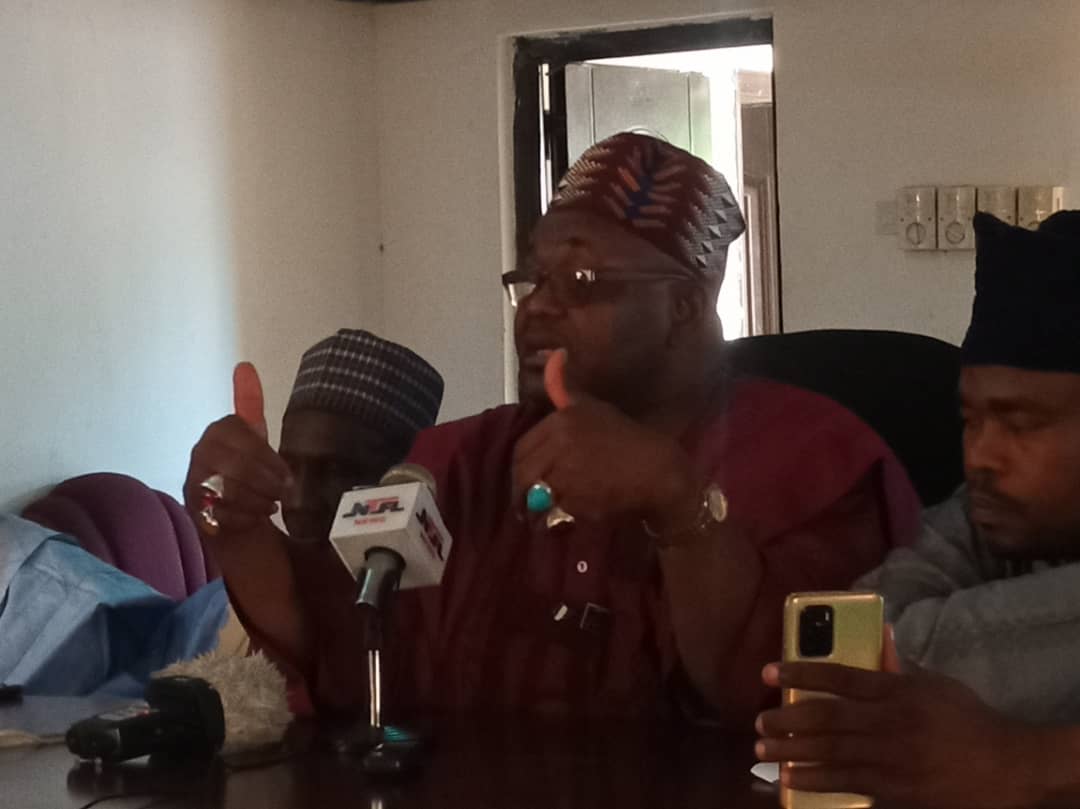
BORNO emirate concerned citizens condemn recent political violence between the APC and PDP
By: Bodunrin Kayode
The Borno Emirate Concerned citizens Forum (BECCF) has condemned the recent political violence that led to the pelting of the Peoples Democratic Party (PDP) convoy of Presidential Candidate Atiku Abubakar by Hoodlums in maiduguri
The group Chaired by Hassan Zanna, the “Boguma of Borno” in a news conference in Maiduguri on Sunday said it has started talking to its people to abstain from involvement in such dangerous vices during this critical campaign period.
“We do not believe it is right for people to gather under the guise of any political party to foment trouble. As a result, we will call for a town hall meeting to address issues that were not thrashed before now.
The group said that it was saddened by the fact that the elders in the land have not said a word about the attack on the opposition party which he said was not good enough. adding that “we on our own have been gathering people to speak to them on the dangers of violence at this time when we are trying to end the spate of insurgency in the state. We have come to a point in which we must directly speak to the party stalwarts regardless of the party they belong to drop their swords.” said Zannah
Speaking on those who were injured during the November 9th fracas between the All Progressive Congress(APC) and the Peoples Democratic Party (PDP) thugs in maiduguri, Zannah said that they have in their own way commiserated with those who were attacked and wounded in the capital during the visit of Atiku stressing that they are independent minded professionals who want the peace of the people to be maintained at all times.
“The Borno Emirate Concerned Citizens Forum (BECCF) is an apolitical and non-religious socio-cultural group established for the promotion of social justice, peace, unity, and the perceptive promotion of the culture and tradition of the people of Borno. The objective of which is purely to unity in the State for us to reclaim its acronym of ‘Home of Peace’ and to promote peaceful coexistence among members of Borno Communities. It is deeply concerned about the recent happenings in the State. The renaissance of political thuggery and mischief-making is in its resurgence and the need to urgently curb the situation before it escalates to another problem.
READ ALSO: https://dailypost.ng/2022/10/27/ndlea-boss-warns-drivers-against-use-of-hard-drugs/
“The Forum believes that the incident of 9th November is attributed to some elements within the two major political parties in the State. These political parties are established by law and the need to draw their attention to respect and abide by the rule of law and the provisions of their constitutions during campaigns. This genuine respect for law and order by all is non-negotiable. Regrettably, the recent happening in the State is tantamount to a breach of peace and concerted efforts in bringing down the successes recorded so far in bringing a lasting peace to our State in the recent past. We observed with dismay that the political upheavals in Bama, Biu, M.M.C. and pockets of others in some designated locations.
“The Forum condemned in strongest terms all acts of violence and disruption that may likely breach the entrenchment of peace in the State. Therefore, we call on all political stakeholders to eschew all forms of political violence that may open ways to hoodlums from de-escalating the relatively hard-earned peace achieved in recent times.
“We equally call on all indigenes of Borno to shun activities that will lead to violence of any type at all costs. We particularly want to intimate parents to call on their wards to avoid places, friends, and associates that can lure them to obstruct peace in the state. It is also important to remind the general public to legitimately operate their mobile phone devices (Smartphones). Especially, the wrong use of social media sites in spreading unconfirmed/fake reports or news against people of all types should be discouraged.
“Recently, people used to enjoy recording their voices expressing unwanted views or commenting on what they do not know is becoming worrisome and condemnable. The need for caution and the creation of public awareness campaigns to inculcate appropriate handling of those digital devices is timely.
“Given the above scenarios, it is the Forum’s observation that it was in the tradition that every season had its unique ways of seeking divine intervention and so it is strongly recommended that the constituted authorities should embark on a call for special prayer sessions for the peaceful conduct of electioneering campaigns, the conduct of 2023 elections, and another transition to civil rule in Nigeria.
“Any form of blackmail orchestrated to dent, smear, or defame his person by some unpatriotic individuals would be fully resisted. Let the whole world know the Governor is a humane and open-minded person, we want to categorically express our unalloyed support for his humanitarian and developmental policies and programmes for the good people of Borno State.” said Hassan Zannah
BORNO emirate concerned citizens condemn recent political violence between the APC and PDP


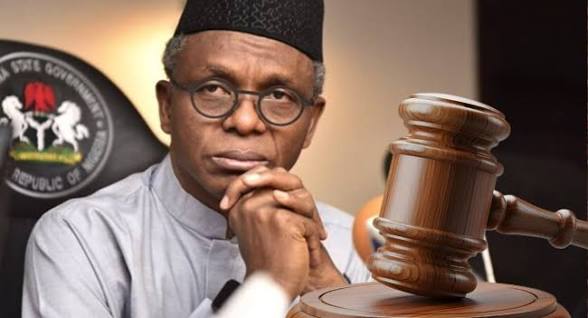
Court Dismisses El-Rufai’s N120m Rights Violation Suit Over Alleged Wiretapping
By: Zagazola Makama
A High Court of the Federal Capital Territory (FCT) on Monday dismissed a N120 million fundamental rights enforcement suit filed by former Kaduna State Governor, Mallam Nasir El-Rufai, against the Department of State Services (DSS), the Economic and Financial Crimes Commission (EFCC), the Independent Corrupt Practices and Other Related Offences Commission (ICPC) and the Attorney General of the Federation (AGF).
The court dismissed the suit for lacking merit and awarded N200,000 each in favour of the DSS, EFCC and ICPC.
Delivering judgment, Justice Sylvanus Orji held that the invitation letters issued to El-Rufai by the EFCC and ICPC complied with constitutional requirements and did not violate his fundamental rights.
On El-Rufai’s challenge to an attempted arrest by the DSS at the Nnamdi Azikiwe International Airport, Abuja, the judge held that the service possessed powers to carry out its statutory responsibilities pursuant to the relevant legal instruments governing its operations, including the National Security Agencies Act.
The court further held that the DSS had the mandate to maintain watchlists and take appropriate action, including arresting persons of interest within the scope of its lawful powers.
Justice Orji stressed that El-Rufai could not use the court to prevent security and law enforcement agencies from performing their legally assigned duties.
On the seizure of the former governor’s international passport by the DSS, the court held that it was satisfied that the action was lawful and within the agency’s powers.
The judge also ruled that the applicant had failed to establish that the seizure was continuous, permanent and unlawful in a manner that amounted to a violation of his fundamental rights.
The suit sought N120 million in damages over alleged violations of El-Rufai’s rights in connection with the actions of the security and anti-corruption agencies.
The ruling represents a setback for the former governor in his legal challenge to the actions taken by the agencies.
Court Dismisses El-Rufai’s N120m Rights Violation Suit Over Alleged Wiretapping
NHRC Raises Alarm Over Child Abuse, Custodial Torture, Civic Freedom Violations
By: Michael Mike
The National Human Rights Commission (NHRC) has called for stronger safeguards against violence and exploitation targeting women and children, tighter oversight of detention facilities and increased protection of civic freedoms ahead of Nigeria’s 2027 general elections.
The Executive Secretary of the Commission, Dr Tony Ojukwu, said persistent cases of sexual and gender-based violence, child abuse, discrimination and other forms of exploitation required more effective prevention mechanisms, thorough investigations and improved access to justice.
Ojukwu, who spoke in Abuja during the presentation of the Commission’s September 2026 Human Rights Situation Dashboard, urged government authorities to translate ongoing reforms into practical protection for vulnerable Nigerians, particularly children in underserved communities.
He welcomed the September stakeholders’ engagement on the review of the Child Rights Act, 2003, describing it as an opportunity to address gaps in the country’s child protection framework and strengthen institutional responses to violence and exploitation.
He, however, stressed that reviewing the law would not be sufficient without adequate funding, stronger institutions and effective implementation capable of delivering tangible protection to children.
The NHRC chief called on relevant authorities to ensure that the reform process produced practical measures to prevent abuse, protect vulnerable children and improve access to justice for victims.
On the treatment of detainees, Ojukwu emphasised the importance of independent monitoring of custodial facilities, warning that effective human rights protection required sustained oversight of institutions responsible for enforcing the law.
He disclosed that the Commission, through its National Preventive Mechanism, validated its 2025–2026 annual report on September 25, bringing together stakeholders to examine findings and recommendations on preventing torture and other forms of ill-treatment in places of detention.
According to him, the exercise was aimed at identifying systemic weaknesses that expose detainees to abuse and strengthening measures to prevent violations.
He said independent monitoring of detention facilities remained critical to accountability within the justice and law enforcement systems, particularly in ensuring that people deprived of their liberty continued to enjoy the protection of the law.
The Commission also stepped up efforts to monitor threats to civic freedoms as political activities gather momentum ahead of the 2027 general elections.
Ojukwu disclosed that the NHRC, in collaboration with the Nigeria Network of NGOs and with support from Heinrich Böll Stiftung Nigeria and the Office of the United Nations High Commissioner for Human Rights, organised a training workshop for the Commission’s state coordinators on Tuesday, October 13.
The workshop focused on operationalising the NHRC’s advisory opinion on promoting and protecting civic space and human rights, issued on May 18, 2026.
The initiative is expected to strengthen the capacity of state offices to identify, document and report violations affecting civic space, including restrictions on peaceful assemblies and regulatory practices affecting civil society organisations.
Ojukwu said integrating civic space monitoring into the Commission’s Human Rights Observatory and Dashboard would improve its ability to detect emerging threats and facilitate timely institutional responses.
He stressed that democratic governance must be measured not only by the conduct of elections but also by the extent to which citizens could freely express their views, associate with others, assemble peacefully and participate meaningfully in public affairs.
The Commission called on government institutions, security agencies, civil society organisations and development partners to intensify collaboration in addressing the underlying causes of human rights violations.
Ojukwu said the NHRC would continue to strengthen its monitoring and reporting systems, improve investigations and complaints resolution, and ensure that documented findings informed policy decisions and institutional reforms.
He maintained that the Commission’s responsibility extended beyond recording allegations to helping prevent violations, securing remedies for victims and ensuring accountability.
“The true measure of our progress is not simply the number of complaints documented, but the extent to which our collective efforts improve the lives of Nigerians,” he said.
He urged stakeholders to act on the findings and recommendations of the September dashboard, stressing that sustained collective action was necessary to prevent human rights violations, secure justice for victims and hold public institutions accountable.
The Commission’s renewed emphasis on child protection, custodial oversight and civic freedoms comes as Nigeria prepares for the 2027 general elections, placing the protection of fundamental rights and accountability for alleged abuses among the issues requiring sustained attention from public institutions.
NHRC Raises Alarm Over Child Abuse, Custodial Torture, Civic Freedom Violations
National News
KACRAN Challenges 19 Northern Governors to Adopt Buni’s Commercial Revolution Blueprint

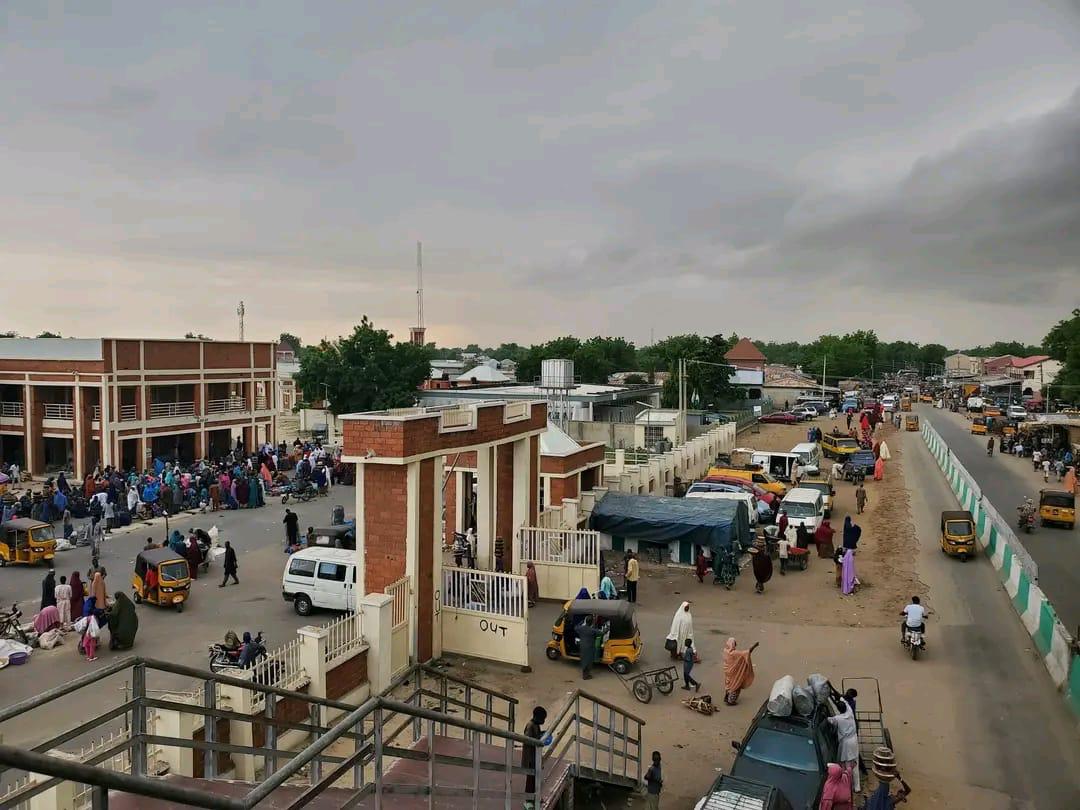
KACRAN Challenges 19 Northern Governors to Adopt Buni’s Commercial Revolution Blueprint
..Calls on Tinubu to Provide Soft Loans to Traders, Says Markets, Factories Can Create Millions of Jobs
By: Michael Mike
The Kulen Allah Cattle Rearers Association of Nigeria (KACRAN) has challenged the 19 governors of Northern Nigeria to adopt Yobe State Governor Mai Mala Buni’s commercial development blueprint, describing it as a potential pathway to economic recovery, job creation and improved security across the region.
The association also urged President Bola Tinubu to provide accessible soft loans and special intervention funds for traders and entrepreneurs operating in newly developed markets, saying inadequate business capital remains a major constraint to unlocking the economic potential of Northern Nigeria.
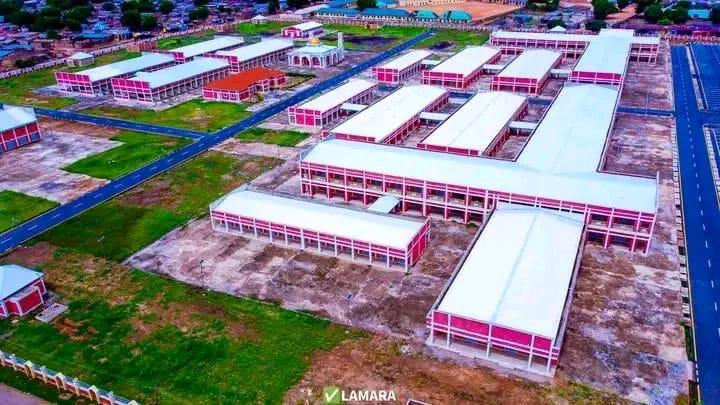
KACRAN, in a statement issued on Tuesday by its National President, Hon. Khalil Mohammed Bello, said the region needed a deliberate economic revival strategy to address insecurity, industrial decline, youth unemployment and the disruption of agriculture and livestock production.
It identified Buni’s investment in modern markets, trailer parks and sesame seed processing facilities as a model that other Northern states could replicate to stimulate commercial activities and create employment opportunities.
According to the association, the Yobe State Government has invested billions of naira in the construction of modern markets across the state’s 17 local government areas, with projects completed in major commercial centres and others approaching completion.
It listed Potiskum, Damaturu, Gashua, Nguru and Gaidam among the towns where modern markets have been completed, adding that Gujba and Fune are among the local government areas expected to have two markets each.
The association said the completed and ongoing projects would bring the total number of modern markets to 19.
It also highlighted the construction of two trailer parks in Potiskum and Damaturu, noting that the Potiskum facility had been completed while work was ongoing in Damaturu.
According to KACRAN, the trailer parks are expected to strengthen transportation and facilitate the movement of goods, while four sesame seed cleaning and packaging factories established in Nguru, Machina, Damaturu and Potiskum would support agricultural value addition and industrial development.
The association argued that investments in commercial infrastructure and agro-processing could expand economic opportunities, improve market access for farmers and traders, and create jobs for young people.
It, however, stressed that infrastructure alone would not be sufficient to achieve the desired economic transformation without access to affordable financing for businesses.
KACRAN therefore called on Tinubu to introduce special credit facilities for traders and entrepreneurs who had secured space in the new markets, arguing that access to working capital would enable them to expand their businesses, employ more people and strengthen economic activities along the commercial value chain.
The association said the proposed intervention could also help reduce the vulnerability of unemployed youths to criminal recruitment by providing more sustainable livelihood opportunities.
In making its case for a regional economic revival, KACRAN recalled what it described as Northern Nigeria’s historical reputation for peaceful coexistence, hospitality, commercial enterprise and trust-based business relationships.
It lamented that insecurity, the collapse of industries, ethno-religious divisions and political mistrust had undermined these traditions, while insurgency had disrupted farming, cattle rearing and fishing in several communities.
The association said the region needed to rebuild its economic foundations by investing in productive infrastructure, supporting private enterprise and creating opportunities for its growing youth population.
It traced its call for a new commercial development strategy to the economic and social changes that had taken place since the era of the late Premier of Northern Nigeria, Sir Ahmadu Bello, arguing that restoring the region’s prosperity required practical policies rather than nostalgia.
KACRAN particularly commended Buni for what it described as his commitment to reviving Yobe’s commercial sector despite the challenges posed by years of insurgency.
It also praised the state’s Commissioner for Commerce, Industry, Tourism and Solid Minerals, Hon. Kaigama Umar, alongside the ministry’s permanent secretary, directors, the management of Yobe State Investment Company and other officials involved in supervising the projects.
The association said the officials’ contributions had helped advance the state’s commercial infrastructure programme.
It maintained that replicating the Yobe model across Northern Nigeria, supported by affordable credit and effective implementation, could strengthen regional trade, expand employment and contribute to national economic growth.
“This revolution is not just for Yobe, it is for the North and for Nigeria,” the association declared.
KACRAN Challenges 19 Northern Governors to Adopt Buni’s Commercial Revolution Blueprint

2027: NSCDC Warns Personnel Against Election Bias, Voter Intimidation

Fani-Kayode Vows to Rebuild Nigeria–South Africa Ties, Protect Nigerians

UNODC Country Representative Calls for African-led Counter-Terrorism Cooperation and Intelligence Sharing

Roger Federer’s Shock as DNA Results Reveal Myla and Charlene Are Not His Biological Children

THE PLIGHT OF FARIDA

FAILED COUP IN BURKINA FASO: HOW TRAORÉ NARROWLY ESCAPED ASSASSINATION PLOT AMID FOREIGN INTERFERENCE CLAIMS
-
 News3 years ago
Roger Federer’s Shock as DNA Results Reveal Myla and Charlene Are Not His Biological Children
-
Opinions5 years ago
THE PLIGHT OF FARIDA
-
 News2 years ago
FAILED COUP IN BURKINA FASO: HOW TRAORÉ NARROWLY ESCAPED ASSASSINATION PLOT AMID FOREIGN INTERFERENCE CLAIMS
-
 Opinions5 years ago
POLICE CHARGE ROOMS, A MINTING PRESS
-

 News3 years ago
EYN: Rev. Billi, Distortion of History, and The Living Tamarind Tree
-

 ACADEMICS3 years ago
A History of Biu” (2015) and The Lingering Bura-Pabir Question (1)
-

 Columns3 years ago
Army University Biu: There is certain interest, but certainly not from Borno.
-

 Politics1 year ago
2027: Why Hon. Midala Balami Must Go, as Youths in Hawul and Asikira/Uba Federal Constituency Reject ₦500,000 as Sallah Gift
