Connect with us

News

Borno to send petrol to farmers in communities affected by insurgency at N600

Published

on

Borno to send petrol to farmers in communities affected by insurgency at N600
By: Michael Mike

Borno State Governor, Prof. Babagana Zulum has announced that the state government will subsidise the cost of petrol to farmers in communities affected by Boko Haram insurgency.

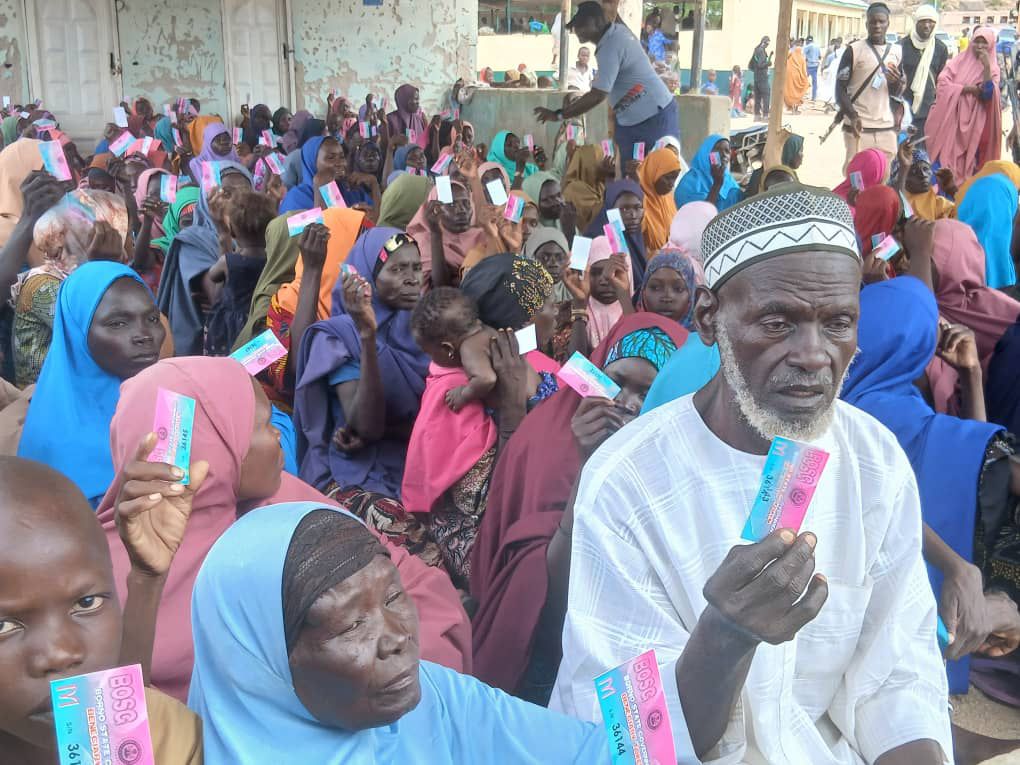
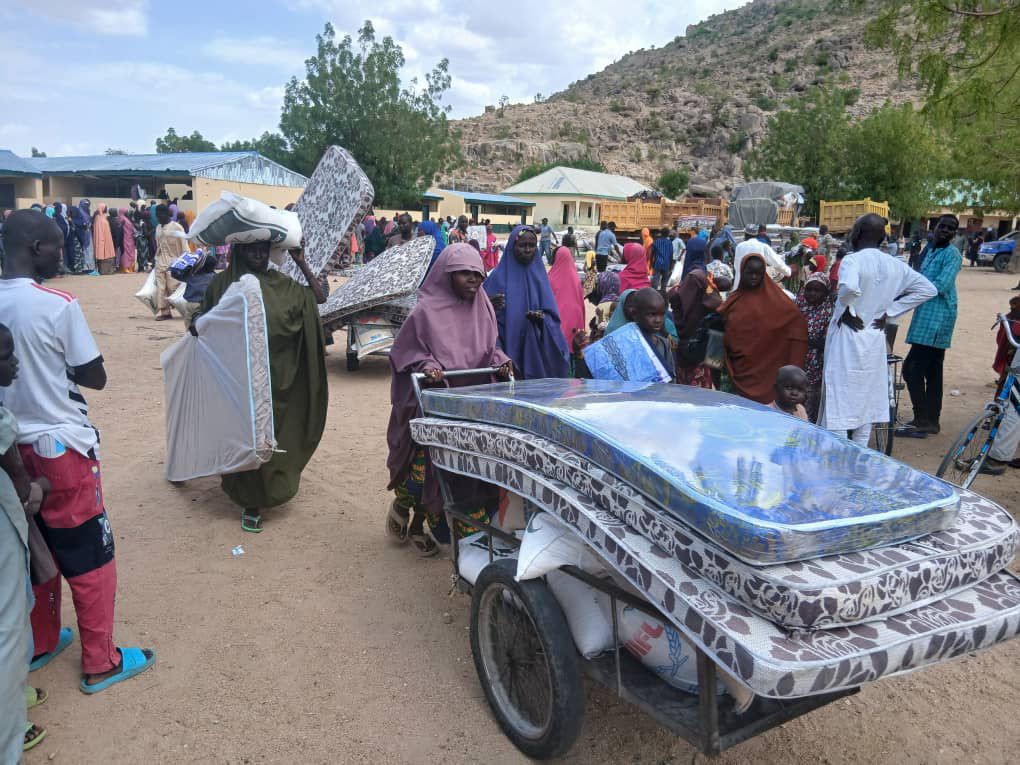
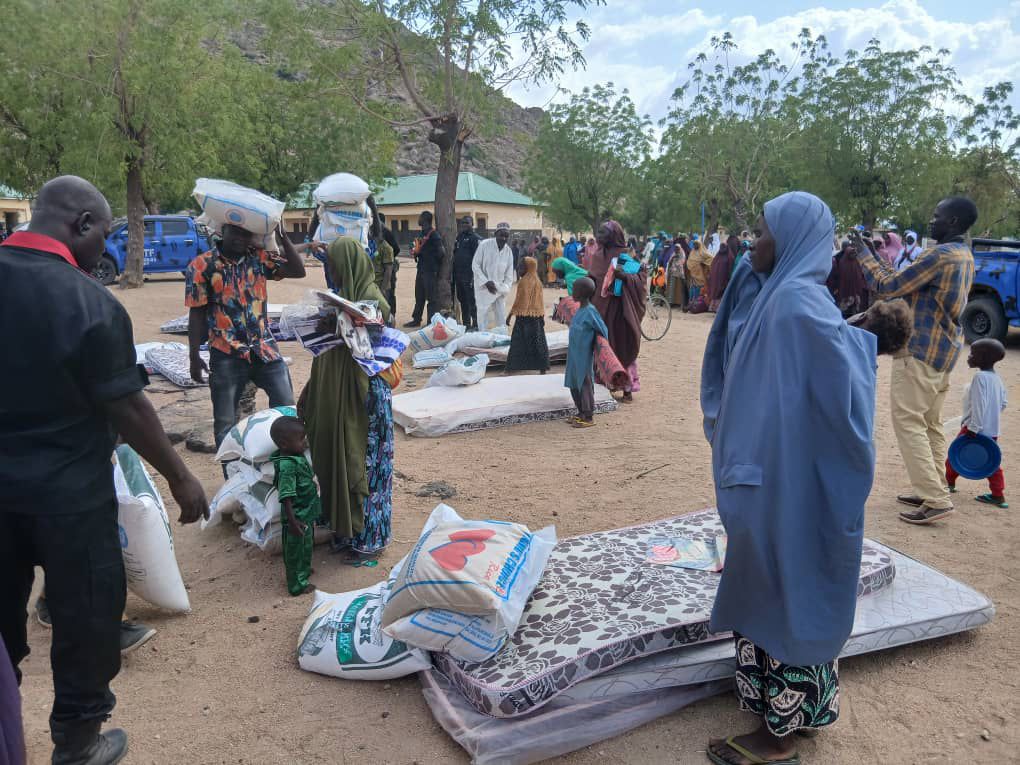
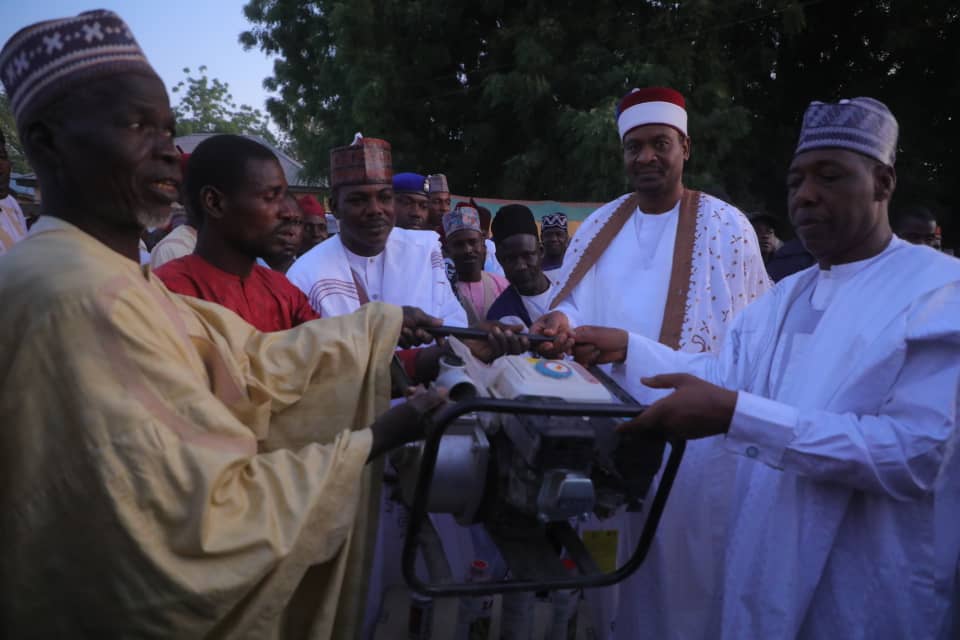
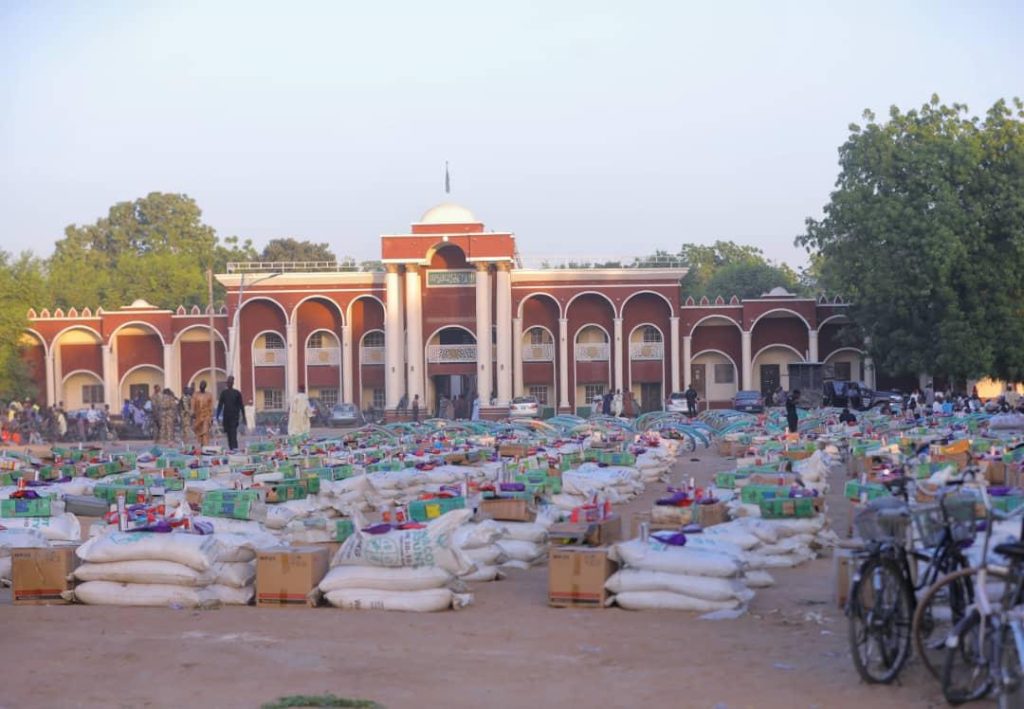
Zulum made the announcement on Friday evening in Bama town when he flagged off the distribution of farm inputs to over 5,000 farmers hitherto displaced by Boko Haram insurgents.

The governor said a litre of petrol sold between N1,000 and N1,200 in Maiduguri will be subsidised to the farmers for N600, noting that this is aimed at alleviating the financial burdens faced by farmers in communities that have suffered economic and infrastructural destruction due to years of conflict.
Zulum emphasised that a similar initiative implemented in Damasak, Mobar Local Government Area, last year has significantly increased food production and improved livelihoods.

He said: “One of the major challenges that are facing the farming communities here as regards irrigation farming is the increasing cost of fuel, as a result, I want to announce to the general public that government will procure petroleum products and sell to the farmers at a subsided rate, a litre of petrol is being sold in Maiduguri at the cost of about N1,200 but in’shAllah, henceforth for irrigation farmers this season a litre of petrol will be sold at the rate of N600.”

The governor also said: “The Commissioner for Agriculture will work with the Brigade Commander to ensure the delivery of the petroleum products to farmers in Bama town as soon as possible.”

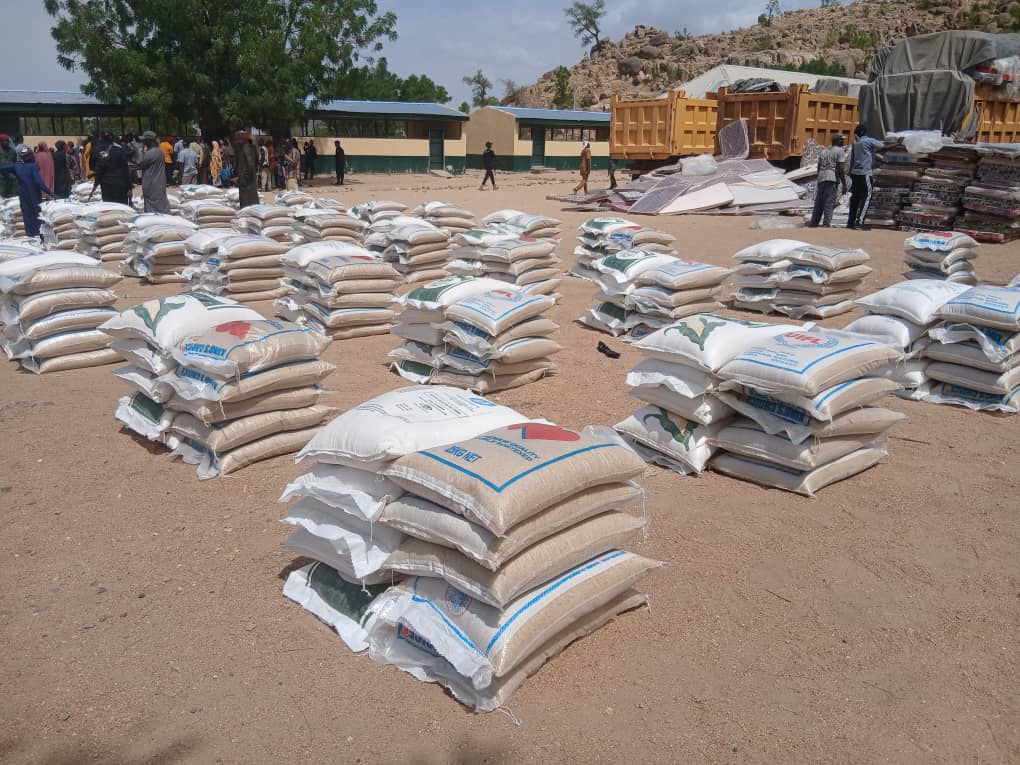
In addition to the petrol subsidy, Zulum distributed farm inputs, including 2000 bags of blended NPK fertiliser, 1000 units of water pumps, and 620 units of gasoline pumps.

Other materials include 380 units of solar water pumps, 1000 units of sprayers, 800 rolls of 2-inch flexible hose, and 1000 litres of pesticides and seeds, among other items.

He said his administration has constructed over 100 tube wells for use by irrigation farmers while also announcing the approval for the construction of an additional 250.

Meanwhile, Governor Babagana Umara Zulum has also visited Darajama and Goniri villages under Bama Local Government to assess the ongoing reconstruction work.

Zulum expressed satisfaction with the quality of the project but also reiterated that his administration will not allow anyone to sabotage its resettlement drive.

The governor expressed gratitude to the federal government for the tremendous support of his administration’s reconstruction and resettlement of communities affected by insurgency.

Borno to send petrol to farmers in communities affected by insurgency at N600

Continue Reading
Click to comment

Leave a Reply

Your email address will not be published. Required fields are marked *

News

Zulum calls for the need for institutionalized collaboration and coordinated reforms to beat terrorism in Nigeria

Published

on

Zulum calls for the need for institutionalized collaboration and coordinated reforms to beat terrorism in Nigeria

By: Bodunrin Kayode

Governor Babagana Zulum has called for the need for institutional collaboration and coordinated reform to effectively confront the menace of terrorism in the nation.

He said that such collaboration between the national and the sub nationals in the sector will have a strong effect on the lingering terrorism in the country counter corruption and resolve land disputes by securing investments for a better society.

Prof. Babagana Zulum, reaffirmed his commitment to working closely with the Federal Government, National Assembly and other sub nationals to deepen reforms in the State judicial system especially at the grassroots level.

Governor Zulum made the commitment recently at the 2025 Justice Sector Leadership Retreat held at the International Conference Centre of Musa Usman Secretariat, Maiduguri.

He reaffirmed Borno State’s commitment to working with the Federal Government, the Judiciary, the National Assembly, and development partners to strengthening reforms in the current judicial system, especially at the grassroots level.

The Governor stressed the need for the deployment of technology which will make judicial delivery faster, transparent and accountable to the citizenry, noting that Borno State had already adopted the use of digital technology to bridge justice delivery gap.

“In Borno State, we are already witnessing how digital tools have enhanced case tracking, enabling virtual court sittings, thus improving prison decongestion and streaming access to legal aid especially in hard-to-reach areas.

“If deployed strategically, technology can bridge the gap between rural and urban justice access. This is particularly important in Borno State where we continue to recover from a protracted insurgency and humanitarian crisis. Justice must serve as a foundation for healing, rebuilding trust and restoring the social contract.

“I urge all of us here as policymakers, jurists, administrators and stakeholders to see coordination not as a procedural matter, but as a moral imperative. Our people deserve a system that works, not one riddled with delays, duplications, or inefficiencies”.

The retreat themed “Strengthening Justice Sector Service Delivery through Technology, Innovation and Coordinated Reform” underscores the importance of deployment of digital tools to fast track judicial process.

Also speaking Attorney General of the federation and Minister of Justice, Lateef Fagbemi, lauded Governor Zulum’s people-centred transformation and reforms in the justice sector.

“Just like other sectors, your impact in the justice sector has been profound. The launch of Borno State e-Justice project in partnership with Law Pavilion has positioned the state as a pacesetter in digital transformation.

“With tools such as the Case Management System, e-Library, and electronic mail tracking for legal processes, Borno is pioneering efficiency and transparency in judicial service delivery.

“Borno under your leadership has become a case study in resilience and renewal. You have shown that governance is not about slogans but about solutions; not about rhetoric but about results.

“You have elevated the standard of leadership by demonstrating that ideas, when backed by courage and action, can transform societies, no matter the odds.

“In a state that has endured some of the toughest trials in our nation’s history, you did not succumb to despair. Instead, you applied innovative thinking, sound judgment, and a data-driven approach to policy and the results are visible to all”. Said Fagbemi.

The Attorney General called for the need to update the nation’s legal frameworks to support these innovations and invest in digital literacy, cybersecurity, and data management for the professionals.

He maintained that by fostering a culture of innovation and leveraging the transformative power of technology, they can build a justice system that is more efficient, more accessible, and more equitable for all Nigerians.

Zulum calls for the need for institutionalized collaboration and coordinated reforms to beat terrorism in Nigeria

Continue Reading

News

NEC Endorses NASENI’s Solar Irrigation Pumps To Boost Food Security

Published

on

NEC Endorses NASENI’s Solar Irrigation Pumps To Boost Food Security

*Seeks President Tinubu’s approval for mass production

*It’s a proof that Nigerian ingenuity can compete with the world – VP Shettima

By: Our Reporter

In a bid to boost food security in Nigeria, the National Economic Council (NEC) has endorsed solar-powered irrigation pumps produced by the National Agency for Science and Engineering Infrastructure (NASENI) for national rollout ahead of the 2025 dry season farming.

The NASENI solar irrigation pump, produced to replace the petrol-powered pump, is aimed at reinforcing the nation’s food security strategy, as it is expected to increase agricultural productivity, lower operational cost, higher incomes and improve livelihoods.

At its 152nd meeting held on Thursday at Presidential Villa, Abuja, NEC endorsed the use of the solar irrigation pump and resolved to adequately notify President Bola Ahmed Tinubu for his approval.

In anticipation of the President’s approval and the need to provide funding for NASENI, the Council also mandated the Minister of Budget and Economic Planning, Senator Abubakar Atiku Bagudu, to work out modalities of funding to enable NASENI to mass produce the solar irrigation pumps and distribute in time for the 2025 dry season.

Chairman of the Council, Vice President Kashim Shettima, said the scaled-up solar irrigation pumps is an indication that Nigerians can compete at the global level with their creativity.

“We must also face the challenge of innovation in agriculture. NASENI’s scaled-up solar irrigation pumps are ready for national rollout ahead of the 2025 dry season. These pumps replace expensive petrol-powered systems, lower farmers’ costs, expand dry-season cultivation, and even provide backup power for households.

“Their advanced features, including GPS tracking, mobile app dashboards, usage monitoring, and pay-as-you-go integration, prove that Nigerian ingenuity can compete with the world,” he stated.

VP Shettima said the innovation by NASENI “will not only boost food security but also unlock carbon credit opportunities” for farmers across the country.

The Vice President hinted at other efforts by the Tinubu administration to ensure food security, saying recently, “250,000 farmers have been insured across eight states, the 30 percent Value Addition Bill is advancing, and the ₦250 billion Bank of Agriculture facility is being activated to reach smallholders.”

Based on updates from the Presidential Food Systems Coordinating Unit, VP Shettima said, “The Green Imperative Project with Brazil is being repositioned for financing, while the World Bank-backed AGROW programme is mapping priority value chains for roll-out.

“The Harvesting Hope Caravan has reached half a million citizens in eight states, building trust and grassroots mobilisation. These are lifelines to farmers and proof that NEC’s decisions resonate beyond these chambers.”

Below are highlights of the meeting:

TALKING POINTS:

NATIONAL ECONOMIC COUNCIL NEC (NEC) 152nd MEETING THURSDAY, 18TH SEPTEMBER, 2025

UPDATE ON ACCOUNT BALANCES AS AT 17th September, 2025

Excess Crude Account – $ 535,823.39

Stabilization Account – N83,495,784,133.24

Natural Resources Account – N125,818,396,257.41

PRESENTATION ON “THE 31ST NIGERIAN ECONOMIC SUMMIT – THE REFORM IMPERATIVE: BUILDING A PROSPEROUS AND INCLUSIVE NIGERIA BY 2030” BY CEO, NESG

The presentation was to brief the Council called to note the Global trends and risks regarding:
● Uneven Global Growth
● Divergent Inflation and Policy
● Geopolitical Tensions Rising
● Climate and Tech Shifts

ACCORDING TO THE REPORT, KEY CHALLENGES FOR REFORM IN NIGERIA INCLUDES:

  • Structural Bottlenecks: Energy and transport deficiencies inflate production costs. Foreign exchange liquidity crisis and over-reliance on oil weaken fiscal sustainability.
  • Political Economy Risks: Political instability, frequent policy reversals, and corruption hinder long-term reform. Upcoming 2027 election may delay necessary actions.
  • Global Systemic Pressure: Climate change, trade tensions, and capital flight strain the economy. Weak industrial base faces competitive pressures from AfCFTA.

NES #31 SUMMIT STRUCTURE & OBJECTIVES SUB THEMES

● Driving Industrialisation-led Growth
● Building Infrastructure for Competitiveness
● Unlocking Investment amid Global Shifts

One Nigeria, Many Markets: A Forum for Subnational competitiveness

  • Nigeria’s economic transformation hinges on unlocking the potential of its diverse subnational markets.
  • Enhancing state-level competitiveness, improving ease of doing business, and investing in infrastructure along key economic corridors will attract investment, foster regional productivity, and drive inclusive growth.
  • A unified national vision must empower differentiated local economic strengths.

Resolution:

Council committed to actively participate in the forthcoming NESG Summit with the view to synergise ideas and mobilise support for President Tinubu’s Renewed Hope Agenda.

ANTICIPATORY ACTION FRAMEWORK FOR RIVERINE FLOODING IN NIGERIA BY MALLAM NUHU RIBADU NATIONAL SECURITY ADVISER

Council was briefed by the NSA about the purpose of Nigeria’s Anticipatory Action Framework which outlined a proactive strategy to reduce the humanitarian and economic impacts of riverine flooding through early warning, targeted preparedness, and coordinated response.

OBJECTIVES OF THE ANTICIPATORY ACTION FRAMEWORK

● Protect vulnerable households, especially in 13 high-risk states.
● Enable timely and dignified interventions before flooding peaks.
● Institutionalize anticipatory action across Ministries, Departments and Agencies.
● Focus on equity, ensuring no community is left behind.

ANTICIPATORY ACTION PLAN

● Prioritizes the use of Multipurpose Cash Assistance, with ₦24 billion earmarked for this purpose.
● Where necessary, support will also include evacuation sites and essential common services such as early warning systems, child protection, and Gender-Based Violence prevention.
● Early Warning. NEMA and NOA leads coordinated messaging to at-risk communities.
Council was also called to note that:
● 16 states have fully established Local Emergency Management Committees (LEMC), while 14 states have none, 4 have partial setups, and 3 rely solely on desk officers
● All high-risk states to establish functional LEMC and provide targeted training for community leaders to enhance preparedness and response at the grassroots level.
● Ensures real-time tracking, post-event reviews, and structured learning to improve accountability and effectiveness.
● Includes Monitoring the quality of early actions, conducting lessons-learned workshops, and refining protocols based on evidence.

RECOMMENDATIONS

State governors should:

a. Step down risk communication to vulnerable communities via state channels such as state broadcast, radio, town halls.

b. Strengthen SEMAs with funding, equipment, and training to lead effective responses.

All stakeholders should empower Local Emergency Management Committees (LEMCs) to enhance community safety and resilience.

Resolution:

● Council commended the Office of the National Security Adviser (ONSA) for the work done as reflected in the presentation, describing the framework as comprehensive and visionary.

● Council directed the ONSA to widen the scope of the framework to include more states and submit final document for ratification at the next meeting of NEC.

REPORT ON MONTHLY COST OF PRODUCTION SURVEY AND IMPACT OF ENERGY COST ON FOOD PRODUCTION BY HIS EXCELLENCY, GOVERNOR OF JIGAWA STATE.

The Memo was presented to Council by Jigawa State Governor. The purpose was to share important information regarding the constraints affecting agricultural production and potential they have in exacerbating the fragile food security situation the federal government has tried to resolve for over two years.

Council was called to note that the information provided was presented last week at the Presidential Food System Coordinating Unit Steering Committee Meeting.

RECOMMENDATIONS

● Government should give equal emphasis to optimizing fertilizer cost, perhaps through the prioritization of the mandate given to the PFSCU to liberalize fertilizer regime.

● Make available smaller handheld implements for small scale and subsistent farmers who are invariably too low in the ladder to immediately benefit from the tractor programme.

The Memo also called on the Chairman of NEC, the Vice President, to respectfully remind the President of his directive during the special NEC meeting held in June 2024, where he ordered NASENI to ramp up production and also seek his approval to fund the production between 50,000 to 100,000 pumps for distribution to the states on needs basis.

Resolution:

● Council resolved to frontally tackle the challenges of high energy cost and fertilizer prices in the country

● Council directed the Minister of State for Petroleum (Gas) to interface with stakeholders in the industry with the view to addressing high cost and availability of gas domestically and report back at next meeting of Council.

NEC Endorses NASENI’s Solar Irrigation Pumps To Boost Food Security

Continue Reading

News

China Calls for Stronger Global Governance, Reaffirms Cooperation with Nigeria

Published

on

China Calls for Stronger Global Governance, Reaffirms Cooperation with Nigeria

By: Michael Mike

China has reiterated its commitment to building a fairer and more inclusive global governance system, pledging closer cooperation with Nigeria and Africa under the newly launched Global Governance Initiative (GGI).

Speaking at a seminar in Abuja organised by the Centre for Contemporary China-Africa Research and the Centre for China Studies, China reaffirmed its commitment to working with Nigeria and other African nations under the Global Development Initiative (GDI), describing it as a new platform to reform global governance, address historical injustices, and give greater voice to the Global South in institutions like the UN Security Council and international financial systems.

Counselor at the Embassy of the People’s Republic of China in Nigeria, Mr. Dong Hairong who spoke at the seminar themed “Opportunities for China-Nigeria Cooperation under GGI”, said the initiative, introduced by President Xi Jinping on September 1, represents “another public good that China has provided to the world.”

According to him, the GGI joins the Global Development Initiative (GDI), Global Security Initiative (GSI) and Global Civilization Initiative (GCI) as the four pillars of China’s vision to build “a community with a shared future for mankind.”

“The current international landscape is undergoing changes and turbulences. As we can see every day, the world is far from peaceful and stable,” Mr. Dong noted, citing geopolitical tensions, economic uncertainties, regional conflicts, and public health crises affecting several continents, including Africa.

He stressed that the GGI seeks to address gaps in the global governance system by encouraging joint efforts among countries and multilateral institutions.

Highlighting its values, Dong explained

“The GDI embodies five core concepts: adhere to sovereign equality, abide by rule of law, practice multilateralism, advocate a people-centered approach, and focus on taking action. These principles have gained world recognition, and the Nigerian government particularly welcomes them.”

He emphasized that the initiative is aligned with Africa’s development aspirations and Nigeria’s priorities, describing it as a new platform to push for reforms in global institutions.

“China has been and is always willing to cooperate, work with African friends, including Nigeria, under the framework of GDI to build a more just and equitable global governance system,” he said.

He further stressed China’s support for reforms in the UN Security Council and international financial architecture to correct the “under-representation of the Global South” and “historical injustices”.

Dong added that collaboration would extend to critical areas such as climate change, cyberspace, artificial intelligence, trade, and outer space.

He added that: “We would like to hear the thoughts and insights of scholars, experts, and media friends on how to harness cooperation under the framework of GDI. I hope today’s seminar will create more thought resonance and bring new ideas for our two countries to pursue a community with a shared future for mankind.”

On his part, the Director General of the Nigeria-China Strategic Partnership (NCSP), Mr. Joseph Tegbe, reaffirmed the organisation’s commitment to supporting the Global Governance Initiative (GGI) by deepening cooperation between Nigeria and China.

He emphasized that the NCSP is focused on fostering mutual growth and strategic collaboration that aligns with the shared goals of both nations.

He said: “At the Nigeria-China Strategic Partnership office, we stand ready to work hand-in-hand with our Chinese counterparts to ensure this vision delivers concrete benefits for our people, for Africa, and for the rest of the world.”

He highlighted the practical value of the Global Governance Initiative (GGI) for Nigeria, describing it as a platform for tangible progress.

He said: “For our great country, Nigeria, the Global Governance Initiative is more than just a set of ideas it represents real opportunities.

“It allows us to enhance our global relevance, drive economic growth, and deepen our long-standing partnership with China. From industrialisation and technology to infrastructure, trade, and cultural exchange, we are optimistic about the future this Initiative is paving for us.”

Director of the Centre for China Studies, Dr. Charles Onunaiju called for a more strategic and action-oriented collaboration between Nigeria and China under the Global Governance Initiative (GGI), stressing that its success will depend on practical implementation, not rhetoric.

Onunaiju emphasized the importance of turning diplomatic frameworks into concrete outcomes.

“The Global Governance Initiative (GGI) will be tested in action, not just in words,”

“Nigeria and China must go beyond dialogue to initiate strategic collaborations that deliver actionable plans advancing the Initiative.” He stated

He noted that Nigeria and China, strategic partners since 2005, already have an established inter-governmental committee a platform designed to facilitate dialogue on all areas of cooperation.

Onunaiju emphasized that the mechanism is well-positioned to integrate GGI discussions and proposed a targeted expansion of its mandate.

Director of the Abuja School of Social and Political Thought, Dr Sam Amadi emphasized that while international initiatives like the Global Governance Initiative (GGI) are important, local leadership and internal reforms are even more critical for Nigeria’s economic transformation.

He pointed to China’s success not because of a favorable global order, but due to visionary internal leadership and a focus on techno-industrialization.

He further urged African countries, especially Nigeria, should learn from China’s internal strategies rather than relying solely on changes in global governance.

He said: “China became rich and powerful under an international order that was not the best It thrived because its leaders aligned its policies and economic programs towards high and sustained economic growth.”

“When we become rich and stable like China, we will make better leverage of the transformative Global Governance Initiative that China wisely promotes.”

China Calls for Stronger Global Governance, Reaffirms Cooperation with Nigeria

Continue Reading

Trending

Verified by MonsterInsights