
National News
Don’t be Muslim than Arabs, ActionAid Nigeria Warns Bauchi, Katsina, Kano, Kebbi Governments Against Closure of Closed Schools During Ramadan


Don’t be Muslim than Arabs, ActionAid Nigeria Warns Bauchi, Katsina, Kano, Kebbi Governments Against Closure of Closed Schools During Ramadan
By: Michael Mike
ActionAid Nigeria (AAN) has asked the governments of the four northern states of Bauchi, Katsina, Kano, and Kebbi that have declared schools closed for up to five weeks during the holy month of Ramadan, to desist from being holier (Muslim) that originator of Islam, the Arabs.
A statement signed by the Country Director, ActionAid Nigeria, Andrew Mamedu said the abrupt closure of schools not only hampers the educational advancement of students but also adversely affects teachers and staff who rely on their salaries for sustenance.
Mamedu while expressing deep concern over the recent directives by the governments of Bauchi, Katsina, Kano, and Kebbi states to close all educational institutions for up to five weeks during the holy month of Ramadan, noting that this decision affects millions of students and educators, disrupting academic progress and livelihoods, said: “In a region already grappling with high rates of out-of-school children averaging 44%, significantly above the national average, such prolonged closures exacerbate existing educational challenges.
“Additionally, Nigerian schools are currently in the second term, and all schools across the states follow a unified curriculum. If schools in these four states remain non-functional for five whole weeks in March out of the 12-week academic calendar for the second term, it will disrupt their schedule, making it impossible for them to catch up with their peers.
“It is noteworthy that many predominantly Muslim countries like United Emirates, Qatar, Saudi Arabia etc. maintain educational activities during Ramadan, adjusting schedules to accommodate fasting without halting academic pursuits. In Saudi Arabia, schools remain open during Ramadan, with adjustments to school hours to accommodate fasting students and staff.
“In 2022, the Saudi Ministry of Education implemented flexible timing, allowing schools to start between 9 and 10 in the morning, with class durations reduced to 35 minutes. This approach ensures the continuation of education while respecting the holy month’s practices.”
He insisted that “Nigeria’s Constitution upholds the right to education and freedom of religion, ensuring that no religious practice impedes the rights of others. While Ramadan is a sacred period for Muslims, it is essential to balance religious observance with the fundamental right to education. The practices of predominantly Muslim countries, which adjust school schedules rather than enforce prolonged closures, serve as exemplary models for harmonizing religious observance with educational
He called on the governors of Bauchi, Katsina, Kano, and Kebbi states to: Reopen Schools Immediately resuming academic activities without delay to prevent further disruption to students’ education and teachers’ livelihoods; Engage in Inclusive Dialogue with religious leaders, educators, parents, and civil society organizations to develop strategies that respect religious practices while safeguarding educational rights; Implement Adaptive Measures like adjusting school hours during Ramadan rather than full closures, ensuring that religious observance and education coexist harmoniously.
He stated that: “Education is a fundamental right and a cornerstone for national development. ActionAid Nigeria stands ready to support initiatives that promote inclusive and equitable education for all, irrespective of religious affiliations. We call on all stakeholders to prioritize the educational needs of our children and work collaboratively towards solutions that uphold both religious values and the right to continuous learning.”
Don’t be Muslim than Arabs, ActionAid Nigeria Warns Bauchi, Katsina, Kano, Kebbi Governments Against Closure of Closed Schools During Ramadan


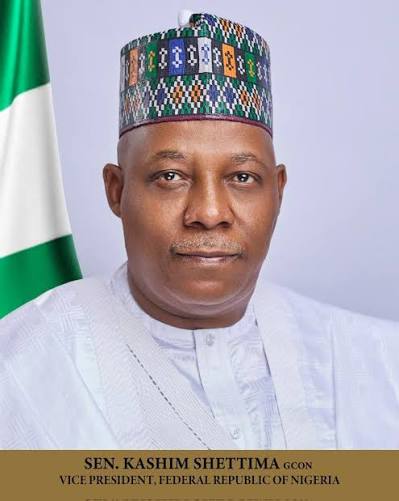
Shettima Hosts Gates Foundation Delegation as 2027 Political Calculations Begin
By: Michael Mike
Nigeria’s Vice President, Kashim Shettima, on Wednesday received a high-level delegation from the Gates Foundation at the Presidential Villa in Abuja, in a visit that observers say comes at a politically sensitive moment ahead of the 2027 presidential election.
The delegation was led by the President of the foundation’s Global Growth and Opportunity division, Hari Menon, and included senior officials of the organisation’s Nigeria office. The team briefed the vice president on the foundation’s ongoing programmes and partnerships in Nigeria.
Posting on his verified Facebook page after the meeting, Shettima commended the foundation for its long-standing support to Nigeria in critical sectors such as health, agriculture and development.
“Yesterday, I received in audience a delegation of the Gates Foundation led by the President of the Foundation’s Global Growth and Opportunity (GGO) division, Mr. Hari Menon, at the Presidential Villa, Abuja,” the vice president said.
“In my interaction with the delegation, I applauded the Gates Foundation for sustaining investments and humanitarian aid in Nigeria. Indeed, the Foundation remains the nation’s strategic partner in the drive to change the Nigerian narrative.”
The visit comes amid growing political conversations about the composition of the ruling ticket ahead of the 2027 presidential election and whether President Bola Ahmed Tinubu will retain Shettima as his running mate.
Although the meeting was officially centred on development cooperation, political watchers say the timing has drawn attention within policy and political circles, especially given the influence of the foundation founded by billionaire philanthropist Bill Gates.
Sources familiar with the engagement said discussions focused largely on the foundation’s interventions in Nigeria, including programmes aimed at improving public health, expanding agricultural productivity and supporting vulnerable populations.
During his visit to Nigeria, Menon also held diplomatic engagements, including a visit to the Indian High Commission where he met with the ambassador, Abhishek Singh.
The Gates Foundation has operated in Nigeria since 2000 and has been a key partner in several national initiatives, particularly in immunisation campaigns, disease control, nutrition and agricultural development. The organisation marked 25 years of its presence in the country in 2025.
Despite its extensive development footprint, some of the foundation’s programmes have occasionally attracted debate in Nigeria, particularly around issues such as genetically modified crops, vaccination initiatives and population policies.
Analysts say that as political alignments gradually begin ahead of 2027, high-profile international engagements by key government figures may increasingly attract attention beyond their immediate development objectives.
Shettima Hosts Gates Foundation Delegation as 2027 Political Calculations Begin
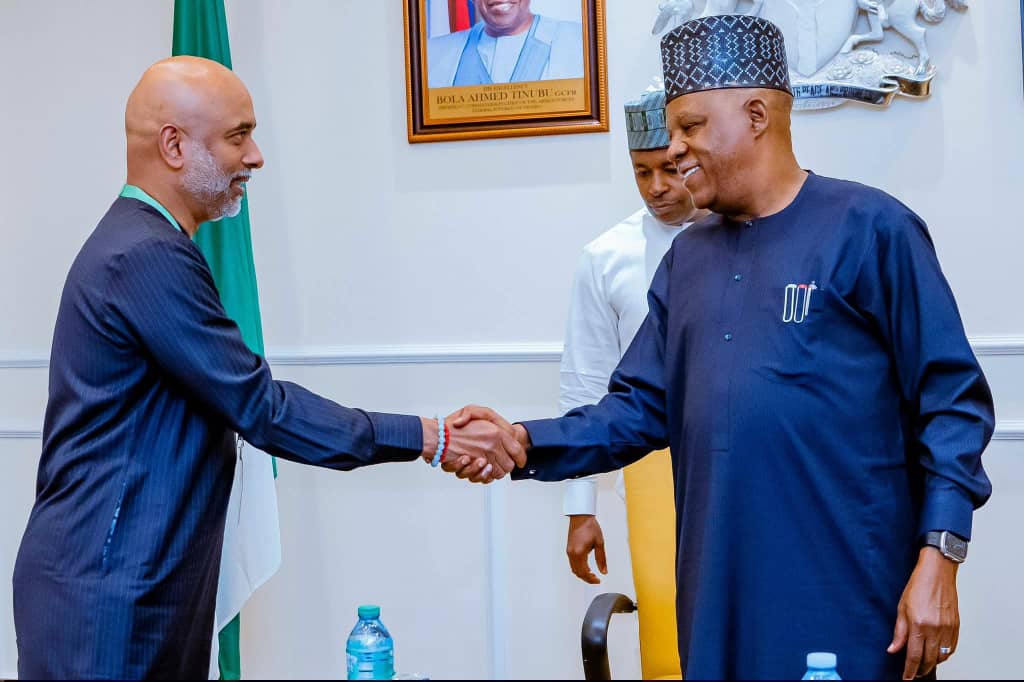
2027: Bill Gates Joins Campaign, Supports Shettima
By:Michael Mike
Nigeria’s Vice President, Kashim Shettima has received a highly anticipated support to continue as President Bola Tinubu’s running mate in the 2027 presidential election from chairman of the Gates Foundation, Bill Gates.
The unusual support according to sources knowledgeable about the matter is a lifeline for the embattled vice president.
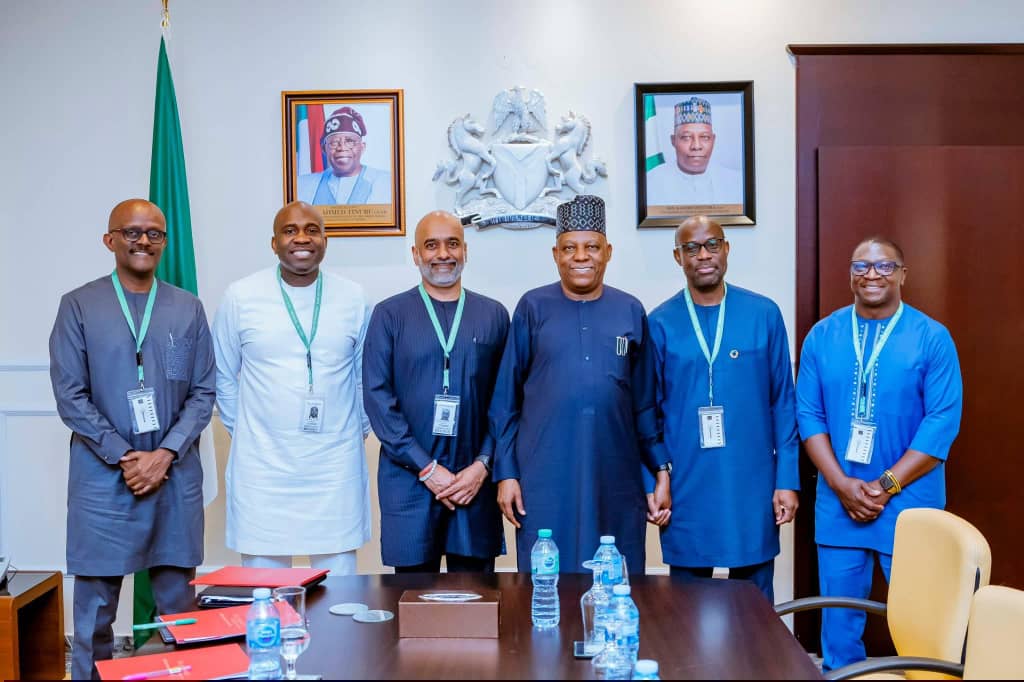
Shettima, whose fate as Tinubu’s running mate has been dangling in the balance received the boost after a delegation from Gates Foundation led by the president, Global Growth and Opportunity (GGO), Hari Menon visited Shettima at the Villa on Wednesday.
According to a post on the vice president’s verified Facebook page, the delegation which also included members of the foundation in Nigeria briefed the VP on its activities in Nigeria .
” Yesterday, I received in audience a delegation of the Gates Foundation, led by the President of the Foundation’s Global Growth and Opportunity (GGO) division, Mr. Hari Menon, at the Presidential Villa, Abuja.
” In my interaction with the delegation, I applauded the Gates Foundation for sustaining investments and humanitarian aid in Nigeria. Indeed, the Foundation remains the nation’s strategic partner in the drive to change the Nigerian narrative, ” Shettima said.
However, the meeting between the vice president and Bill Gates team had another purpose, to pass a vote of confidence on the VP in order to convince President Tinubu to retain him s running mate.
” There have been calls for the president to drop Shettima because of his political baggage and alleged links to the insurgency in the Northeast. Most of the pressure is coming from the United States that currently have soldiers on the ground in nigeria, providing support for the Nigerian military.
” What better way to shore up support than to bring the biggest philanthropist to Nigeria in order to prove that he still hs some international connections, ” the source said.
In his visit to Nigeria, Menon who is of Indian heritage also visited the Indian High Commission to Nigeria, meeting with the ambassador, Abhishek Singh.
The Gates Foundation has been active in Nigeria since 2000 and it celebrated its 25th years in the country last year. Activities of the foundation has also come under scrutiny for many years especially it’s support for population control, Genetically Modified Organisms in agriculture and questionable polio immunisation.
2027: Bill Gates Joins Campaign, Supports Shettima

State Police: Group Commends Tinubu, Urges Accelerated Action
By: Michael Mike
A good governance advocacy group, the Hope Alive Initiative (HAI), has commended President Bola Tinubu for his commitment to addressing Nigeria’s security challenges and for rallying state governors toward a framework for the establishment of state police.
In a press statement issued Wednesday in Abuja by its Director of Press and Communications, Ernest Omoarelojie, the group said lasting peace and stability in the country require a multi-layered approach that empowers communities while strengthening national coordination.
According to HAI, the establishment of state police would enhance citizens’ participation in security matters and align with Nigeria’s federal system.
The group noted that many states already operate regional security outfits and vigilante groups, stressing that legislative backing is necessary to ensure such initiatives function efficiently and complement the federal government’s security architecture.
HAI said localised policing would allow officers to better understand the terrain, culture, and unique security challenges within their communities, thereby improving rapid response and strengthening public trust in efforts to combat crime and insurgency.
The organisation also commended the Nigeria Governors Forum (NGF) for submitting a proposed state police framework to the Office of the National Security Adviser. It, however, urged governors to intensify support for the existing security architecture to address ongoing threats.
The group further welcomed recent security cooperation agreements between Nigeria and partners including the United States, United Kingdom, and France. According to HAI, the partnerships are expected to strengthen advanced training, intelligence sharing, and technological support in the fight against terrorism, banditry, and organised crime.
HAI emphasised that security remains the foundation of national development, noting that combining grassroots policing with global alliances would help create a safer environment, attract investment, and restore public confidence.
The group also praised the Nigerian military for sustaining operations against terrorists and bandits across the country and urged troops not to relent in protecting communities from criminal elements that target civilians to spread fear and panic.
It expressed confidence that the federal government would continue to provide the armed forces with the necessary equipment and welfare support needed to sustain operations and secure victory against threats to national security.
The organisation further highlighted the significance of President Tinubu’s recent state visit to the United Kingdom, where he was hosted by King Charles III. According to HAI, the visit underscores Nigeria’s growing influence in global affairs.
It added that the President’s engagement with Nigerian community leaders in the UK demonstrated the important role of the diaspora in national development and could encourage greater investment and knowledge transfer to the country.
HAI urged government institutions, civil society organisations, and citizens to support ongoing reforms aimed at strengthening security and building a more prosperous Nigeria.
State Police: Group Commends Tinubu, Urges Accelerated Action

Shettima Hosts Gates Foundation Delegation as 2027 Political Calculations Begin

2027: Bill Gates Joins Campaign, Supports Shettima

Troops repel terrorist attack in Zamfara, recover bodies of two villagers

Roger Federer’s Shock as DNA Results Reveal Myla and Charlene Are Not His Biological Children

THE PLIGHT OF FARIDA

FAILED COUP IN BURKINA FASO: HOW TRAORÉ NARROWLY ESCAPED ASSASSINATION PLOT AMID FOREIGN INTERFERENCE CLAIMS
-
 News2 years ago
Roger Federer’s Shock as DNA Results Reveal Myla and Charlene Are Not His Biological Children
-
Opinions4 years ago
THE PLIGHT OF FARIDA
-
 News11 months ago
FAILED COUP IN BURKINA FASO: HOW TRAORÉ NARROWLY ESCAPED ASSASSINATION PLOT AMID FOREIGN INTERFERENCE CLAIMS
-

 News2 years ago
EYN: Rev. Billi, Distortion of History, and The Living Tamarind Tree
-
 Opinions4 years ago
POLICE CHARGE ROOMS, A MINTING PRESS
-

 ACADEMICS2 years ago
A History of Biu” (2015) and The Lingering Bura-Pabir Question (1)
-

 Columns2 years ago
Army University Biu: There is certain interest, but certainly not from Borno.
-

 Opinions2 years ago
Tinubu,Shettima: The epidemic of economic, insecurity in Nigeria
