
News
DSS-led joint operation crushes ESN strongholds, kills top kingpins in Imo

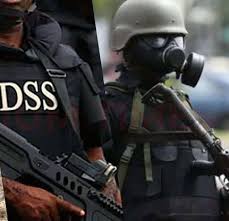
DSS-led joint operation crushes ESN strongholds, kills top kingpins in Imo
By: Zagazola Makama
A wave of coordinated security offensives in Imo State has barbecued the Eastern Security Network (ESN), the militant wing of the proscribed Indigenous People of Biafra (IPOB), with the killing of key kingpins and the dislodgement of notorious terrorist camps in forested parts of Njaba and Isu Local Government Areas.
Zagazola Makama understand that The offensive, which began on June 29, was spearheaded by the Department of State Services (DSS) in close collaboration with the Nigeria Police Force, special forces, and local tactical units.
It was launched after the arrest and detailed confessions of two ESN commanders Uchenna Opara, popularly known as Ntanta Miri, and Ozioma Ihedoro, a.k.a OZ, both natives of Umuaka community in Njaba LGA.
Acting on actionable intelligence, the joint team raided and obliterated several terrorist enclaves, including Umuele Umuaka, Ezioha, and Ugbele Umuaka, known safe havens of the separatist group.
A fierce gun battle ensued as operatives stormed the camps. Three ESN fighters were neutralised during the confrontation, while others reportedly escaped with bullet wounds. Their bodies were later recovered along the Ugbele Umuaka axis.
What followed was a methodical clearance operation targeting the B44 camp cluster, long considered one of ESN’s strategic base networks. The camps, codenamed B44 Tangle 2, 4, 5, 7, and 9, were all successfully dislodged by the joint force.
A caterpillar operator working with the team was tragically killed in the line of duty when the group came under sudden fire while approaching the B44 main camp. He was rushed to the Federal University Teaching Hospital (FUTH), Owerri, but later confirmed dead by a medical officer on duty.
Items recovered from the operation included:
One AK-47 rifle, 15 rounds of live ammunition, pump-action shotgun, two locally made IEDs, one human skull and a Biafran flag
In addition, two suspected ESN members were arrested during the combing of nearby bush paths. The duo Emeka Ogene Sabinus of Ezi Isu in Isu LGA and Nnabuike Emmanuel of Ohofia Oduma in Aninri LGA, Enugu State were said to bear tribal incisions associated with the proscribed militia.
The collapse of the B44 cluster was significant in the counterinsurgency drive in the South-East, where pockets of armed resistance have posed growing threats to residents, security personnel, and national assets.
“The terrain is difficult, but our operatives are relentless,” a senior official close to the operation said. “We are targeting leadership figures, supply chains, and safe havens.”
Meanwhile, efforts are ongoing to apprehend fleeing fighters, with mop-up operations continuing in adjoining forest belts across Orlu, Njaba, and Isu corridors.
The Imo offensive adds to a growing list of successes by joint intelligence-led operations aimed at stabilising regions grappling with armed separatist violence, kidnappings, and the weaponisation of local grievances.
DSS-led joint operation crushes ESN strongholds, kills top kingpins in Imo



Troops intercept 11 youths with donkeys during patrol in Borno
By: Zagazola Makama
Troops of 68 Battalion have intercepted 11 youths during a routine patrol in Mallam Fatori area of Abadam Local Government Area of Borno State.
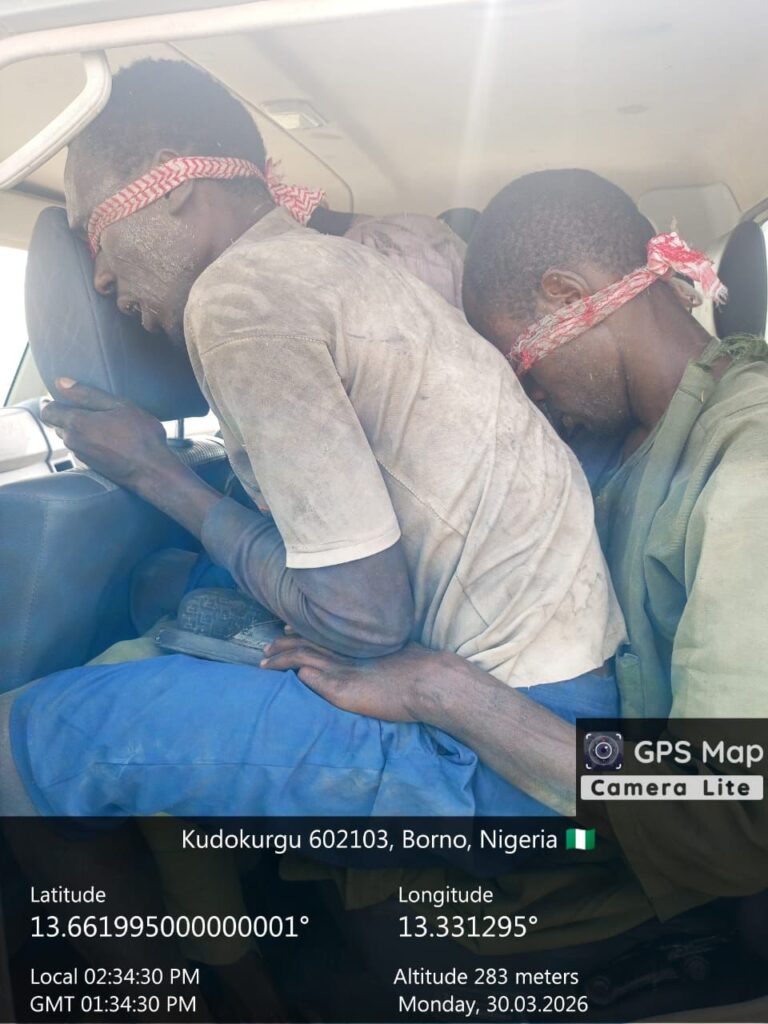
Security sources said the interception occurred along the Bulagana–Cheisa axis on April 2 during ongoing clearance operations in the area.
According to the sources, the individuals were found moving in the area with 12 donkeys when they were stopped and briefly interrogated by troops.
The sources added that the youths were later handed over, alongside the animals, to relevant authorities in a neighbouring country for further necessary action.
The military said the patrol was part of sustained efforts to maintain security dominance and prevent exploitation of border communities by criminal elements.
Troops intercept 11 youths with donkeys during patrol in Borno
Troops recover ammunition, logistics items in Kwara patrol operation
By: Zagazola Makama
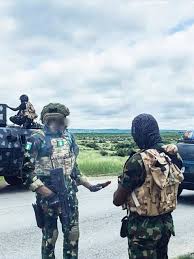
Troops of the Nigerian Army under the 22 Brigade have recovered ammunition and other logistics items during a fighting patrol in Ifelodun Local Government Area of Kwara State.
A security source disclosed that the operation was conducted at about 4:00 p.m. on April 2 at Daban Lema, where troops of the brigade, operating from the Patrol Base, encountered signs of suspected terrorist activities in a deserted location.
According to the source, the troops immediately carried out exploitation of the area, leading to the recovery of four rounds of 7.62mm special ammunition and one empty PKT ammunition belt link.
Other items recovered include four mobile phones, two head warmers, two small solar panels, and assorted repair tools believed to have been used by the suspected terrorists.
The source added that the recovery indicates the presence and movement of suspected criminal elements within the area, noting that troops have intensified surveillance and patrols to deny them freedom of action.
Troops recover ammunition, logistics items in Kwara patrol operation
Troops foil attack by Criminal Youths, rescue victims, arrest suspects in plateau
By: Zagazola Makama
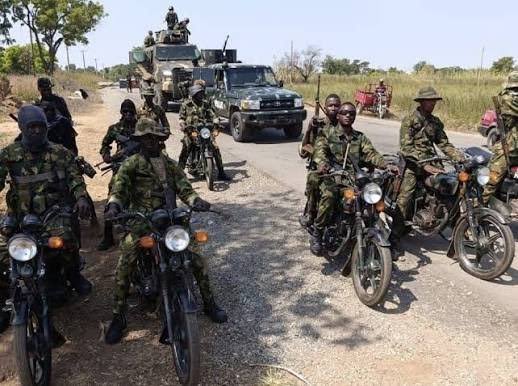
Troops of Sector 1, Operation Enduring Peace (OPEP), have foiled an attack on residents at Dutse Uku in Jos North Local Government Area of Plateau State.
A security source said the troops responded swiftly to a report of sporadic gunshots in the area at about 11:50 p.m. on April 2.
According to the source, upon arrival at the scene, the suspected criminals fled, abandoning their operation due to the prompt intervention of the troops.
He said the troops rescued two victims who sustained gunshot wounds during the incident and immediately evacuated them to a hospital for medical attention.
The source further disclosed that two suspects, dressed in black attire, were arrested at the scene.
Items recovered from the suspects include a cutlass and a knife.
He added that the suspects are currently in military custody and undergoing preliminary investigation, while efforts are ongoing to track down other fleeing members of the group.
Zagazola report that despite heightened security, there has been report of pocket of attacks in some communities.
The source reassured residents of the military’s commitment to protecting lives and property and urged the public to continue providing timely information to security agencies.
Troops foil attack by Criminal Youths, rescue victims, arrest suspects in plateau

Troops intercept suspected Boko Haram logistics convoy conveying 13 persons in Borno

Troops intercept 11 youths with donkeys during patrol in Borno

Troops, CJTF arrest three suspected Boko Haram logistics suppliers in Borno

Roger Federer’s Shock as DNA Results Reveal Myla and Charlene Are Not His Biological Children

THE PLIGHT OF FARIDA

FAILED COUP IN BURKINA FASO: HOW TRAORÉ NARROWLY ESCAPED ASSASSINATION PLOT AMID FOREIGN INTERFERENCE CLAIMS
-
 News2 years ago
Roger Federer’s Shock as DNA Results Reveal Myla and Charlene Are Not His Biological Children
-
Opinions4 years ago
THE PLIGHT OF FARIDA
-
 News12 months ago
FAILED COUP IN BURKINA FASO: HOW TRAORÉ NARROWLY ESCAPED ASSASSINATION PLOT AMID FOREIGN INTERFERENCE CLAIMS
-

 News2 years ago
EYN: Rev. Billi, Distortion of History, and The Living Tamarind Tree
-
 Opinions4 years ago
POLICE CHARGE ROOMS, A MINTING PRESS
-

 ACADEMICS2 years ago
A History of Biu” (2015) and The Lingering Bura-Pabir Question (1)
-

 Columns2 years ago
Army University Biu: There is certain interest, but certainly not from Borno.
-

 Opinions2 years ago
Tinubu,Shettima: The epidemic of economic, insecurity in Nigeria
