
News
ECOWAS Court to Train Sierra Leone Lawyers, Law Students

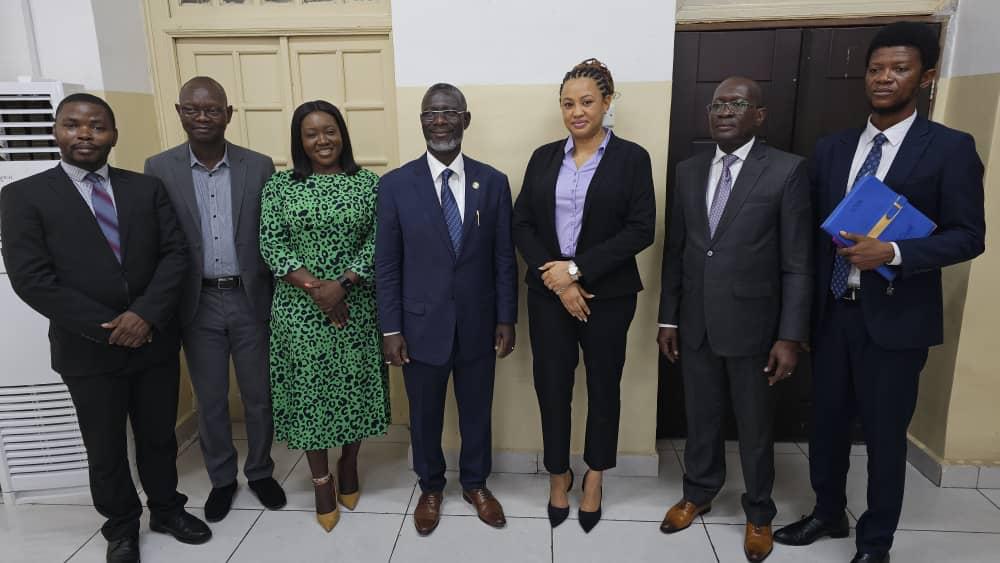
ECOWAS Court to Train Sierra Leone Lawyers, Law Students
By: Michael Mike
The ECOWAS Court will organize a training programme for lawyers and law students from Sierra Leone on the margins of its 2024 international conference to deepen their knowledge of the Court for improved practice, the President of the Court, Justice Edward Amoako Asante has said.
The president said during a meeting with the executive of the Sierra Leone Bar Association (SLBA) in Freetown on Tuesday, that the resource persons for the training will be drawn from senior lawyers from the Court who will be attending the conference.
He said the training should hopefully close the lacuna in the knowledge of the Court among legal practitioners from the country based on the realisation that most of the lawyers appearing before the Court for cases from Sierra Leone were from outside the country.
Justice Asante urged the leadership of the SLBA to help with the process for the successful conduct of the training, working in collaboration with other relevant bodies in the country including the leadership of the law school to streamline the participation and other elements of the training.
He announced that the President of the SLBA, Eddinia Michaela Swallow Esq will deliver a goodwill message at the 2024 conference of the Court which will be historic, being the first time the President of a country’s bar association will be allowed to deliver such a message since the inaugural conference in 2004.
Earlier, the President of the SLBA had thanked the Court for the ‘amazing opportunity,’ granted the country to host the conference describing it as the fulfilment of a dream for her and members of the legal profession in the country.
She suggested that the Court work with the bar associations of Member States to sensitize lawyers on the specificities of the Court in order to improve their practice, particularly for those who might find themselves appearing before the Court.
Justice Asante is leading a 12-member delegation of the Court to discuss arrangements for the successful hosting of the 2024 international conference of the Court scheduled to take place between the 13th and 16th of May 2024.
The conference is on the theme Enhancing the role, relevance and effectiveness of the ECOWAS Court of Justice through the strengthening of synergies between the Court and national stakeholders.
The President said it will provide a forum to generate constructive discussions around the strengths and weaknesses of the Court’s relationship with various national stakeholders and propose practical solutions for the enhancement of the role, relevance and effectiveness of the Court.
ECOWAS Court to Train Sierra Leone Lawyers, Law Students


Troops arrest suspected terrorist, recover rifle in Zamfara
By: Zagazola Makama
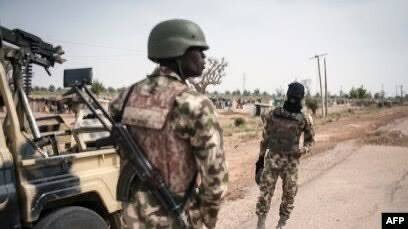
Troops of Operation FANSAN YAMMA have arrested a suspected terrorist and recovered an AK-47 rifle during a routine patrol in Gusau Local Government Area of Zamfara State.
Security sources said the arrest was made on April 3 at about 11:30 a.m. by troops of 1 Brigade Combat Team deployed at Forward Operating Base (FOB) Kurya.
The suspect was apprehended at Tungan Haki village and found in possession of one AK-47 rifle mounted with a magazine containing 13 rounds of 7.62mm special ammunition.
The sources disclosed that the suspect and the recovered weapon are currently in custody for further investigation and necessary action.
They added that troops have continued to intensify patrols and surveillance operations across the area to curb criminal activities.
Troops arrest suspected terrorist, recover rifle in Zamfara
IED explosion injures two security personnel during patrol in Anambra
By: Zagazola Makama
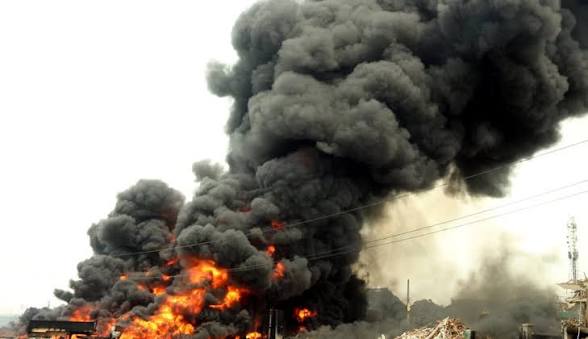
Two security personnel have been injured following the detonation of an improvised explosive device (IED) during a fighting patrol in Ihiala Local Government Area of Anambra State.
Security sources said the incident occurred on April 3 at about 12:30 p.m. when troops of Sector 5, Operation UDO KA, deployed at Forward Operating Base (FOB) Lilu, conducted a patrol alongside Nigeria Police personnel.
It was gathered that the team sighted the IED within the Lilu general area and attempted to destroy it.
However, the explosive device detonated during the process, injuring an Explosive Ordnance Disposal (EOD) personnel and a police officer.
The injured personnel were immediately administered first aid at the scene before being referred to a medical facility for further treatment.
Authorities said the situation has been brought under control, while operations continue in the area to ensure safety and prevent further incidents.
IED explosion injures two security personnel during patrol in Anambra
Troops neutralise two terrorists, destroy hideouts in Plateau clearance operations
By: Zagazola Makama
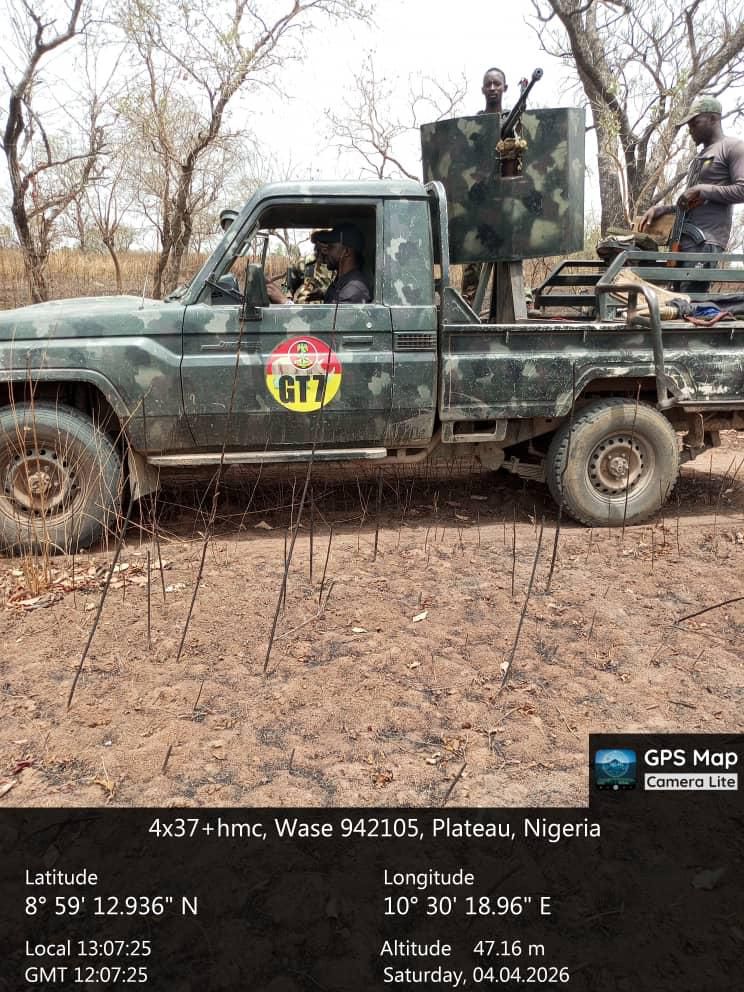
Troops of Operation Enduring Peace (OPEP), under Operation Wutan Daji, have neutralised two suspected terrorists and destroyed several hideouts during clearance operations in Wase Local Government Area of Plateau.
Security sources said the operations were carried out in conjunction with local vigilantes across Babangida, Adua and Bokayi villages within the Dutsen Zaki forest.
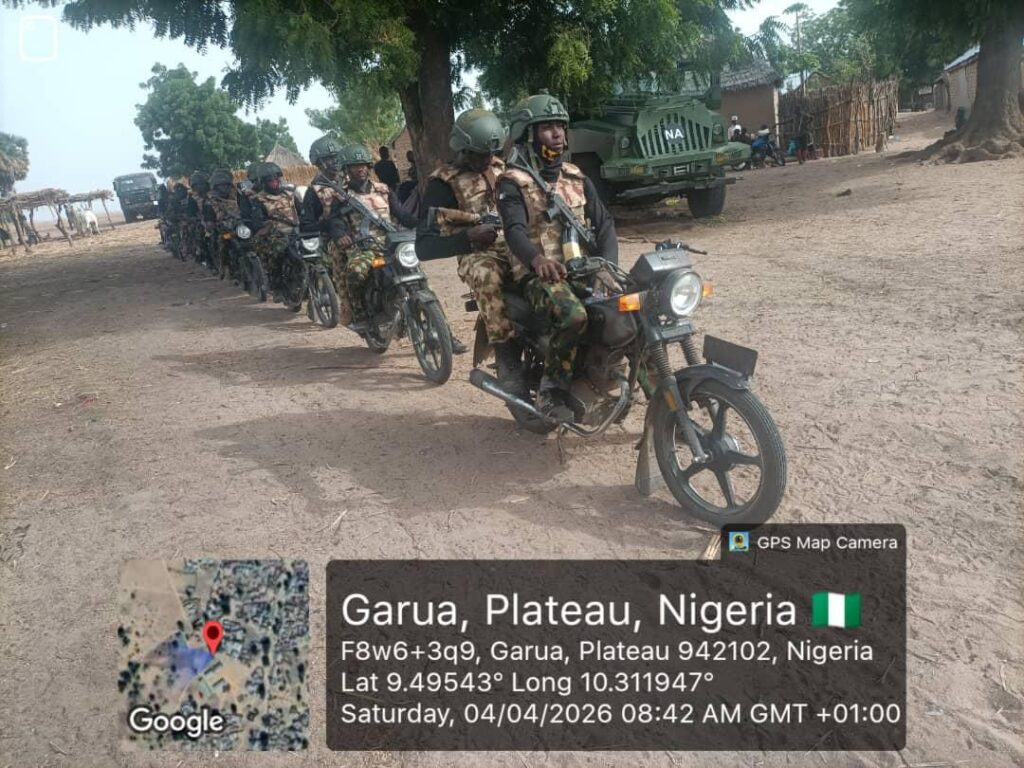
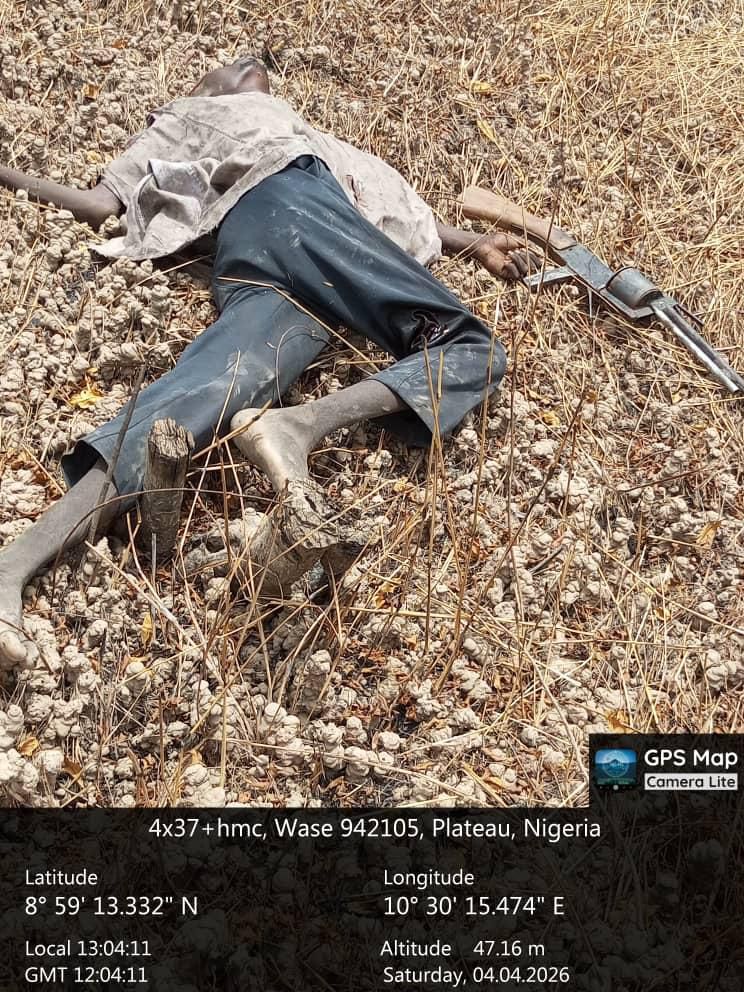
It was gathered that troops made contact with the terrorists along the Babangida–Adua road, leading to a gun battle in which two of the suspects were neutralised, while others fled with possible gunshot wounds.
No casualties were recorded among the troops, and all equipment was accounted for.
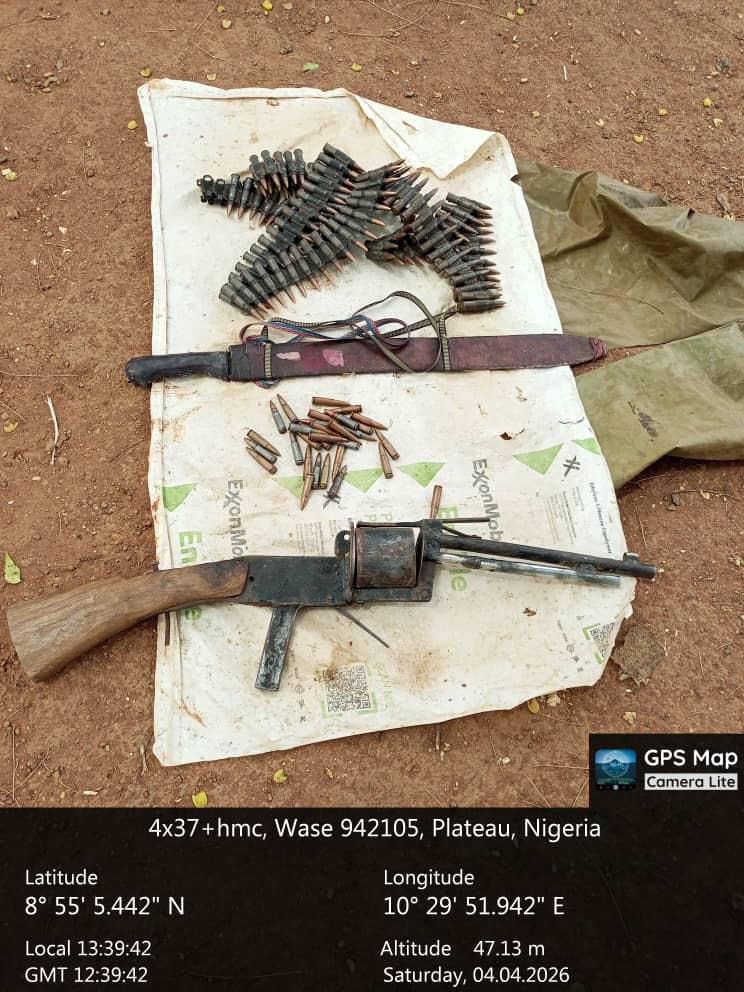
During the operation, troops recovered one locally fabricated gun, a belt containing 105 rounds of 7.62mm PKT ammunition, 30 rounds of 7.62mm special ammunition and a cutlass.
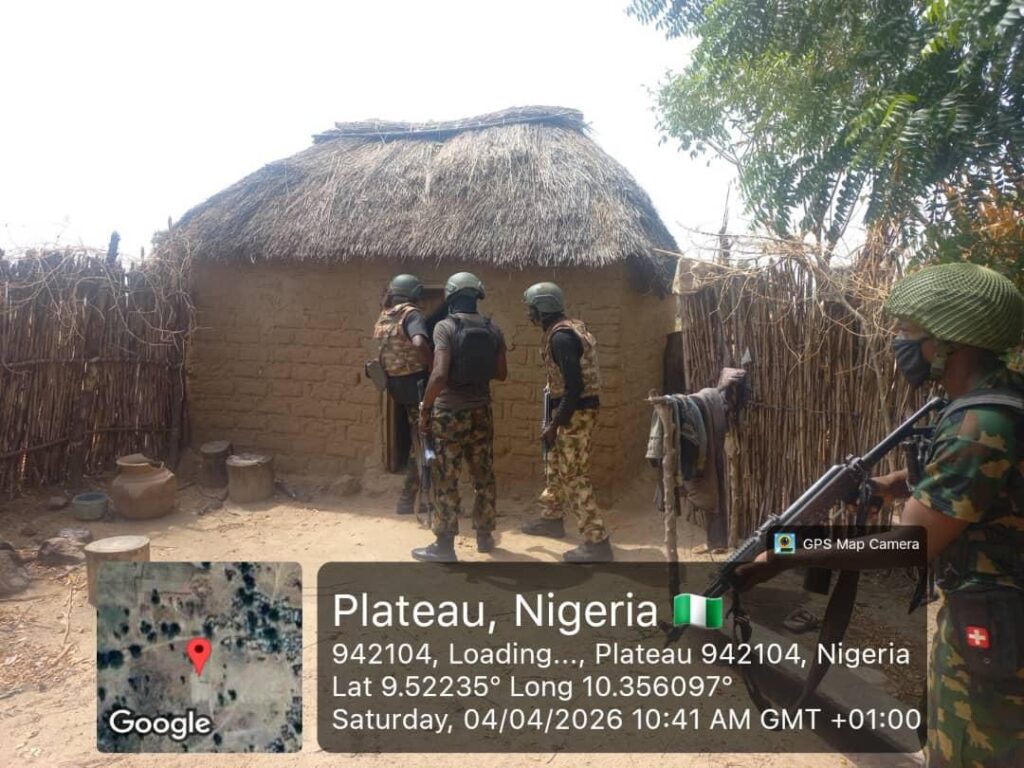
In a related development, troops of CSI Battalion XIV, in collaboration with 332 Artillery Regiment and vigilantes, conducted further clearance and raid operations in Dadin-Kowa and Dada villages.
The operation involved 47 soldiers and four vigilantes, supported with motorcycles, gun trucks, a Mine-Resistant Ambush Protected (MRAP) vehicle and an artillery gun.
The troops established a gun position and carried out fire missions on suspected terrorist locations in Madam Forest to deny them freedom of action.
Subsequent raid operations in Dadin-Kowa village led to the destruction of suspected terrorist hideouts, although no contact was made with the fleeing elements.
Troops neutralise two terrorists, destroy hideouts in Plateau clearance operations

Troops arrest suspected terrorist, recover rifle in Zamfara

Troops recover suspected rustled cattle in Plateau

Troops neutralise kidnapper, rescue victim in Enugu

Roger Federer’s Shock as DNA Results Reveal Myla and Charlene Are Not His Biological Children

THE PLIGHT OF FARIDA

FAILED COUP IN BURKINA FASO: HOW TRAORÉ NARROWLY ESCAPED ASSASSINATION PLOT AMID FOREIGN INTERFERENCE CLAIMS
-
 News2 years ago
Roger Federer’s Shock as DNA Results Reveal Myla and Charlene Are Not His Biological Children
-
Opinions4 years ago
THE PLIGHT OF FARIDA
-
 News12 months ago
FAILED COUP IN BURKINA FASO: HOW TRAORÉ NARROWLY ESCAPED ASSASSINATION PLOT AMID FOREIGN INTERFERENCE CLAIMS
-

 News2 years ago
EYN: Rev. Billi, Distortion of History, and The Living Tamarind Tree
-
 Opinions4 years ago
POLICE CHARGE ROOMS, A MINTING PRESS
-

 ACADEMICS2 years ago
A History of Biu” (2015) and The Lingering Bura-Pabir Question (1)
-

 Columns2 years ago
Army University Biu: There is certain interest, but certainly not from Borno.
-

 Opinions2 years ago
Tinubu,Shettima: The epidemic of economic, insecurity in Nigeria
