
World
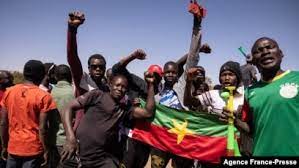
ECOWAS, US, France Condemn Military Take-Over in Burkina Faso

ECOWAS, US, France Condemn Military Take-Over in Burkina Faso
By: Michael Mike
The Economic Community of West African States (ECOWAS) has condemned the coup d’etat in Burkina Faso, describing it as a step backward.
The regional body had in two separate statements on the military take-over of government in the West African countries condemned the action in its entirety.
In an early statement when the military had not explicitly came out to declare a take-over, the body said: “ECOWAS is following with great concern the political and security developments in Burkina Faso since Sunday, 23 January 2022, characterized by an attempted coup d’état.
“ECOWAS condemns this extremely serious act which cannot be tolerated under the relevant regulations.
“It holds the military responsible for the physical integrity of President Roch Marc Christian Kaboré. ECOWAS calls on the military to return to their barracks, to maintain a republican posture and to give priority to dialogue with the authorities to resolve the problems.”
The body came out with a new statement when the picture became clearer that military was not going to change its posture. The statement read that: “ECOWAS notes that, despite calls by the regional and international community for calm and respect for constitutional legality, the situation in Burkina Faso is characterised by a military coup d’état on Monday 24 January 2022, following the resignation of President Roch Marc Christian Kaboré, obtained under the threat, intimidation and pressure of the military after two days of mutiny.
“ECOWAS strongly condemns this military takeover which marks a major step backwards for Burkina Faso. An extraordinary ECOWAS summit will be held in the coming days to examine this situation.”
Sanctions are expected to be issued after the extraordinary meeting by ECOWAS against Burkina Faso to compel the military to retrace their steps.
In a similar development, the United States has equally condemned the military putsch,
A statement by the spokesman of Unites States Department of State, Ned Price, read: “The United States is deeply concerned by events in Burkina Faso. We note that military officers have asserted that they have dissolved the government and national assembly and suspended the constitution.
“We are also deeply concerned by reports of the January 23 detention of Burkina Faso’s President, Roch Marc Kaboré, by members of Burkina Faso’s military. We condemn these acts and call on those responsible to deescalate the situation, prevent harm to President Kaboré and any other members of his government in detention, and return to civilian-led government and constitutional order.
“We acknowledge the tremendous stress on Burkinabé society and security forces posed by ISIS and JNIM but urge military officers to step back, return to their barracks, and address their concerns through dialogue.
“The United States is closely monitoring this fluid situation, and we call for restraint by all actors as we carefully review the events on the ground for any potential impact on our assistance.”
Also, the French President Emmanuel Macron has condemned the military take-over.
Also Read: 2023: Against Odds, Tinubu still a sellable material for…
In his reaction to coup d’etat during an interview by Radio France Internationale (RFI), Macron: “As you know, France is present in the region to fight terrorism. And I am constantly committed to working alongside regional bodies. ECOWAS condemned yesterday this new coup d’état, which was led by the military. And since President Kaboré has been democratically elected by his people twice, France supports the position of ECOWAS. Our priority is obviously that his physical integrity is preserved and that calm is maintained.
“Today it is too early to go into more detail, if I may say so, in the characterisation of the situation in Burkina Faso. And it is clear that this situation remains worrying in view of what has happened since the summer of 2020 in Mali and what has happened in recent months in Guinea. And I think that the region must be supported in its desire to maintain civil transitions and democratic elections. In addition to this, I would like to remind you that our priority in the region is obviously to continue to fight against Islamist terrorism, which continues to wreak havoc in Mali, but also in Burkina Faso, which has been the target of numerous terrorist attacks in recent times.”
He added that: “Moreover, when we look at the demands, the motivations of the coup plotters, it is clear that the security situation and the blows that have been dealt to both the army and the civilian population by these terrorist groups is a determining factor in this rebellion. So our desire is in close collaboration with ECOWAS on the one hand, but also with all the states involved, what we call the Accra Initiative, to fight against all forms of terrorism in the region, and to stand by the states and the people.”
On whether he entertains fear that other countries will suffer from what are called popular coups, Macron said: “We must not underestimate the fatigue and exhaustion created by the permanent attacks of terrorist groups, which weaken the armed forces on the one hand, and which also profoundly weaken the link with the population and the legitimate institutions. So, this is also why, if we want to fight for education, economic emancipation, stability in these democratically elected countries and for the sovereignty of the states, it is important to continue to intensify the fight against terrorism.”
The French President said he does not yet have any information about the deposed Burkina Faso’s President.
He said: “I don’t have any more information than that which has been passed on. It was confirmed to me last night that he was in good health and that he was not under threat. I hope that this will be officially guaranteed in the next few hours and that we will collectively ensure that he and his family are placed in safety.”


Europe Leads Mobilization of €15.5 billion Investment in Clean Energy for Africa
By: Michael Mike
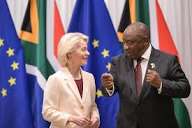
An investment of €15.5 billion has been secured to power a clean future across Africa, as well as additional commitments in clean energy generation and access for households to electricity as a result of a
year-long campaign to mobilise investments in renewable energy on the African continent, led by European Commission President Ursula von der Leyen and South African President Cyril Ramaphosa.
The European Union led the pledging effort, with more than €15.1 billion. This includes a pledge made by President von der Leyen, on behalf of Team Europe, of over €10 billion, as well as significant additional bilateral contributions by European financial institutions, Member States and their Development Finance Institutions, and estimated private investment mobilised.
The campaign, organised in collaboration with the international advocacy organisation Global Citizen and with the policy support of the International Energy Agency, according to a statement on Sunday by EU, was aimed at driving public and private investment in supporting the clean energy transition in Africa, expand access to electricity – and promote Africa’s sustainable economic growth and decarbonised industrialisation.
The statement added that this also represents a step up to accelerate the transition from fossil fuels to clean and sustainable energy globally.
President von der Leyen said: “Today, the world has stepped up for Africa. With €15.5 billion, we are turbocharging Africa’s clean-energy transition. Millions more people could gain access to electricity; real, life-changing power for families, for businesses, for entire communities. This investment is a surge of opportunity: thriving markets, new jobs, and reliable, clean energy that meets the needs of partners across the globe President Ramaphosa and I both look forward to a clean-energy future for the continent. A future led by Africa, with strong support from its friend and partner, Europe.”
The Team Europe package announced by President von der Leyen includes new Global Gateway projects co-financed with contributions from Germany, France, Denmark, Italy, the Netherlands, and Spain as well as the European Investment Bank (€2.1 billion) and the European Bank for Reconstruction and Development (€740 million). In addition, Italy (€2.4 billion), Germany (over €2 billion), the Netherlands including FMO (€250 million), Portugal (€113 million), Denmark (€81 million), Sweden (€44 million), Austria (€5 million), Ireland (€5 million) made bilateral contributions, worth over €5 billion, while the EBRD announced a separate bilateral investment of over €600 million.
In the context of the campaign, the African Development Bank pledged to allocate at least 20% of the African Development Fund’s 17th replenishment to renewable energy. Norway pledged approximately €53 million through their contribution to the African Development Fund over 2026-2028.
The campaign also secured additional commitments that will generate 26.8 GW generated renewable energy and bring renewable electricity to 17.5 million households a that currently live without reliable access.
From the €10 billion pledged by President von der Leyen on behalf of Team Europe, €3.1 billion were announced previously on the occasion of the EU-South Africa summit in March 2025, the Mattei Plan for Africa and Global Gateway event in June 2025, the Africa Climate Summit and the United Nations General Assembly in September 2025 and the Global Gateway Forum in October 2025, while €7 billion were announced by the President during the final pledging event in Johannesburg on 21 November.
A list of projects included in the announcement is available online, and in
addition to the campaign pledges, a number of Team Europe actors have indicated their intention to increase investments in renewable energy by 2030. This amounts to another €4 billion.
The ‘Scaling up Renewables in Africa’ campaign was launched in November 2024 in Rio de Janeiro by European Commission President Ursula von der Leyen and South African President Cyril Ramaphosa. Its aim was to drive new commitments on policy and finance from governments, financial institutions, the private sector and philanthropists. The campaign also created momentum more broadly towards the ambitious targets of tripling renewable energy and doubling energy efficiency worldwide, set at COP28.
Currently, 600 million people still lack access to electricity in Africa. With Africa’s population set to double by 2050, providing affordable, sustainable energy is crucial for both the continent’s development and global climate goals. Africa holds 60% of the world’s best solar resources, offering a significant opportunity for renewable energy.
Despite this, the continent attracts only 2% of global energy investment, and faces challenges like high capital costs, limited investment, geographic barriers, and supply chain constraints, but through the Global Gateway investment strategy, and in particular through the Africa-Europe Green Energy Initiative (AEGEI), the European Union is working with African partners to seize this opportunity. The EU is delivering major investments in renewable energy generation, transmission and cross-border electricity trade, while building long-term, reliable partnerships to support Africa’s clean energy future.
Europe Leads Mobilization of €15.5 billion Investment in Clean Energy for Africa
World
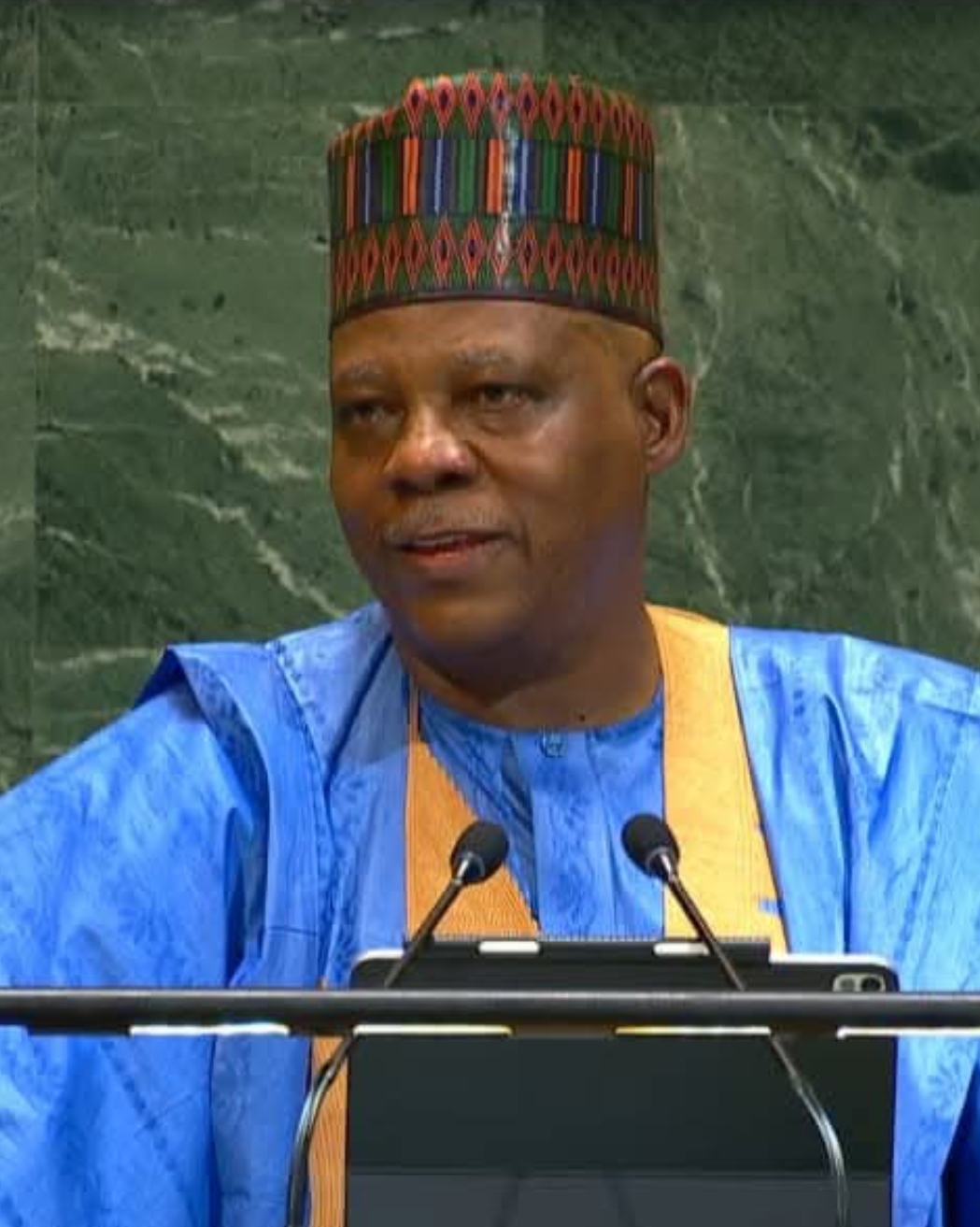
When Vice President Kashim Shettima Approaches the Podium at the 80th Session of the United Nations General Assembly in New York:A Moment of Courage and Pride for Nigeria
When Vice President Kashim Shettima Approaches the Podium at the 80th Session of the United Nations General Assembly in New York:A Moment of Courage and Pride for Nigeria
By: Dr. James Bwala
In the crowded halls of the United Nations General Assembly, global leaders converge to discuss pressing issues that impact humanity as a whole. It is within these moments that speeches have the power to ignite change, persuade nations, and inspire hope. When Vice President Kashim Shettima approaches the podium at the 80th session of the United Nations General Assembly in New York, the world acknowledges not only his courage but also his ability to articulate Nigeria’s vision on the global stage. Through his eloquence and passion, he emerges as a firebrand leader, sending the right messages and making Nigeria proud again.
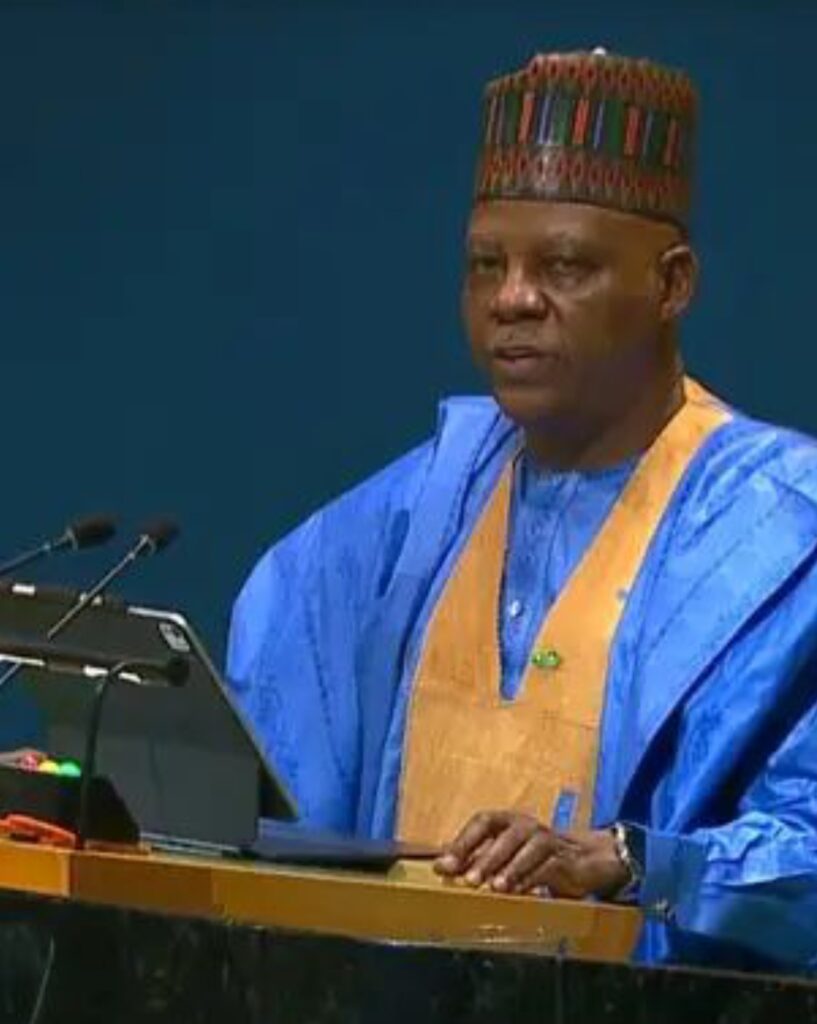
Vice President Kashim Shettima’s background plays a crucial role in understanding his approach. As a seasoned politician with extensive experience in governance, particularly as the former Governor of Borno State, he has witnessed firsthand the complexities and challenges facing Nigeria. His tenure was marked by the struggle against Boko Haram and the need for humanitarian aid in one of the country’s most troubled regions. This intimate knowledge equips him with the credibility and depth required to discuss Nigeria’s role in international matters, from security to economic development.
President Bola Ahmed Tinubu knows very well why it has to be Vice President Kashim Shettima as his representative at the 80th session. The essence of Shettima’s speech lies in its persuasive power. As he stands before a diversified audience comprised of world leaders, diplomats, and representatives from various sectors, he emphasizes that Nigeria is not merely a recipient of aid but a vital player in addressing global issues. His message is clear: Nigeria has the capacity and determination to contribute solutions to problems such as terrorism, climate change, and poverty, rather than being viewed solely through the lens of its challenges. This pivotal argument shifts the narrative, compelling the international community to rethink its perception of Nigeria—a nation rich in resources, culture, and human potential.

Shettima’s assertive stance on security issues, especially on the case of Israel and Palestine, resonates deeply, particularly given Nigeria’s experiences with insurgency and violence. He boldly outlines how collective efforts are necessary to combat terrorism, emphasizing the significance of global cooperation. He calls for enhanced partnerships between nations to share intelligence, resources, and strategies. By framing Nigeria as an essential ally in the fight against extremism, he invites other countries to recognize their mutual interests and responsibilities, encouraging collaborative frameworks that transcend borders.
Central to Shettima’s persuasive rhetoric is his appeal to shared values of humanity and dignity. He interlaces data and statistics with poignant anecdotes, showcasing the human cost of insecurity and poverty—not only in Nigeria but globally. By humanizing abstract statistics, he crafts a narrative that is relatable and emotionally charged. This tactic is effective in engaging not just policymakers but also ordinary citizens, prompting them to rally behind Nigeria’s vision as a partner in progress. Shettima’s ability to evoke empathy while presenting facts elevates his speech beyond mere rhetoric; it becomes a call to action.
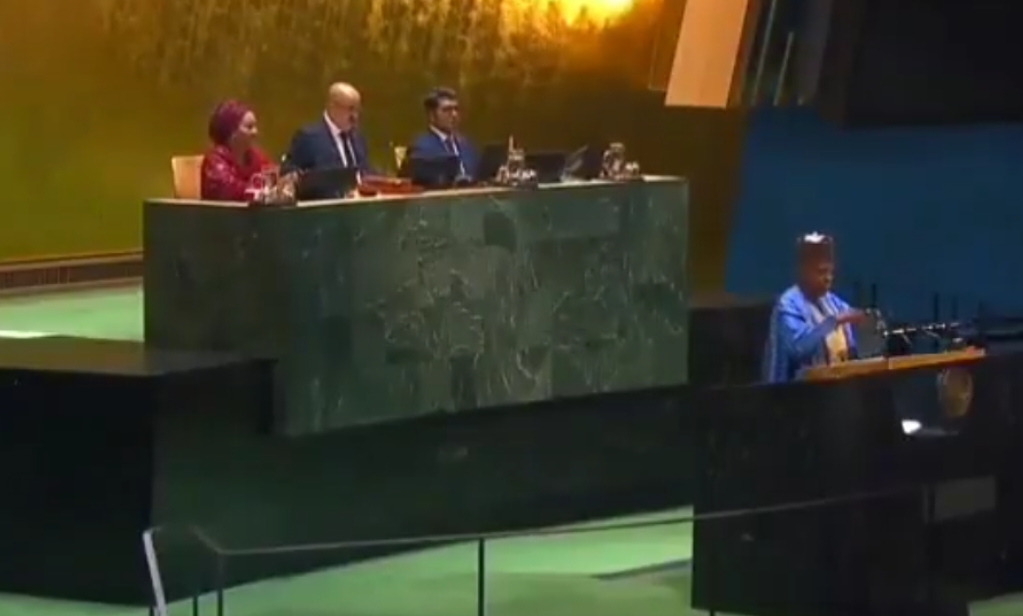
The vice president also addresses economic concerns, arguing for the inclusion of developing nations like Nigeria in discussions about sustainable development. Shettima passionately advocates for fair trade practices, investment in infrastructure, and support for local industries. He emphasizes that such initiatives will not only enhance Nigeria’s economy but will also create opportunities for global trade and investment. By positioning Nigeria as a hub for growth in Africa, he entices international investors to look beyond traditional markets. This strategic framing reinforces Nigeria’s relevance and potential in the evolving global economy.
Another significant aspect of Shettima’s address is his emphasis on youth empowerment. He recognizes that Nigeria harbors one of the largest youth populations in the world. This demographic, if nurtured correctly, can be a catalyst for innovation and change. Shettima’s advocacy for education, technology, and entrepreneurship highlights the critical need for investment in future generations. By aligning Nigeria’s priorities with those of the global community, he underscores that the success of today’s youth will shape a more prosperous future for all. His forward-thinking approach reflects a deep understanding of the interconnectedness of global challenges and the necessity of investing in human capital.

Additionally, Shettima makes a compelling case for climate action, linking it to Nigeria’s agricultural sector, which is significantly affected by climate change. He articulates the importance of sustainable agricultural practices and responsible resource management as crucial for food security. By advocating for climate resilience initiatives, he positions Nigeria as a partner in global sustainability efforts, reinforcing the idea that environmental issues are not isolated but require a united front for effective solutions.
READ ALSO: https://newsng.ng/the-national-statement-of-his-excellency-president-bola-ahmed-tinubu-gcfr/
At the heart of Shettima’s speech is the theme of resilience. Much like Nigeria itself, which has faced numerous trials yet continues to forge ahead, the vice president embodies the spirit of perseverance. His acknowledgment of Nigeria’s struggles is not one of defeat but of growth and learning. By sharing stories of the nation’s progress, he inspires a sense of hope and possibility. This narrative becomes not just a reflection of Nigeria’s journey but a model for other nations grappling with their own challenges. Shettima’s unwavering optimism serves as a reminder that even in the face of adversity, there is always room for advancement through unity and collaboration.
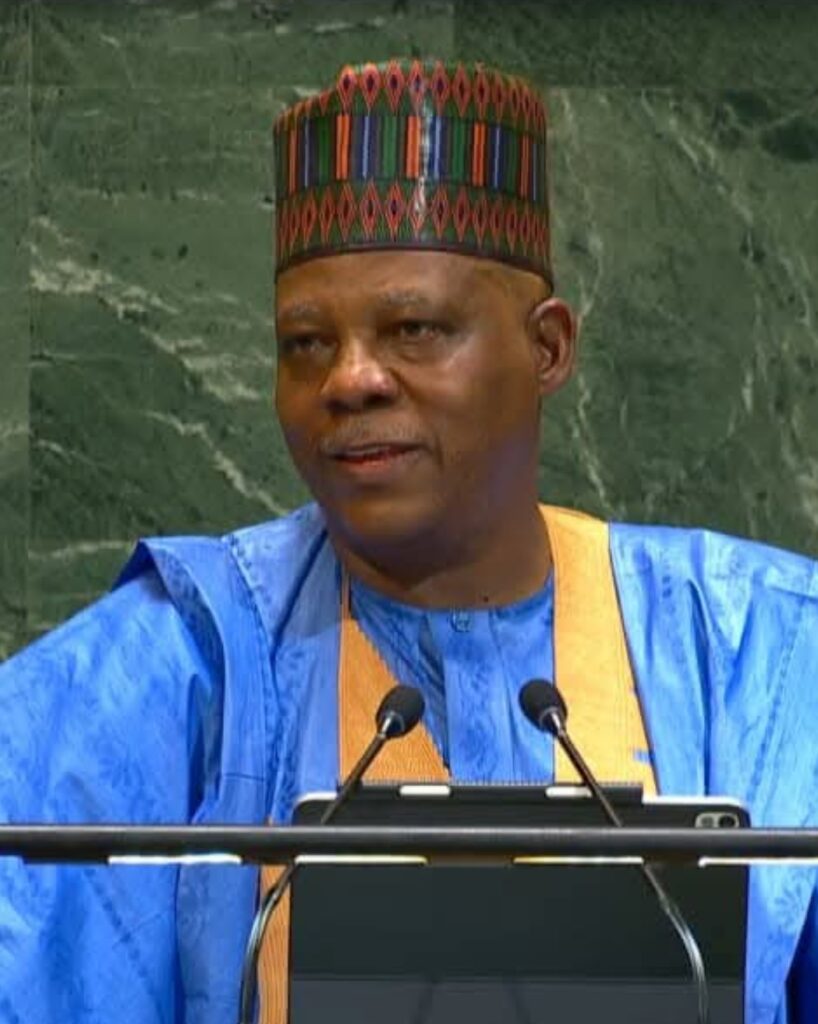
Shettima’s charisma and commanding presence at the podium captivate his audience, creating an atmosphere charged with energy and excitement. His passion for his country and its people is palpable, allowing listeners to connect with his message on both intellectual and emotional levels. The authenticity of his delivery renders his arguments more compelling, making it difficult for attendees to dismiss Nigeria’s potential. In this manner, Shettima transcends the traditional mold of political discourse—he becomes a storyteller, drawing people into Nigeria’s narrative and inviting them to be part of the solution.
As the session unfolds, the reactions from the international community are telling. Leaders nod in agreement, journalists quickly draft headlines, and social media buzzes with supportive commentary. The world takes note: Nigeria is back on the map, not merely as a nation grappling with challenges but as a beacon of resilience and a contributor to global discourse.
There is no question as to why he is the best. Vice President Kashim Shettima’s speech at the 80th session of the United Nations General Assembly is a significant moment of pride for Nigeria. His courageous articulation of the country’s vision, combined with his persuasive approach, positions Nigeria as a key player on the global stage. By emphasizing cooperation, resilience, and the potential of its youth, Shettima not only sends a powerful message but also inspires a renewed sense of hope. As the world acknowledges his capacity as a leader, Nigeria’s emergence as a force for good is reaffirmed. In this pivotal moment, Shettima does not just make Nigeria proud—he also lays the foundation for a future where Nigeria is recognized not just for its struggles but for its contributions to the global community.
* James Bwala, PhD, writes from Abuja.
When Vice President Kashim Shettima Approaches the Podium at the 80th Session of the United Nations General Assembly in New York:A Moment of Courage and Pride for Nigeria
News
ECOWAS Court and Sierra Leone Government Organise Capacity-Building Training for Sierra Leone State Attorneys

ECOWAS Court and Sierra Leone Government Organise Capacity-Building Training for Sierra Leone State Attorneys
By: Michael Mike
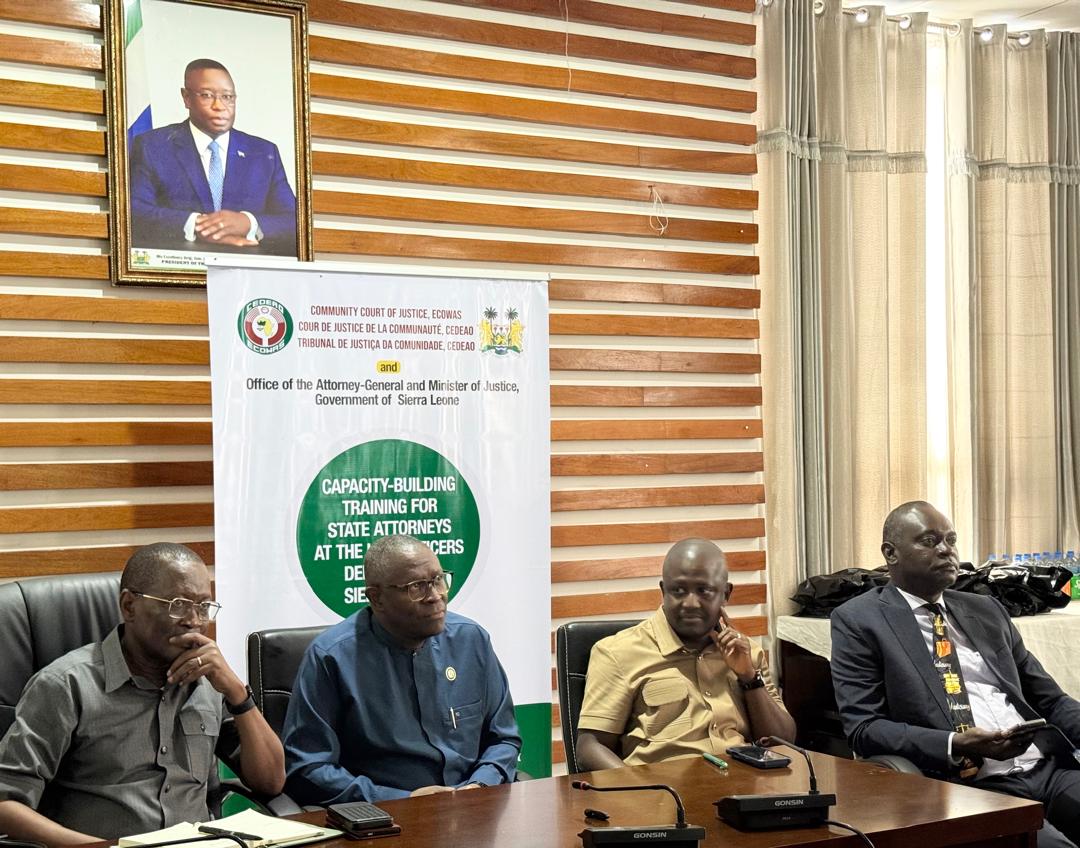
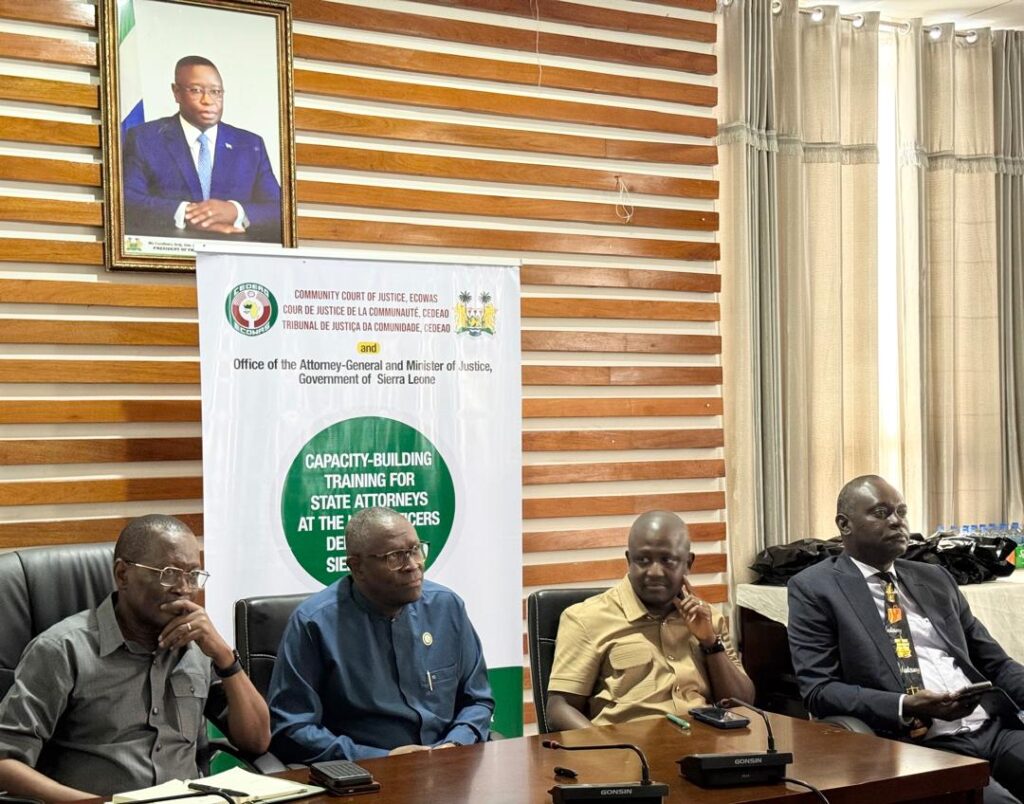
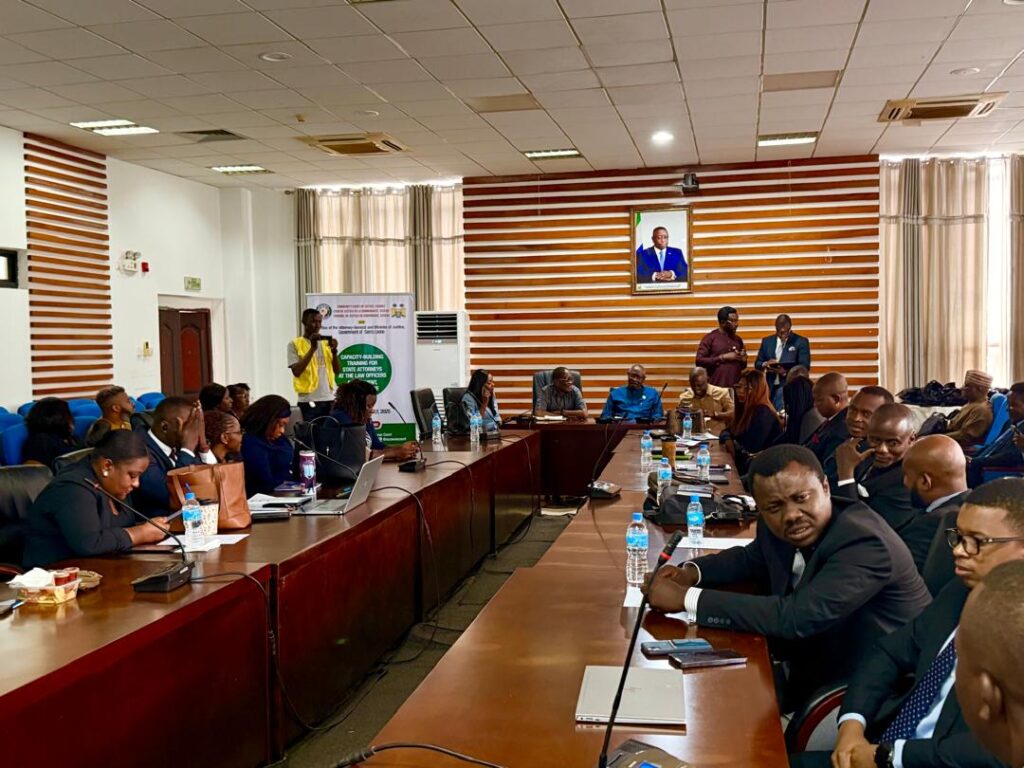
The Community Court of Justice, ECOWAS Court in collaboration with the Office of the Attorney-General and Minister of Justice of Sierra Leone organised a capacity-building training for State Attorneys at the Law Officers’ Department.
The training held at the Sierra Leone Law School Complex and the Ministry of Foreign Affairs of Sierra Leone, is centred on ECOWAS Community law, practice and jurisprudence, among others.
In his remarks, Hon. Justice Sengu Mohamed Koroma, Vice-President of the ECOWAS Court said the training was designed to deepen participants’ knowledge of the Court and its judicial processes and procedures to ensure effective legal representation in the administration of justice. He stressed that cases from the Republic of Sierra Leone have been dismissed due to technicalities or procedural irregularities, leading to reliance on lawyers from neighbouring countries, adding that this training will equip the lawyers for better representation before the Court.
He acknowledged the commitment of the Attorney-General and Minister of Justice Alpha Sesay to continuous training and professional development of the State legal officers. “Sierra Leone has consistently engaged the Court on various matters. Therefore, the State’s decision to request the Court’s assistance in enhancing the capabilities of its lawyers to sustain this engagement, is laudable. The Court remains committed to educating Member States on Community law and practice and to sharing its jurisprudence,” he said.
Delivering his remarks, the Attorney-General and Minister of Justice Alpha Sesay said his office is keen on effective justice delivery that will enhance the rights of the citizens.
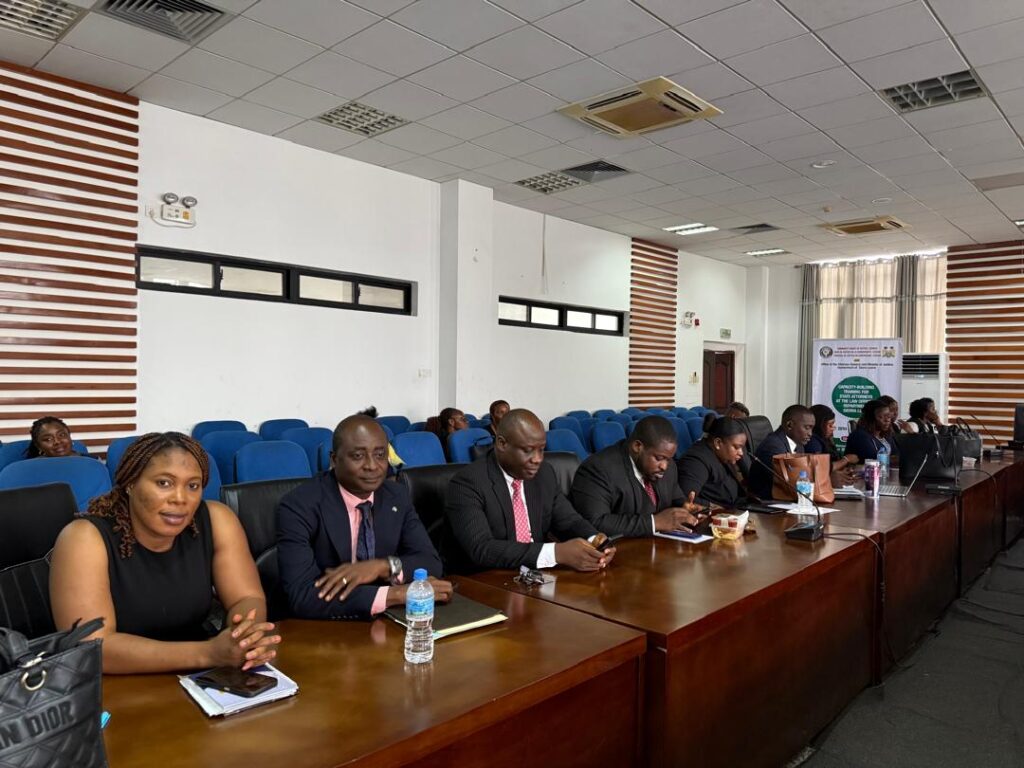
He urged the legal officers to actively participate and familiarise themselves with the Community Law, Jurisprudence, and applicable laws in the administration of justice in the Community Court. He encouraged the participants to avail themselves of this opportunity to ensure that the State gets effective representation before the Court.
Topics for presentation include jurisdiction of the Court, admissibility, non-exhaustion of local remedies, sources of law, jurisprudence, human rights mandate, written and oral procedures before the Court, default judgment, among others. Facilitators drawn from experienced lawyers at the Court led practical exercises on drafting, filing, and oral procedure.
During the four-day mission from 28 July to 31 July, 2025, the delegation from the Court including Hon President Ricardo Cláudio Monteiro Goncalves and Hon Vice-President Sengu Mohamed Koroma have scheduled courtesy visits to high authorities of the State. The high-level delegation of the Court to the Republic of Sierra Leone underscores the Court’s commitment to improving professional legal practice in the region. A similar training was recently held in Accra, Ghana.
End

Zulum Rolls Out 20 Electric Buses to Cushion Petrol Price Hike

Youth Exclusion Could Derail Development Goals, UN Issues Urgent Warning

West Africa’s Child Protection Laws Under Scrutiny as ECOWAS Lawmakers Confront “Implementation Failure”

Roger Federer’s Shock as DNA Results Reveal Myla and Charlene Are Not His Biological Children

THE PLIGHT OF FARIDA

FAILED COUP IN BURKINA FASO: HOW TRAORÉ NARROWLY ESCAPED ASSASSINATION PLOT AMID FOREIGN INTERFERENCE CLAIMS
-
 News2 years ago
Roger Federer’s Shock as DNA Results Reveal Myla and Charlene Are Not His Biological Children
-
Opinions4 years ago
THE PLIGHT OF FARIDA
-
 News12 months ago
FAILED COUP IN BURKINA FASO: HOW TRAORÉ NARROWLY ESCAPED ASSASSINATION PLOT AMID FOREIGN INTERFERENCE CLAIMS
-

 News2 years ago
EYN: Rev. Billi, Distortion of History, and The Living Tamarind Tree
-
 Opinions4 years ago
POLICE CHARGE ROOMS, A MINTING PRESS
-

 ACADEMICS2 years ago
A History of Biu” (2015) and The Lingering Bura-Pabir Question (1)
-

 Columns2 years ago
Army University Biu: There is certain interest, but certainly not from Borno.
-

 Opinions2 years ago
Tinubu,Shettima: The epidemic of economic, insecurity in Nigeria
