
National News
El-Rufai Puts Ribadu on Trial

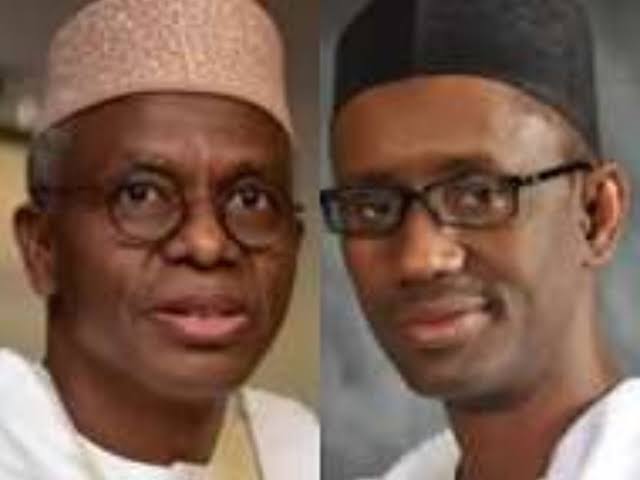
El-Rufai Puts Ribadu on Trial
By Frank Tietie
A man who is neither drunk nor high on drugs, but in his clear and sane mind, goes on a prime-time show on a continental television network like the Arise News Channel and proclaims that he got information from someone who tapped the phone line of the National Security Adviser (NSA) of the Federal Republic of Nigeria. How should the Nigerian government react?
It becomes a Catch-22 for the Nigerian government whether to respond to El-Rufai’s latest tirade. But to react hastily would fail to see the damning point Nasir El-Rufai is trying to make, which is to show the ineptitude of Nuhu Ribadu as NSA. The government should have seen through the former Kaduna State governor’s bravado.
Of course, El-Rufai knows the possibility that Ribadu would fall for the trick and might actually order his detention, either for statements made on live international television or for the bared waiting fangs of the EFCC. Sonit appears he had prepared for the worst, but probably not for death in the hands of his sworn enemies through poisoning. Hence, he immediately alerted the world to the Gestapo treatment that is usually given to some government enemies when they are in detention. So he quickly accuses the same Nuhu Ribadu of importing thallium sulphate, a lethal poison suitable for eliminating political enemies quietly. This he has done, in case he, himself or any other opposition politicians die in detention as 2027 approaches. What a way to shift the burden?
The choice of the government to charge El-Rufai for cybercrimes over the claims he made on live on Arise News Prime Time show about tapping the NSA’s phone is a tacit yet loud acknowledgement that any NSA whose phone can be tapped so easily is not only incompetent, but highly undisciplined and lackadaisical on national security matters. Tell me, which serious country, like the United States of America, the United Kingdom, France, Germany, Russia, or Saudi Arabia, would take the National Security Adviser of Nigeria seriously if they knew that an ordinary citizen could easily tap his phone?
What Malam Nasir El-Rufai has done is not to present technical evidence of interception. Rather, he has thrown a political gauntlet designed to provoke a reaction. The trap is simple: once the state moves against him, the conversation shifts from the accuracy of his claim to the conduct and capability of those charged with safeguarding national security.
A hurried resort to criminal prosecution risks missing the wider implication that public officers, particularly those occupying sensitive security positions, are expected to inspire confidence, not anxiety.
Therefore, if the state frames a prosecution around a claim that the NSA’s line could be tapped, the unintended consequence is that the allegation receives international circulation, renewed media life and diplomatic attention. In effect, the courtroom becomes a megaphone for the NSA’s failures.
Consequently, if the charge against El-Rufai is driven by reputational discomfort or the political embarrassment that he has caused Ribadu or the Tinubu government. It risks being counterproductive, especially in a democratic setting that has a high tolerance for speech directed at public officials.
Statements that are provocative, speculative or even reckless are often part of political contestation, especially as 2027 approaches. They should not be the basis for criminal charges. Such statements are best answered by clarification, transparency, and institutional reassurance, rather than the coercive weight of arrest, arraignment, and trial.
To prosecute El-Rufai in circumstances such as this may therefore produce the exact opposite of deterrence. It can elevate and transform him into a cause, especially among Northern Nigeria elements, and suggest that the government is more eager to punish criticism than to disprove it.
The other dimension is the possibility that such a trial would invite scrutiny, arguments, cross-examinations, and global reporting, further exposing Ribadu or the government. Meanwhile, silence would have buried it faster.
Instead of dismissing El-Rufai as someone probably chasing political clout, the choice to charge him would validate his point and expose Nuhu Ribadu as unfit to be NSA.
El-Rufai is no ordinary politician. He combines the arts of casuistry, statecraft, populism and activism for political relevance, and he is yet on another journey to reinvent himself politically to the detriment of his foes like Ribadu. But he also wants to come out alive. And even if he dies in the process, he seems not to care much, as long as such would deal the maximum blow to the political careers of his traducers.
If anyone thinks El-Rufai is being diminished by his latest travails, they should think again. In fact, it is he who is putting some persons on trial in the court of reason.
Frank Tietie
Lawyer and Public Affairs Commentator,
Writes from Abuja
El-Rufai Puts Ribadu on Trial


National News
Fuel Crisis: ActionAid Urges FG to Deploy Emergency Measures as Global Conflict Deepens Hardship
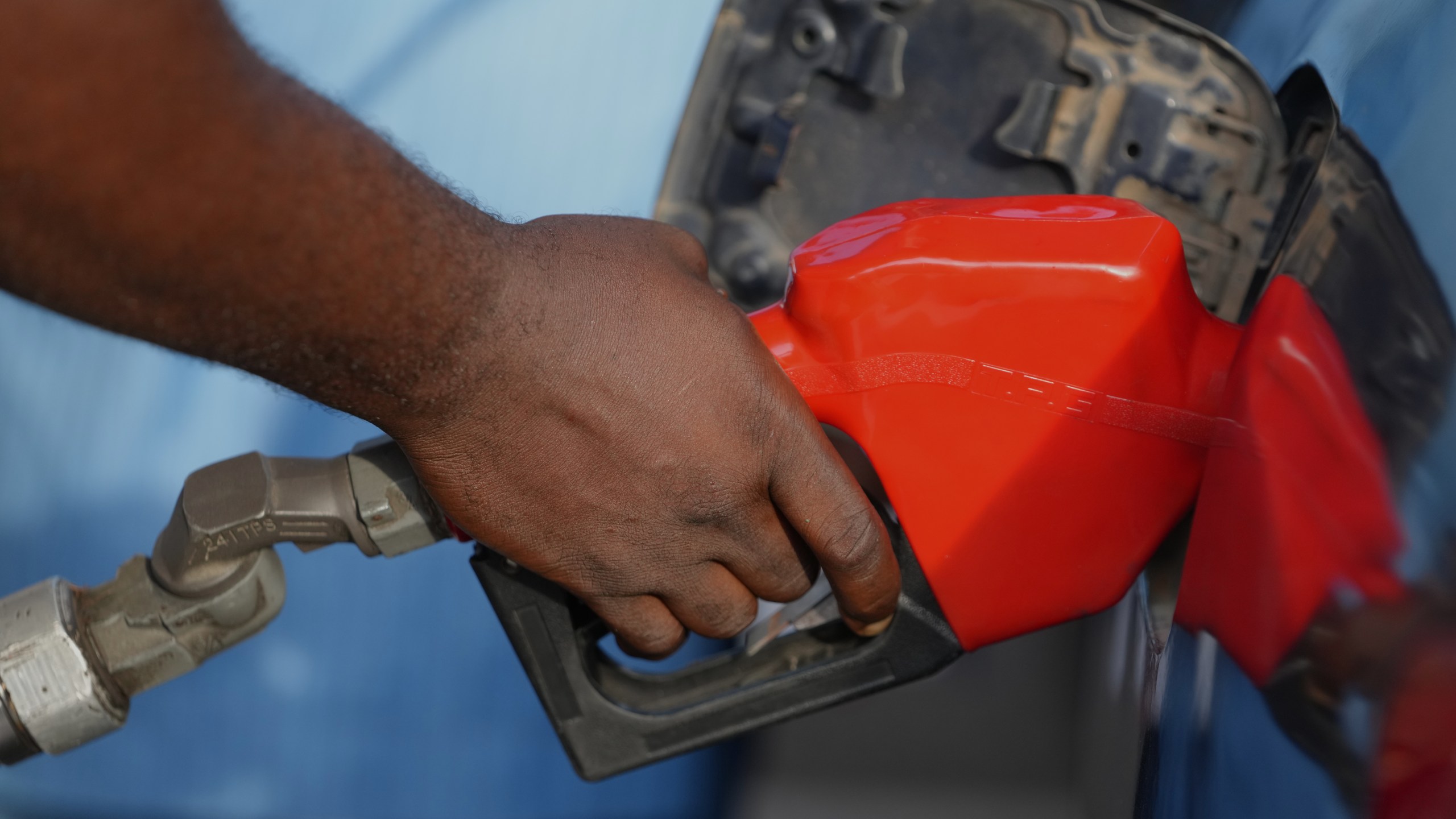
Fuel Crisis: ActionAid Urges FG to Deploy Emergency Measures as Global Conflict Deepens Hardship
By: Michael Mike
ActionAid Nigeria has called on the Federal Government to urgently roll out emergency economic relief measures as the ongoing conflict involving Iran, Israel and the United States continues to disrupt global oil markets and worsen the economic hardship faced by Nigerians.
The organisation raised the alarm in a statement issued in Abuja on Sunday, warning that the crisis, which has persisted for more than a month, is already pushing millions of Nigerians deeper into poverty through rising fuel prices, transport fares and food costs.
According to the group, the absence of a clear and coordinated response from the Federal Government to cushion the effects of the global energy shock is deeply troubling.
While noting that global crude oil prices have surged from an average of about seventy-five to eighty dollars per barrel before the escalation of the conflict to roughly one hundred dollars per barrel due to supply disruptions in the Middle East, the organisation said Nigeria should be benefiting from the price increase.
It explained that with Nigeria’s daily crude oil production currently averaging between 1.3 million and 1.5 million barrels per day, the country is earning significantly more revenue from oil exports, yet these gains have not translated into relief for citizens struggling with soaring fuel costs.
The organisation said petrol prices are currently selling between N1,200 and N1,400 per litre across many parts of the country, while diesel prices remain persistently high.
It noted that the impact is being felt across all sectors of the economy, with transport fares surging, food prices rising and the cost of essential goods and services climbing beyond the reach of many households.
Speaking on the situation, the Country Director of ActionAid Nigeria, Andrew Mamedu, said the hardship faced by Nigerians reflects both the global crisis and long-standing domestic policy failures.
“It is unacceptable that Nigerians continue to suffer the consequences of global oil price increases while the country fails to translate its oil wealth into protection for its people,” he said.
Mamedu added that other countries facing similar shocks have implemented proactive measures to shield their citizens.
He cited examples of governments in Asia introducing price stabilisation policies, public transport support schemes and financial assistance to households in order to mitigate the effects of rising energy costs.
He noted that countries such as Thailand have deployed mechanisms such as the Oil Fuel Fund to cap fuel prices, while Indonesia has used subsidy compensation and public funds to reduce the impact of global price increases on citizens.
According to him, Nigeria must demonstrate similar urgency by implementing strong social protection measures.
The organisation said rapid community engagements conducted across several states indicate that many households are already adopting distress coping strategies, including skipping meals, withdrawing children from school due to transportation costs and borrowing money to survive.
It also warned that small and medium-sized enterprises are scaling down operations or shutting down completely due to rising diesel and logistics costs, while informal workers are experiencing declining incomes.
To address the situation, ActionAid Nigeria urged the Federal Government, in collaboration with state and local authorities, to deploy a coordinated emergency response that includes targeted cash transfers to vulnerable households and informal businesses.
The organisation also called for the temporary reintroduction of fuel subsidies for petrol and diesel, financial support for public transport systems to curb fare increases and the suspension or reduction of taxes and port charges contributing to high fuel prices.
Other recommendations include expanding the crude-for-naira framework to stabilise domestic fuel supply, protecting food distribution and health logistics from rising transportation costs and enforcing fuel consumption reduction measures across public institutions.
In addition, the group urged private sector employers to provide welfare support for workers, including transport assistance, flexible work arrangements and cost-of-living adjustments.
It also called on state and local governments to strengthen community-level safety nets, monitor market practices to prevent exploitation and ensure that relief measures reach vulnerable populations quickly.
“The global crisis may be beyond Nigeria’s control, but the government’s response is not,” the organisation said.
“One month into this crisis, continued inaction is unacceptable. Immediate and decisive steps must be taken to protect Nigerians from further hardship.”
Fuel Crisis: ActionAid Urges FG to Deploy Emergency Measures as Global Conflict Deepens Hardship
National News
Easter: Church Targets Spiritual Renewal, Community Impact with Power-Packed Programme
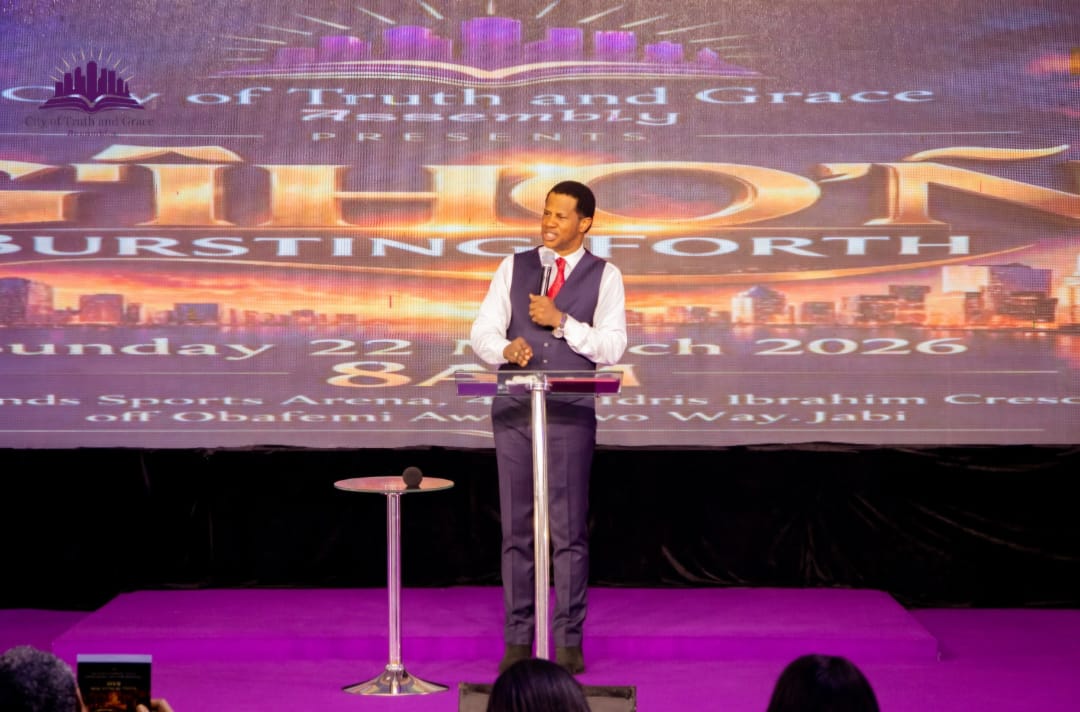
Easter: Church Targets Spiritual Renewal, Community Impact with Power-Packed Programme
By: Michael Mike
As Christians prepare for the Easter season, the City of Truth and Grace Assembly has positioned its 2026 celebration as more than a routine observance, unveiling a spiritually driven programme aimed at fostering personal transformation and strengthening community bonds.
Themed “The Power of Resurrection,” the church said the initiative is designed to rekindle faith, inspire hope, and provide a platform for collective spiritual engagement at a time when many people are seeking renewal amid prevailing social and economic pressures.
The programme, to be hosted by Dipo Fisho, will begin on Good Friday with a family-focused prayer session which organisers describe as a strategic gathering to address both personal and societal challenges through intercession.
According to the church, the prayer session will emphasise unity, healing, and divine direction for families and the wider community.
The Easter activities will culminate on Easter Sunday with a special worship service centred on the message of resurrection, renewal, and spiritual rebirth.
Organisers explained that the programme goes beyond worship services, incorporating moments of fellowship such as a love feast aimed at strengthening relationships among church members and welcoming first-time attendees while reinforcing the central Easter message of love, sacrifice, and redemption.
“This is not just a celebration; it is a call to experience transformation and new beginnings,” the church said, adding that the programme has been carefully curated to deliver both spiritual inspiration and emotional impact.
The event will take place at The Grounds Sport Arena, with activities scheduled for 5:00 p.m. on Good Friday and 8:00 a.m. on Easter Sunday.
With expectations of a large turnout, the church said the programme—also tagged “The Power of Resurrection”—is open to people of all backgrounds and is intended to inspire faith, unity, and a renewed sense of purpose.
Residents across the city have been encouraged to participate, as organisers project the gathering as a significant Easter convergence focused on renewal, hope, and shared spiritual experience.
Easter: Church Targets Spiritual Renewal, Community Impact with Power-Packed Programme
National News
Germany, Agrofood Fair Drive Investment and Technology for Nigeria’s Food Processing Sector
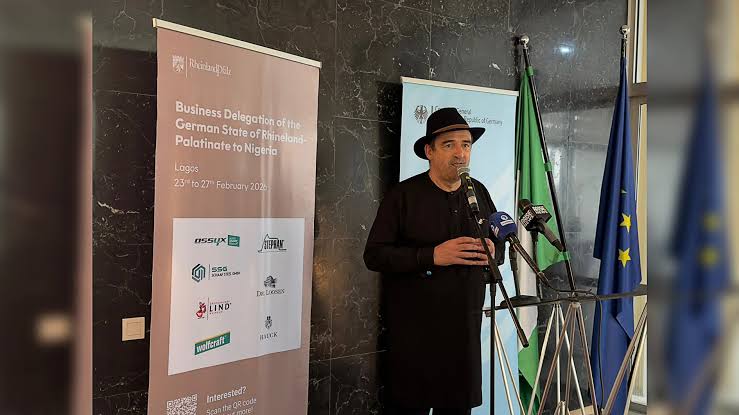
Germany, Agrofood Fair Drive Investment and Technology for Nigeria’s Food Processing Sector
By: Michael Mike
Stakeholders from government, industry and the diplomatic community have intensified efforts to mobilise investment and modern technology to strengthen Nigeria’s food processing and packaging sector, as the 11th edition of Agrofood Nigeria concluded in Lagos.
The push was highlighted during a networking event hosted by the German Consulate General Lagos, where Nigerian agribusiness stakeholders, German exhibitors and members of the German diplomatic and business community discussed opportunities to deepen collaboration across Nigeria’s agri-food value chain.
Speaking at a press briefing, the German Consul General in Lagos, Daniel Krull, said strengthening agriculture and food processing is central to Nigeria’s long-term economic growth and food security.
Krull noted that improving the country’s food processing capacity would not only reduce post-harvest losses but also stimulate industrial growth, create jobs and enhance Nigeria’s ability to meet domestic food demand.
He pointed to Germany’s global strength in food processing technology as evidence of how innovation can transform agricultural output into competitive products.
According to him, Germany remains Europe’s largest exporter of coffee despite not cultivating the crop domestically, a feat made possible through advanced processing technology and value-addition capabilities that tailor products to consumer needs.
“Agriculture and food processing are key to addressing food insecurity and unlocking economic potential. Technology and innovation will play a decisive role in enabling Nigeria to fully harness these opportunities,” Krull said.
The annual exhibition, organised by German trade fair company fairtrade Messe GmbH, brings together players across the entire food value chain—from food production and ingredient manufacturing to processing equipment, packaging technologies and finished product distribution.
Managing Director of fairtrade Messe, Paul März, described the event as a vital marketplace where businesses across Nigeria and West Africa connect with global technology providers.
“It is a meeting point and market place where industry meets once a year for Nigeria and West African countries to come to Lagos to discuss products with exhibitors,” he said.
Now in its 11th year in Nigeria, the exhibition featured 137 companies from 17 countries presenting equipment and technological solutions aimed at strengthening food production, processing and packaging.
Since 2017, the fair has also hosted an official German Pavilion supported by the German Government, providing a platform for German manufacturers to showcase advanced machinery designed to improve Nigeria’s food processing capacity.
Organisers said the initiative is aimed at boosting Nigeria’s food self-sufficiency by introducing technologies that reduce dependence on imported food products while encouraging domestic production and industrialisation.
März said the exhibition has already contributed to noticeable improvements in Nigeria’s food processing ecosystem, particularly in the area of packaging and the development of new supply chains.
However, he stressed that significant gaps remain, especially in packaging technology needed to extend shelf life and meet international export standards.
According to him, several companies participating in the fair have already sold machines for sachet packaging, milk powder processing, PET bottling and recycling to Nigerian businesses.
“With its long-term approach, Agrofood will continue to hold yearly in Nigeria to provide even more solutions to existing problems such as food safety, recycling and processing,” he said.
Krull also highlighted Germany’s broader economic engagement with Nigeria, revealing that Germany currently maintains a development portfolio of about €570 million in the country.
He explained that beyond trade exhibitions, the German government supports Nigerian businesses through technical advisory services, vocational education and training programmes as well as financing opportunities for small and medium-scale enterprises.
These include credit facilities and financial support windows facilitated through the German Desk at Access Bank, which provides funding options for businesses seeking to invest in food processing technology.
German companies already operating in Nigeria are also investing heavily in workforce training to ensure local staff can operate and maintain advanced industrial equipment, thereby strengthening technology transfer.
While acknowledging challenges confronting Nigeria’s agri-food sector—including insecurity, financing constraints, regulatory issues and energy shortages—Krull stressed that such obstacles should not deter stakeholders from taking decisive action.
He said Nigeria possesses the natural resources, entrepreneurial capacity and market potential needed to achieve significant growth in the food processing sector if investment, technology and policy support are effectively aligned.
By connecting entrepreneurs, investors and technology providers, he added, initiatives like Agrofood Nigeria could play a pivotal role in accelerating the transformation of Nigeria’s agricultural economy.
Germany, Agrofood Fair Drive Investment and Technology for Nigeria’s Food Processing Sector

Troops arrest suspected kidnapper in Damboa LGA of Borno

Troops arrest 58 illegal miners in Edo state

Army troops arrest two suspected Boko Haram logistics suppliers in borno

Roger Federer’s Shock as DNA Results Reveal Myla and Charlene Are Not His Biological Children

THE PLIGHT OF FARIDA

FAILED COUP IN BURKINA FASO: HOW TRAORÉ NARROWLY ESCAPED ASSASSINATION PLOT AMID FOREIGN INTERFERENCE CLAIMS
-
 News2 years ago
Roger Federer’s Shock as DNA Results Reveal Myla and Charlene Are Not His Biological Children
-
Opinions4 years ago
THE PLIGHT OF FARIDA
-
 News11 months ago
FAILED COUP IN BURKINA FASO: HOW TRAORÉ NARROWLY ESCAPED ASSASSINATION PLOT AMID FOREIGN INTERFERENCE CLAIMS
-

 News2 years ago
EYN: Rev. Billi, Distortion of History, and The Living Tamarind Tree
-
 Opinions4 years ago
POLICE CHARGE ROOMS, A MINTING PRESS
-

 ACADEMICS2 years ago
A History of Biu” (2015) and The Lingering Bura-Pabir Question (1)
-

 Columns2 years ago
Army University Biu: There is certain interest, but certainly not from Borno.
-

 Opinions2 years ago
Tinubu,Shettima: The epidemic of economic, insecurity in Nigeria
