
News
Emir lauds ACReSAL’s impact on rural dwellers in Gombe

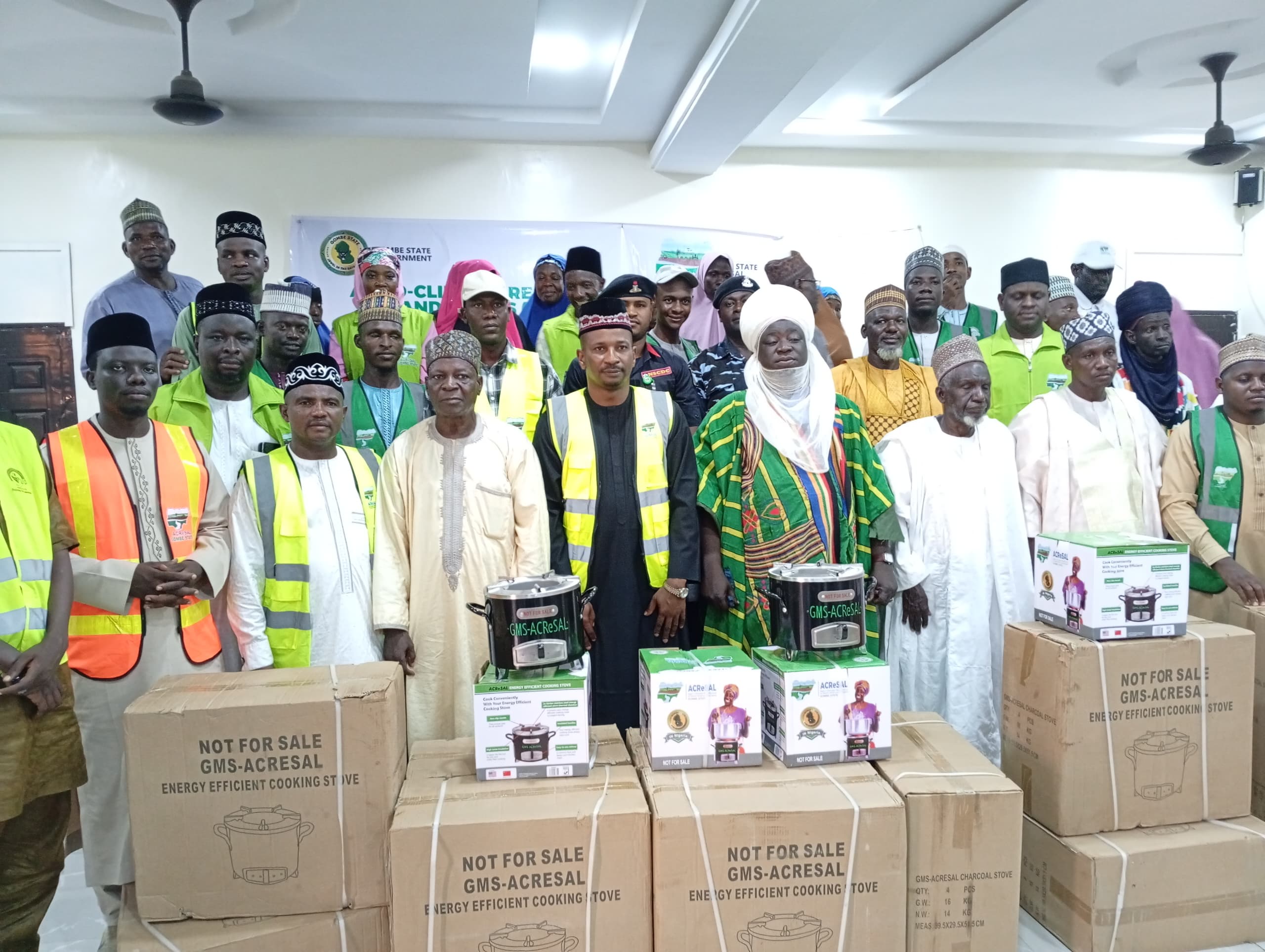
Emir lauds ACReSAL’s impact on rural dwellers in Gombe
Alhaji Yakubu Kwairanga, the Emir of Funakaye, on Friday, lauded Agro-Climatic Resilience in Semi-Arid Landscapes (ACReSAL) project’s impact on the lives and livelihoods of rural dwellers in Gombe State.
Kwairanga gave the commendation in Bajoga town of Funakaye Local Government Area of Gombe State during the distribution of energy-efficient cooking stoves to communities in the council.
He stated that ACReSAL project had helped in improving the lives of rural dwellers especially with its intervention in addressing land degradation, climate change impacts, and promoting sustainable development.
He said that ACReSAL had become a household name in view of the numerous environmental and empowerment projects being carried out in various communities across the state.
“I want to commend ACReSAL for their efforts in ensuring that rural dwellers and their livelihoods are protected.
“This is really commendable as living standards of residents of many communities have been improved.
“Today, energy-efficient cooking stoves are being distributed to rural dwellers and we are very happy because it will help improve their lives and help them save money.
“The tree planting campaign by ACReSAL is really impressive as it is helping to reclaim our land which has been affected by desertification,” he said.
Kwairanga warned beneficiaries of the stoves not to sell them, stressing that the essence of the distribution was to help alleviate economic challenges associated with cooking while helping to protect the environment.
Also speaking, the Gombe State ACReSAL Project Coordinator, Dr Sani Jauro, said the distribution of the energy-efficient cooking stoves was part of efforts to mitigate the impact of climate change.
Jauro said no fewer than 800 stoves would be distributed to seven communities in the Council while the traditional rulers would be given 100.
He stated that the stoves would help reduce dependence on traditional, inefficient cooking methods, which contribute to deforestation and greenhouse gas emissions.
“These stoves are very efficient, as they use small amounts of briquettes and they will help low-income households to reduce costs while minimising deforestation caused by tree felling for cooking fuel.”
The state coordinator said that the event also provided an avenue for ACReSAL to engage with stakeholders at the grassroots on critical climate-change-related issues.
Jauro said that the event was also leveraged to sensitise the grassroots on the need to support Gov. Inuwa Yahaya of Gombe State’s efforts at tackling environmental challenges by sustaining ACReSAL project and encouraging tree planting.
Corroborating Kwairanga, Jauro said that ACReSAL has impacted on lives and livelihoods of the people of the state, empowering women and youths out of poverty.
He said that ACReSAL projects in the state have restored degraded land, improved agricultural practices, and strengthened rural livelihoods through community-driven approaches.
He called on residents of the state to approach any of their nurseries across the state to collect free tree seedlings for planting, stressing that the task of combating impact of climate change was a collective approach.
Emir lauds ACReSAL’s impact on rural dwellers in Gombe


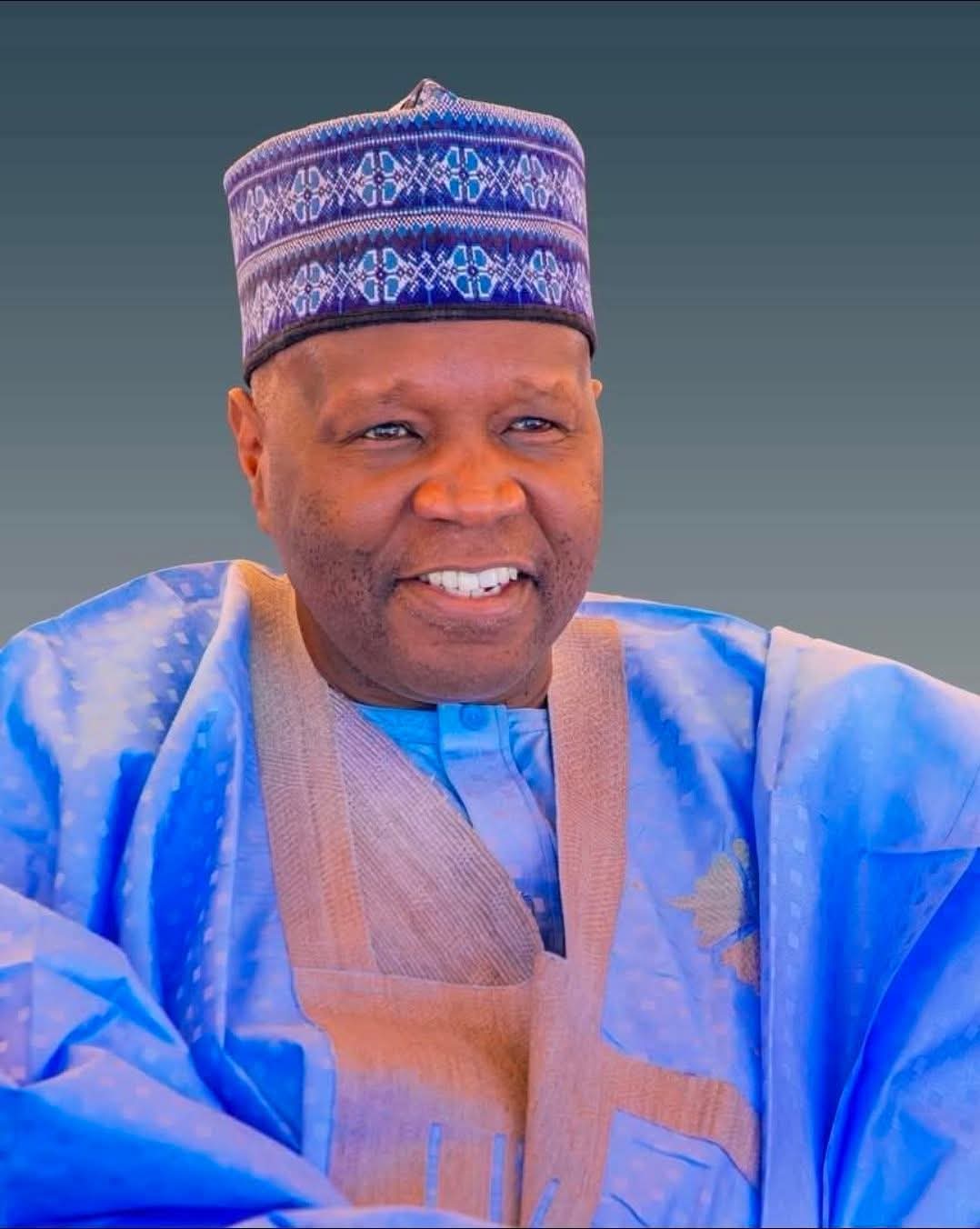
Agriculture partnership: Gov Yahaya to get Sasakawa’s Special Award
Governor Muhammadu Inuwa Yahaya of Gombe State will be honoured with a Special Recognition Award by the Sasakawa Africa Association (SAA) Nigeria, in acknowledgement of the state’s sustained partnership and strategic commitment to agricultural development.
The award will be presented at the 2026 SAA Nigeria Annual Stakeholders Workshop on Thursday, April 9, 2026, in Abuja, where top federal officials, development partners, diplomats, and state governments are expected to gather to discuss pathways for strengthening Nigeria’s food systems.
The workshop, holding at Rockview Royale Hotel, Wuse II, is themed “SAA @ 40: Deepening Impact and Expanding Reach at Scale.”
The recognition of Governor Inuwa Yahaya reflects the depth of Gombe State’s collaboration with SAA over the years, which has supported agricultural extension, smallholder productivity, and rural livelihoods.
Since its creation in 1996, Gombe State has maintained a working relationship with SAA, funded by The Nippon Foundation, to implement initiatives that improve food security, nutrition, climate resilience, and inclusive agricultural services, with particular attention to women, youth, and resource-poor farmers.
Speaking ahead of the workshop, Dr. Godwin Atser, Country Director of SAA Nigeria, said:
“This recognition celebrates a partnership backed by action. Governor Inuwa Yahaya’s leadership reflects the kind of subnational commitment essential for transforming agriculture in Nigeria.
Gombe State’s sustained support for farmer-focused interventions demonstrates what can be achieved when political will, institutional alignment, and practical investment converge.”
SAA Nigeria’s collaboration with Gombe State encompasses a wide range of interventions, including Farmer Learning Platforms (FLP), Community Savings and Investment in Agriculture (CSIA), Private Extension Service Provision (PESP), and Community-Based Seed Multiplication (CBSM), among others. Together, these initiatives strengthen the agricultural ecosystem from production to post harvest, improve access to technology, knowledge, and markets, and enhance the capacities of farmers and rural actors.
The partnership also encourages pluralistic extension systems, involving the private sector, farmer organizations, research institutions, and civil society in scaling agricultural services across the state. This multi-dimensional cooperation underscores why Gombe State’s collaboration is deserving of recognition.
As SAA marks 40 years of operations in Africa and 33 years in Nigeria, the organization notes that sustainable agricultural transformation requires long-term commitment, collaboration, and strategic investment, qualities exemplified by Gombe State and Governor Inuwa Yahaya.
The recognition will be part of a broader conversation at the 2026 Annual Stakeholders Workshop, which will review SAA’s 2021–2025 achievements, share lessons, and explore future partnerships to strengthen agriculture in Nigeria and across Africa.
About Sasakawa Africa Association (SAA)
Sasakawa Africa Association (SAA) was established in 1986 by Japanese philanthropist Ryoichi Sasakawa, Nobel Laureate Dr. Norman Borlaug, and former U.S. President Jimmy Carter.
Dedicated to improving the productivity, profitability, and resilience of smallholder farmers in sub-Saharan Africa, SAA operates through agricultural extension, capacity building, and systems strengthening. Active in Nigeria since 1993, SAA collaborates with governments, research institutions, universities, private sector actors, and development partners to advance farmer-centered agricultural transformation.
Agriculture partnership: Gov Yahaya to get Sasakawa’s Special Award
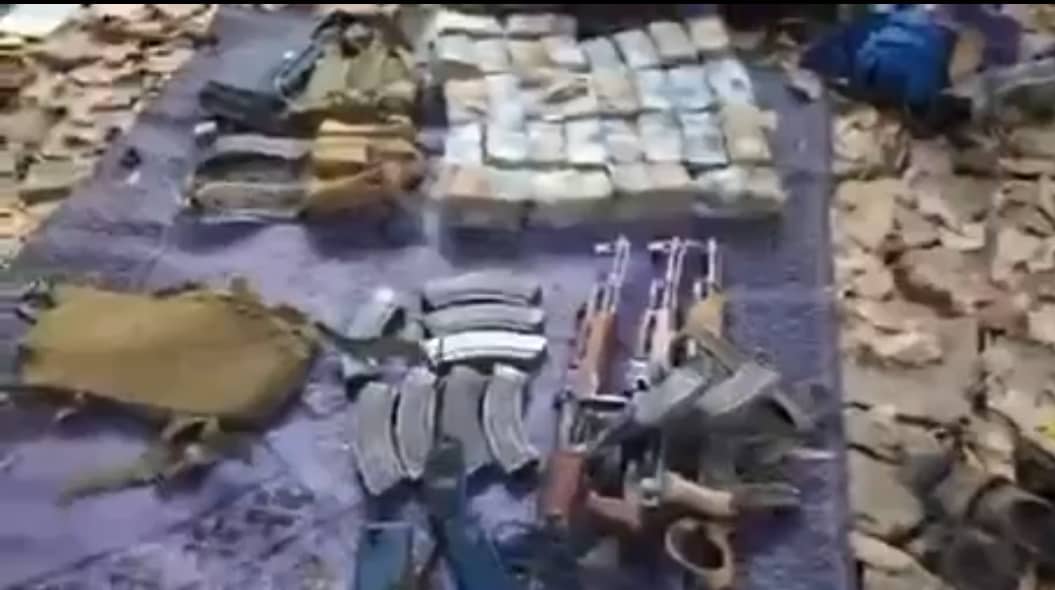
JNIM terrorists clashes with rival factions in rare encounter in Nigeria’s Kebbi state
By: Zagazola Makama
A suspected clash between rival terrorists factions has been reported in Kebbi State, raising fresh security concerns in the North-West region.
Sources said the incident occurred on April 4, when a group identified as Jama’at Nusrat al-Islam wal-Muslimin (JNIM) claimed it engaged a rival faction described as “Khawarij”.
The group alleged that one fighter was killed and another captured during the encounter, while three motorcycles and about N10 million were recovered.
However, the identity of the opposing group has yet to be independently verified.
Preliminary indications suggest the rival faction may be linked to Boko Haram or one of its splinter groups, though this remains subject to confirmation.
Security sources said the development could represent one of the first reported inter-jihadist clashes in the region.
JNIM terrorists clashes with rival factions in rare encounter in Nigeria’s Kebbi state
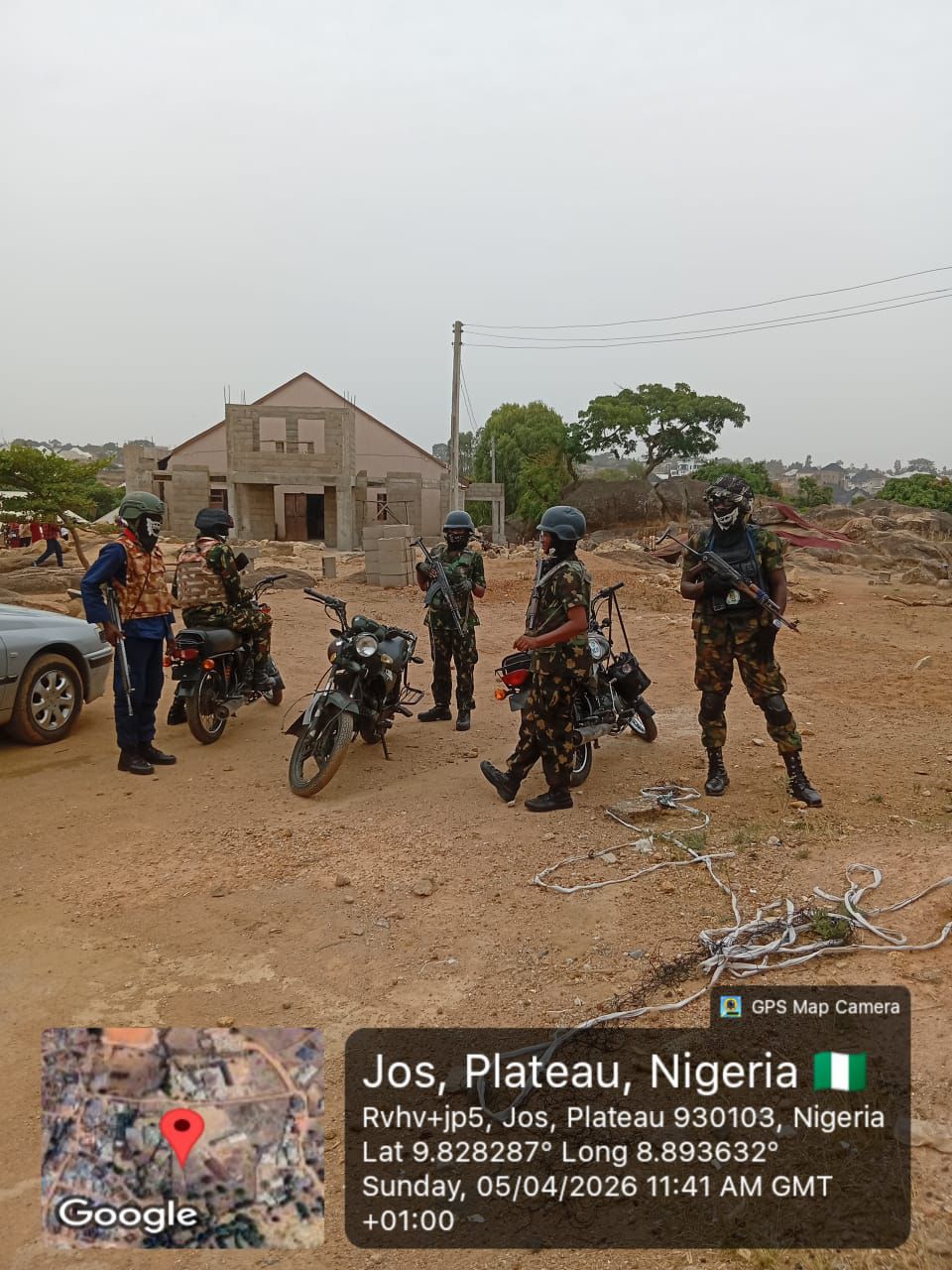
Troops foil mob attack, rescue suspected terrorist in Danmusa in Katsina
By: Zagazola Makama
Troops of 17 Brigade have foiled an attempt by a mob to lynch a suspected terrorist and burn down a police station in Danmusa Local Government Area of Katsina State.
Security sources said the incident occurred at about 4:30 p.m. on April 5, 2026, when troops deployed at Combat Team 1 in Danali village responded to a distress call from a Nigerian Police outpost in the area.
The police had reported that a large crowd attempted to set the station ablaze and attack personnel after a suspected terrorist was brought into custody.
Troops were immediately mobilised to the scene and successfully prevented further escalation of the situation, restoring order in the area.
During the intervention, police personnel reportedly fired tear gas to disperse the irate crowd, which led to injuries sustained by one civilian.
The injured victim was evacuated to a medical facility for treatment.
Security sources said calm had since returned to the area, while troops continued to maintain presence to prevent a resurgence of violence and ensure stability.
Troops foil mob attack, rescue suspected terrorist in Danmusa in Katsina

Agriculture partnership: Gov Yahaya to get Sasakawa’s Special Award

JNIM terrorists clashes with rival factions in rare encounter in Nigeria’s Kebbi state

Troops foil mob attack, rescue suspected terrorist in Danmusa in Katsina

Roger Federer’s Shock as DNA Results Reveal Myla and Charlene Are Not His Biological Children

THE PLIGHT OF FARIDA

FAILED COUP IN BURKINA FASO: HOW TRAORÉ NARROWLY ESCAPED ASSASSINATION PLOT AMID FOREIGN INTERFERENCE CLAIMS
-
 News2 years ago
Roger Federer’s Shock as DNA Results Reveal Myla and Charlene Are Not His Biological Children
-
Opinions4 years ago
THE PLIGHT OF FARIDA
-
 News12 months ago
FAILED COUP IN BURKINA FASO: HOW TRAORÉ NARROWLY ESCAPED ASSASSINATION PLOT AMID FOREIGN INTERFERENCE CLAIMS
-

 News2 years ago
EYN: Rev. Billi, Distortion of History, and The Living Tamarind Tree
-
 Opinions4 years ago
POLICE CHARGE ROOMS, A MINTING PRESS
-

 ACADEMICS2 years ago
A History of Biu” (2015) and The Lingering Bura-Pabir Question (1)
-

 Columns2 years ago
Army University Biu: There is certain interest, but certainly not from Borno.
-

 Opinions2 years ago
Tinubu,Shettima: The epidemic of economic, insecurity in Nigeria
