
News
Exclusive: Professor Ahidjo explains why UMTH established the ICT Center

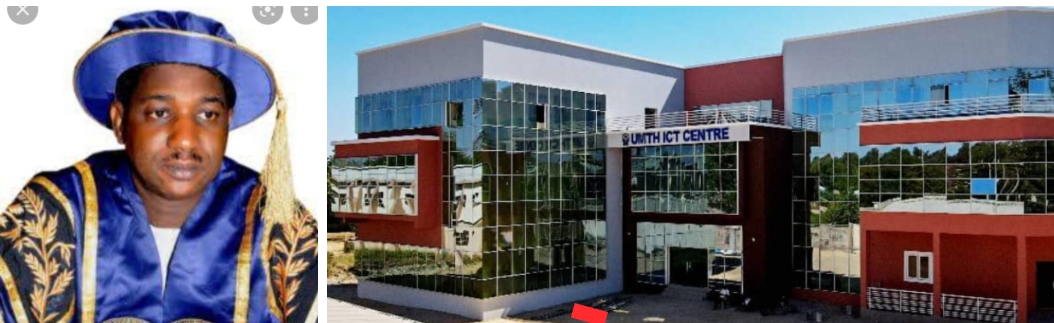
Exclusive: Professor Ahidjo explains why UMTH established the ICT Center
By: Our Reporter
The Chief Medical Director, University of Maiduguri Teaching Hospital, Professor Ahmed Ahidjo, has said the primary objective of establishing the ICT Center at University of Maiduguri Teaching Hospital (UMTH) is to enhance human capacity development specifically within the realm of medical ICT.
According to the CMD, this initiative aims to equip healthcare professionals and students with essential digital skills required for efficient healthcare delivery and management. Interestingly, by integrating advanced ICT tools and training programs, UMTH seeks to foster a workforce capable of leveraging technology to improve patient outcomes and streamline medical processes.
“Human capacity development through the ICT Center involves providing formal training, access to resources, and practical exposure to current technological advancements in medicine. This aligns with findings from similar educational contexts where formal ICT training significantly improves knowledge and utilization among medical students, thereby enhancing their professional competence. Consequently, the center not only supports individual skill enhancement but also contributes to institutional growth by promoting a culture of continuous learning in medical informatics.” He explained.
NEWSng reports that the UMTH ICT Centre serves as a pivotal platform for building proficient healthcare personnel adept in medical ICT. Its establishment reflects an understanding that modern healthcare increasingly depends on digital literacy and technological innovation, reinforcing UMTH’s commitment to advancing health service quality through human capital development.
Speaking to the CMD, he explained that it has been observed that newly employed ICT graduates from universities and polytechnics often require a significant adjustment period to fully comprehend the specific ICT systems and operational needs within a hospital environment. This delay he observed can be attributed to the unique demands of healthcare settings, which differ substantially from general ICT applications taught in academic institutions. The complexity of hospital information systems, he also said, includes patient data management and medical device integration, adding that this necessitates specialized knowledge beyond standard ICT curricula.
“These graduates may lack practical exposure to healthcare workflows during their training, resulting in an initial gap between theoretical knowledge and real-world application. Bridging this gap involves targeted on-the-job training and mentorship tailored to hospital-specific technologies. The establishment of the ICT center, therefore, in addressing these challenges, is crucial for improving system efficiency and ensuring that ICT professionals can effectively support critical healthcare operations at UMTH.” The CMD said.
Professor Ahmed Ahidjo explained that the UMTH has resolved to establish a Diploma Course in Medical Information and Communication Technology (ICT) to address the growing intersection between healthcare and technology. This program aims to equip students with foundational knowledge in both core ICT competencies and essential medical sciences, fostering interdisciplinary expertise crucial for modern healthcare environments.
“The curriculum will integrate modules covering computer systems, data management, and software applications alongside medical subjects such as anatomy, physiology, and healthcare ethics. This balanced approach ensures graduates are proficient in managing health information systems while understanding clinical contexts, thereby enhancing their ability to support digital health initiatives effectively. Furthermore, embedding practical training within clinical settings will enable students to apply theoretical knowledge in real-world scenarios.
“This diploma course at UMTH is designed to prepare competent professionals who can navigate the complexities of medical ICT. By combining rigorous ICT education with relevant medical courses, the program addresses current workforce demands in healthcare technology integration.” He added.
He explained that there is a strategic initiative to offer conversion courses aimed at medical personnel interested in information and communication technology (ICT). This interdisciplinary approach seeks to equip healthcare professionals with digital skills essential for addressing evolving global health demands. Integrating ICT into medical practice can enhance data management, improve patient care, and foster innovation in telemedicine, which is critical in today’s interconnected world.
According to him, the rationale behind these conversion courses lies in bridging the gap between healthcare expertise and technological proficiency. As digital transformation reshapes various sectors, including agriculture and health, equipping medical personnel with ICT competencies aligns with global trends toward digitization. Such education empowers practitioners to contribute effectively to healthcare digitization initiatives and respond adaptively to emerging challenges.
“Overall, UMTH’s commitment reflects a forward-thinking educational model that addresses global needs by fostering cross-disciplinary knowledge. By preparing medical personnel for ICT integration through conversion courses, UMTH positions itself as a leader in cultivating professionals capable of leveraging technology for improved health outcomes.” He said.
Exclusive: Professor Ahidjo explains why UMTH established the ICT Center



KACRAN Applauds Buni’s Leadership, Cites Job Creation and Food Security Gains in Yobe
By: Michael Mike
The Kulen Allah Cattle Rearers Association of Nigeria (KACRAN) has commended Yobe State Governor, Mai Mala Buni, for what it described as visionary leadership that has significantly improved job creation, food security, and overall wellbeing of citizens in the state.
In a statement signed by its National President, Khalil Mohammed Bello, the association said the desire of any society is to have a leader who prioritizes the welfare, security, and long-term prosperity of the people, noting that Governor Buni embodies such qualities.
KACRAN praised the governor’s humility and accessibility, describing him as a leader who maintains close contact with citizens to better understand their needs and challenges. According to the association, this people-oriented approach has contributed to sustained peace and unity in Yobe State.

Highlighting key achievements, the group noted that Buni’s administration has consistently invested heavily in agriculture by procuring and distributing farm inputs to farmers at subsidized rates. This, it said, has boosted food production and strengthened food security not only in Yobe but across neighboring states.
The association also lauded the establishment of a dedicated Ministry of Livestock, which it said has reinforced Yobe’s position as a leading livestock hub in Nigeria. It added that the construction of modern markets across major towns has further enhanced commercial activities within the state.
On human capital development, KACRAN pointed to the award of scholarships to thousands of students for studies within and outside Nigeria, as well as the construction and rehabilitation of roads, bridges, and other infrastructure to improve connectivity between rural and urban areas.
The group further commended the governor for creating employment opportunities through recruitment into the civil service and various empowerment programmes targeting youths and women.
KACRAN also acknowledged the efforts of the Yobe State Emergency Management Agency (SEMA), led by Mohammed Goje, in providing relief materials to internally displaced persons and vulnerable populations affected by insurgency, floods, and other disasters.
It noted that during the ongoing Ramadan, the state government has intensified food distribution initiatives, ensuring that thousands of households receive daily support as part of broader measures to cushion economic hardship.
While stressing the importance of proactive governance, KACRAN urged other state governments and the Federal Capital Territory to emulate Yobe’s approach to investing in agriculture, human development, and security in order to avert potential food crises and improve living standards nationwide.
The association concluded that sustained commitment to these priorities would promote peace, unity, and long-term stability across the country.
KACRAN Applauds Buni’s Leadership, Cites Job Creation and Food Security Gains in Yobe
News
CDS urges Borno, Yobe residents to take ownership of fight against terror, says enemy operating from within
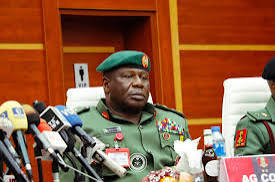
CDS urges Borno, Yobe residents to take ownership of fight against terror, says enemy operating from within
By: Zagazola Makama
The Chief of Defence Staff (CDS), Gen. Olufemi Oluyede, has raised fresh concerns over internal complicity in the protracted insurgency in the North-East, urging residents of Borno and Yobe to take ownership of the fight against terrorism.
Oluyede’s position, articulated after a high-level security meeting in Maiduguri, signals a strategic shift in emphasis from purely kinetic military operations to community-driven counterinsurgency, as Nigeria battles the enduring threat posed by Boko Haram and the Islamic State West Africa Province.
The meeting, which lasted about four hours, brought together top military commanders, including the Chief of Army Staff, Lt.-Gen. Waidi Shuaibu, the Theatre Commander of Operation Hadin Kai, Maj.-Gen. Abdulsalam Abubakar and other top military officials.
At the heart of the CDS’s message is a troubling reality: the insurgency is being sustained, in part, by individuals that sometimes embedded within affected communities.
According to Oluyede, intelligence reports indicate that many of those responsible for attacks over the past 15 years originate from the same communities bearing the brunt of the violence.
This assertion reinforces long-standing concerns within security circles that local knowledge terrain familiarity, social networks, and community cover has continued to provide operational advantages to insurgents.
He cited a recent example in Kukawa, where troops discovered wounded terrorists hiding within the community during post-attack clearance operations, pointing to the challenge of distinguishing between civilians and collaborators.
The dynamics complicate military efforts, as insurgents exploit familial and social ties to evade detection, making intelligence gathering more difficult despite sustained offensives.
The CDS’s call for residents to “take ownership” reflects a recognition that military القوة alone cannot decisively end the insurgency without active civilian cooperation.
Oluyede’s remarks suggest a push to recalibrate this dynamic by encouraging residents to see the fight as a collective responsibility rather than solely a government burden.
The CDS also acknowledged the evolving tactics of insurgents, particularly the increasing use of drones and other technological in attacks.
Oluyede disclosed that the Nigerian military is adapting, including the deployment of advanced drone systems to enhance surveillance, targeting, and battlefield coordination.
CDS urges Borno, Yobe residents to take ownership of fight against terror, says enemy operating from within
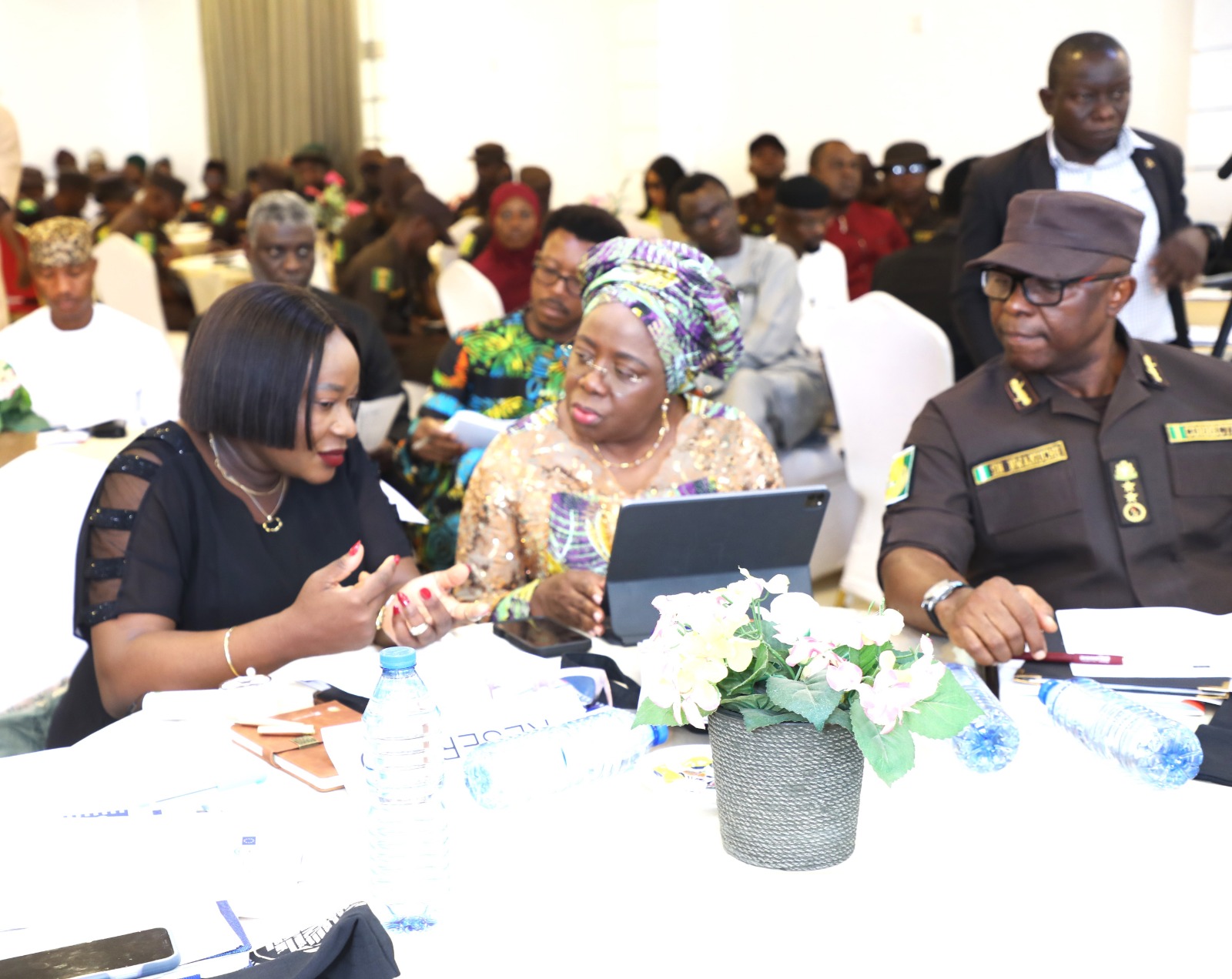
FG Pushes for Correctional Reform via Public-Private Partnership
By: Michael Mike
The Federal Government has reaffirmed its commitment to transforming Nigeria’s correctional system into a hub of rehabilitation, skills development, and national productivity through strategic Public-Private Partnerships (PPPs).
The pledge was highlighted at a stakeholders’ engagement on optimizing correctional farm centres, industries, and PPP opportunities, organized by the Ministry of Interior in collaboration with civil society and development partners.
Representing the Honourable Minister of Interior, Dr. Olubunmi Tunji-Ojo, Permanent Secretary Dr. Magdalene Ajani stated that modern correctional facilities must focus not only on confinement but also on equipping inmates with practical skills for reintegration into society. “Correctional centres must evolve into institutions of transformation—where inmates are prepared to become productive members of society upon release,” she said.
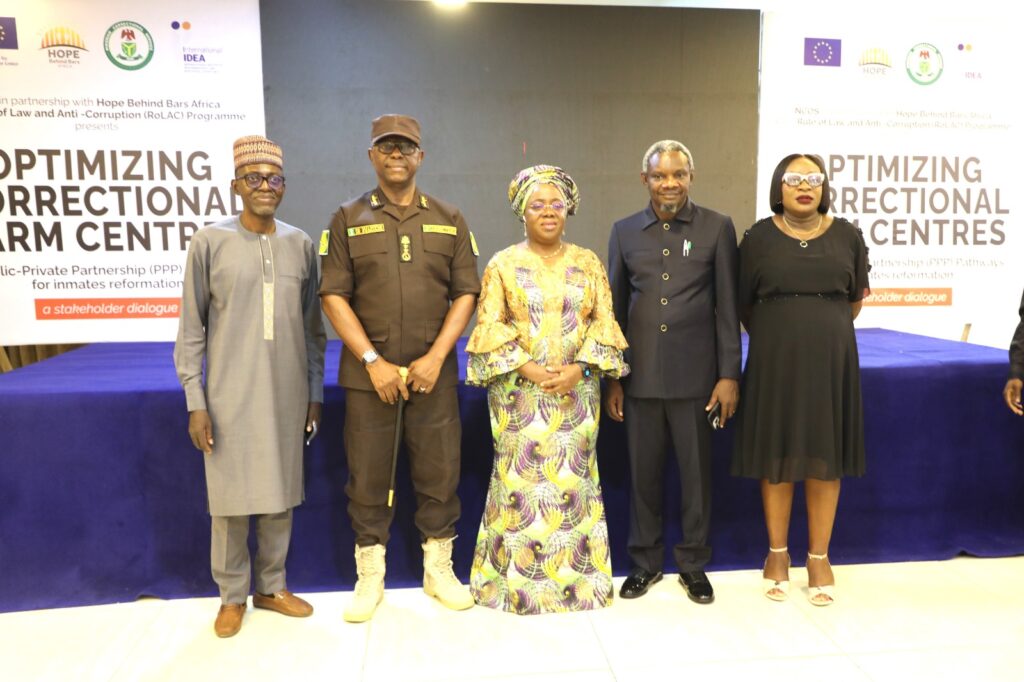
Ajani emphasized the importance of PPPs in achieving this vision, describing them as critical tools for combining government oversight with private sector expertise, innovation, and investment. She added that correctional farm centres and industries could become centres of excellence in agriculture, agro-processing, and value-chain development, contributing to both inmate rehabilitation and national food security.
The Controller-General of the Nigerian Correctional Service, Sylvester Nwakuche, disclosed that the Service currently operates 18 farm centres and 10 cottage industries nationwide, spanning crop production, livestock, fisheries, and poultry.
He noted that collaboration with the private sector would boost productivity, introduce modern techniques, and create sustainable value chains.
Stakeholders, including representatives from government, civil society, development organisations, and the private sector, agreed on the need for actionable and scalable models to drive tangible impact.
On his part, the Chairman of the House Committee on Reformatory Institutions Hon. Chinedu Ogah, called for greater accountability, innovation, and commitment in optimizing correctional farms, noting that agriculture remains a critical driver of economic growth and national security.
The engagement aligns with President Bola Ahmed Tinubu’s administration’s broader reform agenda, which prioritizes institutional strengthening, economic productivity, and sustainable development. Participants were urged to leverage partnerships that transform correctional facilities into engines of productivity, reduce recidivism, and enhance community safety.
The Ministry of Interior reiterated that the success of correctional reform depends on collective action, sustained investment, and a shared commitment to building a humane and development-oriented correctional system.
FG Pushes for Correctional Reform via Public-Private Partnership

UMTH: When VP Kashim Shettima acknowledges Ahidjo and hospital staff for their services to victims of Maiduguri bomb blasts

Sallah: FRSC deploys 620 personnel in Gombe

KACRAN Applauds Buni’s Leadership, Cites Job Creation and Food Security Gains in Yobe

Roger Federer’s Shock as DNA Results Reveal Myla and Charlene Are Not His Biological Children

THE PLIGHT OF FARIDA

FAILED COUP IN BURKINA FASO: HOW TRAORÉ NARROWLY ESCAPED ASSASSINATION PLOT AMID FOREIGN INTERFERENCE CLAIMS
-
 News2 years ago
Roger Federer’s Shock as DNA Results Reveal Myla and Charlene Are Not His Biological Children
-
Opinions4 years ago
THE PLIGHT OF FARIDA
-
 News11 months ago
FAILED COUP IN BURKINA FASO: HOW TRAORÉ NARROWLY ESCAPED ASSASSINATION PLOT AMID FOREIGN INTERFERENCE CLAIMS
-

 News2 years ago
EYN: Rev. Billi, Distortion of History, and The Living Tamarind Tree
-
 Opinions4 years ago
POLICE CHARGE ROOMS, A MINTING PRESS
-

 ACADEMICS2 years ago
A History of Biu” (2015) and The Lingering Bura-Pabir Question (1)
-

 Columns2 years ago
Army University Biu: There is certain interest, but certainly not from Borno.
-

 Opinions2 years ago
Tinubu,Shettima: The epidemic of economic, insecurity in Nigeria
