
National News
FG establishes pad bank for NYSC workforce, corps members, others


FG establishes pad bank for NYSC workforce, corps members, others
The Federal Government has established a Pad Bank for National Youth Service Corps (NYSC) female staff, corps members and other visitors that may have emergency menstrual flow in the office.
A statement by the Director, Press and Public Relations, Ministry of Women Affairs, Mr Eddy Megwa, said Mrs Pauline Tallen, the Minister for Women Affairs, unveiled the bank at the NYSC headquarters in Abuja.
She emphasised the need for continuous sensitisation of the girl child and female folk to menstrual and personal hygiene.
She also urged for continuous campaign against gender-based violence and the need to change the negative social norms among the female folk.
Tallen said efforts should be intensified on the sensitisation, enrolment, orientation and education of the girl child.
According to her, menstruation makes the girl child an easy prey for early marriage, sexual violence, teenage pregnancy, school drop-out, trafficking, among others.
“It is on this note that the Federal Ministry of Women Affairs mainstreamed menstrual and health management hygiene programmes and intervention to promote awareness on menstruation and hygiene.
“It is also to build the capacity of women and adolescents to see menstruation as a normal biological process,” Tallen said.
She urged Nigerians to embrace love and peaceful co-existence as election periods were drawing near.
“I am appealing to all Nigerians, especially our future leaders to give peace a chance. Everyone has a role to play and we must all be peace ambassadors.”
NYSC Director-General Brig.-Gen. Muhammad Fadah said the scheme would continue to make its workplace conducive, especially as it related to the female gender.
Fadah who was represented by the Director of Information and Communication Technology (ICT), Mrs Christy Uba, said ever since gender mainstreaming became a national issue, the NYSC keyed into it and internalised it into its activities and programmes.
He added that the scheme had made giant strides on capacity building of gender officers and sensitisation and advocacy campaigns in rural communities.
“I believe the choice of the NYSC as one of the Ministries, Departments and Agencies (MDAs) to be honoured by the presence of the Minister to unveil this Pad Bank is trajectory to the scheme’s commitment to effective and efficient service delivery.”
Fadah added that the unveiling of the bank would launch a new era of partnership between the NYSC and Federal Ministry of Women Affairs.
This, he said, was especially in the areas of gender sensitivity, provision of pad bank and support to the female staff in the workplace and during orientation programmes.
The Head of Reforms Unit, Abdullahi Baba, said the main objective of the initiative was to support career women not to leave their workplace or absent themselves from duty during their monthly flow.
He added that the benefits of the initiative include the provision of free pads to female staff members and visitors who may have emergency flow in the office.
Abdullahi also said that since 2014 when the issue of menstruation gained global attention, May 28 every year had been set aside as the World Menstrual and Hygiene Day to create awareness.
He said that the Director-General, having taken cognisance of women’s schedule of work, approved the establishment of pad bank in the scheme.
“This is due to the fact that menstrual flow does not give notice and this can lead to lateness to work, absenteeism from workplace and also discomfort on the affected staff while at work, all which can contribute immensely to low staff productivity.”





National News
Germany, Agrofood Fair Drive Investment and Technology for Nigeria’s Food Processing Sector
Germany, Agrofood Fair Drive Investment and Technology for Nigeria’s Food Processing Sector
By: Michael Mike
Stakeholders from government, industry and the diplomatic community have intensified efforts to mobilise investment and modern technology to strengthen Nigeria’s food processing and packaging sector, as the 11th edition of Agrofood Nigeria concluded in Lagos.
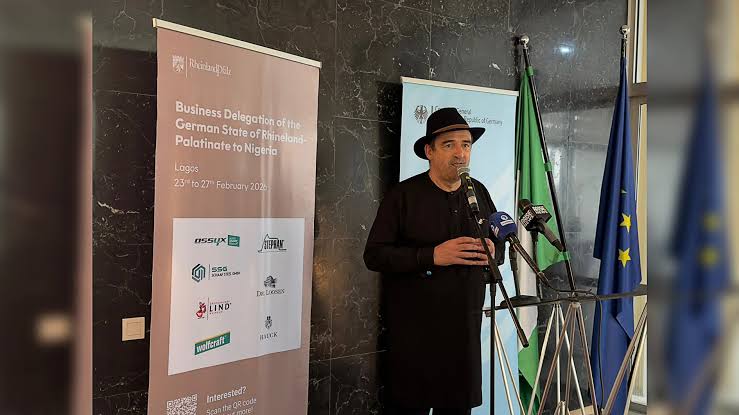
The push was highlighted during a networking event hosted by the German Consulate General Lagos, where Nigerian agribusiness stakeholders, German exhibitors and members of the German diplomatic and business community discussed opportunities to deepen collaboration across Nigeria’s agri-food value chain.
Speaking at a press briefing, the German Consul General in Lagos, Daniel Krull, said strengthening agriculture and food processing is central to Nigeria’s long-term economic growth and food security.
Krull noted that improving the country’s food processing capacity would not only reduce post-harvest losses but also stimulate industrial growth, create jobs and enhance Nigeria’s ability to meet domestic food demand.
He pointed to Germany’s global strength in food processing technology as evidence of how innovation can transform agricultural output into competitive products.
According to him, Germany remains Europe’s largest exporter of coffee despite not cultivating the crop domestically, a feat made possible through advanced processing technology and value-addition capabilities that tailor products to consumer needs.
“Agriculture and food processing are key to addressing food insecurity and unlocking economic potential. Technology and innovation will play a decisive role in enabling Nigeria to fully harness these opportunities,” Krull said.
The annual exhibition, organised by German trade fair company fairtrade Messe GmbH, brings together players across the entire food value chain—from food production and ingredient manufacturing to processing equipment, packaging technologies and finished product distribution.
Managing Director of fairtrade Messe, Paul März, described the event as a vital marketplace where businesses across Nigeria and West Africa connect with global technology providers.
“It is a meeting point and market place where industry meets once a year for Nigeria and West African countries to come to Lagos to discuss products with exhibitors,” he said.
Now in its 11th year in Nigeria, the exhibition featured 137 companies from 17 countries presenting equipment and technological solutions aimed at strengthening food production, processing and packaging.
Since 2017, the fair has also hosted an official German Pavilion supported by the German Government, providing a platform for German manufacturers to showcase advanced machinery designed to improve Nigeria’s food processing capacity.
Organisers said the initiative is aimed at boosting Nigeria’s food self-sufficiency by introducing technologies that reduce dependence on imported food products while encouraging domestic production and industrialisation.
März said the exhibition has already contributed to noticeable improvements in Nigeria’s food processing ecosystem, particularly in the area of packaging and the development of new supply chains.
However, he stressed that significant gaps remain, especially in packaging technology needed to extend shelf life and meet international export standards.
According to him, several companies participating in the fair have already sold machines for sachet packaging, milk powder processing, PET bottling and recycling to Nigerian businesses.
“With its long-term approach, Agrofood will continue to hold yearly in Nigeria to provide even more solutions to existing problems such as food safety, recycling and processing,” he said.
Krull also highlighted Germany’s broader economic engagement with Nigeria, revealing that Germany currently maintains a development portfolio of about €570 million in the country.
He explained that beyond trade exhibitions, the German government supports Nigerian businesses through technical advisory services, vocational education and training programmes as well as financing opportunities for small and medium-scale enterprises.
These include credit facilities and financial support windows facilitated through the German Desk at Access Bank, which provides funding options for businesses seeking to invest in food processing technology.
German companies already operating in Nigeria are also investing heavily in workforce training to ensure local staff can operate and maintain advanced industrial equipment, thereby strengthening technology transfer.
While acknowledging challenges confronting Nigeria’s agri-food sector—including insecurity, financing constraints, regulatory issues and energy shortages—Krull stressed that such obstacles should not deter stakeholders from taking decisive action.
He said Nigeria possesses the natural resources, entrepreneurial capacity and market potential needed to achieve significant growth in the food processing sector if investment, technology and policy support are effectively aligned.
By connecting entrepreneurs, investors and technology providers, he added, initiatives like Agrofood Nigeria could play a pivotal role in accelerating the transformation of Nigeria’s agricultural economy.
Germany, Agrofood Fair Drive Investment and Technology for Nigeria’s Food Processing Sector
Shettima Hosts Gates Foundation Delegation as 2027 Political Calculations Begin
By: Michael Mike
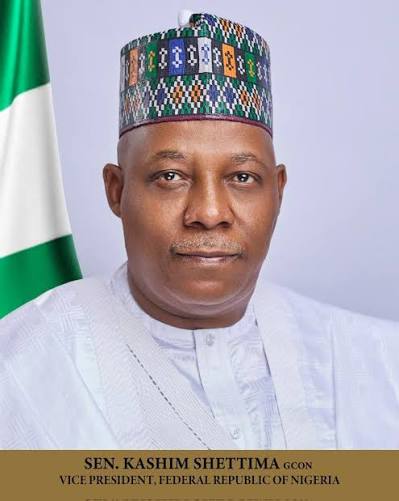
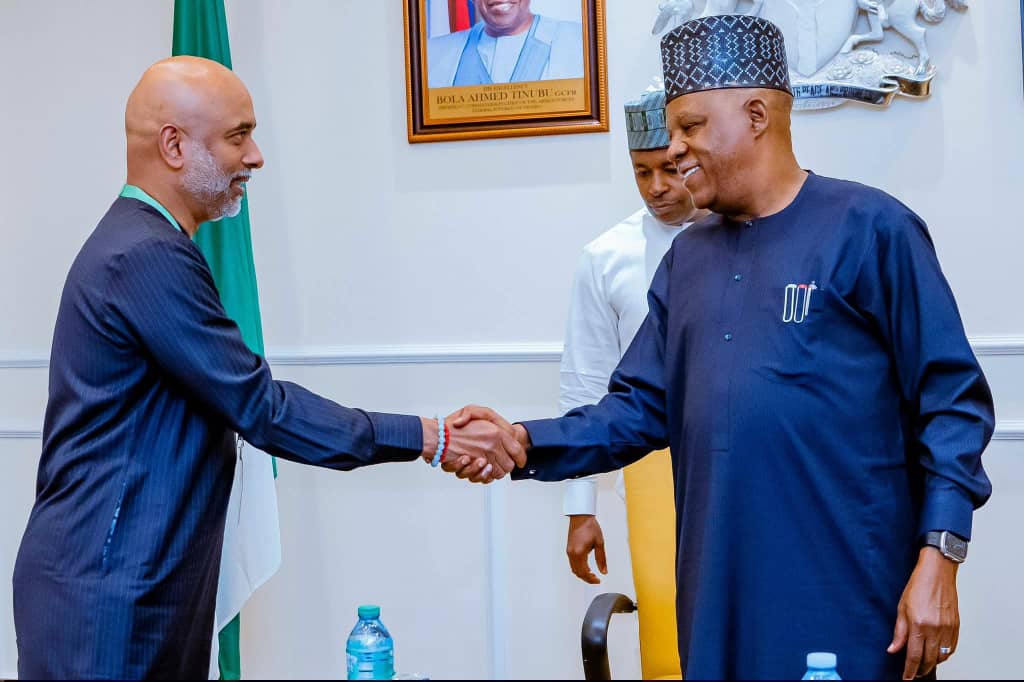
Nigeria’s Vice President, Kashim Shettima, on Wednesday received a high-level delegation from the Gates Foundation at the Presidential Villa in Abuja, in a visit that observers say comes at a politically sensitive moment ahead of the 2027 presidential election.
The delegation was led by the President of the foundation’s Global Growth and Opportunity division, Hari Menon, and included senior officials of the organisation’s Nigeria office. The team briefed the vice president on the foundation’s ongoing programmes and partnerships in Nigeria.
Posting on his verified Facebook page after the meeting, Shettima commended the foundation for its long-standing support to Nigeria in critical sectors such as health, agriculture and development.
“Yesterday, I received in audience a delegation of the Gates Foundation led by the President of the Foundation’s Global Growth and Opportunity (GGO) division, Mr. Hari Menon, at the Presidential Villa, Abuja,” the vice president said.
“In my interaction with the delegation, I applauded the Gates Foundation for sustaining investments and humanitarian aid in Nigeria. Indeed, the Foundation remains the nation’s strategic partner in the drive to change the Nigerian narrative.”
The visit comes amid growing political conversations about the composition of the ruling ticket ahead of the 2027 presidential election and whether President Bola Ahmed Tinubu will retain Shettima as his running mate.
Although the meeting was officially centred on development cooperation, political watchers say the timing has drawn attention within policy and political circles, especially given the influence of the foundation founded by billionaire philanthropist Bill Gates.
Sources familiar with the engagement said discussions focused largely on the foundation’s interventions in Nigeria, including programmes aimed at improving public health, expanding agricultural productivity and supporting vulnerable populations.
During his visit to Nigeria, Menon also held diplomatic engagements, including a visit to the Indian High Commission where he met with the ambassador, Abhishek Singh.
The Gates Foundation has operated in Nigeria since 2000 and has been a key partner in several national initiatives, particularly in immunisation campaigns, disease control, nutrition and agricultural development. The organisation marked 25 years of its presence in the country in 2025.
Despite its extensive development footprint, some of the foundation’s programmes have occasionally attracted debate in Nigeria, particularly around issues such as genetically modified crops, vaccination initiatives and population policies.
Analysts say that as political alignments gradually begin ahead of 2027, high-profile international engagements by key government figures may increasingly attract attention beyond their immediate development objectives.
Shettima Hosts Gates Foundation Delegation as 2027 Political Calculations Begin
2027: Bill Gates Joins Campaign, Supports Shettima
By:Michael Mike
Nigeria’s Vice President, Kashim Shettima has received a highly anticipated support to continue as President Bola Tinubu’s running mate in the 2027 presidential election from chairman of the Gates Foundation, Bill Gates.
The unusual support according to sources knowledgeable about the matter is a lifeline for the embattled vice president.
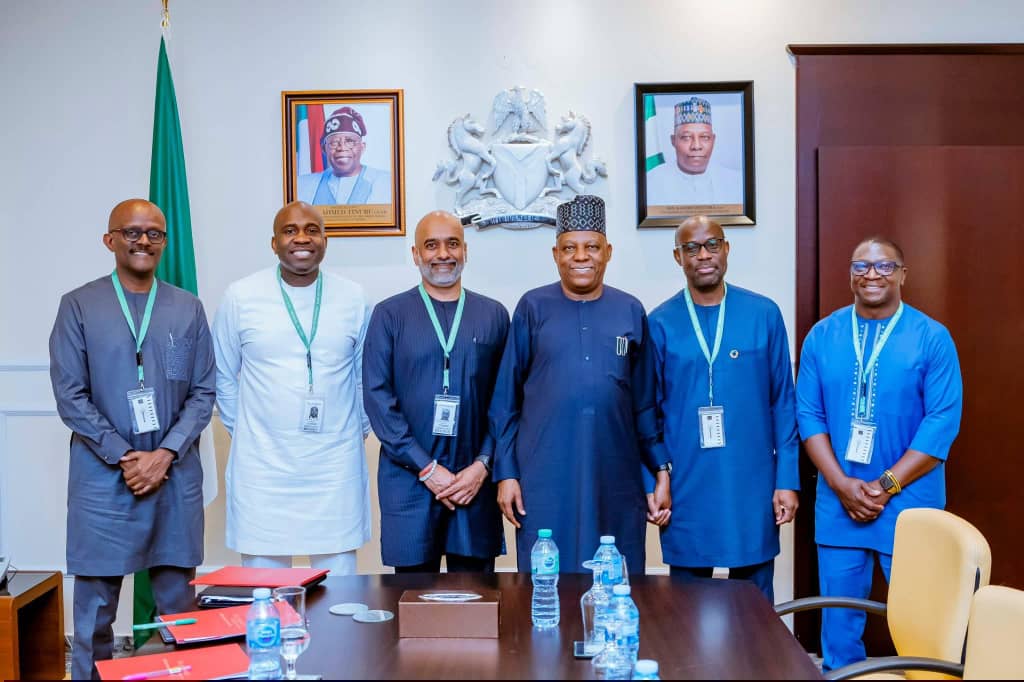
Shettima, whose fate as Tinubu’s running mate has been dangling in the balance received the boost after a delegation from Gates Foundation led by the president, Global Growth and Opportunity (GGO), Hari Menon visited Shettima at the Villa on Wednesday.
According to a post on the vice president’s verified Facebook page, the delegation which also included members of the foundation in Nigeria briefed the VP on its activities in Nigeria .
” Yesterday, I received in audience a delegation of the Gates Foundation, led by the President of the Foundation’s Global Growth and Opportunity (GGO) division, Mr. Hari Menon, at the Presidential Villa, Abuja.
” In my interaction with the delegation, I applauded the Gates Foundation for sustaining investments and humanitarian aid in Nigeria. Indeed, the Foundation remains the nation’s strategic partner in the drive to change the Nigerian narrative, ” Shettima said.
However, the meeting between the vice president and Bill Gates team had another purpose, to pass a vote of confidence on the VP in order to convince President Tinubu to retain him s running mate.
” There have been calls for the president to drop Shettima because of his political baggage and alleged links to the insurgency in the Northeast. Most of the pressure is coming from the United States that currently have soldiers on the ground in nigeria, providing support for the Nigerian military.
” What better way to shore up support than to bring the biggest philanthropist to Nigeria in order to prove that he still hs some international connections, ” the source said.
In his visit to Nigeria, Menon who is of Indian heritage also visited the Indian High Commission to Nigeria, meeting with the ambassador, Abhishek Singh.
The Gates Foundation has been active in Nigeria since 2000 and it celebrated its 25th years in the country last year. Activities of the foundation has also come under scrutiny for many years especially it’s support for population control, Genetically Modified Organisms in agriculture and questionable polio immunisation.
2027: Bill Gates Joins Campaign, Supports Shettima

Former Kaduna governor El-Rufai loses mother

NSCDC Unveils Five-Year Strategy to Strengthen National Security

ECOWAS Court Launches Five-Year Strategic Plan to Deepen Justice, Regional Integration

Roger Federer’s Shock as DNA Results Reveal Myla and Charlene Are Not His Biological Children

THE PLIGHT OF FARIDA

FAILED COUP IN BURKINA FASO: HOW TRAORÉ NARROWLY ESCAPED ASSASSINATION PLOT AMID FOREIGN INTERFERENCE CLAIMS
-
 News2 years ago
Roger Federer’s Shock as DNA Results Reveal Myla and Charlene Are Not His Biological Children
-
Opinions4 years ago
THE PLIGHT OF FARIDA
-
 News11 months ago
FAILED COUP IN BURKINA FASO: HOW TRAORÉ NARROWLY ESCAPED ASSASSINATION PLOT AMID FOREIGN INTERFERENCE CLAIMS
-

 News2 years ago
EYN: Rev. Billi, Distortion of History, and The Living Tamarind Tree
-
 Opinions4 years ago
POLICE CHARGE ROOMS, A MINTING PRESS
-

 ACADEMICS2 years ago
A History of Biu” (2015) and The Lingering Bura-Pabir Question (1)
-

 Columns2 years ago
Army University Biu: There is certain interest, but certainly not from Borno.
-

 Opinions2 years ago
Tinubu,Shettima: The epidemic of economic, insecurity in Nigeria
