
National News
FG Moves To Restore 4 Million Degraded Forest

FG Moves To Restore 4 Million Degraded Forest
By: Michael Mike
The Federal Government said it will soon move to restore 4 million hectares of degraded land forest and landscape, which is in line with its commitment to the Africa Forest Landscape Restoration Initiative, (AFR100).
It however said that this would only be achievable through stakeholders’ collaboration that would create an enabling environment for the exchange of information relating to successful implementation through its various engagements.
The Minister of State for Environment, Sharon Ikeazor, disclosed this at the Formal Inauguration of the AFR100 National Stakeholders Platform on Degraded Forest and Landscape Restoration in Nigeria, held in Abuja on Thursday.
Ikeazor said the AFR100 would accelerate achievement of food security, increase climate change resilience and mitigation as well as combat rural poverty.
The Minister added that: “This will not only contribute to the UN decade on ecosystem restoration but will also deliver on the objectivities of the three global Multilateral Environmental Agreements, that is the United Nations Framework Convention on Climate Change, UNFCCC, United Nations Convention to Combat Desertification, UNCCD and the United Nations Convention on Biological Diversity, UNCBD.”
She noted that landscape restoration is not limited to planting trees, it is about restoring the whole landscape and involves several sectors such as agriculture, livestock, forest and the environment, town planning and housing, water and sanitation, energy, tourism and land use planning.
She said that “the platform would serve as a framework for exchange of experience, sharing of results and dissemination of information on the restoration of forest and degraded landscapes in Nigeria to track and monitor progress thereby subscribing to the Bonn challenge barometer.”
She added that: “After more than four years since Nigeria joined the AFR100 imitative, the government through the Federal Ministry of Environment with the Department of Desertification, Land Degradation and Drought Management as the focal department for the AFR100 initiative is here to inaugurate the AFR100 national stakeholder’s platform to foster collaboration among MDA’S public and private Oragnisation, CBO’s, NGO’s, as this would enhance coordination of restoration activities and strengthen partnership.”
She claimed that collective commitment towards sustainable land management practices would help conserve and restore the Nigeria environment and make the country vulnerable to climate change.
Ikeazor said each year, 13 billion hectares of forest are lost to land conversion for agriculture uses such as pasture and cropland.
She lamented that: “This has detrimental effects on regional water availability, soil fertility, biodiversity, and climate change. More than 70% of all natural ecosystems have been transformed to produce food and animal, illegal logging is threatening forest worldwide, home to several indigenous people, communities and wildlife.”
Also Read: Police arrest popular singer Timaya over alleged…
In his remarks, the Permanent Secretary Ministry of Environment, Mr Hassan Musa, said the AFR100 stakeholder platform would create awareness, promote sustainable practice, and serve as frame work for the exchange of experience as well as sharing of results and dissemination of information on restoration activities in the country.
It would also present an opportunity for public and private sectors to demonstrate large scale of transformative action to restore degraded land.
He said; “A national stakeholder’s platform for forest Landscape Restoration was convinced to help harmonise and integrate various interventions on restoration in the country, to accelerate restoration practices towards achieving the commitments to the African Forest Initiative, AFR100 and the Bonn challenge.”
He also commended the development partners especially the United Nations Development Program UNDP for sponsoring this meeting to foster collaboration amongst stakeholders and hasten the restoration of degraded forest and landscapes.
AFR100 Regional Coordinator for West Africa, Dr Oluseynou Ndoye commended the Nigerian government for taking the decision to restore 4m hectares of degraded land forest and land by 2030, being the second largest engagement in West Africa.
He noted that exceeding the objective of the initial commitment, 33 technical partners and 12 financial partners support the initiative.
“The AFR100 Initiative responds to the Africa Union mandate to restore 100million hectares of degraded forest and land by 2030. It is a contribution to Agenda 2063 which is the African continents strategic framework for an inclusive and sustainable development, ” Dr Ndoye added.
The Africa Forest Landscape Restoration Initiative, AFR100 is a country led effort to restore 100m hectares of forest and degraded landscape across Africa by 2030, to date 32 countries have pledged to restore 128million hectares thus surpassing the commitment goal.
It is a pan Africa initiative aimed at restoring 100m hectares of degraded forest and land by the year 2030.
FG Moves To Restore 4 Million Degraded Forest


National News
President Tinubu Storms Jos Today To Commiserate With Residents Of Angwa Rukuba Massacre


President Tinubu Storms Jos Today To Commiserate With Residents Of Angwa Rukuba Massacre
By: Bodunrin Kayode
President Bola Tinubu will today visit the Plateau state capital Jos to commiserate with residents who lost loved ones during the Palm Sunday shooting spree by criminals that took place at Angwa rukuba area of the city.
The President who was scheduled to visit Ogun state postponed his scheduled trip to Iperu, meant to flag off operations at the Gateway International Cargo Airport.
From the Plateau, the President is expected to travel to Lagos to observe Good Friday public holiday which ushers the beginning of the Easter public holiday which rounds up the lent period.
A state house release signed yesterday by the Presidential spokesman Bayo Onanuga noted that President Tinubu will travel to Ogun State for the commissioning of the Cargo Airport and the inauguration of two commercial aircrafts for the export and import of goods, aimed at boosting the state’s economic growth on Saturday April 4th.
“He will also inaugurate the new edifice of the Federal Operations Unit of the Nigerian Customs Service and its operational vehicles.
“He will return to Lagos to continue the Easter holiday, during which he is also expected to commission infrastructural projects undertaken by the administration of Governor Babajide Sanwo-Olu.
“These projects include: the iconic Ojota/Opebi Link Bridge; the Lagos State Geographic Information System Building; the Multi-Agency Complex named after the President, and a school Complex.
“Before returning to Abuja, President Tinubu will visit Bayelsa State on April 10 to commission some of Governor Duoye Diri’s completed projects.” Said the release.
Sadly several residents lost their lives during the black Palm Sunday shooting spree which is suspected to have been carried out by auto bike riding bandits following after their patterns in the hinterlands of the state.
These bandits who had tormented, killed and destroyed homes of residences of the Jos north axis of the state for several years after September 7th 2001
This damnation let loose on innocent residents is resurfacing after hundreds of killings had occurred in the Jos North council area of the state from September 7th 2001 till date.
And because of the myriad of challenges creeping into the federal security system sub regionals have geared up to manage their on police and Intel services which would assist greatly because they are masters of their territories.
The Federal government is fast tracking the process of state police to ensure that each sub nationals take charge of their environment to ensure that they support the center in the maintenance of internal security.
President Tinubu Storms Jos Today To Commiserate With Residents Of Angwa Rukuba Massacre

NiMet predicts 107 to 138 days of rainfall in Gombe
The Nigerian Meteorological Agency (NiMet) has said that in 2026, the length of the rainy season in Gombe State is expected to be between 107 and 138 days.
This is contained in the Agency’s 2026 Seasonal Climate Prediction (SCP) document, which Gayus Musa, the meteorological manager for Gombe State, made available to Our Correspondent in Gombe on Tuesday.
The total amount of rainfall across Gombe State in 2026 is predicted to be between 701 mm in the northern part of the state (Nafada) and 1089 mm in the South (Shongom).
The onset of the rainfall is expected to commence in the state on May 29 (Shongom) and cease by October 22 (Yamaltu/Deba).
Similarly, in the prediction, four local government areas of the state, namely: Nafada, Yamaltu/Deba, Dukku and Funakaye were likely to be impacted by a severe dry spell (21 days and above) between June and August.
Musa while speaking to Our Correspondent on the first rainfall experienced in some communities in Akko, Gombe and Yamaltu/Deba Local Government Areas of the state on Monday urged farmers to resist the temptation of early planting of crops.
He described the first rain as false onset, explaining that the rainfall was false because it would not support any germination as seeds planted with such rain would not survive.
“This (first rain) is a false onset because the precipitation cannot carry any germination and so any seed planted would not survive.
“So farmers should not engage themselves in planting but to prepare their farmlands while getting their seeds and other inputs ready,” he said.
Musa advised farmers in the state, to make use of the prediction in carrying out farming activities towards avoiding losses in view of the impact of climate change on agriculture.
He further urged relevant authorities in the state to take proactive measures towards tackling environmental issues associated with the rainy season.
NiMet predicts 107 to 138 days of rainfall in Gombe
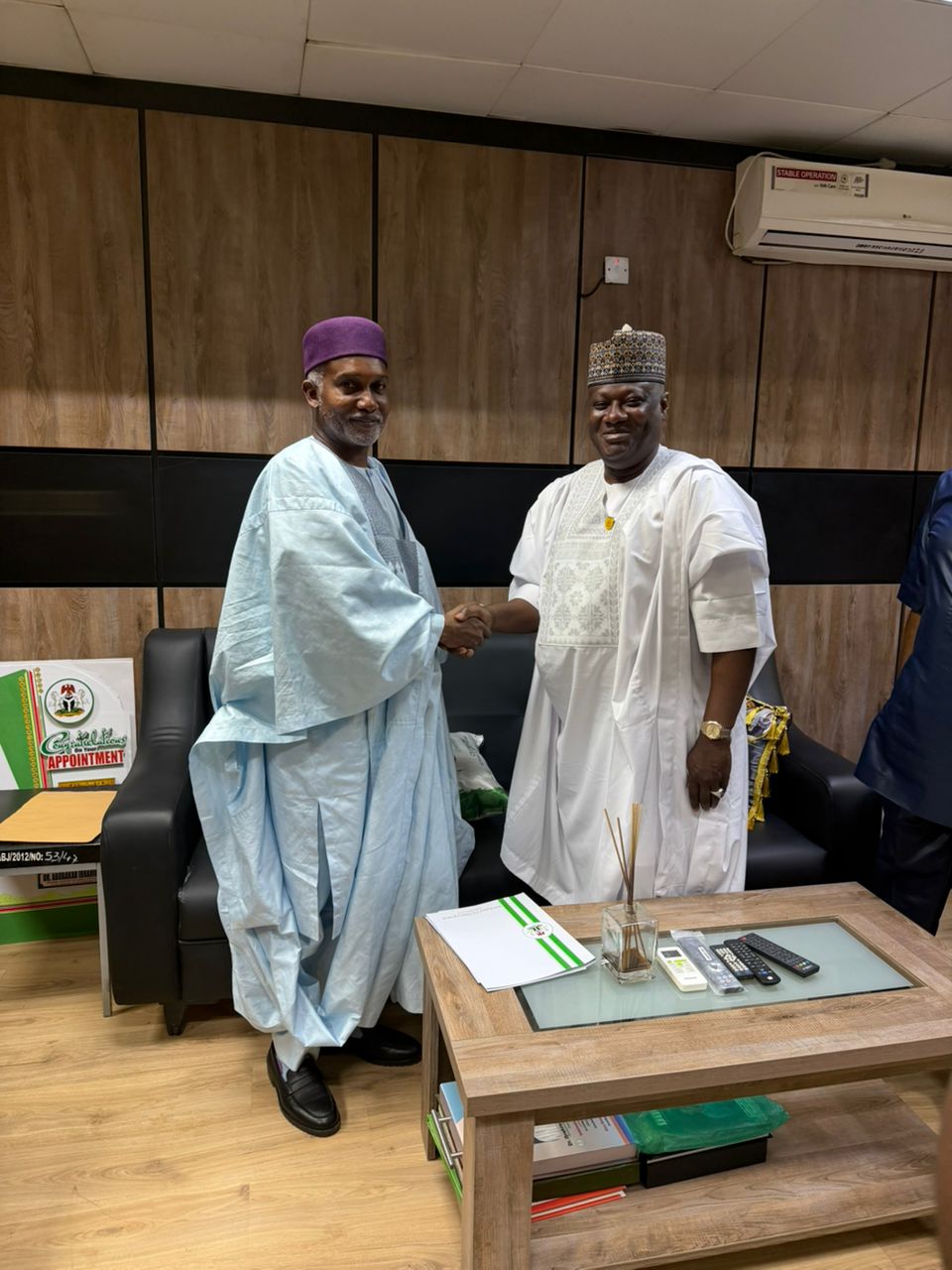
Tuggar Resigns from Tinubu’s Cabinet, Sets for Bauchi Governorship
By: Michael Mike
The rumoured interest of Minister of Foreign Affairs, Ambassador Yusuf Tuggar in becoming the governor of Bauchi State come 2027 may have been confirmed he resigned on Monday to prepared ground for actualization of his political ambition.
The resignation was ahead of the deadline set for political appointees seeking elective positions in the forthcoming general elections.
In a resignation letter submitted to the office of the Secretary to the Government of the Federation, Tuggar expressed profound gratitude to President Bola Ahmed Tinubu for the opportunity to serve the country and contribute to the implementation of the administration’s Four-D foreign policy strategy.
The former minister also appreciated the management and staff of the Ministry of Foreign Affairs and members of the diplomatic community for their cooperation and support throughout his tenure.
During his time in office, Tuggar was credited with advancing Nigeria’s foreign policy objectives through initiatives focused on people-centred diplomacy. These included humanitarian evacuations, facilitation of scholarships for Nigerians abroad, and sustained support for citizens in the diaspora.
His tenure also witnessed increased diaspora engagement, including efforts to develop a structured database of Nigerians living abroad aimed at strengthening their participation in national development.
In addition, Tuggar strengthened bilateral and multilateral relations through strategic engagements with traditional partners and regional alliances, particularly across the Global South. His leadership also promoted regional security cooperation and supported the formation of the Regional Partnership for Democracy initiative.
He also prioritised economic diplomacy, positioning Nigeria as an attractive destination for foreign investment, especially in the energy sector, while facilitating diplomatic interventions that secured the release of detained Nigerians in foreign countries and improved bilateral relations.
The resignation letter was received on behalf of the Secretary to the Government of the Federation by Dr. Abubakar Kana, Permanent Secretary, General Services Office, ahead of the March thirty-first deadline directed by President Tinubu in line with provisions of the Electoral Act.
Tuggar’s resignation was conveyed in a statement issued by his Special Assistant on Media and Communications Strategy, Alkasim Abdulkadir.
Tuggar Resigns from Tinubu’s Cabinet, Sets for Bauchi Governorship

Troops repel bandits’ attack in AgatuBenue

Troops recover another bodies of four herders, targeted and killed by Kaduna

Six more top bandit leaders eliminated alongside Ado Allero’s son in Zamfara offensive

Roger Federer’s Shock as DNA Results Reveal Myla and Charlene Are Not His Biological Children

THE PLIGHT OF FARIDA

FAILED COUP IN BURKINA FASO: HOW TRAORÉ NARROWLY ESCAPED ASSASSINATION PLOT AMID FOREIGN INTERFERENCE CLAIMS
-
 News2 years ago
Roger Federer’s Shock as DNA Results Reveal Myla and Charlene Are Not His Biological Children
-
Opinions4 years ago
THE PLIGHT OF FARIDA
-
 News12 months ago
FAILED COUP IN BURKINA FASO: HOW TRAORÉ NARROWLY ESCAPED ASSASSINATION PLOT AMID FOREIGN INTERFERENCE CLAIMS
-

 News2 years ago
EYN: Rev. Billi, Distortion of History, and The Living Tamarind Tree
-
 Opinions4 years ago
POLICE CHARGE ROOMS, A MINTING PRESS
-

 ACADEMICS2 years ago
A History of Biu” (2015) and The Lingering Bura-Pabir Question (1)
-

 Columns2 years ago
Army University Biu: There is certain interest, but certainly not from Borno.
-

 Opinions2 years ago
Tinubu,Shettima: The epidemic of economic, insecurity in Nigeria
