
National News
FG set to improve Health Research Funding, Review Ecosystem

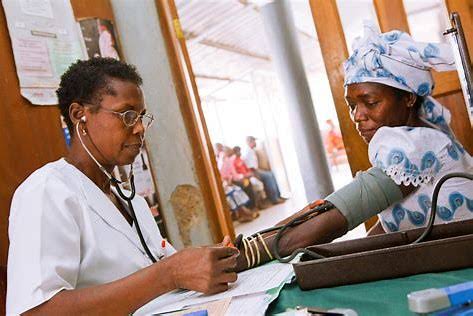
FG set to improve Health Research Funding, Review Ecosystem
•Ministry of health hosts Heth research conference Wednesday
By: Michael Mike
The Federal government is set to improve the health research funding as part of the overall goal to reform and improve the health sector in Nigeria. This comes as the Ministry of Health hosts a one-day National Strategic Meeting on Health Research Development and Innovation in Abuja on Wednesday.
This was contained in a statement of Tuesday, made available by Dr. Lolade Dosunmu Adeyemi, Special Assistant on Research and Innovation to the Honourable Minister of State for Health. The theme of the meeting organized by the ministry’s Department of Health Planning, Research and Statistics is Health Research in Nigeria, Time to Change the Narrative.
Coming on the heels of the Honourable Minister of Health and Social Welfare’s recent inauguration of the National Health Research Committee (NHRC) and National Health Research Ethics Committee ( NHREC) , the meeting will deliberate on issues of critical importance to health system research in Nigeria including a review of current research ecosystem with a view to unlock the healthcare value chain through cutting edge innovative research and capacity strengthening for teeming Nigeria health researchers.
According to the statement, the one-day meeting will also deliberate on resource mobilization initiatives and engage with the legislative arm of government on increased funding for health research in Nigeria.
The meeting will also have in attendance research leaders and key stakeholders including Chairman Senate Committee on Health, Chairman House of Representatives Committee on Health, the EU Ambassador, representatives of WHO, NAFDAC amongst other dignitaries.
There will be a key note presentation by the Vice Chancellor of University of Lagos, Professor Folashade Ogunsola followed by technical presentations and panel discussions. A communique will be issued at the end of the meeting.
FG set to improve Health Research Funding, Review Ecosystem


National News
Nigeria, UNESCO Launch World’s First Media and Information Literacy Institute in Abuja
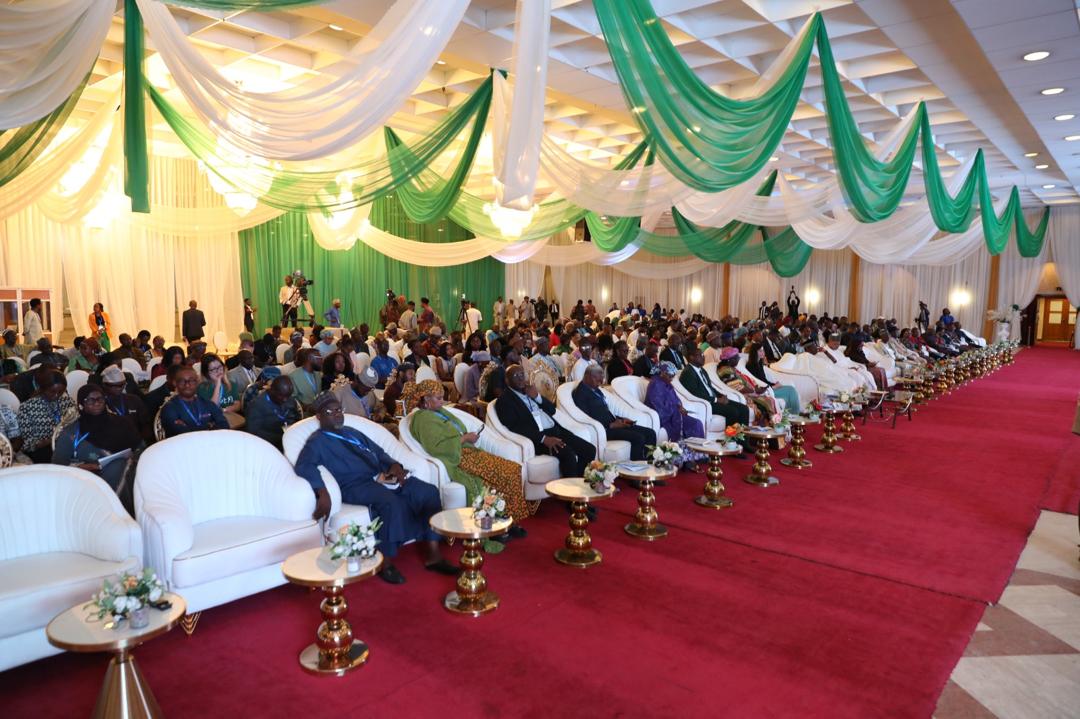
Nigeria, UNESCO Launch World’s First Media and Information Literacy Institute in Abuja
By: Michael Mike
Nigeria has taken a significant step onto the global stage with the launch of the world’s first International Media and Information Literacy Institute (IMILI), a landmark initiative developed in partnership with United Nations Educational, Scientific and Cultural Organisation (UNESCO).
The institute was officially unveiled on Wednesday in Abuja by the Federal Ministry of Information and National Orientation, positioning Nigeria at the forefront of global efforts to strengthen media literacy, combat misinformation, and promote critical thinking in an increasingly complex digital age.
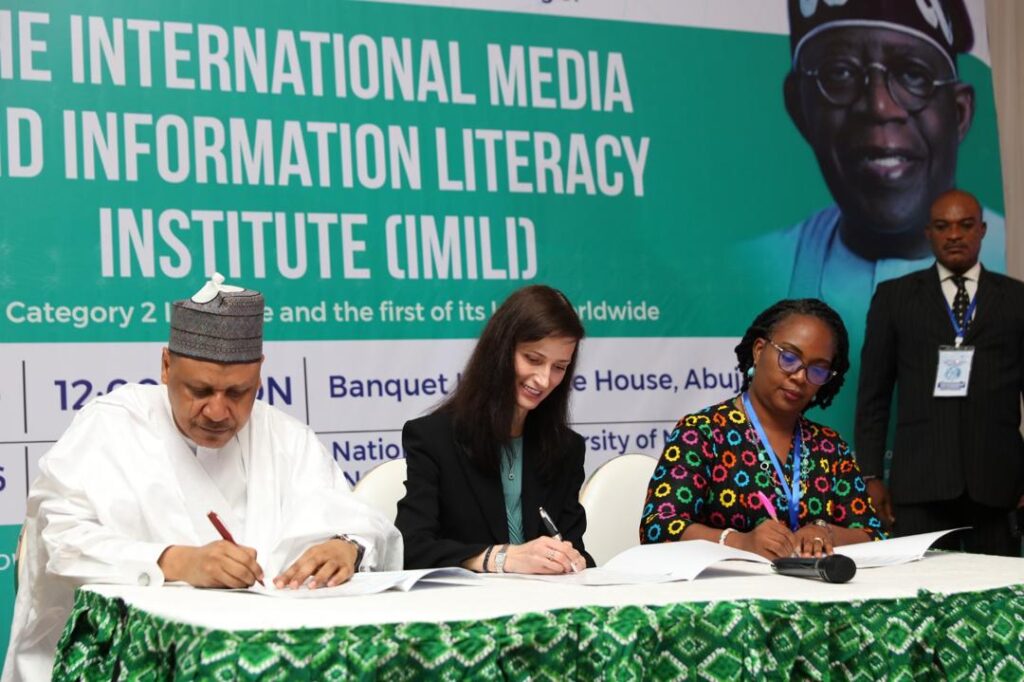
The establishment of IMILI marks a historic milestone not just for Nigeria, but for Africa and the international community, as it becomes the first UNESCO Category 2 Institute globally dedicated solely to Media and Information Literacy (MIL).
Speaking at the launch, UNESCO Assistant Director-General for Communication and Information, Mariya Gabriel, described the institute as a timely and transformative response to one of the defining challenges of the modern era — ensuring that access to information translates into informed, responsible, and empowered societies.
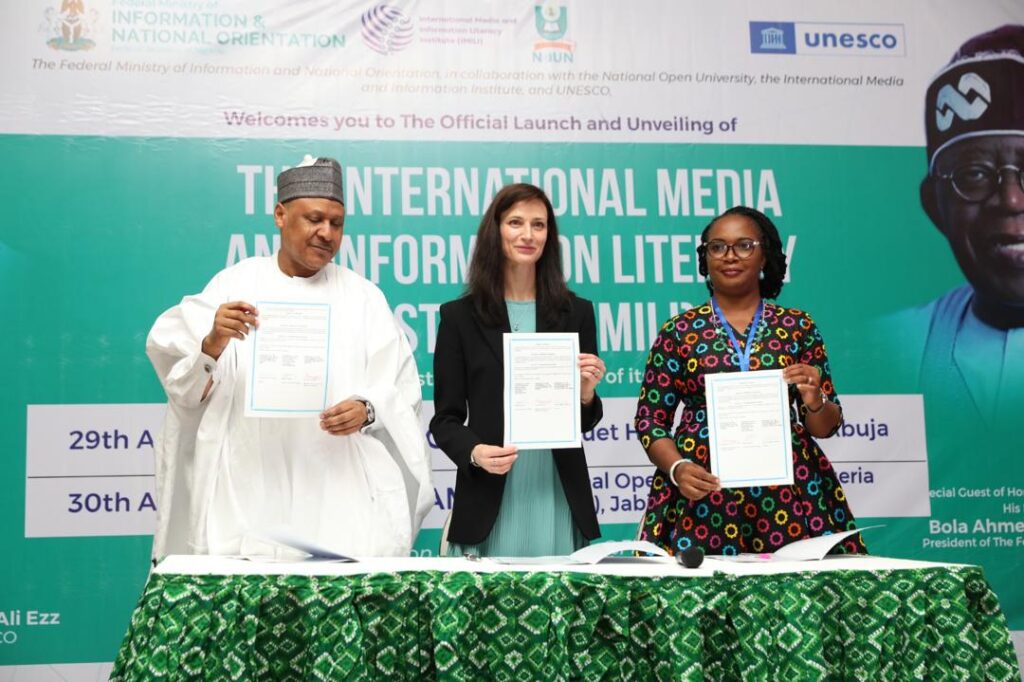
“In a world where the volume of information continues to grow exponentially, the ability to distinguish between reliable and misleading content has become essential,” she said.
IMILI is expected to serve as a global hub for research, innovation, and capacity development in media literacy. It will provide training for educators, policymakers, media professionals, and young people, equipping them with tools to critically engage with information, counter misinformation, and actively participate in democratic processes.
The institute will also support curriculum development, foster international collaboration, and connect Nigeria to a global network of expertise, reinforcing Media and Information Literacy as a universal public good.
UNESCO commended the leadership of President Bola Ahmed Tinubu for his vision and commitment in bringing the initiative to fruition. It also acknowledged the pivotal role played by the Minister of Information and National Orientation, Mohammed Idris Malagi, whose strategic leadership was described as instrumental in advancing the media literacy agenda in Nigeria.
The organisation further recognised contributions from key stakeholders, including the Nigerian National Commission for UNESCO, the UNESCO Abuja Office, and Nigeria’s Permanent Delegation to UNESCO, whose collaborative efforts ensured the successful establishment of the institute.
By hosting IMILI, Nigeria is sending a strong signal that Africa is not only responding to the challenges of the digital age but is actively shaping global solutions. With its vibrant media landscape, youthful population, and expanding digital ecosystem, the country is seen as uniquely positioned to lead this transformative agenda.
Beyond its institutional significance, the launch of IMILI represents a broader commitment to empowering citizens — not just to access information, but to understand, question, and use it responsibly.
As the institute begins operations, it is expected to serve as a catalyst for strengthening trust, promoting informed decision-making, and advancing democratic values across Nigeria, Africa, and the wider world.
Nigeria, UNESCO Launch World’s First Media and Information Literacy Institute in Abuja
National News
China Hands Over Landmark ECOWAS Headquarters in Abuja, as Leaders Call for Stronger West African Unity
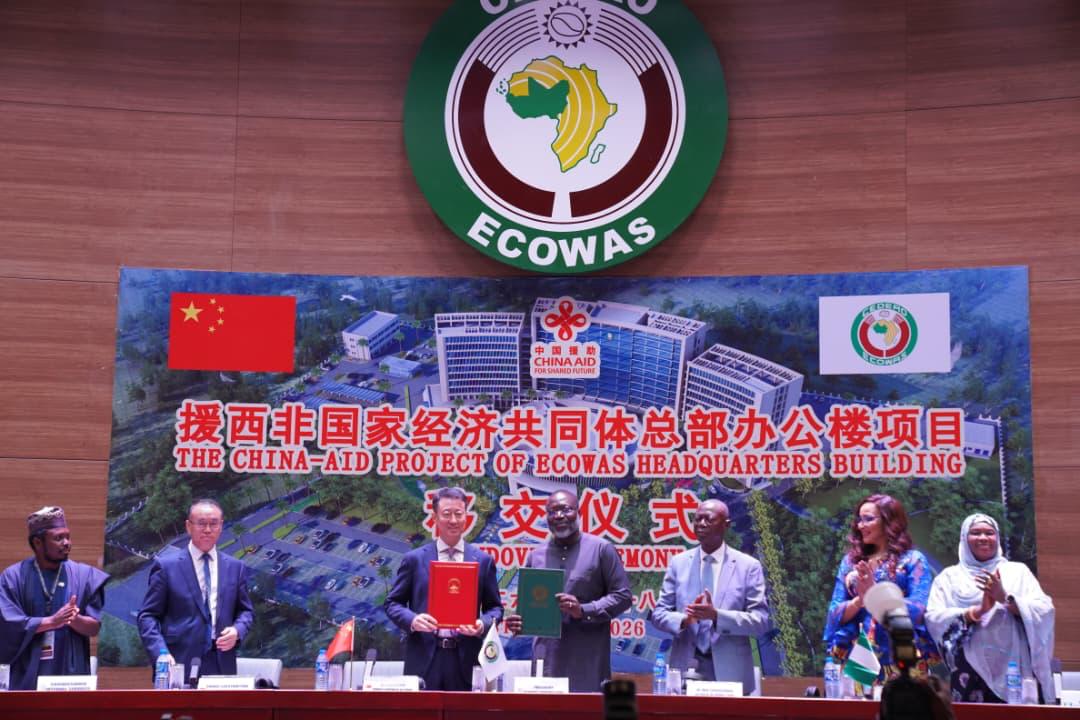
China Hands Over Landmark ECOWAS Headquarters in Abuja, as Leaders Call for Stronger West African Unity
By: Michael Mike
The Government of China on Tuesday officially handed over the newly constructed headquarters complex of the Economic Community of West African States in Abuja, in a ceremony marked by strong appeals for unity, deeper integration, and renewed commitment to regional cooperation across West Africa.
The event brought together senior government officials, diplomats, and regional leaders, with speakers consistently framing the project as more than infrastructure—describing it as a strategic symbol of partnership, vision, and collective ambition for the sub-region.
President of the ECOWAS Commission, Omar Alieu Touray, described the occasion as a historic milestone, noting that it coincides with the bloc’s 50th anniversary.
“Today marks an important day for ECOWAS and we should all be glad to be witnesses to this momentous occasion marking the official handover of the New ECOWAS Headquarters Complex to the Commission,” he said, adding that the development comes at an opportune time in the organisation’s integration journey.
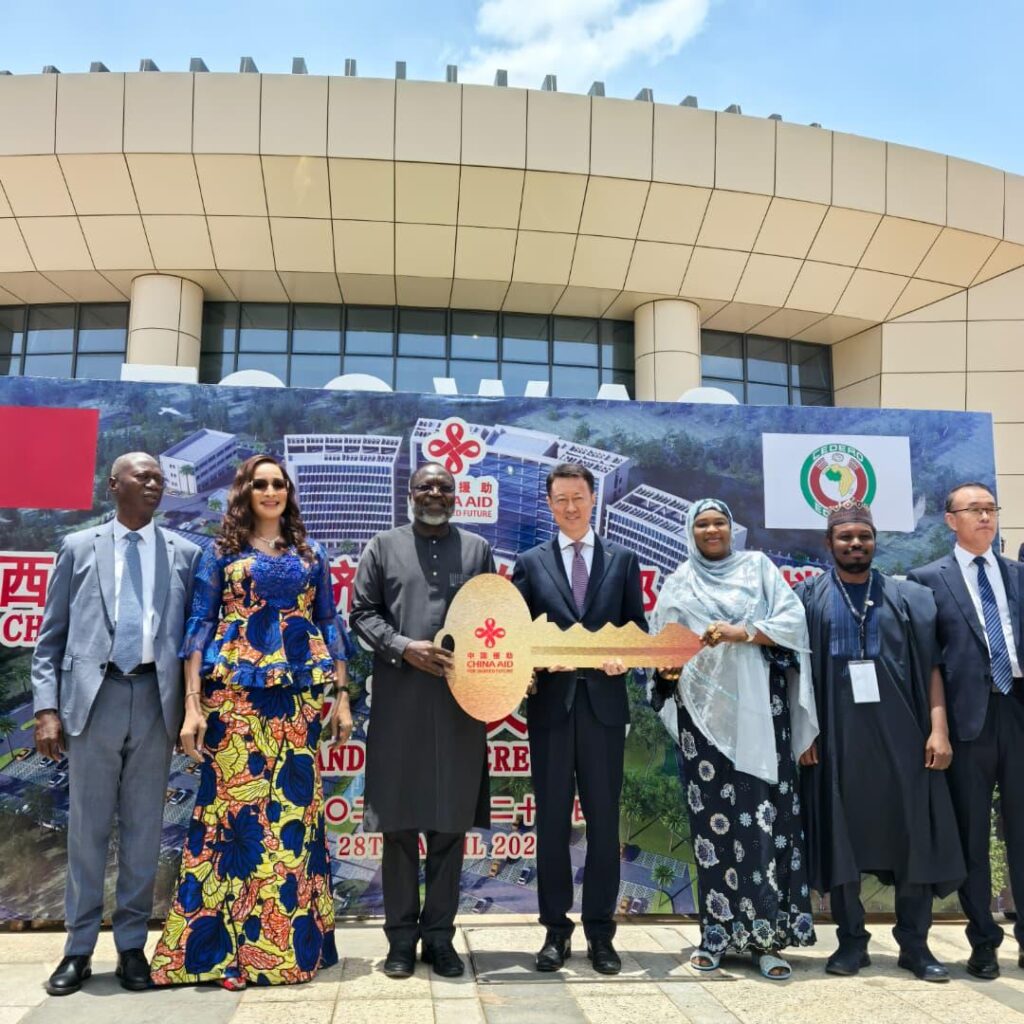
Touray clarified that the ceremony represents the completion and handover of the building, while the formal inauguration will take place later in the year. The commissioning is expected to be led by Sierra Leone’s President, Julius Maada Bio, in his capacity as Chairman of the ECOWAS Authority, alongside Nigeria’s President, Bola Ahmed Tinubu, and other heads of state.
Reflecting on the project’s origins, he recalled that the groundbreaking took place in October 2023 with funding support from China amounting to approximately $56.57 million.
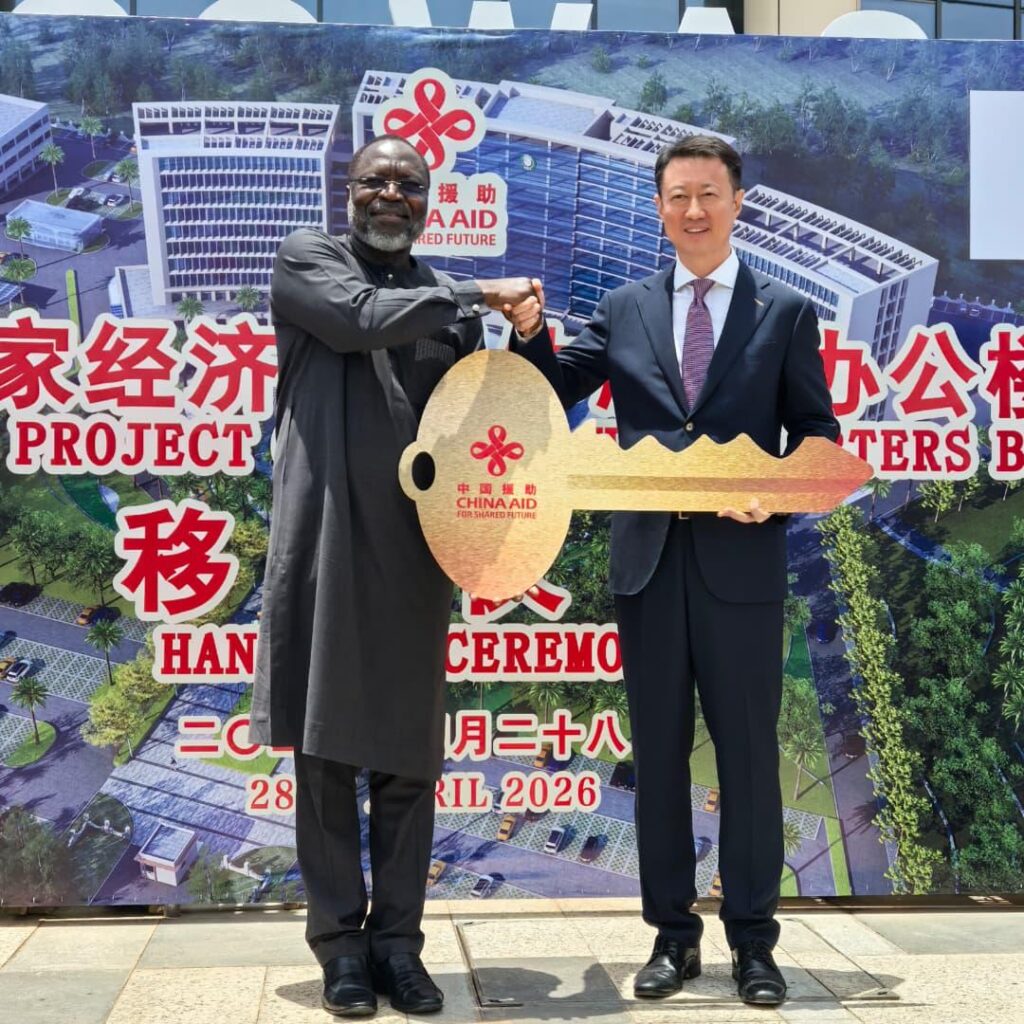
“As you may recall, back in October 2023, we convened here for the groundbreaking ceremony of this complex… Today, two years after that initiation, we are gathered for the handover ceremony of this remarkable building,” he said.
Touray commended the speed and quality of delivery, noting: “Considering the time usually taken to complete infrastructure projects of this magnitude and complexity, the completion of this ECOWAS Headquarters Complex within two years is highly commendable and we should all applaud our Chinese brothers and sisters.”
He also extended appreciation to Chinese President Xi Jinping, represented by Ambassador Yu Dunhai, for what he described as a generous contribution to regional development, while acknowledging China’s broader support for ECOWAS peace and security operations, including assistance to the ECOWAS Standby Force.
Touray further thanked Nigerian authorities, including the FCT Minister Nyesom Wike, for their support in facilitating the successful execution of the project.
Chinese Ambassador Yu Dunhai, in his remarks, described the headquarters as a flagship project and a symbol of enduring China-Africa cooperation.
“This headquarter building stands as a milestone—it is China’s flagship aid project for ECOWAS and another headquarters for an international organization,” he said, comparing it to other major Chinese-supported institutional projects on the continent.
Affectionately called the “Eye of West Africa,” the ambassador said the structure was completed after “more than 1,200 days and nights of meticulous craftsmanship,” blending Chinese engineering expertise with West African cultural identity.
“The building harmonizes the excellence of Chinese architectural technique with the unique culture of West Africa,” he said, adding that it will strengthen ECOWAS’ operational capacity and serve as a platform for regional development.
Yu also situated the project within broader diplomatic context, noting that this year marks 70 years of China-Africa relations. He said China continues to support African modernization through initiatives such as the “Ten Partnership Actions,” expanded South-South cooperation frameworks, and zero-tariff access for African exports.
“We remain committed to a demand-driven approach that respects African autonomy and sovereignty, translating our support into tangible actions for Africa’s revitalization,” he said.
He reaffirmed China’s support for ECOWAS and praised its role in regional peace and integration, while also acknowledging Nigeria’s leadership in the partnership.
For Nigeria, the host nation, the project carries deep symbolic weight.
Minister of the Federal Capital Territory, Nyesom Wike, said the occasion represented far more than a physical handover.
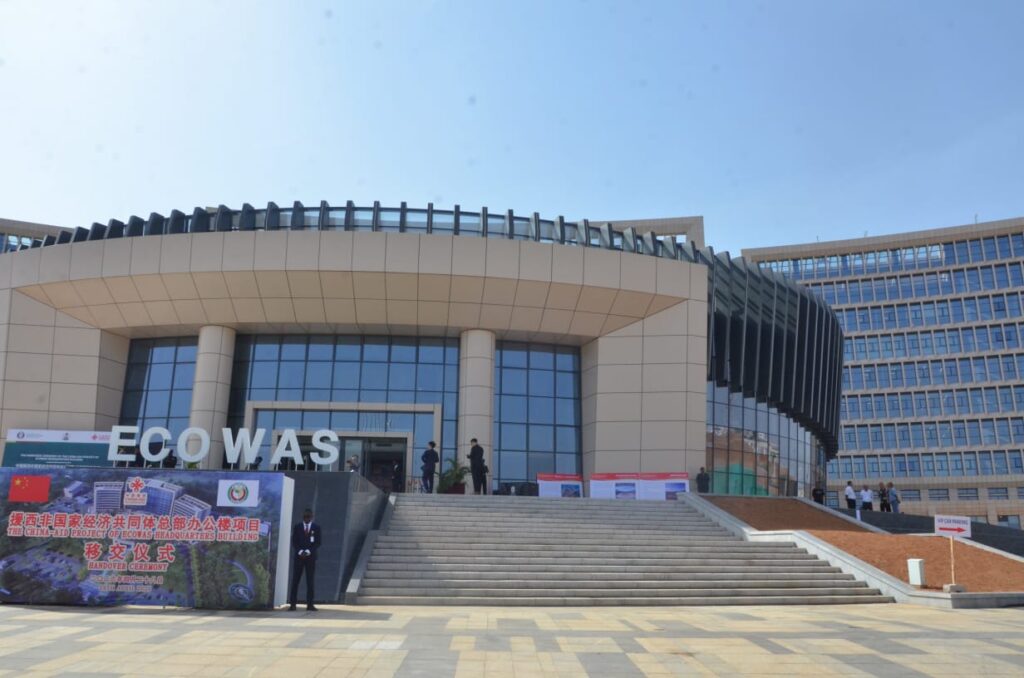
“Today is not just about the handover of a building. Today marks the handover of a vision. A vision of partnership. A vision of regional solidarity. A vision of a West Africa that is prepared to build the institutions that will carry its future,” he said.
Wike described the headquarters as “more than concrete, steel, and glass,” calling it “a statement that cooperation still matters” and proof that diplomacy can still deliver tangible results.
He emphasized Abuja’s status as a diplomatic hub, noting: “Abuja is not only the seat of government; Abuja is the diplomatic capital of this nation, a meeting point of nations.”
He added: “Great institutions deserve worthy homes,” describing ECOWAS as a key expression of regional identity and hope.
Minister of State for Foreign Affairs, Bianca Odumegwu-Ojukwu, also framed the handover as a historic and symbolic moment.
“It is with profound honour and a deep sense of history that I stand before you today,” she said, describing the event as more than the commissioning of a building, but “the consolidation of a vision, a reaffirmation of unity, and a renewed commitment to peace and sustainable development.”
She highlighted ECOWAS’ role since 1975 in conflict prevention, peacekeeping, economic integration, and governance, stressing that the new headquarters would enhance institutional efficiency and coordination.
“This new Headquarters therefore symbolizes more than administrative convenience. It is a strategic asset that will enhance institutional effectiveness… and reinforce the capacity of the Commission to respond to emerging regional and global challenges,” she said.
Odumegwu-Ojukwu praised President Tinubu’s leadership in advancing regional integration and commended China for what she called a “remarkable gesture of goodwill,” adding that the project reflects “mutual respect, shared prosperity, and South-South cooperation.”
She also issued a strong call to member states:
“At a time when our region is confronted with complex challenges… our unity is not optional, it is imperative. We must continue to act in concert, speak with one voice.”
Across all speeches, a consistent message emerged: while the new headquarters represents a major infrastructural achievement, its true value will depend on the political unity and collective resolve of West African states.
As the ceremony concluded, leaders underscored that the building is not an end in itself, but a platform for the next phase of regional integration—one defined not by construction, but by cooperation.
China Hands Over Landmark ECOWAS Headquarters in Abuja, as Leaders Call for Stronger West African Unity
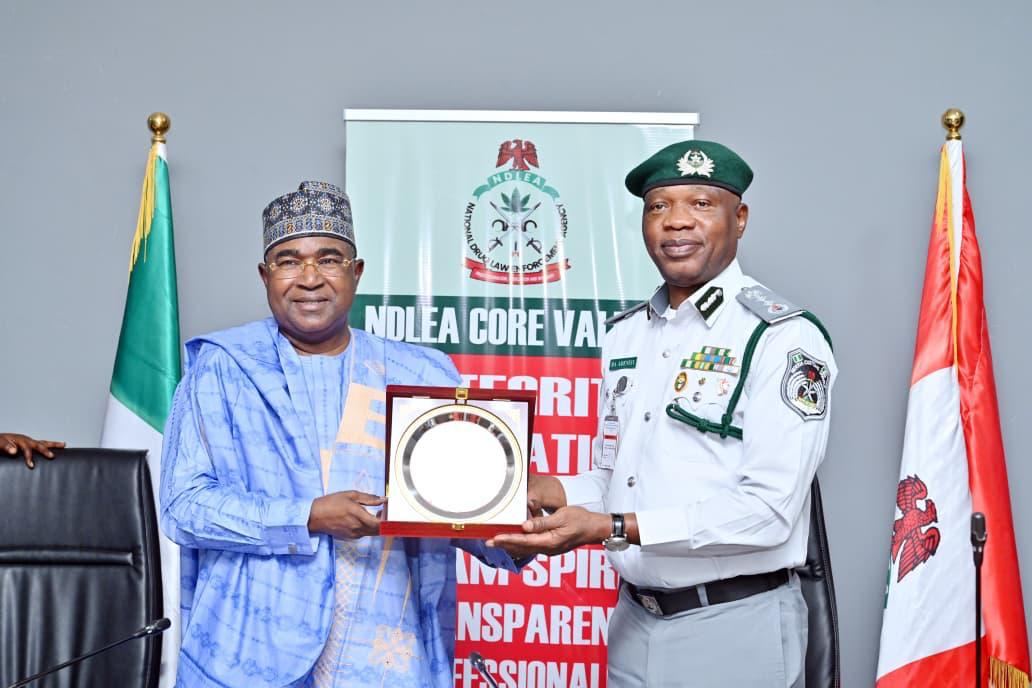
NDLEA, Customs Forge Alliance to Tackle Drug Trafficking
By: Michael Mike
The National Drug Law Enforcement Agency (NDLEA) and the Nigeria Customs Service (NCS) have formalized a strategic partnership aimed at strengthening border security and combating drug trafficking across Nigeria.
The agreement was reached during a high-level meeting at the NDLEA headquarters in Abuja on Monday, where a joint communiqué was signed by NDLEA Chairman, Buba Marwa, and the Comptroller-General of Customs, Bashir Adewale Adeniyi.
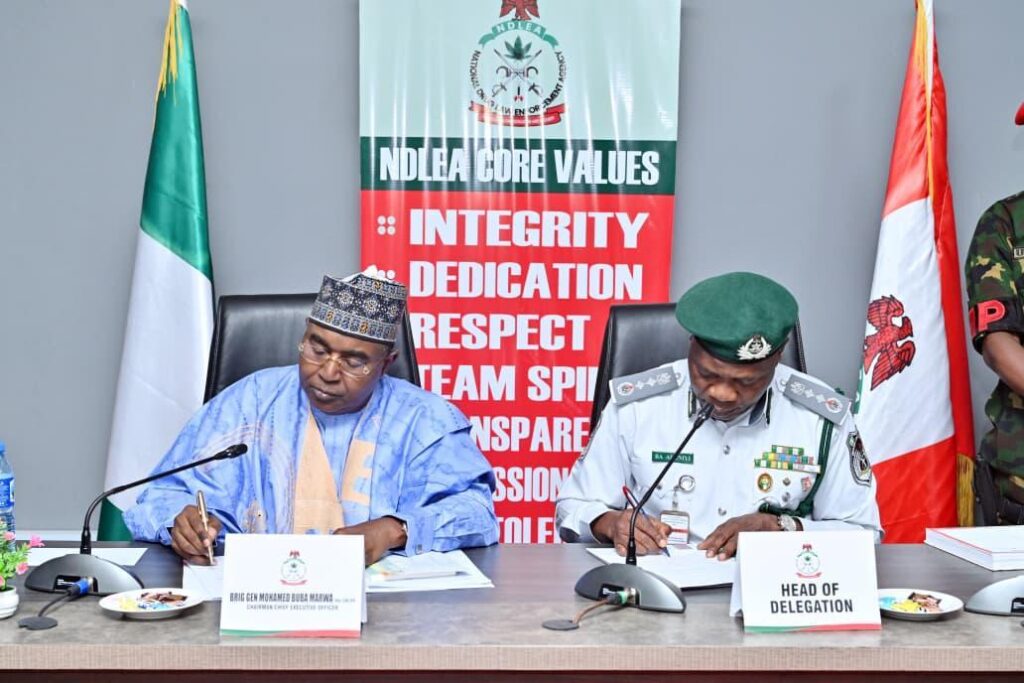
Both agencies acknowledged the growing sophistication of transnational organized crime, stressing that a coordinated institutional response is essential to effectively disrupt illicit drug networks.
Under the new framework, NDLEA and Customs will enhance intelligence sharing through a secure and structured platform designed to enable early detection and prevention of criminal activities. The collaboration will also see the deployment of joint task forces at key operational points, including seaports, airports, and land borders.
The agreement further seeks to eliminate operational overlaps and reduce inter-agency friction by clearly defining roles and respecting each agency’s legal mandate. A Standing Inter-Agency Committee will also be established to promptly address disputes and ensure smooth coordination.
Speaking on the development, both Marwa and Adeniyi emphasized that the partnership represents a critical step toward strengthening Nigeria’s security architecture while maintaining the efficiency of legitimate trade operations.
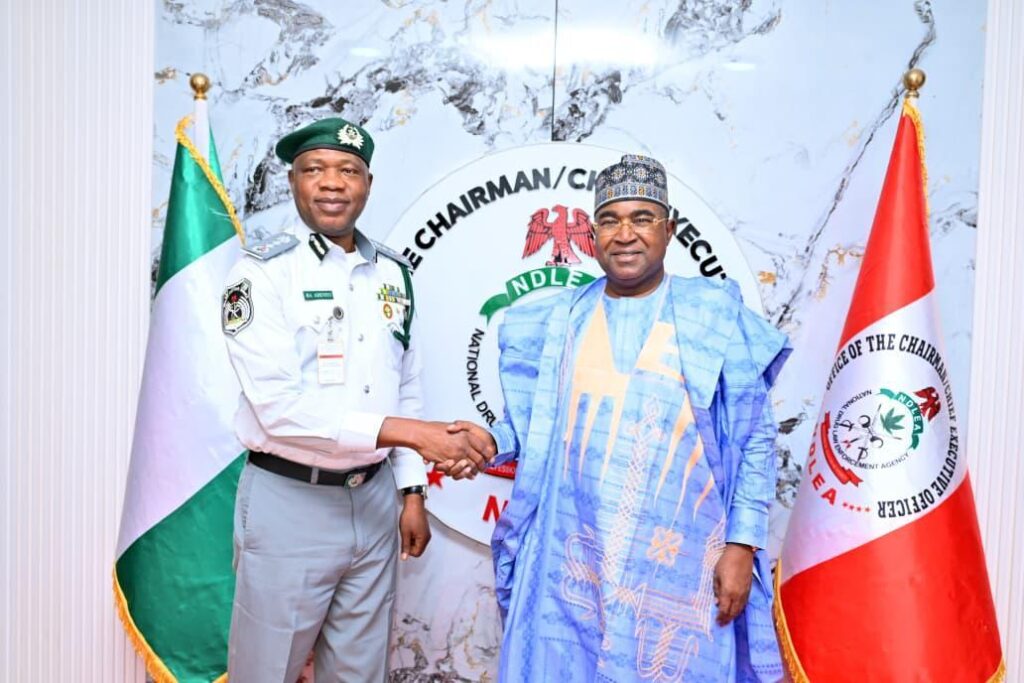
They reiterated their commitment to professionalism, mutual respect, and national interest, noting that aligning the capabilities of both agencies would create a more effective barrier against the trafficking of illicit substances.
The collaboration is expected to significantly boost enforcement efficiency at Nigeria’s entry and exit points, reinforcing ongoing efforts to curb drug-related crimes and safeguard public safety.
NDLEA, Customs Forge Alliance to Tackle Drug Trafficking

NA CAT Week: Army Flags Off Free Medical Outreach in Kaduna Community

Troops Arrest Two Suspected Terrorists in Borno, Recover Phones and Charms

House of Prayer for the Lord Hosts 2026 Edition Of Prayer and Fire Summit in Jos

Roger Federer’s Shock as DNA Results Reveal Myla and Charlene Are Not His Biological Children

THE PLIGHT OF FARIDA

FAILED COUP IN BURKINA FASO: HOW TRAORÉ NARROWLY ESCAPED ASSASSINATION PLOT AMID FOREIGN INTERFERENCE CLAIMS
-
 News2 years ago
Roger Federer’s Shock as DNA Results Reveal Myla and Charlene Are Not His Biological Children
-
Opinions4 years ago
THE PLIGHT OF FARIDA
-
 News1 year ago
FAILED COUP IN BURKINA FASO: HOW TRAORÉ NARROWLY ESCAPED ASSASSINATION PLOT AMID FOREIGN INTERFERENCE CLAIMS
-

 News2 years ago
EYN: Rev. Billi, Distortion of History, and The Living Tamarind Tree
-
 Opinions4 years ago
POLICE CHARGE ROOMS, A MINTING PRESS
-

 ACADEMICS2 years ago
A History of Biu” (2015) and The Lingering Bura-Pabir Question (1)
-

 Columns2 years ago
Army University Biu: There is certain interest, but certainly not from Borno.
-

 Opinions2 years ago
Tinubu,Shettima: The epidemic of economic, insecurity in Nigeria
