
Uncategorized
FG Unveils Large Elephant Sculpture Molded from Destroyed Trafficked Wildlife Ivory and Tusks

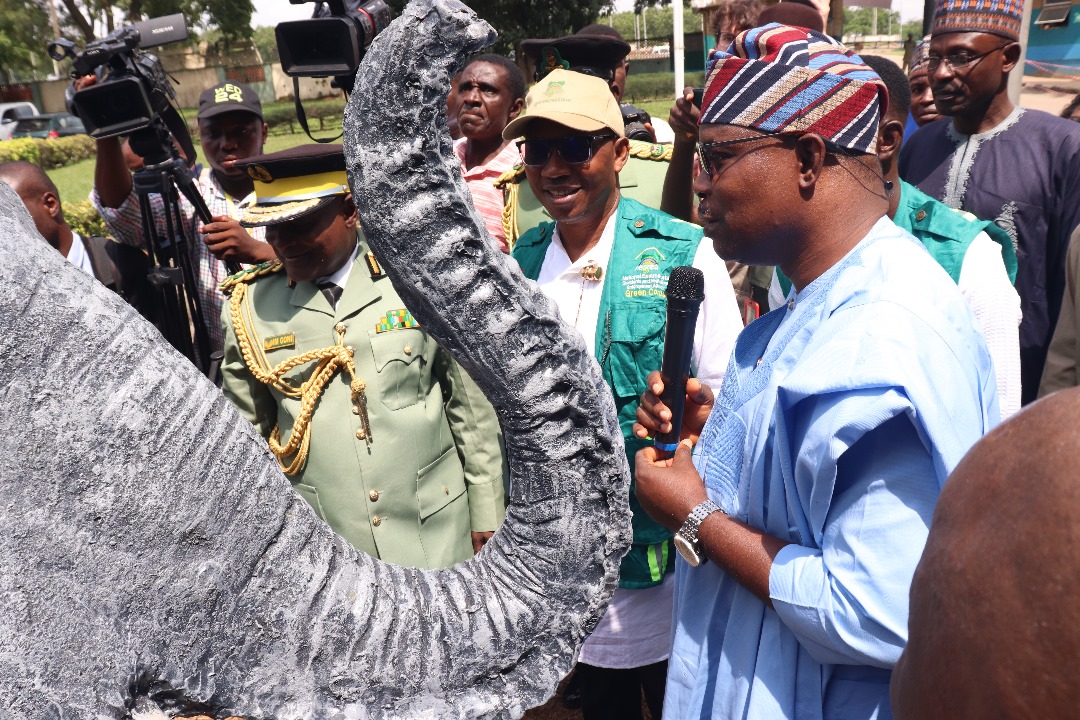
FG Unveils Large Elephant Sculpture Molded from Destroyed Trafficked Wildlife Ivory and Tusks
By: Michael Mike
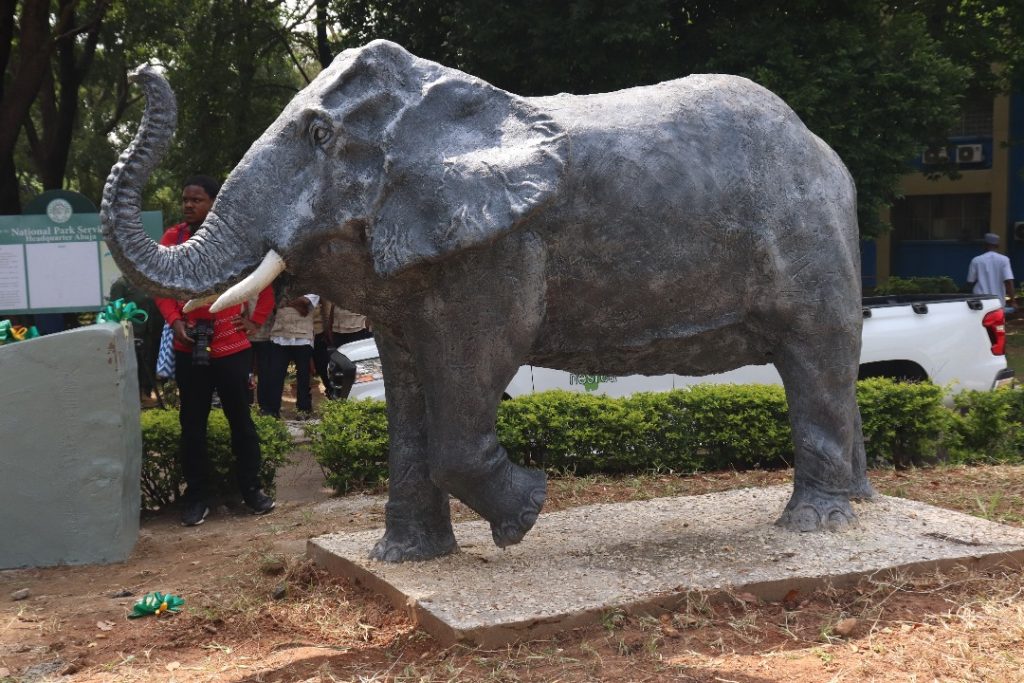
The Federal Government has unveiled the sculpture of an elephant crafted from pulverised Wildlife stockpile, signalling a climax of the disposal of about six tons of confiscated wildlife stockpiles by the National Environmental Standards And Regulations Enforcement Agency (NESREA).
NESREA is the agency designated by Convention on International Trade in Endangered Species of Wild Fauna and Flora (CITES) to enforce international law on the endangered species.
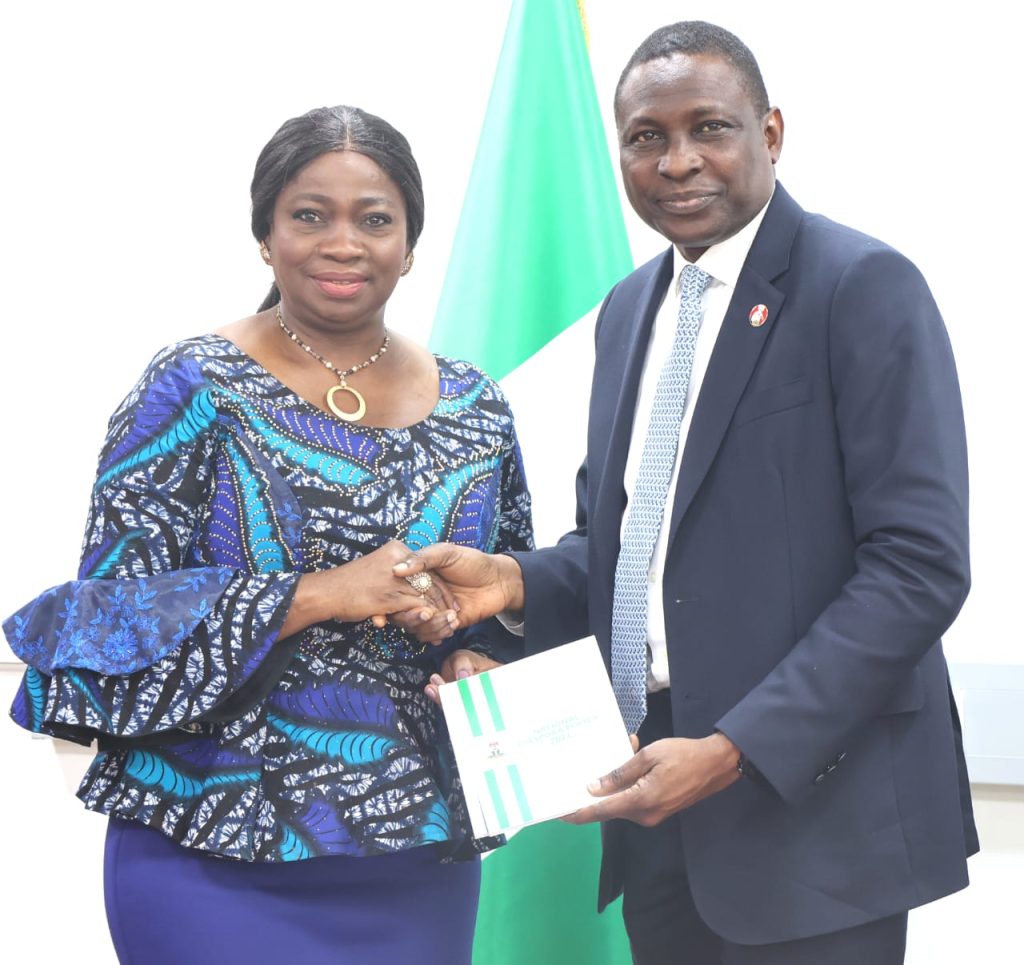
The Sculpture, a first of its kind in Nigeria, represents the country’s zero-tolerance stance against wildlife trafficking and its dedication to protecting listed endangered species of Wild fauna and flora.
The event on Wednesday marks a significant milestone in Nigeria’s efforts to combat illegal wildlife trade, which has been a major threat to the country’s biodiversity and global conservation efforts.
Concerted efforts by NESREA and sister agencies such as the Nigerian Customs Service led to the arrest of several suspects between 2011 and 2023. 185 bags of pangolin scales weighing 3991 kilogrammes, 11 bags of crocodiles and other listed reptiles, leopard skins and feathers weighing 102 kilogrammes and 2500 kilogrammes of ivory were recovered from these suspects and kept in the custody of NESREA.
In October 2023, the seized pangolin scales and other animal skins were incinerated by NESREA and this was followed by the crushing of the confiscated ivory in January 2024. Both exercise were carried out with the support of Elephant Protection Initiative Foundation (EPIF) of United Kingdom and the United States Embassy in Nigeria.
Unveiling the statue crafted from the residue of pulverized confiscated stockpiles, the Minister of Environment, Dr. Iziaq Salako, officially christened it the ‘Giwa Statue of Renewed Hope’. He reaffirmed the unwavering commitment of President Bola Tinubu to eradicate wildlife trafficking in Nigeria.
He called on Nigerians to support the fight against illegal wildlife trafficking by providing intelligence, discouraging animal poaching and refusing to use products that are not ethically sourced, stressing that “we need wildlife for our survival, well being and prosperity as they maintain ecological balance, maintains the food chain and they keep us connected to nature”.
Director General of NESREA, Dr. Innocent Barikor said, “This Elephant sculpture symbolizes Nigeria’s commitment to zero tolerance to Illegal Wildlife Trade (IWT) at all levels, and a proof to CITES communities that Nigeria has not relented in carrying out its obligations to the international environmental conventions and promotion of eco-tourism.”
NESREA, is a parastatal of the Federal Ministry of Environment charged with the mandate to enforce all environmental laws, policies, guidelines, standards and regulations as well as to enforce compliance with the provisions of multilateral environmental Agreements, Protocols, Conventions and Treaties to which Nigeria is a signatory.
Ends


Uncategorized
1 Brigade dismantles terrorist camps, seizes heavy weapons in sustained Zamfara offensive
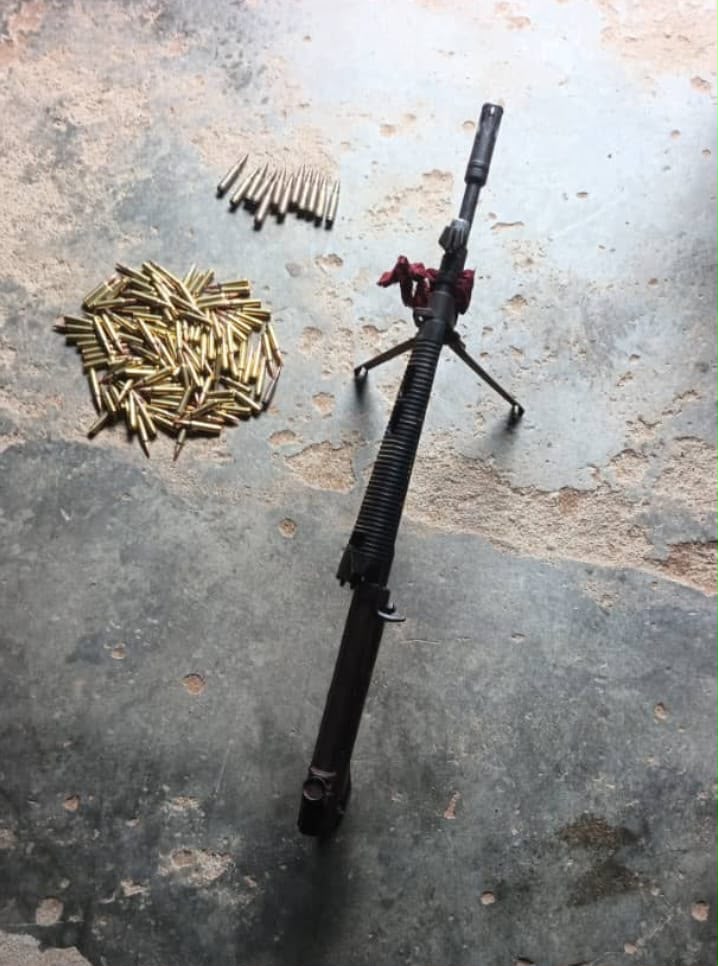
1 Brigade dismantles terrorist camps, seizes heavy weapons in sustained Zamfara offensive
By Zagazola Makama
The Headquarters 1 Brigade, Nigerian Army, has intensified its offensive against terrorist and bandit networks in Zamfara State, dismantling several camps and command hideouts, recovering heavy weapons and large quantities of ammunition, while significantly degrading the operational capabilities of criminal groups operating across the state.
The Brigade Commander, Brig.-Gen. Mustapha Jimoh, said the successes were achieved through sustained intelligence-driven kinetic and non-kinetic operations conducted in collaboration with other components of the Armed Forces, security agencies and critical stakeholders.
Jimoh said the operations were designed to deny criminal elements freedom of action by targeting their command structures, logistics bases and mobility corridors across the brigade’s Area of Responsibility.
According to him, troops destroyed several terrorist camps and operational hideouts during clearance operations, thereby denying armed groups safe havens from which they planned and launched attacks against communities.
“As part of these operations, troops recovered a large cache of arms and ammunition that significantly reduced the firepower available to the terrorists and bandits,” he said.
The Brigade Commander disclosed that troops recovered 46 AK-47 rifles, one PKT machine gun, two General Purpose Machine Guns (GPMGs), three Rocket-Propelled Grenade (RPG) launchers, and six locally fabricated rifles from the criminal elements.
He added that troops also recovered 48 AK-47 magazines, one handgun magazine, one locally fabricated rifle magazine, and large quantities of ammunition during various operations.
According to Jimoh, the recoveries dealt a major blow to the operational capability of the armed groups by disrupting their access to weapons and logistics.
He further revealed that troops recovered 144 motorcycles, which he described as one of the major logistical assets used by terrorists and bandits to move fighters, transport weapons and launch attacks across difficult terrain.
“The recovery of these motorcycles has considerably disrupted the mobility and logistics network of criminal elements operating within our area of responsibility,” he said.
Jimoh explained that Headquarters 1 Brigade conducts continuous intelligence-led offensive operations, including fighting patrols, long-range patrols, ambushes, clearance operations, cordon-and-search missions and rapid response operations across identified flashpoints.
He said the Brigade had established Forward Operating Bases (FOBs), combat locations and checkpoints to dominate the operational environment and respond swiftly to emerging threats.
The Brigade Commander noted that the security situation in Zamfara had evolved considerably over the years, with criminal groups transforming from loosely organised cattle-rustling gangs into heavily armed networks engaged in kidnapping, attacks on communities, destruction of infrastructure and violent assaults on security personnel.
He attributed the transformation to the proliferation of illicit small arms and light weapons, weak governance in remote communities and the exploitation of the vast forests stretching across Zamfara and neighbouring states.
“From about 2011, these criminal groups became increasingly organised, establishing camps within the expansive forests of Kuyambana, Kagara, Kamuku and Gungu, which provided them with freedom of movement and logistical bases,” he said.
Jimoh added that some of the groups later adopted tactics commonly associated with terrorist organisations, including coordinated attacks on communities, sophisticated weapon systems and deliberate intimidation of civilian populations.
He said Zamfara remains one of the country’s most challenging operational theatres because of its extensive forest reserves, rugged terrain and proximity to neighbouring states, which criminal groups exploit for movement and logistics.
Despite these challenges, he said sustained military pressure had continued to reduce the operational capacity of the armed groups while improving freedom of movement for residents.
The Brigade Commander also disclosed that troops rescued 283 kidnapped victims, including women, children, students and other civilians, during various operations across the state.
He said recovered livestock stolen by the terrorists had been returned to their rightful owners, helping to restore livelihoods in affected communities.
Jimoh noted that Headquarters 1 Brigade works closely with the Nigerian Air Force, the Nigeria Police Force, the Department of State Services (DSS), the Nigeria Security and Civil Defence Corps (NSCDC) and other security agencies through coordinated planning, intelligence sharing and joint operations.
He also acknowledged the support of the Zamfara and Kebbi State governments in logistics, intelligence, policy coordination and community engagement, saying the collaboration had enhanced operational effectiveness.
The Brigade Commander said that although considerable progress had been recorded, the Brigade continued to contend with vast operational terrain, expansive forests, evolving criminal tactics, trans-border criminal networks and limited operational resources.
He assured that troops would sustain the momentum of ongoing operations through enhanced intelligence gathering, improved surveillance, strengthened inter-agency cooperation and continuous engagement with local communities.
“The Brigade remains committed to dismantling the remaining terrorist and bandit networks, protecting lives and property, restoring civil authority and creating a secure environment that will support farming, commerce and sustainable socio-economic development across Zamfara and Kebbi States,” Jimoh said.
1 Brigade dismantles terrorist camps, seizes heavy weapons in sustained Zamfara offensive
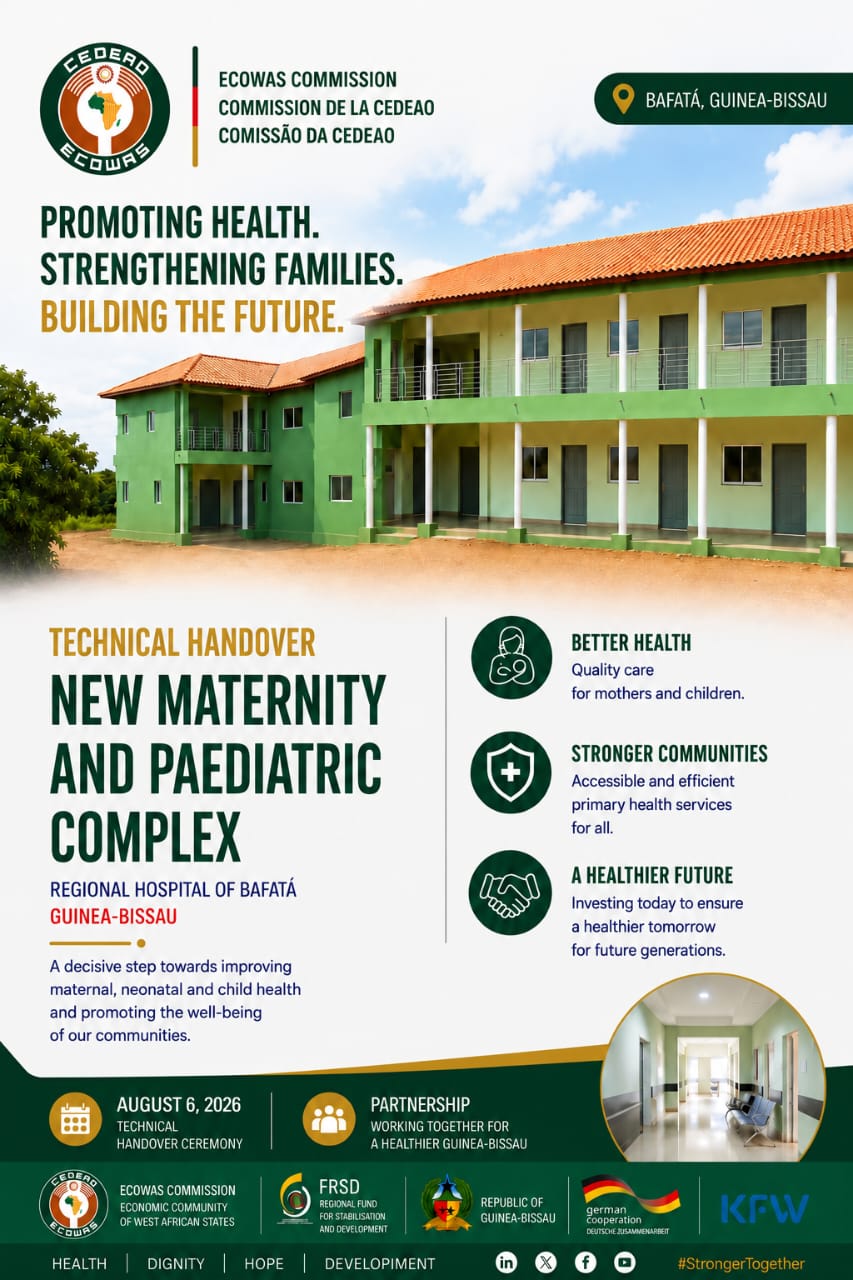
ECOWAS boosts Guinea-Bissau healthcare with new maternity, paediatric complex
By: Michael Mike
The Economic Community of West African States (ECOWAS) will take another significant step in its regional healthcare and development agenda on 6 August 2026 with the commissioning and handover of a new Maternity and Paediatric Complex at the Regional Hospital in Bafatá, Guinea-Bissau.
The project, funded through the ECOWAS Regional Fund for Stabilisation and Development (FRSD), is aimed at expanding access to quality maternal and child healthcare in one of Guinea-Bissau’s key regions while strengthening the country’s healthcare system.
The maternity and paediatric complex was constructed at a cost of $638,538.05 and forms part of a wider $1.8 million ECOWAS Direct Investment Programme in Guinea-Bissau. The programme, implemented with the support of the Government of Germany and national partners, focuses on improving access to essential social services, promoting stability and fostering sustainable development.
Beyond providing modern facilities for mothers and children, the project is expected to reduce pressure on existing healthcare infrastructure, improve the quality of maternal and neonatal care, and contribute to lower maternal and infant mortality rates.
The intervention comes against the backdrop of persistent healthcare challenges in Guinea-Bissau. Despite progress in recent years, the country continues to face one of the highest maternal and child mortality rates in West Africa, driven by inadequate health infrastructure, shortages of skilled personnel and limited access to specialised maternal and paediatric services, particularly outside the capital, Bissau.
Healthcare experts have consistently identified investments in maternity wards, neonatal care and child health services as critical to achieving the Sustainable Development Goals, especially Goal 3, which seeks to ensure healthy lives and promote well-being for all at all ages.
For ECOWAS, the Bafatá project represents more than the delivery of a healthcare facility. It reflects the regional bloc’s growing emphasis on linking peace, stability and development through targeted investments in social infrastructure under the Regional Fund for Stabilisation and Development.
Established to support member states emerging from fragility and to build resilience in vulnerable communities, the FRSD finances projects that improve access to healthcare, education, livelihoods and other critical public services. The fund complements ECOWAS’ broader integration agenda by addressing the social and economic factors that often fuel instability across the region.
The choice of Bafatá, one of Guinea-Bissau’s major regions outside the capital, is expected to improve healthcare access for thousands of residents who previously had to travel long distances to obtain specialised maternal and paediatric care.
ECOWAS said the investment underscores its continued commitment to building resilient, inclusive and people-centred health systems across West Africa, while reinforcing partnerships with member states and international development partners.
The official handover ceremony on 6 August is expected to bring together ECOWAS officials, representatives of the Government of Guinea-Bissau, German development partners, health professionals and community leaders to mark the completion of a project that symbolises the regional body’s commitment to improving the lives of West African citizens through strategic investments in healthcare.
ECOWAS boosts Guinea-Bissau healthcare with new maternity, paediatric complex
Uncategorized
VP Shettima Leads Govs To Benin Republic, Seeks New Investment Path For Nigeria’s Textile Industry

VP Shettima Leads Govs To Benin Republic, Seeks New Investment Path For Nigeria’s Textile Industry
By: Our Reporter
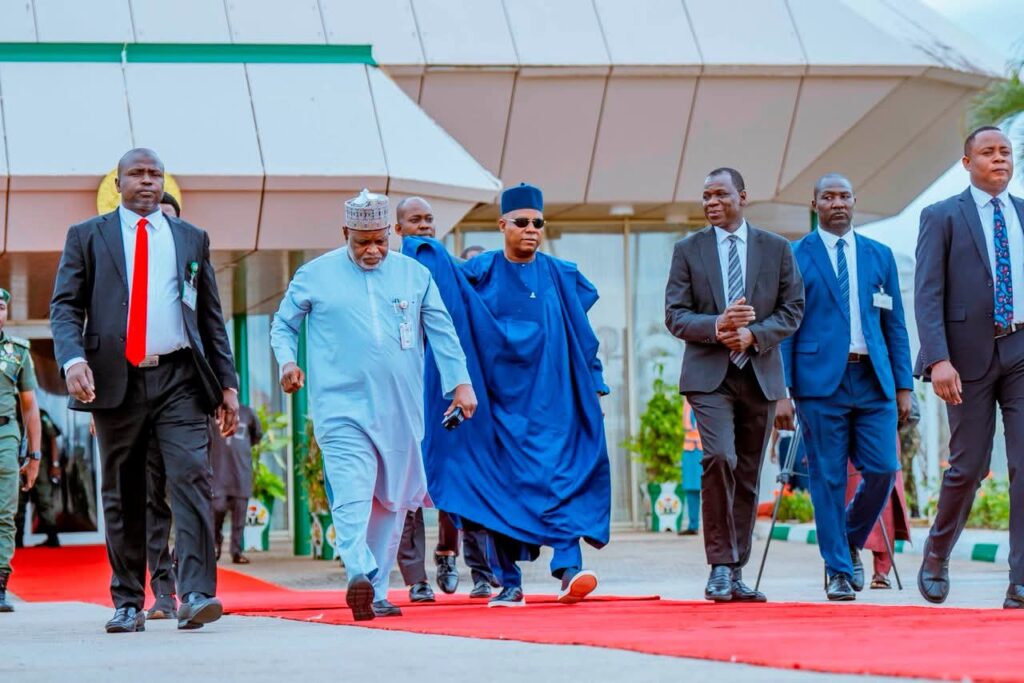
Vice President Kashim Shettima will depart Abuja on Thursday for a high-level working visit to the Republic of Benin, accompanied by some state governors and senior officials of the Federal Government.
The delegation will visit the Glo-Djigbé Industrial Zone, GDIZ, near Cotonou, where it will engage representatives of the Beninese government, investors and private-sector operators involved in the development and management of the industrial hub.

The visit is aimed at strengthening the implementation of Nigeria’s Special Agro-Industrial Processing Zones Programme and drawing practical lessons from Benin’s approach to agricultural value addition, industrial infrastructure, investment mobilisation, skills development and export-oriented production.
Particular attention will be given to the GDIZ textile park, which operates an integrated production system covering cotton spinning, weaving, fabric processing and garment manufacturing.
The industrial zone covers about 1,640 hectares and is designed to move agricultural commodities from the supply of raw materials through processing to the export of finished products.
The visit comes at a time when the federal government is seeking to rebuild a textile industry that remains economically significant despite years of factory closures, weak local processing and intense competition from imported fabrics and garments.
According to the National Bureau of Statistics’ figures, Nigeria’s textile, apparel, and footwear industry was valued at approximately ₦8.15 trillion at current prices in 2024.
The industry generated another ₦2.45 trillion in nominal output during the first quarter of 2025.
The visit will therefore provide an opportunity to examine how Nigeria can develop stronger linkages among cotton farmers, ginneries, spinning mills, textile manufacturers, fashion businesses and export markets.
Nigeria possesses a large domestic market for fabrics, ready-made garments, school uniforms, workwear, medical textiles, footwear, home furnishings and fashion products.
Developing local capacity across these segments could reduce dependence on imports, conserve foreign exchange and create employment across farming, manufacturing, logistics, design and retail.
The delegation is also expected to explore opportunities for technology and industrial training, modern machinery, reliable energy systems, common processing facilities and stronger public-private partnerships.
These interventions are considered necessary to improve the quality and competitiveness of Nigerian cotton, fabrics and finished garments.
The engagement will further examine how lessons from GDIZ can support Nigeria’s agro-industrial zones, including the development of garment-training facilities and dedicated infrastructure for processing agricultural raw materials close to production communities.
The African Development Bank is already supporting plans for a garment-training centre within Nigeria’s SAPZ programme in Ogun State.
The visit aligns with President Asiwaju Bola Ahmed Tinubu’s Renewed Hope Agenda, particularly its priorities of industrial revival, economic diversification, agricultural transformation, import substitution, job creation and the expansion of Nigeria’s non-oil exports.
On the Vice President’s entourage are the governors of Imo State, Hope Uzodimma; Zamfara State, Dauda Lawal; Plateau State, Caleb Mutfwang; Kwara State, AbdulRahman AbdulRazaq; Katsina State, Dikko Umar Radda; and Jigawa State, Umar Namadi.
VP Shettima Leads Govs To Benin Republic, Seeks New Investment Path For Nigeria’s Textile Industry

Troops conduct clearance patrol in Borno

Air Component OPHK Neutralises Terrorists in Precision Night Strike on ISWAP Hideout in Southern Lake Chad

1 Brigade dismantles terrorist camps, seizes heavy weapons in sustained Zamfara offensive

Roger Federer’s Shock as DNA Results Reveal Myla and Charlene Are Not His Biological Children

THE PLIGHT OF FARIDA

FAILED COUP IN BURKINA FASO: HOW TRAORÉ NARROWLY ESCAPED ASSASSINATION PLOT AMID FOREIGN INTERFERENCE CLAIMS
-
 News2 years ago
Roger Federer’s Shock as DNA Results Reveal Myla and Charlene Are Not His Biological Children
-
Opinions4 years ago
THE PLIGHT OF FARIDA
-
 News1 year ago
FAILED COUP IN BURKINA FASO: HOW TRAORÉ NARROWLY ESCAPED ASSASSINATION PLOT AMID FOREIGN INTERFERENCE CLAIMS
-

 News2 years ago
EYN: Rev. Billi, Distortion of History, and The Living Tamarind Tree
-
 Opinions5 years ago
POLICE CHARGE ROOMS, A MINTING PRESS
-

 ACADEMICS2 years ago
A History of Biu” (2015) and The Lingering Bura-Pabir Question (1)
-

 Columns2 years ago
Army University Biu: There is certain interest, but certainly not from Borno.
-

 Politics1 year ago
2027: Why Hon. Midala Balami Must Go, as Youths in Hawul and Asikira/Uba Federal Constituency Reject ₦500,000 as Sallah Gift
