
Crime
FIDA trains election observers on documenting violence against women


FIDA trains election observers on documenting violence against women
By Our Reporter
The International Federation of Women Lawyers (FIDA), has trained observers the effective approaches on how to identify and documents violence in the forthcoming general elections in Borno State.
In her welcome address, the Country Vice President/National President FIDA, Mrs. Amina Agbaje said this at the capacity building workshop for accredited election observers, on documenting and reporting violence against women during the 2023 general elections in Maidiguri on Tuesday.
She said the training has become necessary to ensure that all election observers understand the task ahead.
Agbaje represented by State Secretary of FIDA, Barr. Fatsuma Salihu decried the steady decline in women’s participation in politics, especially at the parliamentary level.
READ ALSO:https://newsng.ng/yobe-cabinet-reshuffle-batons-change-in-ministry-of-information/
“Women constitute a powerful electorate with millions of votes in Nigeria. Women represent about 50% of the Nigerian population despite of this, their level of participation and representation is increasingly very poor.
“Current statistics of women in parliament in Nigeria confirm that women’s representation in parliament is on a steady decline.
“While factors militating against women’s participation are varied, a major cause hindering effective participation of women in politics is the issue of violence”, she explained.
Agbaje maintained that eradication of political violence was key in advancing women’s political participation stressing the importance of condensing political violence before and after polls to allow woto men to participate fully.
“It is on this premise that this capacity building workshop is being organised towards advancing the participation of women in the 2023 general elections by strengthening our selected observers who are being accredited by INEC to identify, observe, document and report incidences of violence against women in the elections.”She said.
She thanked the UNWomen, the Government of Canada for providing much-needed support towards the conveyance of the workshops across the country.
FIDA trains election observers on documenting violence against women



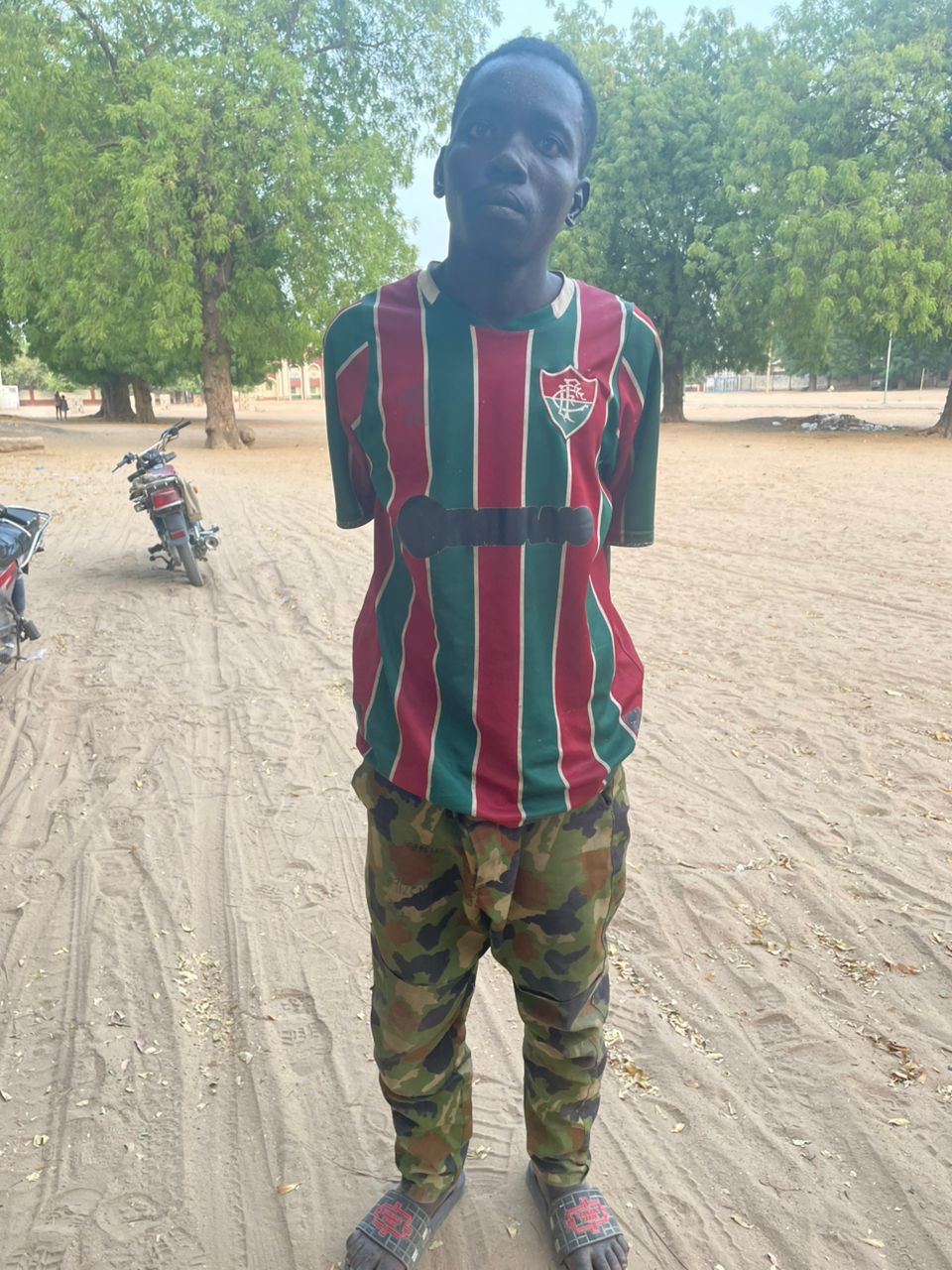
Troops arrest suspected ISWAP member while attempting to infiltrate Maiduguri
By: Zagazola Makama
Troops of Operation Hadin Kai have arrested a suspected member of Boko Haram/ISWAP in Borno while attempting to infiltrate Maiduguri.
Sources told Zagazola Makama that the fighter known as Saina, was apprehended at about 4:42 p.m. on March 29 at a checkpoint in Kilo Papa area.
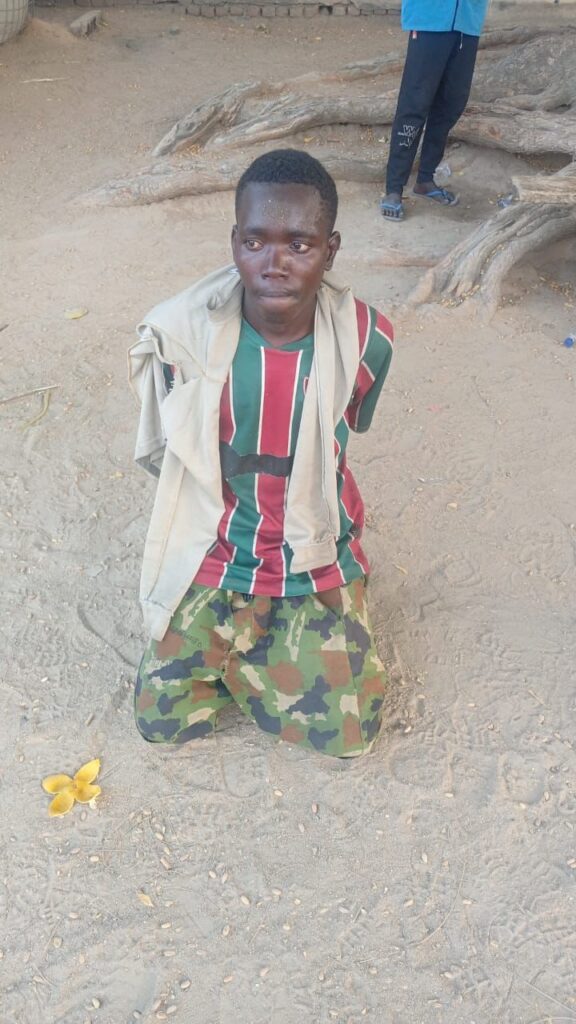
The arrest was carried out by troops of 21 Special Armoured Brigade and allied security operatives deployed at the checkpoint.
According to the sources, the suspect was intercepted while on transit to Maiduguri in a civilian vehicle and was found wearing a woodland camouflage trouser, raising suspicion.
Preliminary interrogation revealed that the suspect initially claimed to be a member of hybrid forces operating in Kumshe.
However, further questioning indicated that he is an active member of a terrorist group and was suspected to be on a reconnaissance mission.
The suspect has been handed over to military intelligence for detailed investigation.
Troops arrest suspected ISWAP member while attempting to infiltrate Maiduguri
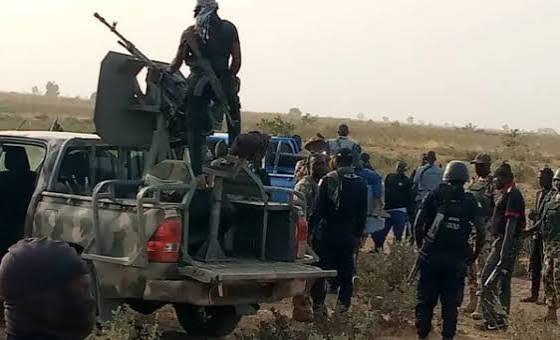
Troops arrest suspected gunrunner, intercept 200 rounds of ammunition in kaduna
By: Zagazola Makama
Troops of Operation FANSAN YAMMA have arrested a suspected gunrunner and intercepted 200 rounds of ammunition in Zaria Local Government Area of Kaduna State.
A security source disclosed that the suspect was apprehended at about 3:15 a.m. on March 29 during a joint intelligence-led operation involving troops of 2 Battalion and a team from the Office of the National Security Adviser (ONSA).
The source said the operation followed credible intelligence on the movement of the suspect, who was reportedly en route to Kaduna from Jos through Dambo community in Zaria.
“Troops swiftly established a snap checkpoint at Dambo, where the suspect was intercepted in possession of 200 rounds of 7.62 x 39mm ammunition,” the source said.
He added that the suspect has been handed over to ONSA for further investigation and necessary action.
The source noted that the arrest is part of ongoing efforts to curb the proliferation of illegal arms and ammunition, as well as disrupt criminal networks operating across the North-West and North-Central regions.
Troops arrest suspected gunrunner, intercept 200 rounds of ammunition in kaduna
Troops intercept vehicle conveying suspected terrorist logistics in Borno
By: Zagazola Makama
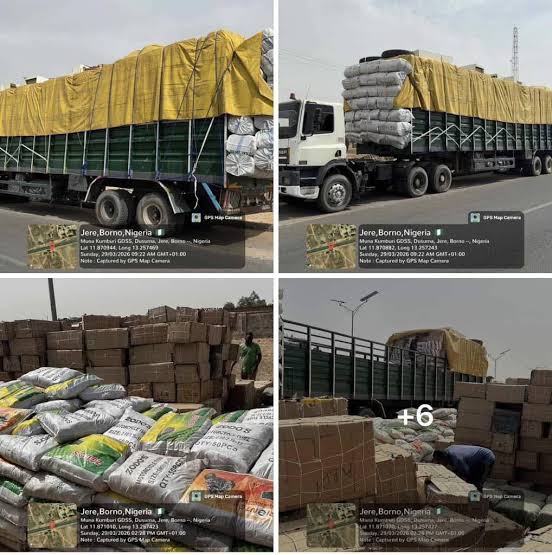
Troops of Operation Hadin Kai have intercepted a vehicle conveying suspected logistics supplies meant for Boko Haram terrorists along Maiduguri–Mafa road in Borno State.
A military source disclosed that the vehicle, with registration number GZA 359 XA, was intercepted during a stop-and-check operation conducted by troops of 195 Battalion (Mechanised) at a checkpoint.
According to the source, the interception followed a thorough search of the vehicle, which revealed several cartons of assorted medical drugs, motorcycle tubes, and brand-new motorcycle tyres concealed in sacks.
Other items recovered include mosquito nets, rolls of mats, cartons of air brake cylinders for heavy-duty trucks, and cartons of detergent.
Preliminary investigation indicated that the items lacked proper clearance and were being transported to Kusuri, a border town en route to Chad.
“All efforts to trace the owners of the items proved abortive,” the source said.
He added that the vehicle, recovered items, and the civilian drivers would be handed over to the appropriate military intelligence unit for further investigation and necessary action.
Troops intercept vehicle conveying suspected terrorist logistics in Borno

FG Targets Cross-Border Mobile Connectivity to Boost Security, Cut Internet Costs

Troops arrest suspected ISWAP member while attempting to infiltrate Maiduguri

VP Shettima Visits El-Rufai, Consoles Ex-Kaduna Gov Over Mother’s Demise

Roger Federer’s Shock as DNA Results Reveal Myla and Charlene Are Not His Biological Children

THE PLIGHT OF FARIDA

FAILED COUP IN BURKINA FASO: HOW TRAORÉ NARROWLY ESCAPED ASSASSINATION PLOT AMID FOREIGN INTERFERENCE CLAIMS
-
 News2 years ago
Roger Federer’s Shock as DNA Results Reveal Myla and Charlene Are Not His Biological Children
-
Opinions4 years ago
THE PLIGHT OF FARIDA
-
 News12 months ago
FAILED COUP IN BURKINA FASO: HOW TRAORÉ NARROWLY ESCAPED ASSASSINATION PLOT AMID FOREIGN INTERFERENCE CLAIMS
-

 News2 years ago
EYN: Rev. Billi, Distortion of History, and The Living Tamarind Tree
-
 Opinions4 years ago
POLICE CHARGE ROOMS, A MINTING PRESS
-

 ACADEMICS2 years ago
A History of Biu” (2015) and The Lingering Bura-Pabir Question (1)
-

 Columns2 years ago
Army University Biu: There is certain interest, but certainly not from Borno.
-

 Opinions2 years ago
Tinubu,Shettima: The epidemic of economic, insecurity in Nigeria
