
News
FUPRE Clarifies Senate Resolutions On Recent Students’ Unrest


FUPRE Clarifies Senate Resolutions On Recent Students’ Unrest
By Daniel Dafe
The Federal University of Petroleum Resources, Effurun (FUPRE), has reacted to online reports and social media commentaries alleging that the University is “forcing all students to pay ₦7,500 because they protested against a fee increase,” saying the “claim is misleading.”
Reacting in a statement on Tuesday, 4th November, 2025, issued by the Directorate of Media and Public Relations, Vice-Chancellor’s Office, the institution stated: “For clarity and proper public understanding, the University wishes to set the record straight and present the true sequence of events surrounding the students’ protest of October 8, 2025, and the subsequent resolutions of the University Senate.”
Adding: “For the record, the review of school charges was still ongoing, and in the spirit of transparency and inclusiveness, the Students’ Union executives were duly involved in the process. However, before the conclusion of deliberations, some students prematurely released an unapproved draft of the proposed fees, even though the final approved rates (which reflected a downward adjustment) had not yet been issued. This misinformation triggered an unsanctioned protest on October 8, 2025, during which students barricaded the University’s main gate and the East–West Road, disrupting public order and ongoing examinations.”
According to the institution, “following a comprehensive review of the situation at an emergency meeting, the University Senate resolved to bring the 2024/2025 academic session to an immediate close and directed all students to vacate the campus that same day to forestall further breakdown of law and order.”
Adding: “This decision implied that affected students would have to carry over their outstanding courses and pay full tuition in the 2025/2026 academic session.”
ALSO READ: Gov. Soludo Welcomes INEC Declaration As Anambra Guber Winner, Extends Fellowship To Opponents
However, following appeals from the students and the intervention of the National Association of Nigerian Students (NANS) Zonal Executives, FUPRE said “the Senate reconvened on 24th October 2025 and approved supplementary examinations,” saying that “final-year students were to write theirs on 31st October 2025, while others would take theirs a week before the 2025/2026 academic session.”
“Senate also directed all students to submit letters of undertaking for good conduct and pay a token sum of ₦7,500 to defray the University’s operational and logistical costs during the disruption,” the statement said.
The statement said further: “It is important to emphasize that the University remains steadfast in its commitment to aligning with international best practices and national aspirations. Under the leadership of the Vice-Chancellor, Professor Ezekiel Agbalagba, Management remains focused on its core mandate and will not be distracted from advancing academic excellence and Institutional stability.
“Professor Agbalagba has consistently prioritized the welfare of students and staff, promoting academic quality, infrastructural renewal, and stakeholder engagement—anchored on transparency, integrity, and compassion. His leadership continues to guide all major decisions, including recent measures taken to preserve peace and sustain academic progress.
“The University upholds the highest standards of ethics and discipline while remaining firmly committed to the welfare of its students and will not condone actions that disrupt peace and order. The university Management appreciates the cooperation of parents, staff, and responsible students, and remains resolute in sustaining the institution’s reputation for excellence and relevance.”
FUPRE Clarifies Senate Resolutions On Recent Students’ Unrest



Troops intercept 11 youths with donkeys during patrol in Borno
By: Zagazola Makama
Troops of 68 Battalion have intercepted 11 youths during a routine patrol in Mallam Fatori area of Abadam Local Government Area of Borno State.
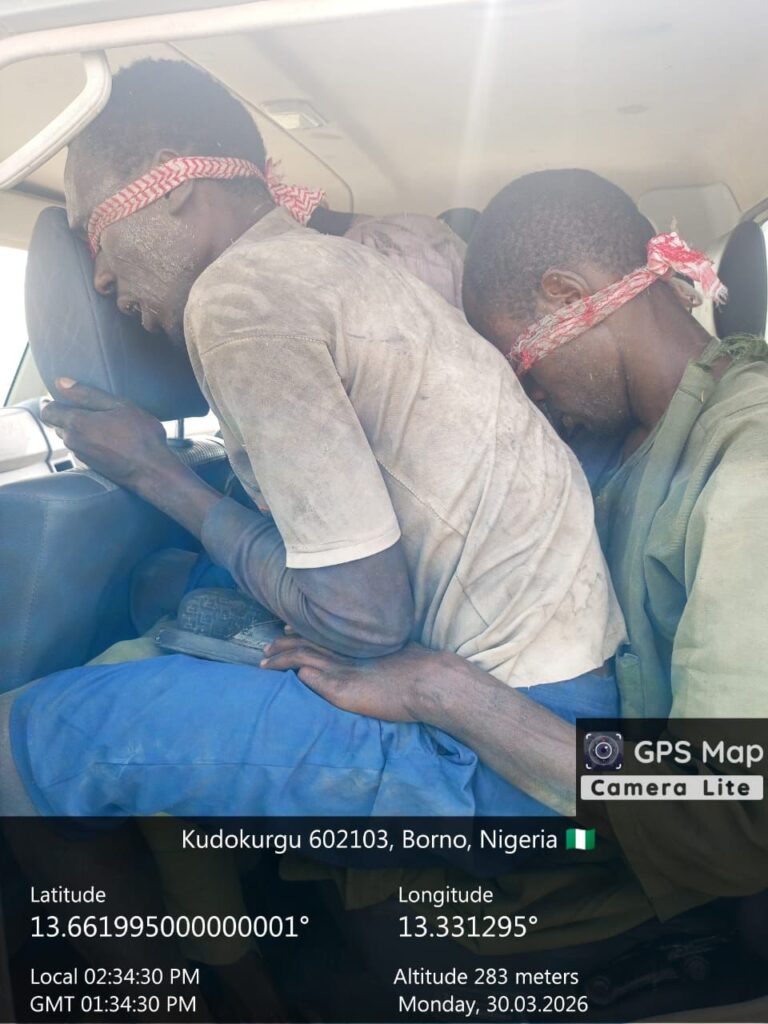
Security sources said the interception occurred along the Bulagana–Cheisa axis on April 2 during ongoing clearance operations in the area.
According to the sources, the individuals were found moving in the area with 12 donkeys when they were stopped and briefly interrogated by troops.
The sources added that the youths were later handed over, alongside the animals, to relevant authorities in a neighbouring country for further necessary action.
The military said the patrol was part of sustained efforts to maintain security dominance and prevent exploitation of border communities by criminal elements.
Troops intercept 11 youths with donkeys during patrol in Borno
Troops recover ammunition, logistics items in Kwara patrol operation
By: Zagazola Makama
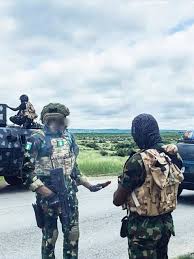
Troops of the Nigerian Army under the 22 Brigade have recovered ammunition and other logistics items during a fighting patrol in Ifelodun Local Government Area of Kwara State.
A security source disclosed that the operation was conducted at about 4:00 p.m. on April 2 at Daban Lema, where troops of the brigade, operating from the Patrol Base, encountered signs of suspected terrorist activities in a deserted location.
According to the source, the troops immediately carried out exploitation of the area, leading to the recovery of four rounds of 7.62mm special ammunition and one empty PKT ammunition belt link.
Other items recovered include four mobile phones, two head warmers, two small solar panels, and assorted repair tools believed to have been used by the suspected terrorists.
The source added that the recovery indicates the presence and movement of suspected criminal elements within the area, noting that troops have intensified surveillance and patrols to deny them freedom of action.
Troops recover ammunition, logistics items in Kwara patrol operation
Troops foil attack by Criminal Youths, rescue victims, arrest suspects in plateau
By: Zagazola Makama
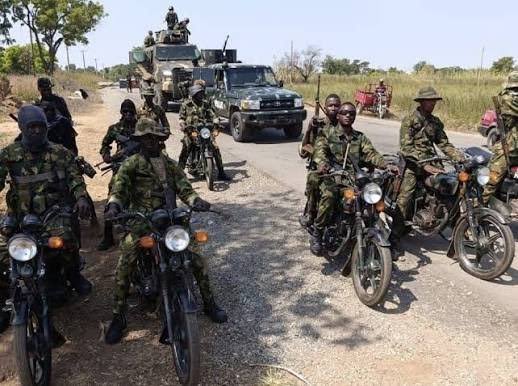
Troops of Sector 1, Operation Enduring Peace (OPEP), have foiled an attack on residents at Dutse Uku in Jos North Local Government Area of Plateau State.
A security source said the troops responded swiftly to a report of sporadic gunshots in the area at about 11:50 p.m. on April 2.
According to the source, upon arrival at the scene, the suspected criminals fled, abandoning their operation due to the prompt intervention of the troops.
He said the troops rescued two victims who sustained gunshot wounds during the incident and immediately evacuated them to a hospital for medical attention.
The source further disclosed that two suspects, dressed in black attire, were arrested at the scene.
Items recovered from the suspects include a cutlass and a knife.
He added that the suspects are currently in military custody and undergoing preliminary investigation, while efforts are ongoing to track down other fleeing members of the group.
Zagazola report that despite heightened security, there has been report of pocket of attacks in some communities.
The source reassured residents of the military’s commitment to protecting lives and property and urged the public to continue providing timely information to security agencies.
Troops foil attack by Criminal Youths, rescue victims, arrest suspects in plateau

Troops intercept suspected Boko Haram logistics convoy conveying 13 persons in Borno

Troops intercept 11 youths with donkeys during patrol in Borno

Troops, CJTF arrest three suspected Boko Haram logistics suppliers in Borno

Roger Federer’s Shock as DNA Results Reveal Myla and Charlene Are Not His Biological Children

THE PLIGHT OF FARIDA

FAILED COUP IN BURKINA FASO: HOW TRAORÉ NARROWLY ESCAPED ASSASSINATION PLOT AMID FOREIGN INTERFERENCE CLAIMS
-
 News2 years ago
Roger Federer’s Shock as DNA Results Reveal Myla and Charlene Are Not His Biological Children
-
Opinions4 years ago
THE PLIGHT OF FARIDA
-
 News12 months ago
FAILED COUP IN BURKINA FASO: HOW TRAORÉ NARROWLY ESCAPED ASSASSINATION PLOT AMID FOREIGN INTERFERENCE CLAIMS
-

 News2 years ago
EYN: Rev. Billi, Distortion of History, and The Living Tamarind Tree
-
 Opinions4 years ago
POLICE CHARGE ROOMS, A MINTING PRESS
-

 ACADEMICS2 years ago
A History of Biu” (2015) and The Lingering Bura-Pabir Question (1)
-

 Columns2 years ago
Army University Biu: There is certain interest, but certainly not from Borno.
-

 Opinions2 years ago
Tinubu,Shettima: The epidemic of economic, insecurity in Nigeria
