
News
Gates Foundation Promises Continued Committed to Revitalization of Public Healthcare In Nigeria


Gates Foundation Promises Continued Committed to Revitalization of Public Healthcare In Nigeria
By: Michael Mike
The Gates Foundation has expressed its full commitment to the development of Primary Healthcare Centres (PHC) in the country.
The commitment was expressed by The Deputy Director, Health Systems Strengthening at Gates Foundation Nigeria,
Dr. Nkata Chuku, during the PHC Leadership Challenge in Abuja, put together by the Nigeria Governors Forum (NGF), Gates Foundation and other development partners.
Chuku said the Foundation remains fully aligned with the government of Nigeria’s determination to revitalize primary health care.

The National Primary Health Care Development Agency (NPHCDA) and development partners, including UNICEF and the World Health Organisation (WHO) supported the event.
He also noted that the 2025 performance landscape emerging from national surveys, high-frequency monitoring, and administrative data shows both progress and gaps in the country’s health systems.
According to him, routine immunization continues its upward trajectory, with national percentage coverage now in the high-60s, and several states crossing 75%, compared to the low-60s in 2022.

He said between July 2024 and October 2025, more than 500,000 previously zero-dose children were reached with vaccines through house-to-house outreach and targeted immunization activities.
Chuku said this represents about 24% of the estimated 2.1 million zero-dose children nationwide, reflecting significant progress through integrated campaigns including the October 2025 polio–routine immunization drive.
According to him, there is a notable decline in cVPV2 cases, dropping from triple-digit cases in 2022–2023 to fewer than 50 confirmed cases in the last 12 months and a significant closure of immunity gaps in historically weak LGAs.
About the PHC Challenge, Chuku said: “The PHC Challenge Fund is designed to accelerate precisely this type of progress. The Gates Foundation has invested $27 million, with 70% dedicated to performance awards over the past four years to fund this initiative as proof of concept.
“The current award structure of one national winner and additional awards for the best and second runners up states across all six geopolitical zones is intentional. It reflects your stated preference for peer accountability and healthy competition, recognizing that states within the same zone often face similar health-system realities.
“Over the past three years: UNICEF, NPHCDA, and the NGF Secretariat have worked closely with Commissioners, SPHCDA Executive Secretaries, and Governors to continuously refine and track a lean but powerful set of indicators to measure the health of the PHC system across the 36+1 states.

He said: “These indicators focus on areas where state leadership is decisive: political leadership, community empowerment, financial resource allocation, quality of care, monitoring and evaluation, sustainable PHC financing. These system inputs are critical for driving impact across routine immunization, MNCH, malaria, and nutrition.”
He also said the ongoing PHC revitalization agenda has renewed political commitment at state level, adding that more states now have dedicated PHC budget lines and are expanding health insurance enrolment while the integrated polio–RI campaign offers a unified delivery platform to rapidly close immunity gaps.
According to him, development partners have signalled interest in expanding the pool of incentives for high-performing states.
The minister of health, Muhammad Ali Pate, during the occasion lauded Gates Foundation for their investment in PHC revitalisation in the country.
He said government have been intervening to lower the cost of drugs, cost of medical treatment, child health insurance and would still increase the budget for health.
Pate said: “ If we are going to see good health, it is an investment. We cannot expect good health at a very low price. Someone has invested, and here, who is going to be in charge is going to have to invest in health. And investing in health has several multilayers. First, it is a good investment not only for the present and also for the future of the country.
“So, we need to not only invest in health but also see the health system and the environment as a whole. So, government has been intervening to lower the cost of drugs, cost of medical treatment, child health insurance, but it is not going to be able to succeed just like that already.”
During the award ceremony, Yobe State emerged the overall winner of the PHC Leadership Challenge, outperforming other states in an independently verified assessment and wining the total sum of $1.2m.
The assessment measures governance, financing, service delivery and accountability within PHC systems.
The annual challenge, which rewards measurable improvements in state-level PHC performance, aims to strengthen accountability, peer learning and sustained political commitment to PHC reforms across Nigeria
Gates Foundation Promises Continued Committed to Revitalization of Public Healthcare In Nigeria


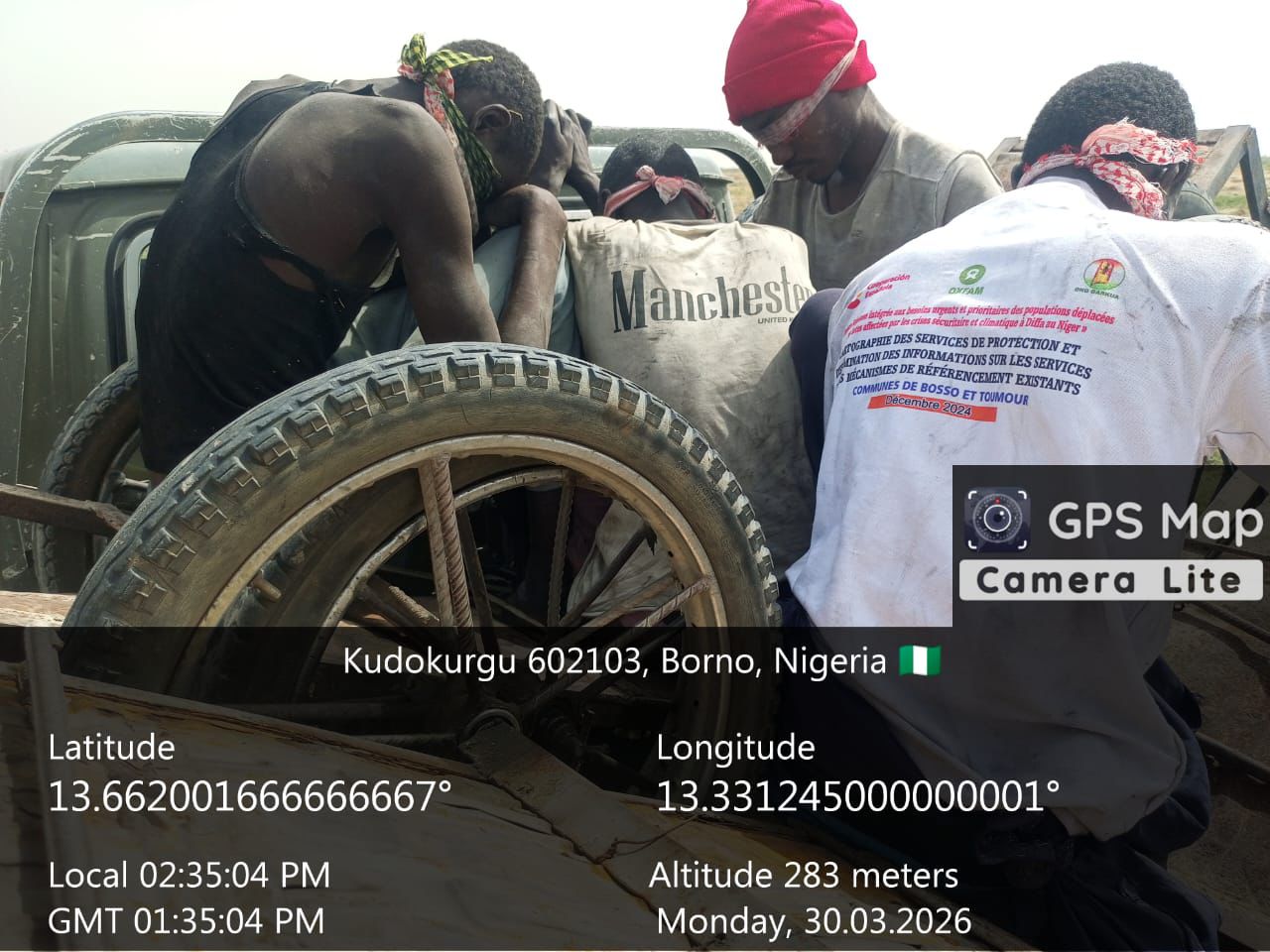
Troops intercept 11 youths with donkeys during patrol in Borno
By: Zagazola Makama
Troops of 68 Battalion have intercepted 11 youths during a routine patrol in Mallam Fatori area of Abadam Local Government Area of Borno State.
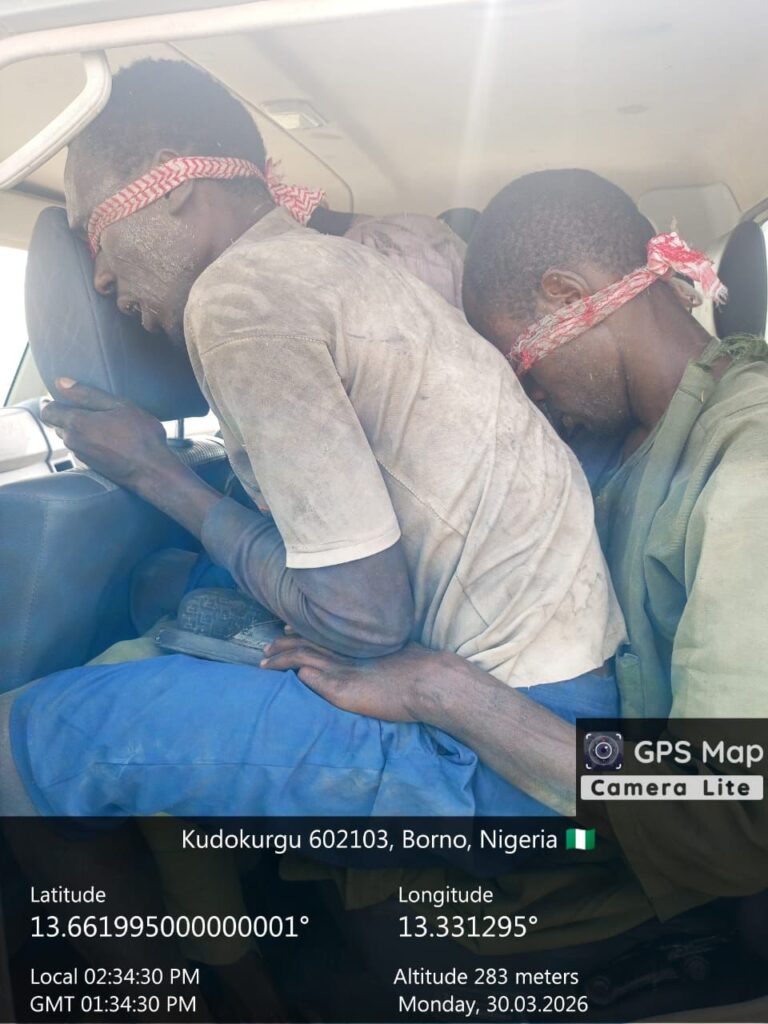
Security sources said the interception occurred along the Bulagana–Cheisa axis on April 2 during ongoing clearance operations in the area.
According to the sources, the individuals were found moving in the area with 12 donkeys when they were stopped and briefly interrogated by troops.
The sources added that the youths were later handed over, alongside the animals, to relevant authorities in a neighbouring country for further necessary action.
The military said the patrol was part of sustained efforts to maintain security dominance and prevent exploitation of border communities by criminal elements.
Troops intercept 11 youths with donkeys during patrol in Borno
Troops recover ammunition, logistics items in Kwara patrol operation
By: Zagazola Makama
Troops of the Nigerian Army under the 22 Brigade have recovered ammunition and other logistics items during a fighting patrol in Ifelodun Local Government Area of Kwara State.
A security source disclosed that the operation was conducted at about 4:00 p.m. on April 2 at Daban Lema, where troops of the brigade, operating from the Patrol Base, encountered signs of suspected terrorist activities in a deserted location.
According to the source, the troops immediately carried out exploitation of the area, leading to the recovery of four rounds of 7.62mm special ammunition and one empty PKT ammunition belt link.
Other items recovered include four mobile phones, two head warmers, two small solar panels, and assorted repair tools believed to have been used by the suspected terrorists.
The source added that the recovery indicates the presence and movement of suspected criminal elements within the area, noting that troops have intensified surveillance and patrols to deny them freedom of action.
Troops recover ammunition, logistics items in Kwara patrol operation
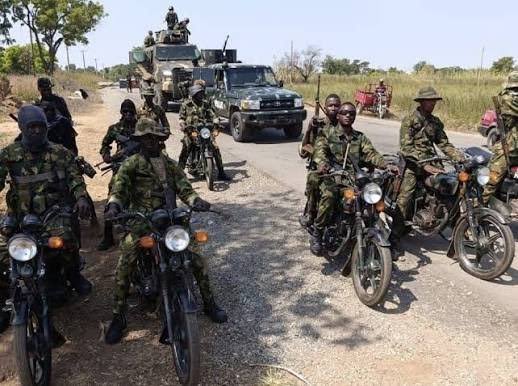
Troops foil attack by Criminal Youths, rescue victims, arrest suspects in plateau
By: Zagazola Makama
Troops of Sector 1, Operation Enduring Peace (OPEP), have foiled an attack on residents at Dutse Uku in Jos North Local Government Area of Plateau State.
A security source said the troops responded swiftly to a report of sporadic gunshots in the area at about 11:50 p.m. on April 2.
According to the source, upon arrival at the scene, the suspected criminals fled, abandoning their operation due to the prompt intervention of the troops.
He said the troops rescued two victims who sustained gunshot wounds during the incident and immediately evacuated them to a hospital for medical attention.
The source further disclosed that two suspects, dressed in black attire, were arrested at the scene.
Items recovered from the suspects include a cutlass and a knife.
He added that the suspects are currently in military custody and undergoing preliminary investigation, while efforts are ongoing to track down other fleeing members of the group.
Zagazola report that despite heightened security, there has been report of pocket of attacks in some communities.
The source reassured residents of the military’s commitment to protecting lives and property and urged the public to continue providing timely information to security agencies.
Troops foil attack by Criminal Youths, rescue victims, arrest suspects in plateau

Troops intercept suspected Boko Haram logistics convoy conveying 13 persons in Borno

Troops intercept 11 youths with donkeys during patrol in Borno

Troops, CJTF arrest three suspected Boko Haram logistics suppliers in Borno

Roger Federer’s Shock as DNA Results Reveal Myla and Charlene Are Not His Biological Children

THE PLIGHT OF FARIDA

FAILED COUP IN BURKINA FASO: HOW TRAORÉ NARROWLY ESCAPED ASSASSINATION PLOT AMID FOREIGN INTERFERENCE CLAIMS
-
 News2 years ago
Roger Federer’s Shock as DNA Results Reveal Myla and Charlene Are Not His Biological Children
-
Opinions4 years ago
THE PLIGHT OF FARIDA
-
 News12 months ago
FAILED COUP IN BURKINA FASO: HOW TRAORÉ NARROWLY ESCAPED ASSASSINATION PLOT AMID FOREIGN INTERFERENCE CLAIMS
-

 News2 years ago
EYN: Rev. Billi, Distortion of History, and The Living Tamarind Tree
-
 Opinions4 years ago
POLICE CHARGE ROOMS, A MINTING PRESS
-

 ACADEMICS2 years ago
A History of Biu” (2015) and The Lingering Bura-Pabir Question (1)
-

 Columns2 years ago
Army University Biu: There is certain interest, but certainly not from Borno.
-

 Opinions2 years ago
Tinubu,Shettima: The epidemic of economic, insecurity in Nigeria
