
News
GSU’s Public Administration Dept hosts maiden int’l conference

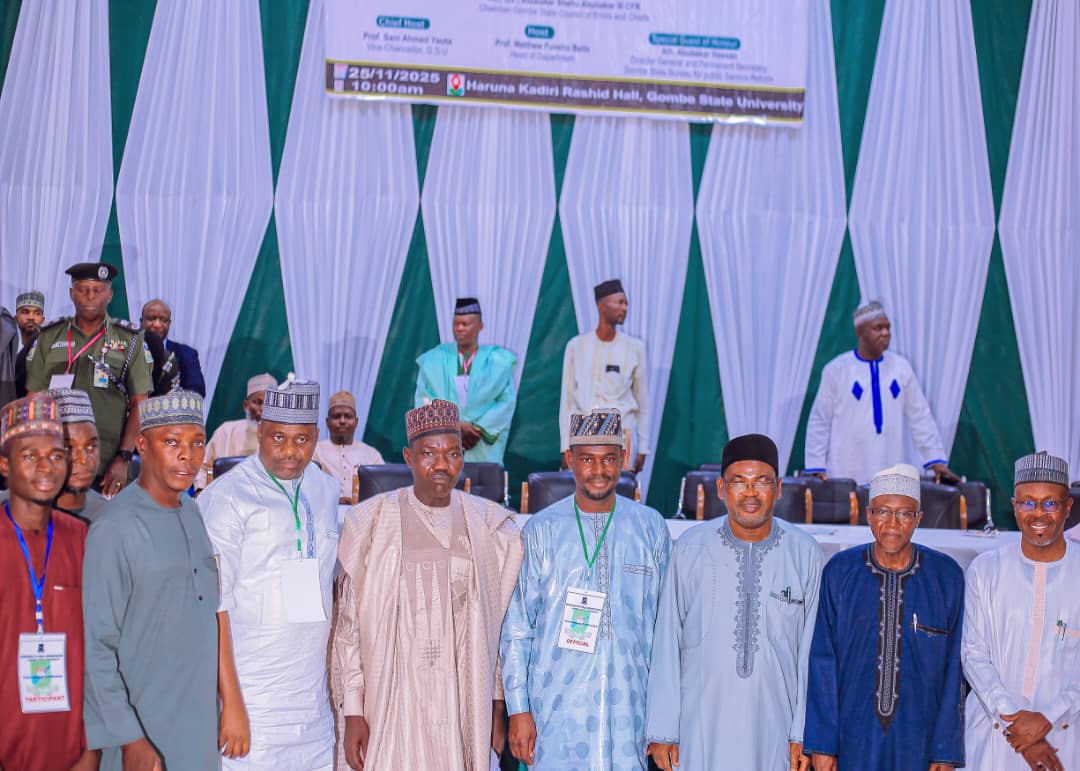
GSU’s Public Administration Dept hosts maiden int’l conference
Stakeholders comprising academics, policymakers, security experts and public-sector practitioners have deliberated ways of tackling insecurity in the country through a multi-faceted approach that includes economic empowerment, improved governance, and enhanced security cooperation.
They made the submission during the maiden International Conference organised by the Department of Public Administration, Gombe State University (GSU).
The conference was declared open on Tuesday by Prof. Sani Ahmed Yauta, the Vice Chancellor of the institution who stated that any engagement aimed at proffering solutions to the security challenges of the country was an engagement borne out of the need to fast-track national development and stability.
Represented by the Deputy Vice Chancellor (Administration) Prof. Danladi Umar, Yauta urged participants to leverage the conference to contribute to ongoing efforts at addressing security challenges so as to enhance peace and development in the country.
In his keynote address, Prof. Ibrahim Abubakar Njodi, Secretary to the Gombe State Government, linked good governance to enhanced security and national development.
Njodi stressed that good governance remained a critical tool to earning citizens’ trust needed to maintain peace and to strengthen development across the country.
He stated that discourse around Nigeria’s governance had become imperative in view of the current security challenges confronting the nation and threatening national development.
He stressed the need for subnational governments to drive national development, adding that they have massive roles to play in determining Nigeria’s progress.
“It is the aggregation of subnational experiences—state successes and failures—that ultimately determines Nigeria’s trajectory.”
Njodi cited the Gombe State governance model and how it had contributed to improvement in human capital development as well as the development of the state and therefore resulting in the peaceful status that the state had enjoyed under Gov Inuwa Yahaya of Gombe State’s leadership.
“The state’s development trajectory under Gov. Yahaya offers a practical demonstration of how visionary leadership, institutional innovation and participatory governance can transform a subnational entity within Nigeria’s federal system.
Speaking earlier, the Head of Public Administration Department, Prof. Matthew Funsho Bello, described the event as historic for both the department and the university.
Bello said that the conference’s theme, “Governance, Insecurity and National Development in Nigeria: Issues and Challenges,” was timely given the complexities of the nation’s socio-economic and security challenges.
“This gathering of distinguished scholars, public-sector experts, policymakers and practitioners from across the country marks a major milestone in our collective quest to address the vexing issues affecting our national life,” he said.
According to him, the theme reflects “the urgent need for academia, security agencies and public-sector experts to engage in constructive dialogue on how addressing insecurity and governance can drive sustainable development in Nigeria.
Security experts amongst other professionals made their presentations during the conference which are expected to form part of the recommendations at the end of the two-day event.
Dr Lawal Abdullahi Oladimeji, the Chairman of the Local Organising Committee of the Conference, lauded all participants and invited guests for the success of the maiden event.
Oladimeji said that recommendations from the conference would be given to relevant stakeholders towards enhancing national security and development.
GSU’s Public Administration Dept hosts maiden int’l conference


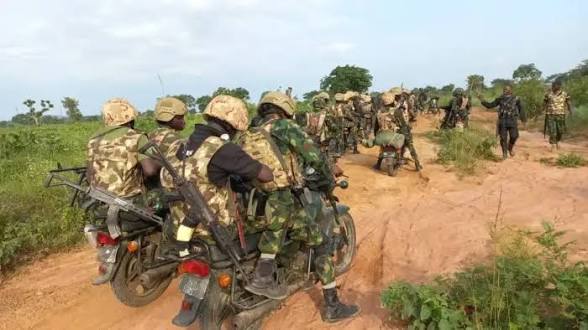
Troops rescue three abducted victims, recover ammunition in Borno
By: Zagazola Makama
Troops of Operation Hadin Kai have rescued three abducted civilians and recovered ammunition during an operation in Bama Local Government Area of Borno State.
Security sources said the operation was carried out at about 10:00 a.m. on March 30 by troops of 202 Battalion in collaboration with volunteer forces at BOCOBS.
According to the sources, the troops responded to credible intelligence indicating that suspected members of the Islamic State West Africa Province and Boko Haram had abducted three locals in the area.
The sources said the troops made contact with the insurgents and successfully rescued all three victims during the operation.
Items recovered from the scene include one AK-47 rifle magazine loaded with 30 rounds of 7.62mm special ammunition.
The sources added that the rescued victims are safe, while troops have continued to dominate the general area to prevent further incidents.
They said the operation is part of sustained efforts to protect civilians and dismantle terrorist activities across the North-East theatre.
Troops rescue three abducted victims, recover ammunition in Borno
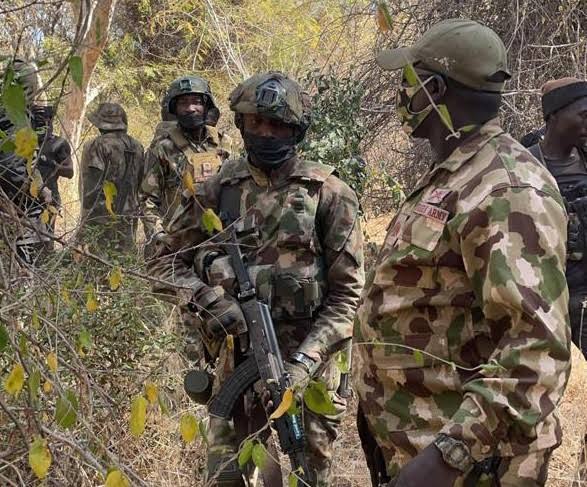
Troops repel terrorist attack in Yobe
By: Zagazola Makama
Troops of Operation Hadin Kai have repelled an attack by suspected members of the Islamic State West Africa Province and Boko Haram on a Forward Operating Base in Yunusari Local Government Area of Yobe State.
Security sources said the incident occurred at about 10:05 p.m. on March 30 at Forward Operating Base Bukarti.
According to the sources, the terrorists launched an attack on the troops’ position, prompting a fierce engagement during which the troops successfully repelled the assailants.
During the encounter, one soldier sustained injuries and has since been stabilised and is responding to treatment.
The sources added that the attackers carted away a gun truck mounted with a QJC gun, a Civilian Joint Task Force vehicle, two motorcycles, a PKT machine gun and a Baofeng radio.
They said troops have continued to maintain operational presence in the area, while efforts are ongoing to recover the stolen equipment and further degrade the capabilities of the insurgents.
Troops repel terrorist attack in Yobe

CJTF member accidentally shot by colleague in Borno
By: Zagazola Makama
A member of the Civilian Joint Task Force (CJTF) has been injured in an accidental shooting incident in Biu Local Government Area of Borno State.
Security sources said the incident occurred at about 3:50 a.m. on March 31 at the location of 162 Amphibious Battalion in Mandara-Girau.
According to the sources, the CJTF member was on duty when he was mistakenly shot in the left leg by a colleague.
The victim was immediately evacuated to the battalion’s medical facility, where he is currently receiving treatment.
Sources said the injured personnel are responding to treatment, while further details surrounding the incident are being awaited.
CJTF member accidentally shot by colleague in Borno

Troops arrest two suspected terrorist collaborators in Pulka

Troops rescue three abducted victims, recover ammunition in Borno

Troops repel terrorist attack in Yobe

Roger Federer’s Shock as DNA Results Reveal Myla and Charlene Are Not His Biological Children

THE PLIGHT OF FARIDA

FAILED COUP IN BURKINA FASO: HOW TRAORÉ NARROWLY ESCAPED ASSASSINATION PLOT AMID FOREIGN INTERFERENCE CLAIMS
-
 News2 years ago
Roger Federer’s Shock as DNA Results Reveal Myla and Charlene Are Not His Biological Children
-
Opinions4 years ago
THE PLIGHT OF FARIDA
-
 News12 months ago
FAILED COUP IN BURKINA FASO: HOW TRAORÉ NARROWLY ESCAPED ASSASSINATION PLOT AMID FOREIGN INTERFERENCE CLAIMS
-

 News2 years ago
EYN: Rev. Billi, Distortion of History, and The Living Tamarind Tree
-
 Opinions4 years ago
POLICE CHARGE ROOMS, A MINTING PRESS
-

 ACADEMICS2 years ago
A History of Biu” (2015) and The Lingering Bura-Pabir Question (1)
-

 Columns2 years ago
Army University Biu: There is certain interest, but certainly not from Borno.
-

 Opinions2 years ago
Tinubu,Shettima: The epidemic of economic, insecurity in Nigeria
