Uncategorized
Kachalla Tsoho Lulu Killed by Kachalla Gajere in Anka, Zamfara
By; Zagazola Makama
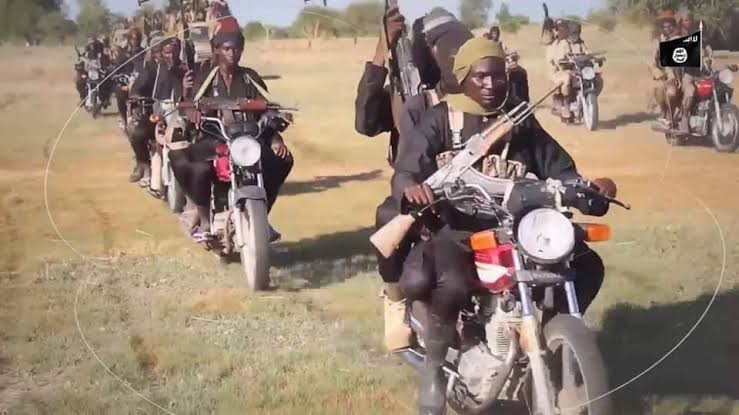
A notorious bandit leader, Kachalla Tsoho Lulu, was killed by fellow bandit Kachalla Gajere.
The incident occurred on Sept 26, 2024, near the village of Kawaye, located in the forests of Bagega within Anka Local Government Area, Zamfara State.
Intelligence told Zagazola Makama the conflict between the two arose from a dispute over mining activities in the area. Sources indicate that tensions between the factions had been escalating for some time.
In response to the killing, followers of Kachalla Tsoho Lulu are now actively seeking revenge, vowing to track down and kill Kachalla Gajere.
Kachalla Tsoho Lulu was notorious for orchestrating violent attacks across the Dan Kurmi region, affecting communities in Maru Local Government Area of Zamfara State.
His raids also extended to areas from Dan Ummaru to Bena in Danko Wasagu Local Government Area of Kebbi State, leaving a trail of destruction.
Meanwhile, in a separate incident on Sept 27, 2024, Kachallah Gajere, aka Mai’Yar Gashi, clashed with the Nigerian troops at Dankurmi village in Dansadau.
The clash resulted in the killing of unconfirmed numbers of bandits while GAJERA escaped but fatally injured.
Kachalla Tsoho Lulu Killed by Kachalla Gajere in Anka, Zamfara
Uncategorized
Hamza Suleiman NAN: How ‘Christian genocide’ label distorts Nigeria’s conflict reality
By: Zagazola Makama
The claim that Nigeria is witnessing a state sanctioned “Christian genocide” has been trending in international discourse, amplifying domestic anxieties and sharpening an already fragile ethno-religious divide in the country.
Such narratives, when detached from the country’s complex security ecosystem, risk oversimplifying multi-layered conflicts into a single religious frame. Nigeria is constitutionally secular, and violence across its regions is driven less by faith alone than by a combustible mix of local grievances, criminal economies, identity politics, and transnational extremist agendas. When attacks occur, communities understandably interpret them through the lens of their beliefs; however, to cast the entire crisis as a binary religious war obscures root causes and hands strategic advantage to extremist groups seeking polarisation.
At the psychological level, Nigerians are highly sensitive to any perceived assault on their faith. This makes the information space a contested battlefield. Episodes in Jos, Southern Kaduna, Benue and parts of Taraba illustrate how disputes over land, grazing routes, political representation and local power can quickly acquire religious colouration once violence erupts between communities with different identities.
In the Middle Belt, Nigeria’s demographic and geographic crossroads ethnicity and religion overlap in ways that allow political entrepreneurs and armed actors to weaponise narratives. What begins as a farmer–herder clash or a dispute over local authority can be reframed as a civilisational struggle, accelerating reprisals and widening the conflict footprint.
Extremist organisations operating across Africa exploit this dynamic. Al-Qaeda and Islamic State affiliates pursue parallel-state projects by stoking fear, delegitimising national institutions and provoking sectarian backlash. From the Sahel to the Horn of Africa, insurgents attack civilians, displace populations and profit from the illicit flow of small arms.
Nigeria sits at the nexus of these corridors. In the northwest and north-central zones, Boko Haram offshoots and allied cells have adapted tactics—including IED use—while cultivating relationships with bandit networks. Their objective is not only territorial control but narrative dominance: to convince populations that the state cannot protect them and that coexistence is impossible.
This is why the “genocide” label, when applied wholesale to Nigeria, is analytically flawed and strategically dangerous. It compresses diverse theatres North-East insurgency, North-West banditry, Middle Belt communal violence into a single story that misreads motive and method. It also creates perverse incentives. Extremist groups thrive on publicity and polarisation; a global narrative that frames local conflicts as a religious extermination campaign can validate their propaganda and encourage copy-cat violence. Domestically, it hardens attitudes, weakens trust in institutions, and pressures political actors into zero-sum postures rather than pragmatic problem-solving.
Psychologically and historically, Nigeria’s past from the Uthman Dan Fodio jihad of 1805 to the 1966 crisis and civil war is often misunderstood and misused. These events are sometimes portrayed as purely religious campaigns, rather than complex political and social upheavals.
Against this backdrop, the U.S.-led narrative of a “Christian genocide” is not merely an analytical error; it becomes a negative description of Nigeria as a state. It suggests official neglect or complicity and projects Nigeria as a country defined by religious war rather than governance and security challenges.
More troubling are claims that the U.S. allegedly targeted Sokoto the historical seat of the Caliphate while neglecting ISWAP/ Boko Haram in the Lake Chad and JNIM offshoots near Kainji National Park. In optics and perception, this fuels suspicion that foreign powers are pursuing broader geostrategic or economic interests rather than purely humanitarian ones.
In a country that is one of the world’s highest consumers of social media content, such narratives spread rapidly. Once the idea of “Christian genocide” takes root in the national psyche, it becomes harder to reverse and easier for extremists and political actors to exploit.
The danger is not only external pressure, but internal fragmentation. Nigeria has long faced separatist and extremist ambitions from IPOB in the South-East, to Oduduwa groups in the South-West, to ISWAP/JAS in the North-East, and identity-based movements in the Middle Belt.
When international narratives suggest Nigeria is failing as a state, they unintentionally embolden these forces. The old CIA-era projection that Nigeria would break up by 2015 did not happen but the conditions for fragmentation remain visible in elite rhetoric, online mobilisation and communal distrust.
International engagement matters, but it must be calibrated to Nigeria’s realities. Security cooperation can deliver tangible benefits counter-IED capabilities, ISR assets, air mobility and training, if anchored in Nigerian ownership and intelligence-led operations. Precision, legality and accountability are essential to avoid civilian harm and the backlash that follows.
At the same time, an exclusive focus on kinetic tools misses the wider contest. Extremist ecosystems depend on recruitment pipelines, financing, social media amplification and local grievances. Disrupting these requires governance reforms, justice for victims, and economic recovery in affected communities so that civilians have reasons to resist insurgent narratives.
The information domain is just as critical. Media must be objective at all time and not to take side. From the government side, strategic communications should be proactive, not reactive: explaining the nature of threats, acknowledging failures honestly, and demonstrating progress in protecting all citizens regardless of faith. A recent failure of Stratcom was the case of the Kaduna state government for denying abduction of 171 Christians in Kajuru and later admitted that it actually took place.
When citizens see investigations, sincerity, arrests, and prosecutions alongside relief for victims and reconstruction of communities, the space for disinformation narrows. Religious and traditional also leaders have a unique role in de-escalation, offering moral authority that counters the language of collective blame.
Finally, Nigeria’s political class must treat local crises with urgency and coherence. State governments, security agencies and community structures should align around early-warning systems, mediation mechanisms and rapid response to prevent isolated incidents from spiralling into wider conflagrations.
Federal-state coordination, coupled with border management and regional diplomacy, can limit the spillover from Sahelian conflicts. None of this denies the suffering of Christian, Muslim and traditional communities alike; rather, it insists that justice and security are indivisible.
In sum, Nigeria’s security challenge is real and severe but it is not a single-story war of religion. It is a complex struggle against transnational extremism, organised crime and politicised identity. Reducing it to “genocide” rhetoric distorts policy choices and empowers those who benefit from division. A credible path forward blends precise security operations with governance, justice and narrative resilience so that Nigerians are protected not only from bullets and bombs, but also from the ideas that seek to turn neighbours into enemies.
Zagazola Makama is a Counter Insurgency Expert and Security Analyst in the Lake Chad region
[1/23, 11:31 AM] Hamza Suleiman NAN: Plateau authorities confirm killing of seven youths at illegal mining site in Jos South, blame night operations
By: Zagazola Makama
Plateau State Security authorities have confirmed the killing of seven youths at an illegal mining site near Kavitex, Kuru in Jos South Local Government Area (LGA), describing the incident as a tragic outcome of violations of state mining laws and unsafe practices.
A Police sources told Zagazola Makama that the victims, Dung Gyang, 19; Weng Dung, 26; Francis Paul, 25; Samuel Peter, 22; Dung Simon, 28; Pam Dung, 23; and Francis Markus, 15 were shot dead by yet-to-be-identified armed men at about 2:00 a.m. on Thursday while engaging in illegal mining activities.
The sources said that the troops of Sector 6, Operation Safe Haven (OPEP), and the police
immediately mobilized to the site and conducted a thorough sweep of the area.
At the scene, they discovered ten spent cases of 7.62mm ammunition, indicating that the attackers were heavily armed. The corpses were subsequently moved to the Primary Health Care Centre, Dabwak, Kuru, to allow the families to make burial arrangements.
Preliminary investigations by security forces indicate that the attackers may have targeted the site to seize illegally mined minerals from the closed mining location at Capitex Kuru.
Security sources said the victims’ decision to remain at the mining site late into the night in violation of Plateau State’s ban on night and illegal mining made them particularly vulnerable.
“The miners’ continued operations in contravention of the extant laws, combined with the clandestine nature of illegal mining, significantly increased their exposure and contributed to this tragic outcome,” the security sources said.
Authorities further observed that an estimated eight-hour delay in reporting the incident to the security authorities likely stemmed from fear of sanctions associated with the prohibition of night mining.
Officials warned that delayed reporting often reduces the ability of security personnel to respond quickly, giving perpetrators a tactical advantage.
In response to the attack, troops of Sector 6 OPEP have intensified both kinetic and non-kinetic operations in the area. Sustained patrols, intelligence-driven offensive measures, and community engagement efforts are being conducted to identify, track, and apprehend the perpetrators, as well as to address underlying conflict triggers in the community and forestall further attacks.
The police on the other hand reiterated its commitment to restoring law and order, stating that security would maintain a strong presence in Kuru and other mining communities to prevent breakdowns of security.
Authorities also urged residents to cooperate with security agencies by providing timely information on suspicious movements or criminal activities, warning that fear of sanctions should not prevent reporting.
On the other hand sources from the Plateau State Government reiterated that enforcement of mining laws is essential to protect both miners and the general public. Officials appealed to youths to comply with existing regulations, including the prohibition on night mining, and to operate only at officially sanctioned sites under regulated conditions.
The Kuru killings are the latest in a series of attacks across Jos South, Barkin Ladi, and Riyom LGAs, where illegal mining sites have repeatedly become targets for armed groups seeking to exploit soft target in an intensified circle of violence in Plateau state.
Meanwhile, Zagazola Makama linked the attack to the latest in a spiral of violence in plateau in what began as disputes over land and livelihoods has metastasized into a tit-for-tat pattern where cattle rustling, livestock poisoning and armed raids trigger swift reprisals, dragging entire communities into a vortex of fear. Gakok attack did not erupt in isolation. It is the tragic crest of a wave that has been rising across the Barkin Ladi–Riyom–Jos South axis for weeks.
The current escalation tracks back to Wednesday, Jan. 14, when no fewer than 102 cows were rustled at Dan Sokoto in Ganawuri District, Riyom LGA. Witnesses said armed men suspected to be Berom Militia stormed the area in broad daylight, forcing herders to flee and driving the cattle away at gunpoint. The animals reportedly belonged to two pastoral families from Jos East, but were seized in Ganawuri, an inter-LGA fault line that complicated response and recovery.
Local accounts allege the attackers came from Vom District in Jos South. The Dan Sokoto raid was not an aberration. In the same month, at least seven cows were poisoned in Kwi village (Riyom LGA), while three others were shot dead near Kuru Gadabiyu in Barkin Ladi. Each incident deepened attacks and retaliation.
Days after the Dan Sokoto rustling, violence crossed from fields to homes. In the early hours of Saturday, at about 2:30 a.m., gunmen attacked Kasuwa Denkeli village in Barkin Ladi LGA. One person was killed on the spot; two others sustained gunshot wounds and were rushed to the Jos University Teaching Hospital. Police confirmed the incident, said a team led by the DPO moved to the scene, and announced an investigation to track the perpetrators.Residents linked the assault to retaliation over the stolen cattle in neighbouring Riyom.
This pattern attack on herds, reprisal on villages has repeated with grim regularity. On Jan. 6, coordinated attacks on Jol community in Riyom and Gero in Gyel District of Jos South left three people dead. The violence followed the shooting of two Fulani youths earlier that day in Jos South, one of whom later died. Witnesses described the ambush as unprovoked. What followed was swift retaliation and counter-retaliation, with communities caught in the crossfire.
The warning signs were already flashing in December. On Dec. 12, more than 130 cattle were reportedly rustled in Nding community. Around the same period, livestock poisoning was recorded in parts of Jos East and Riyom LGAs. Those incidents were followed by deadly clashes, including the killing of four children in Dorong village, Barkin Ladi LGA, and attacks on Gero that left deaths, injuries and the loss of more livestock.
On Dec. 16, an attack on an illegal mining site in Tosho, Barkin Ladi LGA, left 12 miners dead and others abducted. Security sources linked the violence to earlier rustling of 171 cattle belonging to Fulani. Again, a familiar sequence: cattle taken, emotions inflamed, guns answer.
Across Barkin Ladi, Riyom and Jos South, residents now speak of “no-go” zones. Areas like Vwang in Jos South and parts of Fan District in Barkin Ladi are whispered about as holding grounds for rustled cattle belonging to the Fulani.The claims, wether true or not, reinforce suspicion and hinder cooperation. Recovery becomes harder; rumours spread faster than facts.
Security agencies respond to each incident, but the terrain is complex, in most cases lacked accessibility by roads. Attackers move across forested LGA lines; victims come from multiple communities; reprisals target the nearest symbol of “the other.” Investigations start, but arrests lag. In the absence of swift, impartial justice, communities seek their own.
End
Uncategorized
NAF air strikes destroy terrorist boats, neutralise fighters in Kukawa riverine
By: Zagazola Makama
The Nigerian Air Force (NAF), operating as the Air Component of Operation Hadin Kai (OPHK), has recorded another major success against terrorists in the Lake Chad and North-East corridors, following coordinated night precision air strikes that destroyed watercraft, hit key hideouts and neutralised several fighters in the riverine areas of Kukawa Local Government Area of Borno.
Sources told Zagazola Makama that the missions were executed after weeks of sustained intelligence gathering, surveillance and reconnaissance that confirmed increased terrorist movement and logistics activity around the Malimbe–Masaram Island axis and the Northern Tumbuns.
“Based on credible human intelligence (HUMINT) and persistent aerial surveillance, we tracked the movement of Jama’atu Ahlis Sunna Lidda’awati wal-Jihad (JAS) elements transiting through Masaram Island ahead of Malimbe, as well as Toumbun Beriberi in Kukawa LGA,” the sources said.
He explained that the strikes were carried out under the cover of darkness on Jan. 18, using precision-guided munitions to ensure accuracy and limit collateral damage.
“We executed swift, successive interdictions on identified targets. Several JAS fighters were neutralised and their water vessels, which they use for mobility and logistics across the Tumbuns and Lake Chad waterways, were completely destroyed.
“Those that remained at Malimbe and Toumbun Beriberi immediately abandoned their positions and fled,” he said.
According to him, post-strike battle damage assessment showed the fleeing terrorists withdrawing toward the Abadam axis, apparently in disarray and expressing suspicion that their movements had been compromised by informants within their ranks.
“The mission was adjudged highly successful. However, due to the terrorists’ paranoia that civilians are cooperating with government forces, we are sustaining air and ground monitoring of the area to deter any form of reprisal,” he added.
The officer further disclosed that the NAF also conducted another major Air Interdiction (AI) mission on Jan. 20 at a newly identified terrorist enclave codenamed “Rackstar” in the Northern Tumbuns.
“At about 1300 hours on Jan. 20, the Air mission identified location considered to be a safe haven for Islamic State West Africa Province (ISWAP) members, including some prominent commanders. The area was also being used as an IED assembly point and a weapons servicing workshop,”said sources
The sources noted that confirmatory ISR carried out on Jan. 18 revealed the general area to be water-logged with dense vegetation, typical of the Tumbuns, but further scanning of the fringes uncovered active terrorist structures about 1.9 kilometres southwest of the initial coordinates.
“We observed terrorists gathering in two different locations. A solar panel and a black flag were also sighted within the enclave, clearly indicating occupation and operational intent.
“Accordingly, selected targets were acquired and engaged with munitions on board. The strikes degraded the terrorists’ capability and disrupted their command and logistics infrastructure,” the sources said.
The sources stressed that the sustained air operations were part of the ongoing efforts of Operation HADIN KAO to deny terrorists freedom of movement, sanctuary and resources across the Lake Chad basin.
NAF air strikes destroy terrorist boats, neutralise fighters in Kukawa riverine
Uncategorized
MD Damuli Investment Company Limited extends assistance to orphans, underprivileged students in Yobe
By: Yahaya Wakili
Managing Director/Chief Executive Officer of Damuli Investment Company Limited, Alhaji Liman Mohammad Dabuwa, has extended assistance to the development of education in Yobe, targeting orphans and underprivileged students in the state.
The company expanded to be worth over $90 million as part of its contribution towards the development of education, students, and orphans in the region, which includes the purchase of mattresses and bedding materials for Mai Bukar boarding primary school.
Prior to government approval, Damuli Investment Company fed boarding primary schools in the region for a good 3 months for free. In addition, it purchased teaching and learning materials and foodstuff for teachers and principals, as well as presented gifts during the graduation ceremony and others to Mai Bukar boarding school in August 2025.
The company also made the payment of school registration fees for 15 orphan students at Federal Government Girls College (FGGC), Potiskum, and also supported the Yobe State annual Quranic recitation competition held in Machina in 2025.

“In participation in supporting the students of high institutions, Dabuwa Company made the payment of school fee registration for over 150 students at various high institutions. In addition, it supported Yobe State University during a fire outbreak with bending materials.
“Damuli Investment Company also sponsored common entrance exams into Mai Bukar boarding school across the political wards of the Machina local government area in 2024 and 2025, respectively, as well as rendered support to Medical College Damaturu and purchased teaching and learning materials for GSS Machina.
Alhaji Liman Mohammad Dabuwa commended His Excellency, the Executive Governor of Yobe State, Hon. (Dr.) Mai Mala Buni CON, COMN, and the Secretary to the State Government, Alhaji Baba Mallam Wali mni, for turning Yobe State into semi-London.
“Now Yobe State can compete with any developing state in the country in terms of infrastructural development,” Alhaji Liman Mohammad Dabuwa said.
MD Damuli Investment Company Limited extends assistance to orphans, underprivileged students in Yobe
-
News2 years agoRoger Federer’s Shock as DNA Results Reveal Myla and Charlene Are Not His Biological Children

-
Opinions4 years agoTHE PLIGHT OF FARIDA
-
News9 months agoFAILED COUP IN BURKINA FASO: HOW TRAORÉ NARROWLY ESCAPED ASSASSINATION PLOT AMID FOREIGN INTERFERENCE CLAIMS
-

Opinions4 years agoPOLICE CHARGE ROOMS, A MINTING PRESS
-
News2 years agoEYN: Rev. Billi, Distortion of History, and The Living Tamarind Tree
-

ACADEMICS2 years agoA History of Biu” (2015) and The Lingering Bura-Pabir Question (1)
-

Columns2 years agoArmy University Biu: There is certain interest, but certainly not from Borno.
-

Opinions2 years agoTinubu,Shettima: The epidemic of economic, insecurity in Nigeria