
News
Kadafur Lead govt officials to Menwara Festival 2024

Kadafur Lead govt officials to Menwara Festival 2024
…… Highlights its tremendous significance to cultural heritage
By: Our Reporter
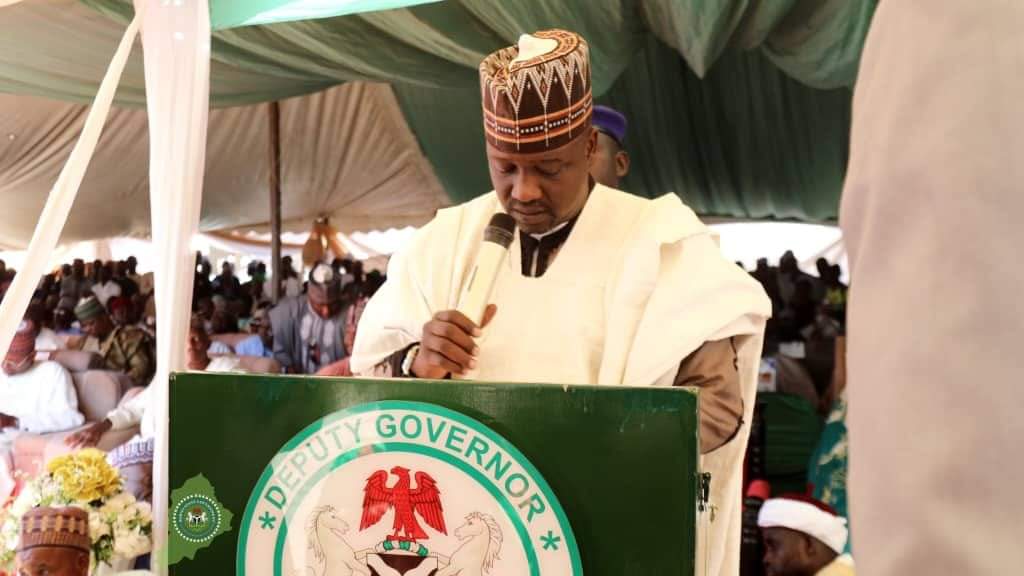
Borno State Governor Professor Babagana Umara Zulum ably represented by the Deputy Governor of Borno State HE (Dr) Umar Usman Kadafur led government officials to celebrate the “Menwara Annual Cultural Festival”, hosted by the Shani Emirate Council.
The Deputy Governor while reading out his remarks said the gathering serves not only as a celebration of our rich cultural heritage but also as a reminder of the values that bind us together as a people, unity, respect and mutual understanding. The Menwara has grown over the years into an event of tremendous significance, bringing together individuals from all folks of life to celebrate the diversity and vibrancy of our traditions.
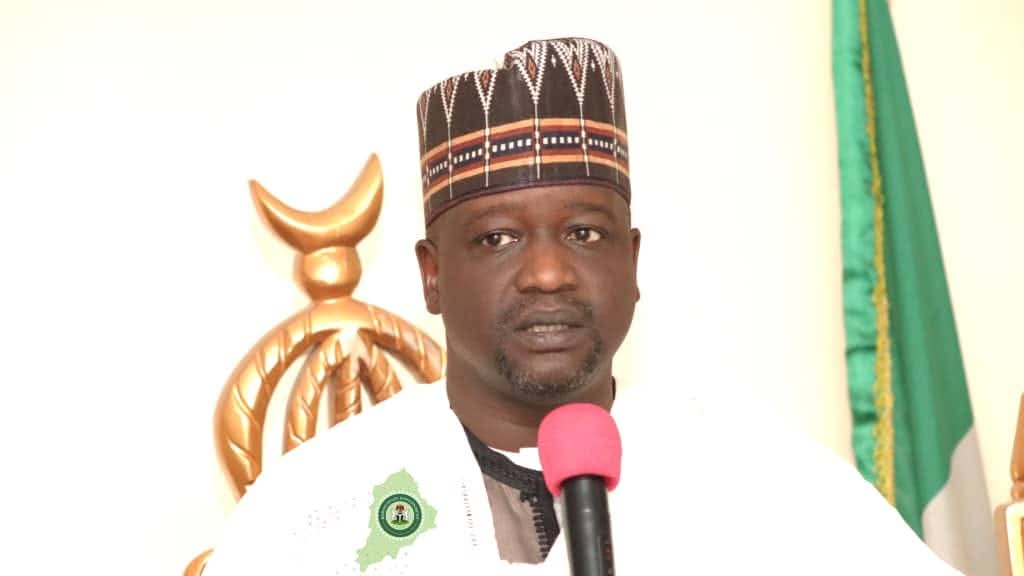
Dr Kadafur further added that “to everyone present, I encourage you to immerse yourselves fully in the celebration today. Let us take pride in who we are and the remarkable culture that we share. Together, we will continue to grow, thrive, and ensure that the spirit of the Menwara Festivals lives on for generations to come.”
In an address, The emir of Shani Alhaji Muhammad Nasir Mai Lafiya, while tracing the centuries-long tradition opined that the cultural festival depicts characteristics and knowledge of people which includes their language, religion, social habits, music and arts.
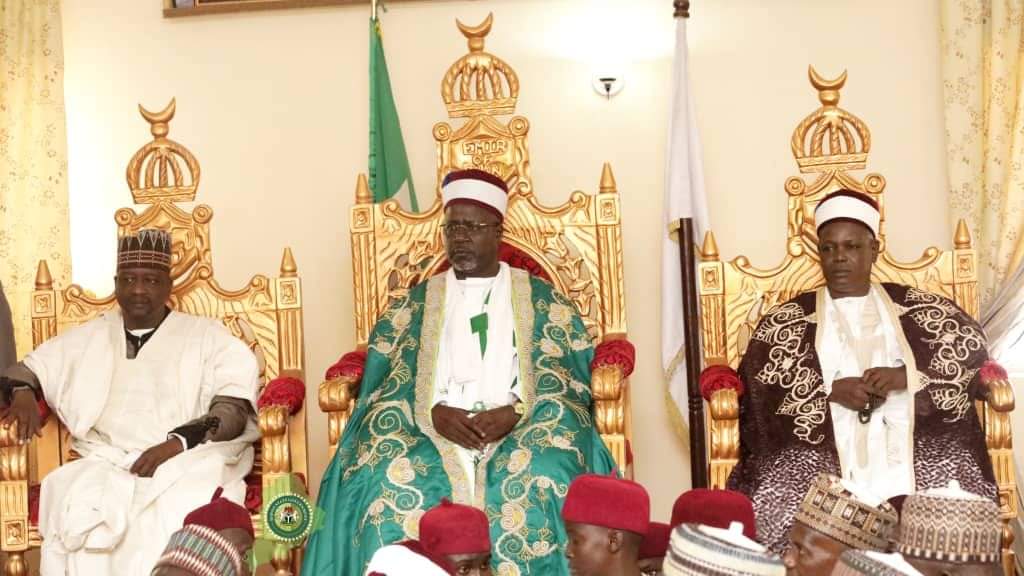
“The aim of hosting this annual cultural event therefore, is to continue to instill our cultural heritage and awareness into our younger generation”, the emir remarked.
The emir also took time to formally commiserate with the government and people of Borno over the recent devastating flood in Maiduguri which resulted in significant loss of lives and widespread destruction of properties, praying Allah to grant the deceased and their families the fortitude to bear the irreparable lost .
In a welcome address, the Executive Chairman of Shani Hon Hassan Abdu Labaki, said Shani local government has witnessed significant progress engendered by the present of administration of Governor Zulum with tangible and laudable projects all over the council which includes Vocational Entrepreneurship Institute Shani, Government Day Secondary School Gasi, Government Day Secondary Bargu, health clinic Gasi, Langama secondary school Shani, Shani water gallery, supply and distribution, as well as Local Government computer ICT Center Shani, among other developmental initiatives.
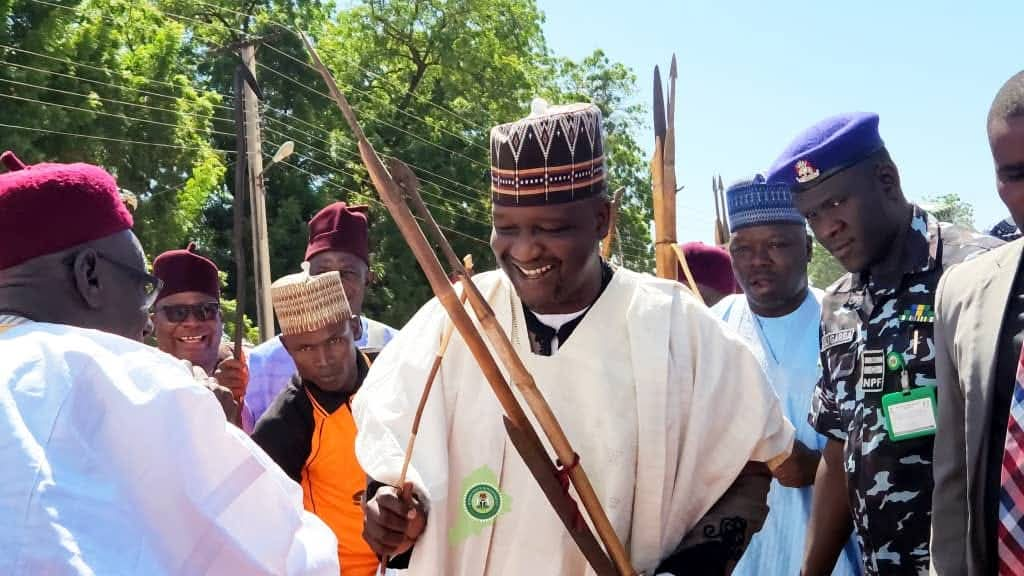
“Your Excellency, on behalf of myself, my council and the entire people of Shani LG we are wishing you, your entourage and all our invited dignitaries a happy and memorable stay in Shani and safe journey back to your destination,” the chairman concluded.
In a vote of thanks, Hon. Musa Inuwa Kubo urged the people of Shani to redouble their efforts in irrigation farming and avoid indiscriminate sales of agricultural produce to avoid food insecurity, while thanking the state governor and his deputy for their unflinching support to the area.
In attendance were the Former Deputy Governor HE Hon Usman Mamman Durkwa, Traditional Rulers, Members House Assembly of Hawul, Shani , Biu, Bayo, Deputy Chief of Staff, Commissioner of Inter-Governmental affairs Hon Ibrahim Tukur Shani, Chairmen of some respective Local Government, Special advisers, Permanent Secretaries , Principal Secretary to the Deputy Governor, Mohammed Adamu Lawan, as well as Senior Special Assistant among others.
Kadafur Lead govt officials to Menwara Festival 2024


Troops intercept 11 youths with donkeys during patrol in Borno
By: Zagazola Makama
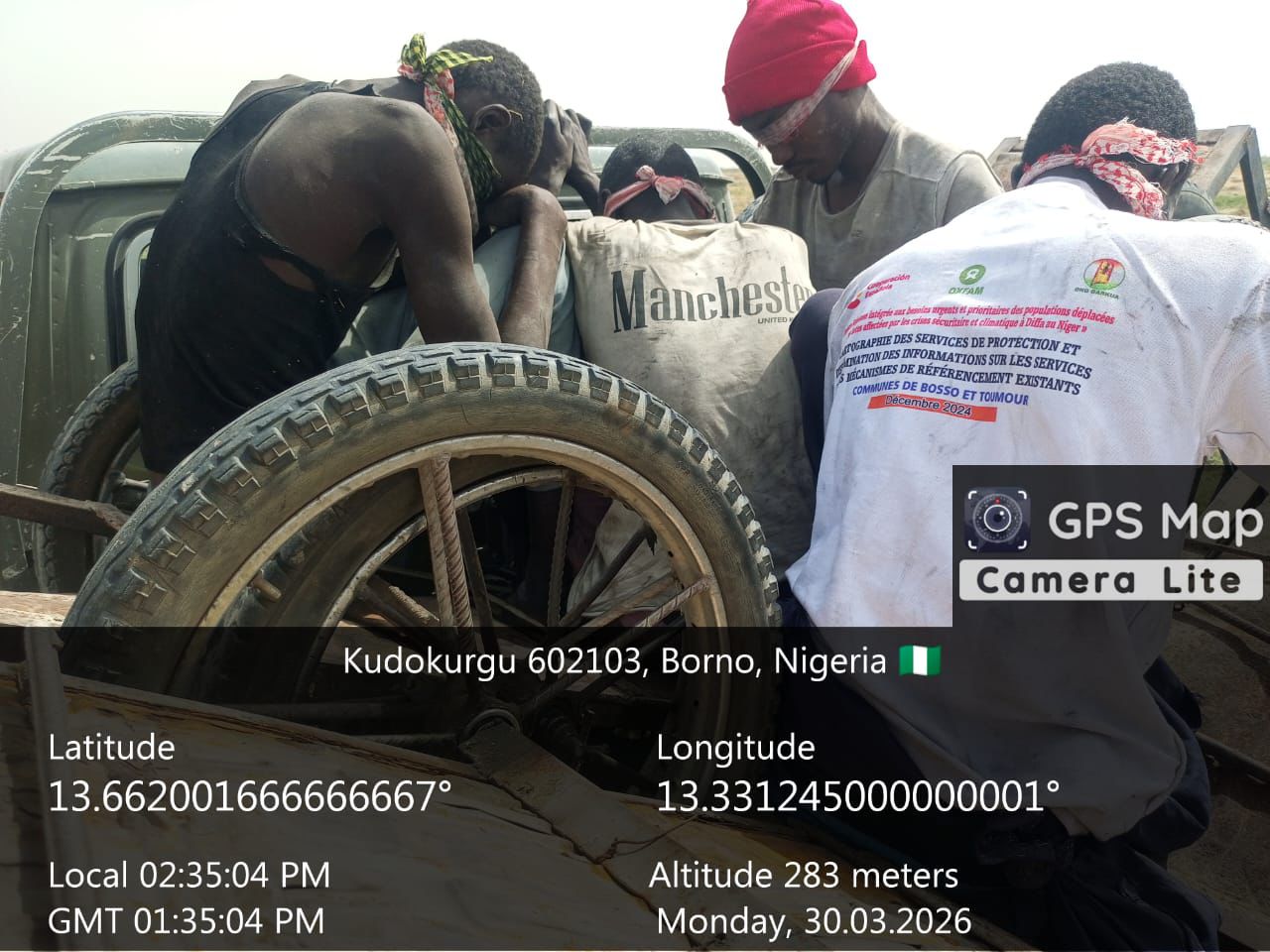
Troops of 68 Battalion have intercepted 11 youths during a routine patrol in Mallam Fatori area of Abadam Local Government Area of Borno State.
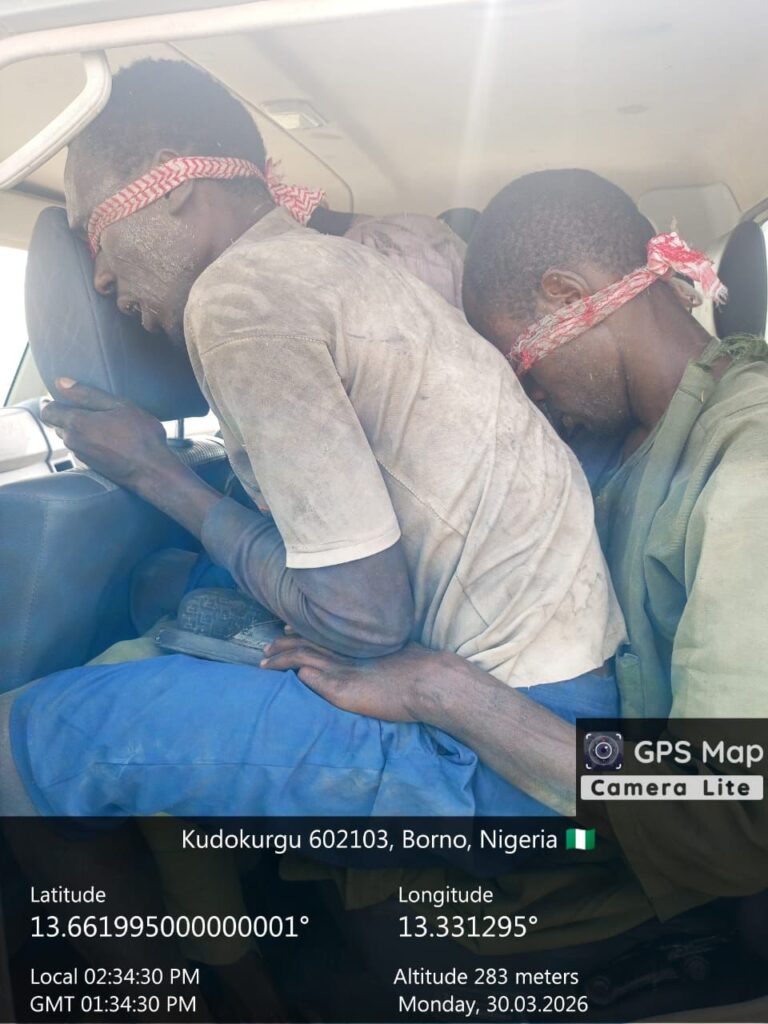
Security sources said the interception occurred along the Bulagana–Cheisa axis on April 2 during ongoing clearance operations in the area.
According to the sources, the individuals were found moving in the area with 12 donkeys when they were stopped and briefly interrogated by troops.
The sources added that the youths were later handed over, alongside the animals, to relevant authorities in a neighbouring country for further necessary action.
The military said the patrol was part of sustained efforts to maintain security dominance and prevent exploitation of border communities by criminal elements.
Troops intercept 11 youths with donkeys during patrol in Borno
Troops recover ammunition, logistics items in Kwara patrol operation
By: Zagazola Makama
Troops of the Nigerian Army under the 22 Brigade have recovered ammunition and other logistics items during a fighting patrol in Ifelodun Local Government Area of Kwara State.
A security source disclosed that the operation was conducted at about 4:00 p.m. on April 2 at Daban Lema, where troops of the brigade, operating from the Patrol Base, encountered signs of suspected terrorist activities in a deserted location.
According to the source, the troops immediately carried out exploitation of the area, leading to the recovery of four rounds of 7.62mm special ammunition and one empty PKT ammunition belt link.
Other items recovered include four mobile phones, two head warmers, two small solar panels, and assorted repair tools believed to have been used by the suspected terrorists.
The source added that the recovery indicates the presence and movement of suspected criminal elements within the area, noting that troops have intensified surveillance and patrols to deny them freedom of action.
Troops recover ammunition, logistics items in Kwara patrol operation
Troops foil attack by Criminal Youths, rescue victims, arrest suspects in plateau
By: Zagazola Makama
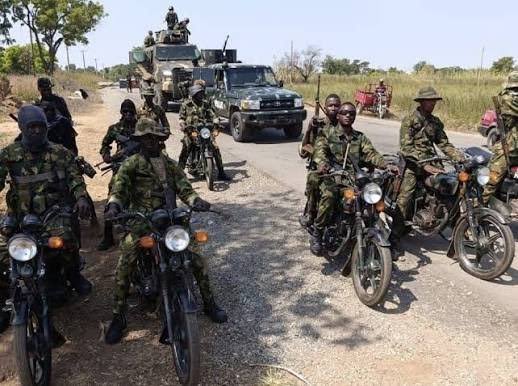
Troops of Sector 1, Operation Enduring Peace (OPEP), have foiled an attack on residents at Dutse Uku in Jos North Local Government Area of Plateau State.
A security source said the troops responded swiftly to a report of sporadic gunshots in the area at about 11:50 p.m. on April 2.
According to the source, upon arrival at the scene, the suspected criminals fled, abandoning their operation due to the prompt intervention of the troops.
He said the troops rescued two victims who sustained gunshot wounds during the incident and immediately evacuated them to a hospital for medical attention.
The source further disclosed that two suspects, dressed in black attire, were arrested at the scene.
Items recovered from the suspects include a cutlass and a knife.
He added that the suspects are currently in military custody and undergoing preliminary investigation, while efforts are ongoing to track down other fleeing members of the group.
Zagazola report that despite heightened security, there has been report of pocket of attacks in some communities.
The source reassured residents of the military’s commitment to protecting lives and property and urged the public to continue providing timely information to security agencies.
Troops foil attack by Criminal Youths, rescue victims, arrest suspects in plateau

Troops intercept suspected Boko Haram logistics convoy conveying 13 persons in Borno

Troops intercept 11 youths with donkeys during patrol in Borno

Troops, CJTF arrest three suspected Boko Haram logistics suppliers in Borno

Roger Federer’s Shock as DNA Results Reveal Myla and Charlene Are Not His Biological Children

THE PLIGHT OF FARIDA

FAILED COUP IN BURKINA FASO: HOW TRAORÉ NARROWLY ESCAPED ASSASSINATION PLOT AMID FOREIGN INTERFERENCE CLAIMS
-
 News2 years ago
Roger Federer’s Shock as DNA Results Reveal Myla and Charlene Are Not His Biological Children
-
Opinions4 years ago
THE PLIGHT OF FARIDA
-
 News12 months ago
FAILED COUP IN BURKINA FASO: HOW TRAORÉ NARROWLY ESCAPED ASSASSINATION PLOT AMID FOREIGN INTERFERENCE CLAIMS
-

 News2 years ago
EYN: Rev. Billi, Distortion of History, and The Living Tamarind Tree
-
 Opinions4 years ago
POLICE CHARGE ROOMS, A MINTING PRESS
-

 ACADEMICS2 years ago
A History of Biu” (2015) and The Lingering Bura-Pabir Question (1)
-

 Columns2 years ago
Army University Biu: There is certain interest, but certainly not from Borno.
-

 Opinions2 years ago
Tinubu,Shettima: The epidemic of economic, insecurity in Nigeria
