
News
Mining: FG Finalizes Plans to Reduce Release of Mercury into Atmosphere in Nigeria

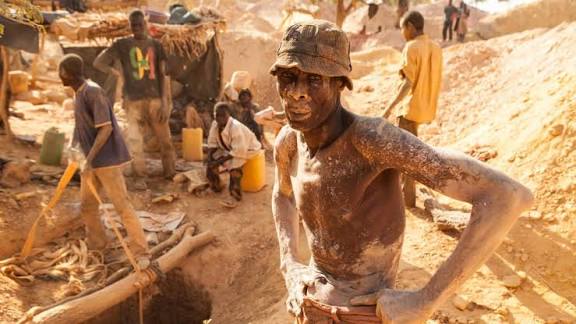
Mining: FG Finalizes Plans to Reduce Release of Mercury into Atmosphere in Nigeria
By: Michael Mike
The federal government is finalizing plans aimed at direct reduction of excess emissions and release of mercury into the environment from Artisanal and Small-scale Gold Mining (ASGM) activities in the country.
The effort is spearheaded by the Federal Ministry of Environment in collaboration with the Federal Ministry of Solid Minerals Development and funded by the Global Environment Facility (GEF).
The Minister of Environment, Balarabe Lawal, during an inception workshop organized at the weekend, in Abuja, to enhance the formalization of a mercury-free gold in Nigeria, revealed that they are collaborating together to forge a future where Nigeria’s gold resources are harnessed responsibly, without compromising the health of the people or the integrity of the environment
Lawal, who was represented by the ministry’s permanent secretary, Mahmud Kambari, said the artisanal and small-scale gold mining (ASGM) sector represents a notable contributor to Nigeria’s economy, and offers livelihoods to many, but, however worried that the sector presents a complex challenge due to the widespread use of mercury.
He decried that this has been identified as a potent neurotoxin with devastating consequences for human health and the environment.
He said: “Mercury is a highly toxic substance that can contaminate water sources and soil, leading to serious environmental and health problems. It can bioaccumulate in the food chain, leading to long-term health effects in humans and wildlife. In addition, mercury pollution can persist in the environment for decades, causing harm to ecosystems and biodiversity.”
Lawal disclosed that Nigeria, as a signatory to the Minamata Convention on Mercury, demonstrated its commitment by developing a National Action Plan (NAP) for the reduction and eventual elimination of mercury use in Artisanal and Small-scale Gold Mining (ASGM) in Nigeria between 2017 and 2020.
The Minister said the present collaboration under the GEF GOLD+ Nigeria Project builds upon the foundation laid by the NAP and represents a significant step forward in their commitment to tackling mercury pollution in the ASGM sector. He further reiterated that the project aligns perfectly with Nigeria’s national environmental policies and its obligations under the Minamata Convention on Mercury, adding that its focus on a holistic, multi-sectoral approach, integrating formalization with the adoption of mercury-free technologies and access to traceable supply chains, offers a sustainable pathway for the sector’s development.
On his part, the Permanent Secretary, Ministry of Solid Mineral Development, Engr. Faruk Yabo noted that Nigeria stands at the forefront of efforts to formalize the ASGM sector and reduce mercury use, in line with the Minamata Convention and the Sustainable Development Goals.
Yabo revealed that the by this project initiative, Nigeria is not only joining the global community efforts, but is setting an example for other nations—demonstrating that economic development and environmental stewardship can go hand in hand.
He said: “This project is designed to support policy reforms, strengthen institutional capacity, empower mining communities, and enhance access to finance for artisanal and small-scale miners. Improving financial inclusion is critical to enabling miners to invest in cleaner technologies, adopt safer practices, and transition toward formal and sustainable operations. By fostering partnerships across government, industry, and civil society, we aim to create an enabling environment where miners can thrive economically while safeguarding health and ecosystems.”
In a message at the event, United Nations Industrial Development Organisation (UNIDO), said; “By this project initiative, Nigeria is not only joining the global community efforts, but is setting an example for other nations—demonstrating that economic development and environmental stewardship can go hand in hand.”
It noted that: “This project is designed to support policy reforms, strengthen institutional capacity, empower mining communities, and enhance access to finance for artisanal and small-scale miners. Improving financial inclusion is critical to enabling miners to invest in cleaner technologies, adopt safer practices, and transition toward formal and sustainable operations. By fostering partnerships across government, industry, and civil society, we aim to create an enabling environment where miners can thrive economically while safeguarding health and ecosystems.
“UNIDO is committed to partner with the Government of Nigeria in driving this important transformation. In line with our mandate, to promote inclusive and sustainable industrial development, our commitment extends beyond the life of this project. We will continue to deliver technical expertise, facilitate knowledge exchange, and leverage international networks to attract resources and partnerships. Together, we aim to position Nigeria’s ASGM sector as a benchmark for sustainability, inclusiveness, and innovation—contributing to economic growth, environmental protection, and social well-being.”
Mining: FG Finalizes Plans to Reduce Release of Mercury into Atmosphere in Nigeria



Troops intercept 11 youths with donkeys during patrol in Borno
By: Zagazola Makama
Troops of 68 Battalion have intercepted 11 youths during a routine patrol in Mallam Fatori area of Abadam Local Government Area of Borno State.
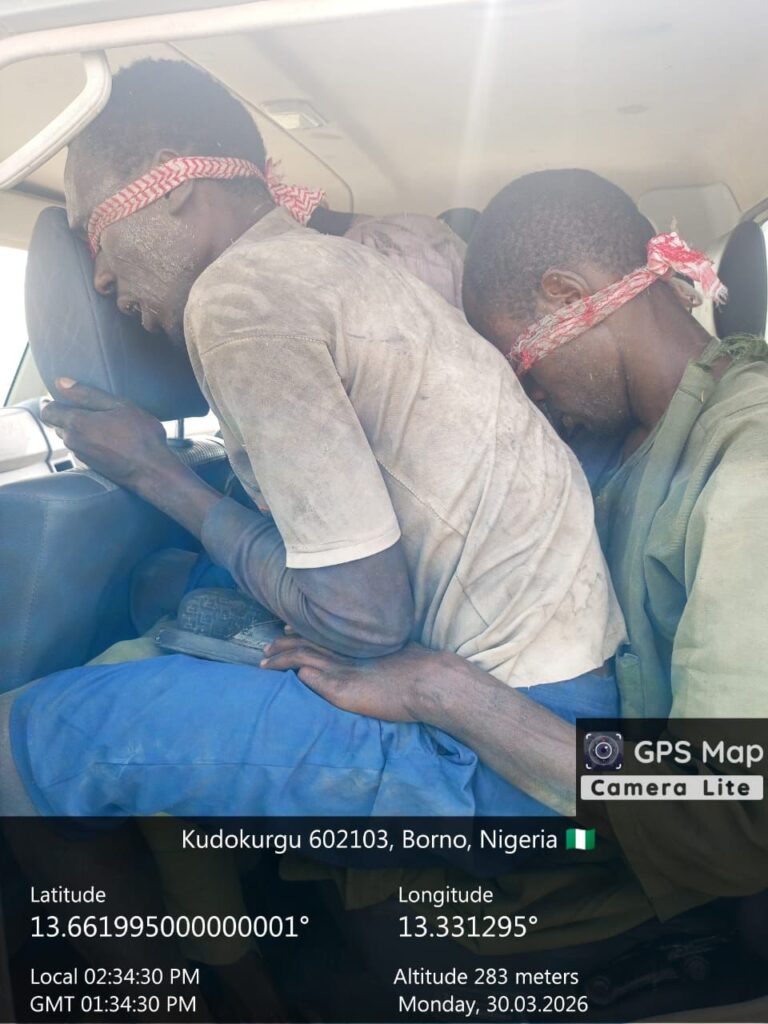
Security sources said the interception occurred along the Bulagana–Cheisa axis on April 2 during ongoing clearance operations in the area.
According to the sources, the individuals were found moving in the area with 12 donkeys when they were stopped and briefly interrogated by troops.
The sources added that the youths were later handed over, alongside the animals, to relevant authorities in a neighbouring country for further necessary action.
The military said the patrol was part of sustained efforts to maintain security dominance and prevent exploitation of border communities by criminal elements.
Troops intercept 11 youths with donkeys during patrol in Borno
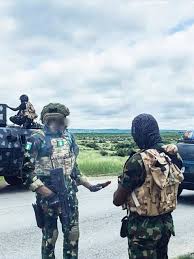
Troops recover ammunition, logistics items in Kwara patrol operation
By: Zagazola Makama
Troops of the Nigerian Army under the 22 Brigade have recovered ammunition and other logistics items during a fighting patrol in Ifelodun Local Government Area of Kwara State.
A security source disclosed that the operation was conducted at about 4:00 p.m. on April 2 at Daban Lema, where troops of the brigade, operating from the Patrol Base, encountered signs of suspected terrorist activities in a deserted location.
According to the source, the troops immediately carried out exploitation of the area, leading to the recovery of four rounds of 7.62mm special ammunition and one empty PKT ammunition belt link.
Other items recovered include four mobile phones, two head warmers, two small solar panels, and assorted repair tools believed to have been used by the suspected terrorists.
The source added that the recovery indicates the presence and movement of suspected criminal elements within the area, noting that troops have intensified surveillance and patrols to deny them freedom of action.
Troops recover ammunition, logistics items in Kwara patrol operation
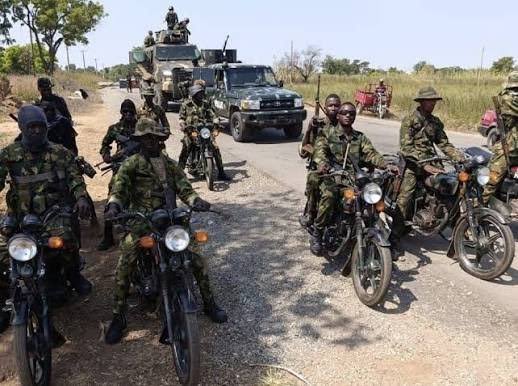
Troops foil attack by Criminal Youths, rescue victims, arrest suspects in plateau
By: Zagazola Makama
Troops of Sector 1, Operation Enduring Peace (OPEP), have foiled an attack on residents at Dutse Uku in Jos North Local Government Area of Plateau State.
A security source said the troops responded swiftly to a report of sporadic gunshots in the area at about 11:50 p.m. on April 2.
According to the source, upon arrival at the scene, the suspected criminals fled, abandoning their operation due to the prompt intervention of the troops.
He said the troops rescued two victims who sustained gunshot wounds during the incident and immediately evacuated them to a hospital for medical attention.
The source further disclosed that two suspects, dressed in black attire, were arrested at the scene.
Items recovered from the suspects include a cutlass and a knife.
He added that the suspects are currently in military custody and undergoing preliminary investigation, while efforts are ongoing to track down other fleeing members of the group.
Zagazola report that despite heightened security, there has been report of pocket of attacks in some communities.
The source reassured residents of the military’s commitment to protecting lives and property and urged the public to continue providing timely information to security agencies.
Troops foil attack by Criminal Youths, rescue victims, arrest suspects in plateau

Troops intercept suspected Boko Haram logistics convoy conveying 13 persons in Borno

Troops intercept 11 youths with donkeys during patrol in Borno

Troops, CJTF arrest three suspected Boko Haram logistics suppliers in Borno

Roger Federer’s Shock as DNA Results Reveal Myla and Charlene Are Not His Biological Children

THE PLIGHT OF FARIDA

FAILED COUP IN BURKINA FASO: HOW TRAORÉ NARROWLY ESCAPED ASSASSINATION PLOT AMID FOREIGN INTERFERENCE CLAIMS
-
 News2 years ago
Roger Federer’s Shock as DNA Results Reveal Myla and Charlene Are Not His Biological Children
-
Opinions4 years ago
THE PLIGHT OF FARIDA
-
 News12 months ago
FAILED COUP IN BURKINA FASO: HOW TRAORÉ NARROWLY ESCAPED ASSASSINATION PLOT AMID FOREIGN INTERFERENCE CLAIMS
-

 News2 years ago
EYN: Rev. Billi, Distortion of History, and The Living Tamarind Tree
-
 Opinions4 years ago
POLICE CHARGE ROOMS, A MINTING PRESS
-

 ACADEMICS2 years ago
A History of Biu” (2015) and The Lingering Bura-Pabir Question (1)
-

 Columns2 years ago
Army University Biu: There is certain interest, but certainly not from Borno.
-

 Opinions2 years ago
Tinubu,Shettima: The epidemic of economic, insecurity in Nigeria
