
News
MOTiON Condemns Violent Attack on Protesters in Abuja


MOTiON Condemns Violent Attack on Protesters in Abuja
…Calls on Government, Judiciary and Security Agencies to Stop Weaponising Citizen Dissent
By: Michael Mike
The Movement for the Transformation of Nigeria (MOTiON) has expressed outrage at what it termed brutal suppression of peaceful free Nnamdi Kanu protesters in Abuja.
The group in a statement on Tuesday, alleged that citizens exercising their constitutional right to dissent were shot at, tear-gassed, chased and arrested, in a chilling display of state hostility toward free expression.
In a statement jointly signed by its Convener, Hauwa Mustapha, and Co-Convener, Chris Isiguzo; the group said eyewitnesses and media reports confirm that security agents deployed heavy-handed tactics to crush a lawful assembly instead of protecting the rights of Nigerians.
The group said security agencies must be reminded that when citizens take to the streets to demand justice, reform, accountability or welfare, their duty is to safeguard and not silence them, stressing that only a few weeks ago, protesters demanding improved welfare for police and retired officers were not treated as adversaries because their demands favoured the same security institutions. Yet this week, citizens voicing dissent against perceived injustice were met with force and contempt. This double standard exposes a dangerous politicisation of the right to protest.
MOTiON asserted that the courts and government must stop framing citizen protests as illegitimate attempts to destabilise the state, insisting that such narratives embolden repression, obstruct reform dialogue, and erode democratic confidence.
It stated that judiciary must refuse to rubber-stamp blanket bans on assembly, and the executive must refrain from treating civic space as a political battleground.
The group said: “We further call on lawmakers to rise above partisan silence and defend the sanctity of citizens’ constitutional freedoms. They must use its oversight powers to ensure that: A public guarantee is issued that peaceful assemblies will never again be treated as criminal acts; All court injunctions restricting protests are reviewed to prevent their misuse as tools of intimidation under the guise of “security”; and Security agencies adopt and enforce a human-rights-compliant protest management protocol, and the Nigeria Police must commit to protecting citizens during protests, and ensure Nigerians are never treated as enemies simply for raising their voices.”
MOTiON said it stands in unwavering solidarity with all Nigerians exercising their right to peaceful protest, whether they are workers, students, retirees, or ordinary citizens. “We will not stay silent while legitimate dissent is criminalised and voices for justice are violently silenced.”
MOTiON is a collective force of Nigerians from mass democratic organisations, workers’ organisations, pro-democracy movements, movements for social justice, women groups, citizens groups, NGOs, academia, students and youth groups, and climate action groups.
According to it, it is a movement of movements channeling shared anger, frustration and aspirations of Nigerians into purposeful action. Through concerted, strategic effort, engaging in citizens’ actions to address and overcome the root causes of Nigeria’s current state: elite capture, ineffective leadership, institutional corruption, insecurity, and the pervasive culture of impunity.
MOTiON Condemns Violent Attack on Protesters in Abuja


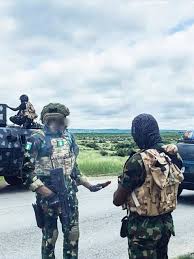
Troops recover ammunition, logistics items in Kwara patrol operation
By: Zagazola Makama
Troops of the Nigerian Army under the 22 Brigade have recovered ammunition and other logistics items during a fighting patrol in Ifelodun Local Government Area of Kwara State.
A security source disclosed that the operation was conducted at about 4:00 p.m. on April 2 at Daban Lema, where troops of the brigade, operating from the Patrol Base, encountered signs of suspected terrorist activities in a deserted location.
According to the source, the troops immediately carried out exploitation of the area, leading to the recovery of four rounds of 7.62mm special ammunition and one empty PKT ammunition belt link.
Other items recovered include four mobile phones, two head warmers, two small solar panels, and assorted repair tools believed to have been used by the suspected terrorists.
The source added that the recovery indicates the presence and movement of suspected criminal elements within the area, noting that troops have intensified surveillance and patrols to deny them freedom of action.
Troops recover ammunition, logistics items in Kwara patrol operation

Troops foil attack by Criminal Youths, rescue victims, arrest suspects in plateau
By: Zagazola Makama
Troops of Sector 1, Operation Enduring Peace (OPEP), have foiled an attack on residents at Dutse Uku in Jos North Local Government Area of Plateau State.
A security source said the troops responded swiftly to a report of sporadic gunshots in the area at about 11:50 p.m. on April 2.
According to the source, upon arrival at the scene, the suspected criminals fled, abandoning their operation due to the prompt intervention of the troops.
He said the troops rescued two victims who sustained gunshot wounds during the incident and immediately evacuated them to a hospital for medical attention.
The source further disclosed that two suspects, dressed in black attire, were arrested at the scene.
Items recovered from the suspects include a cutlass and a knife.
He added that the suspects are currently in military custody and undergoing preliminary investigation, while efforts are ongoing to track down other fleeing members of the group.
Zagazola report that despite heightened security, there has been report of pocket of attacks in some communities.
The source reassured residents of the military’s commitment to protecting lives and property and urged the public to continue providing timely information to security agencies.
Troops foil attack by Criminal Youths, rescue victims, arrest suspects in plateau
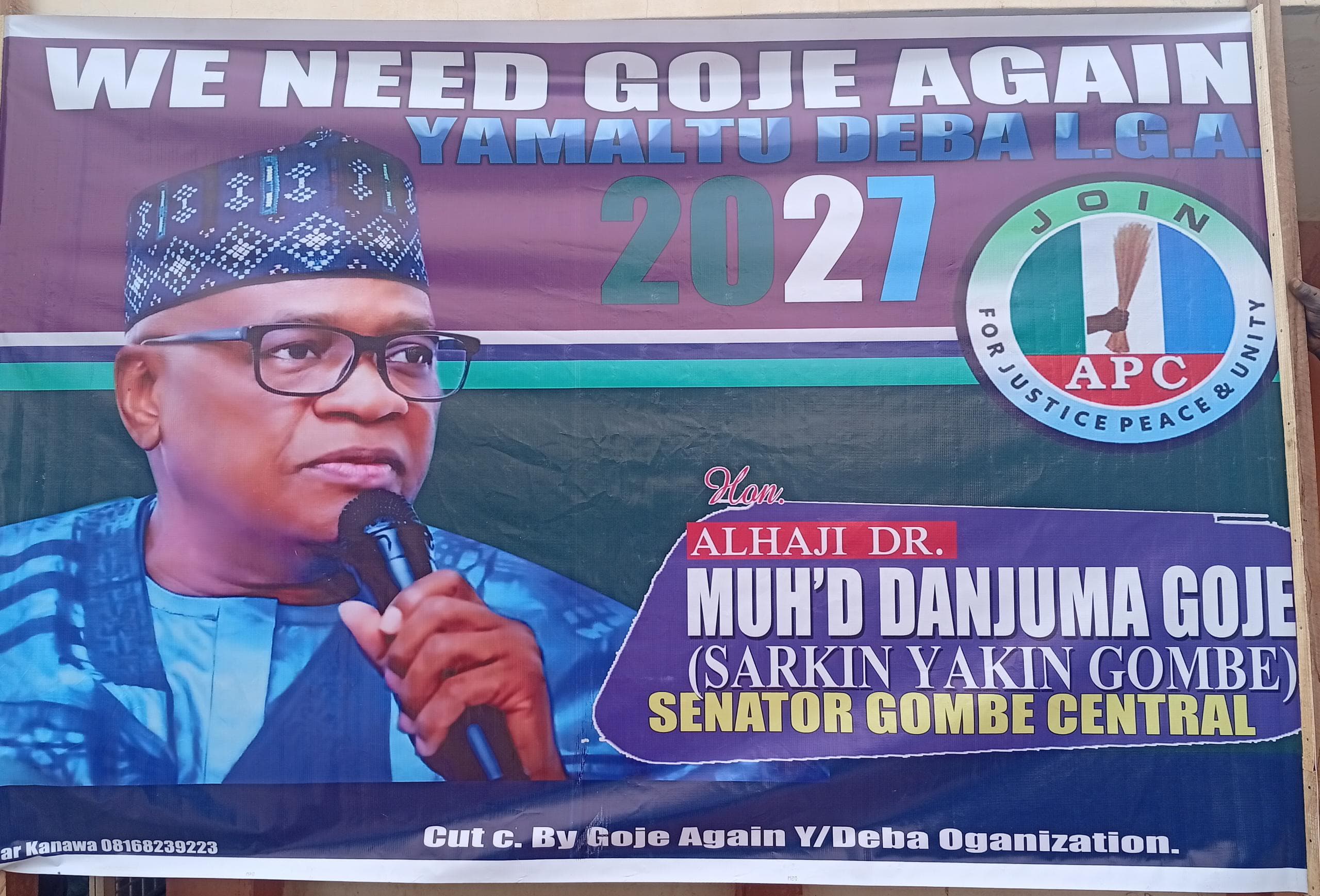
2027: Constituents declare support for Tinubu, Goje’s re-election
Yamaltu/Deba constituents have declared support for President Bola Tinubu and Senator Danjuma Goje’s re-election ahead of the 2027 General Elections.
Dr Newton Moses, declared the support in a statement read on behalf of the people of Yamaltu/Deba Local Government Area of Gombe State on Friday in Gombe.
Moses said voting for experienced leaders in 2027 remained key to addressing Nigeria’s challenges and delivering dividends of democracy to Nigerians.
He said the group’s decision to support Tinubu and Goje was guided by patriotism, and a sincere desire to see competent, and result-driven leadership that would benefit their constituents and the country.
He said that Goje’s leadership in the past 16 years at the Senate has benefitted the constituents and given effective representation to the people of Akko and Yamaltu/Deba LGAs that make up the district.
He dismissed allegations that the people of Yamaltu/Deba have been marginalised and were demanding the seat to be zoned to Yamaltu/Deba and not Akko where Goje is from.
He said that the constitution did not impose any zoning limitation or tenure restriction on membership in the National Assembly, hence urged those seeking the seat to test their popularity through election.
“We are not part of that group saying Goje should not return to the senate in 2027; that is not the voice of the grassroots from Yamaltu Deba.
“ Goje has, over the years, built invaluable networks and acquired the experience necessary to effectively advocate for the interests of his constituency and contribute meaningfully to national development.
“ By returning Goje to the Senate, Gombe Central stands to gain even more.
“ His established influence will ensure greater access to federal opportunities, increased developmental projects, and stronger representation in critical national decisions,” he said.
The group further advised President Tinubu to stay away from those working to tarnish the good name of Goje, stating that Goje’s influence in Gombe was important for the success of the All Progressives Congress in 2027.
Moses said at a time when Nigeria is focused on economic recovery, institutional strengthening, and inclusive growth under Tinubu, it was imperative that proven leaders like Goje to continue contributing his expertise toward national progress.
2027: Constituents declare support for Tinubu, Goje’s re-election

Troops, CJTF arrest three suspected Boko Haram logistics suppliers in Borno

Troops recover ammunition, logistics items in Kwara patrol operation

Troops foil attack by Criminal Youths, rescue victims, arrest suspects in plateau

Roger Federer’s Shock as DNA Results Reveal Myla and Charlene Are Not His Biological Children

THE PLIGHT OF FARIDA

FAILED COUP IN BURKINA FASO: HOW TRAORÉ NARROWLY ESCAPED ASSASSINATION PLOT AMID FOREIGN INTERFERENCE CLAIMS
-
 News2 years ago
Roger Federer’s Shock as DNA Results Reveal Myla and Charlene Are Not His Biological Children
-
Opinions4 years ago
THE PLIGHT OF FARIDA
-
 News12 months ago
FAILED COUP IN BURKINA FASO: HOW TRAORÉ NARROWLY ESCAPED ASSASSINATION PLOT AMID FOREIGN INTERFERENCE CLAIMS
-

 News2 years ago
EYN: Rev. Billi, Distortion of History, and The Living Tamarind Tree
-
 Opinions4 years ago
POLICE CHARGE ROOMS, A MINTING PRESS
-

 ACADEMICS2 years ago
A History of Biu” (2015) and The Lingering Bura-Pabir Question (1)
-

 Columns2 years ago
Army University Biu: There is certain interest, but certainly not from Borno.
-

 Opinions2 years ago
Tinubu,Shettima: The epidemic of economic, insecurity in Nigeria
