Connect with us

Crime

N1.4Bn Bank Fraud: EFCC Moves Atumeyi, NNPP’s Kogi Assembly Candidate To Lagos

Published

on

N1.4Bn Bank Fraud: EFCC Moves Atumeyi, NNPP’s Kogi Assembly Candidate To Lagos

The New Nigerian Peoples Party, NNPP, candidate for the Kogi State House of Assembly, Ismaila Yusuf Atumeyi, who was arrested by the Economic and Financial Crimes Commission, EFCC, in Abuja for a mega bank fraud, has been moved to Lagos.

The politician cum cyber-fraud suspect was flown into Lagos in the early hours of Wednesday, November 2, 2022 in continuation of the investigation into the scam. He is billed to be interrogated by another team of operatives at the Lagos Command of the Commission.

Atumeyi and two others, Joshua Dominic and Abdulmalik Salau Femi, a former bank employee, were arrested by the EFCC for allegedly hacking into the system of a commercial bank and defrauding the institution of over N1.4billion.

The EFCC had in a statement on Tuesday November 1, 2022 disclosed that it recovered N326million and $140,500 USD from Atumeyi during a sting operation at his hideout in Queens Estate, Gwarinpa, Abuja, while $470, 000 was recovered from Abdulmalik in Lagos.

N1.4Bn Bank Fraud: EFCC Moves Atumeyi, NNPP’s Kogi Assembly Candidate To Lagos

Continue Reading
Click to comment

Leave a Reply

Your email address will not be published. Required fields are marked *

Crime

NDLEA Intercepts N10.4bn “Canadian Loud” Drug Shipment at Lagos Port in Major Transnational Bust

Published

on

NDLEA Intercepts N10.4bn “Canadian Loud” Drug Shipment at Lagos Port in Major Transnational Bust

By: Michael Mike

The National Drug Law Enforcement Agency (NDLEA) has intercepted a massive consignment of Canadian Loud, a high-potency cannabis strain, valued at over ₦10.4 billion at the Tincan Island Port in Lagos, in one of the agency’s biggest anti-narcotics operations of 2026.

The seizure, which involved 4,173.5 kilogrammes of the illicit substance, followed weeks of coordinated intelligence gathering and international surveillance involving security agencies across Nigeria, the United Kingdom, the United States, and Canada.

According to the NDLEA, the shipment originated from Toronto, Canada, on March 28, 2026, and was moved by rail to Montreal before being loaded onto a vessel bound for Morocco.

The spokesman of the anti-narcotics agency, Femi Babafemi in a statement said, the consignment was later transloaded onto another ship in Tanger Med Port before arriving at Lagos Port on May 9, 2026, aboard a separate vessel.

He said the container was closely monitored for over two months by its Marine Intelligence Unit and the Tincan Island Strategic Command in collaboration with the Nigeria Customs Service and foreign partners including the United States Drug Enforcement Administration, the United Kingdom Home Office International Operations, and the Royal Canadian Mounted Police.

He notes that the operation culminated in a joint inspection on May 12, 2026, leading to the discovery of the drugs concealed inside two used vehicles — a Ford bus and a Mercedes-Benz C300 — packed within the container.

The latest interception comes just days after NDLEA operatives raided a luxury mansion in Lekki, Lagos, where 4,000 parcels of the same substance weighing 2,326 kilograms and valued at over ₦5.8 billion were recovered.

Officials described the back-to-back seizures as evidence of an intensified attempt by international drug cartels to flood Nigeria with synthetic cannabis through its seaports and urban distribution networks.

Chairman/Chief Executive Officer of the NDLEA, Brigadier General Buba Marwa (Rtd), commended the operatives involved in the operation, describing the seizure as proof of growing synergy among local and international security agencies.

“This second massive seizure in less than a week is a clear message to international syndicates who think they can use our ports as entry points for their soul-destroying trade,” Marwa said.

He stressed that the agency would sustain its crackdown on drug trafficking networks until all supply chains are dismantled and perpetrators brought to justice.

“We will not rest until every link in this supply chain is broken and those behind these shipments are brought to justice,” he added.

The NDLEA Director of Seaports Operations, ACG Ibinabo Archie-Abia, said the operation underscores the effectiveness of intelligence-led policing and inter-agency cooperation in tackling transnational organized crime.

He noted that the concealment method used in the shipment highlights the evolving sophistication of drug trafficking networks targeting Nigeria as a transit and consumption hub.

The agency emphasized that the success of the operation reflects deepening international cooperation in the fight against narcotics, particularly between Nigerian security agencies and global partners.

Authorities said investigations are ongoing to identify the Nigerian and foreign collaborators behind the shipment and to dismantle the wider trafficking network linked to the consignment.

The NDLEA said it will continue its intensified surveillance at ports, borders, and urban centres as part of its broader strategy to curb drug abuse and trafficking across the country.

NDLEA Intercepts N10.4bn “Canadian Loud” Drug Shipment at Lagos Port in Major Transnational Bust

Continue Reading

Crime

Fresh Chadian Offensive Forces ISWAP/Boko Haram Fighters to Flee Lake Chad Shores

Published

on

Fresh Chadian Offensive Forces ISWAP/Boko Haram Fighters to Flee Lake Chad Shores

By: Zagazola Makama

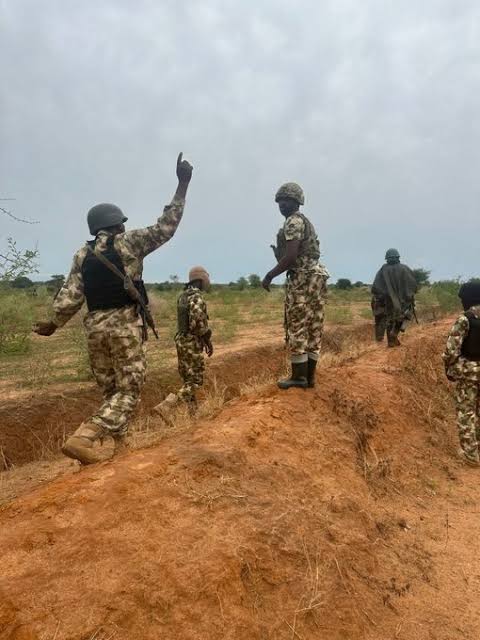
A fresh military offensive by Chadian forces in the Lake Chad Basin has triggered a mass displacement of Boko Haram terrorists and their families from the Tunbuns and adjoining island settlements toward parts of northern Borno, security and local sources have disclosed.

The development followed days of intense aerial bombardments and coordinated ground assaults launched by the Chadian military against suspected Boko Haram and ISWAP enclaves in the Lake Chad region after deadly attacks on Chadian troops earlier this month.

Sources told Zagazola Makama on Tuesday that large numbers of insurgents, accompanied by women and children, were seen moving across border routes from the Tunbuns toward Kangarwa and surrounding settlements.

Kangarwa is located about 14 to 15 kilometres from Kukawa in northern Borno.

The sources said the fleeing insurgents were escaping sustained bombardments by Chadian air assets targeting known terrorist camps and logistics bases located within the marshlands and islands around the Lake Chad fringes.

According to the sources, there are growing fears that some of the displaced fighters may attempt to regroup within established enclaves around Doro Naira, Wula Wula, Njemina, Tunbun Gini, Tunbun Rago and Tunbun Shanu in Borno state.

The sources stressed the need for intensified military operations within the Kukawa, Baga, Gudumbali and Malam Fatori axis to prevent the insurgents from integrating into existing cells operating within Nigerian territory.

The latest offensive is believed to be directly linked to recent deadly attacks carried out by insurgents against Chadian troops in the Lac Province area of Chad.

Security sources said insurgents linked to the Bakura-led faction of Jama’atu Ahlis Sunna Lidda’awati wal-Jihad (JAS) attacked Chadian military positions at Ngaboua and Chukuntale, known collectively as the Barka Tolorom axis, between May 4 and May 6.

According to the sources, the first attack occurred on May 4 at about 10 p.m. when insurgents stormed a Chadian military base at Ngaboua and reportedly overran the position.

Two days later, Chadian troops mounted a counteroffensive involving senior military commanders and multiple watercraft advancing through the riverine area toward insurgent positions.

However, the troops were reportedly ambushed around the Chukuntale waterways and adjoining high grounds.

Official Chadian figures put the casualty toll at 23 soldiers killed and 26 wounded.

However, security and local intelligence sources suggested that the actual casualty figure could be significantly higher, with some reports indicating that more than scores of soldiers, including two generals, may have been killed during the attacks.

The Chadian authorities subsequently declared a three-day national mourning period from May 6 to May 9 for fallen soldiers and imposed a 20-day state of emergency across the Lac Province.

Sources also disclosed that mass burials had been conducted for some of the deceased troops, while reports indicated that additional bodies remained within remote island locations difficult to access.

Zagazola noted that the Lake Chad region remains one of the most difficult operational theatres in the fight against Boko Haram due to its geography of islands, swamps and narrow waterways that provide insurgents with concealment and escape routes.

The terrain enables fighters to move rapidly between islands using canoes and small boats, making pursuit by conventional forces extremely difficult.

Zagazola further noted that poor communications, difficult logistics and isolated forward positions often complicate casualty evacuation, troop reinforcement and battlefield reporting within the region.

The latest attacks have also revived memories of the March 2020 Bohoma assault in Chad, where Boko Haram fighters killed dozens of Chadian soldiers during an attack on a military base located on one of the Lake Chad islands.

The renewed Chadian offensive appears aimed at dismantling insurgent camps and preventing further attacks on military formations within the region.

However, concerns remain that displaced insurgents could spill into communities across northern Borno and parts of Yobe if regional forces fail to coordinate sustained follow-up operations.

Military sources said the current dry-season conditions between May and July provide favourable terrain for clearance operations within the Tunbuns and adjoining riverine corridors.

Zagazola also renewed calls for stronger coordination among countries operating under the Multinational Joint Task Force, warning that unilateral operations without sustained regional synchronisation could simply displace insurgent threats across borders rather than eliminate them.

Fresh Chadian Offensive Forces ISWAP/Boko Haram Fighters to Flee Lake Chad Shores

Continue Reading

Crime

JNIM Fighters Intensify Pressure on Bamako Supply Routes Amid Growing Security Concerns in Mali

Published

on

JNIM Fighters Intensify Pressure on Bamako Supply Routes Amid Growing Security Concerns in Mali

By: Zagazola Makama

Armed fighters linked to Jama’at Nusrat al-Islam wal-Muslimin (JNIM) have intensified attacks along key transport corridors in southern Mali, raising fresh concerns over the country’s deteriorating security situation and the growing vulnerability of routes leading to the capital, Bamako.

Security sources and local reports indicated that several commercial buses and cargo trucks were intercepted and set ablaze on May 9 along the strategic Sikasso-Bougouni highway despite prior warnings allegedly issued by JNIM elements operating in the region.

The attacks reportedly occurred barely 48 hours after Mali’s Foreign Affairs Minister, Abdoulaye Diop, assured diplomats in Bamako that the state remained firmly in control of the security situation and that ongoing military “reorganisation” efforts were progressing effectively.

According to local accounts, armed fighters also attacked the village of Zambougou, located about 45 kilometres from Ségou on the road toward Bamako.

The village, reportedly hosting a pro-government militia allied with the Malian Armed Forces (FAMa), was allegedly set on fire during the assault.

Residents said militia members fled the area during the attack, leaving civilians stranded as homes and property were destroyed.

Similar incidents were reported in the Sanankoro Bani area, where additional buses were reportedly burned by armed groups operating along the corridor.

The attacks have heightened fears that insurgent groups are steadily tightening pressure on transport and supply routes critical to Bamako’s economic and logistical stability.

Transport operators and residents in affected regions described growing anxiety over movement along major highways linking southern and central Mali to the capital.

The latest incidents appear consistent with a broader insurgent strategy aimed at isolating Bamako through progressive disruption of transport corridors, supply chains and commercial movement.

“The pattern emerging is not random violence,” a regional security observer said.

“It increasingly resembles a deliberate strategy of economic and psychological pressure targeting the state’s ability to maintain normal activity and public confidence.”

The attacks also underscore the widening gap between official government messaging and realities on the ground, according to analysts monitoring the conflict.

In his May 7 briefing with diplomats, Diop had accused unnamed foreign actors of attempting to destabilise Mali while insisting that state institutions remained operational and effective.

However, critics argue that the repeated attacks on highways, military positions and civilian infrastructure reflect persistent weaknesses in the country’s security architecture despite the junta’s assurances.

Insurgent activity has expanded significantly in recent weeks across northern, central and southern Mali, targeting not only military facilities but also transport networks, energy infrastructure and commercial routes.

The ruling military government, led by Assimi Goïta, has repeatedly defended its security strategy since severing military ties with France and strengthening cooperation with Russian military partners.

Nevertheless, insecurity has continued to spread in several regions despite intensified military operations.

Zagazola warned that attacks on major highways could have severe economic consequences if sustained over time, particularly as Mali already faces inflationary pressures, fuel shortages and rising transportation costs.

“The danger is not only military. When commercial traffic slows and populations begin to fear movement between cities, the economic and psychological effects become significant.”

Local residents in parts of central and southern Mali have increasingly expressed concern over insecurity on roads previously considered relatively stable compared to conflict zones in the north.

Humanitarian organisations also warned that disruptions along key transport corridors could affect delivery of food supplies, medical assistance and other essential goods to vulnerable communities.

As of the time of filing this report, Malian authorities had not issued a detailed official statement regarding the attacks on the Sikasso-Bougouni axis.

JNIM Fighters Intensify Pressure on Bamako Supply Routes Amid Growing Security Concerns in Mali

Continue Reading

Trending

Verified by MonsterInsights