
News
National Small Arms Control Center officials Seeks Partnership with Borno Journalists


National Small Arms Control Center officials Seeks Partnership with Borno Journalists
By Bodunrin Kayode
Officials of the National Center for the Control of Small Arms and Light Weapons (NCCSALW), have called for partnership with the Nigerian Union of journalists Borno state council.
The officials led by Rear Admiral Abdulrahim Shua came from the northeast zonal office which is now based in maiduguri.
Rear Admiral Abdulrahim Shuwa retired accompanied by top officials of the zonal office was received by the Chairman of the NUJ, Comrade Dauda Iliya, his Vice Chairman, Comrade Abdulkareem Haruna, and Secretary of the Council Chiroma Ali and other top members of the Executive.
Shua disclosed that the NUJ is the first organization they would be visiting outside the military sector since his arrival to the sub-region.
Rear Admiral Shuwa (retired) said his mission was to introduce the federal organization to the working journalists and to forge a collaborative working relationship with the union as critical partners to the attainment of the NCCSALW core mandate of mopping up small arms. .
The retired Rear Admiral informed the NUJ leaders that the establishment of the NCCSALW was in line with the requirements of Article 24 of the ECOWAS Convention for The Establishment of SALW Commissions by all 15 member states in their efforts to eradicate the proliferation of SALW in the region collectively.
“Thus, the NCCSALW is mandated to lead a multi-stakeholder process involving MDAs and civil society organizations in the
implementation of all national, ecowas, and un plans of action on the control of SALW.
Shuwa also noted that the agreement included the establishment of Nigeria’s six zonal centers in Ado-Ekiti Calabar, Enugu, Kaduna, Minna, and Maiduguri by the office of the National Security Adviser.
The Small Arms Control chieftain noted that “when conflicts ends or subside, small arms remaining in circulation may lead to additional violence and suffering since fighting can resume or conflicts may erupt in neighboring regions,” he said.
“when small arms and light weapons are not mopped up in non-conflict areas, they could easily be used in perpetrating criminal violence or may be used in homicides, suicides, robbery.” He posited.
Admiral Shuwa said that there are about 875 million small arms worldwide, produced by 1,200 companies in 90 countries that produced them adding that “SALW has killed between 500,000 and 750,000 people annually. “
He emphasized that the success of the NCCSALW cannot be guaranteed without the media’s full cooperation.
Responding chair of the Borno council Comrade Iliya thanked the NCCSALW Zonal coordinator and his team for the cherished visit, even as he said the NUJ would visit them soon.
Comrade Iliya, however, assured the team of complete participation of the NUJ in all the activities of the Center, noting that everyone is aware of the menace of small arms and how its prevalence in the state has inflicted untold adversity on its people, and their socio-economic activities.
National Small Arms Control Center officials Seeks Partnership with Borno Journalists


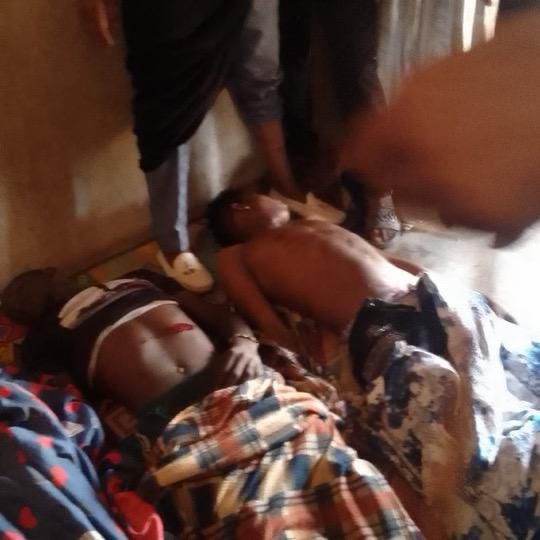
Troops restore calm after communal clash in Nasarawa
By: Zagazola Makama
Troops of 177 Guards Battalion have restored order following a communal clash in Aso Pada Riverside Community, Karu Local Government Area of Nasarawa State.
Security sources said that at about 9:00 a.m. on March 25, troops deployed at Gurku Patrol Base responded to reports of violence in the community.
On arrival, they discovered that some houses and properties had been set ablaze by youths of Fulani extraction.
Investigations revealed that the incident began when a vigilante from the community shot a Fulani youth with a dane gun over a dispute, claiming the youth’s cow had eaten his mango. Two other Fulani youths were also shot dead, triggering reprisal attacks that led to the deaths of two additional individuals and injuries to five others.
The corpses and injured victims were evacuated to a hospital for medical attention, while the vigilante is currently in police custody. Troops maintained a dominating presence in the area, calming the situation and restoring normalcy.
Authorities said efforts are ongoing to convene an expanded meeting with both parties to qfurther investigate the clash and apprehend other perpetrators.
Troops restore calm after communal clash in Nasarawa
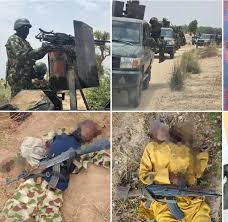
Troops conduct offensive, recover arms in Zamfara
By: Zagazola Makama
Troops of 1 Brigade, Operation FANSAN YANMA in coordination with troops of Sector 2, have carried out an offensive operation to clear a terrorist group from Dutsi village in Moriki District, Zurmi Local Government Area of Zamfara State.
Security sources said that at about 2:15 p.m. on March 25, troops engaged the terrorists in the village, forcing them to flee.
During exploitation of the area, troops recovered one AK-47 rifle, one magazine, and 26 rounds of 7.62mm special ammunition.
The operation was subsequently extended to Gandu village within the same district, where troops engaged fleeing terrorist positions on high ground, compelling them to withdraw.
Troops maintained aggressive posture to deny terrorists freedom of action and continue patrols to ensure the security of communities in the area.
Troops conduct offensive, recover arms in Zamfara
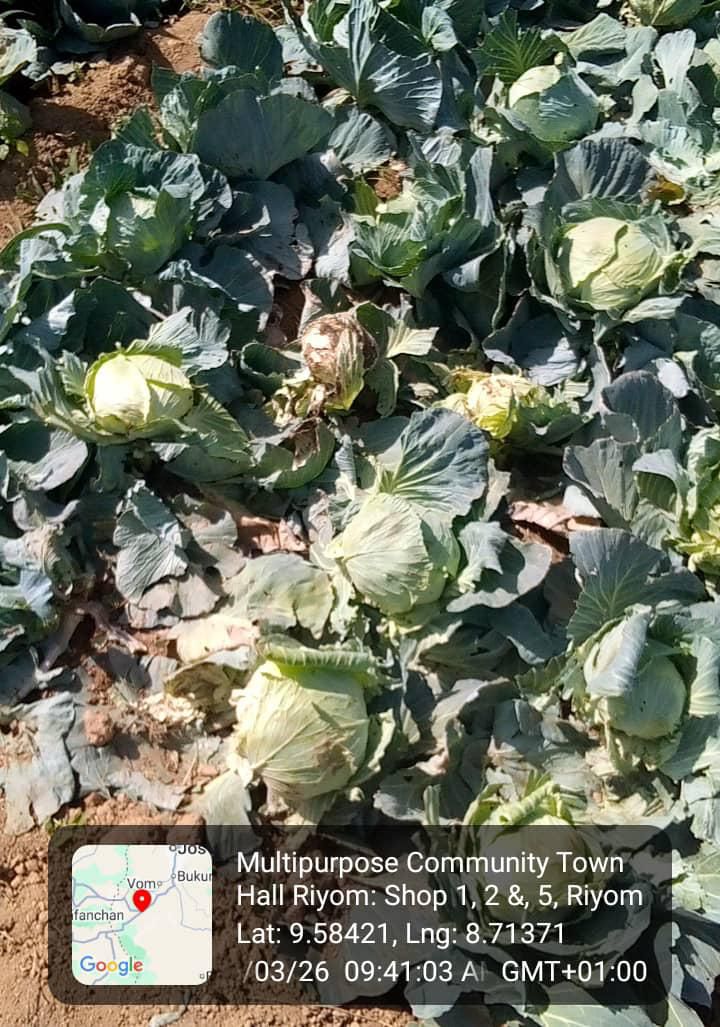
Troops respond irrigation farms destroyed in Rinyan, Riyom LGA, Plateau
By: Zagazola Makama
Troops of Operation Enduring Peace (OPEP) have responded to the destruction of irrigation farms at Rinyan village in Riyom Local Government Area.
Security sources said that at about 8:30 a.m. on March 25, troops of Sector 6 reacted to a report of the destruction of farms belonging to Mr.
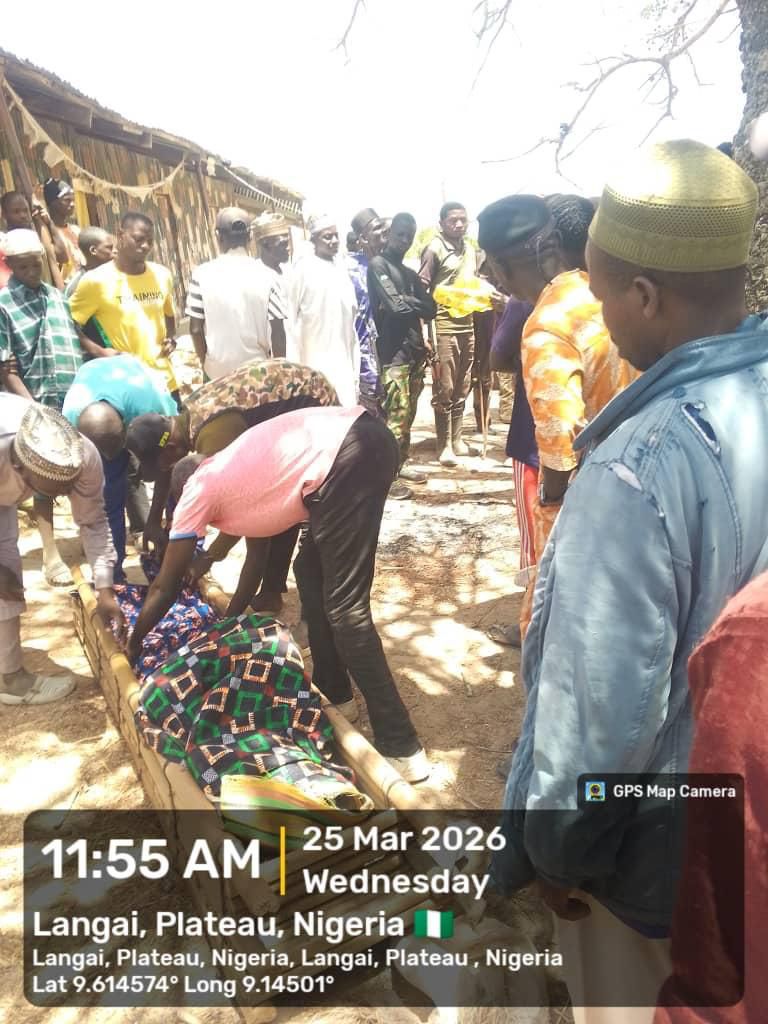
David Samuel Dada and six other farmers. On arrival, troops observed that cabbage and pepper crops had been completely destroyed by unidentified persons.
Efforts are ongoing to apprehend the perpetrators, the sources added.
Troops respond irrigation farms destroyed in Rinyan, Riyom LGA, Plateau

Troops restore calm after communal clash in Nasarawa

Troops conduct offensive, recover arms in Zamfara

Troops trail kidnappers, warn locals in Sokoto against complicity

Roger Federer’s Shock as DNA Results Reveal Myla and Charlene Are Not His Biological Children

THE PLIGHT OF FARIDA

FAILED COUP IN BURKINA FASO: HOW TRAORÉ NARROWLY ESCAPED ASSASSINATION PLOT AMID FOREIGN INTERFERENCE CLAIMS
-
 News2 years ago
Roger Federer’s Shock as DNA Results Reveal Myla and Charlene Are Not His Biological Children
-
Opinions4 years ago
THE PLIGHT OF FARIDA
-
 News11 months ago
FAILED COUP IN BURKINA FASO: HOW TRAORÉ NARROWLY ESCAPED ASSASSINATION PLOT AMID FOREIGN INTERFERENCE CLAIMS
-

 News2 years ago
EYN: Rev. Billi, Distortion of History, and The Living Tamarind Tree
-
 Opinions4 years ago
POLICE CHARGE ROOMS, A MINTING PRESS
-

 ACADEMICS2 years ago
A History of Biu” (2015) and The Lingering Bura-Pabir Question (1)
-

 Columns2 years ago
Army University Biu: There is certain interest, but certainly not from Borno.
-

 Opinions2 years ago
Tinubu,Shettima: The epidemic of economic, insecurity in Nigeria
