
Columns
NBA COLLOQUIUM: BETWEEN A TALKSHOW AND A DRESS PARADE.


NBA COLLOQUIUM: BETWEEN A TALKSHOW AND A DRESS PARADE.
By: Inuwa Bwala
Not only is the annual Bar Conference of the Nigerian Bar Association, NBA regarded as a assemblage of professional luminaries, it is also a rhendezvous for robust intellectual engagement. I know as a matter of fact that, lawyers always want to appear smart, but I am not aware, the colloquium is an outfit parade.
Every participant or guest to the conference did not leave their homes with the intention to get accolades or prizes for appearance, rather to add value to the most important gathering of Nigerian lawyers. I was not therefore impressed with the snapshot of Senator Kashim Shettima adorning what some people felt was inappropriate dress, which is trending in the social media.
I am sure if the Presidential running mate of the All Progressives Congress, APC, had been told that part of the agenda of the conference was to scrutinize people’s dresses, he could have complied with any dress code given. I say this conscious of the fact that, public appearance, nay dressing have never been an issue with Distinguished Senator Kashim Shettima
He remains one public figure to whom looks and brain are his attributes.
It is not in doubt, that, Shettima is one of the flamboyant dressers, even amongst his peers, but far beyond this, he is an authority on any subject he is asked to speak to at any public forum.
Every discerning mind could see through the motive behind the trending picture in the Social Media: to the effect that some people were just out to embarrass the gentleman.
The colleague who forwarded the snapshot of Senator Kashim Shettima to me, said this much in the ridder to the post.
My take on the issue was to first ask, whether Kashim Shettima, who stood in for Asiwaju Bola Ahmed Tinubu, the Presidential standard bearer of the APC, was singled out to further the narrative, which seeks to demarket their ticket, or to tap from his rich repository of intellectualism?
Also Read: Our Successes In Lagos, Borno Show We’ll Hit Ground…
If the former was the case, I think the authors of the mischief only succeeded in temporarily embarrassing Shettima, but grossly failing to take the shine from him, as he was perhaps the most outstanding intellectual amongst the non legal personalities at the conference.
If the later was the case, I feel that, those who showed interest in Shettima’s outfit much more than what he brought to the table were most uncharitable to the bar, which stand to benefit from the blend of ideas with Shettima.
It is not for nothing that lawyers regard each other as learned. This concept finds interpretation in both their outputs and their conducts, and allowing that piece of mischief to define their interactions with their guests at the conference was indeed very unfortunate.
If it were not a Bar conference, at which speakership was restricted amongst professional lawyers, Kashim Shettima would have dazzled the men of the wig with his oratory presentation. Even at that, the brief remarks he made, must have erased whatever notions, those who did not know him may have held.
Those who seek to embarrass Kashim Shettima with those posts should take up the challenge he threw to those who heard him speak; that what will define our future may not be rhetorics, nay propaganda, but experience and capacity. The days ahead will bring out those attributes.



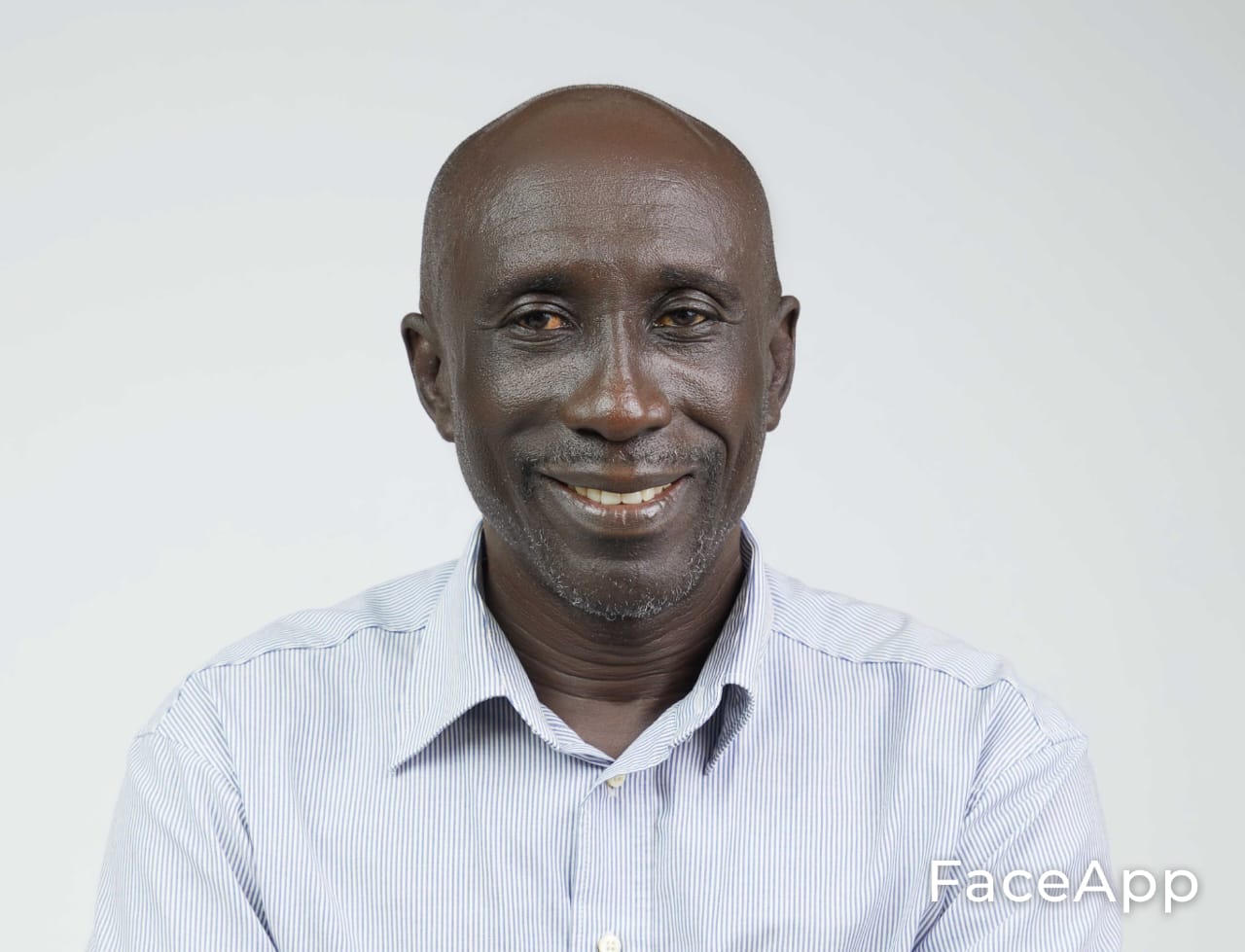
IBUAM: Redefining the Nigerian Aerospace and Systems Through Aeronautics Disciplines
By: Balami Lazarus
The Wright brothers invented and flew the first airplane in 1903. They never knew that they had set the growth, development, and progress of the aviation industry with their invention.
Following the establishment of Isaac Balami University of Aeronautics and Management (IBUAM), Nigerians are optimistic that it will redefine with sophistication the aerospace systems, giving a new definition of the aviation through her academic courses by the quality of graduates that shall come on board sooner or later with made-in-Nigeria aircraft, their parts, and other related inventions.
I remembered one of my bright students whom I taught some years past, who has clamped and insulated her mind and interest to studying aeronautics engineering; my encouragements for her were endless.
And here we are, with a university that will give every candidate equal opportunities in his or her course of study, where future global stars are going to be trained to rule the aviation industry and her economy—national and international—through IBUAM academic disciplines.
The emergence of specialized universities in Nigeria was a big reality in the realm of our educational systems. These universities are no doubt making progress towards improving specialization by their trained professionals in various fields of studies for economic growth and industrialization, like what IBUAM is intended to do through one of her courses rarely taught in some Nigerian universities.
IBUAM is here to cater to the near-starved aviation needs of human capital and material resources through aeronautics engineering systems/management.
All courses at IBUAM are important for our nation’s development and in the aviation sector. Interestingly, IBUAM has state-of-the-art facilities to enhance teaching and learning—hangers, special workshops, tools, materials, and equipment. Her classrooms/lecture halls are also equipped with modern/standard facilities meant for effective and qualitative academic teaching and practical lessons for excellent performance of her students in their various courses. Therefore, IBUAM is doing the right thing in our education space and time.
Before I started this work, I was focused, mind made up on one fundamental course offered at IBUAM, and by all standards, that will automatically change the foundation and structure of the aerospace, which will provide Nigeria with aircraft and parts through the Aerospace Engineering course (B. Aerospace Engineering). This academic discipline is where students are expected to be trained in the science and skills of aerospace engineering “meant for designing, building, aircraft maintenance, and spacecraft systems.”
Therefore, this course of study and its related associates (metaphorically) will redefine the aviation aerospace and its science of engineering arts/skills, provided IBAUM academic teaching and learning are capped with practicals.
Engr. Isaac David Balami
whose passion for education and aeronautics is rooted in IBUAM, said that courses of study are all in the womb of JAMB requirements for candidates seeking admission in IBUAM: “For better and further understanding of our admission requirements and equal opportunities, I refer intended candidates to go through the JAMB prospectus.”
With no iota of doubt in my mind, this university will put Nigeria on the international aviation map of progress and value.
Balami, Publisher/Columnist. 08036779290
IBUAM: Redefining the Nigerian Aerospace and Systems Through Aeronautics Disciplines

My Binoculars:
Fela, Seun Kuti, Wizkid and the Erratic Beliefs of The Generation Zees in Nigeria
By: Bodunrin Kayode
One of the most unintelligent discussions I have heard in recent times is the comparison of a human institution like Fela Kuti to any ordinary individual. It sounds so dumb, awkward and misplaced that sometimes one wonders why so called “right thinking people” wander into such useless discussions like the impulsive Z generation known popularly as genzees. Most generation Zee fellows are adventurous and misuse communication using the latest Ai technology which makes them to assume they are smarter than even the millennials, born before 2000 who are much more closer to them than the generation X which reigned long after legends like Fela Kuti was born.
This is because they can make enormous amounts of money through music or any crafts with the help of the AI technology. Those who find themselves in the culture, art and music are the worse because they become millionaires by just talking or singing any rubbish like they do in the contemporary music at times and it is called “content” fit for consumption. Some even use very foul languages not fit for the airspace yet unfit presenters and uneducated DJ’s call them influencers following after the way of the west where all manner of crude and uncouth behavioral pattern becomes the norm. There is no reason for the comparison of Fela a “baby boomer” to a restless kid like Wizkid. It is an abomination and should never happen under the sun. It’s a sin for anyone to make such comparison because Fela is the founder of the genre of the music most of the genzee musicians are singing today. How does an angel or a mere mortal compare himself to their Creator? Such thoughts should not be allowed to take place at all. It’s disgusting.
Wizkid’s obscene challenge of Fela’s position as the founder of afro beat as it is known today
Imagine a badly influenced genzee element who calls himself Wizkid wakes up and suddenly realizes that he is actually an adult fit to contest superiority with an institution like Baba Fela Kuti. As far as some of us who witnessed the great “anikulapo” Kuti first hand in his shrine can remember, Wizkid was not born when Fela challenged ruthless military authorities to account for their wicked deeds against the people. Consequently, it is really needless for even Seun Kuti to be in a hurry to defend the larger than life pedigree of his father. That too will be heavy for Seun to stand up, carry on his head and defend. He should have allowed all those who were mentees of Fela to get up and take up verbal arms against attention seeking detractors led by this Wiz Pekin way nor know say the thing way elders de see at the foot of a palm tree e nor go see am at all even if he climbs up to the top of the tree. It is often said in Yoruba language that ” Atari ajanaku kii se ewu omode” meaning that the head of an elephant is not the kind of load a child can carry.” And this is for Wizkid who has refused to grow up. Fela’s daughter aunty Yeni and Femi Kuti have placed it succinctly in recent responses to the altercation between Seun and WizKid. And the summary of what they said is that it was pointless fighting for someone who became an institution long before his demise. And long before Wizkid was born or started imitating the nuances of Baba Fela in the name of Afro beat. Fela was idolized by millions of mentees all over the world and we don’t need to ask the family to produce evidence of this. That history was removed from the curriculum of genzees making it difficult for them to understand the past is not their fault. It is a calculated plot of the oligarchs who have an agenda and would not want even millennials to remember who was Funmilayo Ransome Kuti the mother of Fela and what role she played in raw activism against the jack boots of colonialists in Nigeria.
Abani Eda, the deity who walked around with death in his pocket
Fela regarded himself as the ” abani Eda” the strange one who changed his name from Ransome Kuti to Anikulapo Kuti meaning he walked around with death in his pocket. That itself was a dangerous threat to the military who hunted him day and night looking for faults to kill him. He never gave them the opportunity to humiliate or intimidate him even after killing his mother Fumilayo Ransom Kuti whom they thought was his spiritual backbone. Rather, it made Fela more daring and horned the activist in him further. Incarceration equally never broke him because that is always the bottom line of any dictatorial government involved in repressive tendencies.
Regardless of what anyone thinks, Fela Kuti was not just an individual that can be messed around with but a deity of some sorts who fought the deadliest battles in his life against injustice. A man that built the foundation for a genre of music which is now called “afro beat” today and one badly brought up genzee brat just wakes up to name drop and equate himself to Fela the oracle of afro beat in the whole world..it’s so insulting and unintelligent of him to even conceive this kind of talk about “I big pass your papa” “or i get money pass your papa” while thrashing a beef with Seun Kuti. It was arrant nonsense that should never be allowed to be prolonged afterwards Fela reached out to the entire world with his popular pidgin English lyrics which dominated even interviews with international news media houses. Of a truth, this talk about who is greater should not even arise because it is uncalled for, insulting and a dangerous mark of disrespect against the iconic statue of Fela Kuti.
For young people like Wizkid who do not know who Fela is, they should go take a look into his background because none of them were born when Fela dared to speak to power including military governments which was in vogue in Nigeria before 2000 when the generation zees started coming into this world.
My advice to the Kuti Family is to ignore the young man because we all know about his dangerous genzee influencing roles and exigencies way beyond what Fela would have tolerated in his Ikeja Shrine.
Fela, Seun Kuti, Wizkid and the Erratic Beliefs of The Generation Zees in Nigeria
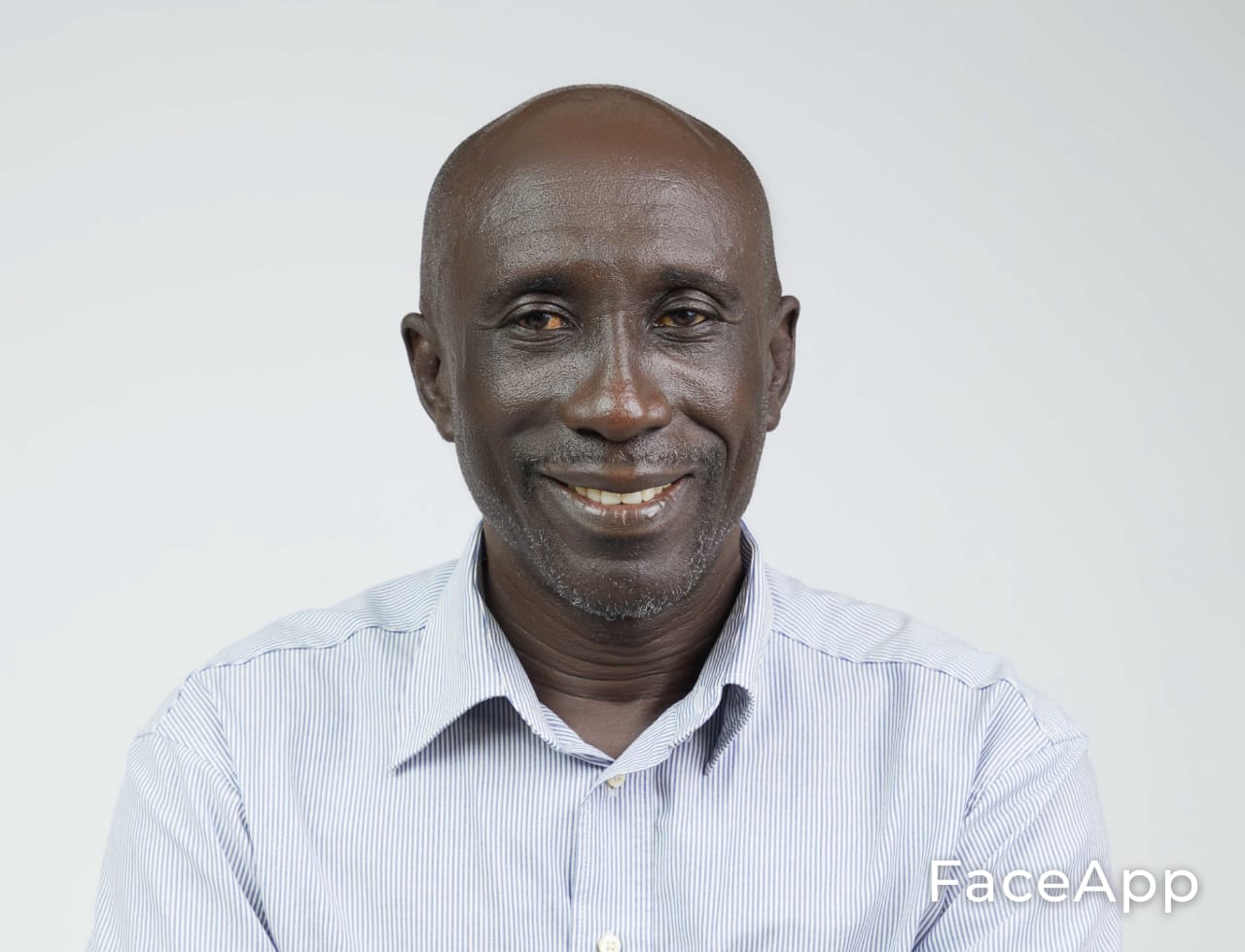
Anatomy of Electronic Platforms: The Honey Badger Attitudes/Character
By: Balami Lazarus
As a young boy I have heard of this small-sized animal, the honey badger, called “Dagi” in the Hausa language, that belongs to the Mustelidae family of otters, weasels, ferrets, and a few others of its kind. It has a white, single stripe pattern on its back. Honey badgers are rated the most fearless animal on earth today, its size notwithstanding. It has no respect for territorial boundaries or the privacy of other animals in the wild.
Honey badgers move and hunt freely at any point in time. They are known for their large appetite; anything goes for either breakfast, lunch, or dinner. Honey juice and snacks are their favorites. Honey badgers fight other animals without hesitation, undermining the consequences. This is the behavior and activities of some individuals on their platforms.
The pictures painted in words are typical of the anatomy of some electronic platforms in this age of digital systems, where many more honey badgers have emerged.
I am a member of some platforms and am writing this piece from experience. As a groping participant of my platform who always tried to make meaningful contributions with glitches of qualitative and educative postings in an attempt to facilitate the free flow of information among members of my group.
Social platforms have made it easier for the free flow of ideas and information accessible to every member of the group, with information at his fingertips.
Platforms that are not properly organized or are not professionally inclined in accordance with their professions, trades, or vocations are always overtaken and controlled by members with the character and attitudes of honey badgers.
Electronic platforms are supposed to be a place where members are informed/receive good information or put on notice.
While bereavements, ailments, and other unfortunate postings are the traffic of some electronics platforms. More so, some are flooded with all such birthdays—humans and animals. In fact, some members are known for soliciting birthday wishes. Without apology, many are birthday beggars: “I am one today; celebrate with me.”
I pray leadership of platforms that are faced with such viruses should endeavor to make corrections to achieve their objectives.
Balami, Publisher/Columnist. 08036779290
Anatomy of Electronic Platforms: The Honey Badger Attitudes/Character

State Police: Group Commends Tinubu, Urges Accelerated Action

Nigeria, EU Strengthen Strategic Alliance with New Investments, Security and Climate Cooperation

ECOWAS, AU Push Green Ports Agenda to Cut Maritime Emissions in Africa

Roger Federer’s Shock as DNA Results Reveal Myla and Charlene Are Not His Biological Children

THE PLIGHT OF FARIDA

FAILED COUP IN BURKINA FASO: HOW TRAORÉ NARROWLY ESCAPED ASSASSINATION PLOT AMID FOREIGN INTERFERENCE CLAIMS
-
 News2 years ago
Roger Federer’s Shock as DNA Results Reveal Myla and Charlene Are Not His Biological Children
-
Opinions4 years ago
THE PLIGHT OF FARIDA
-
 News11 months ago
FAILED COUP IN BURKINA FASO: HOW TRAORÉ NARROWLY ESCAPED ASSASSINATION PLOT AMID FOREIGN INTERFERENCE CLAIMS
-

 News2 years ago
EYN: Rev. Billi, Distortion of History, and The Living Tamarind Tree
-
 Opinions4 years ago
POLICE CHARGE ROOMS, A MINTING PRESS
-

 ACADEMICS2 years ago
A History of Biu” (2015) and The Lingering Bura-Pabir Question (1)
-

 Columns2 years ago
Army University Biu: There is certain interest, but certainly not from Borno.
-

 Opinions2 years ago
Tinubu,Shettima: The epidemic of economic, insecurity in Nigeria
