
Northeast
NCoS Describes Falana’s Allegation Against It’s Officials Wild, Unsubstantiated, Unpatriotic, Most Unfortunate

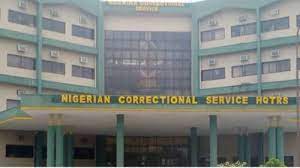
NCoS Describes Falana’s Allegation Against It’s Officials Wild, Unsubstantiated, Unpatriotic, Most Unfortunate
By: Michael Mike
The Nigerian Correctional Service (NCoS) has described the allegation that some of it’s officials are in the habit of arranging for convicts to evade serving terms as wild, unsubstantiated, unpatriotic and most unfortunate.
A respected human rights lawyer, Chief Femi Falana (SAN) has alleged last week during a media session titled, “Forget the past, forfeit the future: A nation seceding from humanity”, that some officials of the Nigerian Correctional Service (NCoS) allow criminals to escape court verdicts by getting young men who will serve jail terms for criminals.
In a reaction at the weekend to the allegation, the spokesman of Nigerian Correctional Service, Francis Enobore said the authorities of the Service “have observed, with great concern, the statement credited to a legal practitioner alleging that some officials of the Nigerian Correctional Service allow criminals to evade court verdicts by getting young men who will serve jail terms for criminals. This wild and unsubstantiated allegation is unpatriotic and most unfortunate, especially coming from a respected lawyer of international recognition.”
He added that: “What is more worrisome is a growing consistency by the author to vilify the Nigerian Correctional Service without a just course. It would be recalled that in February 2021, the author alleged that a high profile inmate who was on remand in the Medium Security Custodial Centre, Kaduna contracted COVID-19 in custody.
“The alarm which insinuated that inmates were kept in squalor and exposed to debilitating health conditions, triggered condemnation from various quarters. Subsequently, an independent COVID-19 test by the National Centre for Disease Control (NCDC) in conjunction with the personal physician of the then inmate was conducted. The result came negative without a trace of the disease in her system.
“Now the alarm is being raised over hearsay arrangements to keep in custody, persons other than those legally convicted yet no name of persons or custodial centre is mentioned. The Service is compelled to respond to the allegation in order to correct the wrong impression and prevent disaffection the information is capable of creating in the mind of Nigerians.”
Also Read: NIN: COSMBYLA urges network operators told to unbar phone…
Enobore said: “For the avoidance of doubt, the process of admitting persons into custody begins with the court where the warrant is issued stating the particulars of the person concerned. At the designated custodial centre, the personal details are confirmed by the superintending officer before further biometrics, including photographs are taken.”
He also explained that: “On routine visits by the Controller in charge of the state, the inmates and their corresponding documents are checked. Furthermore, the Zonal Coordinator conducts his mandatory custodial centre inspection during which these information and general supervision of the yard is carried out. The Controller-General, on his own, carries out unscheduled visits to any custodial centre and prisoners’ records are checked.
“Moreover, Judges, lawyers, statutory custodial visitors, inmates’ relations, religious groups, civil society organisations and host of other visitors regularly interface with the inmates and it is expected that where such incident is observed, an alarm is raised for appropriate action to be taken.”
He said: “Particularly intriguing in this scenario is the fact that author is a public figure like many other distinguished Nigerians, that cannot be denied access to any custodial centre in the country upon request for a genuine course. One therefore wonders why he would resort to wild statement rather than identify a particular culprit with proof of his allegation as would be expected of a patriot.”
Meanwhile he said: “As always, the Controller-General of Corrections, Haliru Nababa is irrevocably committed to the good course of inmates’ care and support for the betterment of the society and recent commendable performances of the inmates in both academic and vocational skills acquisition bear eloquent testimonials to this positive trajectory.
“While soliciting for constructive engagements and contributions from well-meaning Nigerians towards improving custodial management in the country, the Controller General assures of his unwavering determination to put the Service on a higher pedestal.”
NCoS Describes Falana’s Allegation Against It’s Officials Wild, Unsubstantiated, Unpatriotic, Most Unfortunate




Zulum Visits Ngoshe, Pledges Reconstruction of Damaged Infrastructure
…Vows Ngoshe Will Not Fall Again
By: Our Reporter
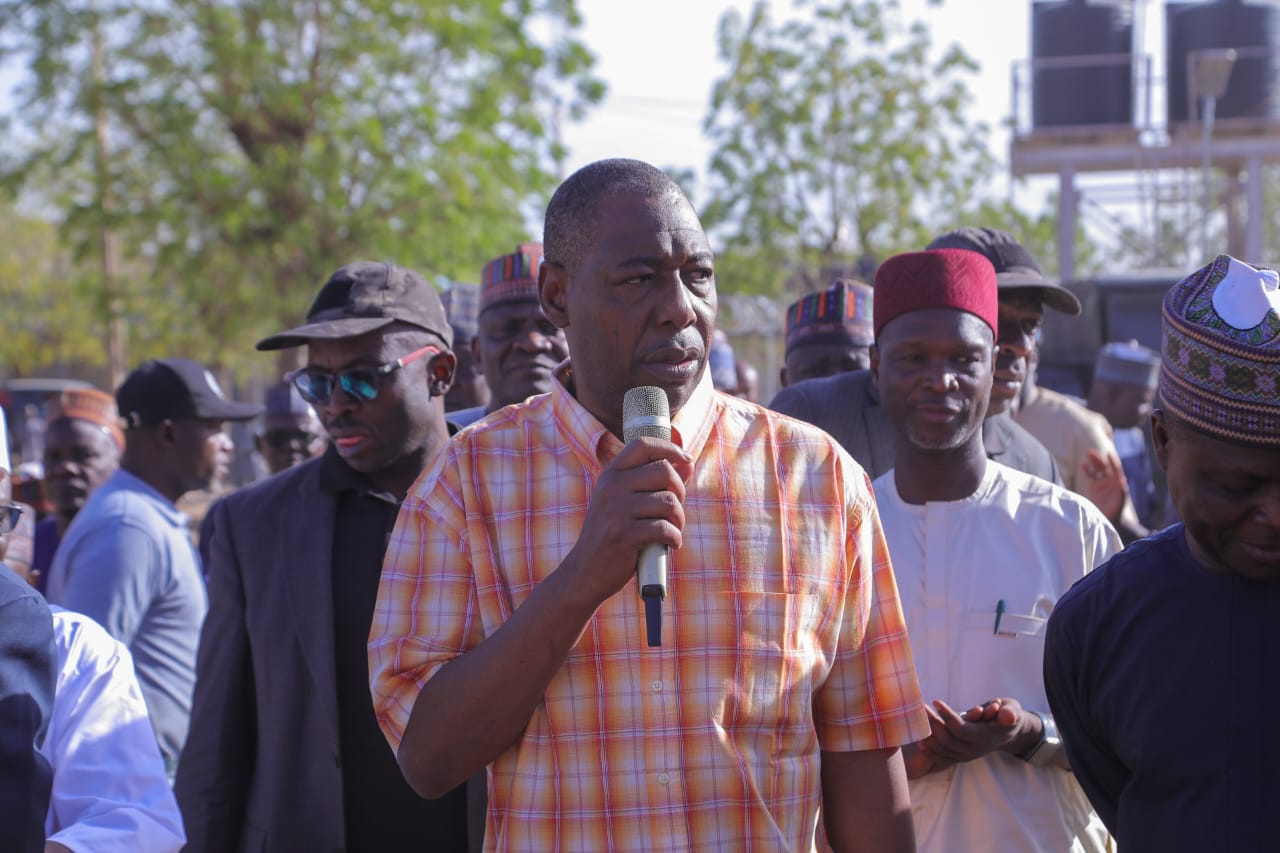
Borno State Governor, Professor Babagana Umara Zulum, on Sunday, visited Ngoshe which is about 40 kilometres away from Gwoza to see for himself the level of damage.
Zulum, who has embarked on a two-day confidence and resilience-building tour to victims of recent Boko Haram attacks in Ngoshe and Pulka, disbursed cash and relief items to over 30,000 people affected by the recent incident.
Speaking to newsmen shortly after inspecting the affected community, the governor described the level of destruction as shocking and heartbreaking.
“It is saddening to see this kind of devastation. In recent times, I have not witnessed such destruction. It is sheer madness, but Insha Allah, we shall build back better,” the governor said.
He assured residents of Ngoshe in Gwoza Local Government Area that government will rebuild homes and public infrastructure destroyed by recent attacks, while intensifying security efforts to restore lasting peace in the area.
Zulum said he had directed officials of the Ministry of Reconstruction, Rehabilitation and Resettlement to immediately assess the extent of the damage with a view to rehabilitating all burnt structures.
“I am here with representatives of the Ministry for Reconstruction, Rehabilitation and Resettlement, and I have directed them to assess the level of damage so that all the burnt infrastructure can be rehabilitated,” he said.
The governor noted that the Federal Government, under President Bola Ahmed Tinubu, had recently released funds to the Multinational Joint Task Force to boost military operations in the region.
“I am pleased to announce the support and funding recently released by the Federal Government of Nigeria, under President Bola Ahmed Tinubu, to the Multinational Joint Task Force for military operations in this general area,” he said.
He explained that the Mandara Hills remain a major stronghold for insurgents, stressing that the only effective response is to take the battle directly to them.
The governor commended the military authorities, particularly the General Officer Commanding 7 Division and the Brigade Commander, for their renewed effort in Ngoshe.
According to him, security presence in the area has now been significantly reinforced.
“The military has taken over Ngoshe again. They have increased the number of personnel in Ngoshe by 100 per cent, and I believe with what they have done so far, we will keep Ngoshe secure,” Zulum added.
…Vows Ngoshe Will Not Fall Again
Governor Babagana Umara Zulum has reaffirmed the commitment of both the Federal Government and Borno State Government to decisively address the lingering security challenges in the state, assuring residents of Ngoshe that the town will not be allowed to fall back into the control of insurgents insha Allah.
Addressing troops of 82 Division Task Force Battalion Ngoshe, Zulum said efforts are ongoing to strengthen the military’s capacity.
“I want to assure you that the Federal Government of Nigeria, and indeed the Government of Borno State, in partnership with the Armed Forces, will do everything possible to contain the lingering security situation,” he said.
The governor emphasized the strategic importance of Ngoshe, warning that its fall could have wider security implications for surrounding communities.
“Ngoshe is very important. The fall of Ngoshe would send a very bad signal to Pulka, Kirawa, Gwoza, and even Bama. We shall not allow this town to be taken over again by insurgents.”
Governor Babagana Zulum was accompanied on the visit by Senator Mohammed Ali Ndume, member House of Assembly representing Gwoza, Hon. Abdullahi Buba Abatcha, Commissioner for Transport and Energy, Mohammed Lawan Buba, and Commissioner for Local Government and Emirate Affairs, among other personalities.
Zulum Visits Ngoshe, Pledges Reconstruction of Damaged Infrastructure
Zulum Spends Night Coordinating Security in Pulka
… Disburses Cash, Palliative to over 30,000 Ngoshe, Pulka Households
By: Michael Mike
Borno State Governor spent the entire Saturday night coordinating security activities in Pulka following the recent attacks in Ngoshe, Pulka and other communities in Gwoza.
This is the first time a sitting governor has slept in Pulka, a community 22 kilometres from Gwoza.
Governor Zulum held a security meeting with the Brigade Commander, military officers, security personnel, and civilian JTF to discuss strengthening security in the general area.
He said leadership is all about commitment and sacrifice which has been the hallmark of his administration since he assumed office.
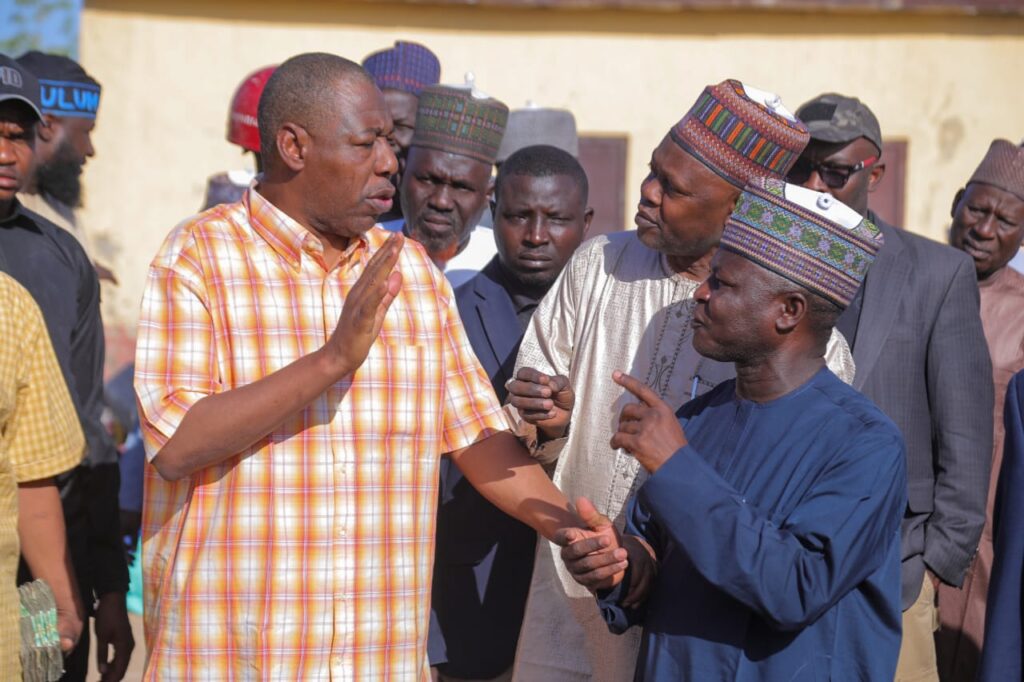
“Leadership is not about living in your comfort zone and addressing people and their concerns, but coming directly to the doorsteps of the less privileged. This has been my tradition, this has been my culture since I assumed duty as the governor of the state,” Zulum said.
“I cannot remember when I lived consecutively for 10 days in my office or even one week since I assumed duty. I’m always in the remote areas attending to people, and I believe this is what we should do from now on to the end of my own administration,” he added.
… Zulum Disburses Cash, Palliative to over 30,000 Ngoshe, Pulka Households
Governor Babagana Umara Zulum has distributed cash, food, and non-food items to over 30,000 affected households of Ngoshe and Pulka communities.
The relief item is intended to provide succor to victims of the recent attack and to the host communities.
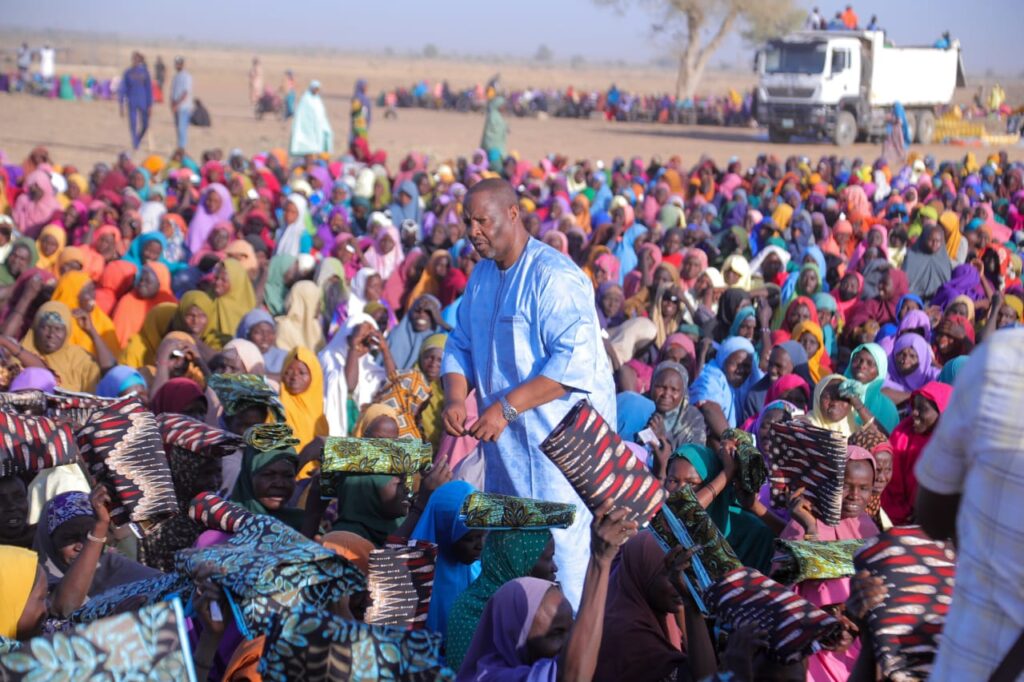
“Each male and female heads of household in Ngoshe will receive N30,000, while married women will receive N20,000. In addition, mattresses and clothing will be distributed to both men and women,” Zulum announced.
The governor disclosed that the intervention would also cover Pulka community which has been impacted by the influx of displaced persons from neighbouring areas.
He further acknowledged the support of the Federal Government and Alhaji Aliko Dangote, who donated 30,000 bags of 10kg rice to support vulnerable populations in the state.
“Out of the 30,000 bags, Pulka community will benefit from the scheme. We are distributing both food and non-food items not only to Ngoshe but also Pulka, which is also a displacement-affected community,” Zulum noted.
Governor Zulum called on residents of affected communities in Gwoza to remain patient and cooperate with security agencies, assuring them of sustained efforts by both the federal and state governments to restore lasting peace.
“They should give the necessary cooperation to all security agencies with a view to identifying culprits within the society. Information is a very valuable tool for addressing insecurity. Without the support of the community, insecurity will never end,” he added.
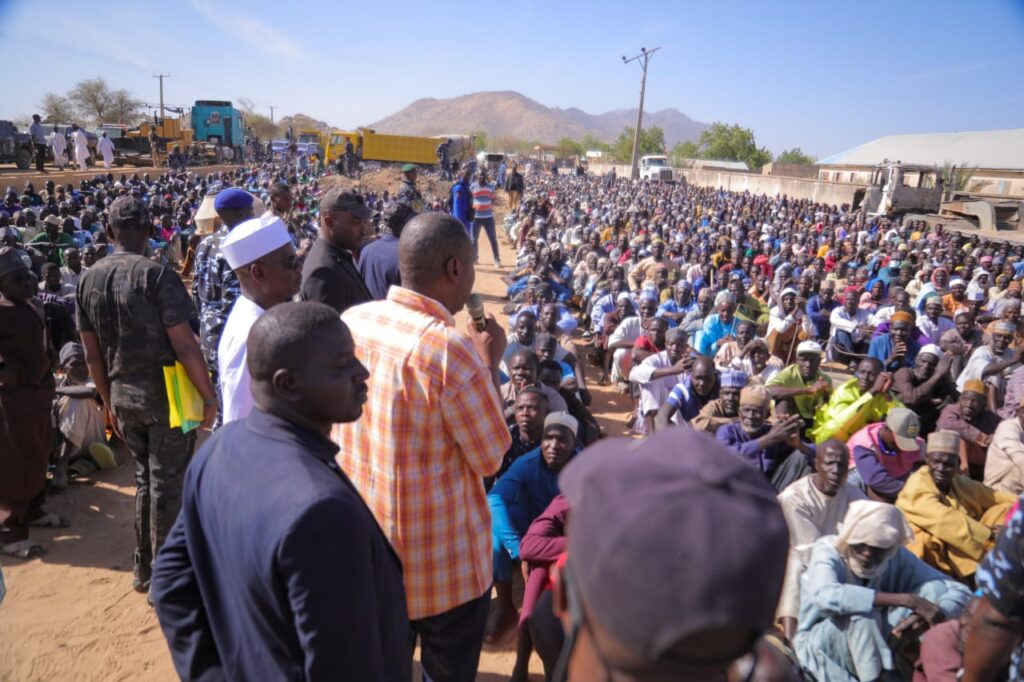
Items distributed include rice, maize, guinea corn, mattresses, and plastic mats.
Those on the governor’s entourage include Senator Mohammed Ali Ndume, member representing Gwoza, Damboa, and Chibok at the national assembly, Hon. Ahmed Jaha, Chairman Palliative Distribution Committee and member representing Monguno, Nganzai, Marte, Hon. Bukar Talba, member representing Gwoza state constituency; Commissioners for Local government and that of Transport and Energy; Special Advisers and other government officials.
Zulum Spends Night Coordinating Security in Pulka
Northeast
Maiduguri Bomb Blast: Senator Kyari acknowledges Tinubu, Shettima, and Zulum for support to victims.
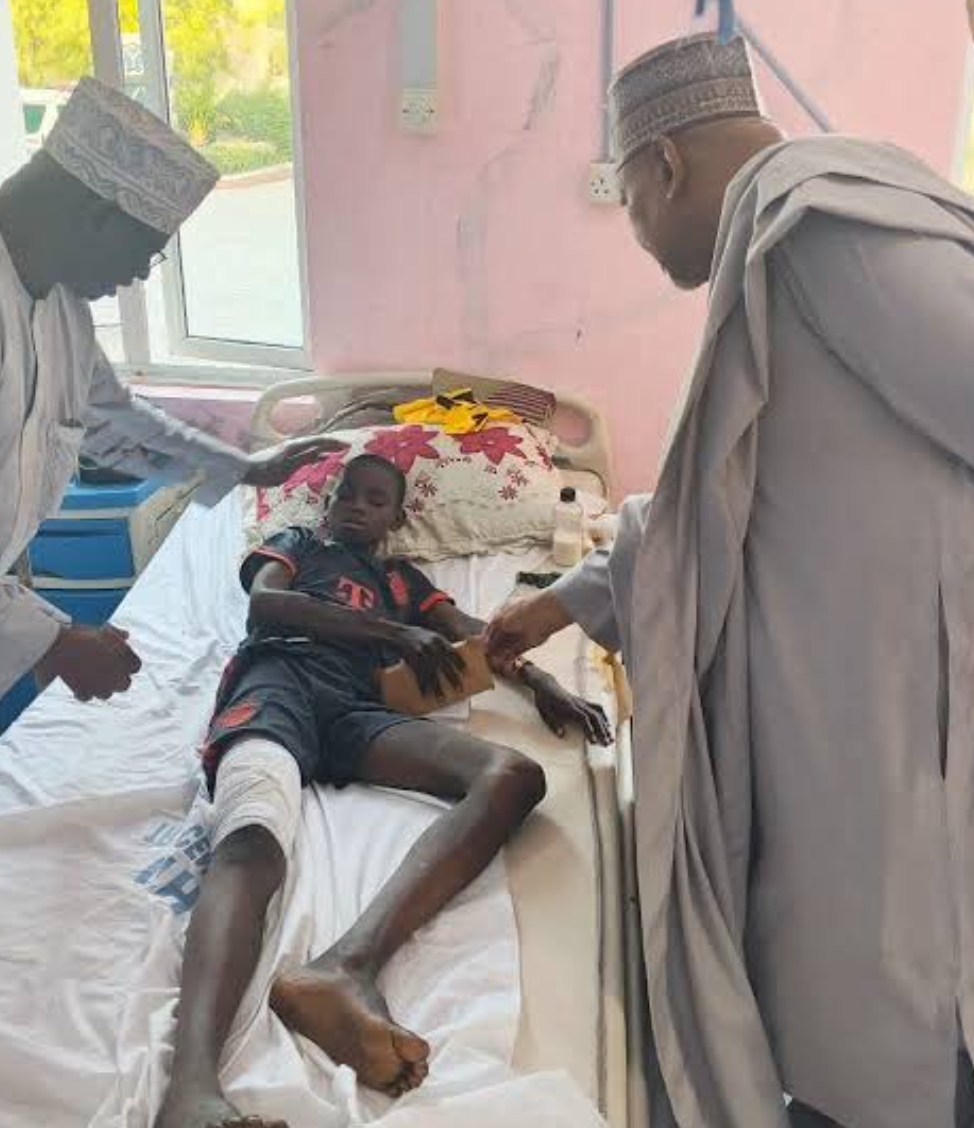
Maiduguri Bomb Blast: Senator Kyari acknowledges Tinubu, Shettima, and Zulum for support to victims.
By: Dr. James Bwala
The recent visit of the minister of agriculture and food security to the victims of the Maiduguri bomb blast stands as a compelling testament to the federal government’s commitment to alleviating human suffering and advancing security in Nigeria’s northeast region. This high-profile gesture not only extends vital financial support to those affected but also underscores the government’s dedication to restoring peace and stability amid persistent insecurity challenges.
The Minister’s visit, coupled with the laudable efforts of President Bola Tinubu, Vice President Kashim Shettima, and Borno State Governor Babagana Umara Zulum, exemplifies a comprehensive approach to addressing both humanitarian needs and security threats. Their unified dedication must be recognized as a critical driver in Nigeria’s ongoing struggle against insurgency and for sustainable development.
Kyari’s decision to personally visit victims of the Maiduguri bomb blast transcends mere symbolic action. It reveals an empathetic government response that goes beyond abstract policy formulations into tangible support for affected communities. The bomb blast, perpetrated in one of the nation’s most conflict-ridden areas, resulted in devastating human losses and severe economic disruptions to livelihoods. By visiting the victims, the minister acknowledges their plight first-hand, fostering a crucial connection between government officials and grassroots realities. This face-to-face engagement is indispensable for crafting policies that are responsive and tailored to the unique challenges faced by people living under the shadow of terrorism.
READ ALSO: https://newsng.ng/umth-when-vp-kashim-shettima-acknowledges-ahidjo-and-hospital-staff-for-their-services-to-victims-of-maiduguri-bomb-blasts/
The financial support extended by the minister forms a critical lifeline for victims struggling to rebuild their lives. The immediate aftermath of attacks like the Maiduguri bomb blast often witnesses heightened vulnerabilities—loss of homes, disruption of agricultural activities, and compromised food security. Since agriculture is the backbone of the local economy and a primary source of sustenance, the role of the Ministry of Agriculture and Food Security in intervening cannot be overstated. Providing financial aid ensures that survivors can access essential resources, resume farming activities, and thereby restore their food production capacity. Ultimately, this assistance contributes directly to regional food security and economic recovery, fostering resilience against the destabilizing effects of insurgency.
Equally significant is the minister’s public appreciation of the federal government’s broader efforts to tackle insecurity, highlighting the indispensable leadership of President Tinubu, Vice President Shettima, and Governor Zulum. This triad of leadership embodies a strategic synergy between federal and state authorities that is vital for counter-insurgency efforts. President Tinubu’s administration has placed national security at the forefront of its agenda, instituting reforms aimed at enhancing military responsiveness and intelligence coordination. Vice President Shettima, hailing from the northeast region himself, represents a critical bridge between local interests and federal actions, emphasizing inclusive governance and sensitivity to regional dynamics.
READ ALSO: https://newsng.ng/umth-when-vp-kashim-shettima-acknowledges-ahidjo-and-hospital-staff-for-their-services-to-victims-of-maiduguri-bomb-blasts/
Governor Babagana Umara Zulum’s role is especially noteworthy, as his ground-level leadership offers a direct interface with the people most affected by insecurity in Borno State. His tenure has been marked by proactive reconstruction projects, rehabilitation of internally displaced persons (IDPs), and sustained advocacy for increased federal support. Together, these leaders manifest a comprehensive approach that blends military, political, and humanitarian interventions—a necessity in a conflict environment as complex as northeastern Nigeria.
Critics may argue that such visits and financial donations are insufficient to stem the tide of violence and that more aggressive military action or systemic political reforms are necessary. While these critiques hold some merit, it is important to acknowledge that the multifaceted nature of insecurity demands equally multifaceted responses. Military efforts alone cannot rebuild bombed communities or address underlying socio-economic grievances. Conversely, humanitarian support without adequate security frameworks leaves vulnerable populations exposed to repeated attacks. The minister’s visit, therefore, symbolizes the critical balancing act between compassion and security strategy, demonstrating that effective government intervention must integrate both.
READ ALSO: https://newsng.ng/umth-when-vp-kashim-shettima-acknowledges-ahidjo-and-hospital-staff-for-their-services-to-victims-of-maiduguri-bomb-blasts/
Recognizing the contributions of President Tinubu, Vice President Shettima, and Governor Zulum signals an important narrative of hope and accountability. In regions beleaguered by decades of insurgency, governance is often viewed through the prism of neglect and failure. Highlighting these leaders’ commitments counters such pessimism and encourages civic trust. It also places public officials under deserved scrutiny and motivates continuous improvement in policy implementation. By publicly appreciating their efforts, the minister reinforces a culture of recognition and responsibility that can galvanize further progress toward peace.
It is also crucial to situate this visit within the context of broader strategies aimed at achieving sustainable food security in Nigeria’s northeast. Insurgent activities have severely disrupted agricultural production cycles, escalated food scarcity, and exacerbated poverty. The Ministry of Agriculture and Food Security’s involvement in providing direct support to victims aligns with the government’s long-term vision of restoring agricultural productivity as a cornerstone of regional stability. By supporting farmers and displaced persons, the government aids in reestablishing livelihoods and curtails the socioeconomic factors that often fuel insurgency recruitment.
READ ALSO: https://newsng.ng/umth-when-vp-kashim-shettima-acknowledges-ahidjo-and-hospital-staff-for-their-services-to-victims-of-maiduguri-bomb-blasts/
The Minister of Agriculture and Food Security’s visit to the Maiduguri bomb blast victims represents more than a compassionate outreach; it epitomizes an integrated government response that marries humanitarian relief with strategic security objectives. The financial assistance extended offers critical immediate support, while the appreciation of President Tinubu, Vice President Shettima, and Governor Zulum highlights the indispensable leadership guiding Nigeria’s fight against insecurity. Their collective efforts create a powerful narrative of resilience, responsibility, and hope that must continue to shape policies moving forward. To effectively combat insurgency and foster lasting peace, Nigeria requires this sustained commitment from all levels of government, robust institutional collaboration, and unwavering support for the victims who bear the brunt of conflict. Abubakar Kyari’s visit is thus a pivotal moment and a call to action for continued dedication to securing Nigeria’s northeast and uplifting its people.
* James Bwala, PhD, writes from Abuja.
Maiduguri Bomb Blast: Senator Kyari acknowledges Tinubu, Shettima, and Zulum for support to victims.

ADC; Coalition Is Not Enough

Madiba Advocates Raise Alarm, Urge Presidency, Labour Ministry, NSITF Management Board & relevant authorities to Probe Alleged ₦297bn NSITF Irregularities Linked to MD Faleye Oluwaseun

The Sahel: Seeing Through Russia’s Disinformation Playbook in Africa

Roger Federer’s Shock as DNA Results Reveal Myla and Charlene Are Not His Biological Children

THE PLIGHT OF FARIDA

FAILED COUP IN BURKINA FASO: HOW TRAORÉ NARROWLY ESCAPED ASSASSINATION PLOT AMID FOREIGN INTERFERENCE CLAIMS
-
 News2 years ago
Roger Federer’s Shock as DNA Results Reveal Myla and Charlene Are Not His Biological Children
-
Opinions4 years ago
THE PLIGHT OF FARIDA
-
 News12 months ago
FAILED COUP IN BURKINA FASO: HOW TRAORÉ NARROWLY ESCAPED ASSASSINATION PLOT AMID FOREIGN INTERFERENCE CLAIMS
-

 News2 years ago
EYN: Rev. Billi, Distortion of History, and The Living Tamarind Tree
-
 Opinions4 years ago
POLICE CHARGE ROOMS, A MINTING PRESS
-

 ACADEMICS2 years ago
A History of Biu” (2015) and The Lingering Bura-Pabir Question (1)
-

 Columns2 years ago
Army University Biu: There is certain interest, but certainly not from Borno.
-

 Opinions2 years ago
Tinubu,Shettima: The epidemic of economic, insecurity in Nigeria
