
Crime
NDLEA arrests port terminal operator, dock worker over 1,044.29kg Cocaine, Colos

NDLEA arrests port terminal operator, dock worker over 1,044.29kg Cocaine, Colos
By: Michael Mike
Operatives of the National Drug Law Enforcement Agency (NDLEA) have begun to unmask members of an organized criminal network behind the recent importation of two containers laden with illicit drugs as well as assorted arms and ammunition from Durban, South Africa to the Tincan seaport in Lagos.
A press statement on Sunday by the spokesman of the anti-narcotics agency, Femi Babafemi said among those already arrested as members of the syndicate are: a clearing and notify party of the two containers, Falowo Kayode; a dock worker, Anjorin Idowu and Uzairu Iguda who is in charge of the five star terminal at the port. Another dock worker at the terminal, Mohammed Sule (alias organizer) who is equally linked to the syndicate is currently at large.
Babafemi said based on credible intelligence, the agency had requested for a 100 percent joint examination of two containers marked MSCU 4581770 and TRHU 7968071 from South Africa. As a result, the exercise was conducted with other stakeholders on 18th and 19th of January, 2024 during which 56.39 kilogrammes cocaine and 795 kilogrammes Colorado, a synthetic strong strain of cannabis among other illegal items were recovered from the containers.
He said following a tasking order by the Chairman/Chief Executive Officer of NDLEA, Brig Gen Buba Marwa (Retd) to a combined team of specialized units of the agency to unravel those behind the importation of the large consignments of the illicit drugs, ongoing investigations have led to the discovery of more bags of Colorado weighing 192.7 kilogrammes, a pistol, and rounds of ammunition removed from the container, MSCU 4581770 and hidden in an empty container before the 100 percent joint examination at the five star terminal.
He said as a result, two suspects: Uzairu Iguda who is in charge of the terminal’s container positioning and stacking, and Anjorin Idowu who is a dock worker in the terminal have been arrested. Another suspect, Mohammed Muktar Sule (alias organizer) now at large, is also a dock worker in the terminal. Investigations revealed that the three suspects conspired with the agent and notify party, Falowo Kayode to remove the 192.7 kilogrammes Colorado, pistol and rounds of ammunition from the container to an empty container in the terminal.
He noted that the latest seizure brings the total recovered from the two containers to 56.39 kilogrammes of cocaine and 987.9 kilogrammes of Colorado with a combined weight of 1,044.29 kilogrammes .
He added that investigations have also revealed three kingpins believed to be based in South Africa and connected with the importation of the containers are Odeyemi Taiwo; Akinyemi Olayinka and Adebayo Adewole who are now on the agency’s wanted list.
In Edo state, NDLEA officers last Tuesday 20th raided a drug joint under powerline off Etete road, GRA Benin city where they arrested a salesgirl, Jessica Destiny, 24, and recovered assorted illicit drugs. A follow up operation the following day led to the arrest of the owner of the joint, 36-year-old Ibrahim Sani who is the Commander, Arewa Association Vigilantes in the area.
A consignment of 179 kilogrammes cannabis was recovered by operatives at Badagry Waterside, Lagos last Wednesday, while a 67-year-old grandpa, Rafiu Ogunro was nabbed last at Magbon, Ogun state with 57 kilogrammes cannabis, 2,700 pills of tramadol, and 231 bottles of Codeine syrup, weighing 2.31 litres.
In Borno, a 25-year-old lady, Zara Mele was arrested with quantities of cocaine and heroin at Baga checkpoint last Tuesday, while Usman Shuaibu, 26, and Mohammed Lawan, 22, were also nabbed with quantities of the same class A drug at Meri and Babban Layi areas of Maiduguri the same day respectively.
Babafemi said no less than 44,820 pills of opioids being taken to Zamfara state by Tasiu Mohammed, 25, and Abubakar Tanko, 54, were intercepted along Jega-Sokoto road by NDLEA officers in Kebbi state, while a farmer Ali Abdulhamid, 35, was arrested in his farm where he grows tomatoes and some stems of cannabis sativa weighing 73 kilogrammes at Bakin Kasuwa village, Birnin Yero area of Igabi local government area of Kaduna state.
Two suspects: Shuaibu Ahmed, 38, and Tanimu Abdullahi, 29, travelling in a commercial bus from Lagos to Kano with 99 blocks of cannabis weighing 37 kilogrammes were intercepted by NDLEA officers along Kwali-Gwagwalada express road, Abuja on Monday 19th Feb, while one Michael Okefi was arrested at Upper Iweka area of Onitsha, Anambra state with 483 bottles of codeine-based cough syrup concealed in two 50-litre kegs. A follow up operation led to the arrest of the suspected actual owner, Osinachi Jasper.
You
Babafemi also revealed that at least 540 grammes of cocaine concealed in canvas shoes heading to the United Kingdom were intercepted at a courier firm in Lagos last Friday by NDLEA operatives of the Directorate of Operation and General Investigation, DOGI.
Equally, a consignment of tramadol 225mg hidden in ladies headgear going to the United Kingdom was also seized same day at the courier house, while another parcel containing ecstasy concealed in body cream container meant for Cyprus was also intercepted.
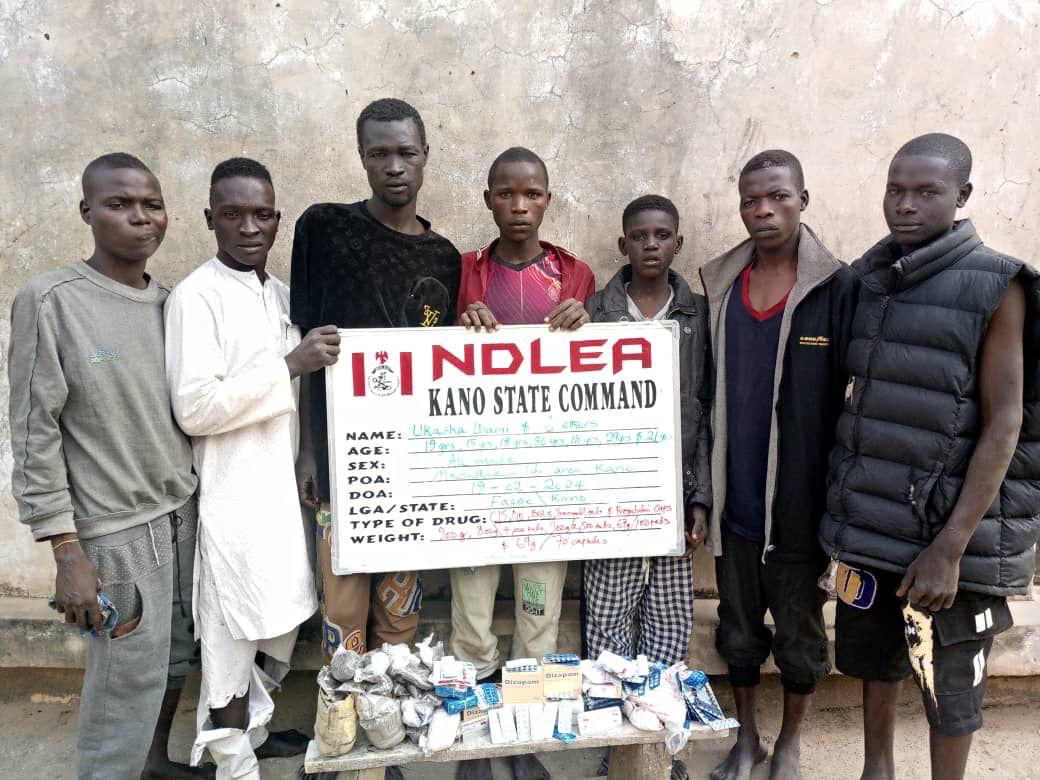
In Kano state, different quantities of opioids and other illicit drugs were recovered from at least 12 young men arrested in parts of Kano between Monday 19th and Friday 23rd February. Some of the suspects include: Yusuf Abdullahi,20; Usman Muhammed,18; Sadiq Jibrin, 20; Ibrahim Lawan, 25; Ukasha Usaini,19; Sahabi Lamini,15; Isiyaka Mohammed, 28; Bashir Ayuba, 36; Ahmad Idris,18; Abubakar Sani,29; Bashir Mohammed, 21 and Udochukwu Ezekiel, 35.
He said NDLEA Commands across the country continued to intensify their War Against Drug Abuse (WADA) advocacy lectures.
Meanwhile, the Chairman/Chief Executive Officer of NDLEA, Brig. Gen. Buba Marwa (Retd) has applauded officers of the agency across the country for continued arrest of drug traffickers and intensifying the WADA advocacy lectures, thus creating parity between their drug supply reduction and drug demand reduction activities.
NDLEA arrests port terminal operator, dock worker over 1,044.29kg Cocaine, Colos


Troops Arrest Suspect Over Killing of More Than 50 Cattle in Edo
By: Zagazola Makama
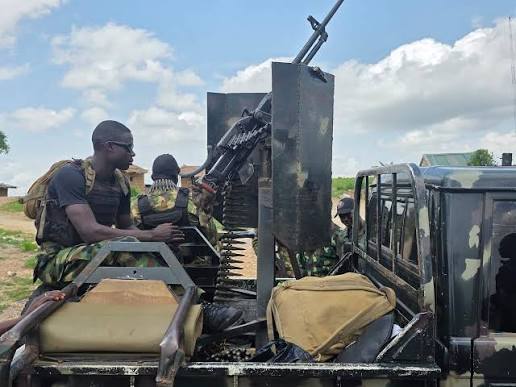
Troops of Operation MESA have arrested a suspected criminal linked to the killing of more than 50 cattle belonging to Fulani herders in Esan South-East Local Government Area of Edo State.
Security sources said that the suspect was arrested at about 4:30 a.m. on Thursday following credible intelligence on his whereabouts.
According to the sources, troops of 4 Brigade operating from the Forward Operating Base (FOB) in Uromi apprehended the suspect at his residence in Oloshi Main Town.
The suspect had reportedly been on the run since May 31, when he allegedly led an attack that resulted in the killing of over 50 cattle in the Oloshi general area.
The sources said the arrest was made after sustained efforts by security agencies to track down those involved in the incident.
Following his arrest, the suspect was handed over to the Nigeria Police Force for further investigation and possible prosecution.
Security agencies have assured residents that efforts are ongoing to apprehend other individuals connected to the attack.
Troops Arrest Suspect Over Killing of More Than 50 Cattle in Edo
Troops Arrest Suspected Kidnappers, Recover Two AK-47 Rifles in Magumeri Borno
By: Zagazola Makama
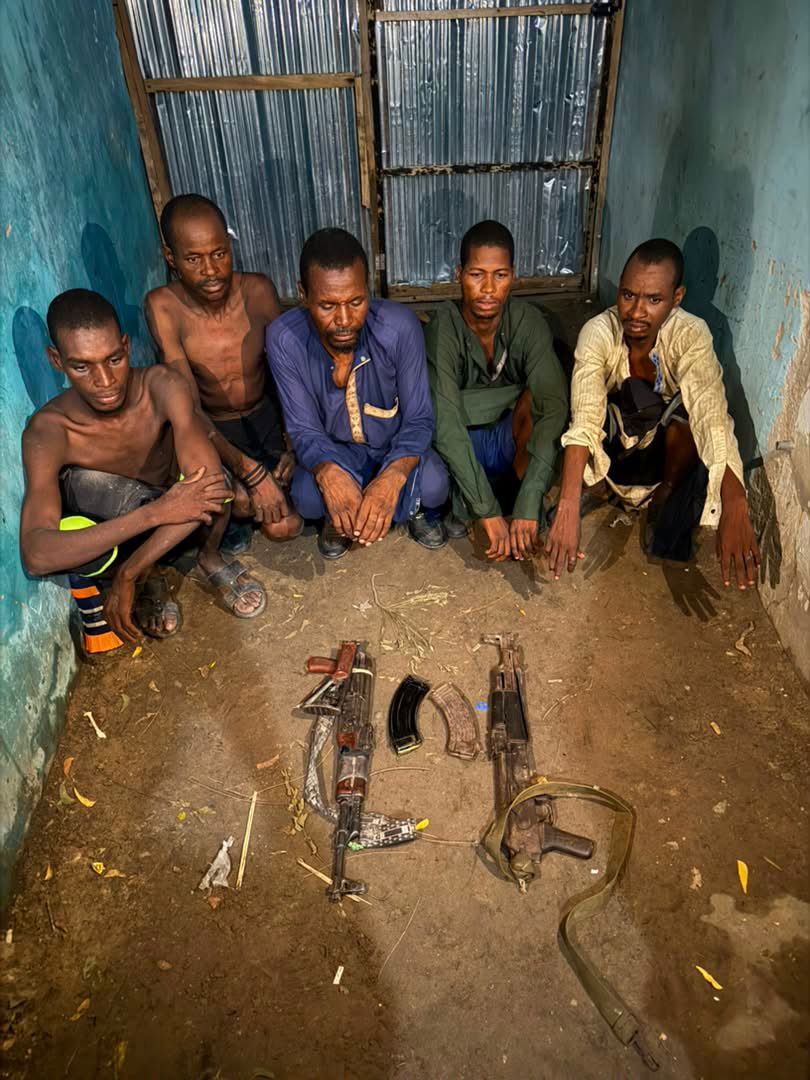
Troops of Operation HADIN KAI conducting an ongoing operation in Magumeri Local Government Area of Borno have arrested suspected kidnappers and recovered two AK-47 rifles from them.
Sources involved in the operation disclosed on Friday that the suspects were apprehended during a targeted security operation ahead of Magumeri town.
According to the sources, the operation led to the recovery of two AK-47 assault rifles believed to have been used by the suspects in criminal activities within the area.
The sources further revealed that preliminary interrogation of the suspects had yielded valuable intelligence that could assist security agencies in tracking and arresting other members of the kidnapping network.
“The suspects have provided useful information that can aid further operations and lead to the arrest of additional members of the criminal syndicate,” the source said.
The arrests are part of ongoing efforts by security forces to dismantle kidnapping and other criminal networks operating in parts of Borno State.
Security authorities have yet to issue an official statement on the operation, while investigations and follow-up actions are continuing.
Troops Arrest Suspected Kidnappers, Recover Two AK-47 Rifles in Magumeri Borno
Police Rescue Six Kidnap Victims, Recover Stolen Motorcycle in Zamfara
By Zagazola Makama
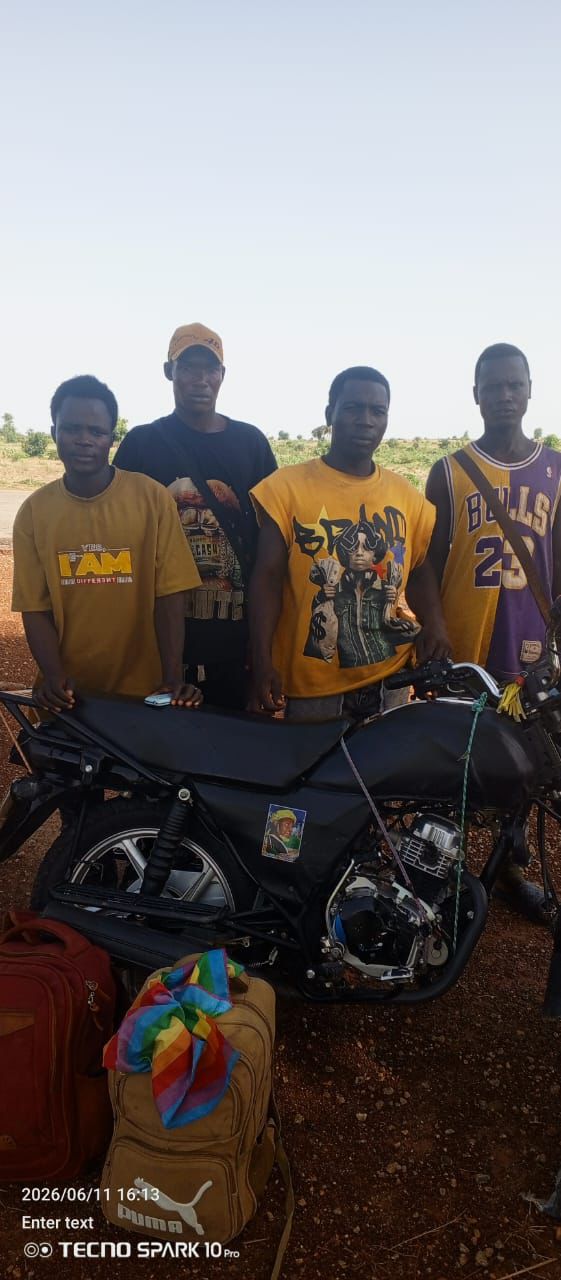
Operatives of the Zamfara State Police Command have rescued six kidnapped victims and recovered a stolen motorcycle following a gun battle with armed bandits along the Anka–Gurusu Road in Zamfara State.
The command said the operation was carried out at about 4:30 p.m. on Thursday by personnel of the Violence Crimes Response Unit (VCRU) during ongoing anti-banditry operations.
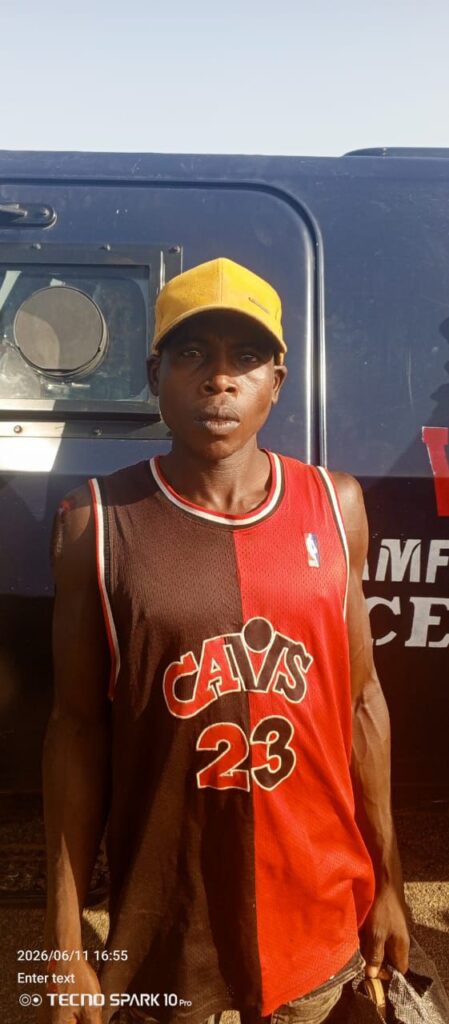
According to the police, the operatives received credible intelligence that heavily armed bandits had blocked the Anka–Gurusu Road and abducted six travellers along with their two motorcycles while they were travelling from Mayanchi village in Maru Local Government Area of Zamfara to Zuru Local Government Area of Kebbi State.
Acting on the information, the police team mobilised to the area and tracked the bandits to their hideout.
Upon contact, the suspects reportedly engaged the operatives in a gun duel.
The police said the operatives responded with superior firepower, forcing the bandits to flee into the surrounding forest with suspected gunshot injuries.
As a result of the operation, all six abducted victims were rescued unhurt, while one of the stolen motorcycles was recovered.
The second motorcycle was, however, taken away by the fleeing bandits.
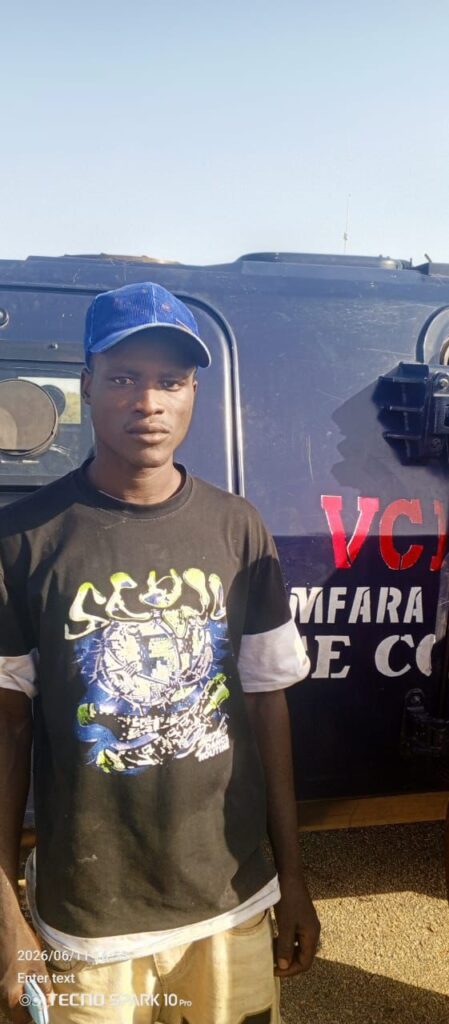
The command said efforts were ongoing to track down and arrest the suspects as well as recover the remaining motorcycle.
The Zamfara State Police Command reiterated its commitment to tackling banditry and other violent crimes across the state and urged residents to continue providing timely and actionable information to security agencies.
Police Rescue Six Kidnap Victims, Recover Stolen Motorcycle in Zamfara

Zulum Delivers Relief, Cash Support to 434 Ngoshe Residents Rescued from Boko Haram

DEMOCRACY AND THE COURAGE TO BELIEVE

Army Distributes Fertiliser to Farmers in Jigawa Under Civil-Military Cooperation Programme

Roger Federer’s Shock as DNA Results Reveal Myla and Charlene Are Not His Biological Children

THE PLIGHT OF FARIDA

FAILED COUP IN BURKINA FASO: HOW TRAORÉ NARROWLY ESCAPED ASSASSINATION PLOT AMID FOREIGN INTERFERENCE CLAIMS
-
 News2 years ago
Roger Federer’s Shock as DNA Results Reveal Myla and Charlene Are Not His Biological Children
-
Opinions4 years ago
THE PLIGHT OF FARIDA
-
 News1 year ago
FAILED COUP IN BURKINA FASO: HOW TRAORÉ NARROWLY ESCAPED ASSASSINATION PLOT AMID FOREIGN INTERFERENCE CLAIMS
-

 News2 years ago
EYN: Rev. Billi, Distortion of History, and The Living Tamarind Tree
-
 Opinions4 years ago
POLICE CHARGE ROOMS, A MINTING PRESS
-

 ACADEMICS2 years ago
A History of Biu” (2015) and The Lingering Bura-Pabir Question (1)
-

 Columns2 years ago
Army University Biu: There is certain interest, but certainly not from Borno.
-

 Politics1 year ago
2027: Why Hon. Midala Balami Must Go, as Youths in Hawul and Asikira/Uba Federal Constituency Reject ₦500,000 as Sallah Gift
